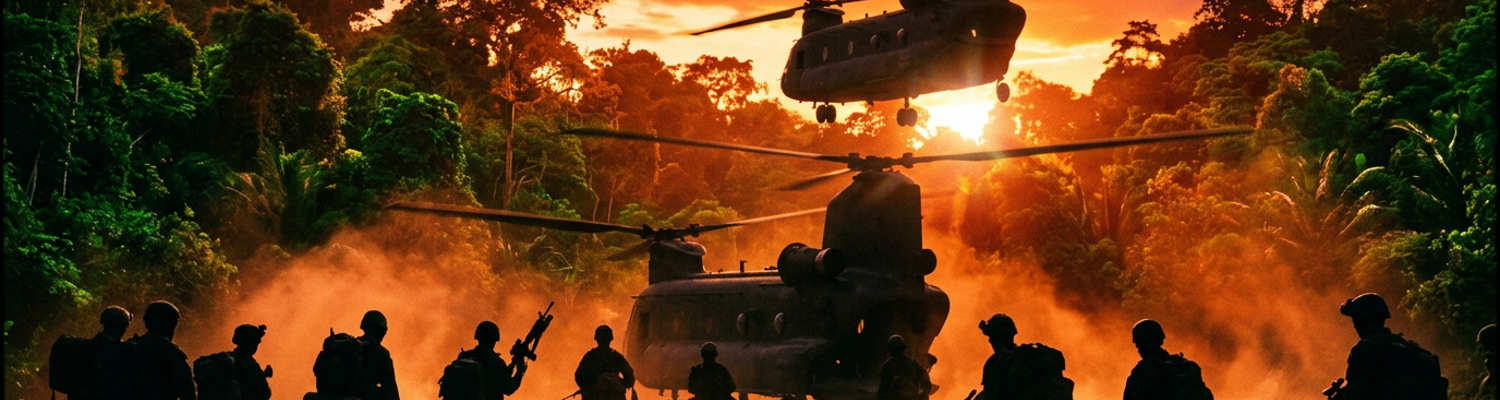

Post-Tet Deployment and Rapid Force Mobilization
Lockheed C-141 Starlifter cargo planes swallowed entire rifle companies and mountains of crated ammunition when the 27th Marine Regiment of the 5th Marine Division received sudden deployment orders in February 1968. Logistics officers faced a forty-eight-hour deadline to organize, manifest, and airlift thousands of combat troops across eight thousand miles of ocean to reinforce the Da Nang defense sector after the North Vietnamese launched the Tet Offensive. Staging crews at Marine Corps Base Camp Pendleton worked through two sleepless nights, wrestling heavy weapons trailers, mortar baseplates, and combat packs into cavernous fuselages until the aircraft tires sagged on the tarmac. Severe weight and cabin restrictions forced commanders to strip units down to bare necessities, abandoning heavy support vehicles, field desks, and maintenance vans so that every square foot held a Marine with an M16 rifle. Exhausted troops crammed onto nylon troop seats along the cold metal hulls, enduring twenty straight hours of engine roar across the Pacific before the aircraft banked sharply over the South China Sea into Da Nang.
Rifle companies of the 3rd Battalion, 27th Marines stepped directly off those aircraft into an active combat theater crippled by severe manpower deficits. Battalion leaders quickly mobilized over 400 non-infantry occupational specialists from rear-echelon support roles into frontline rifle companies to meet urgent combat strength requirements. Mechanics, motor transport drivers, supply clerks, and radio repairmen dropped their hand tools and clipboards to draw combat field packs, steel helmets, and bandoliers of rifle ammunition. Company commanders integrated these technicians alongside seasoned infantrymen, assigning clerks to carry machine-gun ammunition and turning vehicle mechanics into point men for forward fire teams. Squad leaders conducted immediate field rehearsals in the dust behind the aircraft hangars, teaching the converted specialists how to clear jammed rifle chambers, deploy claymore mines, and maneuver under direct fire before placing hundreds of inexperienced riflemen into forward fire teams where they had to react instantly to incoming fire.
Riflemen quickly discovered that Marine Corps doctrine manuals prescribing orderly sweeps across open terrain failed completely against the brutal ground south of Da Nang. Battalion columns advanced toward Go Noi Island, encountering a punishing environment where 110-degree heat and suffocating humidity drained men faster than enemy bullets. Subterranean bunkers, reinforced trench systems, and dense bamboo hedgerows hid entrenched North Vietnamese Army units, rendering conventional fire-and-maneuver formations completely obsolete. Armored vehicles bogged down in thick paddy mud, forcing foot patrols to shoulder eighty-pound packs through waist-deep irrigation ditches under a blistering sun. Dehydration, heat stroke, and salt depletion struck dozens of men every afternoon, forcing squads to halt constantly to drag heat casualties under sparse tree lines, losing operational momentum as hostile snipers fired from the distant treelines.
Bullets and heat casualties dominate the operational realities that clerks compile into the official monthly record, striking typewriter keys against thick carbon paper inside the Cau Ha command tent on May 31, 1968. Exhausted commanders sit in the stifling stillness of the post, listening to the rhythmic striking of keys while the whir of medevac helicopter rotors from earlier missions still echoes inside their heads. Every typed line in the command chronology represents an agonizing tactical compromise between advancing into bunker complexes and pulling heat-stricken riflemen back from the brink of collapse. Staff officers methodically catalog the coordinates, casualty figures, and ammunition expenditures, signing their names to the completed pages before dispatching the casualty reports to regimental headquarters.
Subterranean Bunkers and Terrain of Go Noi Island
Riflemen of the battalion generating those casualty reports crossed that river into Go Noi Island, a low alluvial landmass located twenty-five kilometers south of Da Nang between the Ky Lam and Ba Ren Rivers that served as a fortified logistics redoubt for the People's Army of Vietnam 308th Division. North Vietnamese combat engineers and local laborers spent years turning this river island into an underground fortress, packing weapons caches, field hospitals, and training barracks beneath family farm plots. Deep water channels prevented Marine tanks and heavy trucks from crossing easily, forcing forward elements to rely on foot patrols and lightweight aluminum boats that drew heavy small-arms fire from the opposite banks. Silt deposits from seasonal floods produced deep mud that swallowed combat boots, while thick canopy layers trapped tropical moisture at ground level. Reconnaissance aircraft flying overhead saw only quiet hamlets and peaceful rice paddies, completely missing the thousands of enemy soldiers who moved unseen through concealed trench mouths beneath the brush.
Marines pushing past those hidden trench mouths discovered that standard Fleet Marine Force sweeping doctrine failed against the terrain of Go Noi Island, which featured dense hedgerows, earthen berms, and interlocking subterranean bunkers. North Vietnamese sappers built these firing positions out of heavy mahogany timber, railroad ties, and compacted river mud that absorbed direct hits from 105-millimeter artillery shells without cracking. Interconnected tunnels ran three levels deep into the subsoil, allowing enemy squads to survive massive high-explosive bombardments and then surface directly behind advancing Marine platoons. Machine gunners inside these pillboxes fired through narrow firing slits positioned just three inches above the dirt, creating grazing fields of fire that clipped grass stems and pinned entire companies in open drainage ditches. Grenades tossed into bunker firing ports often rolled down dogleg baffles and exploded harmlessly in empty drainage sumps, leaving the North Vietnamese gunners unharmed and free to reload their weapons.
Infantrymen crawled on their stomachs toward those active weapons, using bayonets and entrenching tools to scrape away layers of packed clay while machine-gun bursts tore through the surrounding vegetation. Thick bamboo stalks grew in tangled walls ten feet deep around every agricultural field, stopping fragmentation shrapnel and deflecting rifle bullets away from the bunker ports. Squad leaders called for shoulder-fired rockets and flamethrowers, but the thick brush fouled weapon sights and ignited grass fires that forced Marines to drag their own wounded backward through the heat. Earthen berms lining the irrigation canals offered no safe protection, because North Vietnamese mortar crews pre-registered every ditch line and dropped eighty-two-millimeter rounds directly into the depressions whenever troops sought shelter. Platoon commanders watched their forward fire teams split apart in the dense greenery, losing sight of adjacent squads as soon as the men pushed five yards into the growth.
Radiomen struggled to maintain contact across those fractured squad lines, holding whip antennas aloft while snipers in nearby palm trees fired at the swaying metal poles. Forward observers abandoned standard grid coordinates and guided close air support strikes by popping smoke grenades inside the tree lines, bringing napalm canisters within fifty meters of friendly rifle pits. Jet engines shook the ground as high-drag bombs gouged smoking craters into the mud, yet the explosions rarely breached the lower living quarters where enemy fighters stored their dry ammunition and rice rations. Company commanders realized that no amount of air ordnance could substitute for direct assaults, forcing them to commit their riflemen to close-quarters attacks against fortified positions. Platoons re-formed their skirmish lines along the canal banks, chambered fresh rounds, and crawled forward into the blind hedgerows to clear each bunker by hand.
The May 17 Ambush of Company I
Company I of the 3rd Battalion, 27th Marines advanced southeast of Phu Dong on May 17, 1968, extending those canal-bank skirmish lines across open ground toward Le Nam hamlet to clear the bunkers. Scouts moved toward a dry riverbed lined by thick timber, scanning the grass for tripwires and fresh footpaths. Concealed North Vietnamese Army soldiers belonging to an entrenched battalion held their fire until the lead Marine squads stepped into the open riverbed. Machine-gun bursts, rocket-propelled grenades, and heavy mortar rounds erupted simultaneously from hidden earthen firing slits, tearing through the vegetation and severing internal communications while casualties piled up under the intense barrage.
Private First Class Robert C. Burke, an eighteen-year-old motor vehicle mechanic serving as a company machine gunner, saw those wounded riflemen pinned without cover under the relentless barrage. Burke grabbed his M60 machine gun and charged forward alone toward the edge of the steep riverbank to draw enemy fire away from his squad. Heavy bursts from his machine gun hammered the enemy treeline, throwing up dirt and splintering wooden bunker logs while pinned Marines dragged their wounded comrades into defilade. Enemy gunners inside a fortified automatic-weapons bunker tried to traverse their barrel toward his position, but Burke poured sustained fire into their firing slit, killing three North Vietnamese soldiers as they attempted to flee. Hot shell casings covered the dirt around his boots as he maneuvered along the embankment, firing from the hip into fortified positions to suppress enemy weapons across the defensive line.
Burke dropped his M60 machine gun when the feed mechanism jammed during that suppressive fire, grabbed a fallen Marine's rifle and hand grenades, and charged directly into the next enemy bunker. Shrapnel from his grenades killed two more enemy fighters, eliminating another active firing position along the trench system. Spotting a nearby rifleman who had cleared the stoppage on his machine gun, Burke reclaimed the M60 and stepped back into the open to pour fire into the fortified treeline until enemy bullets mortally wounded him. His single-handed assaults broke the immediate momentum of the North Vietnamese battalion's ambush, allowing Company I to establish a defensive perimeter in the dirt.
Riflemen along that newly formed perimeter pulled their casualties into dry irrigation ditches while uninjured squad leaders keyed backpack radios to report their dead officers to the battalion command post. North Vietnamese snipers and mortar crews kept up constant fire from the surrounding hedgerows, zeroing in on green smoke markers whenever Marine evacuation helicopters attempted to hover over the tree canopy. Artillery batteries at nearby firebases fired white phosphorus and high-explosive shells within seventy-five meters of friendly positions, building a protective barrier of dirt and shrapnel to stop North Vietnamese infantry from overrunning the company. Combat corpsmen used their remaining field dressings on traumatic gunshot wounds under the brutal midday heat, rationing muddy canteen water as heatstroke threatened to disable the uninjured defenders. Battalion headquarters recognized that the battered company could not break through the entrenched enemy battalion without immediate reinforcements, triggering an emergency order to load Companies K and L onto transport helicopters bound for contested landing zones across Go Noi Island.
Emergency Helicopter Insertions into Contested Landing Zones
Helicopters received the emergency order from Lieutenant Colonel Tullis J. Woodham Jr., who directed the airlift of Companies K and L as soon as fragmented radio calls reached the battalion operations post at Cau Ha. Staff officers immediately coordinated with Marine aircraft groups stationed at Da Nang and Marble Mountain, requesting every available medium transport helicopter to lift two complete rifle companies into combat. Severe shortages of transport helicopters quickly disrupted the operational timetable, because regional aviation commands had already committed aircraft to resupply missions and casualty evacuations across northern I Corps. Riflemen from Companies K and L waited on sunbaked taxiways for hours under full combat loads, drinking warm canteen water while ground crews worked to refuel and inspect returning airframes. Flight crews finally guided their Boeing CH-46 Sea Knight helicopters in long rows onto the pickup pads, loaded the waiting infantry platoons, and lifted off into the humid sky toward the rising smoke south of the Ky Lam River.
Dirt and dry grass marked Landing Zone An Tam (1) as it appeared through the open cabin doors as a wide agricultural clearing bordered by dry irrigation dikes, bomb craters, and thick bamboo treelines. North Vietnamese mortar crews and heavy machine gunners opened fire on the clearing as soon as the transport helicopters flared their rotors to settle into the dry grass. Lieutenant Colonel Tullis J. Woodham Jr. deployed Companies K and L via emergency helicopter insertion into Landing Zone An Tam (1) under active mortar and small-arms fire. Shrapnel and automatic-weapons rounds punched clean holes through the thin aluminum fuselages, throwing up plumes of red dirt and clipping branches above the landing site while Marine door gunners laid down suppressing fire into the surrounding hedgerows. Riflemen jumped four feet from vibrating rear cargo ramps into the blowing dust, dropping straight onto their bellies to return fire before sprinting toward the temporary shelter of low earthen dikes. Flight leaders pulled pitch and lifted their damaged aircraft off the ground as soon as the last squads cleared the ramps, clearing the airspace so armed attack helicopters could pound the active enemy weapon pits with rockets and twenty-millimeter cannon fire.
Company K reassembled its scattered fire teams behind the irrigation berms as the twenty-millimeter cannon fire faded, immediately launching an overland assault toward the sound of continuous gunfire near Le Nam. Tropical heat and dense vegetation slowed the advance, turning dry drainage ditches into exposed avenues of fire where hidden snipers shot from elevated platforms in the trees. Severe shortages of transport helicopters delayed the aerial movement until 1500 hours, forcing Company K to fight forward until 1930 hours to establish a relief linkup with Company I. Riflemen crawled past interlocking log bunkers, throwing fragmentation grenades into firing slits and clearing trench lines with short rifle bursts while carrying heatstroke casualties alongside their ammunition crates. Enemy mortar rounds exploded along the company axis of advance, tearing up the dry soil, yet the Marines maintained steady forward pressure to reach their besieged sister unit before nightfall. Lead elements of Company K reached the outer fighting holes of Company I at 1930 hours, linking their skirmish lines across the riverbed and establishing a unified perimeter to evacuate the wounded.
Close-Quarters Combat at Le Nam and Le Bac
Companies K and L advanced north from that unified perimeter toward Le Bac (2) on May 18, 1968, to suppress snipers but encountered a prepared multi-company defensive network. Concealed North Vietnamese riflemen and machine gunners held their fire until the lead Marine squads stepped into open terrain between the bamboo groves. Automatic weapons and heavy mortar fire erupted from reinforced earthen bunkers, pinning down both companies in shallow depressions and exposed paddy dikes. Temperatures climbed above one hundred degrees in the stagnant tropical air, baking the dry soil as riflemen traded fire at point-blank range. Marine squads could neither maneuver through the interlocking fields of fire nor drag their mounting casualties to safety without taking direct hits. Heat exhaustion rapidly incapacitated dozens of troops alongside combat casualties, depleting frontline strength while enemy fire swept every foot of open ground.
Marines directed jet strikes and artillery barrages against the fortified positions to shield their fallen comrades from the sweeping fire. Marine fighter-bombers and aerial observers flew over the tree line, dropping two-hundred-and-fifty-pound bombs and firing rockets to destroy the reinforced log bunkers. Enemy defenders neutralized this aerial firepower by crawling within thirty meters of friendly positions, pulling the fighting into point-blank range where heavy ordnance could not hit without destroying both sides. Forward air controllers watched high-explosive ordnance detonate dangerously close to Marine helmets, forcing pilots to break off their bombing runs. Company commanders could neither advance against the interlocking bunkers nor pull back across the open ground without suffering catastrophic casualties. Lieutenant Colonel Tullis J. Woodham Jr. committed his last operational reserve to the fight by ordering Company M into the combat zone.
Company M arrived by helicopter at 1500 hours to cover the withdrawal of Companies K and L after proximity between opposing lines minimized the utility of close air support. Transport helicopters touched down under heavy mortar and machine-gun fire, discharging fresh platoons that sprinted directly into blocking positions south of Le Bac (2). Machine gunners from Company M laid down sustained suppressive fire into the wood line, forcing enemy gunners down while the lead squads of Companies K and L began their retreat. Riflemen crawled backward through dirt furrows, pulling severely wounded comrades and carrying troops who had collapsed from heatstroke. Corpsmen moved down the withdrawal route under fire, administering intravenous fluids from plastic bags hung on rifle barrels and bandaging shrapnel wounds in the dirt. Company M held that perimeter against repeated counterattacks while the battered units extracted their casualties from the fire-swept field.
Helicopters shuttled the wounded and heat casualties extracted from that field back across the river to medical stations at Da Nang until the landing zone fell silent. Artillery batteries then unleashed heavy barrages of high-explosive and white phosphorus shells into Le Bac (2), pulverizing the vacated tree lines to suppress any North Vietnamese pursuit. Battalion reports cataloged fifteen Marines killed, thirty-five wounded, and ninety-four severe heat exhaustion cases from the battle, while search teams confirmed twenty enemy dead around the bunker network. Clerks in the Cau Ha command post typed these exact coordinates, casualty numbers, and withdrawal times into the official operational log on May 31, 1968, preserving each tactical compromise in carbon copy. Battalion headquarters consolidated the remaining rifle companies into a tightened perimeter around Le Nam, redistributing ammunition and digging new fighting holes to hold the ground through the night.
Heat Prostration and Frontline Casualty Triage Realities
Riflemen collapsed inside those freshly dug fighting holes with blistered hands, vomiting bile and shaking uncontrollably from severe dehydration. Sustained 110-degree Fahrenheit heat and extreme humidity incapacitated 94 Marines from heat exhaustion during the fighting on May 18 alone. Heavy canvas web gear, ceramic body armor plates, and iron ammunition cans trapped core heat against the skin, pushing internal body temperatures to dangerous levels. Marines drained their plastic canteens by midday, forcing them to dry-swallow salt tablets that triggered violent nausea and severe abdominal spasms in the bottom of the trenches. Platoon sergeants stripped equipment and sweat-soaked utility jackets off delirious men, laying them beneath shredded palm fronds while corpsmen monitored faint pulses under intermittent sniper fire.
Corpsmen knelt in the red dust beside those heat victims, facing a medical disaster that completely outstripped their field dressings and intravenous saline supplies. Combat lifesavers inserted plastic needles into collapsed veins, hanging saline bags from propped-up M16 rifle barrels to revive soldiers who were slipping into comas. Enemy mortar shells slammed into the tree line alongside the casualty collection point, adding shrapnel wounds, compound fractures, and severed arteries to the medical log. Field commanders were forced to prioritize emergency medevac extraction flights between heat prostration victims and penetrating combat trauma casualties under hostile fire. Officers and senior medical personnel crouched over the litters in the dirt, making harrowing choices about which men would receive the few available spots on arriving helicopters. Riflemen with sucking chest wounds and blasted limbs took immediate precedence on the manifests, while soldiers with heat stroke convulsed on ponchos, awaiting a second wave of evacuation helicopters that had to brave hostile fire to reach the ground.
Pilots guided their Boeing CH-46 Sea Knight helicopters down through heavy machine-gun tracer fire to reach the smoke-marked extraction zone. Door gunners fired fifty-caliber machine guns into the nearby tree lines to suppress North Vietnamese weapons pits while ground crews rushed the litters across the churned dirt. Riflemen carried unconscious heatstroke victims on green ponchos, lifting their limp bodies over the vibrating rear ramps alongside comrades bleeding through thick pressure dressings. Hostile mortar rounds exploded across the open field, peppering aluminum helicopter fuselages with shrapnel and forcing flight leads to limit ground time to under sixty seconds. Crew chiefs kicked empty ammunition crates out of the cargo bays to make floor space, packing three or four heat prostration patients between severely wounded Marines before signaling the pilots to pull pitch. Rotors beat the air with deafening thuds as the heavily laden transports climbed upward through enemy fire, banking hard toward the medical facilities at Da Nang.
Surgeons at Da Nang received these evacuation flights around the clock, submerging delirious heat casualties in cold-water troughs while operating tables filled with gunshot and shrapnel cases. Commanders at Cau Ha reviewed the casualty logs, calculating that extreme environmental exposure had disabled more frontline troops during the midday assault than hostile machine-gun fire. Typewriter keys strike against carbon forms inside the Cau Ha command bunker on May 31, 1968, recording the exact evacuation tallies while the sound of spinning helicopter blades still echoes in the minds of the officers. Battalion staff officers verify the triage manifests, attaching flight records from the Le Nam extraction to the completed pages of the monthly operational report. Staff officers staple the casualty logs into the master file, sign the formal personnel replacement requests, and dispatch the completed records to regimental headquarters.
Artillery Coordination and Tactical Doctrine Adjustments
Rifle company commanders reviewed those dispatched personnel records and overhauled the infantry tactics that had guided the battalion since crossing the river. The battalion modified infantry tactics around Le Bac by halting frontal assaults against bunkers and utilizing deliberate fallbacks to enable air strikes and massed artillery fires. Platoon leaders instructed their point squads to locate enemy firing ports, lay down brief bursts of suppressive fire, and quickly withdraw under white smoke grenades instead of attempting costly close-quarters charges. Riflemen crawled backward into irrigation ditches and canal beds, pulling their wounded comrades behind them to create an open buffer zone of several hundred meters between friendly lines and the fortified tree lines. Forward air controllers and artillery observers took over the fight the moment the infantry cleared the open fields, radioing exact coordinates back to rear fire support bases. This deliberate tactical shift stripped away the North Vietnamese advantage of clinging closely to Marine positions, leaving the subterranean defenses completely exposed to heavy supporting arms.
Battery crews at nearby fire support bases answered those observer radio calls by firing hundreds of high-explosive 105-millimeter and 155-millimeter howitzer shells into the exposed enemy tree lines. Heavy projectiles with delayed fuses slammed into the reinforced earthen berms, punching through layers of coconut logs and compacted mud before detonating inside underground living quarters. Marine fighter-bombers from Da Nang dived in behind the shell barrages, dropping five-hundred-pound high-drag bombs and canisters of napalm that burned away the dense foliage concealing the trenches. Aerial spotters circled overhead in lightweight observation aircraft, marking newly exposed bunker apertures with white phosphorus rockets so that following flight divisions could place their ordnance directly onto active machine-gun pits. Ground shockwaves from the cascading detonations shook the canal banks where the rifle companies waited, collapsing subterranean tunnels and triggering secondary explosions among stockpiled enemy mortar rounds.
Riflemen advancing through the ruins triggered by those secondary explosions found that from May 17 to May 19, coordinated supporting fires shattered defensive complexes, resulting in more than 100 confirmed enemy fatalities against 54 Marines killed in action. Corpsmen and stretcher-bearers moved between the splintered bamboo groves to recover the dead Marines, tagging ponchos and carrying their fallen comrades to designated pickup zones under the blazing sun. Enemy soldiers who survived the barrages lay trapped under collapsed timbers and heavy dirt roof layers, while abandoned machine guns and rocket launchers lay twisted in the mud. Surviving North Vietnamese defenders abandoned their fortified perimeter, slipping across the shallow Ba Ren River toward southern sanctuaries to avoid further exposure to Marine air and artillery. Platoons from Company K and Company L secured the perimeter around Le Bac without taking additional casualties, methodically detonating satchel charges inside remaining tunnel entrances to prevent the enemy from reoccupying the complex.
Engineers completed the destruction of those underground chambers by igniting thermite grenades and plastic explosives inside every discovered firing slit. Clerks at Cau Ha recorded these tactical adjustments on May 31, 1968, typing the rounds expended and targets destroyed into the permanent battalion chronology while the hum of distant helicopter engines lingered in the stagnant air. Operations officers reviewed each carbon page, noting how replacing frontal infantry charges with massed artillery and air support had preserved the remaining combat strength of the battalion. Battalion commanders signed the finished tactical reports and preparing their depleted companies for the next river crossing.
The May 31 Command Chronology at Cau Ha
Infantrymen from the 1st Battalion, 26th Marines marched across the northern pontoon bridges to take over the contested perimeter on Go Noi Island before the depleted companies crossed the river. Following operational relief by the 1st Battalion, 26th Marines, 3/27 displaced to the Cau Ha operational staging area to reorganize depleted rifle platoons. Dusty six-by-six cargo trucks carried the surviving infantrymen away from the river, hauling companies that had entered the paddies at full strength but now returned with platoons reduced to a dozen functional riflemen. Mud-caked Marines stepped down from the tailgates into the stifling heat of the rear staging camp, unbuckling frayed web belts and stacking carbon-fouled rifles on wooden racks. Medical corpsmen moved down the rows of canvas shelters, checking open skin ulcers, bandaging secondary shrapnel punctures, and distributing fresh iodine purification tablets to soldiers still shaking from chronic dehydration.
Rifle company first sergeants gathered those surviving troops into open ranks between the supply bunkers to tally combat losses and redistribute working squad gear. Machine-gun teams pooled working receiver groups and spare barrels from weapons damaged during the Le Bac assaults, creating functional M60 teams out of depleted platoons. Noncommissioned officers filled out green casualty notification cards for fallen comrades while ordnance specialists distributed fresh crates of thirty-round magazines, olive-drab canteens, and clean jungle utility uniforms to replace sweat-rotted clothing. Company commanders reassigned surviving non-infantry specialists who had mobilized back in February, shifting former administrative clerks and truck mechanics into critical squad leader positions to replace fallen sergeants. Supply trucks delivered fifty-five-gallon drums of potable drinking water into the company streets, allowing dehydrated riflemen to refill their gear and soak heat-blistered skin while company clerks finalized their roster lists.
Battalion staff completed the official monthly Command Chronology on May 31, 1968, using those finalized roster lists to formally record casualty ratios, logistical deficits, and tactical lessons from Operation Allen Brook. Clerks pressed mechanical typewriter keys through layers of purple carbon paper inside the humid Cau Ha command post, documenting the loss of fifty-four Marines killed and hundreds more wounded or evacuated for extreme heat prostration against more than one hundred confirmed enemy dead. The typed pages detailed chronic shortages of CH-46 transport helicopters that had repeatedly delayed tactical insertions and stranded pinned companies under mortar barrages. Officers documented how severe heat and insufficient water supplies had disabled more troops during daytime assaults than hostile small-arms fire, creating an unsustainable medical burden for combat corpsmen. The administrative logs noted every failed direct assault against subterranean bunker networks, spelling out how standard sweeping tactics had exposed rifle platoons to interlocking fields of fire.
Staff officers preserved the tactical solution to those fortified defenses by writing concrete doctrine adjustments directly into the final entries of the record. Planners recorded that future engagements required rifle companies to break contact immediately upon identifying bunker apertures, pulling back behind smoke markers to let artillery batteries and jet aircraft obliterate the earthen works. Lieutenant Colonel Woodham reviewed each completed section of the thick document, verifying casualty ratios and ammunition expenditure tables while the quiet thrum of distant helicopter blades drifted through the open tent flaps. Marine couriers gathered the carbon-copied bundles, secured them in waterproof canvas courier bags, and loaded them onto a liaison truck bound for the 27th Marine Regiment headquarters at Da Nang. Field commanders stepped out of the stifling operations tent into the evening dusk, watching replacement drafts arrive by truck to rebuild the rifle companies for their next assigned combat mission.