
A Congressional Sanction for Plunder
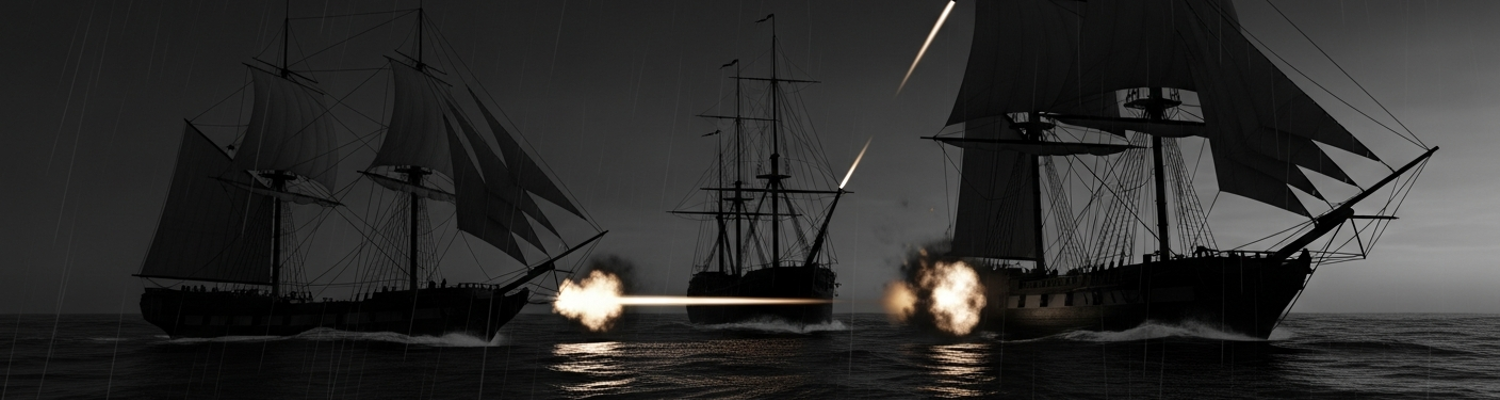
In the winter of 1775, the American rebellion faced a stark reality on the water. The Royal Navy, a leviathan of over 270 ships of the line and countless smaller vessels, held uncontested dominion over the Atlantic. Against this, the Continental Navy, formally established in October 1775, was a minnow. Its handful of converted merchantmen and hastily procured sloops could not hope to challenge British maritime supremacy in a fleet action. The colonies, however, possessed a different asset, a latent power rooted in their very economic existence. Their sprawling coastline was home to thousands of experienced mariners, captains, and shipwrights who crewed a vast merchant fleet. The Second Continental Congress, meeting in Philadelphia and grappling with the logistics of a full-scale war, saw an opportunity in this maritime population. It was a strategic calculation born of desperation and pragmatism. On March 23, 1776, Congress passed legislation that would weaponize the American merchant marine. It authorized the issuance of Letters of Marque and Reprisal, legal instruments that deputized private citizens to arm their vessels and wage war on British commerce.
This act was not piracy. It was a formal, state-sanctioned decentralization of naval warfare. The legal framework was precise, designed to distinguish a privateer from a freebooter. A prospective privateer captain or a consortium of investors, often prominent merchants from ports like Salem, Boston, or Philadelphia, had to post a substantial bond with Congress. These bonds, typically ranging from five to ten thousand dollars depending on the vessel's size, served as collateral against any breach of the rules of engagement. The instructions accompanying each Letter of Marque were explicit. They governed the treatment of prisoners, forbade attacks on neutral shipping, and, most critically, mandated that all captured vessels, or prizes, be brought before a state admiralty court. These courts, operating under maritime law, would adjudicate the capture. If the prize was deemed legitimate, meaning it was enemy property, the court would condemn it for sale. This legal process, signed off by figures like John Hancock as President of Congress, transformed a private vessel into a lawful combatant in the eyes of the rebelling colonies. It unleashed a force the Royal Navy was ill-prepared to counter. Congress ultimately issued around 1,700 such letters, licensing nearly 800 privately owned warships that swarmed the Atlantic trade routes. The strategy turned America's seafaring culture into a distributed, profit-driven, and highly motivated naval auxiliary.
Cutting Britain's Commercial Arteries
The privateers' mission was simple: inflict maximum economic pain. Their targets were not Royal Navy frigates but the soft-bellied merchantmen that formed the arteries of the British Empire. These ships carried sugar and molasses from the West Indies, manufactured goods from Liverpool, and military supplies for British forces in America. The campaign of commerce raiding was relentless and shockingly effective. By the war's conclusion, American privateers had seized between 1,700 and 2,000 British vessels. Some accounts push the number closer to 2,300. The direct financial loss to British merchants and insurers was staggering, estimated at £18 million, equivalent to several billion dollars in modern currency. The indirect effects were just as damaging. The constant threat of capture caused maritime insurance rates at Lloyd's of London to spike, sometimes increasing by over 25 percent for a single transatlantic voyage. British merchants, facing financial ruin, flooded Parliament with petitions demanding an end to the costly American war. The pressure mounted within Britain's powerful merchant class, creating a potent anti-war lobby that the government could not ignore.
This economic warfare was conducted by a generation of audacious sea captains who became legends in their home ports. Jonathan Haraden of Salem, Massachusetts, was one such commander. In October 1779, commanding the 16-gun privateer brigantine General Pickering, Haraden engaged and captured three armed British vessels in a single action off the coast of New Jersey. In another famous engagement in the Bay of Biscay, his smaller vessel fought the 42-gun British privateer Achilles for three hours, forcing the larger ship to break off the fight. Men like Haraden were masters of their craft, using the superior speed and maneuverability of their American-built ships, often Baltimore Clipper-style schooners, to outwit and overpower their prey. The business model fueling these operations was a powerful incentive. Once a prize was condemned by an admiralty court in a port like New London or Baltimore, the ship and its cargo were sold at public auction. The proceeds were split according to a pre-arranged contract. Typically, the owners and investors who financed the voyage took fifty percent. The remaining fifty percent was divided among the captain and crew, with shares allocated based on rank. A single successful cruise capturing a rich prize, like a West Indiaman laden with sugar, could yield a common sailor a fortune far exceeding what he could ever earn in the Continental Navy or Army. The lure of this wealth was a primary driver of the privateering enterprise, ensuring a steady supply of willing crews for the dangerous voyages.
A War Within a War and a Doctrine Forged in Profit
The very success of the privateering system created significant internal friction for the American war effort. The promise of prize money was a constant drain on the manpower available to the Continental Navy. Commanders like John Paul Jones, a commissioned naval officer who the British derisively labeled a privateer, grew immensely frustrated. Jones argued passionately for a disciplined, professional navy focused on strategic objectives, such as destroying enemy warships and projecting national power. He viewed privateering's profit motive as a corrupting influence that diverted the best sailors away from national service. In his letters, he complained that he could not properly man his ships for long, arduous campaigns against the Royal Navy because experienced seamen preferred the shorter, potentially more lucrative cruises on privateers. A sailor on Jones's ship might earn a few dollars a month, while a privateersman could earn a thousand dollars or more from a single captured prize. Congress attempted to manage this competition by requiring privateers to have crews composed of at least one-third landsmen, but the rule was widely ignored and nearly impossible to enforce in bustling port towns.
The competition extended beyond manpower. The outfitting of nearly 800 private warships placed an immense strain on the colonies' limited industrial base. The demand for cannons, gunpowder, sailcloth, timber, and rope drove up prices and created shortages that directly impacted the Continental Army and Navy. Shipyards that could have been building frigates for the nation were instead refitting faster, more profitable privateers. This internal conflict represented a war within a war, a constant tension between private gain and the public good. Yet, the strategic contribution of the privateers was undeniable. They did more than just damage the British economy. They forced the Royal Navy to reallocate its precious warships. Instead of maintaining a tight blockade on the American coast or seeking decisive fleet battles, British frigates and sloops-of-war were forced into the tedious but vital role of convoy escort. This diversion of naval strength was a strategic victory in itself, relieving pressure on the American coastline and on French allies. Privateers also captured critical military supplies. The early war capture of the British ordnance brig Nancy by Captain John Manley's privateer Lee provided George Washington's army with thousands of muskets and tons of ammunition, a windfall that came at a desperate time for the Continental Army besieging Boston.
The legacy of the Revolutionary War privateering campaign was deeply embedded in the formation of American naval doctrine. It was a powerful demonstration of guerre de course, or commerce raiding, as a potent asymmetric strategy. A weaker naval power, it proved, could effectively challenge a stronger one by attacking its economic lifelines rather than its battle fleet. This concept, a hybrid model using a small professional navy for key missions alongside a large force of commerce raiders, became a cornerstone of American strategic thinking for the next half-century. The doctrine was resurrected with success during the Quasi-War with France in the 1790s and again, to devastating effect, during the War of 1812. The gamble on privateering, a policy forged in necessity and fueled by profit, had paid off. It cemented an aggressive, opportunistic, and decentralized approach to naval warfare that defined the character of American sea power long after the revolution was won.