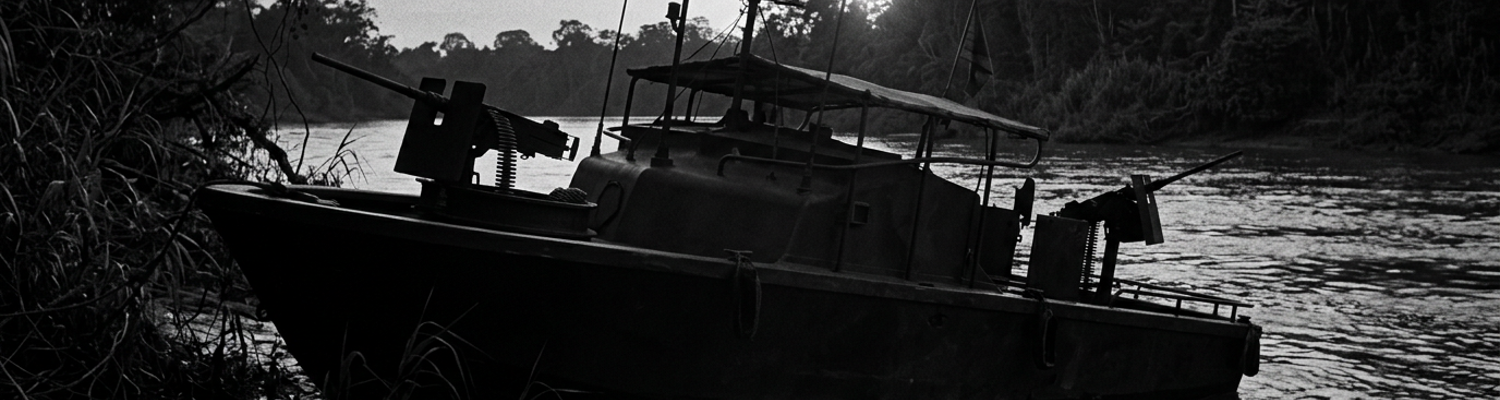

Viet Cong Infiltration Routes Toward Bien Hoa Air Base
Ten fiberglass boats. A wide river. A reinforced infantry regiment.
Operational logs from May 1968 detail the movement of the Viet Cong 275th Regiment. This main force element of the 5th Division began a coordinated march toward the northern approaches of Saigon. They moved from base areas in War Zone D. The regiment bypassed fortified road checkpoints. They exploited the dense network of tidal waterways threading through Bien Hoa Province. Squads broke down into small cells. They utilized camouflaged sampans and motorized dugouts to transit the Dong Nai River. Monsoon squalls provided cover.
Archival after action reports identify a specific transit corridor. The route followed the Rach Thi Tinh and surrounding canals. It funneled south toward Cu Lao Pho. This tear shaped river island sat directly adjacent to Bien Hoa city. The regiment carried heavy 82mm mortars. They transported Chinese Type 56 assault rifles. B-40 rocket propelled grenades were wrapped in rubberized ponchos. The rubber kept powder charges dry. Movement occurred between midnight and dawn. This schedule evaded aerial thermal sensors and scout helicopters. Vietnamese commanders calculated a specific timeline. By slipping through the confluence where the Song Be joins the Dong Nai, their battalions could establish assembly areas directly beneath allied radar coverage. They planned to arrive before daylight broke on May 5.
Surprise depended entirely on waterborne concealment.
A close review of operational logs indicates the proximity of Bien Hoa Air Base. The installation stood just three kilometers east of these water routes. It housed hundreds of strike aircraft parked in unreinforced revetments. Next to the airfield lay the Long Binh ammunition storage depot. This compound held thousands of tons of high explosives, artillery shells, and aviation fuel tanks. These supplies equipped Allied forces across III Corps. Engineers had built these sprawling compounds to resist landward infantry charges. Triple strand concertina wire lined the eastern boundaries. The western perimeter relied on the natural water barrier of the Dong Nai River.
Waterborne infiltration inverted this geographic defense.
Mortar teams firing from low profile rivercraft or hidden positions on Cu Lao Pho island could strike flight lines. They would never touch perimeter wire. Trajectory data plotted by base defense coordinators confirmed a severe threat. Standard 107mm rockets launched from the riverbanks could saturate the base operations center within ninety seconds of launch. Securing Cu Lao Pho meant the 275th Regiment could establish a permanent firing position. This would disable air combat sorties. It would also threaten commercial shipping lanes on the Long Tau River.
Allied defensive perimeters contained no physical barricades across the water.
Command authority over this aquatic gap fell directly to Task Force 116. This United States Navy river patrol force executed Operation Game Warden. Naval planners assigned River Division 572 a specific tactical mission. They were ordered to seal the Dong Nai corridor around Cu Lao Pho. RivDiv 572 deployed thirty one foot Mark II Patrol Boats. The unit faced severe operational constraints. Fiberglass hulls offered zero ballistic protection against armor piercing 7.62mm rounds. North Vietnamese units carried shaped charges. Dual Detroit 6V53N diesel engines drove Jacuzzi 14YJ waterjet pumps. These provided rapid acceleration and a top speed of twenty five knots. Floating vegetation frequently choked the intake grates in shallow marshlands. Task Force 116 tactical doctrine dictated continuous two boat patrols along designated sectors. Crews conducted stop and search procedures against civilian river traffic by day. They enforced strict free fire curfews by night.
Crews armed with twin forward mounted .50 caliber machine guns monitored miles of braided channels. An aft M60 station and an Mk 18 grenade launcher provided rear defense. Visual range dropped to zero around every bend. Orders dispatched to RivDiv 572 on May 5 instructed crews to maintain a permanent floating blockade around the island perimeter. They were authorized to halt every moving vessel with lethal force.
Patrol instructions mandated that every boat run blacked out. They drifted with the current alongside the mudbanks. Radar antennas were switched off to preserve tactical surprise.
Vulnerabilities of the Mark II Patrol Boat River
Archival evidence shows the engineering priorities of the thirty one foot hull. United Boatbuilders in Bellingham, Washington, designed the craft for lightweight speed. Ballistic survivability was not a factor. The outer shell consisted of layered sheets of fire retardant fiberglass reinforced plastic. It measured less than one half inch thick along the waterline. Ceramic boron carbide composite panels shielded specific areas. These included the coxswain console, engine hatches, and forward gun tub. The rest of the vessel offered no resistance to incoming projectiles.
A standard Viet Cong B-40 rocket propelled grenade carried a PG-2 shaped charge warhead. It detonated immediately upon impact with the laminate skin.
The resulting copper plasma jet pierced the hull at eight thousand meters per second. The impact shattered the resin matrix into thousands of sharp fiberglass splinters. These fragments cut down exposed crewmen across the open deck. Bilge pumps rated at twenty five gallons per minute were instantly overwhelmed. A shaped charge warhead routinely blew a foot wide hole beneath the water line.
The craft carried four men and several thousand pounds of ordnance without armor plating.
A close review of operational logs indicates survivability rested entirely upon engine output. The propulsion train possessed its own fatal failure points. Two Detroit Diesel 6V53N naturally aspirated two stroke marine engines provided power. Each generated 216 horsepower at 2,800 revolutions per minute. These diesels did not run standard shafts and external rudders. They drove twin Jacuzzi Brothers 14YJ axial flow waterjet pumps. Water rushed through bottom grates. It discharged through steerable stern nozzles at twenty five knots. This design eliminated exposed underwater appendages that could catch on submerged logs. Mechanical steering cables routed from the coxswain station directly shifted the deflector buckets. This dictated heading and reverse thrust.
If an AK-47 round penetrated the fiberglass engine cowlings, the systems failed. The thin walled aluminum heat exchangers and exposed copper raw water cooling tubes ruptured immediately. Loss of raw water overheated the cast iron cylinder heads within ninety seconds. The block warped. The crankshaft locked. The drive couplings froze.
A disabled engine stripped the boat of steerage and defensive speed.
Riverbed topography around Cu Lao Pho created mechanical hazards. These exacerbated equipment weaknesses. Commander, Naval Forces Vietnam instructions mandated a strict operational limit. PBRs had to maintain a minimum operating depth of four feet during combat patrols. Jacuzzi waterjets acted as high volume suction pumps. They cycled over three thousand gallons of river water each minute through the hull. Across the Dong Nai estuary, twice daily tidal shifts dropped the water level by nearly two meters. This exposed wide mudbanks and shifting sand shoals around the perimeter of the island.
A coxswain sometimes cut inside the navigation channel to pursue a sampan into marsh shallows. The intake grates drew thick riverbed silt directly into the pump housings. Coarse quartz sand ground away the soft brass wear rings. It chewed down the clearances of the stainless steel impellers. Loss of water seal triggered instantaneous cavitation. Engine RPM spiked to redline. Actual jet thrust dropped to zero.
Clearing choked grates required sailors to lean fully over the exposed stern. They worked hand held cleanout tools through the jet nozzles. The boat drifted helplessly with the current under direct small arms fire.
The Tactical Gamble in the Rach Cat Channel
Archival evidence shows a specific command decision on the morning of May 8, 1968. Task Force 116 commanders issued an order violating standing shallow water navigation directives. Commander, Naval Forces Vietnam had established these rules. Fleet regulations strictly prohibited Mark II Patrol Boats from entering channels with water depths under four feet. This operational limit was designed to prevent jet pumps from inhaling riverbed sediment. Aerial reconnaissance confirmed elements of the Viet Cong 275th Regiment were bypassing the main Dong Nai channel. They slipped small wooden sampans through the unmonitored shallows of the Rach Cat to reach Cu Lao Pho island.
Tactical commanders faced an uncompromising mathematical dilemma.
Pulling back to keep the four foot safety margin left a three kilometer corridor wide open to enemy mortar squads. Ordering patrol boats into the secondary cuts risked stranding entire sections. Task Force 116 staff discarded the safety directives. They formally instructed River Division 572 to force their fiberglass hulls directly into the un-dredged creek beds.
Safety margins were abandoned to prevent the bombardment of Bien Hoa Air Base.
A close review of operational logs indicates patrol sections pushed into the western reaches of the Rach Cat channel. Soundings showed water depths falling below thirty inches. Detroit 6V53N diesel engines were throttled down to minimum continuous revolutions. This reduced bow wave formation and prevented suction cavitation. Dense stands of nipa palm crowded both shores. Visibility was restricted to twenty meters. Extreme blind spots existed at every meander. Insurgent logistical teams utilized these narrow tidal corridors. They transported 82mm mortar tubes, heavy baseplates, and crated rocket ordnance aboard double hulled sampans. These wooden craft drafted only six inches of water.
Pairs of PBRs stationed directly across the un-dredged shallows. They did not remain on deep water patrol loops. RivDiv 572 cut the primary waterborne artery connecting northern base areas with Cu Lao Pho. Crews established ambush sectors across the creek bends. They positioned bow guns toward the center of the muddy flow.
Low water turned the channel floor into a trap of thick sediment.
The downstream tidal drop across the Bien Hoa basin pulled five vertical feet of water out of the Rach Cat within a four hour window. Jacuzzi 14YJ axial flow pumps immediately ingested bottom mud. Abrasive river sand drove directly into the internal pump housings. Coarse quartz particles stripped the bronze wear rings. Running tolerances widened. Sudden thrust failure followed. Silt packed into the copper raw water cooling tubes. Rapid engine overheating forced mechanics to shut down the Detroit diesels before cylinder blocks warped.
Task Force 116 commanders had anticipated these mechanical casualties. They accepted hull groundings as a deliberate tactical tradeoff. Sitting immobilized in forty centimeters of soft clay, the PBRs lost maneuverability. They maintained full electrical and battery power to run their primary weapon stations. Crews turned their stranded vessels into stationary armored bastions resting directly on the mudflats.
Records from the May 8 engagement establish the effectiveness of the stranded boats. They sealed the southwest approaches to Cu Lao Pho through continuous interlocking fire. Gun mounts tracked across the mudbanks. They swept thirty foot arcs with forward twin .50 caliber heavy machine guns. Aft gunners engaged creeping infantry using pintle mounted M60s and Mk 18 grenade launchers. PBR crews fired over eight thousand rounds of belted .50 caliber ammunition into the nipa palms. They destroyed seven camouflaged transport sampans. The 275th Regiment halted at the water line.
Hull groundings prevented the boats from pursuing fleeing squads. The physical presence of the heavy machine gun stations across the tidal mud blocked the infiltration corridor entirely. High tide refloated the hulls at 1700 hours. RivDiv 572 held the channel without losing a single vessel.
Mechanical Failures of Jacuzzi 14YJ Waterjet Pumps
Archival evidence shows the mechanical vulnerability of River Division 572 stemmed directly from internal architecture. The Jacuzzi Brothers 14YJ axial flow pump was engineered originally for civilian recreational craft. Each pump drew water through an intake screen flush against the bottom of the hull. It channeled the fluid through a mixed flow impeller rotating at over two thousand revolutions per minute. Across the shallow bed of the Rach Cat, this suction pulled continuous plumes of suspended laterite mud off the river floor.
Heavy sediment mixed with fibrous submerged mangrove roots. These slipped through the intake grate bars. Bronze and stainless steel impeller blades shredded the softer organic debris. The pulped root fibers packed into the tight gap between the blade tips and the stationary pump housing. Laterite clay acted as an industrial grinding paste. It scoured away the protective coatings inside the pump bowl. Accumulated debris soon jammed the rotating assembly. The drive coupling splines sheared. The Detroit diesel stalled outright.
Suction turned the river bottom into a destructive force inside the machinery.
A close review of operational logs indicates extreme tidal fluctuations in the Rach Cat. These provoked immediate hydrodynamic breakdown across both propulsion lines. Soundings during low water plunged below thirty inches. The boat draft dropped dangerously close to the exposed mudbanks. Starved of solid water volume, the intake grates ingested air pockets alongside river froth. This triggered violent waterjet cavitation. Vapor bubbles formed across the low pressure suction faces of the impeller blades. They collapsed with thousands of pounds of concentrated force against the metal surfaces. Hull vibration spiked. The diesel engines began free wheeling toward their maximum governors without water resistance.
Directional steering on the Mark II PBR depended exclusively on the vector of the pressurized water stream. This stream expelled through the aft discharge nozzle. The boats lacked a traditional rudder. When cavitation eliminated pump thrust, hydraulic steerage collapsed instantly. Currents grabbed the flat fiberglass bottoms. The disabled boats slewed broadside across the narrow channel directly into the waiting fields of fire.
Without water pressure against the deflector nozzles, the helm went dead.
Restoring pump operation required boat crews to execute high risk maintenance. They were immobilized under direct enemy observation. Access to each Jacuzzi 14YJ housing existed only through an aft inspection hand hole. This was positioned directly beneath the transom deck outside the hull. Enginemen stripped their body armor. They crawled out over the unarmored stern to unbolt the water tight access plates with hand wrenches. Viet Cong snipers operating along the Rach Cat tree line targeted these exposed stern quarters with 7.62mm fire. They knew a grounded boat could not maneuver.
Working blind, mechanics thrust their bare arms into the jet discharge passages. They sliced away packed mangrove roots with combat knives. They clawed out handfuls of clay from around the seized impellers. Forward gunners kept up continuous cyclic fire from the twin .50 caliber mounts. This suppressed incoming fire while the boat settled into the mud. Records detail mechanics submerged to their chests in brackish water. They cleared intake screens by hand beneath the hull before the falling tide left the vessel stranded on an exposed shelf.
The entire cleanout had to be completed in four minutes. Engine heat locked the shaft seals permanently after that window closed.
Point-Blank Rocket Ambushes and Combat Trauma
Archival evidence shows Viet Cong ambush teams along the Rach Cat and Dong Nai waterways engaged River Division 572 at ranges under twenty five yards. Gunners from the 275th Regiment concealed themselves inside reinforced spider holes dug beneath the root systems of nipa palms. They fired Chinese manufactured B-40 rocket propelled grenades directly into the Mark II patrol boats as they drifted past channel chokepoints.
When a PG-2 warhead struck the hull, its nose mounted fuze detonated four tenths of a pound of high explosive compound within microseconds.
The resulting shaped charge jet burned through the three eighths inch resin and woven roving fiberglass bulkheads without resistance. The blast did not create a clean perforation. It ignited the polyester resins. The interior compartments instantly filled with dense black toxic smoke. In several instances along the Cu Lao Pho perimeter, rockets passed straight through the unarmored midships spaces. They severed 12 volt copper electrical harnesses. They cut rubber fuel return lines before detonating against the far side bulkhead. Flooding occurred within seconds. Torn hull laminate delaminated under the hydrodynamic suction generated by passing water currents.
A single shaped charge jet cut clean through both fiberglass gunwales.
Sailors operating the forward twin .50 caliber machine gun tub sustained severe blast injuries during these close range firefights. The gun mount rested inside a circular tub. Quarter inch boron carbide ceramic plates protected it. These extended only to mid chest height. The gunner's upper torso and head were completely exposed to incoming fire. Detonations of incoming B-40 rounds against the tub rim or gun shields produced violent overpressure waves. These rebounded inside the confined curved structure.
Gunners suffered ruptured eardrums. Severe blast induced concussions followed. Temporal lobe contusions caused sudden spatial disorientation while trying to track bank targets. Steel fragments from exploding RPG casings and sheared brass rivets from the gun cradle ricocheted within the tub cavity. They struck gunners across the neck and arms despite their standard issue nylon flak vests. The cyclic discharge of dual Browning M2 heavy barrels fired eight hundred rounds per minute within an enclosed metal tub. This delivered sustained acoustic shock exceeding one hundred and sixty decibels. Bleeding from the ears, loaders collapsed onto spent .50 caliber brass casings. They were unable to hear fire commands shouted over the engine noise.
Concussion waves trapped inside the gun tub knocked sailors unconscious at their triggers.
A close review of operational logs indicates the physical environment of the Cu Lao Pho cordon broke down crew endurance. This occurred after seventy two continuous hours on the water. Temperatures along the Dong Nai River hovered above ninety five degrees Fahrenheit. Humidity exceeded ninety percent. Boat crews were trapped inside heavy ceramic body armor and steel helmets. Stagnant creek air concentrated the chemical fumes produced by thousands of spent nitrocellulose propellant charges. This blended with unburned diesel exhaust billowing from low idling Detroit 6V53N engines.
Spilled fuel from perforated tanks coated the water surface in thin oil films. This ignited under tracer fire. Crewmen were exposed to continuous petroleum vapor inhalation. Entangled in this polluted air mass, sailors experienced acute combat fatigue. Symptoms included severe muscle tremors, uncontrollable vomiting, and auditory hallucinations. Sleep deprivation compounded these physical breakdowns. Constant sniper fire and mortar impacts prevented crews from resting even when boats rotated back to mid river anchorages. Combat efficiency dropped sharply. Dehydration and carbon monoxide exposure degraded motor reflexes during high speed maneuvering.
Physical exhaustion incapacitated boat crews faster than enemy rifle fire.
Medical evacuation reports filed by Task Force 116 during the second week of May 1968 document specific trauma patterns. Over sixty percent of RivDiv 572 casualties evacuated to the 24th Evacuation Hospital at Long Binh exhibited primary blast trauma and toxic inhalation rather than penetrating bullet wounds. Field surgeons treated sailors who displayed bilateral tympanic membrane perforations. Chemical burns caused by diesel fuel saturating their uniforms inside swamped bilges were common. Three Mark II hulls towed back to the repair barge at Nha Be contained pools of standing water mixed with twelve gallons of spilled diesel fuel and hundreds of spent cartridge links.
Operational Impact of the Cu Lao Pho Cordon
Archival evidence shows the interdiction maintained by River Division 572 broke the offensive timetable of the Viet Cong 275th Regiment. This occurred during the opening phases of the May Offensive. Over forty eight hours of continuous contact, the regiment lost twelve transport sampans. Three 82mm mortar assemblies were destroyed. Over ninety combatants died along the tidal mudbanks of the Rach Cat and Rach Dong Nai.
Cut off from their staging points on Cu Lao Pho island, the surviving battalions failed to establish dry foot mortar pits within striking range of Bien Hoa Air Base. Base perimeter defense records confirm zero 107mm rockets struck the primary aircraft parking revetments or the Long Binh ammunition dump from the western approaches between May 8 and May 12. Deprived of waterborne supply lines, the 275th Regiment fragmented into squad sized units. They pulled back toward safe zones in War Zone D without establishing fire support bases along the river loop. Intelligence debriefs from captured logistics cadres confirmed a specific operational goal. Commanders had counted on an open river corridor to transport thirty thousand rounds of small arms ammunition into Bien Hoa city.
The air base perimeter held.
River Division 572 validated an aggressive, unauthorized tactical doctrine. They used mobile patrol craft as grounded, static blockhouses. Task Force 116 staff officers had long treated Mark II PBRs strictly as interceptors. They required open water and high speeds to survive hostile ambushes. Beaching fiberglass boats in thirty inches of tidal mud had been viewed as operational suicide. Ground level combat data from the Cu Lao Pho cordon demonstrated a new capability. Twin .50 caliber gun tubs and aft Mk 18 grenade launchers could suppress dug in infantry positions from fixed, partially submerged firing points.
The tactic exacted an extreme mechanical toll. Operating within the churning silt completely destroyed twelve Jacuzzi 14YJ pump assemblies across RivDiv 572. Impellers were stripped down to bare hubs. Wear rings were scoured past manufacturer tolerances. Seven Detroit 6V53N diesel engines suffered severe cylinder head warping from clogged raw water intakes. Fleet commanders acknowledged the tradeoff. Accepting total propulsion loss in exchange for holding channel chokepoints succeeded in denying waterways to organized regimental crossings.
Engines were traded for geography.
A close review of operational logs indicates Commander, Naval Forces Vietnam issued immediate revisions to riverine standing operating procedures. These changes occurred in the weeks following the battle. Revised Task Force 116 directives prohibited Mark II PBRs from idling in waters under five feet during falling tides unless actively engaging fortified enemy troop movements. Naval engineers introduced mandatory post patrol back flushing cycles for all Jacuzzi 14YJ waterjet systems. Crews were required to blast high pressure freshwater through discharge nozzles. This purged abrasive river sand before engine restart.
Maintenance depots at Nha Be and Cat Lo established forty eight hour overhaul rotations. These were designed specifically to inspect pump clearances. Bronze wear rings were replaced whenever gaps exceeded twenty thousandths of an inch. Field mechanics received specialized long handled cleanout rakes. These tools pulled submerged brush from exterior grates without requiring sailors to hang over the transom while exposed to small arms fire. Bilge pump capacities were expanded from twenty five to fifty gallons per minute. This countered water intake from hull fractures sustained during grounding maneuvers.
Maintenance schedules shifted from calendar intervals to operating hours logged in silty water.
Records from the Naval Support Activity Saigon repair barges detail the fabrication of modified intake grates. These were made from reinforced steel bar stock. They were designed to block fibrous mangrove root mats from entering the impeller bowls. Patrol craft operating along the upper Dong Nai received secondary water temperature gauges. These were wired directly to the coxswain dashboard to alert pilots to raw water intake blockages before exhaust manifolds warped. Task Force 116 incorporated shallow water grounding defense drills into training curriculums at Vallejo, California. Instructors ordered crews to train weapons along mudbanks the instant waterjet thrust failed. RivDiv 572 returned to regular operations on May 24 with eight refitted hulls. Four damaged boats remained drydocked on YRBM-16 repair barges. They awaited replacement fiberglass bottom skins and newly cast stainless steel pump impellers.