
Strategic Scope of Operation Linebacker II
On December 14, 1972, the National Command Authority gave the Joint Chiefs of Staff exactly seventy-two hours to initiate a heavy bomber offensive. Archival evidence shows this compressed timeline bypassed standard operational planning cycles entirely. The ticking clock forced Eighth Air Force commanders at Andersen Air Force Base in Guam and U-Tapao Royal Thai Navy Airfield to condense a three-week deployment schedule into three days. Planners hand-drew flight routing charts. Ground crews loaded thousands of 500-pound Mark 82 bombs onto aircraft hardpoints.
Strategic Air Command deployed over 200 B-52 heavy bombers for Operation Linebacker II.
A close review of operational logs indicates the fleet comprised 153 older B-52D models and 54 newer B-52G models. The 43rd Strategic Wing and the 72nd Strategic Wing Provisional managed the Guam operations. The 307th Strategic Wing launched out of Thailand. Ground crews pushed the mechanical limits of the airframes to meet the deployment quota. Maintenance squadrons worked consecutive twenty-four-hour shifts. Mechanics repaired persistent hydraulic leaks. Technicians calibrated navigation systems. Support personnel replaced worn Pratt and Whitney J57 turbojet engines under the tropical sun.
The B-52G models arrived in theater without the upgraded AN/ALQ-117 electronic countermeasures equipment.
This missing hardware left them exposed to radar-guided threats. Command knew about this vulnerability. Generals dismissed it in the rush to launch. Parking density on the Andersen tarmac created severe ground traffic bottlenecks. Aircraft sat wingtip to wingtip. Base infrastructure struggled to provide the millions of gallons of JP-4 jet fuel required daily. A single failed nose-gear tire on a taxiway routinely delayed an entire three-ship cell of bombers by forty-five minutes. This threw off the synchronized launch sequence demanded by Omaha.
Flight engineers logged multiple radar warning receiver failures while the bombers still sat on the flight line.
The operation targeted industrial and military infrastructure around Hanoi and Haiphong. Target specialists focused specifically on Route Package 6. They designated the Yen Vien rail yards, the Kinh No storage complex, the Gia Lam rail repair shops, and the Hanoi thermal power plant as primary destruction zones. Air defense battalions of the North Vietnamese military concentrated over two hundred SA-2 Guideline surface-to-air missile sites across the Red River Delta. Soviet-built Fan Song engagement radars and Spoon Rest early warning systems overlapped to form an unbroken radar coverage zone.
Strategic Air Command headquarters dictated the approach routes from thousands of miles away.
Staff officers in Omaha mandated rigid, single-file flight paths to maximize the radar-jamming effects of deployed chaff corridors. They actively ignored classified warnings from Monkey Mountain signals intelligence analysts regarding the enemy ability to track these predictable formations. The targeting coordinates required the bomber streams to fly directly into crossfire zones pre-sighted by the 261st and 267th Air Defense Regiments.
Personnel at the Monkey Mountain facility in Da Nang intercepted North Vietnamese communications detailing the exact altitudes and headings of the incoming bomber streams. The SIGINT analysts attempted to route these intercepts through the Seventh Air Force command structure to warn the B-52 crews. Bureaucratic protocols required all tactical changes to be approved by Strategic Air Command headquarters. Omaha refused to alter the flight plans. General officers argued that deviating from the established coordinates would disrupt the timing of the F-4 Phantom escort fighters and the EB-66 electronic warfare aircraft.
Strike commanders filed the intelligence reports away unread.
Monkey Mountain Signals Intelligence Operations
A close review of operational logs indicates that the Son Tra Peninsula housed the most highly classified signals intelligence outpost in Southeast Asia. This was a 2,230-foot peak jutting into the South China Sea just northeast of Da Nang. Navy and Marine Corps intercept facilities on Monkey Mountain provided real-time signals intelligence directly impacting the bomber streams. Naval Security Group Activity personnel operated alongside cryptologic linguists from the Marine Support Battalion Company L. They worked inside heavily fortified, windowless concrete blockhouses.
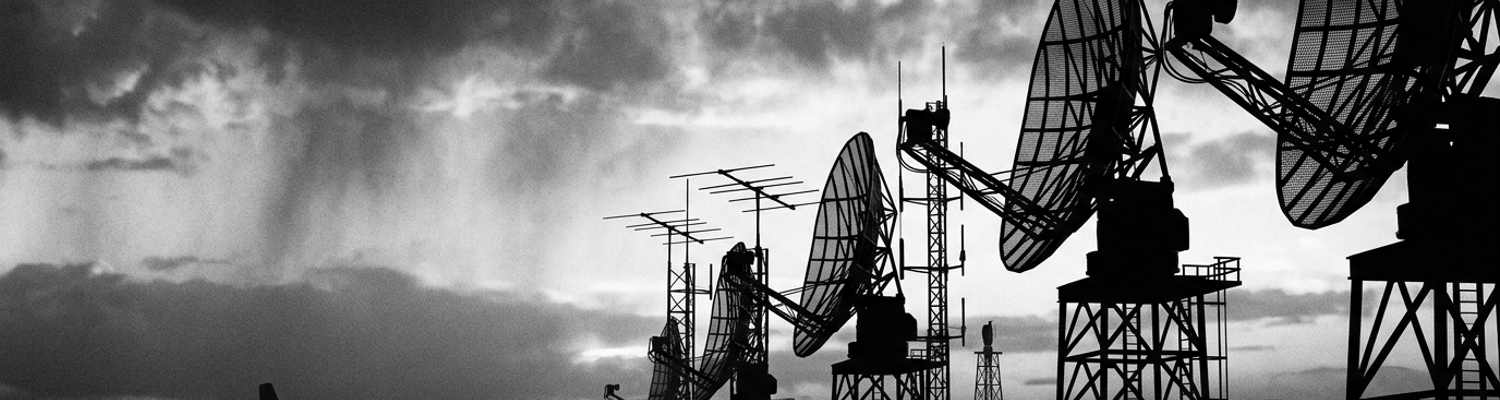
These joint-service teams utilized massive directional antenna arrays.
Operators intercepted high-frequency, very-high-frequency, and ultra-high-frequency radio transmissions originating from North Vietnamese ground control centers. Equipment degradation was constant. Salt-laden coastal air and ninety percent tropical humidity routinely short-circuited the AN/PRD-1 direction-finding sets. The moisture degraded the fragile vacuum tubes within the receiver banks. Maintenance technicians ran industrial dehumidifiers twenty-four hours a day. This prevented the electronic components from completely failing during heavy intercept periods. Parts shortages forced technicians to cannibalize broken radio frames to keep the primary intercept networks functioning.
Cooling system breakdowns regularly forced operators to strip off their uniform blouses. They worked in undershirts while manually tuning the receiver dials.
Archival evidence shows that the intelligence gathered by these Navy and Marine specialists mapped the exact North Vietnamese defensive posture minute by minute. Linguists translated intercepted voice communications from MiG fighter bases at Phuc Yen and Kep. Analysts identified scramble orders and flight vectors before the enemy aircraft even left the runway. Inter-service rivalry immediately degraded the utility of this data. Strategic Air Command generals in Nebraska viewed intelligence originating from Naval and Marine Corps assets with heavy skepticism. They preferred to rely on their own organic reconnaissance platforms. Air Force planners at the Seventh Air Force headquarters at Tan Son Nhut Air Base demanded exclusive control over the threat warning distribution network.
This command friction meant that verified intercepts detailing North Vietnamese ambush vectors sat in teletype queues.
They awaited inter-service validation rather than being broadcast directly to the vulnerable B-52 cells approaching the Red River Delta. The Air Force insisted on routing all warnings through their own airborne command and control platforms. This added another layer of transmission delay to the process. Ground relays monitored North Vietnamese Fan Song radar guidance frequencies associated with SA-2 surface-to-air missile sites. The Soviet-supplied SNR-75 Fan Song engagement radars emitted highly specific electronic signatures in the E-band and F-band ranges. They operated between 2965 and 3050 megahertz.
Analysts on Monkey Mountain stared at green cathode-ray oscilloscopes.
They needed to detect the exact moment a Fan Song shifted from a wide-area acquisition mode to a narrow target-tracking mode. When the radar locked onto a B-52, the pulse repetition frequency spiked dramatically. This altered the visual waveform on the monitors. This spike signaled an imminent SA-2 Guideline missile launch. Electronic warfare officers inside the blockhouses documented these frequency shifts down to the microsecond. They logged the precise geographic coordinates of the active missile batteries based on triangulation data from secondary listening posts positioned along the Laotian border. The technicians cross-referenced these electronic emissions against known deployment patterns of the 261st Air Defense Regiment.
Operators tracked the uplink command signals guiding the 35-foot-long missiles toward the bombers.
When examining the historical record, the mechanical process of transmitting this early warning data proved entirely inadequate for the speed of modern air combat. The ground relays depended on secure teletype networks encrypted by KW-26 mechanical cipher machines. Operators typed the Fan Song frequency shifts and missile launch warnings onto punched paper tape. They fed the tape through a mechanical reader. They transmitted the encrypted burst to a relay station in Thailand. The receiving station decrypted the message, printed it, and handed it to an Air Force liaison officer.
This officer evaluated the intelligence against Strategic Air Command parameters before authorizing a radio broadcast to the airborne command post.
A standard SA-2 missile traveling at Mach 3 took approximately forty-five seconds to reach a B-52 cruising at thirty-five thousand feet. The inter-service validation process and the mechanical limitations of the teletype relays required a minimum of three minutes to complete the data transmission cycle from detection to cockpit warning. Bomber crews over Hanoi received the missile launch warnings two minutes after the warheads had already detonated.
Encryption Mismatches and Tactical Signal Delays
When examining the historical record, the electronic infrastructure supporting the bombing campaign fractured along rigid service lines. USAF Seventh Air Force command centers and Navy Task Force 77 carrier groups utilized completely incompatible radio encryption protocols. Task Force 77 warships anchored at Yankee Station near coordinates 19 degrees North 107 degrees East. They equipped their aircraft with the KY-28 NESTOR secure voice communications system. Naval Security Group personnel generated and distributed the daily cryptographic key lists for these heavy, vacuum-tube-based units.
Seventh Air Force fighter wings flying out of Udon Thani and Korat Royal Thai Air Force Bases carried the exact same KY-28 hardware.
The National Security Agency provided the keying material for the Air Force units through entirely separate administrative channels. Cryptographic custodians loaded the daily cipher variables using KYK-28 mechanical fill devices. These devices could not accept cross-branch security parameters. This administrative separation guaranteed that Navy and Air Force pilots flying in the same airspace could not decode secure transmissions from the other branch.
A Navy EA-3B Skywarrior electronic intelligence aircraft detected an active North Vietnamese Fan Song radar array near the Yen Vien rail yards.
The crew broadcast a threat warning using their daily Navy cipher. Air Force F-4D Phantom escort fighters flying ten miles away heard only heavily distorted static bursts on their UHF frequencies. To pass the warning, the Navy electronic warfare officer had to switch to an unencrypted channel. This exposed the intelligence to Soviet AGI intelligence trawlers monitoring the Gulf of Tonkin. If the crew chose to maintain operational security, they routed the message back to the USS Long Beach guided-missile cruiser. Combat information center personnel on the cruiser then fed the data into a KW-7 teletype machine to generate a physical message for Air Force headquarters.
Tactical warning advisories became stranded in bureaucratic clearance loops before reaching airborne strike cells.
At the Seventh Air Force Tactical Air Control Center located at Tan Son Nhut Air Base, duty officers received the decoded Navy threat warnings on strips of perforated paper tape. Standard operating procedure strictly prohibited these officers from broadcasting the intelligence directly to the B-52D and B-52G formations approaching the Red River Delta. Communications technicians had to rip the five-level Baudot code tape from the teletype machines. They translated the text into standard operational reports. Junior officers then hand-carried the printed intercepts across the windowless operations floor to the Strategic Air Command Advanced Echelon liaison desk.
General officers in Omaha demanded total control over the bomber formations.
They required their own liaisons to validate all external intelligence. The Strategic Air Command officers initiated a secondary verification process to confirm the Navy threat data against their own pre-mission briefing documents. A close review of operational logs indicates this redundant protocol consumed an average of four to seven minutes per intercept. Once the liaison officer signed the authorization form, a communications specialist encrypted the warning using an Air Force KY-8 secure voice terminal. The operator transmitted the data via high-frequency radio to an EC-135 airborne command post orbiting continuously over the Gulf of Tonkin.
The EC-135 crew manually logged the coordinates, switched to a designated ultra-high-frequency channel, and relayed the warning to the specific three-ship bomber cell under threat.
A North Vietnamese SA-2 Guideline missile traveling at Mach 3 required exactly forty-five seconds to reach an altitude of thirty-five thousand feet. During the heavy strikes of December 20, the 261st Air Defense Regiment fired over forty missiles at the inbound bomber streams. The mechanical transmission sequence and the mandatory liaison approvals mathematically guaranteed the intelligence arrived too late. B-52 electronic warfare officers logged the incoming missile radar locks on their ALR-20 panoramic receivers while the ground-based threat warnings were still awaiting a signature on a desk in Saigon.
Electronic Countermeasure Synchronization Failures
A close review of operational logs indicates the electronic warfare officers operating inside the pressurized aft compartments of the B-52D models relied on a complex array of vacuum-tube technology to survive. These officers sat facing a wall of AN/ALT-22 and AN/ALT-28 jamming transmitters. They monitored the electronic environment through an ALR-20 panoramic receiver. The North Vietnamese 261st Air Defense Regiment constantly shifted the operating frequencies of their SNR-75 Fan Song radars to avoid this jamming.
To counter these shifts, the bomber crews needed exact, real-time frequency readouts from the Monkey Mountain signals intelligence facility.
Bureaucratic routing delays through the Seventh Air Force command centers meant these updates consistently failed to reach the electronic warfare officers in time to calibrate their jamming gear. An intercepted Fan Song frequency jump from 2990 megahertz to 3025 megahertz took up to seven minutes to clear the teletype relays and reach the airborne EC-135 command post for broadcast. Manual calibration of the transmitters required the officers to physically rotate heavy selector knobs to match the delayed data. Archival evidence shows this time lag rendered the airborne electronic countermeasures completely ineffective during the heaviest missile barrages.
When a North Vietnamese radar operator switched to a narrow target-tracking mode near the Kinh No storage complex, the Monkey Mountain analysts immediately logged the specific pulse repetition frequency.
The analysts fed this data into their KW-26 cipher machines. The warning processed through the inter-service verification loop in Saigon before transmitting to the Gulf of Tonkin. By the time the EC-135 radio operator transmitted the new frequency parameters over the ultra-high-frequency channel, the North Vietnamese radar had already locked onto the bomber and launched an SA-2 Guideline missile. The electronic warfare officer in the targeted B-52 manually dialed the AN/ALT-22 jammers to the broadcast frequency. They attempted to project radio frequency noise at the incoming weapon.
The ground-based radar operators had already shifted to a completely different frequency band to guide the weapon through its final ascent phase.
Bomber crews pumped maximum electrical power into jamming transmitters that were projecting radio frequency noise into empty spectrums. Unsynchronized electronic countermeasure arrays left entire strike cells vulnerable to active SA-2 missile guidance tracks. Strategic Air Command doctrine mandated that bombers fly in tight, three-ship formations designated by callsigns like Snow, Ivory, or Cobalt. This spacing theoretically allowed the individual airframes to overlap their jamming signals. This created a continuous, mutually supporting electronic noise barrier against ground radar.
Because the frequency updates arrived late and fragmented, individual electronic warfare officers within the same three-ship cell began guessing at the enemy radar parameters.
The officer in the lead aircraft dialed his transmitters to the E-band range. The officer in the trail aircraft shifted his output to the F-band range. This lack of coordination opened massive gaps in the overlapping noise barrage. Fan Song radar beams penetrated these unprotected gaps in the electronic spectrum. This allowed the Soviet-built tracking computers to isolate individual bombers against the background clutter. A single uncoordinated jammer exposed all three aircraft in the formation to continuous radar locks.
When examining the historical record, the physical consequences of these synchronization failures occurred at thirty-five thousand feet over the Gia Lam rail yards.
The 35-foot-long V-750 missiles rode the unjammed radar beams directly up through the center of the broken electronic formations. Ground controllers steered the weapons precisely into the gaps left by the mismatched AN/ALT-28 transmitters. The proximity fuzes inside the SA-2 warheads detected the massive radar cross-section of the B-52 airframes. The 430-pound fragmentation warheads detonated exactly where the unsynchronized electronic noise failed to mask the radar returns. This drove thousands of steel splinters through the aluminum skin, hydraulic lines, and jet fuel tanks of the bombers.
Environmental Degradation of Relay Hardware
A close review of operational logs indicates the physical geography of the Son Tra Peninsula actively dismantled the American signals intelligence infrastructure. Naval Security Group personnel stationed at the 2,230-foot summit of Monkey Mountain operated entirely exposed to the weather patterns of the South China Sea. Winter monsoon winds drove highly concentrated salt spray directly into the unprotected mechanical housing of the direction-finding antenna arrays. This constant influx of airborne sodium chloride mixed with ninety-five percent ambient humidity to accelerate rapid oxidation across all exposed steel surfaces.
The high-frequency gear assemblies suffered the most severe damage.
Azimuth drive motors designed to rotate heavy intercept antennas continuously seized as rust fused their internal ball bearings. Technicians from the Marine Support Battalion Company L documented severe pitting on the brass coaxial cable connectors linking the exterior masts to the interior receiver banks. Corrosion weakened the carbon steel teeth on the primary rotation gears until the torque of the drive motors sheared the metal flat. Maintenance crews exhausted their monthly supply of industrial lubricants in three days.
When the automated rotation motors burned out from the friction of grinding rusted gears, operations officers ordered enlisted personnel onto the roof.
They manually turned the heavy aluminum arrays. Archival evidence shows these Marines stood in driving rainstorms at coordinates 16 degrees North 108 degrees East. They physically pushed the antenna masts to track the shifting radio frequencies of North Vietnamese MiG bases. The dampness penetrated the heavy rubber weather seals on the exterior junction boxes. This short-circuited the primary power relays and forced the station to rely on erratic diesel generators. Voltage spikes from these generators fed directly into the windowless concrete blockhouses housing the primary intercept equipment.
Ambient temperatures inside these unventilated bunkers routinely exceeded one hundred and ten degrees Fahrenheit.
Overheating inside these tropical ground stations triggered catastrophic failure rates across the entire electronic intercept network. Analysts relied on tightly packed racks of R-390A high-frequency receivers and KW-26 mechanical cipher machines to process the Fan Song radar emissions originating from the Red River Delta. These heavy metal chassis contained hundreds of fragile glass vacuum tubes generating continuous secondary heat. The thermal buildup inside the blockhouses caused the glass envelopes of the 12AX7 and 6AL5 tubes to fracture at the base pins. Extreme temperatures warped the internal metal grid structures. This created direct electrical shorts that instantly destroyed the components.
Cathode depletion accelerated exponentially in the sweltering environment.
Electronic warfare officers logged multiple critical SIGINT relay failures per hour as primary receiver banks went completely dead mid-transmission. Base commanders authorized the removal of all protective metal casing from the receivers so technicians could point industrial floor fans directly at the glowing glass tubes. This ad hoc ventilation drew thick clouds of corrosive coastal dust directly into the exposed circuitry. When examining the historical record, the supply chain completely failed to replace these burned-out components during the highest tempo operations of December 1972.
Cryptologic technicians cannibalized tubes from secondary communication radios to keep the primary missile warning relays functioning.
A single vacuum tube burnout in a KW-26 cipher machine broke the encryption synchronization with the relay station at Ramasun Station in Thailand. Re-establishing this secure teletype link required a technician to manually extract the shattered glass, recalibrate the voltage output, and run a new deck of punched paper key cards through the mechanical reader. This physical repair sequence halted all outbound threat warnings for up to twenty-five minutes. During the heavy December 20 strikes, an R-390A receiver tracking the 261st Air Defense Regiment suffered a catastrophic thermal blowout of its primary amplifier tube. Three B-52D bombers entered the engagement zone over the Yen Vien rail yards without any active frequency updates from the dead ground station.
Inter-Service Command Friction and Clearance Loops
Archival evidence shows the physical architecture of the American intelligence network actively prevented time-sensitive threat data from reaching the bomber formations. Navy EA-3B Skywarrior electronic reconnaissance aircraft assigned to Fleet Air Reconnaissance Squadron One operated from the aircraft carrier USS Enterprise at Yankee Station. The aircraft held position exactly at coordinates 19 degrees North 107 degrees East. These four-engine jets carried high-resolution ALQ-86 intercept receivers. These receivers detected North Vietnamese Fan Song radar emissions the millisecond a surface-to-air missile site transitioned to a narrow target-tracking mode.
Standard operating procedures dictated by Seventh Air Force headquarters at Tan Son Nhut Air Base strictly prohibited these Navy crews from broadcasting their intercepts directly to the inbound B-52 cells.
Bureaucratic clearance procedures between Seventh Air Force and Task Force 77 stalled urgent threat broadcasts. They forced all tactical intelligence through a sequential, multi-agency validation loop. Navy electronic warfare officers had to encrypt their findings and transmit them via ultra-high-frequency data links to the carrier combat information center. Shipboard communications technicians then translated the raw intercept into a formal formatted text message. Technicians punched the data onto five-level Baudot paper tape. Operators fed it into a KW-7 mechanical teletype machine for transmission over the secure Automated Digital Network back to the ground station in Saigon.
This administrative routing consumed eight minutes of flight time.
A close review of operational logs indicates commanders prioritized service-specific security protocols over immediate tactical warning distribution. The National Security Agency issued completely separate cryptographic key lists to Pacific Fleet naval assets and Strategic Air Command bomber wings. Navy communications officers utilized KY-28 NESTOR secure voice terminals built with heavy, heat-generating vacuum tubes. Air Force EC-135 airborne command posts relied on incompatible KY-8 hardware. When a Navy intercept operator detected an active SA-2 Guideline missile battery preparing to fire, the administrative separation guaranteed they could not securely radio the Air Force bombers flying in the exact same airspace.
Transmitting the threat warning over the unencrypted 243.0 megahertz ultra-high-frequency guard channel would expose the exact capabilities of the ALQ-86 receivers to Soviet signals intelligence trawlers.
These trawlers anchored just outside the Gulf of Tonkin territorial limits. Task Force 77 flag officers rigidly enforced strict Communications Security directives. They ordered their aircrews to maintain absolute radio silence rather than broadcast classified radar frequencies in the clear. Seventh Air Force generals actively supported this compartmentalization. They demanded their own operations personnel sanitize and re-verify every piece of Navy data before it entered the Air Force command structure. The encrypted paper tape piled up in aluminum teletype catch bins.
When examining the historical record, the mechanical consequences of this inter-service friction manifested directly during the December 21 strikes against the Kinh No storage complex.
A Navy EA-3B detected a sudden spike in pulse repetition frequencies from the 267th Air Defense Regiment at 21 degrees North 105 degrees East. The Skywarrior crew routed the intercept down to the USS Enterprise. It entered the Automated Digital Network queue for transmission to coordinates 10 degrees North 106 degrees East. At Tan Son Nhut Air Base, Seventh Air Force duty officers ripped the perforated paper tape from the receivers. They hand-carried the raw data across the windowless operations floor to the Strategic Air Command Advanced Echelon liaison desk.
The liaison officer initiated a mandatory cross-referencing protocol.
They used grease pencils on plexiglass map boards to compare the Navy intercept against pre-mission Air Force flight plans. This manual plotting confirmed the active missile battery posed a mathematical threat to the specific approach vectors of the B-52G formations. Once validated, a communications specialist re-encrypted the warning using the daily Air Force key list. They transmitted the data via high-frequency radio to an orbiting EC-135 command post. The EC-135 radio operator manually logged the coordinates, switched to a designated frequency, and hailed the targeted bomber cell.
The 430-pound fragmentation warhead detonated inside the bomber right wing root before the radio operator pressed the transmission switch.
Tactical Impact on B-52 Bomber Formations
Archival evidence shows Strategic Air Command standard operating procedures forced heavy bomber crews into highly predictable flight profiles upon reaching the heavily defended airspace of Route Package 6. Target specialists in Omaha mandated a rigid approach maneuver known as the Press to Target phase. Navigators operating inside the windowless lower decks of the B-52D and B-52G airframes relied on ASQ-38 analog bombing computers to calculate precise release points over industrial zones.
These mechanical computers required exactly four minutes of straight, level flight to process wind shear, altitude, and airspeed variables.
The systems automatically opened the bomb bay doors over coordinates 21 degrees North 105 degrees East. Aircraft commanders locked their control yokes and disabled the autopilot systems at thirty-five thousand feet. High-altitude crosswinds blowing off the Gulf of Tonkin forced pilots to maintain a constant crab angle. This maneuver bled airspeed. The aircraft flew directly into pre-surveyed kill zones established by the North Vietnamese 261st Air Defense Regiment. Standard doctrine strictly prohibited any evasive maneuvering during this four-minute window.
The massive aluminum airframes presented a radar cross-section of over one hundred square meters during this flat approach.
Deviating from the established heading by even two degrees would instantly abort the analog calculation sequence. Such an error forced the entire three-ship cell to dump their Mark 82 payloads into empty jungle. Ground controllers at the 261st Air Defense Regiment simply waited for the American formations to enter these fixed, unalterable tracks. When examining the historical record, the only defense against this extreme vulnerability was real-time early warning data from Monkey Mountain. This system was actively failing due to severe environmental degradation.
The primary communication link between the signals intelligence analysts in Da Nang and the airborne bombers relied on an exposed network of AN/GRC-27 ultra-high-frequency radio relays.
Coastal monsoon weather patterns drove heavy salt spray directly into the unprotected junction boxes of these relay towers. Highly concentrated sodium chloride ate through the rubber weather seals. It initiated rapid galvanic corrosion across the brass coaxial connectors. Technicians from the Marine Support Battalion Company L logged daily equipment faults as the dampness penetrated the heavy metal chassis. Copper wiring inside the primary transmission amplifiers oxidized and turned green. This decay increased electrical resistance until the voltage drops caused complete signal failure.
Maintenance crews working on the Son Tra Peninsula documented severe pitting on the transmission antennas used to broadcast the SA-2 launch warnings.
Intercepted telemetry indicating an active Fan Song radar lock had to pass through these rusted ground relays before reaching the EC-135 airborne command post for final broadcast to the strike cells. The rusted hardware dropped the transmission output from one hundred watts down to barely fifteen. This physical decay of the relay network guaranteed that incoming B-52 bomber cells flew completely unaware of lethal SA-2 launches during their most exposed bomb-run tracks. North Vietnamese missile batteries positioned near the Yen Vien rail yards initiated their firing sequences as the bombers locked into their four-minute straight approaches.
Monkey Mountain operators detected the spike in pulse repetition frequencies immediately.
They attempted to push the launch warning through the degraded AN/GRC-27 relays. The oxidized connectors and weakened transmission signals caused the encrypted burst to fail multiple redundancy checks at the receiving stations in Thailand. Communications technicians had to manually re-transmit the data packets through secondary, lower-frequency channels. A standard Soviet-built V-750V missile cleared the launch rail and accelerated to Mach 3. The weapon reached thirty-five thousand feet in exactly forty-five seconds.
The signal delay caused by the corroded ground relays extended the warning transmission cycle to over four minutes.
Electronic warfare officers inside the targeted B-52s stared at empty ALR-20 panoramic receivers. Without the frequency update from the ground station, the airborne officers could not tune their AN/ALT-22 jamming transmitters to project noise at the incoming weapon. They remained entirely unaware of the active missile track until the visual flash of the solid-propellant rocket motor broke through the undercast cloud cover. The proximity fuze on a 430-pound fragmentation warhead triggered twenty feet below the right inboard engine pod of a B-52G over the Kinh No storage complex.
Post-War Joint Communications Reforms
A close review of operational logs indicates the loss of fifteen B-52 heavy bombers between December 18 and December 29 forced an immediate audit of theater command architecture. Investigators from the Strategic Air Command Advanced Echelon arrived at Tan Son Nhut Air Base at coordinates 10 degrees North 106 degrees East in January 1973. They tracked the exact routing of Monkey Mountain threat warnings. They discovered a fractured electronic infrastructure completely incapable of supporting joint-service combat operations.
The audit traced the transmission path of an intercepted Fan Song radar lock originating from the 261st Air Defense Regiment near the Yen Vien rail yards.
Naval Security Group personnel at Da Nang recorded the frequency shift. Their mechanical KW-26 cipher machines could not interface with the Air Force KY-8 secure voice terminals aboard the orbiting EC-135 command posts. Analysts manually punched five-level Baudot paper tapes. They pulled the strips from the clattering teletype receivers. They hand-carried them across operations floors. Junior officers waited for inter-branch liaisons to verify the coordinates against pre-mission flight plans using grease pencils on plexiglass map boards.
This manual routing sequence consumed an average of six minutes.
An SA-2 Guideline missile required exactly forty-five seconds to intercept a bomber at thirty-five thousand feet. The physical separation of cryptographic key lists generated by the National Security Agency guaranteed that Navy EA-3B Skywarrior crews monitoring the Red River Delta could not securely broadcast imminent launch warnings directly to Air Force strike cells flying in the same airspace. Soviet signals intelligence trawlers operating near coordinates 19 degrees North 107 degrees East monitored unencrypted ultra-high-frequency guard channels. This forced American pilots to maintain radio silence rather than transmit defensive data in the clear.
Bureaucratic compartmentalization directly caused B-52G formations to fly blindly into overlapping surface-to-air missile engagement zones without synchronized electronic countermeasure data.
The 430-pound fragmentation warheads detonated against the aluminum airframes before the administrative clearance loop approved the transmission of the intelligence. The fragmented data networks got aircrews killed. Archival evidence shows Strategic Air Command headquarters in Omaha utilized these failure metrics to overhaul the entire Department of Defense communications apparatus. Planners drafted the engineering requirements for what would eventually become the Joint Tactical Information Distribution System.
This initiative mandated the complete eradication of service-specific encryption hardware across all combat aircraft and ground stations.
Engineers replaced the fragile, heat-generating vacuum tubes of the KY-28 NESTOR systems with solid-state circuitry capable of accepting standardized, cross-branch cryptographic variables. They eventually fielded the KY-57 VINSON secure voice system. The National Security Agency consolidated its key distribution centers to ensure Navy carrier air wings and Air Force bomber squadrons received identical daily cipher lists. Technicians ripped the mechanical teletype machines, paper tape readers, and analog switchboards out of the Seventh Air Force Tactical Air Control Center to install computerized data processors.
Automated digital relays replaced the liaison desks.
When examining the historical record, the new tactical data relay protocols prioritized raw transmission speed over redundant command verification. The hardware upgrades installed in the subsequent generation of E-3 Sentry airborne warning and control aircraft allowed signals intelligence operators to broadcast threat parameters directly to receiver units inside individual bomber cockpits. This direct-link architecture bypassed the ground-based administrative clearance loops entirely. Intercepted telemetry from early warning radars processed through centralized computer processors. These processors automatically matched the electronic signatures against pre-loaded enemy capability profiles. The system utilized Time Division Multiple Access technology.
An electronic warfare officer detecting a frequency shift on a ground-based tracking array pushed a single button.
They transmitted the exact coordinates and jamming requirements via encrypted digital bursts over the ultra-high-frequency L-band. This data populated directly onto the radar scopes of every allied aircraft operating within a three-hundred-mile radius without requiring a single spoken word. The transmission cycle dropped from eight minutes to less than two seconds.