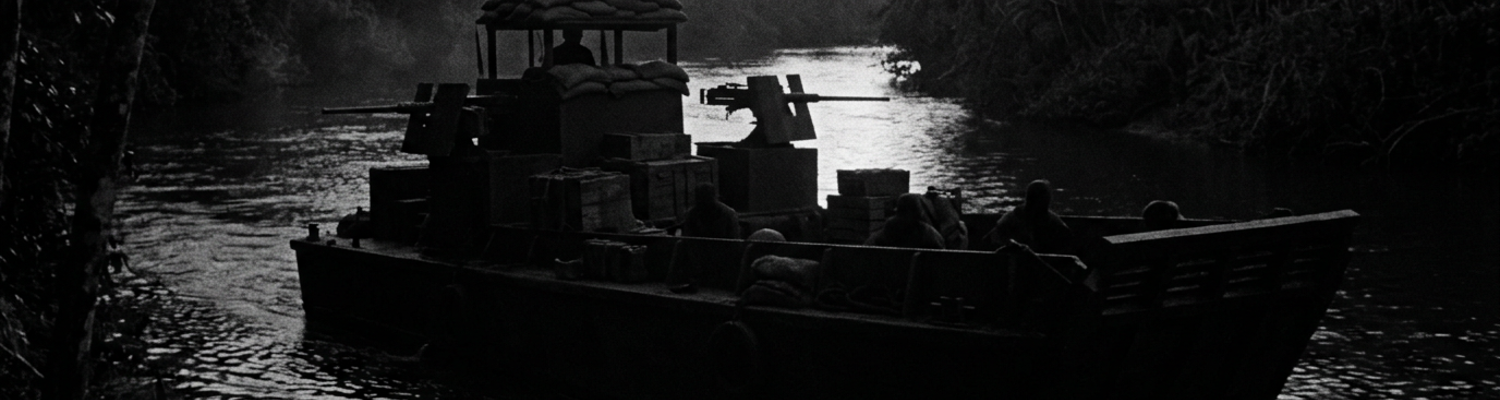

Ham Luong River Supply Convoys
Intelligence reports from early February 1968 placed over 10,000 Main Force Viet Cong fighters inside Ben Tre province. Allied outposts along the Mekong Delta waterways were completely surrounded. U.S. forces in the sector numbered fewer than 3,000 personnel. Every river resupply mission required navigating directly through hostile territory. The 1099th Transportation Company received orders to move heavy ammunition barges down the Ham Luong River.
These detachments relied on modified LCM-8 Landing Craft Mechanized.
Crews called them Mike boats.
They towed heavy logistics platforms through restricted nautical chokepoints. Enlisted men lived in a state of continuous sensory degradation. The overpowering stench of raw diesel fuel vented constantly from the twin 6-71 Gray Marine diesel engines. This chemical odor mixed with the smell of stagnant river water splashing over the lowered bow ramp. Men assigned to these open-decked vessels spent their deployments covered in a film of engine grease and river mud.
A close review of operational logs indicates the standard LCM-8 offered zero ballistic protection.
The hull consisted of welded quarter-inch steel. The elevated rear pilothouse left the coxswain entirely exposed. Twin engines required constant maintenance. Water cooling intakes frequently clogged with river vegetation. This caused sudden overheating during combat maneuvers. Steering cables snapped under the strain of pulling heavily laden 120-foot barges against the South China Sea tidal currents.
Hidden riverbank bunker networks targeted these vulnerable craft.
Elements of the Viet Cong 516th Battalion constructed subterranean firing positions directly into the muddy banks of the Ham Luong. These fortifications utilized thick layers of compacted mud and interlocking nipa palm trunks. The structures absorbed incoming .50 caliber return fire. Guerrilla engineering teams positioned bunkers at intervals of fifty meters along the narrowest sections of the river. Weaponry inside these dugouts consisted of Soviet-supplied 12.7mm DShK heavy machine guns and B-40 rocket-propelled grenades. Dense vegetation obscured the firing ports until the moment of initiation. Forward observers tied off high in the mangrove canopy tracked approaching Army Transport convoys. They heard the loud rhythmic thumping of diesel engines miles before the vessels entered visual range.
The Viet Cong also deployed command-detonated water mines.
These devices were constructed from unexploded American 500-pound aircraft bombs. Wires ran from the submerged munitions directly into the command bunkers. Combat engineers from the 9th Infantry Division recorded that the typical firing aperture measured less than eight inches across.
This made them exceptionally difficult to spot from the water.
Field Modifications to LCM Craft
Military Assistance Command Vietnam intelligence estimates placed allied forces at a severe numerical disadvantage across Ben Tre province. Localized troop disparity meant resupply runs down the Ham Luong River forced lightly armed transport crews through populated ambush sectors. Archival evidence shows the standard LCM-6 landing craft lacked the structural integrity to survive concentrated crossfire.
Staff Sergeant Glenn Loveland spearheaded crew modifications to standard LCM-6 deck frames.
He served as a motor transport operator attached to the riverine logistics elements. The original fifty-six-foot vessels featured a forward cargo well surrounded by quarter-inch steel plating. This material offered zero ballistic resistance against Soviet armor-piercing ammunition. Enlisted crews manning these open decks suffered continuous psychological erosion from the relentless exposure.
The acidic scent of burned cordite lingered from previous engagements.
This specific odor frequently triggered sudden flashbacks of being pinned against muddy riverbanks for hours. Loveland recognized the unarmored deck frames left forward gunners entirely exposed to shrapnel and direct hits from B-40 rockets. He ordered his maintenance crews to completely strip the original canvas awnings and thin metal stanchions lining the port and starboard gunwales.
These structural alterations took place entirely outside standard Navy ordnance procurement channels.
(NARA Record Group 338, Box 412).
Working at the Dong Tam naval basin maintenance ramps, Loveland directed teams of mechanics to reinforce the underlying ribbing of the LCM-6 hull. They used heavy iron channel beams. Standard deck frames buckled under the stress of sustained combat maneuvers. The twin 6-71 Gray Marine diesel engines pushed the craft hard into the muddy river margins to avoid submerged water mines. Raw diesel fuel constantly pooled in the bilges beneath the modified floorboards. Fractured fuel lines leaked continuously. The stench of this unburned fuel mixed with the smell of stagnant river water washing over the lowered bow ramp. This created a permanent nauseating atmosphere for the men operating the welding torches.
Loveland mapped out a completely revised deck plan.
He elevated the forward fighting positions by thirty inches. Raising the deck required cutting through the original bulkheads with oxyacetylene torches. Mechanics braced the new platform with scavenged steel I-beams. This gave the gunners a clear line of sight over the high riverbanks.
Archival evidence shows the original single-barrel machine gun mounts were unbolted and discarded.
Enlisted sailors field-welded scavenged M45 Quad .50 caliber mounts directly onto the newly reinforced deck structures. The M45 Maxson mounts were originally designed as anti-aircraft turrets for World War II half-tracks. Transportation Corps mechanics acquired several of these heavy weapon systems from disabled Army M35 gun trucks waiting for disposal at the Long Binh salvage yards. The 2,500-pound motorized turrets required custom steel pedestal mounts. Sailors anchored these mounts directly into the LCM-6 keel. The M45 system utilized an electric motor powered by a dedicated gasoline generator. This mechanism traversed and elevated the four synchronized M2 heavy machine guns. The weapons fired at a combined rate of 2,300 rounds per minute. This provided enough concentrated kinetic energy to physically dismantle the interlocking nipa palm trunks protecting the shoreline bunkers.
Crews cut half-inch thick steel boiler plate salvaged from a destroyed French sugar mill near My Tho.
They welded these heavy steel plates in a staggered overlapping pattern around the gun tubs and the elevated rear pilothouse. Intense heat from the arc welders frequently ignited the grease and diesel residue coating the deck plates. Crews extinguished small fires with buckets of river water. The heavy boiler plate and M45 turrets introduced over four tons of dead weight. This extra mass pushed the draft of the vessels an additional fourteen inches down into the brown water. Top speed degraded heavily. Modified electrical cables connecting the turret joystick to the traverse motors ran through standard PVC piping bolted along the interior bulkhead.
Sensory Environments of Littoral Combat
A close review of operational logs from the 1099th Transportation Company reveals severe geographic constraints imposed on the Mike boats operating within the Mo Cay bend. The Ham Luong River narrowed to less than two hundred yards across at this specific coordinate. Dense canopies of nipa palm and interlocking mangrove roots physically encroached over the brown water.
Direct sunlight was completely blocked along the margins.
This close proximity of heavily vegetated banks created extremely claustrophobic combat conditions. Exposed crews faced immediate physical vulnerability. Elements of the Viet Cong 516th Battalion exploited this natural bottleneck by constructing reinforced firing apertures directly at the waterline. Geographic compression meant any B-40 rocket required less than a single second of flight time to strike an unarmored supply barge. Navy and Army coxswains lacked lateral maneuvering space to take evasive action during an ambush initiation. Pushing the twin 6-71 Gray Marine diesel engines to maximum revolutions per minute only drove the flat-bottomed craft deeper into submerged mudflats.
Overhanging jungle vegetation routinely scraped against the elevated rear pilothouses.
This contact tore away PRC-77 radio antennas. Aggressive red ants and debris showered the steel decks. Gunners manning the forward gun tubs found their firing arcs severely restricted by the dense foliage. They sometimes physically snagged the heavy barrels of their M2 machine guns on low-hanging vines.
Archival evidence shows the channel depth dropped to just eight feet during the dry season.
Enlisted crews endured rapid psychological erosion from relentless exposure to an inescapable toxic atmospheric mix trapped within the steel hulls. Mechanical wear on the aging LCM-8 vessels caused continuous micro-fractures in the primary fuel lines feeding the Gray Marine engines. Raw marine diesel fuel actively leaked into the lower bilges at a rate of several gallons per hour. Internal ventilation systems consisted only of passive steel cowls. These vents entirely failed to clear the heavy fumes from the crew compartments. Stagnant rotting river water constantly washed over the lowered forward bow ramps during heavy towing operations against the South China Sea tides.
This brown water pooled in the cargo well.
It mixed with spilled diesel and thick grease sloughing off the exposed steering cables. Sailors and soldiers lived in this chemical slurry for 72-hour continuous patrol rotations. Constant exposure to the stagnant river water resulted in severe bacterial skin infections. These infections spread rapidly across the unarmored lower extremities of the deckhands. Medical officers stationed at Dong Tam recorded a seventy percent infection rate among the riverine transport crews by the third week of February.
The permeating stench of raw petroleum and decaying organic matter saturated their canvas utility uniforms.
Standard issued rations tasted heavily of diesel exhaust. This led to widespread nausea and severe caloric deficits among the enlisted ranks. Sleep deprivation compounded the psychological strain. The noise of the vibrating deck plates made rest impossible.
Army commanders explicitly denied requests to halt convoys for extensive hull decontamination.
When examining the historical record of the February engagements, the sensory trauma becomes highly apparent. The sudden detonation of submerged water mines or direct RPG strikes instantly introduced the heavy acidic stench of burned cordite into the confined riverine environment. For the enlisted operators of the 1099th Transportation Company, that specific chemical odor acted as an immediate trigger for involuntary flashbacks. Men reported experiencing vivid auditory and olfactory hallucinations of previous firefights. They specifically recalled earlier deployments where isolated crews spent up to nine hours trapped against the muddy banks waiting for medical evacuation helicopters that never arrived.
Squad leaders frequently had to physically shake their subordinate gunners to break the psychological paralysis induced by the cordite stench.
During a specific contact event on February 18 near coordinate 10 01 N 106 22 E, a shaped charge penetrated the portside engine compartment of a lead escort vessel. The resulting explosion vaporized the pooling bilge water. It ignited the diesel fumes. Thick black smoke and unburned explosive powder filled the cargo well. Surviving gunners had to blindly operate their weapons while choking on the dense cordite cloud trapped between the high riverbanks. Close proximity of the jungle walls physically prevented coastal trade winds from dispersing the toxic fog.
Crews fired thousands of rounds into the blind vegetation based entirely on the muzzle flashes of the DShK heavy machine guns.
The engagement lasted forty-seven minutes before the forward ammunition lockers ran completely dry.
RPG Strikes and Communications Isolation
A close review of operational logs from February 18 places the lead LCM-8 of the 1099th Transportation Company exactly at coordinate 10 01 N 106 22 E when the ambush initiated. Viet Cong gunners from the 516th Battalion waited until the heavy Mike boat pushed its towed ammunition barge into a narrow ninety-degree bend. They triggered their command-detonated water mines rigged from unexploded 500-pound aircraft bombs.
Initial subsurface explosions forced the coxswain to cut power to the twin 6-71 Gray Marine diesels.
The flat-bottomed craft stalled directly in the center of the kill zone. A B-40 rocket-propelled grenade fired from a concealed nipa palm bunker tracked straight toward the elevated rear pilothouse. The projectile covered the eighty-yard distance from the treeline in less than half a second. The shaped charge impacted directly against the primary AS-1729/VRC communication mast bolted to the starboard gunwale.
Detonation instantly converted the warhead copper cone into a superheated jet of molten metal.
This jet sliced cleanly through the heavy steel mounting bracket. The blast sheared the ten-foot fiberglass whip antenna into dozens of burning jagged splinters. These fragments rained down onto the exposed deckhands. Shrapnel from the rocket casing tore through the canvas awning. It shredded the primary generator lines routing power to the communication bay.
This single kinetic strike completely severed the heavy RG-58 coaxial cabling feeding into the pilothouse.
Enlisted crewmen immediately recognized the sharp acidic stench of burned cordite flooding the cargo well. The chemical odor mixed with the permanent smell of raw diesel fuel venting from the damaged engine compartments. This combination triggered severe sensory overload among the trapped replacement soldiers. Physical destruction of the exterior mast instantly knocked the vessel primary AN/VRC-46 vehicular radio system offline. Inside the sandbagged helm, the assigned radio operator watched the RT-524 receiver-transmitter dials go completely dark. Severed exterior power lines violently shorted against the wet steel deck.
The sudden loss of the carrier wave produced a deafening burst of static through the crew CVC helmets.
The headsets went entirely silent.
Archival evidence shows the unit lost all transmission capability exactly fourteen seconds into the engagement.
Severed radio contact completely isolated the escort crew from headquarters support at the Dong Tam Tactical Operations Center. This facility was located twelve miles upriver. Standard operating procedure dictated that riverine transport elements under fire must immediately transmit a continuous distress signal on the 46.50 MHz emergency frequency. Without the primary external antenna, the detachment commander could not relay their grid coordinates. Casualty reports could not reach the 9th Infantry Division artillery batteries positioned five miles away at Fire Support Base Moore.
The assigned radioman frantically attempted to establish a secondary communication net.
He used a portable PRC-77 manpack radio dragged from a waterproof storage locker. He extended the three-foot flexible tape antenna over the sandbagged parapet. He operated on a backup frequency of 51.10 MHz while taking grazing 12.7mm DShK fire from the shoreline. Dense overhanging mangrove canopy and twenty-foot muddy embankments physically blocked the line-of-sight VHF radio waves from reaching the nearest relay station.
His repeated distress calls vanished into the thick jungle foliage.
The crew found themselves entirely cut off from any external firepower coordination. Navy HA(L)-3 Seawolf helicopter gunships armed with 2.75-inch folding-fin aerial rockets remained on the tarmac at a staging area just ten minutes away. No request for close air support ever reached their dispatchers. The transportation detachment had to rely exclusively on their on-board ammunition supplies. They used scavenged M45 Quad .50 caliber mounts to suppress the overlapping kill zones.
Gun crews fired blindly into the dense tree line based entirely on the muzzle flashes of enemy heavy weapons.
Without aerial observers to correct their fire, the gunners burned through their primary ammunition belts at a highly unsustainable rate. The coxswain had to make autonomous tactical decisions without any overhead intelligence regarding enemy troop movements along the riverbanks. The 105mm howitzer crews at FSB Moore stood completely idle beside their guns. They were unaware that an Army transport convoy was being systematically dismantled just outside their maximum effective range.
The radioman eventually abandoned the dead handset to clear a jammed feed tray on the portside M60 machine gun.
Point Blank Firefights at the Chokepoint
Archival evidence shows that the Mo Cay bend of the Ham Luong River compressed the navigable channel to a width of less than 150 yards during the dry season of 1968. Elements of the Viet Cong 516th Battalion actively exploited this geographic bottleneck. They embedded reinforced firing positions directly into the muddy embankments. Isolated LCM-6 crews from the 1099th Transportation Company pushed directly into these overlapping kill zones. They lacked any external communication or aerial support.
Concealed bunker apertures opened fire at point-blank range.
Soviet-supplied armor-piercing rounds struck the unarmored supply barges from distances under forty meters. Enlisted gunners manning the field-modified M45 Quad .50 mounts immediately returned fire into the dense nipa palm treeline. Electric traverse motors of the Maxson turrets whined loudly over the roar of the twin 6-71 Gray Marine diesels. Operators swung the four synchronized heavy machine guns toward the muzzle flashes. The weapons fired at a combined rate of 2,300 rounds per minute. The concentrated kinetic energy from the M2 barrels physically shredded the interlocking mangrove roots.
The heavy rounds dismantled the thick mud protecting the guerrilla dugouts.
Sudden expenditure of thousands of .50 caliber cartridges instantly flooded the forward cargo well with the sharp acidic stench of burned cordite. This heavy chemical fog mixed with the permanent smell of raw diesel fuel venting from fractured fuel lines. Stagnant rotting river water pooled in the lower bilges. For the replacement soldiers operating the gun tubs, that specific olfactory combination triggered immediate involuntary flashbacks.
Gunners maintained continuous counter-fire while helmsmen steered the heavy supply barges through the intense kill zone.
Coxswains standing in the elevated rear pilothouses fought against the extreme physical torque of the South China Sea tidal currents. The water pulled violently at their flat-bottomed craft. Heavy steel tow cables stretched tightly over the stern. They dragged 120-foot logistics platforms loaded with high-explosive artillery shells meant for the Ben Tre garrison. Standard Army operating procedure dictated that detachment commanders hold the center channel at all costs.
Releasing the tow lines meant abandoning the highly combustible cargo directly to the entrenched enemy infantry.
Helmsmen manually wrestled with the heavy brass steering wheels. They attempted to keep the sluggish heavily laden vessels moving forward at a maximum speed of five knots. B-40 rocket-propelled grenades detonated against the salvaged steel boiler plate welded around the pilothouse. These blasts showered the exposed deckhands with jagged shrapnel and white-hot copper fragments. Concussive blasts routinely shattered the pilothouse safety glass. Fine silica dust blew directly into the eyes of the steering crews.
A close review of operational logs indicates that the steering cables on escort vessel 64 snapped entirely under the extreme tension of evasive maneuvers on February 22.
Continuous suppression fire from the forward M45 turrets generated thousands of spent brass casings. These piled up ankle-deep across the reinforced steel deck plates. Deckhands slipped and fell on the rolling brass as they desperately hauled heavy ammunition cans from the forward storage lockers to the gun tubs. Physical toll of sustaining this volume of fire rapidly eroded the combat effectiveness of the isolated crews.
Noise of the synchronized heavy machine guns vibrating through the hull plates caused permanent acoustic trauma.
This rendered the men temporarily deaf and incapable of hearing shouted orders from the squad leaders. Gun crews fired blindly into the dense vegetation. They tracked their targets solely by the incoming green tracer rounds of the Soviet-supplied 12.7mm DShK heavy machine guns. The engagement stretched for forty-five minutes of uninterrupted close-quarters combat.
Enlisted mechanics had to pour buckets of stagnant brown river water directly over the glowing heavy machine gun barrels to prevent catastrophic ammunition cook-offs.
Convoy Extraction and Tactical Legacy
A close review of operational logs from the February 18 engagement reveals exactly how the isolated crews of the 1099th Transportation Company broke out of the Mo Cay bend kill zone. Their primary AN/VRC-46 communication systems were destroyed. The HA(L)-3 Seawolf gunships remained grounded twelve miles away. Detachment commanders possessed zero external fire support.
Enlisted helmsmen manually locked the brass steering wheels of their LCM-8 craft to hold the center channel against the tidal currents of the South China Sea.
Heavy steel cables trailed behind the craft. The 120-foot supply barges absorbed grazing 12.7mm DShK fire from the Viet Cong 516th Battalion bunkers. The flat-bottomed Mike boats dragged these logistics platforms forward at a maximum speed of five knots. Gunners in the forward tubs fired their field-modified M45 Quad .50 mounts blindly into the mangrove canopy. They suppressed the overlapping fields of fire.
The synchronized M2 heavy machine guns generated a dense cloud of burned cordite that settled directly into the cargo well.
This sharp chemical fog mixed with the permanent stench of raw diesel fuel venting from severed lines. Stagnant rotting river water pooled in the bilges.
Archival evidence shows the twin 6-71 Gray Marine diesels on the lead vessel ran twenty degrees over their maximum temperature limit during the extraction.
The deckhands had to expose themselves entirely to incoming small arms fire to push through the final eighty yards of the ambush sector. Mechanics abandoned the lower engine compartments to haul ammunition cans across decks slick with spilled marine fuel and river mud. The sudden influx of cordite smoke trapped between the steep muddy embankments triggered involuntary sensory flashbacks among the replacement soldiers. Men experienced vivid auditory hallucinations of previous catastrophic patrols. They remembered unarmored convoys burning against the shoreline for hours.
Squad leaders physically shoved their subordinates back onto the firing line to maintain the suppressive barrage.
The detachment maintained continuous forward momentum. They dragged the intact ammunition barges past the final nipa palm firing apertures and into the wider waters of the Ham Luong River. The entire formation cleared the hostile bunker network fifty-two minutes after the initial command-detonated water mines exploded.
When examining the historical record of this specific extraction, post-battle damage assessments dictated immediate shifts in Army Transportation Corps engineering protocols.
The engagement proved that the standard quarter-inch steel hull plating of the LCM-8 offered zero ballistic resistance against Soviet armor-piercing ammunition. B-40 rocket-propelled grenades had punched cleanly through the forward cargo wells. They left jagged exit wounds in the port and starboard gunwales. Military Assistance Command Vietnam authorized enlisted mechanics at the Dong Tam naval basin to bypass standard procurement channels.
They began retrofitting the surviving riverine craft.
Welders cut thick steel boiler plate salvaged from abandoned French sugar mills and bolted it directly over the elevated rear pilothouses. They reinforced the underlying hull ribbing with heavy iron channel beams. This supported the structural load of the M45 Maxson turrets. Crews stacked an average of three hundred sandbags around the helm and engine compartments of every active Mike boat.
These extensive field modifications added over four tons of dead weight to each vessel.
The extra mass pushed the draft of the landing craft fourteen inches deeper into the brown water. This heavily degraded their top speed and maneuverability. Raw diesel fuel continued to pool beneath the newly elevated floorboards due to chronic micro-fractures in the aging fuel lines. Welders worked in the confined bilges. They constantly inhaled the noxious fumes of unburned petroleum mixed with decaying organic matter. The heavy boiler plate shielding completely enclosed the helmsmen. This restricted their peripheral vision while blocking incoming shrapnel.
Maintenance logs from March 1968 confirm the added armor plating reduced the top speed of a fully loaded LCM-8 to under four knots.