
The Post-Manassas Mandate
The air over the Arlington hills on July 21, 1861, was a wet blanket. On the high ground overlooking the Potomac, a Union Army engineer adjusted his transit, making careful notes for a planned redoubt. Below him, Washington D.C. sat placid. The city was confident. Its 35,000-man army had marched south just days before to crush the rebellion in a single blow. The work was methodical, almost leisurely. Only a handful of hasty forts, including Corcoran and Runyon, guarded the immediate approaches to the city’s bridges. Then a distant, rhythmic rumble began to assert itself, a sound distinct from the day's intermittent thunderstorms. By late afternoon, the sound had a name. It was the sound of defeat. The first trickle of panicked men became a torrent, a human flood of blue-uniformed soldiers whose retreat was not a controlled withdrawal but a frantic rout. They choked the roads back to Washington, a disorganized mob of infantry, artillery, and the civilian spectators who had gone to watch the battle as a Sunday spectacle.
Washington was defenseless.
The chaotic aftermath of the First Battle of Manassas laid bare the capital’s vulnerability. The rout shattered the illusion of a short war and exposed the inadequacy of the existing defenses. In the panic, President Lincoln and his war cabinet understood that a determined Confederate push could seize the city. This fear spurred an immediate, large-scale response. The mandate was clear: Washington must be turned into a fortress, and it must be done quickly. To orchestrate this project, Lincoln summoned Major General George B. McClellan. Arriving on July 26, McClellan, a railroad executive and engineer by training, possessed the organizational mind required. He immediately began to shape the demoralized units into the formidable Army of the Potomac and, with equal vigor, addressed the capital’s defense. Archival evidence shows his command style was one of systematic control. He was not a man for hasty improvisation. He appointed Brigadier General John G. Barnard, an expert from the Corps of Engineers who had served as Chief Engineer during the Bull Run campaign, to design and oversee the construction of a comprehensive defensive network. This was not to be another collection of isolated batteries. McClellan and Barnard envisioned a connected system of fortifications, a defensive ring that would make the city impregnable.
Order would be imposed by earth and timber.
Barnard’s plan was ambitious and rooted in sound military engineering principles. A close review of his post-war reports (NARA Record Group 77) indicates a strategy of layered, interlocking defense. The primary focus was the high ground in Virginia, the Arlington Line, which directly overlooked the capital and its critical bridges. From these heights, enemy artillery could have shelled the White House and government buildings at will. Construction began almost immediately in August 1861 on forts that would become the backbone of this line, such as Forts Morton and Woodbury. The design was a system of enclosed field-forts, placed on every prominent point at intervals of 800 to 1,000 yards, ensuring their cannons could provide mutual support. Any depression or approach not visible from a main fort was to be covered by a smaller, supporting gun battery. The initial construction, spurred by the post-Manassas panic, was often rushed, but the core concept was to create an unbroken perimeter.
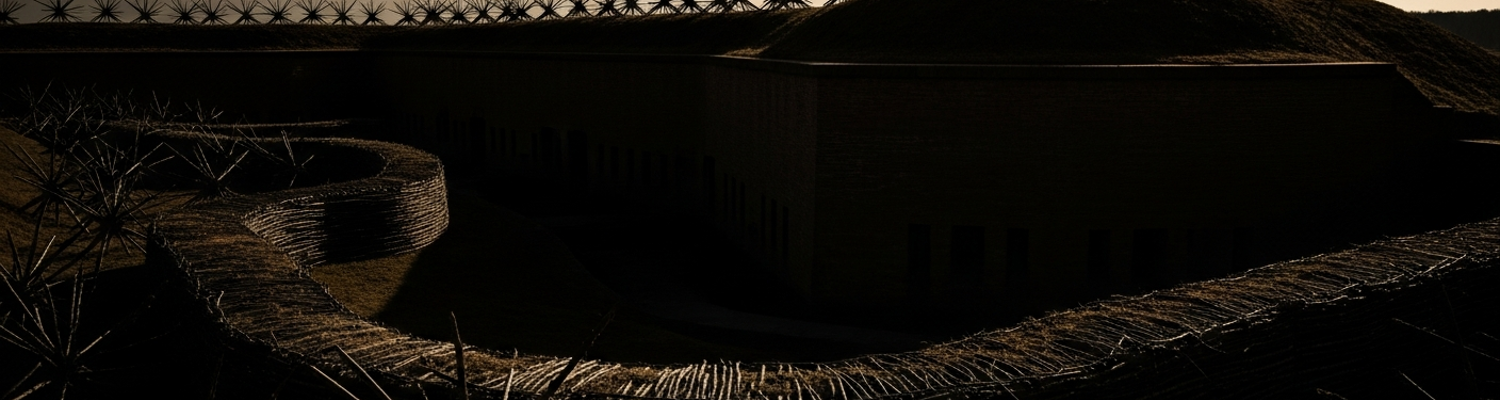
The scale of the undertaking was enormous. The project ultimately involved the construction of 68 enclosed forts and 93 gun batteries. These were connected by over 20 miles of rifle trenches that doubled as covered pathways for troops. Thirty-two miles of military roads were cut to allow artillery and reinforcements to move rapidly along the perimeter. The labor force was a mix of soldiers from infantry and heavy artillery regiments, civilian contractors, and freed slaves who had come into Union lines. They wielded axes and shovels to erect earthen walls, some twenty feet thick, fronted by deep ditches and abatis, which were barriers of felled trees with sharpened branches pointing toward the enemy. Within the forts, bomb-proof shelters and powder magazines were dug deep into the earth. The armament was formidable, with hundreds of heavy cannon, including massive 15-inch Rodman guns and powerful Parrott rifles, moved into place. The system, born from the panic of a single battle, had made Washington one of the most heavily fortified cities in the world.
Capital Defense Engineering Challenges
The mandate to fortify Washington collided immediately with the operational state of the Union Army. After the rout at Bull Run, the force protecting the capital was a demoralized and disorganized collection of about 35,000 men. Under General McClellan's leadership, this army swelled rapidly, but with new bodies, not seasoned soldiers. These were ninety-day volunteers and fresh recruits, men who had enlisted in a patriotic fervor but who possessed little training and even less discipline. A close review of operational logs shows that the same infantry regiments tasked with picket duty and drilling were also handed shovels and ordered to perform the back-breaking labor of digging trenches and raising earthworks. The engineers under General John G. Barnard might have designed the forts, but it was these ill-equipped infantrymen, alongside civilian laborers and formerly enslaved people, who did the construction. They were not a dedicated engineering workforce. Their primary duties were supposed to be those of soldiers, creating constant tension between the need to train for battle and the urgent requirement to build defenses. The result was interrupted work, inconsistent quality, and a labor pool often exhausted before ever facing the enemy.
The shovels broke first.
Material acquisition was a nightmare of competing priorities and bureaucratic friction. A review of the Quartermaster Department records from late 1861 reveals an organization completely overwhelmed. This department, led by Montgomery C. Meigs, was responsible for procuring everything from uniforms and wagons to the very tools and timber needed for the fortifications. General Barnard’s engineers required tens of thousands of axes, picks, shovels, wheelbarrows, and immense quantities of lumber for revetments and abatis. The Quartermaster, however, was also tasked with housing and supplying the rapidly expanding Army of the Potomac. This created a direct conflict for resources. Every request for lumber to build a bomb-proof shelter competed with a request for lumber to build winter barracks. Every wagon detailed to haul earth for a parapet was a wagon that could not be used to transport forage for the army’s thousands of horses. Archival evidence shows that graft and incompetence compounded the shortages. Some purchasing agents acquired substandard goods like brittle tools made from cheap iron or green lumber unsuitable for construction. The engineers were forced to make do, often with civilian contractors of varying quality, because trained U.S. Army engineers were in critically short supply and many were pulled away for active field campaigns.
There was no single blueprint for salvation.
While General Barnard had an overarching concept, the initial construction phase was marked by a distinct lack of standardized plans. The first forts thrown up in Virginia after the Manassas panic were often isolated and designed on the fly by different officers. An engineer from New York might apply different principles of bastion design than one from Ohio. Early earthworks often consisted of simple six-foot-high embankments fronted by a trench, strong enough to deter a cavalry raid but insufficient to withstand a determined infantry assault. These initial forts, like Corcoran and Runyon, were not part of an interconnected system. A close analysis of the fortification plans reveals an evolutionary process. What began as a series of disparate strongpoints was only later woven into a coherent defensive web. Barnard and his team had to retroactively connect the forts with miles of rifle trenches and military roads, filling in gaps where the fields of fire from one fort failed to cover the approaches to its neighbor. This process of correction and expansion continued for years, exposing the dangerous inconsistencies born from the initial haste and lack of a unified engineering doctrine.
Inter-Agency Bureaucratic Conflicts
The fortification of Washington was a war within a war. It was a battle fought not with bayonets but with blueprints, budgets, and bureaucratic authority. A deep chasm of culture and methodology immediately opened between the professional engineers of the Regular Army and the politically appointed officers of the state volunteer regiments. General John G. Barnard, a career officer from the U.S. Army Corps of Engineers, was a man of science who viewed fort construction through the rigid lens of West Point doctrine. His plans were precise, mathematical, and systematic. He was not, however, in complete control. The Union’s reliance on state-raised volunteer forces meant that men with civilian engineering experience, perhaps from building railroads or canals, were now colonels and majors. They commanded thousands of troops and were eager to prove their worth. A review of the engineering records from late 1861 shows a pattern of uncoordinated and often substandard construction initiated by these volunteer officers, who would begin erecting earthworks without central approval from Barnard’s office. The result was a patchwork of defenses built on conflicting principles, with some forts being poorly sited and incapable of providing mutual fire support to their neighbors. This forced Barnard and his small contingent of Regular Army engineers to act as a correction detail, retroactively trying to impose a coherent system on a series of disconnected strongpoints. The process consumed valuable time and resources.
It was a clash of professional pride and political expediency.
This friction was compounded by a catastrophic failure in the supply chain. The Quartermaster Department, under Montgomery C. Meigs, was tasked with supplying not only the immediate needs of the rapidly growing Army of the Potomac but also the material demands of the fortification project. Archival evidence from the department reveals an organization utterly overwhelmed. Every request for lumber to build a fort’s gun platform competed directly with a request to build winter barracks. Wagons needed to haul earth for ramparts were the same wagons required to transport food and ammunition. This created a perfect environment for fraud and profiteering. Civilian contractors descended on Washington, seeing a chance for profit from the government’s desperation. Contracts were awarded for tools that broke on first use, for lumber that was too green to bear weight, and for provisions that were inedible. In one documented instance, the government was sold hundreds of horses that were too sick, old, or lame for service. Five were already dead upon delivery. The crisis became so severe that Congress was compelled to pass the False Claims Act in 1863, a direct response to the rampant fraud that was undermining the Union war effort from within.
A far darker compromise was made in the name of labor. The sheer scale of the earthworks required a workforce that infantry details alone could not provide. The Union Army turned to the very people the war was ostensibly beginning to liberate. Thousands of contrabands, the military term for formerly enslaved people who had escaped to Union lines, were put to work on the fortifications. They were a captive labor force, working for nominal wages that were often withheld. A review of operational logs shows that in August 1862, both men and women received 40 cents a day plus rations for their labor. While this was later increased, the conditions were harsh and the work was grueling. These freedmen were joined by impressed local civilians, both white and black, who were conscripted to dig the miles of trenches and build the twenty-foot-thick earthen walls that would shield the capital. This created deep resentment among the local population and exposed the moral hypocrisy at the heart of the project. The forts that stood as a symbol of Union strength were built, in part, by a system of coerced labor that mirrored the institution the nation was fighting to destroy.
The Human Cost of Construction
The human engine required to build Washington’s salvation was fueled by misery. A close review of the medical ledgers from the forts’ garrisons reveals a catastrophic health crisis that killed more men than any Confederate weapon could. The thousands of soldiers, civilian laborers, and contraband workers were packed into sprawling, unsanitary camps where contaminated water sources became vectors for disease. Typhoid and dysentery burned through the workforce, incapacitating entire companies at a time. The swampy lowlands along the Potomac bred mosquitos, and with them came the debilitating cycles of fever and chills known as Potomac Fever, a common name for malaria and other agues. Malnutrition was a constant companion. The Quartermaster Department, overwhelmed by the army’s needs, provided a monotonous and often deficient diet of salt pork, desiccated vegetables, and hardtack biscuits that were frequently infested with weevils. A lack of fresh produce led directly to outbreaks of scurvy, a condition that left men with bleeding gums, open sores, and crippling joint pain. The official rations were often spoiled or pilfered, forcing laborers to subsist on whatever they could forage or purchase from price-gouging sutlers. Makeshift hospitals, little more than rows of tents, offered minimal comfort and even less effective medical care against diseases that doctors of the era barely understood.
The work itself was a form of punishment.
It was a primitive, muscle-driven operation on a scale that strained the limits of pre-industrial technology. An analysis of engineer requisitions and quartermaster reports shows a constant struggle for basic implements. The shovels, often sourced from corrupt contractors, were made with brittle iron that snapped when striking Virginia clay. Axe handles, carved from green, unseasoned wood, would split after a few hours of felling the dense forests required for abatis and timber revetments. Wheelbarrows, the primary machines for moving earth, were crudely constructed and broke down constantly under the weight of hundreds of thousands of cubic yards of soil. From sunrise to sunset, seven days a week, the men dug. They carved deep, V-shaped ditches into the earth, sometimes fifteen feet deep, and piled the excavated soil to form the massive parapets, tamping it down by hand and foot. They wrestled massive timbers into place to shore up the earthen walls and constructed complex bomb-proof shelters and powder magazines deep within the structures. An individual soldier or laborer was expected to move multiple cubic yards of earth every single day, an exhausting quota that left men physically broken.
Every shadow in the tree line was a potential threat. The psychological strain on the workforce was unrelenting. The half-built forts of the Arlington Line were on the absolute frontier of Union control, with Confederate pickets and cavalry patrols sometimes just a mile or two away. The name J.E.B. Stuart, the Confederacy’s daring cavalry chief, was a source of constant anxiety. His troopers were known for lightning-fast raids that could materialize without warning, overwhelm a small detachment, and vanish before a proper response could be mounted. Unarmed laborers, particularly the contraband workers who feared being captured and re-enslaved, worked with one eye always scanning the horizon. Operational logs from the work parties detail frequent false alarms where a stray rider or a deer breaking from cover would send men scrambling for cover. The sudden, panicked beat of the long roll from a drummer would stop all work, sending diggers running for the stacked rifles of the infantry guards. These alerts, day after day, shredded nerves and made sustained work impossible. The men were caught between the certainty of physical exhaustion and the persistent fear of a violent death.
The Strategic Legacy
The earthworks’ ultimate test came in the sweltering heat of July 1864. Lieutenant General Jubal Early’s Confederate force, having brushed aside Union resistance at the Monocacy River, appeared on the northern outskirts of Washington. By July 11, his troops were probing the defenses near the 7th Street Pike, directly threatening Fort Stevens. Panic began to grip the city. Yet, the massive ring of forts, designed for exactly this contingency, proved its worth. At this critical moment, General Ulysses S. Grant had stripped the capital’s defenses of veteran troops for his campaign against Petersburg. This left a skeleton force of only 9,000, comprised largely of poorly trained reserves, convalescents, and government clerks. As Confederate skirmishers advanced, the artillery of Fort Stevens, supported by fire from Forts DeRussy and Slocum, opened up, slowing the assault. The defense was desperate but effective, buying precious hours. It was just enough time for veteran reinforcements from the VI Corps, dispatched by Grant, to arrive. On July 12, as President Lincoln himself watched from the fort’s parapet and came under enemy fire, the reinforced Union line counterattacked and drove Early’s men back. Early, recognizing the strength of the now-manned fortifications, concluded that a full-scale assault would be folly and withdrew. His gamble was defeated. The defense system had performed its primary function perfectly. It allowed a smaller, weaker force to hold off a larger enemy long enough for reinforcements to arrive, validating the entire strategic concept.
The project became a large-scale education in the realities of military supply.
A close review of the historical record reveals that the construction of the defenses created a logistical vortex that nearly overwhelmed the Union war machine. The Quartermaster Department was forced to source and transport unprecedented quantities of material, competing with the simultaneous need to equip and sustain the massive Army of the Potomac. Records document the demand for hundreds of thousands of axes, shovels, and wheelbarrows, alongside immense volumes of timber for revetments and gabions, which were wicker baskets filled with earth. This surge in demand created a chaotic procurement environment ripe for corruption, forcing the army to contend with subpar tools and materials. To manage this effort, the Union established a network of depots and refined its system for contracting with civilian suppliers. These were lessons that improved the logistical support for all its armies as the war progressed. The 32 miles of dedicated military roads built to connect the 68 forts and 93 batteries were a revolution in operational mobility. These roads allowed troops and artillery to be shifted rapidly along the 35-mile perimeter, a key factor in the successful defense against Early’s raid and a foundational concept for future military infrastructure planning.
The very act of construction forced a new, if reluctant, model of inter-service cooperation. The project was commanded by the U.S. Army Corps of Engineers, a small, professional cadre of West Point-trained officers led by General John G. Barnard. They were tasked with imposing a unified design based on the engineering doctrines of Dennis Hart Mahan, ensuring forts were placed at 800-to-1,000-yard intervals for mutual cannon support. They constantly clashed with the officers of state volunteer regiments, many of whom had civilian engineering backgrounds and initiated their own unapproved and often substandard earthworks. The engineers were also entirely dependent on other branches for execution. The Quartermaster Department provided the tools and materiel, while the infantry and artillery provided much of the manual labor. This forced interaction between the scientific professionals of the Corps, the massive bureaucracy of the supply departments, and the line soldiers of the combat arms created a working template for joint-effort military construction. The difficult experience of building Washington’s defenses underscored the necessity of a centralized, systematic approach to large-scale engineering, influencing the Corps’ prominent role in national projects for decades to come.