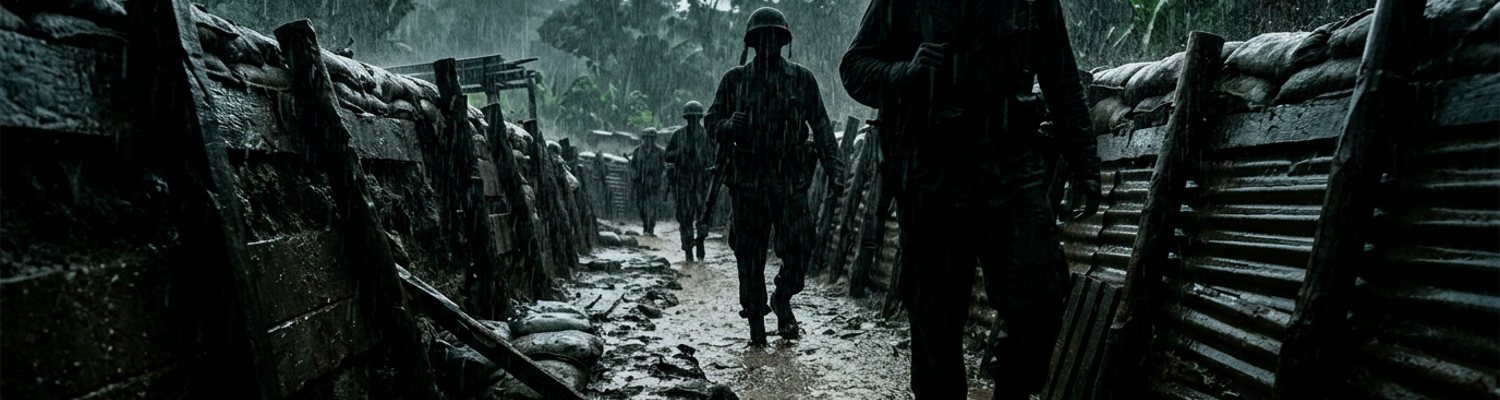

9th Cavalry Deployment in Albay Province
High-pressure steam lines hissed violently before the cast-iron spur gears inside the auxiliary feed pump of an Army Quartermaster steam lighter sheared completely flat. Boiler pressure plummeted from one hundred and twenty pounds per square inch down to twenty-two within three seconds. This starved the delivery manifold and locked the drive shaft against its bronze sleeve. Volcanic sand churning through the shallow surf of Albay Gulf had slipped past the intake strainer. The grit scored the cylinder walls and seized the duplex piston mid-stroke. Heavy black smoke poured from the bypass valves as sea water flooded the firebox. Lacking power to reverse off the surf line, the flat-bottomed wooden hull swung broadside into the coastal shoals. It grounded hard beneath the shadow of Mount Mayon.
The landing craft sat immobilized four hundred yards from the high-tide mark.
Archival evidence shows that in early 1901, Captain Charles Young deployed dismounted squadrons of the 9th Cavalry directly into this rugged littoral environment on the southeastern tip of Luzon. Young commanded troops stripped of their standard mounts. The sodden rice paddies, mangrove swamps, and razor-sharp volcanic ravines surrounding Albay rendered equestrian tactics unusable. Troops I and M came ashore carrying Krag-Jorgensen carbines, canvas haversacks, and heavy entrenching picks instead of sabers and cavalry saddles. Salt air corroded metallic cartridges in their belts. Coastal humidity regularly exceeded ninety percent. This rotted wool uniforms and fouled the bolt sleeves of their firearms with volcanic dust.
A close review of operational logs indicates that Young organized his squads into foot patrols.
These units marched across knife-edge basalt ridges and chest-deep tidal estuaries between Legazpi and Tabaco. They hunted local fighters who understood every drainage ditch and subterranean cave network carved by the prior eruptions of Mount Mayon. Establishing permanent fortified coastal outposts to silence insurgent artillery positions targeting United States Navy gunboats formed the primary operational objective. Filipino forces operating under General Vito Belarmino had salvaged Spanish bronze muzzle-loaders and modern Krupp mountain guns (specifically the 75mm Model 1890). They positioned them inside fortified earthen revetments along the high bluffs overlooking the inner anchorages.
Naval vessels including the gunboat Yorktown and coastal auxiliary cutters repeatedly took fire while attempting to resupply army garrisons.
Solid iron shot and high-explosive fragments holing the hulls of wooden transport craft regularly drove them away from the landing beaches. This threatened supply lines across the entire southern peninsula. Young received direct orders to push inland from the tideline. He was instructed to secure these promontories and construct sandbagged redoubts armed with rapid-fire Colt machine guns. The goal was to deny the bluffs to the gunners under Belarmino.
Brass shrapnel repeatedly tore through the rigging of patrol craft operating within eight hundred yards of the headland.
When examining the historical record of these outpost engagements, an engineering adjustment quickly triggered an unpredicted tactical crisis. Young ordered his men to dig deep revetments directly across the drainage canals feeding local hemp fields. This was intended to shield his riflemen from plunging artillery fire. Diverting these channels drained the local mud flats. The dry ground initially gave American patrols firmer footing against the hill batteries. The sudden drop in regional water flow emptied the protective perimeter trench surrounding the nearby Spanish-built church at Daraga.
This uncovered the rear approach of the garrison and exposed six hundred yards of dry trench along the Daraga-Legazpi road.
Mayon Volcano Outposts and Earthwork Construction
Archival evidence shows that Captain Charles Young ordered continuous trenching operations along the southern approaches of Mount Mayon on March 14, 1901. Dismounted cavalrymen drove iron-nosed spades into unconsolidated volcanic ash and vesicular basalt. Loose pyroclastic debris collapsed back into the excavation ditches with every strike. Young directed the immediate fabrication of timber revetments using split bamboo, hand-hewn ipil logs, and wire-bound fascines. These structures retained the shifting soil along four forward parapets.
Sapping details cut deep lateral trenches three feet wide and five feet deep.
They slanted them outward toward the Bicol plain to redirect tropical runoff away from the gun platforms. American soldiers reinforced each revetment wall with double layers of hemp sacking packed with pulverized pumice. They staked them into the ground with sharpened hardwood pickets. Operative engineering logs (NARA Record Group 395) record that afternoon downpours repeatedly liquefied the upper trench walls. Dry ash turned into dense lahar mud. This slurry clogged the action mechanisms of Krag-Jorgensen rifles laid on the firing steps.
Trenches dug at daybreak washed away before dusk.
A close review of operational logs indicates that Young adjusted the angle of the main drainage saps to thirty-five degrees. This directed runoff into natural volcanic fissures rather than existing surface gullies. Troops I and M felled three hundred coconut palms along the fringe of the Budiao riverbed. They split the fibrous trunks with broadaxes to line the sap walls. Sapping tools worn down by abrasive scoria required daily reshuffling to regimental blacksmiths stationed two miles behind the line in Legazpi.
Young positioned forward breastworks twelve hundred yards north of the Daraga church ruin.
He anchored the left flank against a solid basalt outcrop and the right flank against a sunken cart path. Every revetted fire bay received designated ammunition niches. These were carved six inches into the volcanic earth and sealed against rain with heavy vulcanized rubber ponchos. Static earth quickly devoured every mobile asset under the command of Young.
When examining the historical record, this decision to anchor the line with permanent earthworks rapidly transformed an expansive littoral screening operation into a static perimeter defense.
Insurgent battalions had previously scattered whenever dismounted cavalry squads maneuvered through the coastal flats. They avoided open gun battles against American Krag rifles. Once the soldiers picked up heavy entrenching tools and tied themselves to fixed breastworks, Filipino observers stationed on the upper volcanic ridges mapped the exact positions of every gun slit, listening post, and sap drain. Young had arrived in Albay tasked with sweeping along the coastal road between Legazpi and Libog. He was supposed to keep sea lanes open and interdict supply bancas.
Instead of conducting fluid beach landings and boat-borne reconnaissance, two full troops of the 9th Cavalry were now locked into six hundred linear yards of dirt ditches.
This required daily rotations of fifty men just to shovel collapsed pumice and drain flooded fire bays. Belarmino exploited the paralysis within seventy-two hours of the parapets being completed. Insurgent guerrilla cells bypassed the fixed redoubts entirely. They used deep dry ravines on the western shoulder of Mayon to infiltrate behind the defensive perimeter. The static garrison found itself targeted by plunging sniper fire from elevated basalt ridges.
Filipino riflemen severed the single copper field-telegraph wire connecting the Mayon line to the coastal depot at Legazpi.
Supply wagons loaded with hardtack, canned beef, and five-hundred-round cases of .30-40 ammunition were repeatedly ambushed three miles south of the works. Young was forced to siphon forty riflemen from his defensive line solely to escort horse-drawn rations through the mud. By April 2, 1901, the 9th Cavalry detachment had expended four thousand rounds of rifle ammunition simply repelling nightly probes against their parapets. Coastal patrols in the Albay Gulf were abandoned entirely due to a total lack of available uncommitted manpower.
Waterlogged Trenches and Monsoon Attrition
Archival evidence shows that torrential monsoon downpours began striking the southern slope of Mount Mayon on April 8, 1901. The storm delivered over twelve inches of rain within seventy-two hours. Runoff roaring down the basalt ravines overwhelmed the thirty-five-degree drainage saps Captain Charles Young had cut into the volcanic slope. Instead of carrying water clear of the works, these unlined auxiliary saps acted as funnels. They channeled thousands of gallons of liquefied volcanic ash directly into the sunken fire bays of Troops I and M.
Water backed up behind the split-coconut revetment walls.
This saturated the porous scoria and pumice packed into the hemp retaining sacks. Wire bindings snapped under the sudden hydraulic pressure. Heavy ipil retaining timbers gave way. Four tons of grey lahar mud slid into the central communication trench. This buried the rubber ponchos protecting the ammunition storage niches.
Firing banquettes were completely obliterated.
Standing water inside the main breastwork quickly reached four feet in depth. This submerged the breechblocks of Krag-Jorgensen carbines hanging from ditch-wall pegs. The six hundred yards of fortifications were reduced to an unusable knee-deep morass of liquid pumice. Drainage saps engineered to deflect the water transformed the parapets into self-filling cisterns.
A close review of operational logs indicates that Filipino forces capitalized immediately on the collapse of these works.
Insurgent snipers armed with Model 1893 Spanish Mausers occupied camouflaged hides along the upper scoria ridges five hundred yards north of the redoubts. They laid continuous accurate fire across the flooded trench line. Every attempt by dismounted cavalrymen to stand and clear the collapsed mud walls with entrenching spades drew plunging 7x57mm rounds through the ruined sandbag embrasures. Two soldiers from Troop M were shot through the shoulders while attempting to shovel an opening through the blocked south sap.
Riflemen crouched neck-deep in foul sediment-heavy water behind the decaying bamboo revetments.
They were unable to return fire without exposing their heads above the washed-out parapets. Volcanic slurry coated their hands, carbine actions, and metallic cartridges. This jammed the magazine cut-off mechanisms on the Krags whenever men attempted to cycle rounds. Maintenance of the position ceased entirely during daylight hours. Snipers killed any soldier who raised an entrenching tool above the mud line.
When examining the historical record of the 9th Cavalry detachment, environmental illness degraded the command far faster than insurgent ballistics.
Stagnant rainwater trapped inside the collapsed ditches became a breeding ground for Anopheles mosquitoes. This exposed the pinned soldiers to relentless nocturnal feeding. Within two weeks of the first torrential downpours, virulent strains of malaria swept through the ranks. Body temperatures spiked to one hundred and four degrees. Contaminated volcanic runoff mixed with human waste in the flooded sap bottoms.
This polluted the emergency water casks of the command.
Widespread outbreaks of bacillary dysentery followed. Men suffered from severe gastrointestinal cramps, dehydration, and acute physical exhaustion while standing watch for twelve-hour shifts in cold mud. Medical supplies stationed at Legazpi failed to reach the forward earthworks. Guerrilla parties routinely ambushed pack-mule trains traversing the washed-out Daraga cart road. Quinine supplies were depleted by April 19.
The squadron surgeon treated fever cases with hot coffee and wet compresses.
Morning duty rosters on April 24 showed that only twenty-eight of the eighty-six men assigned to Troop I remained physically capable of carrying a rifle to the firing step.
Insurgent Encirclement and Tactical Deadlock
Archival evidence shows that insurgent commanders recognized the total loss of mobility within forty-eight hours of the trench lines flooding. Operating from base camps concealed in the thick abaca plantations around Camalig, Filipino guerrilla columns systematically severed the five-mile overland cart road. This route connected the forward works of Captain Charles Young to the coastal supply depot at Legazpi. Teams of insurgent riflemen dug deep pits lined with sharpened bamboo stakes across the packed-earth roadbed. They camouflaged them with palm fronds to cripple American escort mules.
Insurgent snipers concealed in the tree canopy concentrated their fire on every supply wagon.
They targeted any movement through the sunken trail past the ruined stone church at Cagsawa. Quartermaster records indicate that by April 26, three consecutive supply columns had been turned back after teamsters took heavy fire. Six mules were killed. Two escort wagons were abandoned in axle-deep mud. Severing this artery cut off the regular delivery of dry .30-40 Krag ammunition, clean drinking water, and field dressings to the pinned-down troops.
Rations dropped to half-hardtack biscuits per man each day.
A close review of operational logs indicates that Filipino forces maintained round-the-clock kinetic pressure on the isolated redoubts. This prevented the garrison from rebuilding its collapsed parapets. Belarmino positioned two hundred riflemen armed with Spanish Mausers and Remington rolling-block carbines across the elevated basalt rims. These positions overlooked the eastern flank of Troops I and M. Starting at midnight, insurgent infantry crept through the deep scoria ravines to within fifty yards of the forward saps.
They hurled bundles of dynamite wrapped in wet abaca fibers.
They fired bamboo mortars loaded with scrap iron and river stones. The soldiers under Young were pinned below the mud-slicked banquettes. They were unable to mount counter-sweeps into the surrounding brush without leaving the gun emplacements unmanned. Night sentries fired blind into the dark. They rapidly burned through their remaining ready-service ammunition boxes.
By April 28, the forward earthworks were taking continuous harassing fire from three distinct directions.
The outpost was transformed into an isolated pocket that consumed supplies without being able to project force across its own perimeter. Two isolated outposts consumed twelve thousand rounds of rifle ammunition in seventy-two hours simply holding their ditch lines. When examining the historical record, this localized tactical paralysis quickly reverberated up the chain of command to Brigadier General William August Kobbe in Nueva Caceres. Sustaining the two marooned cavalry troops required immediate operational interventions that the district headquarters had not scheduled or budgeted.
Kobbe was forced to strip two full companies from the 47th United States Volunteer Infantry out of garrison duty in Sorsogon.
He dispatched them by forced march to clear the roads between Legazpi and Daraga. Regional commanders pulled the United States Navy gunboat Callao and the armed auxiliary cutter Albay from their maritime blockade stations in the Lagonoy Gulf. They directed them to anchor in the Albay roadstead. These vessels expended dozens of three-pounder explosive shells against suspected insurgent positions on the lower volcanic slopes. This suppressed the sniper fire pinning the men in the trenches.
Diverting these naval units left vast stretches of the eastern Luzon coastline unpatrolled.
Filipino coastal bancas smuggled salt, rice, and black powder across the straits from Catanduanes. The relief operation diverted three hundred infantrymen and two naval combatants to preserve six hundred yards of waterlogged dirt.
Coastal Defense Doctrine and Archival Legacy
Archival evidence shows that Captain Charles Young began recording the mechanical and structural collapses of the Albay campaign in field notebooks immediately following the April 1901 floods. Drafting by lantern light at the Legazpi garrison headquarters, he produced rigorous technical surveys mapping the littoral shelf and the sixty-degree volcanic ridges framing Albay Gulf. His entrenchment schematics documented the exact structural failure points of double-walled bamboo revetments. He calculated how pulverized pumice expanded under continuous tropical rainfall to exert over three thousand pounds of lateral hydraulic pressure per linear foot.
Young measured soil porosity across six distinct terrain zones between the Daraga church ruins and the lower slopes of Mount Mayon.
These diagrams detailed modified sap angles and ditch drainage gradients reduced to twelve percent. They included subterranean gravel filtration beds designed to prevent scoria sediment from scouring wooden sluice gates. Squadron engineering logs were systematically paired with cross-sectional diagrams of firing steps. These showed that standard banquettes collapsed unless anchored with six-foot seasoned ipil hardwood pilings driven straight into the underlying basalt bedrock.
Young converted the mud of the 9th Cavalry trenches into rigorous engineering data.
A close review of operational logs indicates that his littoral defense suppression reports targeted the specific tactical deadlocks between fortified shore emplacements and naval gunboats. Young analyzed why high-explosive three-pounder shells fired from gunboats including the Callao and Yorktown failed to neutralize insurgent gun pits set into the reverse slopes of basalt ravines. Shore-to-ship trajectories enabled Filipino gunners using concealed Krupp mountain pieces to strike unarmored transport craft while remaining immune to direct naval gunfire. His technical reports proposed integrated littoral bastions equipped with low-profile depressed-angle machine gun positions.
These were capable of raking exposed landing beaches from protected lateral angles.
He drafted schematics for sunken Colt machine gun redoubts reinforced with split-palm logs and wire-bound fascines. These were deliberate departures from the elevated parapets that had drawn deadly 7x57mm Mauser sniper fire along the Mayon line. Each tactical report incorporated mechanical modifications for landing equipment. This included dual-chamber water intake boxes fitted with brass mesh screens to prevent volcanic sand from seizing auxiliary steam lighter pumps during surf transitions.
Theory formed directly out of abandoned positions and fractured machinery.
When examining the historical record, these technical treatises did not stay confined to military dispatches in the Department of the Pacific. Young shipped large packing cases containing hundreds of draft schematics, topographic cross-sections, and operational field notebooks back to his private estate at Wilberforce, Ohio. Preserved inside his study at Youngsholm, these original records became primary source material for his tactical instruction when he returned to Wilberforce University as professor of military science and tactics. Officers assigned to the War Department Board of Fortifications and the Army War College consulted the Albay field surveys while drafting modern fortification guidelines for Pacific island defense between 1905 and 1912.
His analyses of volcanic soil stability, drainage trench failure, and interlocking machine-gun fire directly influenced the engineering of concrete redoubts.
These informed the coastal artillery batteries guarding Subic Bay and the entrance to Manila Bay on Corregidor Island. Senate Resolution 858 formally recognized these analytical contributions. The text cited how his technical surveys and littoral doctrine established early twentieth-century standards for Army coastal fortifications. The hand-drafted trench dimensions dictated the exact revetment slope ratios adopted in the 1908 Coastal Artillery Field Regulations.