
Baldwin Locomotive Failures in the Vladivostok Yards
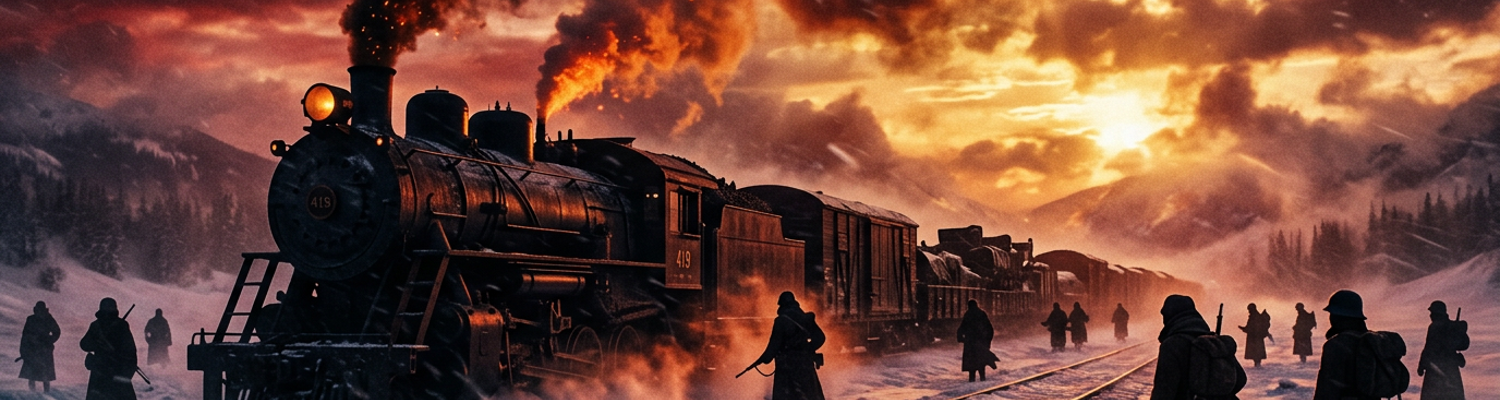
Locomotives built by the Baldwin Locomotive Works hauled strings of flatcars loaded with heavy field artillery, Dodge staff cars, and motorized supply trucks across the frozen yards of Vladivostok. These fifty-ton machines worked continuously to assemble outbound military cargo from scattered warehouse spurs and position the rolling stock for the final retreat to the transport ships. Siberian coastal weather degraded normal rail operations within hours as a sudden drop in barometric pressure pulled arctic air directly into the exposed yards. Baldwin-built 2-8-0 locomotive cylinder castings cracked under temperatures plummeting to thirty degrees below zero Fahrenheit. Thick gray iron fractured along the main steam chests, venting pressurized vapor into the blizzard and paralyzing the lead engines directly across the central departure corridor.
Maintenance soldiers rushed to the disabled engines with metal scrapers and oil lamps to keep the remaining steam lines from freezing solid inside the blocked corridor. Maintenance detachments used hand torches and brittle shop tools to repair cracked steam chests amidst blizzard winds. Steel wrenches snapped in two when mechanics pulled on frozen cylinder bolts, while cold metal tore skin from bare fingers whenever a soldier slipped. Kerosene blowtorches flickered and failed repeatedly because gale-force winds blew the flames away from the frozen metal before the castings could absorb enough heat for patch welding. Mechanics improvised field patches by bolting scrap boiler plate across the fractured metal and packing the seams with asbestos rope and red lead paste to contain the steam.
Steam hissed loudly through the packed asbestos seams as the mechanics brought the patched engines back up to operating pressure. Rail crews kept coal fires burning high in the fireboxes day and night, knowing that a single hour of idle boiler time would cause the internal water tubes to rupture from expanding ice. Train crews shoveled low-grade local coal that filled the locomotive cabs with sulfur fumes, while conductors scraped thick layers of frost from the cab windows to watch for signals along the tracks. Yard dispatchers coordinated with depot guards to shove three patched locomotives against stalled supply trains, using raw tractive power to break the wheels free from the iced rails. Outbound tracks slowly reopened as the improvised engines dragged rows of loaded artillery wagons and ammunition boxcars toward the harbor junction.
Security guards posted along the harbor junction cleared armed civilian crowds and stray carts from the right-of-way as the first heavy supply train rolled slowly into the terminal throat. Operating conditions worsened as heavy snow reduced visibility to ten paces, forcing brakemen to walk the frozen roadbed ahead of the cowcatchers with kerosene lanterns to inspect each rail joint. American logistics officers monitored every car movement from the yardmaster shanty, calculating how many tons of crated rifles, motor vehicles, and field rations could reach the pier before the track switches froze shut entirely. Railway engineers kept the Baldwin engines coupled in tandem to maintain forward momentum against the drifting snowbanks that built up against the rail heads. Convoys of army trucks arrived at the yard perimeter to transfer additional crated stores onto the newly opened flatcars under the sweep of harbor searchlights.
War Department Withdrawal Orders of January 1920
Truck drivers cut their roaring engines at the freight platforms just as a courier motorcycle skidded through the frozen slush from the American Expeditionary Force headquarters. The motorcycle messenger carried urgent dispatch bags containing encrypted orders that drastically changed the mission for every unit in the terminal. Major General William S Graves received War Department evacuation orders on January 9 1920 terminating active Siberian operations after months of diplomatic deadlock and regional combat. The encrypted directive ordered the complete withdrawal of all American forces from Russian soil, canceling previous mandates to protect surplus Allied war material or guard international rail traffic. Staff officers under Graves immediately revised their loading schedules inside the port administration building, halting non-essential supply shipments to prioritize the survival and transport of nine thousand American troops.
Telegraph keys clattered across the headquarters communications room as signal officers sent the evacuation instructions deep into the Siberian interior. The directive initiated the emergency recall of scattered 27th and 31st Infantry Regiment garrisons along the Trans-Siberian Railway. Soldiers of the 27th Infantry Regiment occupied isolated guard posts and rail sidings that spanned hundreds of miles westward toward Lake Baikal, surrounded by armed partisans and hostile Cossack detachments. Troops of the 31st Infantry Regiment maintained defensive positions around coal fields and vulnerable bridges near Suchan, where partisan attacks threatened to cut rail links at any moment. Regimental commanders received the recall signals and immediately ordered their companies to pack ammunition, destroy fixed fortifications, and commandeer every usable train car in their sectors.
Infantrymen dragged crates of Springfield ammunition and heavy Browning machine guns aboard requisitioned boxcars, reinforcing the wooden walls with sandbags and thick wooden planks to stop rifle bullets. Locomotive engineers coupled these improvised armored trains to coal tenders and pushed out from remote rail stations under freezing winds that dropped temperatures past thirty degrees below zero. Hostile irregular forces shadowed the retreating trains from nearby tree lines, firing sporadic rifle volleys at the armored cabs and water tenders. Train crews kept armed sentries posted on locomotive catwalks with automatic rifles, clearing frozen switches by hand whenever partisan sympathizers jammed the tracks with debris. Conductors guided the heavily laden troop trains eastward along single-track sections at slow speeds, waiting for clear signals while boiler feed pipes repeatedly threatened to freeze solid.
Locomotives pulling the lead garrisons of the 27th and 31st Infantry finally rolled into the outer classification yards of Vladivostok after days of continuous running. Medical officers met the arriving boxcars with litters and woolen blankets, carrying out soldiers who had suffered severe frostbite or contracted typhus during the brutal transit. Armed patrols from the port provost marshal cleared paths through crowds of armed civilians and desperate refugees who packed the station platforms in search of food and transport. Major General Graves established his forward command post near the railhead, personally directing the arriving companies toward the transport docks where waiting ships kept boilers lit. Quartermasters checked soldiers off company rosters as the men marched out of the rail yards, channeling the steady stream of troops straight toward the harbor piers under the glare of naval searchlights.
Trans-Siberian Logistical Breakdown and Infrastructure Collapse
Transport vessels took on the arriving infantry at the water's edge, but the rail line feeding those docks from the deep Siberian interior buckled under record cold and broken machinery. Russian Railway Service Corps personnel managed frozen water cranes and ruptured locomotive tenders across iced rail sectors to keep the remaining evacuation trains moving eastward. Water inside the massive steel trackside cranes had turned into solid ice plugs, blocking the gravity pipes and preventing dry engine boilers from refilling. Railway engineers built wood fires directly beneath the elevated tank valves and beat on the cast pipes with heavy sledgehammers to free the flow of water before the fires burned out. Expanding ice ripped through the sheet-metal seams of locomotive tenders along exposed sidings, spilling thousands of gallons of vital water across the ballast and leaving heavy freight engines stranded on dead tracks. Stranded train crews abandoned those disabled engines to the arctic gales, consolidating their surviving coal and water into whatever locomotives could still hold pressure.
Locomotives that still held boiler pressure pushed their overloaded boxcars down the main line, only to stop when communications between the trackside stations collapsed completely. Partisan fighters and severe winter storms brought down miles of copper lines along the right-of-way, snapping wooden poles and grounding the circuits in deep snowdrifts. Severed telegraph wire networks compelled American logistics officers to coordinate train movements using pilot engines and couriers. Logistics officers dispatched solo pilot locomotives five miles ahead of every troop train to scout the track for broken rails, snowdrifts, and partisan ambushes. Couriers rode through freezing blizzards in unheated engine cabs or on horseback, carrying handwritten clearance slips between isolated stations so trains would not smash head-on into each other on the single track. Dispatchers tracked these handwritten clearances with grease pencils on paper wall maps, guessing where each convoy was located whenever couriers failed to arrive on schedule.
Rail sidings filled to capacity with abandoned freight cars, leaving inbound American convoys stranded on the open line while dispatchers waited for word from the missing messengers. Partisan irregulars exploited these paralyzed bottlenecks by unbolting fishplates from the rails and rolling boulders down steep embankment cuts. American infantrymen riding the train roofs jumped down into knee-deep snowdrifts with shovels and iron bars to clear the debris before their boilers lost steam. Soldiers used crowbars to chip away dense shelf ice that had welded track switches into the wrong positions, hammering at the iron linkage rods with the butts of their rifles. Heavy snow continued to bury the right-of-way faster than the work parties could clear it, forcing engineers to ram their snowplow engines directly into five-foot drifts to punch an opening toward Vladivostok.
Steel snowplows battered through the packed drifts, throwing sheets of snow onto the roadbed as the battered troop trains crawled across the frozen Ussuri plain. Exhausted train crews burned wooden packing crates and scrap railroad ties inside the fireboxes when the supply of coal ran dangerously low, keeping boiler gauges barely above the failure mark. Armed guards stood watch on open car platforms through twenty-hour shifts, stomping their feet on the wooden floorboards to ward off numbness while frost coated their wool greatcoats. Logistics officers maintained a strict rotation at the manual brake wheels, replacing men every thirty minutes before freezing metal could lock their stiffened hands to the iron controls. Locomotive whistles shrieked through the swirling blizzard as the lead trains finally reached the outer perimeter switches, where armed guards stepped forward through the blinding snow to guide them onto the final harbor tracks.
Armored Train Interdictions by Semyonov Cossack Forces
Switch guards directed the arriving trains into the harbor sidings, but urgent telegraph dispatches from western stations warned that trailing supply convoys had stalled under hostile blockades deep along the single-track line. Cossack forces loyal to Ataman Grigory Semyonov deployed armored trains to intercept American supply echelons and hospital cars across the eastern Siberian rail network. Semyonov controlled critical rail junctions around Chita with his White Russian cavalry, treating the evacuating American columns as easy sources of weapons, food, and locomotives. Heavy steel armor plates bolted across the boilers and cabs of Semyonov locomotives shielded his gun crews from standard rifle fire, giving his trains heavy protection that could split an evacuation column in half. Cossack gunners aimed three-inch field pieces and water-cooled machine guns directly at American locomotive cabs, threatening to blow steam cylinders apart if engineers refused to decouple their wagons. Red Cross hospital cars carrying American soldiers incapacitated by typhus, pneumonia, and severe frostbite sat stranded on freezing passing sidings, dangerously vulnerable as rail stoves burned down to cold ash.
Cossack boarding parties moved across the icy track ballast to uncouple the stranded hospital cars and seize food crates, triggering immediate defensive responses from the American train guards. American train escorts deployed Browning automatic rifles and Lewis machine guns to repel Cossack attempts to commandeer rolling stock. Infantrymen kicked back the frozen sliding doors of boxcars along the entire length of the train, resting air-cooled Lewis guns on stacks of sandbags and wooden packing crates. Doughboys slammed twenty-round box magazines into their Browning automatic rifles and leveled them through open doorframes, targeting the Cossack raiding parties that surrounded the train cars. Searing Siberian air caused lubricating gun oils to freeze into thick paste inside receiver housings, forcing gunners to strip the weapons on their knees and rub metal bolts with dry graphite powder. Machine gunners fired controlled warning bursts into the snowbanks near Cossack boots, chewing through packed drift ice to show the warlord troops that every car remained under active American guard.
Infantry officers stepped onto the station platforms under the cover of these weapon teams to confront Cossack commanders face-to-face. American escorts refused every demand to surrender hospital cars or hand over locomotive coal tenders, keeping their automatic weapons aimed directly at the observation ports of the armored Cossack engines. Tension mounted over long hours in negative thirty-degree winds as both sides kept their fingers on cold steel triggers, neither willing to yield the single track. Cossack raiders realized that their thick armor plates could not protect the unshielded running gear and brake lines of their own engines from point-blank machine-gun fire. Semyonov commanders ordered their armored locomotives to reverse off the junction switches, clearing the blocked line rather than risking an all-out battle against entrenched automatic weapons. American locomotive engineers yanked their boiler throttles forward the moment the tracks cleared, pulling their intact supply echelons and hospital cars eastward toward Vladivostok.
Partisan Confrontation at the Switch Point
Locomotive engineers slammed on their air brakes when an unthrown manual switch loomed through the falling snow just yards ahead of the cowcatcher. Steel brake shoes clamped against spinning drive wheels, screeching across the frosted rails as the heavy evacuation echelon slid to an emergency halt thirty miles outside Vladivostok. Ice and hard-packed snow blocked the track mechanism, wedging the steel switch points half an inch open and threatening to derail the front trucks of the engine if the train pressed forward. Armed Bolshevik irregulars stepped out of the dense birch timber lining the rail cut, leveling worn Mosin-Nagant rifles and carbines directly at the stalled cab. Partisan fighters in sheepskin coats and fur hats spread across the right-of-way in a loose skirmish line, planting themselves around the frozen switch stand to cut off the single track to the coast. Machine gunners on the partisan flanks dropped into the snowdrifts, setting up water-cooled Maxim guns on wheeled Sokolov mounts aimed squarely at the train boiler.
Combat escorts faced a critical five-minute standoff against armed Bolshevik irregulars at a snow-clogged track switch. Doughboys leveled their Springfield rifles and Browning automatic rifles from open boxcar doorways and flatcar sandbag positions, aiming straight at the partisan firing line across thirty yards of snow. Partisan commanders shouted across the wind to demand the surrender of the train cargo and rolling stock, while American riflemen held their positions without flinching in the sub-zero chill. Five minutes passed in complete silence between the shouts, as both sides recognized that a single accidental discharge would trigger a point-blank crossfire along the entire track bed. Partisan fighters kept their fingers resting on cold steel triggers while American infantrymen stared back through the iron sights of their rifles. Infantry officers held up their gloved hands to restrain eager trigger fingers, signaling two volunteers to drop into the deep snow with clearing tools.
Soldiers manually cleared ice from switch mechanisms under rifle cover to prevent the derailment of an evacuation echelon. Two doughboys crawled between the rail heads on their knees, driving pick heads and heavy iron pry bars into the frozen crust that filled the switch cavity. Partisan rifles remained aimed at their chests from twenty paces away, but the soldiers continued chipping at the frozen ballast without looking up from the steel points. Frost had frozen gravel, ice, and rail grease into solid chunks that resisted ordinary shovel blades, forcing the men to break the debris with short strokes of their entrenching tools. Hard ice shattered into gray fragments beneath their blows, freeing the throw rods and exposing the moveable guide rails. Doughboys grabbed the iron switch stand lever together, throwing their full body weight onto the counterweight to force the track alignment into place.
Iron switch rails clicked shut against the mainline track with a loud metallic snap, seating the points cleanly for forward travel. Doughboys scrambled back up the wooden stirrups of the nearest boxcar, hauling their tools aboard just as the engineer shoved the throttle into forward gear. Heavy steel drive wheels slipped briefly against the frosted iron before gaining traction on the rail, venting plumes of black coal smoke over the partisan line. Partisan irregulars lowered their rifle barrels into the snow, stepping back into the tree line as the evacuation train gathered speed through the cleared junction. Locomotive boilers hissed under full steam pressure as the evacuation echelon pounded over the switch points, accelerating down the cleared line toward the harbor docks of Vladivostok.
White Garrison Collapse and the Partisan Coup
Steel rails along the harbor brought the speeding evacuation trains into a city already collapsing into open warfare. Pro-Bolshevik partisan forces launched an armed rebellion on January 31 1920, shattering the remaining White Russian control under General Sergei Rozanov. Revolutionary workers, dock hands, and mutinous garrison soldiers poured out of the surrounding hills, rapidly seizing the central post office, the railway station, and municipal armories. General Rozanov watched his command structure dissolve within hours as his remaining officers threw off their imperial insignia or fled toward the fortified headquarters of the Imperial Japanese Army. Partisan rifle companies occupied key intersections along Svetlanskaya Street, trading rifle and machine-gun volleys with die-hard White loyalists who barricaded themselves inside brick government buildings. Spent lead and mortar fragments peppered the cobblestones across the city center, threatening the vital supply roads that connected the classification rail yards to the deepwater wharves.
Infantry detachments preserved armed neutrality while navigating street battles to secure military transit routes through Vladivostok. Couriers from Major General William S Graves delivered strict operational orders to every street barricade, commanding the infantrymen to hold their fire unless hostile factions directly attacked American personnel or supplies. Infantrymen from the 27th and 31st Infantry Regiments set up fortified sandbag outposts at critical street corners, leveling Springfield rifles and Browning automatic rifles outward to keep conflicting factions away from the evacuation corridor. Partisan combat groups and retreating White soldiers repeatedly surged toward the American perimeter, shouting demands for access to warehouse compounds and stored munitions. Squad leaders stood their ground on the frozen pavement without returning sporadic potshots, using firm hand gestures and fixed bayonets to turn armed Russian fighters away from the military right-of-way.
Supply trucks driven by quartermasters pushed directly through the contested intersections, carrying crated weapons, spare engine parts, and medical baggage past active firing lines. Drivers kept steel windshield louvers closed and crouched low over the wooden steering wheels as stray rifle bullets whined through the freezing air and chipped masonry off nearby storefronts. Partisan snipers firing from upper-story apartment windows watched the olive-drab vehicles pass beneath their rifles, honoring the neutral boundary lines established by Graves rather than risking a firefight with American convoy escorts. Foot patrols accompanied each vehicle echelon with fixed bayonets, stepping through piles of broken glass, discarded White Army greatcoats, and frozen blood on the streetcar tracks. American mechanics followed the supply columns in open wrecker wagons, hooking tow cables to any stalled Dodge car or ambulance within minutes to keep the narrow cobblestone lanes completely clear of blockages.
Sentries stationed at the port barricades guided the cleared convoys straight onto the concrete waterfront aprons as White resistance collapsed entirely across the city. General Sergei Rozanov fled his besieged headquarters under the protective cover of Japanese bayonets, abandoning his remaining garrisons to surrender or defect to the advancing Bolshevik committees. Revolutionary irregulars hoisted red flags over the imperial government buildings and city hall, consolidating their control over the municipal districts while avoiding any direct assault on the American embarkation piers. Major General Graves inspected the perimeter defenses along the wharves as the final supply trucks backed up to the ship gantries, ensuring every transit route remained under strict military control. Soldiers formed loading parties along the iced dock edges, swinging crate hooks and cargo nets to hoist the last field guns and equipment boxes into the holds of the waiting transport ships.
Armed Neutrality at the Cape Churkin Depots
Cargo booms swung those final crates into the hulls of the transports at the commercial wharves, but the vast majority of American military supplies still lay stacked across the Golden Horn bay at the Cape Churkin peninsula. American quartermaster units established fortified perimeters around primary warehouses and docks at Cape Churkin to prevent the sprawling supply yards from falling into the hands of competing Russian factions. Doughboys hauled hundred-pound sandbags through deep snowdrifts to build breastworks around the depot gates, strung heavy bands of concertina wire across rail sidings, and placed Browning machine guns to cover the shoreline approaches. Armed sentries paced the snow-packed perimeter fence lines in twenty-minute shifts, watching armed partisan patrols gather in nearby industrial alleys while rifle and machine-gun fire echoed across the water from the city center. Quartermaster officers met local revolutionary delegates at the timber gate barriers, warning the Russian leaders that any attempt to breach the warehouse wire would be met with direct rifle and automatic fire.
Depot checkpoints remained tightly shut after these tense meetings while logistics personnel inventoried, guarded, and transferred millions of dollars in ordnance and medical stores during the urban revolt. Supply clerks carried clipboards and kerosene lanterns through unheated corrugated-iron warehouses, tallying thousands of wooden packing cases of Mosin-Nagant rifles, million-round lots of small-arms ammunition, field dressings, and surgical supplies. Logistics teams worked through freezing drafty corridors where their breath turned to frost on crate stencils, checking every line item against War Department manifests before releasing the goods for movement. Quartermaster guards with fixed bayonets stood over every open stack, stopping Russian laborers and unauthorized soldiers from tampering with crates of morphine, iodine, and artillery propellant. Loading details dragged the verified wooden containers out onto the central loading aprons, stacking crates of ammunition and medical field kits onto flatbed wagons and hand carts for immediate movement to the water.
Flatbed wagons rolled down the iced spur tracks toward the Cape Churkin docks, accompanied by walking rifle escorts whose cold leather boots crunched heavily over the frozen ballast. Quartermasters kept the transfer operation moving in a continuous line between the storage sheds and the shoreline, refusing to pause the work even when stray bullets from city fighting whistled across the bay and struck the warehouse roofs. Soldiers used pry bars, iron rollers, and heavy rope slings to move massive cases of crated artillery components and heavy hospital sterilizers across the icy planks of the freight platforms. Mechanics checked wheel bearings on the transport carts every hour, applying warm grease to frozen axles so the heavy loads of munitions would not seize up and block the single wooden pier approach. Escort squads kept their Springfield rifles at the ready along the entire route, preventing curious crowds of dockworkers and displaced civilians from pressing too close to the moving supply lines.
Dockworkers and soldiers pushed these heavy carts directly onto the wooden piers at Cape Churkin, where harbor barges and open lighters sat moored in thick sheets of tidal slush. Steam winches on the dock edges hissed pressurized vapor into the arctic air, hoisting cargo nets packed with crated rifles and medical chests out over the freezing water and down into the open scow holds. Tugboats equipped with reinforced steel bows broke through the harbor ice pack, taking the loaded lighters under tow to transfer the military cargo across the bay to deep-draft American transports waiting in the roadstead. Armed quartermaster guards rode atop the wooden crates in each open boat, keeping their weapons dry beneath heavy wool coats while waves splashed freezing spray across the gunwales. Shipboard derricks aboard the transport vessels hoisted the final pallets out of the barges and swung them directly into the dark cargo holds, sealing the expeditionary supplies behind locked iron hatches.
Evacuation Operations Aboard Army Transport Ships
Longshoremen dogging down those iron deck covers cleared the gangways for the thousands of soldiers waiting along the frozen waterfront. Port quartermasters systematically staged and embarked personnel, equipment, and medical casualties aboard the USAT Great Northern and USAT South Bend. Quartermaster detachments directed arriving truck convoys onto designated staging aprons, where mechanics disconnected vehicle batteries and drained fuel tanks into steel drums to prevent shipboard fires. Riggers secured the heavy Dodge staff cars, motorized ambulances, and crated artillery pieces deep within the lower cargo holds using heavy timber bracing, turnbuckles, and steel chains. Medical corpsmen carried litter patients through the midship companionways, moving soldiers crippled by typhus, pneumonia, and severe frostbite into warm hospital wards below decks. Staging pens built from raw lumber kept whole battalions organized by company strength on the dock aprons, ensuring that no stray soldiers were separated from their units during the rush to board.
Infantrymen filing through those timber pens formed steady columns of twos and climbed the ice-coated companionway stairs into the troop quarters. Quartermaster sergeants stood at the foot of each wooden ramp with grease pencils and company rosters, checking off each doughboy before the men hauled their full field gear up the wooden planks. Soldiers from the 27th and 31st Infantry Regiments stacked their Springfield rifles in locked iron racks and slung their canvas haversacks into tiered pipe berths. Steam radiators hummed throughout the steel passageways, pumping heat into crowded berthing compartments where men finally stripped off stiff wool overcoats that smelled of coal smoke and frozen mud. Army surgeons and Red Cross nurses established triage posts in the shipboard sick bays, administering clean dressings, hot broth, and typhus inoculations to the most exhausted troops. Platoon leaders moved down the cramped berthing aisles with flashlights, inspecting boots and feet for blackened frostbite tissue while checking ammunition pouches to ensure weapons were fully unloaded.
Sentries stationed along the exterior ship rails maintained continuous watches with loaded Browning automatic rifles as the last shore detachments abandoned their sandbag outposts. Armed Russian partisans held their positions on the snowy ridges above the waterfront, watching the gray transports through field glasses but respecting the neutral boundaries of the embarkation zone. Port provost guards marched the final rear-guard squads aboard under the sweep of navy searchlights, pulling back the barbed wire entanglements and abandoning the frozen shoreline barricades. Deckhands hauled the heavy wooden boarding ramps upward with block and tackle, lashing them securely against the hull bulwarks as the gangway gates swung shut. Quartermaster officers on the navigation bridge verified the final manifest counts with ship captains, confirming that every wounded man, combat soldier, and piece of essential hardware was safely inside the iron hulls.
Steam whistles echoed across the waterfront as bridge officers signaled to the engine rooms that all personnel were secure and ready for departure. Deckhands knocked loose the thick hemp mooring hawsers from the iron bollards on the piers, allowing the heavy hulls to drift slowly into the harbor channel. Harbor tugboats with reinforced steel bows shoved their padded fenders against the ship sides, guiding the deep-draft transports past the Cape Churkin narrows and away from the contested shoreline. Major General William S Graves stood on the open bridge wing of his transport, watching the smoking hills and frozen wharves of Vladivostok drop away behind the stern wake. Engine room telegraphs clanged down for full ahead, and the twin bronze propellers bit into the freezing green water to drive the convoy south toward the open Pacific.