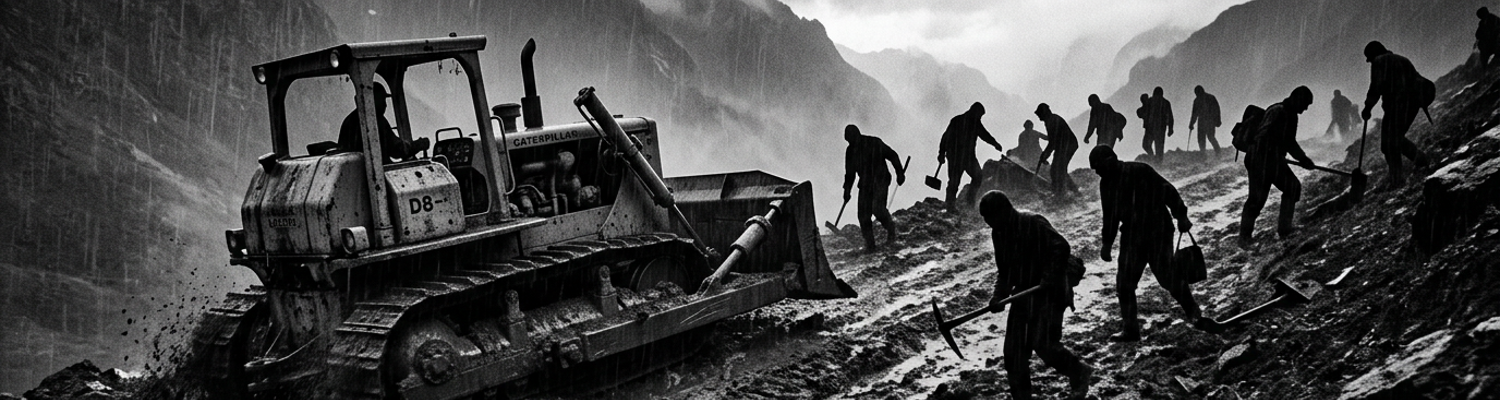

Strategic Isolation Along the Mang Yang Corridor
Monsoon squalls along the crest of the Mang Yang ridge drove sheets of freezing rain straight through the canopy. Unbroken equatorial heat followed within hours. Surface temperatures on the exposed rock pushed past one hundred and ten degrees Fahrenheit. Saturated topsoil dissolved into knee-deep red basaltic sludge. This mud jammed heavy tracked undercarriages. It fouled oil-bath air cleaners and stripped lubrication from exposed winch drums. Water pooled in the cut banks. Timber culverts rotted. Gravel bypasses collapsed. Unrelenting solar radiation baked the churned clay into iron-hard crusts once the downpours stopped. These crusts sheared off grader blades. Cooling lines ruptured. Hydraulic hoses cracked under violent road vibration.
Red volcanic dust turned grease-slick within minutes of every cloudburst.
Archival evidence shows that in January 1964, MACV advisory personnel assigned to II Corps and the ARVN 20th Combat Engineer Battalion began pushing unescorted route clearance operations across the interior plateau of the Central Highlands. Commercial transport companies had abandoned the corridor after repeated ambushes. Military working parties had to shoulder the mechanical burden of opening National Route 19. They operated between the coastal supply hub at Qui Nhon and the administrative center at Pleiku. Detachments composed of two dozen South Vietnamese sappers and a pair of American field advisers pushed open-cab Caterpillar D7E bulldozers and International Harvester dump trucks along narrow mountain shelves. Mechanized infantry screens did not exist. Field repairs happened directly on the exposed road shoulder. Mechanics welded scrap iron across fractured leaf springs. Crews cut leather boot tongues and fuel hose sections to pack leaking seal glands when hydraulic lift cylinders blew out after striking buried corduroy log obstacles. Viet Cong rifle fire from the timberline regularly shattered unarmored windshields. Diesel fuel tanks took punctures. Operators plugged ruptured tanks with whittled bamboo pegs while lying flat beneath hot engine blocks.
No armored cavalry troops accompanied these pioneer parties.
A close review of operational logs indicates that these work detachments traversed hostile mountain defiles without dedicated tactical air cover. Indirect artillery support was absent. The sheer rock cut at kilometer marker 72 placed repair teams inside a terrain dead zone. This location sat directly on the western face of the Mang Yang pass. It fell far outside the thirteen-kilometer maximum effective range of ARVN 105mm howitzers stationed at An Tuc to the east or Pleiku to the west. FM radio communication through the granite gorges failed regularly. Battery-drained AN/PRC-10 transceivers could not push line-of-sight signals over the surrounding 800-meter ridgelines. Clearance crews had no forward observer to coordinate defensive barrages when insurgent ambushes blew out timber bridges or detonated command-wire culvert charges. Alert strike aircraft were not on call. Republic of Vietnam Air Force A-1H Skyraiders based at Pleiku maintained no alert scrambles for road-gang emergencies. Heavy morning ground fog routinely blinded high-altitude observation. Sappers returned fire using individual M1 carbines and a single truck-mounted Browning .30-caliber machine gun. They simultaneously rigged manual block-and-tackle winches to drag disabled graders out of the kill zone.
Permanent firebases with overlapping artillery fans along the corridor would not exist until late 1965.
Monsoonal Attrition and Heavy Equipment Failures
Archival evidence shows that during the 1964 summer monsoon along Route 19 between Mang Yang Pass and the An Khe basin, torrential seasonal rains mixed with abrasive red laterite soil. This mixture continually clogged Caterpillar D7 bulldozer fuel filtration systems. Unpaved cuts through the crest exposed deep beds of weathered volcanic clay. The clay liquefied under forty inches of seasonal precipitation. Standard fuel handling protocols collapsed along the line of march. Diesel fuel arrived in fifty-five-gallon drums. Open M35 trucks hauled these drums across fifty miles of unpaved road. Water gathered on drum lids and penetrated cracked rubber bung seals. Fine laterite dust washed off the drum surfaces by steady squalls. It settled into the fuel oil as an abrasive suspension. Mechanics poured the contaminated diesel through standard canvas funnels into Caterpillar D7E crawlers. The particulate matter bypassed the wire mesh strainers.
Water-separator bowls inside the tractor engine bays filled with heavy red paste within twelve operating hours.
Primary pleated-paper filter elements ruptured under internal suction pressure. This allowed iron-oxide particles straight into the Caterpillar D339 engine injection pumps. Fuel injector plungers seized inside their close-tolerance barrels. Cylinders starved of fuel. Clearing operations shut down midway through active landslide excavations at kilometer marker 68.
Standard replacement filter cartridges ran out across the corridor by mid-July.
Field engineers improvised emergency filtration assemblies using supplies from resupply convoys. ARVN sappers and American advisers stripped porous field-dressing cotton and parachute silk. They wrapped these materials around collapsed filter cores. Copper wire stripped from disabled field telephone wire secured the cloth. Operators flushed contaminated diesel lines using hand-operated grease guns filled with clean kerosene. They did this whenever a drum of clean fuel could be located. Crews welded auxiliary sediment traps made from cut-down six-inch artillery shell casings directly onto the fuel feed lines ahead of the primary housing. This stopped fine sediment from reaching the injector pumps. Mechanics blew out plugged metal filter screens using compressed air lines. They hooked these lines up to the pneumatic brake reservoirs of nearby five-ton dump trucks (NARA Record Group 338). These field improvisations kept the crawler tractors running. Injection systems delivered erratic fuel volume. Engine horsepower output dropped by an estimated thirty percent during heavy grading work.
Saturated slope clearing repeatedly stripped the winch drive gears on primary earthmoving equipment.
Cutting two-lane bypasses around landslide zones required operators to work Caterpillar D7 bulldozers perpendicular to the roadbed. They operated along unstable sixty-percent grades. Heavy water saturation increased the weight of the clay from eighty pounds per cubic foot to more than one hundred and twenty pounds per cubic foot. Operators attempted to drag fallen jungle timber and heavy boulders off the slide path. The vacuum created by the saturated red laterite mud increased the pulling resistance. Bulldozers anchored to raw bedrock used their rear-mounted mechanical-drive Hyster D7N winches to haul tree stumps out of drainage ditches. Excessive resistance caused the single-drum winch assemblies to experience direct mechanical shock loads. These loads exceeded the fifty-four-thousand-pound rated line pull.
Tension sheared metal without warning.
Internal inspection reports from the Pleiku maintenance depot recorded recurring fractures in the high-carbon steel bevel gears. Spur reduction assemblies driving the winch drums off the tractor power take-off shafts also fractured. Drive splines twisted along their axes under maximum load against saturated mud slides. Gear teeth sheared completely off the planetary carriers. Mechanics attempting field extraction could not disengage the cable drums. Stripped drive teeth jammed between the bull gear teeth and the cast-iron gear housing. Depot-level spare assemblies were held five hundred miles away in Saigon. Repair teams burned through wrecked winches with oxyacetylene cutting torches to salvage the cable. They chained two tractors together in tandem to pull disabled bulldozers backward down the pass.
Small Arms Maintenance in Saturated Defiles
American advisers and specialized security elements carrying standard 7.62mm M14 rifles along Route 19 experienced continuous mechanical failures. The Central Highlands climate caused these stoppages. Saturated air with relative humidity regularly exceeding ninety-five percent reacted with microscopic laterite dust. This dust hung suspended inside the mountain defiles. Fine iron-rich volcanic particles bypassed the barrel handguard. They settled directly around the gas cylinder assembly beneath the barrel. Carbon fouling from sustained firing bonded with this damp laterite paste inside the three-and-a-half-inch stainless steel gas cylinder. The red grit scored the chrome surface of the hollow gas piston under rapid heating and cooling cycles. It jammed the tight tolerances between the piston head and cylinder wall.
Expanding gases bled out around the fouled threads of the gas cylinder plug.
The operating rod failed to move rearward. The rifle failed to extract spent brass casings. This transformed the weapon into a single-shot manually operated straight-pull action during perimeter sweeps.
Piston seizures occurred within forty-eight hours of field issue.
A close review of operational logs indicates that patrol leaders instituted non-standard mechanical cleaning routines. Armorers lacked ultrasonic solvent tanks at forward encampments. Soldiers disassembled the gas system using combination wrenches improvised from cut-down automotive tools. Squeeze tubes of standard-issue Rifle Bore Cleaner could not dissolve the baked volcanic clay without vigorous mechanical scraping. Advisers used copper strands unwound from surplus communications wiring to clean the tiny gas port orifice drilled through the rifle barrel. Mechanics soaked seized gas pistons in heated five-gallon cans of mixed diesel fuel and aviation kerosene. They scrounged this fuel from engineer equipment trucks. Troops wiped cylinder interiors with light machine oil to prevent rapid oxidation when rifles dried out. Liquid lubricants attracted even thicker layers of airborne red grit within hours.
Dry-firing checks became mandatory before every patrol cleared the wire.
Perimeter forces faced recurrent localized ambush probes inside steep hand-carved road cuts between kilometer markers 69 and 73. Viet Cong local force sappers from the Gia Lai provincial units infiltrated the fifty-foot embankments overlooking the exposed roadbed. Security squads drawn from the ARVN 20th Combat Engineer security company and accompanying American advisers patrolled narrow shelves cut into the hillside. They operated completely beyond the range of friendly defensive networks. Granite ridges rising eight hundred meters on either side of the defile blocked low-frequency radio transmissions from portable AN/PRC-10 sets. This severed contact with fire direction centers. Republic of Vietnam Air Force A-1H fighter-bombers sitting strip alert at Pleiku airbase remained grounded during afternoon squalls. Low cloud ceilings dropped directly onto the canopy. The clearing detachments occupied narrow terrain corridors. Artillery batteries at Camp Radcliff or Pleiku could not clear the intervening mountain crests.
The infantry screen fought in total ballistic isolation.
Enemy probes struck from concealed firing pits dug directly into the lip of the vertical road cuts. These pits sat less than twenty yards above the working parties. Insurgents initiated contact with salvos of stick grenades and chipped-iron pipe charges rolled down the mud slopes. Interlocking bursts of 7.62x39mm fire from SKS carbines and captured French MAT-49 submachine guns followed. Security riflemen scrambled across wet rock shelves to establish ad-hoc base-of-fire positions behind disabled Caterpillar tracks and boulder piles. They lacked indirect mortar or howitzer fires. Rifle squads beat back uphill probes using grazing fire from air-cooled Browning .30-caliber machine guns mounted on five-ton dump truck cabs. They threw hand grenades straight up the embankment. ARVN marksmen climbed excavator booms to gain clear line-of-sight angles into the overhanging scrub. They killed individual snipers before the main assault team could breach the engineer equipment perimeter. Surviving enemy fighters broke contact into the dense bamboo thickets above the cut. Three dead riflemen remained tangled in the vines alongside discarded wooden ammo crates.
Emergency Fabrication and Hydraulic Line Repairs
Forward equipment depots ran completely out of factory replacement hardware for Caterpillar D7E crawler tractors during the July 1964 pushes between kilometer markers 71 and 75. Continuous clearing operations against jagged granite rubble and ancient teak stumps imposed extreme mechanical shock on bulldozer blade assemblies. Impact forces routinely sheared the hardened-steel safety pins. These pins were designed to sacrifice themselves before terminal torque could shatter the internal planetary gears and heavy mechanical linkages. An entire twelve-ton earthmoving blade assembly turned into dead weight without these factory pins. This pinned the crawler tractor directly inside open kill zones along the mountain roadbed.
Factory supply lines back to the port of Qui Nhon offered no resupply.
Field mechanics from the ARVN 20th Combat Engineer Battalion and attached American military advisers resolved this stoppage by scavenging deformed structural rebar. They pulled this steel from pulverized French colonial bunker foundations along the pass. Sapper maintenance details set up field fabrication benches directly on the beds of M35 two-and-a-half-ton trucks parked under hostile rifle fire. Welders sliced three-quarter-inch and five-eighths-inch carbon steel reinforcing bars into four-inch blanks using portable oxyacetylene cutting torches. The jagged rebar lacked the exact round profile and heat-treated shear tolerance of genuine Caterpillar parts. Soldiers ground the uneven ridges down on portable hand-cranked emery wheels until the cylinders slid into the pin sleeves. Mechanics used hand drills to bore cross-holes through both ends of the soft steel pins for wire cotter keys. They hammered the improvised rods straight into the dozer blade trunnion brackets and winch drive couplers.
Rebar steel possessed a lower yield strength than standard alloy fasteners.
These improvised pins bent under half the rated mechanical load. Operators accepted constant pin replacements every five to six operational hours. The soft rebar sacrificed itself reliably enough to keep expensive transmission gears from shattering against submerged boulders.
Extreme hydraulic system failures immobilized four out of six frontline bulldozers working the western slope of the Mang Yang crest. The hydraulic systems powering the heavy dozer blades operated under continuous internal pressures exceeding one thousand pounds per square inch. Flying fragmentation from command-detonated roadbed mines and constant vibration against sharp granite ledges caused violent ruptures in the external wire-braid hydraulic lines. These lines fed the front lift cylinders. Hydraulic fluid sprayed across glowing exhaust manifolds in blinding clouds of white smoke. This instantly dropped blade pressure and left the heavy moldboards buried in the clay. Technicians lacked hydraulic crimping machines at the forward clearance point. Spare fittings and bulk rubber tubing were absent.
Maintenance teams scavenged thousands of feet of standard WD-1/TT twin-conductor military field wire.
This wire lay discarded along the road margins from severed tactical communication runs. Sappers stripped the outer vinyl insulation to expose the four copper and three galvanized steel strands wound inside each conductor. Mechanics wrapped the ruptured rubber hoses with strips of canvas cut from discarded utility pouches. They sealed the leak with heavy friction tape. Fence-wire twisting pliers bound the exposed copper-steel wire tightly around the hose casing in overlapping tight-pitch coils. This external wire cage provided the hoop strength required to contain pressurized fluid. The hydraulic pumps sustained roughly six hundred pounds per square inch of operating pressure without blowing out the patch. Crews dumped two gallons of clean motor oil directly into the hydraulic reservoirs after every single grading pass.
Culvert Restoration Under Ambush Threat
Clearance teams working kilometer marker 78 faced systematic roadway destruction executed by local force sappers of the Viet Cong 408th Sapper Battalion in August 1964. Insurgent teams moved at night beneath heavy rain. They placed captured French 105mm artillery shells beneath the concrete headwalls of French-built arch culverts. These culverts drained mountain runoff across the roadway shelf. Detonations blew out eight-foot-deep gaps across the single-lane roadbed. The blasts collapsed both the stone masonry conduits and the retaining shoulders down steep seventy-degree ravine slopes. Replacement corrugated steel culvert pipe was unavailable anywhere west of Qui Nhon. Sappers from the ARVN 20th Combat Engineer Battalion and two American advisers rebuilt the drainage channels directly under sniper fire. This fire originated from ridge positions four hundred meters above the gap. Clearing the road required immediate reconstruction before evening flash floods washed out the entire mountain shelf.
A single command-detonated mine severed the only land route connecting coastal ports to the Pleiku garrison.
Combat engineers rebuilt blown culverts and roadway breaches using timber cribbing and hand-tamped laterite fill. Work crews felled sixty-foot native hardwood trees along the southern shoulder. They utilized two-man crosscut saws and axe teams while security squads returned suppression fire into the tree line. Sappers notched the eighteen-inch green logs into interlocking rectangular box cribs. They stacked four tiers of timber down into the scoured streambed to serve as a retaining framework. Heavy iron drift bolts scrounged from destroyed colonial bridge abutments were driven through the timber joints using sixteen-pound sledgehammers. The central open conduit was framed to allow mountain runoff to pass through the lower level. Dump truck crews unloaded raw red laterite soil directly into the cribbing cavities. Operators could not risk running heavy motorized rollers over the hollow log structure without triggering catastrophic collapses.
Soldiers packed the damp laterite by hand using heavy ten-pound steel rammers.
They worked in narrow four-inch lifts to drive out air pockets. Each compacted lift hardened into an impermeable dense plug. This plug anchored the cribbing against the cut bank. Manual compaction took four hours under intermittent mortar fire.
Improvised mechanical troubleshooting sustained equipment availability. The continuous jarring of rough timber approaches fractured the hydraulic hoist cylinders on three International Harvester dump trucks assigned to haul laterite from nearby borrow pits. Hydraulic fluid drained out across the subgrade. Truck beds stuck in a half-raised position blocked the narrow clearing line. Mechanics disconnected the high-pressure hydraulic lines entirely. They wedged five-foot split logs beneath the dump beds to act as mechanical props. Snatch blocks rigged to a Caterpillar D7E front tow-hook manually pulled the beds down once laborers cleared the loads with hand shovels. Sharp shale fragments punctured the cast-iron oil pans of two Caterpillar No. 12 motor graders grading the tamped approaches. Mechanics plugged the drainage cracks using softwood balsa pegs covered in canvas and sealed with roofing tar melted over an open diesel fire. Radiator cooling systems shredded by mortar fragments were repaired by pinching off punctured copper tubes with locking pliers. Crews topped off water tanks using muddy runoff gathered in canvas shelter halves.
These field-rigged machines packed forty tons of wet laterite across the repaired timber structure by 1600 hours. A twenty-truck supply convoy from the 8th Transportation Group transited the gap thirty minutes before dusk.