
USCAR Civil Affairs Deployment in the Southern Ryukyus
Manifest entries logged at Naha Military Port for the southern convoy listed forty-two metric tons of seventy-five percent wettable DDT powder. Eighteen drums of technical grade chlordane sat on the dock. Nine thousand gallons of kerosene diluent waited alongside one hundred twenty Hudson model 335 back-pack compression sprayers and two Todd Insecticidal Fog Applicators.
This chemical volume had the theoretical lethal capacity to wipe out every arthropod population across three hundred square miles of territory.
When examining the historical record of December 1950, USCAR Directive Number 3 created localized Civil Affairs Teams across the isolated southern archipelagos. The goal was direct American administrative oversight. A small detachment under Captain Robert Vance set up headquarters in the bomb-scarred municipal hall of Hirara on Miyako. A second unit occupied a corrugated tin warehouse at the port of Ishigaki in the Yaeyama group.
These units comprised three commissioned officers, six enlisted technical specialists, and an unstable pool of local Ryukyuan contract laborers.
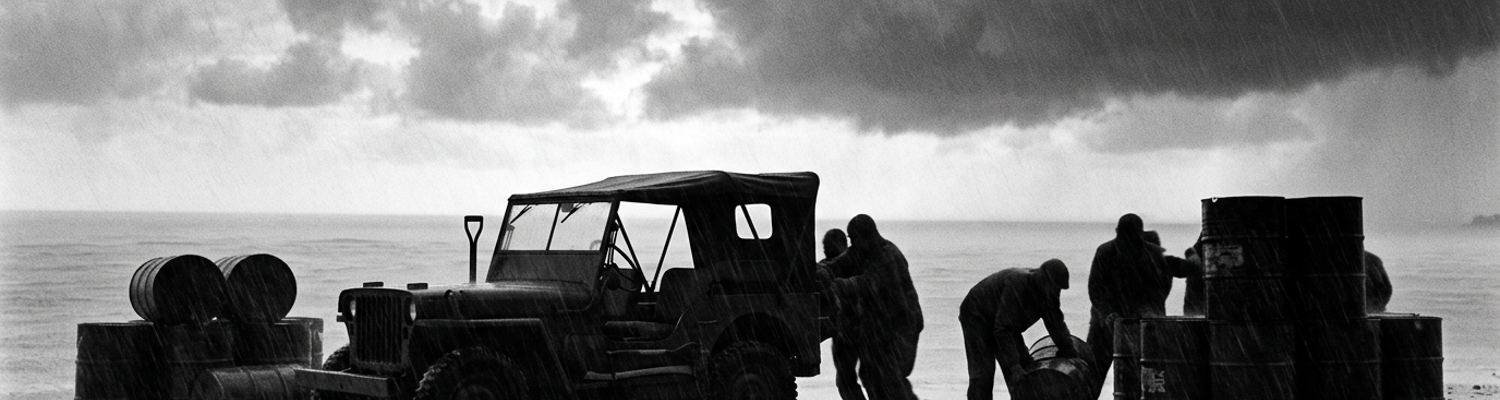
Daily governance meant tracking fuel allotments and requisitioning brass pump nozzles. Typed equipment requests sat unanswered in regional sub-commands. Motor transport depended on keeping twenty-year-old Willys MB jeeps running across coral-rubble tracks. Sharp limestone shredded six-ply tires every forty miles.
Every gasket decayed in the salt air.
Archival evidence shows that pathogen suppression drove the operational deployment. Imperial Japanese Army garrisons had evacuated thousands of civilians into the jungle interior of Ishigaki and Iriomote during 1945. They deliberately planted populations inside hyper-endemic breeding grounds of Anopheles minimus. That forced movement triggered an epidemic. Over ninety percent of the southern civilian populace contracted Plasmodium falciparum and Plasmodium vivax.
Wartime bombardment had flattened municipal drainage grids in Ishigaki. Irrigation ditches remained stagnant. Domestic stone water catchments cracked into thousands of breeding pools.
Field teams received orders to enter every wooden residential dwelling and livestock pen across Miyako and Yaeyama. They were to coat interior walls with residual toxic films and eradicate larval habitats along lowland streams. Spray operators worked hand-cranked pump cylinders under midday humidity exceeding ninety-five percent. They breathed chemical suspension clouds through damp cheesecloth masks. Vulcanized rubber respirators turned brittle in tropical storage lockers.
Naha was three hundred miles away across open water.
A close review of operational logs indicates that distance crippled supply schedules from the main distribution depots at Machinato and Sukiran on Okinawa Island. Small coastal motor vessels displacing under one hundred gross tons had to traverse the deep trenches of the Miyako Strait. This passage was exposed to seasonal typhoons and unpredictable tidal rips.
When supply ships reached Ishigaki Harbor, the absence of deep-draft wharves forced crews to transfer steel chemical drums onto unpowered flat-bottomed wooden barges two miles offshore. Dropped drums punctured on submerged coral heads. Tons of toxic suspension dumped into harbor shoals before reaching land.
Radio transmissions between Ishigaki and USCAR headquarters in Naha failed whenever heavy tropical squalls grounded high-frequency signals. Isolated teams reused degraded fuel. They substituted coconut oil for missing machinery lubricants. Mechanics machined replacement shut-off valves from scrap brass left behind by wartime coastal defense batteries.
Chemical Storage Conditions and Drum Corrosion
When examining the historical record of early 1951, USCAR field quartermasters requisitioned three abandoned Imperial Japanese Navy ordnance revetments. These were cut into the limestone ridge behind Tonoshiro at Ishigaki Port.
These concrete shelters lacked roof louvers, cross-draft windows, or mechanical exhaust blowers.
Civil affairs personnel crammed forty tons of seventy-five percent wettable DDT powder sacks inside. Dozens of heavy steel containers holding technical grade chlordane filled the dead air spaces. Summer solar radiation heated the uninsulated flat concrete roofs to over one hundred twenty degrees Fahrenheit. Interior air temperatures pushed past one hundred fifteen degrees. Relative humidity rested continuously near saturation.
Chlorinated hydrocarbon solutions inside the space suffered thermal expansion. This generated positive internal pressure against drum closures. Volatile petroleum distillates vaporized into the stagnant air without venting. The atmosphere grew thick with toxic hydrocarbon vapors. Ryukyuan unloading crews experienced lung irritation within five minutes of entry.
The salt air destroyed the steel.
Archival evidence shows that supply teams stored the liquid compounds in standard eighteen-gauge commercial cold-rolled carbon steel drums. These lacked interior protective resin liners. Prevailing southern monsoon winds drove fine maritime salt spray directly off the East China Sea into the unsealed shelter mouths. Every exterior metal surface received a coating of thick sodium chloride deposits.
Electrochemical reactions attacked the steel where moisture trapped between the bottom chime rings and wet storage pallets. Galvanic cells formed around the cadmium-plated bungs threaded directly into raw mild-steel drum tops. The zinc coatings stripped away. Aggressive pitting initiated along the stamped closure threads.
Within three months of exposure to the saline sea mist, the structural wall thickness degraded. It went from zero point zero four seven inches to thin layers of brittle iron oxide. The slightest structural jolt from a transport hook split the stressed metal seams wide open.
Drums ruptured along their bottom chimes without warning.
A close review of operational logs indicates that by October 1952, at least seventeen drums of technical grade chlordane had suffered structural integrity breaches. Heavy chlorinated pesticide spilled directly across the porous concrete flooring. The liquid stripped existing floor paint and dissolved bitumen seam caulking. It sank through structural slab fractures into the underlying foundation strata composed of crushed coral sand and permeable limestone gravel.
Dense hydrocarbon liquid pooled six inches deep in the unpaved drainage troughs along the perimeter walls. The earthen floor of the storage compound reached full saturation.
The depot ground turned into a sticky mixture of heavy aromatic solvents and residual cyclodiene toxins. Workers walking across the staging yard tracked the sticky sludge outside. Chlorinated residues spread into drainage swales. These discharged directly into the coastal fishing grounds around Tonoshiro.
Clean fill dirt did not stop the spread.
Field personnel attempted to suppress the standing pools of pesticide by shoveling dry crushed limestone aggregate and coral sand over the compromised storage pads. This tactic created an unstable mass of toxic mud. It continued to release chlorinated vapors into the coastal air corridor.
Civil affairs personnel lacked soda ash, lime slurries, or caustic soda supplies required to neutralize technical grade organochlorines chemically. Heavy seasonal rains flooded the bunker entrances in November 1952. Surface water washed through the contaminated gravel. Unmeasured volumes of dissolved DDT suspension carried directly into the shallow aquifer supplying local civilian dug wells.
Mechanical Failure of Vector Dispersal Equipment
When examining the historical record of March 1953, field spraying operations across the Yaeyama District collapsed along the mechanical tolerances of Hudson Model 335 backpack compression sprayers. Civil Affairs technical teams stationed at Ishigaki tasked twelve Ryukyuan civilian spray squads with treating over four thousand domestic structures. These were located in the lowland rice-farming basins around Shiraho and Kabira.
Field water sources consisted almost entirely of turbid stream wash and open limestone well water. This water was saturated with dissolved calcium carbonate and suspended silt.
Spray teams blended this unfiltered water with seventy-five percent wettable DDT powder inside the galvanized steel sprayer tanks. The insoluble inert clay carriers failed to stay in suspension under ambient humidity levels hovering above ninety-two percent. Particulate sludge accumulated rapidly in the lower sump of the cylinder assemblies.
Within forty-eight operating hours, microscopic abrasive mineral grains lodged between the brass ball checks and their machined seating rings inside the discharge valves. The pumps could not hold pressure. Chemical encrustation welded the brass shut-off needles directly inside the standard 8002 TeeJet spray tips.
Dispersal spray patterns degraded from uniform eighty-degree fan distributions into erratic, low-pressure streams. Toxic sludge dripped across operator boots instead of atomizing across residential walls.
Wettable powder destroyed the brass pump chambers.
A close review of operational logs indicates that supply lines failed to deliver baseline soft-goods replacement components required to sustain mechanical pressure inside the hand-pump systems. Each Hudson backpack unit relied on three synthetic Buna-N rubber cup gaskets and an internal plunger leather assembly. These sealed the central compression cylinder against five atmospheres of working pressure.
Technical grade chlordane and aromatic kerosene diluents softened and dissolved the synthetic elastomers within twenty days of continuous saturation. Extreme tropical humidity rotted the untreated animal leathers inside the pump shafts.
Captain Vance submitted emergency priority requisitions to the 2nd Civil Affairs Unit depot at Machinato on Okinawa Island. He asked for eight hundred replacement nitrile diaphragms, six hundred pump check gaskets, and two gross of replacement hose couplers. Quartermaster staff at the Sukiran supply annex routinely downgraded these requisitions to lowest-priority non-combat Class II administrative status. They shelved them behind pending line-unit vehicle components.
Zero replacement factory gaskets reached the Yaeyama harbor master during the entire first quarter of 1953.
By the middle of April, seventy-eight of the original one hundred twenty backpack sprayers sat dead in the Ishigaki supply shed due to complete hydraulic blow-by. Spray coverage rates across the malarial breeding perimeter dropped to less than thirty percent of scheduled acreage.
Compression seals rotted faster than supply requisitions moved through Naha.
Archival evidence shows that field mechanics resorted to scavenging combat debris and utilizing local pre-war civilian machinery to manufacture functional replacement parts. Enlisted technical specialists stripped spent heavy brass artillery casings and corroded nautical steam pipe fittings from abandoned Imperial Japanese Navy bunker positions situated along the base of Mount Banna.
Military personnel commandeered a belt-driven, foot-treadle civilian metal lathe located in a damaged commercial bicycle repair shop in downtown Ishigaki. They lacked access to US Army ordnance repair lathes or standard machine-shop tap sets.
Specialist Fourth Class Donald Miller and local Ryukyuan mechanics turned down non-spec salvaged ordnance brass to fabricate bespoke pump check valves. They used hand-ground carbon steel files and repurposed wood chisels to true the seating surfaces. Mechanics turned replacement plunger packings by hand from thick vegetable-tanned pigskin scraps obtained from a local slaughterhouse. They boiled the cut disks in reclaimed military motor oil to provide temporary resistance against solvent breakdown.
Threads on clogged dispersal wands were cleared with non-standard British Standard cycle taps found in the bicycle shop inventory. Technicians wrapped mismatched pipe connections with kerosene-soaked hemp twine and red lead paint. This prevented spray wands from spraying pressurized solvent back into operators faces.
Local scrap metal kept the spraying detachment functional.
Field modifications carried extreme physical penalties for the Ryukyuan spraying crews operating across the interior jungle tracks of Iriomote. Improvised shut-off needles turned from soft, salvaged naval brass wore down after seventy-two hours of contact with abrasive pyrophyllite suspension. The discharge apertures widened from precisely gauged fifty-micron slits into ragged, oversized holes.
The enlarged nozzles dumped three times the calculated chemical volume over floorings. Available pesticide stocks depleted six weeks ahead of projected resupply dates.
Pressurized kerosene solvent continuously sprayed through hand-cut pigskin seals. It ran down the canvas backpack harness straps directly onto the bare shoulders of civilian operators. Chemical burns covered the backs and necks of forty-two sprayers by late May 1953. USCAR regional directives mandated that teams maintain daily quotas along the river valleys using hand-ground civilian parts that had no standardized tolerances or safety margins.
Maritime Transport Bottlenecks and Inter-Island Luggers
Maritime supply lines south of the twenty-sixth parallel depended on unrated civilian craft.
When examining the historical record of early 1953, USCAR freight officers had no permanent military sealift assigned to support sanitation initiatives in the Yaeyama District. Civil Affairs instead contracted sixty-ton Okinawan wooden motor luggers. These were known locally as converted yanbarusen. They hauled bulk supplies across three hundred miles of open sea.
Built from local pine with hand-hewn ribbing, these shallow-draft vessels carried salvaged pre-war Niigata single-cylinder marine diesels rated at barely seventy-five horsepower.
Winter and spring monsoon fronts brought continuous gale-force winds from the northeast. This generated fifteen-foot ocean swells across the Miyako Strait. Heavy seas twisted the unreinforced wooden hulls. Plank seams below the waterline sprang open. Civilian crews manned hand-cranked bilge levers around the clock.
Saltwater washed over low gunwales into open cargo holds. The corrosive brine dissolved paper packaging and submerged crated brass spray valves. During a severe squall line on February 18, 1953, the contracted lugger Kosei Maru lost its steering quadrant forty miles northwest of Tarama Island. The crew pushed twelve forty-five-gallon drums of pesticide diluent overboard into the trench to prevent capsizing.
Planks buckled under the weight of shifting fuel barrels.
A close review of operational logs indicates that the United States Army Transportation Corps failed to provide reliable scheduled surface transport to the outer archipelagos. Military movements between Naha and Ishigaki depended entirely on small, steel-hulled Design 381 Freight Supply vessels like the 176-foot FS-244.
Korean War supply commitments took priority at the Naha Military Port. These small cargo hulls diverted to run ammunition shuttles between Okinawa, Sasebo, and Pusan. Whenever an FS craft was assigned to a southern civil affairs run, maintenance deferrals caught up with the machinery.
Main engine bearing failures and stripped winch gears routinely trapped vessels at the Machinato repair basin for five to seven weeks beyond their scheduled departure dates.
When a military cargo ship finally reached Ishigaki waters, harbor conditions created a new obstruction. The outer reef passage off Tonoshiro at latitude 24 degrees 20 minutes North, longitude 124 degrees 09 minutes East provided less than eight feet of clearance over coral shoals during spring low tides. Ship captains refused to risk tearing open their outer hull plates on submerged coral heads. They frequently turned their ships back toward Naha or anchored three miles offshore while burning standard operating fuel allocations.
Civil disease control ranked at the bottom of Army sailing manifests.
Archival evidence shows that these transport failures repeatedly stranded Civil Affairs spraying detachments on remote islands without baseline operating equipment. By the second week of April 1953, a vector-control team under Master Sergeant Frank Caldwell ran out of chemical stocks while operating along the western coast of Iriomote.
At the isolated outpost of Sonai, nine field workers exhausted their final fifty-gallon drum of kerosene diluent. They wore through every leather pump gasket on hand.
The scheduled resupply vessel carried thirty Hudson model 335 backpack pumps, six hundred pounds of wettable DDT, and eight barrels of fuel. Mechanical engine breakdowns held the ship at dock in Naha for twenty-six days.
With zero fuel remaining to run their Willys jeep, operators could not haul chemical gear over the mountain passes to Kabira or Shiraho. The field team sat idle in damp thatched huts for over three weeks. Standing water in adjacent rice terraces turned black with emergent mosquito larvae. Local Anopheles minimus mosquito counts along the lower reaches of the Urauchi River surged four hundred percent before an unscheduled commercial fishing boat arrived with four hand pumps and ten gallons of commercial grade diesel on May 19.
Supply Chain Paralysis at Naha Port Depots
Carbon copies filled the warehouses.
When examining the historical record of early 1953, the bottleneck originated inside the corrugated administrative sheds of the 523rd Quartermaster Depot at Naha Military Port. This facility sat at latitude 26 degrees 12 minutes North, longitude 127 degrees 40 minutes East.
Standard Department of the Army Form 447 supply requisitions arrived weekly via courier packets from civil affairs detachments on Miyako and Ishigaki. These carbon-interleaved slips requested pump gaskets, brass delivery tubes, and kerosene drums. Depot filing clerks faced a structural deficit of administrative personnel. They processed fewer than forty requisitions a day against incoming tallies exceeding three hundred.
Form 447 slips from the southern out-islands lacked line-item priority flags. Supply clerks routinely pushed them to the bottom of wooden sorting bins to clear high-priority requisitions filed by operational units in Japan.
By February 1953, over six hundred Form 447 requests from Captain Vance and Master Sergeant Caldwell sat unfiled in damp pasteboard crates stacked behind the dispatch desk. Moisture caused the purple hectograph and typewriter ink on the carbon slips to bleed together. This obliterated five-digit stock numbers for Model 335 Hudson sprayer components. Hundreds of pending parts orders turned into illegible sheets of paper.
Paperwork stayed unread while malaria spread south.
Archival evidence shows that an administrative error inside the Eighth Army property coding system aggravated this clerical paralysis. In January 1953, depot catalogers at Naha re-indexed non-tactical field gear under revised Far East Command supply tables. They misclassified all vector-control dispersal apparatus under Class IV engineering construction surplus rather than Class II medical sanitation assets. This included Hudson backpack sprayers, hand-operated emulsion pumps, and Todd Insecticidal Fog Applicators.
This reclassification stripped the gear of scheduled preventative maintenance cycles.
Depot staging workers shoved crated sprayer assemblies out of covered storage bays and onto exposed asphalt aprons alongside rusted bridge pontoons and surplus barbed wire spools. Monsoon rains penetrated unbanded pine crates. Forty Todd fogger carburetion units soaked in standing puddles of brackish harbor runoff.
Yaeyama Civil Affairs officers submitted emergency Form 447 chits for carburetor repair kits. Quartermaster supply computers at Sukiran flagged the requisitions as non-authorized requests for non-essential engineering items. The shipments automatically voided before dock workers could pull the parts from the pallets.
Every spare hull turned north toward the peninsula.
A close review of operational logs indicates that the United States Army Transportation Corps stripped the Naha port staging area of maritime assets to sustain UN operations along the 38th Parallel. Between January and June 1953, the armistice negotiations at Panmunjom drove emergency sealift demands. Eighth Army supply planners diverted every operational Design 381 Freight Supply vessel, LCM-6 landing craft, and ocean-going tug toward ammunition conduits between Okinawa, Sasebo, and Incheon.
Machine shops at the Machinato marine maintenance basin operated twenty-four hours a day. Commanding officers assigned all thirty-five marine diesel mechanics exclusively to repair damaged transmissions on landing ships shuttling combat cargo north.
Civil affairs outposts in the southern Ryukyus dropped to zero maritime allocation.
Yaeyama detachments waited three months for harbor craft to haul three hundred drums of fuel and five tons of chemical wettable powder. Port dispatchers refused to assign even an unpowered wooden barge to the Miyako-Yaeyama sea lane.
The civilian Okinawan coaster Meiko Maru arrived at Naha Pier 2 in late April offering commercial hold space. Depot authorities refused to provide crane operators or fuel tenders to load the pesticide drums. They cited strict military command bans on civilian stevedore operations during active Korean War convoy assembly.
Administrative Conflict with Ryukyuan Municipal Councils
When examining the historical record of April 1953, executive authority fractured along the administrative boundaries between USCAR and local self-governing bodies. Major General Robert Beightler operated as USCAR Deputy High Commissioner from the executive compound in Naha. He promulgated directives demanding unconditional access to private land and compulsory civilian labor for chemical teams.
The Yaeyama District Municipal Assembly convened in emergency session inside the Ishigaki municipal hall. Assembly members formally passed binding counter-resolutions nullifying the unilateral military orders within municipal lines.
Local representatives blocked Captain Robert Vance from requisitioning municipal warehouses for toxic chemical staging. They cited civil fire codes and pre-war land titles. Assemblymen barred the allocation of local tax revenues for military fuel tenders. Civil Affairs vehicles lost their gas funding.
Legal officers in Naha classified the assembly counter-resolutions as seditious breaches of military government decrees. They threatened to suspend local home rule throughout the archipelago. Yaeyama magistrates countered by filing formal legal petitions through the newly formed Government of the Ryukyu Islands. This halted all planned depot transfers until property compensation schedules were settled in court.
Paper edicts failed to sway the village council floor.
Archival evidence shows that operational cordons collapsed completely once American field teams attempted to isolate civilian population centers. Captain Vance issued military travel bans around the Nagura River basin. He established vector quarantine perimeters across sixty square miles of agricultural terrain to prevent infected civilians from seeding pathogens into cleared zones.
Village mayors across Kabira, Shiraho, and Ohama organized immediate civil resistance against the cordon lines.
Ryukyuan police constables stationed at roadside checkpoints under USCAR authority stood by while Kabira village headmen dismantled barbed-wire checkpoints. They removed English-language toxic biohazard placards from rural thoroughfares. Mayors prohibited village laborers from reporting to American spray details. They argued that locking down movement during the spring planting season would starve local settlements.
In the farming enclave of Shiraho, the municipal council locked the central irrigation sluice gates with heavy padlocks. Village leaders warned American technicians that any attempt to pump wettable DDT suspensions into communal agricultural canals would result in the physical eviction of chemical teams by civilian farming cooperatives.
Local agricultural survival took precedence over foreign sanitation mandates.
A close review of operational logs indicates that this administrative paralysis stopped insecticide applications during the most dangerous entomological window of the year. Peak reproductive cycles for Anopheles minimus accelerated between April 28 and June 10. Heavy rainfall expanded standing water across three hundred fifty acres of unmapped paddy terraces flanking Mount Omoto.
USCAR regional detachments sat immobilized while jurisdictional paperwork drifted through three separate review boards in Naha.
Civilian magistrates in Ishigaki refused to issue entry permits for residential compounds until USCAR signed formal indemnification bonds covering livestock losses caused by chlordane contamination. A provisional jurisdictional compromise arrived by mail boat on June 14, 1953. Larval counts across the Miyara River basin had climbed from four larvae per square meter to sixty-eight larvae per square meter.
Field technicians finally entered the Kabira sector forty-two days behind schedule. They discovered that local Plasmodium falciparum recrudescence rates among agricultural laborers had already tripled across the unmonitored valley.
Agricultural Contamination and Damage Claims
Chemical slicks moved into the municipal food supply.
When examining the historical record of May 1953, heavy pre-monsoon precipitation across Mount Omoto saturated the unpaved drainage network feeding the agricultural basin of Shiraho. Spray detachments had coated irrigation banks and roadway culverts with excessive volumes of technical grade chlordane dissolved in commercial kerosene.
Surface runoff carried heavy petroleum emulsions down the mountain terraces directly into forty-eight acres of freshwater taro paddies.
The chemical compound spread an oily film across the surface of the flooded fields. Water-taro corms submerged in the anaerobic muck absorbed chlorinated hydrocarbons through their fibrous root systems. Within seventy-two hours, the kerosene solvent broke down the cellular walls of the aquatic plants. Broad leaves blackened. Root tubers rotted in standing water.
Downstream, concrete sluice flumes channeled the contaminated effluent into the communal irrigation grid of the Miyara River valley. Ryukyuan farmers attempting to flush their low-lying vegetable plots opened wooden diversion gates. They inadvertently drew tons of chlorinated residue into seedbeds of sweet potatoes and winter cabbage.
The irrigation canals carried poison into every acre.
Archival evidence shows that local livestock populations suffered lethal losses after ingesting contaminated forage. Civil Affairs spray teams operating under Captain Vance treated roadside grasses and pen perimeters without coordinating with village agricultural cooperatives.
Draft water buffalo grazed along the treated banks of drainage canals. Pesticide residues coated the wild Bermuda grass and cane leaves. Swine in the farming villages of Ohama and Kabira consumed sweet potato vines harvested directly from ditch banks treated forty-eight hours earlier with high-concentration chlordane emulsions.
The cyclodiene insecticides attacked the nervous systems of the animals within hours of digestion.
Veterinary casualty reports filed with the Yaeyama Civil Administration Team documented violent muscle tremors, loss of motor coordination, foaming at the mouth, and terminal convulsions among working stock. Forty-six draft water buffalo died across the district between May 12 and June 8. Sixty-five percent of the Shiraho rice acreage remained unplowed during the narrow planting window.
Over two hundred twenty domestic pigs died in their stone sties. This eliminated the primary source of animal protein and cash savings for one hundred forty rural households.
Carcasses accumulated beside the coral roads.
A close review of operational logs indicates that the economic fallout triggered a breakdown inside the USCAR legal bureaucracy. Displaced farmers and village headmen filed three hundred forty-six formal indemnification petitions through the Yaeyama District branch of the Government of the Ryukyu Islands. They demanded compensation under USCAR Ordinance Number 29.
Civilian claims listed twelve million seven hundred thousand Type B yen in lost draft animals, ruined taro harvests, and contaminated agricultural topsoil.
Requisitions forwarded to the USCAR Legal Department at Sukiran on Okinawa stalled immediately on procedural grounds. Military claims officers required civilian claimants to provide certified gas-chromatography analysis and laboratory tissue biopsies confirming toxicological organochlorine poisoning for every dead pig and buffalo.
No analytical chemical laboratory existed anywhere in the southern Ryukyus. Commercial air transport to Naha was restricted to military priority cargo. USCAR legal adjusters classified the petitions as unsubstantiated civilian claims. They attributed the livestock mortality to endemic hog cholera and poor native animal husbandry.
The files sat stacked in unindexed pasteboard storage boxes in the Machinato staff judge advocate repository through December 1953. Not a single yen disbursed to the farming households.
Operational Aftermath and Civil Affairs Policy Revisions
The corroded storage bunkers at Tonoshiro forced an immediate operational overhaul.
When examining the historical record of September 1953, USCAR Civil Affairs staff recognized that decentralized chemical warehousing in maritime outposts was unmaintainable. Captain Robert Vance condemned the three limestone revetments at Ishigaki Port. He cited severe container integrity failure and soil leaching.
Command orders stripped out-island civil affairs units of all permanent storage mandates. Bulk pesticide reserves transferred back to the 523rd Quartermaster Depot at Machinato on Okinawa Island. Supply planners replaced eighteen-gauge cold-rolled steel drums with heavy-gauge five-gallon metal carboys lined with epoxy phenolics. These packed inside reinforced timber crates designed to resist maritime humidity.
Resupply doctrine abandoned multi-ton field dumps in favor of staged, demand-driven deliveries hauled aboard scheduled Design 381 Freight Supply runs.
Yaeyama field stations received strictly rationed allocations calculated against forty-eight-hour spraying cycles. This prevented chemical stocks from sitting in tropical shore revetments past seventy-two hours. Field teams returned empty containers and unmixed wettable powders directly to the Naha Military Port for inspection and decontamination. Localized chemical losses from drum corrosion dropped to zero by November 1953.
Dead livestock left uncompensated by the military legal branch brought local government to an absolute standstill.
Archival evidence shows that civilian unrest prompted Deputy High Commissioner Major General Robert Beightler to issue USCAR Directive Number 14 in October 1953. This created the Joint Agricultural Claims Review Commission. This bilateral administrative tribunal sat at the Ishigaki municipal building. It paired two US Army Staff Judge Advocate legal officers with three agronomists appointed by the Government of the Ryukyu Islands.
The commission scrapped military demands for gas-chromatography analysis from civilian applicants. They accepted certified necropsy statements from Okinawan veterinary technicians alongside signed affidavits from village headmen.
Settling claims became a mechanical process of standard cash disbursals drawn from USCAR civil administration contingency reserves. The tribunal established non-negotiable compensation tables fixing payouts at eighteen thousand Type B yen per dead draft water buffalo, twenty-four hundred yen per pig, and thirty-five yen per square meter of ruined water-taro seedbed.
Before closing regional hearings in January 1954, the joint board settled three hundred twenty-eight outstanding petitions from Shiraho, Kabira, and Ohama. Eleven million two hundred forty thousand Type B yen released directly to affected farming families.
Field vector control shifted out of military hands.
A close review of operational logs indicates that USCAR formally decommissioned military chemical vector units in the southern archipelagos during the spring of 1954. Field operations transferred entirely to the Department of Social Affairs within the Government of the Ryukyu Islands.
The military abandoned blanket indoor DDT saturation and broad-spectrum chlordane culvert spraying. They retired the defective Hudson Model 335 backpack pumps from public service. Civilian public health teams under Dr. Hiroshi Teruya established operational centers at the Ishigaki Public Health Department. Malaria control shifted to mechanical habitat modification and selective larviciding.
Technicians bypassed organochlorines. They cleared blocked drainage sluices along the Miyara River basin and introduced surface-feeding mosquito fish into lowland taro terraces. Pathogen surveillance shifted from armed military cordons to village clinics. Civilian microscopists processed four thousand Giemsa-stained peripheral blood smears every month to intercept Plasmodium falciparum recrudescence before vector contact could occur.
On June 30, 1954, the final USCAR sanitation detachment boarded an army transport ship bound for Naha. All vector management responsibilities passed to civilian Okinawan epidemiologists.