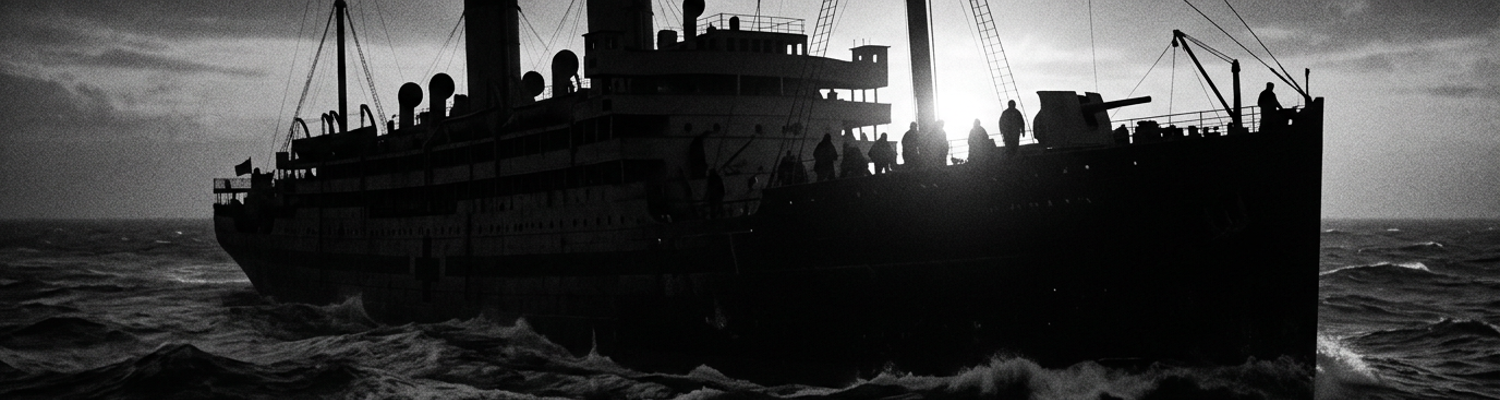

Emergency Distress Signals off the Mid-Atlantic Coast
At 0240 hours off the Virginia Capes in early October 1918, a continuous-wave Morse code transmission cracked across the standard maritime distress frequency. The sender operated key instruments inside a darkened radio shack. The wireless telegraphist aboard USS Mercy (designated AH-4) transmitted an urgent plea for emergency intervention to the Fifth Naval District station at Norfolk. Transmission logs recorded an unmanageable outbreak onboard. Dozens of sailors became incapacitated within single watch rotations. Medical staff suffered high fevers. Sick bays overflowed into crew mess spaces.
Panicked operators spelled out technical coordinates. They requested clearance for an isolated anchorage before entering Chesapeake Bay.
Heavy Atlantic swells pounded the hull. The vessel ran its 5-kilowatt spark-gap transmitter into the night. Coastal commands received warning that the hospital ship was returning as a contaminated vessel unable to contain its own dead.
Contagion crippled the vessel within ninety-six hours of clearing the shoals.
Archival evidence shows that commanding officers on the mainland scrambled to contain the crisis before the ship entered civilian waterways. Following the reception of these distress signals, the Fifth Naval District commandant ordered harbor defense vessels to establish a patrol cordon around the approaching hospital ship. Surgeons aboard formally requested armed patrol craft to enforce an offshore quarantine zone. They also requested emergency barges carrying fresh nursing detachments, oxygen cylinders, and crates of digitalis (NARA Record Group 24).
Docking clearance was flatly refused by port directors at Norfolk and Newport News.
Fearing public contamination, civilian stevedores threatened complete work stoppages if infectious patients set foot on municipal piers. Orders broadcast from coastal headquarters redirected the ship toward a designated quarantine anchorage off Old Point Comfort. The sick remained isolated miles from landward medical infrastructure.
Corpsmen collapsed across the ward decks beside the men they were ordered to treat.
A close review of operational logs indicates that an aggressive secondary bacterial pneumonia triggered the total collapse of shipboard care. The illness began as acute catarrhal influenza among the engine room ratings. It rapidly devolved into massive pulmonary consolidation within forty-eight hours. Microscopic analysis of sputum samples collected in the dispensary showed runaway pneumococcal and streptococcal superinfections. These infections defeated the ship supply of camphor and alcohol sprays.
Deprived of oxygen, patients developed heliotrope cyanosis. Their lungs filled with blood-stained fluid. Their faces and fingers turned dark purple.
Physical berthing space vanished almost immediately. Sickbay cot allocations were capped at four hundred sixty beds. Admissions surged past seven hundred. Hospital staff lashed canvas stretchers to steam pipes across the lower berth decks.
Deaths began striking the medical staff itself.
On October 12, Lieutenant Commander Chester Cameron Wood of the Medical Corps died aboard of acute broncho-pneumonia. Pharmacist Mate James Weller Perrott died twenty-four hours later.
When examining the historical record from the Bureau of Medicine and Surgery, the breakdown of vessel operations left the crew incapable of standard seamanship. Stoker gangs dropped from high fevers. Steam pressure fluctuated in the boilers while the ship drifted through dense coastal fog banks. Down below, the lack of forced-draft exhaust fans trapped infectious aerosols inside sealed bulkheads. Every adjoining companionway turned into an active zone of transmission.
Shoreside tenders finally made contact near the mouth of the James River. They transferred limited supplies of morphia and dry linen over rolling swells. They refused to take aboard contaminated casualties.
On October 14, three additional enlisted hospital apprentices perished in the forward ward. Their bodies were wrapped in canvas hammocks. Deck crews stacked them in the refrigerated meat lockers to await port clearance.
Meuse-Argonne Combat Wounds and Chemical Burns
Archival evidence shows that casualty manifests originating from the Meuse-Argonne sector overwhelmed USS Mercy deck winches within hours of embarkation at the port of Brest. Litter bearers hoisted infantrymen drawn directly from the 35th and 77th Divisions. These men had faced concentrated barrages near Montfaucon-d Argonne and the dense scrub of the Argonne Forest between September 26 and October 1.
German batteries fired 15-centimeter sFH 13 heavy howitzers and 7.7-centimeter field guns. The shrapnel shattered skeletal structures. Hundreds of soldiers suffered jagged compound fractures, eviscerating abdominal wounds, and avulsed muscle tissue.
French military rail authorities loaded these polytrauma cases into unheated boxcars (designated 40-and-8) at Souilly and Bar-le-Duc without adequate field decontamination.
These railcars carried troops westward over forty-eight continuous hours. Their mud-caked woolen service uniforms were saturated with oily dichlorodiethyl sulfide from German Yellow Cross gas shells. High-explosive iron splinters drove contaminated fabric deep into femoral and thoracic wounds. Gas gangrene accelerated before the train wheels reached the coastal sidings.
Artillery trauma arrived soaked in unneutralized vesicant poison.
A close review of operational logs indicates that volatile chemical agent off-gassing from wet wool uniforms triggered severe burn complications inside the lower deck companionways. Converted from the commercial passenger liner Saratoga, the vessel possessed narrow passageways lacking mechanical exhaust fans. Mustard vapors settled heavily along the C and D deck corridors. Body heat from wounded men lying on stretchers accelerated the chemical reaction. This caused deep chemical erythema and massive cutaneous bullae across the axillae, perineum, and facial tissue.
Hospital apprentices set up field-dressing lines directly on the linoleum floors of the gangways. They stripped chemically burned uniforms with heavy shears.
Medical personnel swabbed sloughing skin with Carrel-Dakin sodium hypochlorite solution. They spread zinc oxide ointment over open chemical ulcers. They instilled mineral oil drops into eyes swollen shut by keratoconjunctivitis.
Rolling Atlantic swells repeatedly broke the balance of corpsmen. Corrosive irrigation fluids sloshed across exposed nerve beds. Unsecured stretchers crashed into iron steam lines.
Sulfur-mustard vapors blinded three attending hospital apprentices before the vessel completed its first outward watch.
When examining the historical record from the vessel surgical department, the rapid intake of battlefield polytrauma beside active pandemic influenza destroyed all standards of surgical asepsis. Operating spaces sized for four simultaneous interventions held ten operating tables. Crews lashed them together in the main surgical suite. Contaminated open fractures sat inches away from respiratory beds.
Ether anesthesia administered through open drop masks provoked violent coughing fits in gassed soldiers. These men harbored early-stage viral influenza. They projected aerosolized pneumococcal droplets directly across the sterile surgical fields.
Wounded soldiers undergoing primary debridement inhaled these virulent respiratory particles. Their thoracic cavities or compound limb fractures were exposed on the tables.
Cross-infection surged immediately. Fatal streptococcal empyema developed in amputees within forty-eight hours of operation.
Sterilizers ran dry as fresh boiler feed water dropped. Surgical teams dressed open wounds with rough muslin gauze boiled in salty harbor discharge.
Deck logs record that eight amputees died of acute broncho-pneumonia before the vessel made twelve knots past the Ushant light.
Depletion of Critical Antiseptics and Analgesics
Archival evidence shows that the dispensary aboard USS Mercy exhausted its baseline inventory of Carrel-Dakin solution within seventy-two hours of clearing European waters. Alexis Carrel and Henry Dakin designed this continuous irrigation method specifically for deep combat trauma. The process required an unstable, precisely neutral 0.48-percent sodium hypochlorite compound flushed through multi-perforated rubber instillation tubes every two hours to suppress gas gangrene.
Raw stocks of chlorinated lime and sodium bicarbonate vanished from the forward compounding laboratory on C Deck.
Hospital corpsmen attempted to titrate fresh batches using unbuffered bleaching powder and harbor water distilled through corroded evaporator coils. Rolling Atlantic sea conditions disrupted the delicate chemical balance. The pharmacy produced alkaline mixtures exceeding 0.6 percent. This fluid chemically destroyed living granulation tissue and dissolved catgut ligatures in open stump wounds.
Chief surgical officers ordered the irrigation manifolds shut down once the final carboy ran empty on October 7. Sixty-four soldiers from the 137th and 138th Infantry Regiments were left to rapidly spreading anaerobic necrosis.
Anaerobic bacteria multiplied in unwashed muscle tracts within six hours of the final chemical reservoir running dry.
A close review of operational logs indicates that the sudden surge of respiratory agony forced an immediate command breakdown over injectable morphine sulfate. Senior Medical Corps surgeons allocated their four-ounce stock of hypodermic quarter-grain tablets strictly for surgical interventions. They managed shock in men with severed femoral arteries or shattered pelvic bones arriving from Montfaucon.
By October 8, hundreds of concurrent influenza casualties developed terminal pulmonary consolidation. They choked on blood-tinged alveolar fluid and thrashed violently against iron bunk stanchions.
Hospital apprentices faced an impossible distribution choice between surgical wards and infectious berthing bays. The ship executive officer issued an order cutting hypodermic dosages down to an ineffective eighth of a grain.
Corpsmen dissolved these reduced tablets over alcohol flame spoons in the pitching companionways. They dulled reusable steel hypodermic needles against wire files until bent tips ripped muscle tissue.
By October 10, the dispensary safe held less than twenty grains of morphia. Surgical teams withheld all injectable sedation from delirious pulmonary patients to preserve single doses for secondary debridements.
Guards armed with Colt Model 1911 pistols stood watch over the remaining narcotic lockboxes. They prevented desperate corpsmen from raiding the supply.
When examining the historical record from the ship supply department, the expenditure of dry surgical dressings far outpaced the capacity of the vessel internal steam autoclaves. Standard treatment of severe chemical burns and compound shrapnel wounds demanded clean changes of absorbent cotton batting, gauze fluffs, and sterile muslin bandages three times daily.
The ship five hundred standard operating packs ran out.
Sea water contaminated the auxiliary boilers. This destroyed the pressure valves on the D-deck sterilizing tanks and halted all heat decontamination of salvageable linen. Blood, mustard gas residue, and infectious sputum saturated every available sheet across the five casualty tiers.
Apprentices stripped canvas covers from auxiliary lifeboats. They ripped apart unbleached cotton mattress ticking. They unthreaded heavy wool hammocks to create crude retention wrappings for suppurating stumps.
These unsterilized textiles held necrotic fluid against open flesh. Runaway staphylococcal wound contaminations and erysipelas triggered across thirty-two amputees before the ship reached latitude 37 degrees north.
Surgical Operations Under North Atlantic Blackout Orders
Archival evidence shows that German submarine activity in the Western Approaches forced Commander Frederick Rice to impose strict Condition Aphrodite blackout orders immediately upon clearing the goulet at Brest. Vice Admiral William Sims mandated total optical suppression for all homeward-bound naval transports. He disregarded standard non-combatant hospital ship markings under the Hague Convention after German torpedo attacks sank HMHS Llandovery Castle earlier that summer.
Shipboard carpenters nailed heavy asphalt-saturated tar paper across every porthole, skylight, and open air scuttle along the B Deck. Master-at-arms details dogged down the thick brass deadlight covers with heavy iron spanners.
These mechanical seals trapped the heat radiating from steam-driven ventilation trunks. Ambient temperatures inside the main surgical suite passed ninety-eight degrees Fahrenheit within hours of clearing the coast.
Canvas light-lock baffles were constructed from doubled layers of tarred sailcloth. Crews rigged them across every companionway hatch leading into the operating spaces. This completely cut off passive atmospheric draft.
Stifling, uncirculated air rapidly concentrated volatile fumes from open-drop ether anesthesia, vomitus, and burning sulfur fumigation candles inside the windowless surgery compartment.
Deadlights remained bolted shut even when internal compartment temperatures reached one hundred degrees.
A close review of operational logs indicates that the vessel primary electrical plant could not maintain baseline voltage to the surgical suite while running auxiliary bilge pumps and forced-draft blowers in heavy seas. Chief engineers throttled back the direct-current dynamos in the engine spaces to prevent switchboard burnouts. This starved the overhead surgical fixtures down to a dim, yellow glow.
Surgical teams directed by Lieutenant Commander William Seaman Bainbridge operated under single 15-watt carbon-filament bulbs fitted with conical tin hoods. Dry-cell Burgess battery lanterns supplemented the light. These lanterns flickered whenever vibrations rattled their zinc casings.
In this weak illumination, naval surgeons performed emergency debridements and guillotine amputations on soldiers suffering from advancing gas gangrene and shattered femurs.
Corpsmen held directional hand lanterns inches above open muscle beds. Operators distinguished between pale, necrotic tissue tracts and viable bleeding muscle by this light. They traced retracted femoral vessels before patients died of blood loss.
Chemical batteries failed during deep surgical explorations. Medical personnel struck friction matches over the sterile field. They guided amputation bone saws across exposed periosteum by touch alone.
Surgeons tied off deep arterial bleeds using finger pressure and tactile memory rather than direct vision.
When examining the historical record from the bridge navigation logs, dense fog banks collided with severe gale-force swells as USS Mercy reached open ocean coordinates near 48 degrees North, 17 degrees West on October 6. Steaming through zero-visibility conditions under strict radio silence forced the bridge watch to maintain nine knots through running transverse seas. This generated violent roll angles exceeding twenty-five degrees every six seconds.
Inside the surgical flat, iron operating tables secured to the deck beams strained against their deck bolts. Operative fields suddenly tilted by several feet without warning.
Hospital corpsmen physically threw their upper bodies across convulsing soldiers. They used raw physical weight to pin down thrashing limbs while operating surgeons manipulated Liston knives, bone rongeurs, and retractors.
Unsecured instrument trays, carboys of corrosive phenol, and unsterilized enamel basins repeatedly broke their lashings. They crashed across the blood-slicked linoleum floors.
Pitching hull movements frequently deflected surgical scalpels during invasive procedures. Scalpels accidentally severed healthy nerve trunks and cut through peritoneum during abdominal explorations before assistants could brace the surgeon against the steel bulkhead.
Four soldiers suffered severed popliteal arteries when thirty-degree hull rolls pitched scalpel blades through posterior tissue pockets.
Ventilation Failure and Cross-Infection in Berthing Compartments
Archival evidence shows that the mechanical enforcement of Condition Aphrodite transformed the lower berthing compartments of USS Mercy into sealed aerodynamic dead zones. Below the water line on E and F Decks, carpenters and repair parties wedged heavy rubber gaskets into every brass port flange. They drove iron wedge dogs into place with heavy mauls to stop any trace of interior electric glow from reaching German submarines.
Air circulation throughout the lower hull depended almost entirely on passive wind-scoop cowls mounted along the weather deck. Bridge watch officers ordered these exterior intake funnels capped with tarred canvas. This prevented surface spray and ocean damp from pouring into the hold during heavy North Atlantic swells.
The lowest casualty flats were deprived of both natural atmospheric draw and functional mechanical exhaust fans. Stagnant air settled across the decks.
Exhaled moisture from five hundred men condensed on exposed steel frames. It hung in dense, stationary clouds of microscopic respiratory droplets. These droplets could neither rise through the sealed hatch trunks nor escape through the dogged hull plates.
Static moisture dripped continuously from overhead deck girders directly onto the faces of immobilized men below.
A close review of operational logs indicates that naval dockyard contractors in New York had altered the original commercial cargo layout. They installed tightly packed four-tier pipe-frame racks to maximize casualty transport numbers. Each soldier occupied a galvanized iron frame strung with rough canvas lacing. Less than twenty inches of vertical clearance separated each bunk from the one directly above.
Wounded men from the 35th and 77th Divisions lay head-to-head along these continuous iron tiers. They coughed violent streams of bacillus and viral discharge directly across adjoining bed spaces.
Civilian canvas supplies had failed prior to departure from Brest. Hospital corpsmen could not erect muslin separation screens between the stacked rows.
Damp straw-filled tick mattresses quickly absorbed sweat, infectious sputum, and purulent drainage from soiled wound dressings. Each bunk frame turned into a permanent surface reservoir for bacterial transfer.
Attendants moving through narrow twelve-inch gangways brushed their woolen uniforms against contaminated bedding. They carried live pathogens from cot to cot during every routine watch inspection.
Cross-contamination swept through entire twenty-man rack rows in under twelve hours.
When examining the historical record from the vessel daily medical journals, this unchecked airborne exposure triggered explosive cases of secondary bronchopneumonia. The infection destroyed lung function with unprecedented speed.
Infantrymen reported baseline coryza and mild pyrexia at the start of a watch. They collapsed into severe respiratory failure before their reliefs finished duty.
Lungs filled with thin, blood-stained pulmonary edema. This cut off alveolar gas exchange and starved systemic capillaries of oxygen.
Clinical staff charted a distinct, darkening discoloration spreading across the ears, lips, and malar ridges. This condition, known as heliotrope cyanosis, stained facial skin a deep mahogany or indigo hue.
Patients choked on their own excessive bronchial secretions. They produced loud, rattling respirations that echoed off the damp bulkheads. Corpsmen ran out of suction tubing to clear obstructed airways.
By midnight on October 8, fifty-six ambulatory surgical convalescents progressed to complete respiratory arrest. Their stiffened bodies remained jammed inside the narrow four-tier racks until deck crews arrived with canvas hoisting straps.
Medical logs on October 9 cataloged twenty-two deaths in Compartment E-4 alone.
Physical and Psychological Collapse of Navy Corpsmen
Archival evidence shows that influenza spread through the shipboard medical department with the same velocity seen in the lower cargo bays. By October 9, thirty-eight of the sixty-five enlisted hospital corpsmen attached to USS Mercy developed acute pyrexia. They displayed body temperatures fluctuating between 103 and 105 degrees Fahrenheit.
Seven medical officers collapsed on duty from rapid pulmonary consolidation within seventy-two hours of the first documented civilian case in Brest. The assistant division surgeon was among them.
Members of the Navy Nurse Corps assigned to the upper officer wards succumbed alongside the corpsmen. They lost eleven of their twenty-two active personnel to severe secondary pleurisy and chest pains.
Sick medical staff attempted to remain on their feet by dosing themselves with liquid camphor and raw spirits of ether. Persistent vertigo, spontaneous epistaxis, and cyanotic exhaustion dropped attendants across the dispensary linoleum.
Replacing sick medical staff proved impossible at sea.
Healthy corpsmen inherited double and triple watch assignments. They absorbed twenty-hour shifts across the dark companionways with zero off-watch relief.
Forty-four out of seventy-eight hospital corpsmen lay incapacitated in their bunks before the ship crossed the fortieth meridian.
A close review of operational logs indicates that extreme sleep deprivation crippled baseline clinical decision-making throughout the lower deck wards. Attendants worked continuous forty-eight-hour rotations through the foul atmosphere of E and F Decks. They inhaled concentrated carbon dioxide and aerosolized sputum until severe cognitive impairment set in.
Corpsmen repeatedly misplaced distribution ledgers. They misread handwritten doctor orders. They dropped glass medication ampoules onto the deck plates with trembling fingers.
Scheduled administrations of digitalis, strophanthin, and codeine stopped completely across Compartments E-2 and E-3. Surviving apprentices were physically unable to climb the companionway ladders to restock dispensary supplies.
Basic ward maintenance halted.
Soiled linen, vomit-streaked canvas covers, and full bedpans accumulated along the bulkheads. This created an overwhelming stench that induced dry-heaving in the staff.
Immobilized patients ceased breathing inside their four-tier pipe berths. Delirious corpsmen failed to register the deaths. They left corpses wedged against living respiratory cases for eighteen hours before deck division working parties arrived with canvas tags.
Administrative tracking of patient temperatures and pulse rates ceased across three lower wards on October 10.
When examining the historical record from the vessel neuropsychiatric intake files, the burden of managing acute war neurosis beside terminal infectious patients fractured the psychological stamina of the surviving apprentices. Hundreds of infantrymen from the 35th Division suffered from severe artillery shell-shock. They displayed uncontrolled muscular tremors, hysterical blindness, and violent combative episodes triggered by the thrum of the ship reciprocating engines.
These convulsing soldiers occupied cots directly adjacent to men choking on pulmonary fluid.
Hospital corpsmen bodily pinned down screaming soldiers who believed their berthing tier was collapsing under German high-explosive bombardments. They simultaneously attempted to clear blood-streaked bronchial froth from dying patients lying six inches away.
Sensory overload broke the corpsmen.
Two hospital apprentices abandoned their posts on D Deck. They crawled into empty chain lockers. Masters-at-arms found them curled in catatonic fugue states.
Pharmacist mates suffered acute tremor fits and uncontrollable weeping spells. They were unable to suppress auditory hallucinations of screaming wounded after seventy hours of continuous exposure to dying men.
Deck officers placed four corpsmen under armed sentry watch in the aft steering compartment. These men attempted to jump over the guardrails into the North Atlantic swells on October 11.
Bureau of Medicine and Surgery Post-Voyage Reforms
Archival evidence shows that formal post-mortem examination packets reached the desk of Surgeon General William C. Braisted at the Bureau of Medicine and Surgery within four days of USS Mercy dropping anchor off Old Point Comfort. Naval pathologists at the Hampton Roads Naval Base laboratory dissected the pulmonary tissue of forty-two deceased crewmen and Meuse-Argonne casualties. They prepared gross anatomical descriptions alongside paraffin-embedded histological sections.
Pathological records documented complete alveolar destruction. Excised lungs averaged between 1,200 and 1,800 grams due to severe hemorrhagic pulmonary edema. This was more than triple the weight of healthy respiratory organs.
Cross-sections revealed dark red hepatization across all pulmonary lobes. Extensive mucosal sloughing occurred throughout the trachea and primary bronchi.
Cultures pulled from terminal bronchoalveolar lavage fluid confirmed runaway secondary bacteremia. They isolated heavy strains of Streptococcus hemolyticus and Diplococcus pneumoniae that overwhelmed hosts during viral immunosuppression.
BUMED convening authorities logged these findings alongside daily clinical charts. They established that secondary bacterial invasion drove the rapid shipboard mortality rate, rather than primary blast injury or mustard-gas burns.
Laboratory slides confirmed the lungs had failed under bacterial load.
When examining the historical record from the joint investigative board convened by BUMED and the Bureau of Construction and Repair, mechanical ventilation failures during Condition Aphrodite blackouts received immediate technical condemnation. Marine engineering inspectors discovered that converted liner hulls like AH-4 relied on passive wind-scoop cowls. These went completely non-functional when dogged down against heavy Atlantic seas or German submarine threats.
Naval directives issued in late November 1918 mandated the immediate removal of canvas intake covers. They ordered the physical installation of continuous mechanical forced-draft supply and exhaust blowers across every transport berthing deck.
Blueprints required multi-branch sheet-metal duct networks connected to high-output electric centrifugal fans. They set an absolute design threshold of thirty-five cubic feet of fresh atmospheric air per man per minute in all enclosed casualty compartments.
Shipyards received strict instructions to eliminate dead-air pockets. They cut supplementary exhaust plenums directly through watertight bulkheads. They fitted them with automatic spring-loaded acoustic and optical flash baffles so circulation continued uninterrupted through nighttime combat blackouts.
Stagnant air pockets in the lower hull were declared structural defects.
A close review of operational logs indicates that the complete depletion of surgical wash and analgesics on the Atlantic crossing triggered emergency revisions to standard naval cargo allocations. BUMED Instruction 118-B established non-divertible baseline reserve quotas for all auxiliary transports. It mandated a minimum ninety-day operating supply of unbuffered sodium hypochlorite reagents, dry Dakin tablets, and sealed three-pound carboys of medicinal liquid petrolatum.
Dispensary safes were legally required to store forty grains of injectable morphine sulfate per one hundred embarked troops. This stock was isolated in dual-keyed steel lockboxes separate from routine pharmacy stock.
Berthing architecture underwent identical regulatory overhauls.
Naval architects barred the installation of four-tier casualty racks. They capped troop berthing at double-tiered bunks spaced a minimum of five feet between stanchion centerlines. They enforced an alternating head-to-toe sleeping configuration.
Every transport vessel handling wounded personnel had to permanently designate ten percent of its total berth tonnage as negative-pressure isolation spaces. These spaces were isolated behind gas-tight bulkheads and fitted with independent drainage sumps. The sumps discharged directly overboard through steam-disinfection traps.