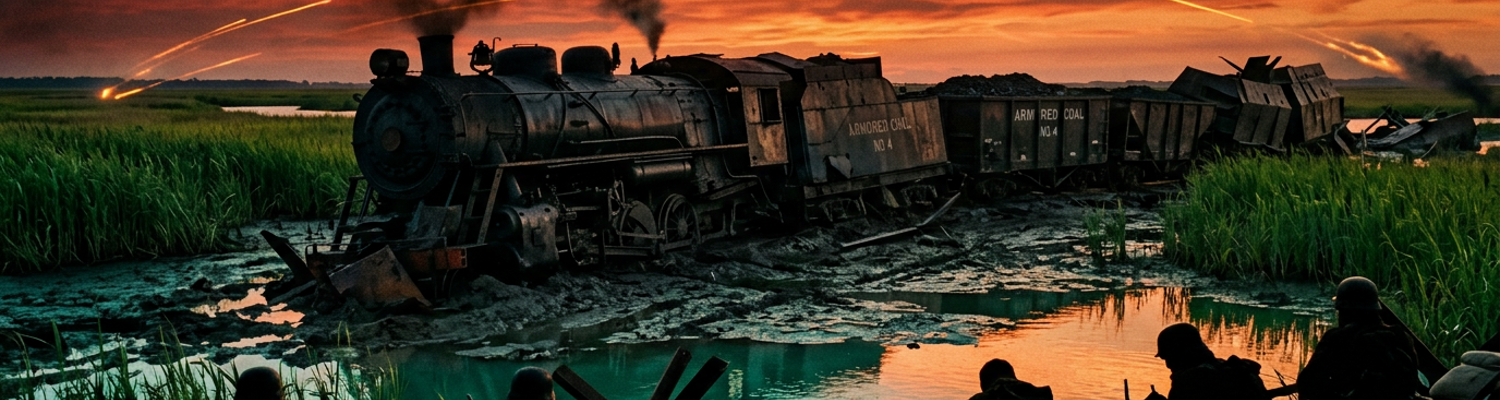

Operation Beleaguer and the Kailan Railway Corridor
Riflemen of the Eighth Route Army occupied the waterlogged fringes of the Bohai Gulf. They dug firing pits into the muddy embankments and observed every movement along the raised single track railway. Miles of tidal mudflats, shallow drainage ditches, and dense reed beds separated these hidden snipers from the sea. This terrain swallowed heavy vehicles and fouled military gear with salty silt. Marines of the 1st Marine Division deployed into Tangku and Tientsin in late 1945 under Operation Beleaguer to repatriate Japanese personnel and secure strategic infrastructure across this hostile landscape [1]. American logistics officers immediately confronted severe shortages of rust inhibitors, grease, and replacement parts. Damp sea air ate away at exposed steel mechanisms. Wet salt mist corroded the bolt assemblies and gas pistons of infantry weapons within days. Coal locomotives struggled to pull heavy freight through the sodden delta toward waiting ships.
Ships at the Tangku wharves relied entirely on the steady arrival of these rail convoys. Marines took on an exhausting logistical burden along the interior line to keep the vessels loaded. Infantrymen assumed operational protection over the Kailan Mining Administration rail corridor connecting the bituminous coal mines of Tangshan with coastal ports and Tientsin [1]. This vital industrial artery kept municipal power plants running, supplied commercial factories, and warmed millions of freezing civilians throughout northern China during the bitter winter months [1]. American supply personnel worked around the clock in crude rail yards. They tried to keep ancient prewar rolling stock functional despite frozen grease boxes and bent axles. Silt mixed with pulverized coal to gum up the journal boxes on the freight cars. Constant friction wore down wheel bearings and snapped heavy steel draft gear during transit.
Steel draft gear failures frequently stranded loaded gondolas in desolate stretches of track. Small guard details found themselves isolated against sudden nighttime raids. Marine security detachments operated alongside Nationalist Chinese railway police across politically contested zones in eastern Hebei Province to protect these exposed freight trains [1]. Nationalist guards manned stone watchtowers and reinforced sandbag revetments at critical bridges. Their lack of heavy tools and proper spare parts made rapid rail repair nearly impossible. Guerrillas exploited these structural weaknesses by unbolting rail plates, cutting copper telegraph wires, and burying explosive charges under the gravel ballast beneath the cross ties. Track repair crews had to clear debris, shovel away mud, and replace loosened rail sections under armed guard. They raced to finish work before the scheduled departure of the midnight coal escort.
Locomotive crews received urgent orders to assemble this midnight coal escort before the next tidal surge flooded the lower marsh beds. Supply sergeants wrestled with requisition paralysis and empty storage bins at the depot. They could not secure factory specification leaf springs or clean ammunition belts for the train machine guns. Mechanics used scrap metal and field torches to reinforce cracked leaf springs. Marine gunners manually scraped abrasive silt from their jammed Browning feeds. Nationalist rail dispatchers finally waved the outbound train onto the mainline just as cold rain and coastal fog settled over the vast salt flats outside Lutai. Engineers pushed the lead steam locomotive into the dark marshland. The cowcatcher drove over unstable ties as Marine riflemen racked their weapons behind damp sandbags.
Alkaline Marsh Silt and Small Arms Degradation
Riflemen felt the gritty drag of fine white dust ground into the steel receiver tracks the moment they pulled back the charging handles. Corrosive alkaline silt and brine spray from the Gulf of Chihli flats infiltrated operating mechanisms. M1 Garand operating rods and bolt lugs seized within minutes of exposure to the sea wind. Supply sergeants had already run out of light lubricating preservative oil at the Tangku depot. Squads possessed only thick cosmoline that trapped airborne alkali particles and formed a heavy grinding paste. Marines repeatedly slammed rifle butts against the wooden floorboards of the open gondolas to break loose frozen bolt assemblies. They used dry cloth patches and toothbrush bristles to clear the caustic white residue from the firing chambers. Gun crews on the sandbagged flatcars discovered that their water cooled Browning machine guns suffered identical stoppages. Sticky salt crusts fouled the feed trays and cartridge extractors before the convoy even reached the first drainage trestle. Escort leaders quickly realized that their infantry firepower was crippled. The train became dependent on the motorized patrol trucks assigned to shadow the track from the dirt service road below the ballast.
Trucks attempting to keep pace along the embankment churned the coastal mud into deep trenches as their heavy dual tires lost traction. Seasonal monsoon rains liquefied marsh subgrades. Six by six transport trucks and support vehicles attempting trackside patrols along the single line corridor routinely bogged down. Drivers engaged front wheel drive and locked their differentials to power through the sludge. The heavy vehicles sank to their axle housings in the gray waterlogged soil. Recovery crews tried anchoring front mounted winches to trackside telegraph poles. Rotten wood and soft embankment earth tore out under the mechanical strain. Supply sergeants back at the railhead refused to release additional wreckers into the swamp. Earlier recovery attempts had already burned out clutches and snapped scarce steel tow cables. Stranded drivers had to abandon their bogged vehicles in the tall reeds. They grabbed their field packs and scrambled up the ballast on foot. The lumbering coal train proceeded alone into the marshland without motorized flank security.
Radiomen huddled inside the vibrating caboose cranked their field sets to alert the Lutai stationmaster that the convoy had lost its motorized flank security. Salt crusted atmospheric moisture accelerated galvanic corrosion on radio wiring harnesses. The operational range of field transmitters dropped to less than a single mile. Green copper oxide crusted over the exposed multi pin plugs and internal solder joints. Voice transmissions turned into garbled squeals and dead static. Battery terminals corroded inside their rubberized canvas carrying pouches. Electrical current failed, preventing transmission of urgent warning messages to the division command post in Tientsin. Escort leaders repeatedly inspected the power cables and scraped the contacts clean with bayonet tips. Damp sea air continuously broke the circuits and choked off the outgoing signal. Train guards finally set the dead handsets aside. They chambered rounds into their sluggish rifles and posted lookouts with red kerosene lanterns along the catwalks of the loaded coal hoppers.
Improvised Armored Gondolas and Railcar Hardening Techniques
Lantern light swung across the crude armored cars spliced directly behind the locomotive tender. The glow illuminated the patchwork iron shielding that guarded the train crew. Marine combat engineers had retrofitted commercial coal gondolas into rolling pillboxes. They torch cut salvaged boilerplate steel from derelict factory ruins and bolted the heavy plates along the wooden side slats. Double tiered sandbag walls rose behind the steel plating. Engineers stacked them six bags high against the interior bulkheads to soak up rifle bullets and cushion the concussion of mortar splinters exploding against the outer hull. Supply sergeants had scoured the Tangku docks for these heavy burlap sacks. They filled them with coarse river gravel because fine salt marsh sand consistently leaked through the loose weave and gummed up weapon actions. Riflemen squeezed into the narrow central aisle between the sandbag barricades. They stacked wooden crates of belted ammunition and cleared firing ports cut directly through the iron siding. Gun crews scraped damp marsh mud off their boots and braced against the swaying floorboards as the heavily modified coal cars clattered across the uneven track switches.
Timber pedestal mounts bolted through the thick deck floorboards shuddered with every violent jolt of the train trucks against the rail joints. Combat engineers fashioned these sturdy wooden pillars from eight inch railroad ties. They secured the bases with iron lag bolts and heavy angle braces to support reclaimed M1919A4 air cooled and M1917A1 water cooled Browning machine guns at waist height. Marine mechanics had dragged the water cooled guns out of depot salvage piles. They rebuilt the pitted bronze trunnions with hand files and wrapped leaky water jackets with friction tape to maintain coolant levels during sustained firing. Canvas water buckets and rubber condensing hoses dangled beside each M1917A1 crew. These provided emergency drainage into dented kerosene cans so the boiling steam would not blind the gunners inside the enclosed gondola walls. Air cooled M1919A4 guns occupied the open corner posts on pintle brackets. Loaders wrestled with twisted link belts while trying to keep wet salt fog from fouling the open receiver covers. Machine gunners checked the elevation screws and loaded cloth belts into the feeds. They aimed the black muzzles through the narrow steel embrasures into the dark reeds flanking the right of way.
Reeds whipped against the undercarriage as thousands of pounds of deadweight pressed the wheel sets deep against the iron rails. Added armor weight of the thick boilerplate, wet gravel bags, and reinforced timber bastions overwhelmed the fragile running gear of the civilian coal cars. Steel leaf springs cracked under the relentless vertical pounding along the marsh subgrade. They flattened until the heavy timber car bodies scraped directly against the spinning wheel flanges. Damaged journal boxes overheated as abrasive marsh grit mixed with black axle grease. The friction ate away the babbitt metal bearings and spewed acrid white smoke from beneath the trucks. Jerking tension running through the train slack repeatedly overstressed the weakened draft gear. Sheared couplers threatened to split the armored cars away from the main coal consist. Railcar wheels screeched violently whenever the engineer applied the air brakes. Metallic groans echoed through the marsh as bearings ground against dry axle journals.
Axle grease bubbled inside the smoldering journal boxes while the convoy crawled past the outer switches of the Lutai marsh siding. Trainmen ran along the vibrating exterior catwalks with long spouted oil cans and heavy pry bars. They doused the hot wheel hubs with thick cylinder oil to prevent the bearings from welding themselves solid to the axles. Supply sergeants leaned over the armored gunwales to drop spare coupling pins and emergency chains down to the brakemen working on the footboards between the cars. Mechanics clamped heavy steel clamps over the cracked leaf springs. They attempted to hold the broken spring leaves together before the sagged car frames derailed on the sinking cross ties. Marine riflemen braced their shoulders against the sandbags and watched the track bed disappear into the fog. They waited for the strained metal beneath their feet to give way entirely.
Tientsin Headquarters Bureaucracy and Conflicting Intelligence Estimates
Steel rail joints groaned beneath the overloaded gondolas far from the dry office rooms in Tientsin. Command staff at 1st Marine Division headquarters evaluated conflicting field evaluations generated by the Office of Naval Intelligence and the Strategic Services Unit [1]. Naval intelligence reports insisted that organized regiments of the Communist Eighth Route Army were massing along the rail corridor to cut coal deliveries to the port cities. Strategic Services Unit agents working out of regional observation posts claimed that Communist forces had vacated the immediate rail zone. They reported only loosely organized local militias without heavy weapons or central direction remained. Division planners struggled to reconcile these opposing assessments while sitting at conference tables covered in grease pencil situation maps. General Keller Rockey and his operations staff lacked reliable aerial reconnaissance over the tidal marshes. They had to guess whether line units faced simple track saboteurs or coordinated brigade attacks. Intelligence officers filed these contradictory assessments into metal cabinets and forwarded ambiguous warning circulars to the field garrisons along the Kailan line.
Commanders reading those ambiguous circulars faced heavy operational constraints. Diplomatic sensitivities surrounding the Marshall Mission imposed strict rules of engagement that prohibited preemptive clearing operations against insurgent staging areas [1]. General George C. Marshall was actively negotiating in Nanking to broker a truce between the Nationalist government and the Chinese Communist Party. American forces were ordered to maintain strict political neutrality. Marine rifle companies were strictly forbidden from sweeping villages or digging out fortified positions in the reed beds along the right of way unless fired upon directly. These passive rules forced Marine train escorts to remain confined to the elevated gravel track bed. Hostile spotters could track their every movement from concealed trenches in the swamp. Officers in the field protested that surrendering the tactical initiative handed the guerrillas complete freedom to select the exact time and place for derailments. Field captains nevertheless had to lock their machine guns on safe, restrict their sentries to the rail perimeter, and file endless paperwork requesting permission to engage hostile targets.
Paper requisition vouchers and engagement requests piled up in Tientsin supply bins while administrative friction and rear echelon requisition delays left line units short of essential cleaning solvents, canvas water shedding tarpaulins, and spare firing pins. Line sergeants sent urgent requests back to the division depot for drums of rifle bore cleaner. Rear echelon quartermasters repeatedly rejected paperwork for minor clerical errors or misplaced ledger stamps. The complete lack of heavy canvas tarpaulins meant that open coal gondolas, machine gun mounts, and crated ammunition absorbed continuous sea spray and cold rain throughout the journey. Bolt assemblies on infantry rifles seized up without light lubricating solvents. Brittle metal firing pins snapped inside dirty bolt carriers after firing only a handful of rounds. Supply sergeants had to barter field rations with civilian dockworkers and naval storekeepers in Tangku to obtain motor pool grease and scrap iron. Armorers threw snapped firing pins into scrap bins and hand filed replacement pins from discarded engine bolts so patrol squads would have functional weapons on the train.
Teletype machines in the Tientsin rail office clattered with final movement clearances for that very train. Orders directed the compromised coal escort to advance into the salt flats on schedule. Headquarters staff dismissed the mechanical breakdowns reported from the rail sidings. They prioritized the economic delivery of industrial fuel over the tactical vulnerabilities of the escort. Dispatchers refused to halt the convoy or authorize extra air cover. They insisted that political negotiations would protect the American train from hostile action. Marine escorts racked their gritty rifle bolts and checked their improvised firing pins. They watched the station lights disappear behind them as the train rolled onto the unstable mainline track.
Chronology of the August 4 Tangshan Coal Run
Rails clicked beneath the heavy wheels as the Tientsin bound Kailan Mining Administration coal consist rolled into the rainy darkness on August 4, 1946. The train hauled tons of bituminous fuel vital for regional municipal power grids [1]. A four man security escort from the 1st Marine Division rode aboard the improvised armored gondola alongside a contingent of Chinese railway police. They peered through narrow gun slits at the marshy terrain [1]. Marines squeezed between the wet sandbag revetments. They shared shoulder space with the Chinese officers while balancing their loaded weapons against the vibration of the iron floor. Both detachments understood that the municipal power plants in Tientsin depended entirely on this single train pushing through contested territory before local coal stockpiles completely ran out. The train engineer kept one hand on the steam throttle and one hand on the air brake valve. He watched the wet rails reflect the dim glow of the cowcatcher lantern.
Rails dipped and swayed into the muck where subgrade washouts and track bed subsidence from seasonal marsh flooding restricted train speed along the single track right of way. Floodwaters from nearby river channels had carved deep gullies beneath the cross ties. Crushed limestone ballast washed away, leaving sections of iron track suspended over soft silt. The civilian engineer cut the locomotive regulator back to a dead crawl of barely ten miles per hour to keep the heavy coal hoppers from jumping the spreading rails. Every sudden deceleration slammed the armored gondola against the tender. The four Marines and the railway police fell hard against the gravel sandbags and iron bulkheads. The supply sergeant crawled across the shifting floor to check the tie down wires on the water cooled machine gun. Jolting stops had worked the mounting lag bolts loose from the damp timber pedestal.
Wrenches turned against the rusted lag bolts while Chinese railway police leaned out of the firing embrasures. They pointed at severed telegraph wires trailing in the trackside brush. Reed beds pressed against both sides of the raised right of way. These thick plants hid the drainage ditches where guerrilla spotters monitored the train crawl. The four Marines divided their sectors of fire. They placed two riflemen at the forward steel shield and two with the machine gun facing the landward salt flats. Silt fouled moisture continued to bead along the receiver covers of their carbines and rifles. The men had to work the actions back and forth by hand every few minutes to keep the locking lugs from sticking. Lookouts on the swaying coal tender shouted down warnings whenever the track disappeared under standing pools of muddy water. The locomotive braked again as iron wheel flanges screamed against misaligned rail joints.
Sparks sprayed from the brake shoes as the train entered the dense salt marshes east of Lutai. The single track curved sharply around a submerged culvert. Locomotive steam hissed into the heavy fog. The engineer spotted loosened fishplates and pulled rail spikes glinting in the mud fifty yards ahead. Air brakes locked across the entire length of the consist. The sheer momentum of loaded coal gondolas shoved the heavy engine forward onto the unsupported cross ties. Marine riflemen threw their weight against the sandbags as the lead tender jumped the roadbed. The massive engine tore through the splintered ties and violently dragged the armored gondola into the marsh ditch. Chinese railway police scrambled to bring their carbines to bear through the canted gun ports. The first volley of hidden guerrilla rifle fire slammed into the outer boilerplate.
Culvert Demolition and the Lutai Derailment Firefight
Rifle bullets ricocheted off the dented hull just as buried charges detonated by Eighth Route Army guerrillas blew apart a trackside stone drainage culvert near Lutai. Exploding masonry and severed steel rails collapsed into the void. The massive steam locomotive pitched off the embankment, sending the forward coal hoppers tumbling onto their sides in the waterlogged marsh flats. Jagged iron frames, splintered ties, and tons of spilled bituminous coal dug deep trenches into the tidal mud. The derailed armored car pinned at a violent forty degree angle. Concussion waves threw the four Marines and surviving Chinese railway guards against the sandbag bulkheads. Black coal dust and blinding alkaline silt showered over them. Guerrilla marksmen entrenched behind raised irrigation ditches poured continuous rifle fire into the exposed wreck. They chipped away at the iron gun slits and drove the dazed defenders flat against the canted floorboards.
Marines pushed off the canted floorboards and clawed their way back toward the firing slits to return fire. They braced their gritty weapons across ruptured coal bins and torn steel plates. The four pinned Marines and surviving railway guards fought from derailed railcar wreckage against sustained insurgent fire from concealed embankments. They traded rapid rifle bursts with riflemen hidden among the wet reeds. Sandbags shredded under heavy caliber impact. Defenders stacked spilled lumps of coal into makeshift barricades to protect their wounded comrades from ricocheting lead. Silt caked the feed trays of their Browning machine guns. Gunners had to palm the charging handles back manually to clear repeated stovepipe jams between short bursts. Railway guards fed loose ammunition into their bolt action carbines. They shot through gaps in the mangled undercarriage whenever flashes revealed guerrilla rifle pits along the drainage dykes. Ammunition stocks dwindled rapidly inside the tilted gondola. Persistent enemy fire kept both groups trapped below the bent rim of the armored car, completely isolated from outside support.
Radiomen inside the battered caboose wrestled with soaked cables to break that isolation and transmit an urgent distress call back to the regimental base. Intermittent high frequency radio signal failure and routing bureaucracy delayed emergency dispatch requests to regimental headquarters for hours. The isolated detachment remained cut off in the swamp. Green galvanic corrosion on the antenna leads and atmospheric interference over the Bohai Gulf degraded the transmission into garbled static that failed to register across regional relays. Clerks at intermediate relay stations in Tangshan and Tangku refused to forward the fragmented messages without proper operational clearance codes. They demanded clerical verification while the fighting raged at the culvert. Regimental staff officers in Tientsin debated the validity of the garbled reports behind closed office doors. They shuffled movement ledgers instead of clearing emergency relief trains, leaving the trapped men to fight with dwindling ammunition.
Cartridge casings piled up around the tilted floorboards as the four Marines rationed their remaining clips against the encroaching guerrilla lines. No sign of reinforcements appeared. Guerrilla squads advanced through the tall reeds toward the derailed engine. They used the drainage ditch for cover while lobbing stick grenades toward the overturned tender. Surviving railway police tossed fragmentation grenades over the rim to break up the enemy rush. They caught the shockwaves against the steel floor while Marines picked off fighters scrambling through the mud. Defenders conserved their last belts of thirty caliber ammunition for point blank defense. They locked their bayonets onto weapon lugs and braced against the cold boilerplate. The distant whistle of an unescorted relief engine finally sounded across the salt flats.
Post Ambush Rail Patrol Doctrines and Communications Reform
A relief train dispatched from the Marine garrison at Tangku reached the derailment site after guerrilla forces had disengaged into the surrounding salt marshes [1]. The relief locomotive and rescue cars ground to a halt where the rail ballast vanished beneath black standing water. Marine infantrymen jumped into the waist deep brine with stretchers and pry bars. Steam billowed from the overturned locomotive. Medical corpsmen pulled the four Marine defenders and surviving Chinese railway police out through the buckled floor plates of the armored gondola. Silt covered spent cartridges rattled underfoot as rescue teams secured the perimeter. Eighth Route Army riflemen had already vanished into the maze of drainage dykes. They left behind only discarded sandals and empty ammunition clips pressed into the mud. Engineers used cutting torches to slice away tangled rail sections. They hooked heavy steel winch cables to the shattered coal hoppers in an effort to drag the wreckage off the single track mainline before the next high tide flooded the embankment.
Commanders revised rail defense doctrine to prevent another wrecked train from blocking the embankment, mandating motorized handcar reconnaissance sweeps ahead of all critical supply trains [1]. Staff officers at Tientsin realized that waiting for an escort train to stumble into blown culverts invited total destruction. Division headquarters pushed light scout teams ahead of every heavy locomotive. Depot mechanics welded steel shields and forward facing machine gun pedestals onto small gasoline powered maintenance speeders. This gave track inspection teams sufficient firepower to fight off ambushes while checking for pulled rail spikes. Patrol crews on these open speeders ran three to five miles ahead of the coal transports. They scanned drainage bridges and culvert masonry with binoculars to confirm track integrity. Radiomen assigned to these lead speeders discarded the corroded canvas battery packs. They wired their field sets directly to vehicle generators, securing battery voltage against the coastal moisture that had choked off emergency signals during the ambush.
Outposts received orders to coordinate their defensive routines directly with these advancing handcar crews, utilizing the secured radio networks. They tightened visual observation over vulnerable culverts along the Kailan line. Marine riflemen stationed in trackside concrete bunkers burned back the surrounding reed beds with fuel oil to eliminate concealed approach paths used by insurgent demolition squads. Nationalist rail dispatchers synchronized their telegraph lines with the new Marine movement schedules. They halted outbound coal consists the moment a scout handcar failed to report through the nearest wayside station. Supply sergeants stocked replacement fishplates, track spikes, and pre cut timber ties at every intermediate rail junction. They kept repair trains on immediate standby behind the reconnaissance screen to clear small demolitions before mainline traffic backed up.
Marines recognized that clearing small demolitions and protecting hundreds of miles of isolated iron track through political diplomacy alone left supply units at the mercy of mobile insurgent forces. The Lutai engagement demonstrated the tactical vulnerability of static infrastructure security against guerrilla interdiction during the opening phases of the Chinese Civil War [1]. Coal trains rolled forward under the updated precautions. Rail mechanics still spent their nights hammering replacement spring leaves onto scarred gondolas. Track walkers moved along the sodden right of way, probing the ballast beneath their boots for freshly disturbed earth.