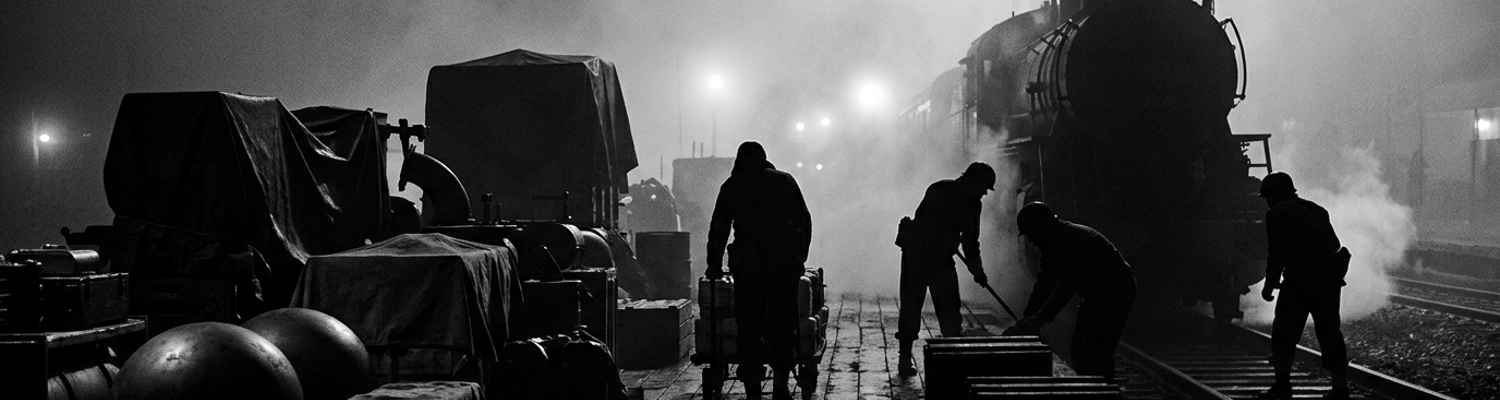

Naval Base 17 and the North Sea Mine Barrage
During April 1917, German submarines sank 881,027 tons of Allied shipping.
British Admiralty projections indicated a total collapse of their supply lines by November of that year if the sinkings continued at that rate. When examining the historical record, the American response materialized through the rapid construction of distinct coastal facilities in Scotland. In early 1918, the United States Navy established Naval Base 17 at Invergordon and Base 18 at Inverness. These specific locations provided deep-water anchorages and direct access to the Highland Railway network. Base 17 sat on the northern shore of the Cromarty Firth. Base 18 occupied the Moray Firth near the eastern terminus of the Caledonian Canal. Rear Admiral Joseph Strauss took command of the overarching United States Mine Force. He deployed the 1st Mine Regiment to execute the industrial buildup.
Engineers at Invergordon immediately requisitioned the Dalmore Distillery.
Working parties tore out the commercial copper stills. They replaced the brewing equipment with heavy assembly lines. Construction battalions poured thousands of cubic yards of concrete to support narrow-gauge railway tracks. These tracks ran directly through the former fermentation sheds. Cargo ships delivered raw components to the western port of Kyle of Lochalsh. Steam trains then hauled these crates over the mountains to the eastern firths. Cargo manifests show that the parts originated from over five hundred separate automotive and agricultural manufacturing plants across America. The bases were tasked with assembling 100,000 Mark 6 mines for the North Sea Mine Barrage. Planners intended to drop these weapons in a continuous barrier across 230 miles of open ocean between the Orkney Islands and the Norwegian coast.
A close review of operational logs indicates the extreme technical complexity of the assembly process.
The Mark 6 weapon system contained a 300-pound cast trinitrotoluene explosive charge. This payload was housed in a buoyant steel sphere measuring thirty-four inches in diameter. Its primary activation method relied on the newly invented K-pistol firing mechanism. Once a mine entered the water, the K-pistol released a small copper float. This float pulled a seventy-foot antenna upward toward the surface. Contact between this copper wire and the steel hull of a submerged submarine generated a localized galvanic battery effect. This electrical charge tripped the detonator relay.
Assembly crews at Base 17 had to manually wire the K-pistol before mating the explosive sphere to an 800-pound box anchor.
Inside each anchor sat a cast-iron plummet, a spool of wire rope, and a mechanical depth-taking gear. The plummet mechanism controlled the final depth of the mine through a series of hydrostatic dashpots. Archival evidence shows that early production batches of the hydrostatic dashpots failed calibration tests at a rate exceeding forty percent. Engineers under Strauss had to disassemble the faulty depth-taking gears on the unheated concrete floors of the converted distillery. They filed down the brass valve seats by hand. This modification ensured the pressure springs would release the wire spool at the correct ocean depth. A miscalculation during this manual filing process meant the mine would either float to the surface and threaten friendly shipping or sink uselessly into the mud.
Mechanics worked continuous twelve-hour shifts.
They used improvised calipers to measure the tension on the K-pistol springs. They replaced substandard factory wiring with heavier gauge copper salvaged from local telegraph lines. Faulty detonator relays triggered three separate accidental explosions inside the assembly sheds during the first month of operation. To transport the finished ordnance, workers loaded the armed Mark 6 units onto flatbed railcars. Small shunting engines moved the trains down to the Invergordon piers. Specialized mine-laying vessels waited at the docks to take on the volatile cargo. The loading process required deckhands to operate steam winches. They lifted each 1,100-pound assembly over the side of the ship. Handlers maintained strict physical clearance to avoid jarring the sensitive K-pistol housing during the transfer. Saltwater corrosion frequently jammed the winch gears. Crews had to lower the live mines into the cargo holds using manual block and tackle systems.
Administrative Delays and Mark 6 Mine Assembly
Between January and March 1918, inventory records confirm that 14,300 Mark 6 mine anchor casings sank into the freezing mud at the Kyle of Lochalsh railhead.
Missing cargo manifests caused the pileup. A close review of operational logs indicates that United States Navy Supply Corps personnel struggled under severe administrative delays throughout the Highland winter. Commander E.C. Tobey operated out of a damp wooden shed near the Invergordon piers. He served as the senior supply officer attached to the 1st Mine Regiment. His team of thirty clerks attempted to track ordnance shipments crossing the Atlantic on civilian freighters. Cargo ships frequently arrived at the western Scottish ports without advance notice. Dockworkers unloaded unlabeled crates containing thousands of K-pistol firing mechanisms, copper antenna floats, and hydrostatic dashpots directly onto the open docks.
The Highland Railway network lacked the rolling stock to move this sudden influx of heavy industrial material.
Trains running between the western coast and Naval Base 17 experienced frequent breakdowns on the steep grades near Achnasheen. Snowdrifts regularly blocked the tracks at the Dingwall junction. Supply clerks at Invergordon received boxcars filled with 300-pound cast trinitrotoluene explosive spheres weeks before the corresponding box anchors arrived. This sequencing error forced engineers to stack the highly volatile explosive charges in unheated fermentation sheds at the Dalmore Distillery. Freezing temperatures cracked the cast-iron plummet casings. Archival evidence shows that inter-departmental coordination failures heavily disrupted routine assembly operations on the distillery floor.
The Bureau of Ordnance in Washington designed the explosive spheres.
Civilian automotive plants in Detroit manufactured the mechanical depth-taking gears and wire rope spools. Neither bureau standardized the threading specifications for the brass valve seats connecting the two systems. The Detroit plants utilized a coarse-thread design optimized for rapid stamping. Washington engineers drafted schematics requiring a fine-thread machine screw to secure the waterproof seals. When assembly crews at Base 17 attempted to mate the K-pistol housings to the anchor units, the locking collars failed to align. Royal Navy liaison officers at the Admiralty compounded the confusion. They demanded the Americans adopt British Whitworth thread standards for all replacement parts machined on-site.
United States Navy mechanics refused.
They lacked the specific taps and dies required to cut British threads into American steel. The resulting standoff halted production for eighteen days. Captain Orin Gould Murfin commanded the local assembly detail. He ordered his men to bypass the official supply chain entirely. Base 17 engineers dismantled the incompatible brass locking collars and hauled them to civilian machine shops in Inverness. Local Scottish machinists worked alongside American sailors to manually re-thread 4,500 individual valve seats using improvised lathes. Back at the Dalmore facility, routine assembly operations deteriorated into a chaotic system of localized stockpiling.
Workers stripped functional copper wiring from damaged K-pistols to complete units waiting on the primary assembly line.
Train schedules dictated by the British Ministry of Munitions prioritized coal shipments over ordnance components. American supply officers had to barter directly with Highland Railway dispatchers. They traded surplus naval rations for dedicated flatbed railcars. A single boxcar could transport exactly twenty-four fully assembled Mark 6 mines. The physical environment inside the assembly sheds amplified the administrative friction. Mud tracked in from the railway sidings coated the concrete floors. Mechanics dropping a standardized locking pin often lost the component in the sludge. This required a clerk to file a formal requisition form with the Supply Corps depot three miles away.
Bureau of Ordnance regulations mandated that a commissioned officer physically sign each requisition slip for replacement detonator relays.
Officers were frequently inspecting the deep-water anchorages at the Cromarty Firth. They traveled up to five miles away from the main factory floor. Assembly lines stopped completely while enlisted men waited hours for a lieutenant to return and authorize the release of a ten-cent copper spring. The resulting backlog of partially assembled mines forced night-shift crews to stack live ordnance directly on the narrow-gauge tracks.
October 1918 Blackout and Command Isolation
On the night of October 14, 1918, a severe coastal gale triggered a catastrophic blackout across Naval Base 17.
The storm instantly severed all telegraphic and electrical lines throughout the Invergordon depot. A close review of operational logs indicates that the sudden loss of power plunged the entire Dalmore Distillery assembly complex into total darkness. The night shift had just reached peak production. Saltwater surges from the Cromarty Firth breached the primary generator sheds located along the southern piers. This flooding shorted the main direct-current dynamos. The surge burned through the heavy-gauge copper transmission cables strung above the narrow-gauge railway tracks.
Inside the unheated fermentation sheds, assembly crews from the 1st Mine Regiment were actively mating sensitive K-pistol firing mechanisms to 300-pound cast trinitrotoluene explosive spheres.
The blackout extinguished the overhead arc lamps mid-shift. Mechanics were paralyzed in the pitch black while physically holding live detonator relays over open anchor casings. The howling wind outside snapped the primary telegraph poles. These poles connected Invergordon to the regional supply hub at Naval Base 18 in Inverness. The gale also tore down the high-frequency radio antennas required to maintain contact with the Admiralty in London. The physical destruction of these communication nodes left the large-scale industrial facility completely blind. This sudden physical isolation triggered a complete breakdown in centralized command.
Archival evidence shows that without functional radio telephones or telegraph lines, base engineers lost all contact with Rear Admiral Joseph Strauss.
Standard operating procedures strictly dictated that any disruption in the assembly line required immediate authorization from a commissioned officer before resuming the handling of volatile ordnance. The blackout rendered this protocol impossible to follow. Captain Orin Gould Murfin found himself entirely cut off from his superiors, his engineering officers, and his outlying supply clerks stationed near the Dingwall junction. The specialized minelaying vessel USS Shawmut waited at the deep-water docks. The ship was scheduled to load 310 fully armed Mark 6 mines at dawn for the final North Sea Barrage excursion.
Halting production meant missing the narrow tidal window required to launch the minelayer into the Moray Firth.
Missing the tide would delay the entire Allied mining operation by a full week. Without overarching directives, junior officers and enlisted foremen on the factory floor had to assume total control over the hazardous manufacturing process. The isolated engineers decided to bypass standard military doctrine entirely. Working entirely without operational guidance, enlisted mechanics improvised a highly dangerous solution to keep the assembly lines moving under the threat of accidental detonation. They requisitioned civilian hurricane lamps and kerosene lanterns from the nearby Highland Railway dispatchers. They hung the open flames directly over the active explosive charges.
The flickering yellow light cast heavy shadows across the sludge-covered concrete floors.
This made it exceptionally difficult to align the fine-thread machine screws on the brass valve seats. Sailors used their bare hands to feel the tension on the hydrostatic dashpots. They manually calibrated the depth-taking gears by touch rather than visual inspection. When a K-pistol spring snapped during this blind assembly process, isolated foremen authorized field repairs on the spot. They cannibalized parts from damaged units without filing the mandatory requisition slips. To coordinate the movement of the armed mines, workers spliced the severed internal base communications using salvaged wire rope. They established a crude mechanical pulley system between the fermentation sheds and the loading docks. They dragged the 1,100-pound assemblies through the freezing mud without the aid of the electric shunting engines. The night shift successfully armed 240 Mark 6 mines by candlelight.
Galvanic Firing Latch Defects on Loading Piers
A close review of operational logs indicates that during the final loading phases at Naval Base 17, ordnance inspectors identified a severe mechanical flaw.
The flaw existed within the fully assembled Mark 6 weapons waiting on the Cromarty Firth docks. Members of the 1st Mine Regiment were preparing to hoist the 1,100-pound units into the cargo holds of the minelayer USS San Francisco. Enlisted handlers noticed that the primary safety components on the K-pistol mechanisms were failing under the ambient physical stress of transport. The specific failure occurred at the galvanic firing latch. This small brass assembly was designed to physically restrain the detonator relay until the mine entered the saltwater of the North Sea. Factory stamps on the defective latches traced the components back to a secondary civilian stamping plant in Ohio.
The locking pins holding the latch in place measured three millimeters too short for the required tolerance.
The defect was invisible to the naked eye during initial assembly. Continual vibrations from the narrow-gauge railway transport down to the piers caused these undersized pins to vibrate loose. Once a pin dropped out, the galvanic firing latch would slip from its locked position. The heavy copper floats would then deploy prematurely. This mechanical slippage fully armed the weapon while it still sat on the wooden planks of the loading dock. Archival evidence shows that Captain Orin Gould Murfin immediately halted the steam winches.
His engineers faced an inventory of 480 live Mark 6 mines stacked in tight rows along the Invergordon waterfront.
Disarming these units required mechanics to physically open the K-pistol housing and manually reset the copper antenna floats. The freezing coastal temperatures combined with heavy sea spray to coat the brass fittings in a layer of ice. Sailors from the assembly detail used standard-issue canvas tarps to block the wind while they worked on their hands and knees in the freezing mud. They extracted the undersized Ohio-manufactured pins using specialized pliers. Machinists inside the Dalmore Distillery sheds cut new retaining pins from salvaged telegraph wire. Runners sprinted these crude replacement parts down to the piers. The repair crews completed this localized troubleshooting process while working inches away from active detonators.
The physical danger on the piers compounded when working parties identified a secondary chemical hazard.
Leaking explosive charges threatened to trigger a catastrophic chain reaction across the entire loading area. The Mark 6 mine utilized a 300-pound cast trinitrotoluene payload housed inside the buoyant steel sphere. Rapid temperature fluctuations between the unheated Dalmore fermentation sheds and the exposed coastal docks caused the steel hemispheres to expand and contract. This thermal shifting broke the waterproof seals securing the equatorial joint of the spheres. Liquid TNT exudate began seeping through the compromised gaskets. The chemicals pooled. This highly volatile byproduct collected at the base of the anchor boxes and dripped directly onto the wooden pier structures.
The structural integrity of the entire shipment degraded by the hour.
Friction from a worker's boot or a dropped wrench could easily ignite the sensitive exudate. An ignition would instantly detonate the leaking sphere. This would send a supersonic shockwave through the densely packed rows of armed mines. The blast radius would encompass the entire waterfront. A mass detonation at this geographic coordinate would vaporize the Invergordon loading facilities alongside the docked minelaying fleet. When examining the historical record, the ground-level response to this dual threat relied entirely on unauthorized field modifications. Base commanders ordered all heavy machinery shut down to eliminate vibration. Steam winches stopped immediately.
Enlisted sailors approached the leaking spheres carrying wooden paddles carved from broken shipping crates.
They scraped the crystallized TNT exudate from the steel casings. They collected the hazardous material in canvas buckets for disposal in the firth. Once a sphere was wiped clean, mechanics applied a thick layer of industrial shipbuilders pitch over the cracked equatorial seals to stop further leakage. They heated this pitch over open coal braziers located at the far end of the pier. Men carried the boiling tar back to the ordnance stacks at a run. They smeared the hot sealant over the explosive charges with bare hands. The loading of the USS San Francisco resumed only after inspectors verified the integrity of the pitch seals on all 480 units.
Civil Engineer Corps Steam Purge Improvisations
During the second quarter of 1918, equipment failure rates at the Invergordon mine depot reached forty-one percent.
This resulted in the total loss of 3,200 Mark 6 firing mechanisms to saltwater contamination and premature arming. When examining the historical record, the burden of neutralizing these highly unstable munitions fell directly on United States Navy Civil Engineer Corps officers attached to the 1st Mine Regiment. These specialized engineers operated along the northern shoreline of the Cromarty Firth near coordinates 57 41 N 4 10 W. Thick, freezing coastal fog rolled off the North Sea almost every evening. This dropped visibility on the loading piers to less than ten feet. Royal Navy coastal defense batteries stationed at the North Sutor and South Sutor headlands frequently detected suspected German submarines prowling the approaches to the Moray Firth.
These detections triggered immediate base-wide U-boat alerts.
British artillerymen activated thirty-six-inch carbon-arc searchlights. They swept the intense beams across the water to spot periscopes. The high-intensity light hit the dense Scottish fog banks and refracted violently. This created disorienting whiteout conditions across the Dalmore Distillery docks. American engineers attempting to disarm leaking explosive spheres had to perform delicate mechanical extractions while completely blinded by the scattered light. The sudden blare of the U-boat sirens forced all personnel to extinguish their handheld kerosene lanterns to comply with mandatory blackout regulations. A close review of operational logs indicates that the combination of total darkness and erratic searchlight sweeps severely complicated the handling of defective ordnance.
Hundreds of Mark 6 mines sat on the wooden piers with their galvanic firing latches jammed in the open position.
This rendered the 300-pound cast trinitrotoluene charges highly volatile. Before initiating any chemical extraction procedures, technical teams had to completely isolate the primary detonator relays. This prevented ambient vibrations from triggering an accidental firing. Civil Engineer Corps officers designed mechanical bypasses using scrap material pulled directly from the local Highland Railway telegraph network. Sailors physically jammed three-inch segments of heavy-gauge copper wire into the K-pistol housings. This permanently blocked the release springs from striking the internal percussion caps. They also dismantled the mechanical depth-taking gears located inside the 800-pound box anchors. By removing the pressure springs from the hydrostatic dashpots, the mechanics ensured the seventy-foot copper antennas could not deploy during the subsequent disarmament phases.
Working crews executed these intricate mechanical bypasses entirely by touch while kneeling in the freezing Scottish mud.
Once the detonators were isolated, Civil Engineer Corps personnel determined they could safely empty the main steel spheres. They decided to melt the solid TNT directly out of the casings using high-pressure steam. Engineers requisitioned two coal-fired shunting locomotives from the Highland Railway dispatchers. They parked the engines on the narrow-gauge tracks running alongside the docks. Mechanics attached heavy-duty canvas hoses to the locomotive boiler exhaust valves. They secured the connections with iron pipe clamps. Working parties dragged these improvised lines across the wet timber planks. They clamped the brass nozzles directly over the threaded fill-ports of the armed mine spheres.
Pumping raw steam into a live explosive cavity carried an extreme risk of thermal detonation.
Standard naval supply channels lacked the precision regulators required for this hazardous extraction method. This forced the isolated base personnel to engineer their own pressure management systems from local industrial debris. The ambient freezing temperatures caused the steam to rapidly condense inside the canvas hoses. This created dangerous pressure spikes that threatened to rupture the lines. Boiler pressure exceeding fifteen pounds per square inch would instantly ignite the trinitrotoluene payload and vaporize the entire waterfront. Archival evidence shows that to control the locomotive boiler output, enlisted mechanics scavenged heavy brass gate valves from the abandoned commercial stills inside the Dalmore fermentation sheds.
They spliced these civilian distillery components into the canvas hoses to create improvised manual steam-purge overrides.
During a live purge, an engineer had to kneel directly beside the armed mine casing. The operator kept one hand on the hot brass gate valve and the other on a salvaged pressure gauge. They manually adjusted the steam flow second by second. They flushed the steel hemispheres with steam heated to exactly 212 degrees Fahrenheit. The solid TNT slowly liquefied inside the buoyant chamber. As the explosive melted, it drained out through the bottom hydrostatic dashpot seals as a toxic yellow sludge. Handlers caught the liquid runoff in copper vats originally designed for fermenting barley. Once the explosive jackets were fully drained, rail crews loaded the empty steel spheres onto flatbed cars for transport back to the western port of Kyle of Lochalsh.
The flatbed cars departed at midnight.