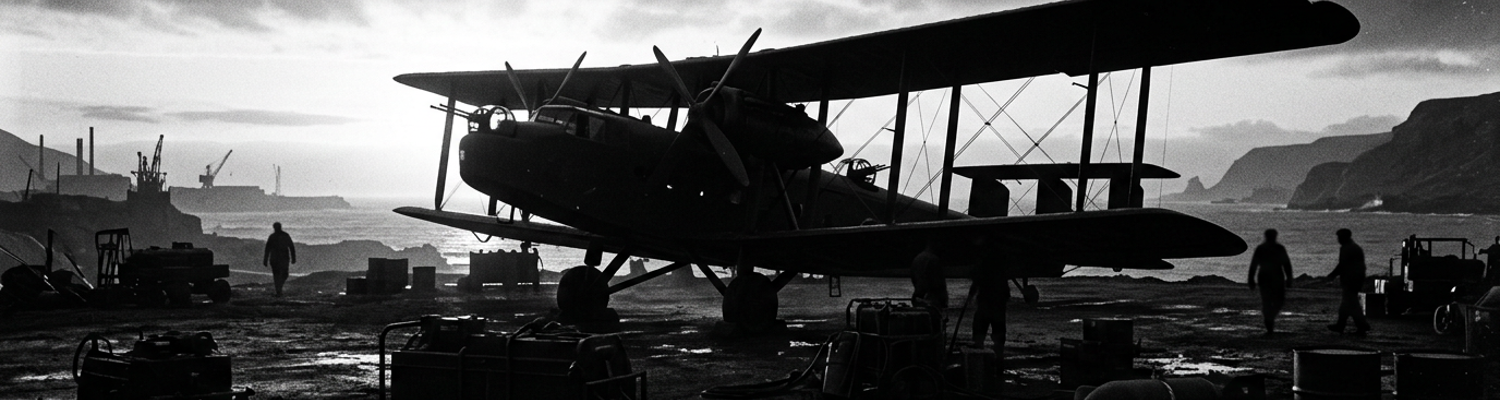

Fatal Wing Spar Failures off the Virginia Capes
Fourteen October 1924 at 1142 hours local. Archival evidence shows that an encrypted War Department signal logged the exact coordinates as thirty-six degrees fifty-eight minutes north and seventy-five degrees fifty-two minutes west. Three miles east of Cape Henry Light. A Martin NBS-1 twin-engine bomber belonging to the 2nd Bombardment Group broke apart in mid-air over the Atlantic approach to Hampton Roads. The biplane was evaluating non-standard bomb racks bolted directly into the primary lower wing structure. It was flying at an altitude of 3,200 feet during a simulated level-bombing run.
Observers stationed at the coastal artillery battery on Fort Story watched both outer wing panels fold upward at a ninety-degree angle. The fuselage entered an uncontrolled vertical spin into the ocean.
Neither the two test pilots nor the two enlisted mechanics strapped into the open cockpit managed to release their harness restraints before impact.
The biplane disintegrated in less than four seconds.
A close review of operational logs indicates that the structural failure stemmed from localized torsion inside the spruce framing. Investigators hauled jagged sections of the lower left wing assembly from six fathoms of seawater the following morning. Factory-milled from high-grade Sitka spruce, the front and rear spars were routed box beams designed to flex uniformly under standard flight profiles. The recovered wood showed acute torsional shear failure instead. Longitudinal splits ran through the spar webs where the supplementary armament program had repositioned the external bomb shackles. Mechanics had welded extended steel mounting lugs across the bottom spar caps to hold heavy two-thousand-pound maritime demolition bombs. They intended to give ground crews faster turnarounds against moving surface targets. That offset bracket created a continuous twisting lever arm. Every buffeting wind gust during high-speed runs forced the lower wing section to twist against the rigid interplane rigging struts. This sheared the grain of the wooden beams along the internal lightening pockets until the forward spar snapped clean off at the shackle root.
Base commanders at Langley Field reacted before the wreckage even settled on the sea floor.
Colonel Thomas Milling placed the entire installation under an immediate communications blackout. He cut off civilian telegraph connections and ordered switchboard operators to sever all outbound long-distance lines to Newport News and Washington. Three sixty-foot wooden-hulled crash rescue boats from the 2nd Wing marine section cast off from the Langley docks on the Back River. They cleared the mouth of Hampton Roads within fifteen minutes of the initial radio alert. Armed security detachments rode aboard two accompanying harbor tugs. These guards were tasked with intercepting commercial fishing smacks and keeping naval observers from the nearby Norfolk Navy Yard away from the floating debris field. Enlisted recovery parties pulled floating fuel tanks, splintered control surfaces, and the fractured components of both lower wings from the water before local press syndicates realized an aircraft was down.
Salvage crews crated every shard of fractured spruce and padlocked them inside Hangar 3 under armed military guard by sunset.
McCook Field and Maritime Bombing Directives
Archival evidence shows that the blueprint directives originated hundreds of miles inland. They came from deep within the drafting rooms of the Army Air Service Engineering Division at McCook Field in Dayton, Ohio. Technical staff finalized the confidential Supplementary Armament Program in early 1924. This initiative was intended to convert existing fleet inventory into long-range maritime interdiction strike platforms. Air Service strategists sought immediate weapons parity with foreign naval fleets without waiting for the multi-year development cycles of purpose-built heavy bombers. Command directives dispatched from the Office of the Chief of Air Service pushed McCook Field to prioritize rapid structural retrofits over standardized margin testing protocols.
Civilian draftsmen and technical officers altered factory-standard Martin airframe blueprints.
They worked across drafting tables covered in pencil revisions that redistributed primary flight loads onto components never designed to accept them. Static sandbag load tests on reinforced wings were skipped to save procurement months. Field depots received binding orders to commence immediate airframe modifications using local base maintenance personnel rather than factory tooling.
Paper calculations replaced destructive structural load testing.
A close review of operational logs indicates that the program specifically mandated fitting standard Martin NBS-1 twin-engine bombers with heavy external bomb racks and underslung torpedo suspension gear. Originally manufactured by the Glenn L. Martin Company and Curtiss, the biplane relied on two 420-horsepower Liberty 12-A liquid-cooled engines. These powerplants lifted an operational payload strictly capped near two thousand pounds. Engineering Division blueprint Number 048712 required airfield ground crews to install modified Mark IX release shackles alongside reinforced steel carriage cradles designed for eighteen-hundred-pound Bliss-Leavitt Mark 7 torpedoes. Mechanics bolted these supplementary steel strap assemblies directly across the lower wing center-section spars and forward fuselage truss stations. Standard box-beam spruce spars carried factory safety margins calculated exclusively for distributed aerodynamic lift. They were not rated for the acute downward twisting moments generated by concentrated external iron hardware. Every high-speed taxi and rough landing onto rutted grass runways transferred dynamic jolts straight up through the shackle brackets. This micro-fractured the unreinforced Sitka spruce fibers around each hand-drilled mounting hole.
The hardware was too heavy for the wood.
When examining the historical record of inter-service war planning, the doctrine driving these mechanical alterations prioritized deep-water strikes against naval underway replenishment lines. Army Air Service tactical theorists argued that hostile battle fleets crossing the Atlantic relied entirely on vulnerable colliers, fuel-oil tankers, and ammunition transports during long ocean transits. Hitting those support conduits required attacking ships operating well outside the defensive umbrella of coastal artillery installations. Fort Story and Fort Monroe mounted heavy twelve-inch and sixteen-inch coastal guns capable of throwing shells twenty-five miles out to sea. Hostile support formations could loiter indefinitely at forty miles while transferring bunker oil via broadside towing lines. Air Service planners designed the modified NBS-1 wings to ferry two-thousand-pound demolition ordnance seventy-five miles beyond that fixed artillery limit. Striking replenishment ships during low-speed fuel transfer runs would leave capital battleships stranded without propulsion fuel. Flight orders dispatched to the 2nd Bombardment Group directed test crews to fly sustained low-altitude overwater profiles. This subjected the modified lower wing spars to hours of oceanic thermal turbulence with live ordnance swinging beneath the carriage points.
Technical Alterations to Standard Mark V Bomb Shackles
Archival evidence shows that maintenance personnel inside the repair hangars at Langley Field began dismantling factory-standard bomb racks in August 1924. They worked under direct verbal instructions from 2nd Bombardment Group engineering officers. Standardized Mark V bomb shackles were originally manufactured by the Marlin-Rockwell Corporation to carry daylight fragmentation bombs and 300-pound general-purpose munitions. These units used spring-loaded bronze suspension hooks secured to thin-gauge pressed-steel release brackets. These factory assemblies lacked the structural girth to accept wide-diameter naval ordnance lugs. To bypass the prolonged engineering review cycle at McCook Field, master mechanics used hand-cranked drill presses and oxyacetylene torches to fabricate custom auxiliary shackles from one-quarter-inch structural cold-rolled steel plate.
Ground crews unbolted the standard carriage housings.
They tapped new through-holes across the undercarriage framework and mounted non-catalog heavy auxiliary hooks with oversized clevis pins. Machinists reamed out the standard three-eighths-inch factory mounting holes to half-inch diameters to fit high-tensile carriage bolts. Field service logs record that eighteen Martin NBS-1 airframes underwent this uninspected hardware swap within a twenty-day window. This produced mounting assemblies that exceeded original factory weight limits by forty-two pounds per station.
Improvised steel replaced certified aviation alloy.
A close review of operational logs indicates that this shackle replacement altered the primary dynamic load paths of the Martin biplane in ways base mechanics failed to calculate. Factory blueprints distributed payload stresses through internal steel tie-rods into the heavy spruce longerons of the central fuselage truss. Cross-braced engine beds and landing gear struts absorbed vertical shock loads during flight operations there. The new auxiliary shackles required wider lateral spacing to keep heavy sea bombs from swinging into the twin wooden propeller arcs. Ground crews relocated the primary mounting points outward along the wings to accommodate this clearance. Mechanics clamped the steel brackets directly across the lower wing compression ribs, sixty-eight inches beyond the fuselage centerline. These ribs consisted of lightened spruce web plates with three-sixteenths-inch basswood cap strips. They were built exclusively to maintain airfoil camber against aerodynamic surface suction. Sustained bank angles during maritime search patterns instantly transformed these delicate compression members into load-bearing cantilevers. Downward gravitational pull from the suspended iron, coupled with alternating aerodynamic lift, produced continuous vertical prying across the lower wing envelope. Hundreds of pounds of kinetic inertia drove upward through the wood joints with every change in flight attitude instead of dispersing into the fuselage truss.
The airframe flexed where designers intended it to remain rigid.
When examining the historical record of depot work orders, ground mechanics made an even more destructive alteration to clear the external casing dimensions of 1,100-pound Mark III demolition bombs. Measuring eighteen inches in diameter and packed with 550 pounds of cast TNT, the naval demolition munition sat with only three inches of clearance above the coastal grass runways when suspended beneath an NBS-1. To prevent the bomb casings from striking the dirt during rough taxiing rollouts, maintenance detachments discarded the factory-specified anti-vibration dampening pads. These five-eighths-inch vulcanized rubber and impregnated canvas isolation shims normally sat between the metal shackle brackets and the wooden airframe framing. They absorbed the continuous cyclic chatter of two 420-horsepower Liberty 12-A engines running at 1,700 revolutions per minute. Without the elastomeric dampeners, mechanics bolted the cold-rolled steel shackle flanges flush against the bare Sitka spruce wing ribs and spar flanges. They torqued the steel nuts down with open-end wrenches until the metal edges crushed into the wood grain. This direct contact transferred every micro-vibration of the engine driveshafts and every shudder of propeller backwash straight into the wood. The severe harmonic buzz pulverized the natural lignin bonding within the spruce cells. This left the wood around each steel through-bolt structurally brittle before the aircraft ever left the sod runway.
Seven modified bombers stood fueled on the Langley flight line by the end of September. Raw steel bit directly into splintering spruce.
Flight Line Preparations at Langley Field
Archival evidence shows that flight line preparations along the concrete sea ramps of Langley Field began at 0430 hours each morning. The ramps directly faced the salt marshes of the Back River. Maintenance detachments from the 2nd Bombardment Group walked the wet wooden planks with handheld mechanical tensiometers and open-end brass wrenches. Rigging chiefs inspected the internal drag wires and anti-drag wires threaded through the hollow bays of the lower wings. They checked whether high coastal humidity had altered the tautness of the cold-drawn steel wire cords. Standard Army Air Service rigging specifications required crews to torque the nickel-steel turnbuckles until wire tension registered exactly 380 pounds-force across the inboard bays and 290 pounds-force along the outer panels.
Ground mechanics inserted hardened steel tommy bars into the turnbuckle barrels.
They twisted the threaded hardware a quarter-turn at a time to take up slack caused by damp, swollen spruce spar caps. Salt spray blown inland off Hampton Roads corroded the bare steel threads within hours of exposure. Technicians had to brush heavy grease across every exposed junction before safety-wiring the barrels with soft copper strand.
Tension gauges recorded erratic readings across every modified airframe on the flight line.
A close review of operational logs indicates that the standard flight crew restraint protocols placed severe physical burdens on the two test pilots and enlisted bomb-aimers strapped into the open cockpits. Flight crews wore five-point safety harnesses stitched from thick three-inch unbleached linen webbing. These were fitted with heavy drop-forged steel friction buckles that ground crews hauled taut using mechanical lever bars before engine ignition. Mechanics cinched the shoulder straps until the webbing cut through sheepskin flight suits directly into the crew collarbones. This severe restraint was mandatory to counter the low-frequency mechanical shudder of the two 420-horsepower Liberty 12-A engines. When idling at 550 revolutions per minute on the tidal ramp, the forty-five-degree V-12 powerplants produced heavy, unbalanceable transverse engine-order vibrations. The violent lurching threw unrestrained crewmen against the plywood cockpit rims. It blurred glass flight instruments, dislodged heavy leather goggles, and tore toggle connections loose from the magneto switches. Aviators sat immobilized in the open freezing air. They were unable to turn their torsos while waiting out the mandatory twenty-minute pre-takeoff coolant heating cycles.
The cold engines shook the cockpit floors with seven millimeters of continuous transverse displacement.
When examining the historical record of pre-takeoff throttle runs, this mechanical shudder multiplied once test pilots pushed the dual throttles forward across the quadrant. The non-standard external bomb mountings introduced severe aerodynamic and physical asymmetry across the biplane seventy-four-foot lower wingspan. Base workshops had bolted an 1,800-pound dummy torpedo shackle under the port lower wing center section. The starboard wing carried two lighter Mark IX bomb racks spaced forty-four inches apart. At static full-throttle checks of 1,700 revolutions per minute, the asymmetric surface area of the bulky external carriage brackets created uneven propeller slipstream wash across the lower airfoil fabric. Vortex shedding off the unfaired steel shackle lugs generated localized drag pulses that matched the natural resonant frequency of the lower wing bays. This flutter travelled laterally through the internal Sitka spruce compression ribs. It amplified from a minor cyclic hum at the engine nacelle mounts into a visible two-inch vertical oscillation at the lower wingtips. The interplane strut fittings on the port side absorbed double the oscillatory stress of the starboard wing. This stretched the external streamline flying wires beyond their elastic limits before ground crews pulled the wooden wheel chocks.
Ground logs for 14 October show that aircraft number 68434 cleared its ramp inspection with four sheared drag-wire cotter pins inside the port lower bay.
Transverse Harmonics and High-Speed Aeroelastic Flutter
Archival evidence shows that the crude auxiliary steel lugs bolted beneath the lower wing projected two and a half inches directly into the laminar stream. Machined with square, unchamfered corners to accommodate field-fabricated shackle pins, these steel blocks disrupted the thin envelope of smooth air moving across the bottom airfoil surfaces. At airspeeds approaching 110 miles per hour, the unfaired protrusions tripped the lower wing boundary layer into chaotic, detached micro-vortices. Air separated violently from the skin immediately aft of the front spar cap instead of adhering smoothly along the doped cotton fabric toward the trailing edge. This premature detachment formed an expanding zone of turbulent low pressure that buffeted the light basswood rib caps. Manometer tubes fitted to test airframes staging out of Langley Field recorded localized suction drops of up to fifteen pounds per square foot across the outer wing bays. The separated wash rolled backward in distinct pressure pulses. It repeatedly struck the lower fabric stitching and excited transverse oscillations in the internal rib trusses at seventy cycles per second.
Airflow separation stripped aerodynamic damping from the lower wing panels.
A close review of operational logs indicates that shallow dive profiles flown by the 2nd Bombardment Group over the mouth of the Chesapeake Bay initiated violent aeroelastic flutter. Test crews pushed their aircraft into fifteen-degree attack angles against moving target vessels near Chesapeake Light. Operational velocities climbed from cruising speeds to 128 miles per hour. Standard Roebling cold-drawn carbon steel flying wires crossed into uncontrolled resonant harmonic frequencies. These wires measured three-sixteenths of an inch in diameter and were tension-rigged to withstand baseline dynamic loads of 1,800 pounds. Rapid aerodynamic reversals caused the dual flying wires between the outer interplane struts to whip through broad elliptical orbits measuring four inches off their neutral axis. This violent whipping generated cyclic tension spikes exceeding 2,500 pounds-force at the airframe anchor points. Threaded bronze turnbuckle barrels suffered severe thread galling under the pounding. The internal lands stripped clean off the forward bay bracing. Mechanics inspecting recovered wire assemblies found deep fatigue fractures running through the cadmium-plated terminal clevis eyes.
The steel rigging wires stretched permanently beyond their elastic yield limits during thirty-second shallow dives.
When examining the historical record of maintenance evaluations, the unbalanced weight distribution of the experimental ordnance brackets caused severe mechanical distortion throughout the wing truss. Ground crews had mounted an 1,800-pound dummy torpedo release assembly beneath the port lower wing center section. They installed two lighter bomb racks forty-four inches apart under the starboard wing. As dynamic flight pressure mounted during high-speed runs, asymmetrical aerodynamic drag forced the port lower wing to twist rearward by three degrees. The starboard wing panels maintained their design pitch. This severe cell warpage shifted internal cast-aluminum fairlead pulleys out of alignment. It twisted the channels that carried the seven-by-nineteen flexible steel aileron control cables. Misaligned pulley brackets drove the quarter-inch cables directly against the sharp edges of structural duralumin routing conduits. Friction built up across the guide brackets until the aileron control wheels locked in place at bank angles exceeding twelve degrees. Aviators had to exert over eighty pounds of force on the cockpit control wheel to break the binding cables free.
Post-flight teardowns inside Hangar 4 revealed twenty-two severed steel strands wedged into the port lower wing aileron pulley bracket.
In-Flight Breakups and Crew Survival Disparities
Archival evidence shows that when the lower wing spars fractured during 110-mile-per-hour dive testing over the Atlantic, the structural failure triggered immediate airframe rotation. Loss of outboard lifting surfaces on the port wing instantly initiated an uncontrolled flat spin rotating at over ninety revolutions per minute. Asymmetric yawing moments from the intact starboard panels twisted the five-ton Martin NBS-1 biplane across its longitudinal axis. Rotational forces during the breakup generated violent centrifugal acceleration. This subjected the four-man crew to sustained radial loads exceeding 4.5 Gs. Trapped within open cockpits, aviators experienced rapid peripheral blackout as blood pooled in their extremities under the sudden radial surge. Crew members could not lift their forearms toward the heavy drop-forged steel harness release latches. Flight test records from Langley Field indicate that the outward acceleration drove the pilot and co-pilot deep into their sheet-steel bucket seats. It wedged their heavy boots beneath the rudder bars.
Centrifugal acceleration pinned men against the cockpit floorboards with three times their body weight.
When examining the historical record of these mid-air breakups, crew casualty statistics revealed an acute survival disparity directly dictated by airframe layout. Forward gunners stationed in the circular nose cockpit ahead of the biplane front bulkhead survived at far higher rates than the pilots seated aft. As the lower front spar snapped, the heavy upper wing center section collapsed directly downward into the main flight cockpit. This section carried two 180-gallon gravity fuel tanks and thick steel center-section cabane struts. Heavy Sitka spruce box spars and sagging fabric folds smashed flat over the pilots. The timber crushed the dual control wheels and trapped both aviators before the main fuselage impacted the water. Angular momentum at the nose pitched the forward gunner free of his cockpit rim. Observers thrown clear of the biplane without overhead timber obstructing their path managed to pull their ripcords and deploy seat-pack parachutes over Hampton Roads.
Forward gunners had no overhead timber to block their ejection into open air.
A close review of operational logs indicates that post-crash inspection boards led by Engineering Division metallurgists at McCook Field uncovered systematic mechanical deterioration across every recovered wing attachment. Technicians chemically etched the quarter-inch cold-rolled steel shackle fittings with concentrated nitric acid solutions after disassembling the crushed lower spar roots hauled from the ocean floor off Cape Henry. Microscopic examination revealed progressive fatigue micro-fractures propagating across the metal grain adjacent to the primary through-bolt holes. Field maintenance detachments at Langley had drilled these half-inch mounting holes through non-heat-treated commercial steel plate. This introduced rough micro-burrs along the inner bore surfaces. Under seventy cycles per second of un-damped engine harmonics and repeated aerodynamic buffeting during ocean runs, these localized stress concentrations deepened into transgranular fatigue cracks. Progressive fractures advanced invisibly through forty percent of the bracket cross-section before final structural cleavage occurred. Metal shards recovered from the seabed showed distinctive beach marks across the steel shear zones. This proved that mechanical decay had been active across dozens of flight hours.
Depot metallurgists logged eighteen distinct micro-fractures radiating from the inner diameter of the left rear shackle bracket bolt hole.
The Lampert Committee Hearings on Air Service Procurement
Archival evidence shows that congressional scrutiny escalated on 11 December 1924 inside Room 268 of the House Office Building. Representative Florian Lampert banged his gavel. He called the House Select Committee of Inquiry into the Operations of the United States Air Services to order. An anonymous envelope delivered to committee counsel had exposed five internal technical memos from the McCook Field Structural Analysis Section. These classified Dayton reports, dated between March and June 1924, explicitly warned that drilling non-standard half-inch carriage holes into lower wing Sitka spruce spars would degrade ultimate yield strength by forty-three percent. Civilian engineer Charles Ward had calculated that unfaired Mark IX shackle brackets generated uncontrollable transverse flutter exceeding seventy cycles per second at airspeeds above one hundred miles per hour. Air Service procurement officers had shelved Ward and his data to avoid delaying the deployment of coastal bomber squadrons. Lampert held the blue-penciled drafts before witness tables. He entered the unredacted documents into the committee record over furious formal objections from War Department legal representatives.
Blueprints stamped secret in Dayton sat openly on congressional mahogany tables.
A close review of operational logs indicates that the testimony quickly turned into an open bureaucratic brawl between War Department strategists and the Navy Bureau of Aeronautics. Rear Admiral William A. Moffett took the stand to attack the Army Air Service coastal interdiction ambitions. Navy planners maintained that hunting hostile colliers and tankers seventy-five miles off Cape Henry belonged exclusively under naval jurisdiction. Moffett presented naval intelligence memos demonstrating that twin-engine Army bombers operating over open ocean lacked proper nautical dead-reckoning instruments, marine survival craft, and flotation bladders. Army General Staff witnesses fired back. They asserted that naval carriers could not protect the eastern seaboard from coordinated offshore resupply maneuvers. Flying heavy NBS-1 formations armed with two-thousand-pound demolition bombs was presented by Air Service leadership as a cost-effective alternative to multi-million-dollar battleships. Bureau of Aeronautics engineers produced damage assessments showing that Army ground crews had cut into primary airframe spars without naval ordnance clearance. This created dangerous, unstable craft that endangered both military flight lanes and civilian shipping lanes around Hampton Roads.
The two branches fought over maritime boundary charts while flight crews flew structurally compromised wings over the Atlantic.
When examining the historical record of committee depositions, legislative cross-examinations focused relentlessly on bypassed testing protocols and deliberate institutional cover-ups. Representative Randolph Perkins pressed Chief of Air Service Major General Mason Patrick on why McCook Field skipped the mandatory forty-eight-hour sandbag load test on modified NBS-1 wing assemblies. Base orders from Langley Field revealed that depot maintenance officers routinely substituted uninspected cold-rolled carbon steel for certified aviation alloy to meet arbitrary flight demonstration deadlines. Perkins produced padlocked crate manifests from Langley Hangar 3. He exposed how officers had classified post-crash wing fragments recovered off Cape Henry on 14 October 1924. Metallurgical evaluations detailing transgranular fatigue cracks radiating from reamed-out bolt holes had been classified secret and locked in base safes rather than distributed to active bomber squadrons. Test pilots operating out of Virginia had logged sixty-two additional flight hours on structurally condemned biplanes before congressional subpoenas forced base commanders to open the hangar doors.
Committee clerks entered seventeen suppressed crash manifests directly into the House record on 18 December 1924.
Doctrinal Shifts and the Air Corps Act of 1926
Archival evidence shows that legislative intervention reached its culmination on 2 July 1926. President Calvin Coolidge signed the Air Corps Act into law as Public Law 69-446. Driven by the damning transcripts of the Lampert Committee and the technical findings of the Morrow Board, the statute abolished the Army Air Service and established the United States Army Air Corps. The legislation enforced an exhaustive overhaul of military aviation procurement. It systematically codified structural airworthiness and flight safety standards into federal military contracts. Clause after clause dismantled the loose procurement practices that had permitted unverified engineering revisions. Aircraft manufacturers had to submit certified stress analyses and load-distribution balance sheets to War Department inspectors before metal was cut or spruce was milled under the new statutory mandate. Factory airframes were required to meet strict static load margins. This required physical wing assemblies to endure sandbag loadings exceeding one hundred percent of design yield thresholds and maintain a structural factor-of-safety multiplier between 1.5 and 2.0. The act created the position of Assistant Secretary of War for Air to enforce accountability outside the military hierarchy. This established direct civilian oversight over aeronautical contracts.
Congress stripped field commanders of unmonitored engineering authority.
When examining the historical record of structural testing facilities, War Department planners recognized that the cramped workshops at McCook Field could not handle dynamic structural qualification for multi-engine aircraft. Technical operations shifted east of Dayton, Ohio, to 4,500 acres of flat terrain along the Mad River. The military established Wright Field there in 1926. The new installation centralized dynamic airframe stress analysis protocols inside purpose-built mechanical testing laboratories. Technicians mounted full-scale bomber airframes onto hydraulic shaker tables and dynamic drop-test rigs to measure structural response under induced cyclic vibration. Calibrated instrumentation recorded how engine harmonics from 420-horsepower Liberty V-12 powerplants traveled through spar roots, rib caps, and wire bracing. Airframe assemblies were vibrated until structural joints cracked under sustained mechanical oscillation. This generated empirical fatigue curves that replaced speculative slide-rule calculations. The dynamic analysis section isolated how aerodynamic flutter and engine vibration interacted at high airspeeds. They determined exact failure thresholds for wood and duralumin wing panels before experimental aircraft received operational clearance.
Spruce airframes gave way to controlled laboratory destruction.
A close review of operational logs indicates that the revised regulations clamped down directly on frontline maintenance hangars through binding War Department Technical Orders. Headquarters formally prohibited the installation of uncertified, field-modified external stores across all multi-engine military aircraft in active service. Coastal bomber units, including the 2nd Bombardment Group operating out of Langley Field, were stripped of their authority to fabricate auxiliary shackles, clearance brackets, or torpedo cradles in depot machine shops. All bomb racks, sway braces, and suspension hooks had to carry factory serial stamps certifying dynamic release testing and structural compatibility through Wright Field Materiel Division. Maintenance personnel were barred from drilling through-holes, reaming factory bolt apertures, or welding steel extension lugs onto primary wing spars and fuselage longerons. Ordnance mountings had to integrate standardized vulcanized rubber isolation bushings to absorb engine shudder. They secured only to reinforced hardpoints engineered into the original airframe blueprints. Any squadron engineering officer who authorized non-standard ordnance mountings faced immediate court-martial under the 96th Article of War.
Base inspectors impounded thirty-six uncertified auxiliary bomb shackles at Langley Field before the close of 1926.