
Mobilization of the 3d Air Expeditionary Group
Valves controlling the pneumatic starter on the number three Allison turboprop engine jammed shut with a sharp metallic clatter during preflight power checks on the icy Ramstein ramp. Flight engineers instantly yanked the overhead emergency fuel shutoff handles to stop pressurized jet fuel from igniting inside the choked combustion chambers. Ground mechanics swung open the heavy aluminum cowl doors, aimed flashlights onto the cracked pneumatic housing, and worked feverishly with socket wrenches to unbolt the scorched assembly. Crew chiefs hauled a crated replacement valve from the supply depot through the freezing drizzle, torqued every retaining bolt to precise factory specifications, and test-fired the starter to verify normal engine rotation. Technicians then rolled heavy auxiliary power units and yellow air start carts away from the parking apron so the rest of the staging force could begin their launch sequences.
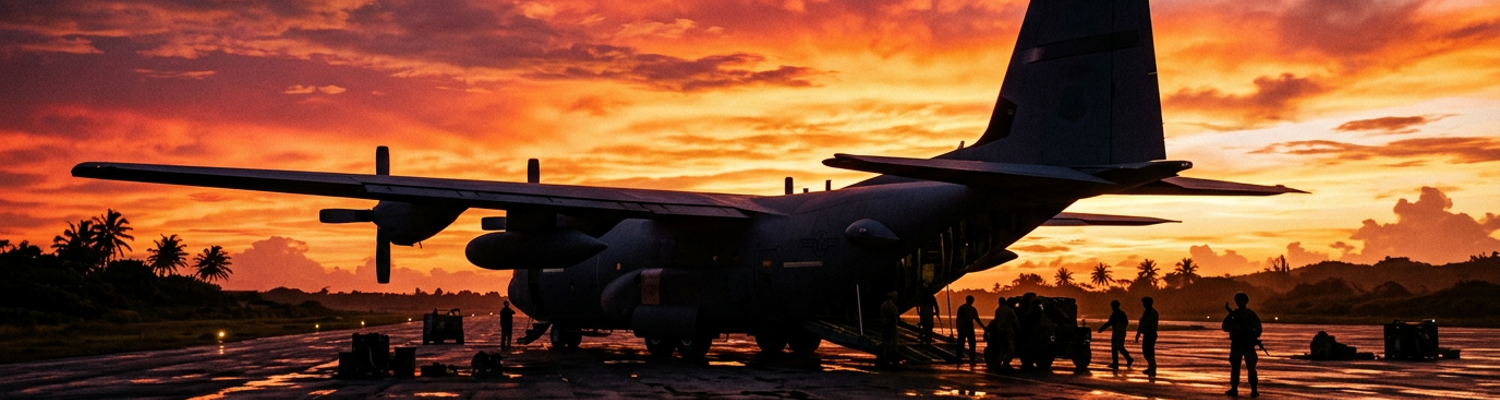
United States Air Forces in Europe mobilized the 3d Air Expeditionary Group in February 1997 to support regional peacekeeping mandates across West Africa, ordering these prepared transports straight into the mission. Five C-130E Hercules aircraft and crews from the 86th Airlift Wing 37th Airlift Squadron deployed from Ramstein Air Base to establish the tactical airlift, heading south toward their intermediate staging hub at Bamako, Mali. Pilots guided the heavily laden turboprops through turbulent winter skies over southern Europe, monitoring instrument gauges for any lingering oil pressure drops while maintaining tight formation discipline over the Mediterranean Sea. Cargo specialists crammed the rear cargo bays with spare tires, portable generators, satellite dishes, maintenance toolboxes, and palletized field rations required to run an autonomous air terminal under austere tropical conditions. Wheels touched down at Senou International Airport in Bamako after eight-hour transit legs, where taxiing crews parked their aircraft onto an overcrowded apron baked by intense equatorial heat.
Loadmasters stepped down from the crew entrance doors onto the concrete at Bamako to inspect the dense rows of vehicles, ammunition crates, and support gear waiting for delivery into Liberia. Planners tasked the 3d Air Expeditionary Group with ferrying hundreds of Malian soldiers and tons of critical supplies into Roberts International Airport outside Monrovia to reinforce regional peacekeepers holding defensive perimeters. Malian infantrymen wearing combat webbing and carrying assault rifles assembled into long march columns alongside five-ton utility trucks, while American aerial porters measured individual axle weights and chained rolling stock securely onto aluminum cargo pallets. Sweltering afternoon air drastically thinned atmospheric density over the airfield, forcing tactical load planners to recalculate maximum takeoff weights against the dangerous combination of heavy loads, high runway temperatures, and reduced engine climb performance. Flight dispatchers ordered loadmasters to strip several heavy cargo pallets off the aircraft manifests to keep the departing airframes within strict takeoff weight margins.
Airmen unchained several crated high-frequency radio transceivers, backup battery banks, and joint tactical liaison kits from the primary cargo manifests to lighten the departing airframes by several thousand pounds. Loadmasters shoved the offloaded communication crates into temporary canvas tents along the edge of the Bamako apron, assuming that incoming flight crews would easily handle landing coordination through standard air traffic control towers at Robertsfield. Ramp supervisors signed off on the reduced weight sheets, cleared the flight deck crews to begin their engine start checklists, and waved the lead C-130E toward the departure threshold. Pilots released the wheel brakes, pushed all four throttles forward to full military power, and climbed out over the Niger River toward the coast of Liberia with the essential liaison radios left behind in the Bamako storage tents.
West African Staging Operations and Flight Corridors
Turboprop vibrations shuddered through the cockpit floor as the lead Hercules leveled off into the designated air route toward the Atlantic coast. Airlift operations routed strategic cargo and troops through staging facilities at Bamako, Abidjan, and Accra to build an expansive supply network into the conflict zone. American planners selected these three distinct regional hubs along the Gulf of Guinea to separate incoming peacekeeper units from diverse West African militaries and prevent ground bottlenecks on any single ramp. Logistics personnel at Port Bouet Airport in Abidjan organized supply lines for arriving French-speaking detachments, while staging crews at Kotoka International Airport in Accra processed English-speaking battalions and heavy ammunition crates. Transports shuttled between these staging nodes along narrow flight corridors, picking up infantry companies, medical kits, and light artillery before turning west toward the embattled Liberian airfield.
Tanker trucks rumbled across the hot concrete at each staging facility to service the continuous stream of arriving and departing turboprops. Flight crews balanced strict turnaround schedules against fuel shortages and limited civilian air traffic coordination across West African hubs to meet mandatory delivery targets. Aviation kerosene supplies ran critically low at secondary airfields along the route, forcing mission commanders to limit fuel uploads and order aircrews to calculate minimum reserve requirements for every flight leg. Maintenance technicians examined fuel lines for tropical microbial growth, draining sumps into glass containers in the tropical heat to ensure contaminated fuel did not clog the fine mesh engine filters. Loadmasters conducted hot refuelings with turboprops spinning to shave valuable minutes off ground stops, pushing the heavily burdened transports back onto taxiways before local ramp space filled completely.
Radio antennas on the transport fuselages picked up faint signals and heavy atmospheric static as the aircraft climbed into regional flight sectors. Civilian controllers inside regional flight information centers managed vast stretches of West African airspace without modern primary radar coverage or automated tracking screens. Aircrews placed routine position reports through high-frequency radios over thousands of square miles of dense forest and open ocean, often receiving only silence or disjointed acknowledgments from civilian ground stations. Flight dispatchers coordinated flight plans across multiple sovereign airspaces using antiquated landline telephone connections that frequently failed during equatorial rainstorms. Pilots relied on line-of-sight VHF radios and visual scanning to keep separation between multiple C-130 transports converging on the same narrow arrival corridors without radar guidance.
Altimeter needles unwound steadily on the instrument panels as the lead transport began its descent through the dense coastal clouds toward Robertsfield. Flight navigators scanned nautical charts and tuned radio beacons, attempting to raise the control tower at Roberts International Airport to confirm landing clearance and runway security. Transmitters inside the cockpit broadcast repeated calls on standard civilian aviation channels, but no responses returned from the damaged tower structures sitting silent on the airfield perimeter. Pilots reached for the tactical liaison channels to contact the Nigerian peacekeeping troops guarding the runway perimeter, only to realize that the specialized radio transceivers were sitting in storage crates back on the tarmac in Bamako. Crews lowered landing gear into the coastal haze without a confirmed radio link, bringing the unannounced four-engine transport straight down toward suspicious peacekeeper machine gun emplacements.
Runway Infrastructure Degradation at Robertsfield
Rubber tires slammed against fractured blacktop as the lead C-130 bounced hard onto the broken surface of the landing strip. Civil war destruction left Roberts International Airport outside Monrovia with a decaying two-mile runway, wrecked terminal radar, and no functional approach aids. Flight crews had to navigate entirely by visual landmarks and compass headings because artillery shell strikes and looters had smashed the glide slope transmitters, stripped copper wiring from the approach lights, and left the main radar tower as a hollow steel skeleton. Pilots gripped the flight controls tightly to steer around deep ruts and weathered patches of loose asphalt that threatened to puncture heavy tires or throw stone debris into the spinning propellers. Flight engineers pulled reverse thrust levers to bring the transport down to taxi speed before it reached bomb craters near the runway overrun, swinging the plane toward the bullet-scarred terminal ramp where Nigerian peacekeeper machine guns tracked every wheel rotation.
Engineers stepped down onto the burning tarmac under the gaze of these mounted machine guns to conduct emergency structural assessments of the landing apron. Combat engineering assessments and strict pavement stress limits were urgently needed because tropical moisture and years of wartime neglect had hollowed out the soil layers beneath the cracked concrete. Technicians drove steel penetrometer rods into the sub-base and measured pavement deflection to calculate the exact weight limits the degraded apron could bear without collapsing under the aircraft landing gear. Pavement specialists discovered that waterlogged voids beneath the surface could not support repeated heavy taxi runs, establishing strict pavement stress limits that prohibited sharp turns and required transports to use only the centerline. Surveyors sprayed bright orange paint across crumbling sections of the parking apron to guide the arriving turboprops away from structural weak points and shattered drainage conduits.
Loadmasters backed their aircraft into these painted parking boxes only to discover that every piece of civilian airport machinery had been destroyed during the factional fighting. Combat engineering assessments and manual cargo handling were required due to inoperable ground support equipment and strict pavement stress limits that prevented heavy commercial unloading vehicles from operating. Hydraulic forklifts and motorized belt loaders sat abandoned along the perimeter fence with blown tires, seized diesel engines, and stolen batteries, leaving crews with zero automated gear to move incoming supplies. Airmen unlatched the aft cargo door, lowered the aluminum ramp to the crumbling pavement, and began hauling tons of crated rations, ammunition cans, and tent poles out of the fuselage using physical muscle. Malian infantrymen joined American aerial porters to form bucket-brigade lines along the cargo deck, sweating in the heavy tropical humidity as they slid heavy palletized containers down portable roller conveyors by hand.
Soldiers from the Nigerian perimeter guard watched this slow manual offloading with rising alarm as crates piled up on the open tarmac without any prior radio authorization from the arriving aircrew. Sentries cocked heavy automatic weapons and advanced across the ramp in skirmish lines, suspecting that the unidentified transport had landed to deliver weapons to rival rebel factions outside Monrovia. American pilots tried signaling from the flight deck windows with hand gestures, but the missing tactical liaison transceivers left them completely unable to tune to the local peacekeeping radio frequencies. Squad leaders on the ground leveled their rifles directly at the transport cockpit and ordered all manual unloading to halt immediately, trapping the cargo handlers in a tense standoff in the shadow of the wingtips.
Bamako Tarmac Weight Adjustments and Cargo Separation
Rifle muzzles remained locked onto the flight deck windows while cargo handlers raised their hands against the aluminum fuselage, caught in a dangerous standoff created earlier that morning at Bamako Senou International Airport. Aerial port expeditors on the Malian ramp had faced urgent engineering reports warning that full-weight C-130 transports would punch through the deteriorated sub-base at Robertsfield upon touchdown. Tactical weight-rationing adjustments on the Bamako staging tarmac altered palletized loading schedules to prevent runway overstress at Robertsfield. Loadmasters unbuckled heavy cargo straps, returned signed manifests to the flight planning desk, and recalculated maximum landing weights for every departing airframe in the staging queue. Forklift operators worked under the baking Sahel sun to strip heavy cargo pallets from the staging bays, shaving thousands of pounds from every aircraft to preserve the fragile Liberian landing strip. Ground crews shoved the rejected cargo pallets into crowded outdoor holding lanes, separating the heavy communication equipment from the departing passenger manifests.
Cargo restructuring separated critical ECOMOG field communications systems and liaison radios from incoming troop passenger manifests as logistical officers scrambled to make the revised weight limits work. American loadmasters and West African staging officers decided to fill the restricted payload allowances with frontline infantrymen rather than bulky equipment boxes, intending to move the soldiers forward as fast as possible. Technicians unbolted heavy high-frequency base stations, whip antenna arrays, and tactical frequency-hopping transceivers from the aircraft cargo floors, rolling the crates out onto the open concrete. Malian and Ghanaian infantrymen filled the troop seats along the cabin walls with their personal rifles, but the specialized communication teams and their radio racks stayed behind on the ramp. Manifest clerks marked the stranded radio pallets for future secondary flights, working under the mistaken belief that Robertsfield possessed functioning base stations capable of bridging the tactical gap. Propellers spun up and transports climbed into the coastal flight corridors carrying hundreds of troops who lacked any electronic means of coordinating with the armed perimeter guards at their destination.
Transports approaching the Liberian coast dropped below the cloud layer into complete electronic silence because the missing equipment left the pilots isolated from the ground garrison. Crew members toggled through standard civilian aviation channels over the ruined airport terminal, broadcasting repeated calls that vanished into dead air. Nigerian peacekeepers belonging to the Economic Community of West African States Monitoring Group held defensive dugouts along the tree line, scanning the overcast sky with growing anxiety. Intelligence alerts had warned perimeter units that rebel factions might use chartered cargo aircraft to land assault teams or supply hostile forces near Monrovia. Watchstanders in the sandbagged control posts gripped their combat rifles tightly as the four-engine Hercules roared over the boundary fence without announcing its identity or mission over the local defense network. Gunners swung heavy caliber machine guns onto the descending airframe, tracking its tires down to the cracked blacktop to intercept an unannounced aircraft breaching their defensive perimeter.
Tarmac sentries sprinted from their perimeter revetments the moment the aircraft rolled to a stop, surrounding the fuselage before ground handlers could finish lowering the rear cargo door. Squad commanders leveled automatic weapons at the flight deck and barked sharp orders for the crew to shut down all four turboprops immediately. American pilots cut the fuel valves, popped open the overhead escape hatches, and tried to communicate through megaphone calls and open cockpit windows, but the language barrier and missing radio protocols intensified the suspicion. Nigerian officers demanded to see the authorized liaison personnel and field radios that were supposed to authenticate the flight, refusing to let aerial porters unload a single crate without official verification from their battalion command. Armed soldiers took up firing positions behind the aircraft wingtips and vehicle tow bars, holding the transport and its cargo crew frozen on the apron. Operation commanders back in Bamako halted further outbound flights and held transports on the Malian taxiways as soon as radio reports confirmed the armed detention of their lead aircraft at Robertsfield.
Perimeter Communications Disruption with Nigerian Forces
Nigerian perimeter sentries leveled automatic rifles directly at the grounded transport as the aircrew shut down all systems on the humid Robertsfield tarmac. The offload of peacekeepers without pre-coordinated liaison radio gear triggered an immediate communications blackout with Nigerian ECOMOG perimeter defense units. Malian infantrymen walked down the rear ramp in full combat gear into the bright sunlight, but not one soldier carried the tactical radios or frequency codes needed to verify their identity with the airport defense detachment. Nigerian commanders expected specific radio authentication signals before any foreign unit disembarked onto their defensive sector, yet the missing Bamako radio kits left both sides shouting across the noisy apron without a shared communications link. ECOMOG officers immediately ordered their troops to take up firing positions behind sandbag barriers, assuming the unannounced detachment might be a hostile element attempting to infiltrate the airfield under the guise of an aid delivery.
Paper manifests and chalk numbers carried by the arriving officers failed to match the handwritten flight logs maintained by the perimeter defense post. Misidentified arrival chalks and authentication failures produced an armed perimeter standoff that temporarily halted aircraft turnaround operations. Flight numbers chalked onto the cargo pallets indicated an ammunition delivery for existing garrison troops, but the aircraft actually carried fresh infantry units that local guards knew nothing about. American loadmasters attempted to show their flight authorization forms to the Nigerian squad leader, but the lack of prearranged identification passwords forced the perimeter garrison to declare an immediate base security alert. Ground crews abandoned their manual cargo rollers beside the fuselage, leaving pallets of field supplies stuck halfway down the ramp while armed guards halted every vehicle on the apron.
Fuel trucks and towing tugs stopped across the apron as sentries established an armed cordon around the entire perimeter of the transport. Nigerian squad leaders refused to clear the aircraft for unloading, keeping their heavy machine guns trained on the cockpit until a military courier could travel across Monrovia to verify the flight with regional headquarters. Delays accumulated over several hours on the exposed ramp, causing cockpit temperatures to climb and threatening the strict fuel and turnaround schedules required for the regional air bridge. Dispatchers at the staging hubs in Bamako and Accra could not launch follow-on C-130 sorties because the single usable parking box at Robertsfield remained blocked by the detained transport and its stranded passengers. Regional commanders at staging hubs scrambled to locate backup high-frequency radios, attempting to re-establish secure communications between the isolated airfield and multinational planning cells.
Couriers from the regional peacekeeping headquarters finally drove onto the apron in an armed scout car, carrying physical authentication packets and landing clearances directly from the ECOMOG command post in downtown Monrovia. A senior Nigerian officer checked the travel orders against the physical rosters of the Malian troops, verified the airlift authorizations, and instructed the perimeter sentries to lower their weapons. American loadmasters immediately resumed hauling palletized cargo down the ramp rails, while Malian soldiers marched past the sandbag bunkers to their assigned assembly zones near the tree line. Ground handlers refueled the transport from portable fuel bladders and pushed the empty aircraft back toward the runway centerline to make room for the next incoming C-130.
Airlift Completion and Abuja Accords Enforcement
Pilots throttled the four turboprop engines up to full power and lifted off the pitted tarmac, opening the cleared runway for the long backlog of incoming transports waiting across West Africa. Staging coordinators in Bamako, Accra, and Abidjan immediately reorganized their loading docks to make sure no flight departed without its integrated communications package. Aerial port expediters halted the practice of stripping radio crates from passenger chalks, repacking high-frequency radios and liaison personnel directly onto the cargo decks alongside the infantry companies. Flight dispatchers set up direct telephone and high-frequency communication links between the West African hubs and the peacekeeping headquarters in Monrovia to verify each manifest before departure. Radio operators established dedicated listening posts at Robertsfield, logging inbound tail numbers and authenticating flight codes miles before the aircraft approached the Liberian coastline. Loadmasters and airfield sentries exchanged shared hand signals and pre-briefed paperwork manifests on the tarmac, clearing incoming transports for immediate manual offloading.
Pallets of field supplies and communication arrays moved across the rear ramps without interruption as the expanded airlift hit its full operational stride. Tactical airlifters delivered 1,160 ECOMOG peacekeepers and 452 tons of equipment required to secure Monrovia and enforce the Abuja Accords. Ground handlers pushed carts loaded with field antennas, mortar tubes, and ration crates toward waiting West African battalions assembling along the runway revetments. Malian, Ghanaian, and Nigerian troops received their crated radio sets and operational orders directly on the tarmac, testing their tactical frequencies with perimeter outposts before mounting up. Motorized infantry columns formed up beside the damaged terminal buildings, their utility trucks weighted down with heavy machine guns and fresh ammunition crates brought in by the transport shuttle. Convoy commanders signaled their drivers to shift into gear and roll out through the main security gate, moving in disciplined formations along the coastal highway toward the capital.
Soldiers fanned out across the outskirts of Monrovia to establish heavily fortified checkpoints, separating warring factions and cutting off arms smuggling corridors into civilian districts. ECOMOG units used the steady influx of air-delivered ammunition, field rations, and secure radios to disarm rival militia groups and enforce the terms of the regional peace agreement across the city. Patrols moved methodically through the bullet-scarred streets, clearing illegal roadblocks, protecting relief supply warehouses, and providing armed security for international aid workers. Rebel commanders who had previously threatened the airport perimeter pulled their fighters back from the airfield boundary lines after confronting the sudden presence of well-equipped multinational battalions. Peacekeeper garrisons established sandbagged checkpoints across the Saint Paul River bridges, locking down the primary transportation arteries connecting Monrovia to Robertsfield.
Aircrews maintained an unbroken supply shuttle into Robertsfield despite severe tropical storms and the constant hazard of landing on fractured asphalt. The 3d Air Expeditionary Group executed 49 total sorties into Roberts International Airport without the loss of a single airframe. Maintenance specialists inspected every landing gear assembly, tire tread, and engine intake after each hard touchdown, patching stress cracks and replacing damaged components under makeshift canvas shelters beside the runway. Ground crews hauled the final empty fuel bladders and cargo tie-down straps into the cabin of the last C-130 as the deployment mandate drew to an official close. Mechanics pulled the heavy wheel chocks from the nose gear, stepped back onto the cracked apron, and watched the final transport lift smoothly into the coastal sky toward Ramstein Air Base.