
Vladivostok Command and the Siberian Information Vacuum
At 0240 hours on a freezing December morning, a garbled wireless intercept from an outpost along the Baikal sector registered on the naval spark-gap receiver in Golden Horn Bay. The transmission detailed an armored-train assault, severed telegraph loops, and direct orders to burn cipher ledgers before the perimeter fell.
The transmission ceased sixty seconds later.
A close review of operational logs indicates that Major General William S. Graves established his American Expeditionary Forces Siberia headquarters inside a requisitioned tsarist naval barracks at Vladivostok during the sub-zero winter of 1919 to 1920. Inside this coastal station, severe coal shortages forced administrative officers to work in heavy sheepskin mackinaws. Typewriter ribbons froze solid. The factory grease inside standard-issue M1903 Springfield rifles congealed into a thick paste. Graves faced severe isolation from the start. General Orders No. 412 restricted offensive maneuvers while White Russian warlord Grigory Semyonov, Cossack atamans, and local Bolshevik partisan networks fought pitched battles for regional control. Arctic gales blowing inland off Amur Bay routinely coated the headquarters radio masts in heavy sheets of rime ice. This ice snapped heavy copper wire lines and cut broadcast ranges to a fraction of their rated capacity.
The staff worked in a total electronic blackout.
Archival evidence shows that severe physical distance isolated the command staff from remote detachments scattered across hundreds of miles of the Trans-Siberian Railway. Units of the 27th and 31st Infantry Regiments manned solitary guard points, water towers, and wooden rail trestles across an expanse stretching past Khabarovsk and Chita to the shores of Lake Baikal. When partisan units blew bridge abutments or tore up track along switchback curves, electrical continuity died. This stranded company commanders without tactical direction. Steam locomotives sent out with status reports suffered blown boiler tubes, sabotage of water cisterns, and catastrophic derailments caused by steel tracks warping in minus-fifty-degree cold. Couriers required anywhere from fourteen to twenty-four days to make a single one-way trip from far-flung outposts like Verkhneudinsk back to headquarters in Vladivostok.
When examining the historical record of late 1919, staff decoders in Vladivostok deciphered casualty notifications and ammunition requests that were three weeks stale. They charted combat actions where isolated garrisons had already run out of food. Russian operators controlling key junctions on the Chinese Eastern Railway routinely siphoned, suppressed, or altered military dispatches to manipulate troop deployments. Graves possessed no scout aircraft to verify rail conditions. He depended entirely on fragmented, static-choked Morse bursts that frequently dropped entire coded groups. On December 28, a priority packet detailing combat casualties from an ambush at Romanovka reached the headquarters map table. Surviving riflemen had hauled their dead off the line on hand-pumped railway trolleys six days before the message arrived.
War Department Telegraphic Ciphers and Signal Intercepts
Code clerks worked by candle flame inside rooms stripped of heating fuel.
A close review of operational logs indicates that G-2 intelligence officers processed intercepted Bolshevik and White Russian wireless transmissions using standard War Department telegraphic ciphers. Field listening posts established by the 8th Field Signal Battalion along the Ussuri rail trunk intercepted traffic from regional transmitters. Operators routed the raw Morse text directly to the Vladivostok base. Inside the makeshift cipher bureau, staff officers consulted worn copies of the 1915 War Department Telegraph Code and standard Military Intelligence Division five-number transposition matrices. These mechanical tables were originally engineered for Anglo-American administrative cable traffic transmitted across commercial Western Union telegraph circuits. They were not designed for tactical radio signals broadcast in Cyrillic across irregular frequencies. Russian military dispatches sent by Admiral Aleksandr Kolchak at the Ministry of War in Omsk utilized thirty-six-letter Cyrillic polyalphabetic substitutions and custom numeric phrase books. Partisan cells active in the Suchan Valley used similar systems. Decoders had to transcribe incoming Russian Morse characters into Latin-letter phonetic approximations before running them against American codebooks. Every step introduced clerical distortions.
Compounding transcription errors broke the cipher structure completely.
An eight-hour decryption run routinely yielded nothing more than unreadable character strings. This left American headquarters unaware of troop movements orchestrated by Cossack forces under Ataman Ivan Kalmykov fifty miles north of Khabarovsk. Archival evidence shows cryptographic personnel struggled to decode garbled radio intercepts affected by severe atmospheric disturbances and incomplete message fragments. Winter blizzards across the Sikhote-Alin mountain range generated continuous ionized static. This produced deafening audio interference in the operators headsets. Signal Corps technicians operated SCR-67 receiver cabinets and field spark-gap equipment. The fragile de Forest audion vacuum tubes inside these units fractured under the thermal shock of unheated command rooms. Thick rime ice accumulated on copper antenna arrays strung between wooden rail trestles. This altered electrical impedance and cut receiver sensitivity by eighty percent. Raw radio signals originating from Red partisan forces near Spasskoye or White outposts in Nikolsk-Ussuriysky reached the receiving sets with up to forty percent of their numeric groups obliterated by ground-wave scatter. Missing preamble indicators and lost letter counts prevented code clerks from aligning substitution grids.
Deciphering a single garbled five-letter cipher block required days of manual frequency counts and guesswork.
Operational urgency forced officers to abandon half-solved messages. The tactical situations described in the opening headers had expired days before the text could be reconstructed. When examining the historical record of January 1920, an incomplete intercept captured near coordinates 43.1155 degrees North, 131.8855 degrees East warned of an impending strike against the coal branch line serving the Suchan Mines. Atmospheric disturbances wiped out the middle twenty code groups of the incoming wireless transmission. This obscured whether the attacking force belonged to White Russian irregulars or local Bolshevik partisans. Technical specialists worked thirty-six continuous hours attempting to rebuild the missing cipher groups using standard War Department subtraction charts and telegraph line cross-references. American decoders guessed wrong on two key transposition variables. They misidentified the target as an empty siding at Kangauz. Major General Graves received the corrected decryption six hours after an armed partisan company had blown three wooden rail trestles, severed local telegraph loops, and encircled Company M of the 31st Infantry at Kazanka.
Sub-Zero Ballistics and Weapon Mechanism Failures
Standard weapons grease petrified into glass at forty degrees below zero.
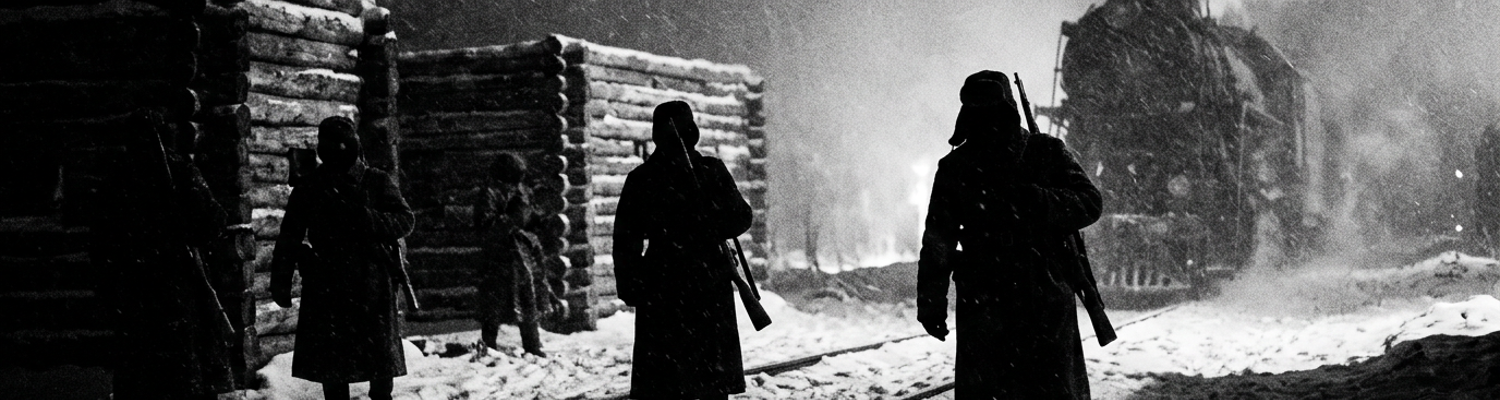
A close review of operational logs indicates that extreme cold and internal moisture wrecked the mechanical function of standard Springfield M1903 bolt-action rifles inside forward railway blockhouses. Along isolated sectors of the Suchan line and track outposts between Nikolsk-Ussuriysky and Khabarovsk, infantrymen of the 31st Infantry Regiment lived inside crude log bunkers heated by cast-iron wood stoves. Wet wool mackinaws and boiling ration kettles filled these tight enclosures with thick, humid air. When sentries stepped through door frames into gale-force arctic winds at railway checkpoints, rapid temperature drops triggered immediate moisture condensation inside the rifle actions. This moisture seeped behind the bolt sleeve. It settled across the dual front locking lugs. It coated the firing pin strike channels before freezing solid into clear ice within two minutes.
Bolts froze shut.
Men struck bolt handles against railway ties or hit them with trench knives to force actions open. This action sheared off cocking pieces and bent extractor collars. Company officers attempted field corrections by ordering armorers to boil every rifle mechanism in kerosene tanks. This stripped away all traces of frozen cosmoline and whale-oil lubricant. Operating dry steel without oil created severe galling. This left bolt raceways scarred and caused extraction failures when brass shell casings expanded inside frost-chilled chambers during partisan sniper exchanges. Archival evidence shows that tempered steel Lewis gun recoil springs shattered under sub-zero Siberian temperatures. This disabled critical automatic fire support across the Trans-Siberian perimeter. Squads deployed by the 27th Infantry to guard timber rail bridges near Krasnaya Rechka relied on the gas-operated, drum-fed Lewis gun as their sole source of sustained defensive volume against mounted Cossack and partisan formations.
The weapon depended on a spiral, tempered ribbon-spring housed inside a gear casing beneath the receiver to push the operating rod and bolt forward after each gas-piston stroke.
In temperatures reaching minus forty-eight degrees Fahrenheit, the high-carbon steel lost elasticity and entered a state of metallurgical embrittlement. Firing a rapid three-round burst subjected the chilled spring coil to sudden kinetic strain. This caused the tempered steel ribbon to snap into three or four jagged fragments inside the housing. The operating rod froze in the rearward position with the bolt locked back. This instantly converted twenty-six-pound automatic weapons into inoperable steel. Replacement mainsprings did not exist in forward supply caches. Depot quartermasters in Vladivostok held no cold-weather spare parts inventories for British-manufactured or converted .30-06 Lewis platforms.
When examining the historical record of December 1919, small-arms ammunition also displayed severe ballistic degradation that confounded company commanders in the field. Below-zero chamber temperatures altered propellant burn rates inside standard Frankford Arsenal .30-06 cartridges. This produced erratic chamber pressures and drop-offs in muzzle velocity exceeding two hundred feet per second. Bullets fell short of range markers established during summer target calculations. Firing pins struck hardened primers with reduced mechanical force because congealed residues inside the striker wells cushioned the spring descent. This resulted in forty percent misfire rates on perimeter watches. Blockhouse garrisons along the Amur railway sector abandoned overhead weapons mounts and dragged their Lewis guns into bunker crawlspaces. They stacked red-hot wood embers directly beneath the receivers to thaw brittle feed components before partisan assaults developed. On December 22, Company B reported eighteen frozen Springfield bolts and five shattered Lewis springs within two hours of sunrise at kilometer post 314.
Severed Telegraph Infrastructure and Remote Blockhouse Garrisons
Copper telegraph wire lost its structural tensile strength the moment ambient air dropped past thirty-five degrees below zero.
A close review of operational logs indicates that heavy ice accumulation along the main rail right-of-way between Nikolsk-Ussuriysky and Khabarovsk destroyed physical communications faster than signal repair crews could splice broken lines. Hard-drawn number-nine copper wire strung between untreated larch-wood telegraph poles collected thick sleeves of rime frost. This frost expanded to five times the core diameter of the metal. Siberian crosswinds blowing across the open plains of the Amur basin applied steady lateral shear against the weighted cables. Glass insulators cracked on crossarms under asymmetric ice loads. The chilled metal stretched past its plastic limit and snapped with explosive cracks. This dropped thousands of yards of dead conductor into snowbanks three feet deep. Signal detachments from the 8th Field Signal Battalion sent out on open pump handcars found sections where six parallel circuits had simultaneously sheared off at the crossarm brackets. Splicing bare wire with frozen pliers took hours while line technicians suffered third-degree frostbite on exposed fingers.
Partisan raiders systematically exploited every meteorological breakdown.
Archival evidence shows that local Bolshevik partisan detachments operating out of the forested Sikhote-Alin foothills targeted the telegraph corridors to sever company outposts from headquarters control. Irregulars threw lengths of discarded logging chain or iron baling wire across active lines to cause dead short-circuits. This blinded dispatchers without leaving visible mechanical breaks. When total interdiction was required, sabotage units used crosscut saws to fell heavy wooden poles directly across the Trans-Siberian tracks near kilometer post 680. This took down regional communications and blocked relief locomotives in a single action. Small groups drilled auger holes into pole bases, tamped three-stick packages of Russian commercial mining dynamite into the wood, and blew thirty-pole stretches into splinters. Repair wagons traveling to severed sectors regularly encountered severed wires that had been dragged hundreds of yards into dense birch thickets. Signal officers had to abandon wire-tracing operations under sniper harassment from concealed rail cuts.
Every severed pole left an outpost alone in the taiga.
When examining the historical record of late 1919, isolated detachments of the 27th and 31st Infantry Regiments occupied primitive timber-and-earth revetments designed to guard vulnerable rail switches and water towers. These structures consisted of double-walled log revetments packed with crushed limestone ballast and banked with packed snow to absorb small-arms fire. Inside these dark perimeter positions, forty men shared cramped living quarters built directly into rail embankments near Sviyagino and Kraevsky. When overhead telegraph loops broke, the brass Morse sounders mounted on depot battery benches fell silent for weeks at a time. The physical cutoff created total command blindness in Vladivostok. Staff officers on General Graves administrative staff had no technical means to verify whether isolated blockhouse garrisons were holding track sectors, running out of dried rations, or overrun by local insurgent forces.
Operational silence forced staff officers to make blind tactical decisions that compounded field disasters. At Vladivostok headquarters, casualty ledgers remained entirely blank for garrisons along the Spasskoye branch line throughout three straight weeks of sub-zero blizzards. Administrative officers assumed garrisons were intact. They routed unarmed supply trains directly toward contested switches where timber revetments had already run out of coal and rifle ammunition. At rail post 412 near Ussuri, Company G of the 31st Infantry spent eighteen days without incoming signals or resupply. Their field telegraph instruments remained dead while forty-two riflemen survived on quarter-rations of hardtack and melted ditch snow. A two-car reconnaissance train finally broke through snowdrifts to the post on January 14. Inspectors discovered twenty-nine men incapacitated by severe dysentery and gangrenous frostbite. Four guards had died in the revetment rifle pits seventy-two hours before relief arrived.
Casualty Logs and Epidemic Disease Tracking
Paper reports reached command desks weeks after the patients had died.
Archival evidence shows that enciphered medical returns arrived weeks late to Vladivostok, cataloging mounting typhus outbreaks and extensive frostbite amputations across remote garrisons. Field surgeons assigned to the 27th and 31st Infantry Regiments operated from converted boxcars and unheated rail depots along the line between Verkhneudinsk and Khabarovsk. Medical supplies ran out by mid-November. Medical officers enciphered their weekly sick sheets into standard five-letter cipher groups using the War Department telegraph tables before passing the paper forms to railway telegraphers. Those wires were dead. Messengers carried the cipher packets aboard erratic steam trains that spent weeks sidetracked in snowdrifts near Lake Baikal. Staff officers at Evacuation Hospital No. 44 in Vladivostok finally decrypted the accumulated reports in late January. The data described conditions that had collapsed thirty days earlier.
Body lice infested wool uniforms that soldiers could not wash in sub-zero water.
This spread epidemic louse-borne typhus throughout the barracks revetments. Surgeons working without running water performed digit and limb amputations using bone saws heated over kerosene stoves. They recorded seventy-four bilateral foot amputations and twelve deaths from wet gangrene across a single battalion during a period when headquarters ledgers showed no urgent medical distress. A close review of operational logs indicates that headquarters casualty ledgers were continuously revised retroactively following partisan ambushes on isolated railway patrols. Administrative clerks inside the Vladivostok base kept tallies of active, wounded, missing, and killed personnel in heavy cloth-bound ledgers using black India ink. These records assumed daily routine along the rail bed. Bolshevik partisan cells operating out of the taiga ambushed four-man handcar details and foot patrols inspecting track bolts between Kraevsky and Sviyagino. They left no survivors to report the engagements.
Because telegraph lines remained down, field company commanders could not signal the ambushes to headquarters.
Staff officers in Vladivostok continued listing those missing soldiers as present for duty on battalion ration rosters for up to twenty-eight days. An armored patrol train finally fought its way down the track to recover the dead. Rail-clearing details discovered frozen corpses stripped of weapons and boots inside snow-choked culverts. Back in Vladivostok, adjutant clerks used red ruling pens to draw retroactive correction lines across weeks of ledger pages. They backdated casualty dates to December to match the physical decomposition found on the ballast. The casualty ledger rarely reflected the actual physical state of the infantrymen. When examining the historical record of early 1920, the delayed records produced severe administrative paralysis that disrupted company-level replacements across the Ussuri rail corridor.
Replacement drafts arriving by transport ship at Golden Horn Bay remained idle on Vladivostok docks.
The Adjutant General Section possessed no accurate personnel counts for outlying detachments. Staff rosters compiled on January 8 showed Company A of the 31st Infantry at eighty percent operational strength at an outpost near Spasskoye. The decrypted field report that arrived on January 29 revealed that typhus had hospitalized thirty-four riflemen. Frostbite had crippled seventeen others. Eight men had been killed in a rail-siding skirmish on January 3. Graves had signed deployment plans based on thirty-nine riflemen who were either dead or lying in delirious stupors on canvas stretchers. Clerks in Vladivostok recorded nine retroactive combat deaths at kilometer post 588 on February 4, forty-one days after the patrol had vanished.
Retrograde Decisions and the March 1920 Evacuation
Clerks drafted orders to abandon the Siberian interior on carbon paper weeks before the instructions reached the locomotives.
A close review of operational logs indicates that staff officers at Vladivostok headquarters issued blind retrograde orders to outlying garrisons without real-time intelligence on opposing force concentrations. Major General Graves and his operations section operated in complete ignorance of rail line security between Nikolsk-Ussuriysky and Lake Baikal. Decrypted dispatches arrived thirty days late. The withdrawal directives required company commanders of the 27th and 31st Infantry Regiments to abandon fortified timber revetments without knowing whether armed Bolshevik partisan columns or Cossack irregulars held the adjacent track switches. Staff officers in the coastal barracks traced hypothetical troop trains along track charts while irregular forces were actively blowing trestles fifty miles away. Outpost commanders at Verkhneudinsk and Posolskaya received garbled Morse fragments instructing them to spike their 37mm trench guns, smash water tower pump valves with sledgehammers, and retreat down single-track lines without scout trains.
Baldwin steam engines pulling wooden boxcars loaded with infantrymen struck derailed rails and loosened fishplates.
This spilled twenty-ton flatcars into four-foot snowdrifts. Isolated rifle companies had to burn thousands of rounds of Frankford Arsenal ammunition and toss cipher books into locomotive fireboxes before beginning foot marches across sub-zero embankments. They were entirely unaware whether the next siding was occupied by Red partisans or White warlord detachments. Garrison commanders marched into unmapped territory where every blind rail curve concealed potential ambushes. Archival evidence shows that this blind inland contraction transitioned into the maritime evacuation of American expeditionary forces from the Port of Vladivostok throughout March 1920. Exhausted rail echelons carrying surviving infantrymen, field kitchens, and frostbitten casualties crawled into the Golden Horn Bay terminals under freezing coastal fog.
The port facilities operated under immediate martial tension.
Commercial freighters and United States Army transports, including the USAT Great Northern, USAT Thomas, and USAT Sheridan, docked alongside iced-over wharves to take on troops. Japanese imperial army units patrolled adjacent rail sidings with fixed bayonets. These squads established sandbag machine-gun emplacements. At the exact same time, Red partisans seized municipal government buildings directly outside the naval reservation perimeter. Quartermaster details worked around the clock on concrete pierheads. They poured drum kerosene over wooden supply crates and dumped damaged Springfield rifles and machine-gun tripods into thirty feet of harbor water. Evacuation Hospital No. 44 transferred litter cases carrying soldiers suffering from typhus, gangrene, and severe respiratory illnesses directly into the dark hold spaces of the waiting transports.
Tugboats worked continuously to break pack ice away from the steel transport hulls.
When examining the historical record of late March 1920, the strategic withdrawal reached its final phase as the last rear-guard detachments pulled back from the Vladivostok terminal yards. Signal Corps personnel cut the remaining military switchboards, packed their receivers into wooden shipping crates, and boarded the ships under defensive rifle screens. Transports weighed anchor in staggered convoys to avoid drifting minefields floating near the mouth of the Eastern Bosphorus strait. On March 31, 1920, the transport Great Northern slipped its heavy mooring cables from Pier 3 with Graves and the remnants of the headquarters staff aboard. The vessel steamed south toward the Sea of Japan while Japanese infantry companies moved into the vacated American barracks.