
Legal Inquiries in White House Official File 303
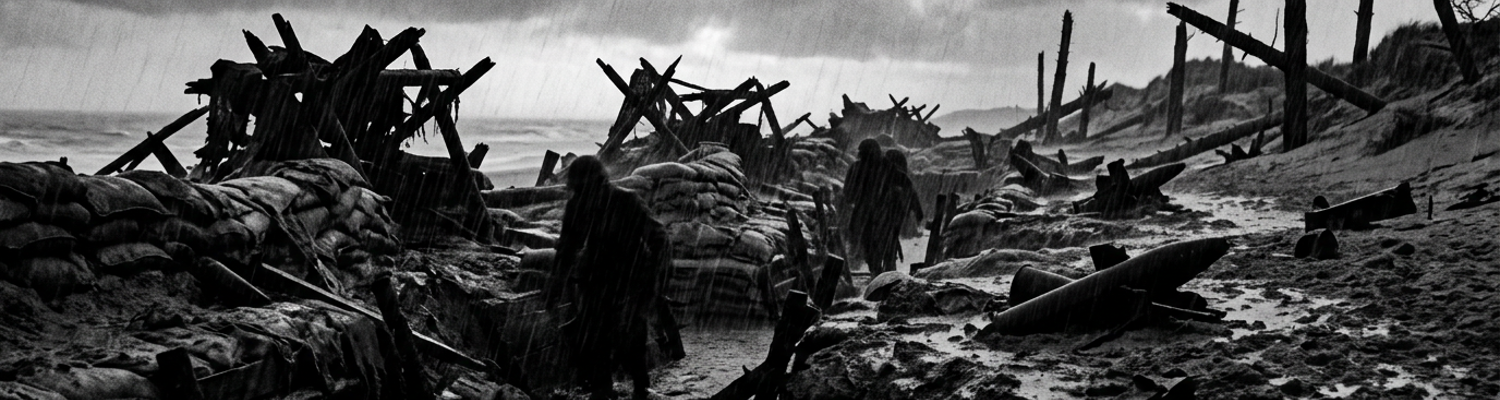
Department of the Army defensive manuals guaranteed that properly revetted timber and earth bunkers could survive continuous shore battery bombardment. Garrison forces on Yo-do Island inherited crumbling trenches and shattered sandbag parapets directly under the barrels of North Korean 76mm coastal batteries hidden on the Kalma Peninsula. Water seeped through coastal sand to flood communication lanes before incoming artillery rounds severed the primary field telephone lines.
Standard field manuals failed against high explosive ordnance.
When examining the historical record, White House Official File 303 reveals the administrative panic triggered in Washington once reports reached the Executive Branch. Presidential aides compiled classified memoranda documenting severe fallout across theater headquarters. Files preserved in this executive dossier contain after-action transmissions between Naval Forces Far East and the Joint Chiefs of Staff. Staff investigators documented specific instances of dereliction across the supply chain.
Garrison leadership allowed the primary coastal radar installations on Hill 121 to operate without functional secondary power generators.
Inspector general reports in File 303 cataloged the breakdown of the 40mm anti-aircraft batteries along the western spits. Salt spray corroded traverse gears because maintenance crews lacked authorized solvent lubricants for twenty-six consecutive days.
Blame shifted down the chain of command into military courtrooms.
A close review of operational logs indicates that prosecutors relied entirely on the newly enacted Uniform Code of Military Justice of 1951 to frame formal general courts-martial. Congress had brought the unified military code into force on May 31, 1951. The statutory framework replaced the separate Articles of War and Articles for the Government of the Navy with standardized punitive articles. Legal officers specifically drew up charge sheets under Article 92 for failure to obey general orders concerning sector fortification maintenance. They filed additional charges under Article 99 for misbehavior before the enemy. Multiple defensive redoubts along Sector Charlie were abandoned before hostile ground elements established a firm beachhead.
Navy Department files confirm that defense attorneys clashed with the convening authorities at Yokosuka. Naval jurists rejected these appeals. Officers assigned to the island perimeter had signed binding fortification logs certifying defensive readiness while knowing revetment walls lacked the sand volume required by marine engineering circulars.
Recorded testimony linked structural rot to physical defeat.
Field inspection reports appended to court dockets pinpointed the collapse of Sector Baker directly to the failure of twenty-eight field-expedient pillboxes. Green logs shattered outward under the concussion of 122mm Soviet supplied artillery shells. The primary SCR-300 radio sets were destroyed. Staff officers had signed off on construction inspections four days before the bombardment without verifying timber load limits or revetment drainage trenches. Saltwater backup in the subfloor trenches shorted out the firing batteries of the coastal searchlight emplacements at coordinates 39 degrees 14 minutes North, 127 degrees 30 minutes East.
The outer wire aprons sat in complete darkness at 0340 hours.
Strategic Garrison Role During the Wonsan Siege
Archival evidence shows that Task Force 95 landed Marine garrison detachments alongside Naval Beach Group 1 personnel onto the jagged shoreline of Yo-do in early 1951. Landing craft vehicle personnel from amphibious transports brought ashore elements of the Marine defense detachment. Specialized beach parties arrived equipped with SCR-608 radio sets, AN/TPS-1 radar gear, and twin-mount .50 caliber M2 heavy machine guns.
Their immediate operational requirement focused on holding the deep water Russian Channel.
Without ground forces permanently entrenched on Yo-do, United States Navy minesweepers clearing the inner shipping lanes routinely came under direct small arms and mortar fire from adjacent mainland coves. Beach parties established visual signal stations along the northern bluffs. Signalmen passed manual flag and blinker light navigational instructions directly to incoming logistical vessels moving through the cleared swept channels. Combat engineers leveled sections of the central ridge using hand entrenching tools and commercial dynamite charges.
Supply runs across the eastern channel depended entirely on wooden hulled utility boats evading mainland spotters.
Military tribunal records show that Yo-do functioned as a forward observation buffer designed to neutralize Soviet manufactured contact mines. Hostile forces deployed moored M-08 and M-26 chemical horn contact mines alongside free floating spherical charges. Camouflaged wooden sampans dropped these devices along the mouth of the Namdae River. Drifting munitions rode outgoing tidal currents directly into the patrol boxes assigned to United Nations destroyers operating along the inner blockade lines.
Lookouts stationed on the outer bluffs tracked floating casings through ten power naval binoculars.
Shore observers marked coordinates for armed patrol craft or dispatched rifle squads to detonate the lead acid horns with armor piercing .30-06 ammunition before the devices entered the cleared transit lane. Corrosive salt encrustation repeatedly fouled the traverse mechanisms and optical sights of the garrison 75mm recoilless rifles. Night observation posts lacked functional infrared equipment. Personnel fired star shells from 60mm mortars whenever ocean swells suggested the silhouette of drifting ordnance.
High explosive mine strikes had already disabled four fleet destroyers in the surrounding shallows.
Archival battle damage assessments reveal how the island outpost absorbed heavy artillery barrages originally directed at blockade warships. Mainland North Korean gunners operated 76mm divisional guns M1942 and 122mm howitzers concealed within reinforced granite caves on the Kalma Peninsula and the Hodo Pando headland. Whenever United Nations task elements entered the harbor to shell mainland rail junctions, enemy coastal batteries shifted fire toward Yo-do sandspits. Fragmentation from high explosive rounds routinely severed external antenna leads on the beach party SCR-509 radio sets. Signalmen ran manual wire splices through unroofed communication trenches during active shelling.
Direct hits from 76mm shells repeatedly blew out the untreated pine bracing of the southwest observation bunker.
Optical rangefinders were buried under five feet of displaced sand at coordinate marker 39 degrees 14 minutes North, 127 degrees 37 minutes East. Shrapnel scarred the water distillation units on the western beachhead. Potable water production dropped to twelve gallons per day during the height of the summer bombardment.
Severe Tidal Surges and Trench Submersion Hazards
Archival evidence shows that daily tidal fluctuations in Wonsan Harbor swung by as much as eight feet. Violent tidal surges washed across the low lying western littoral of Yo-do. When high volume swells pushed through the outer channels during the harsh winter cycle of late 1951, incoming seawater surged through porous sandbars directly into the forward fighting holes dug by the 1st Marine Defense Detachment.
Slush and sub zero brine saturated defensive Sector Alpha within minutes of peak tide.
Dry firing positions turned into waist deep quagmires of freezing mud. As the seawater retreated twice every twenty four hours, the hydraulic suction scoured out the footings of the beachhead trench lines. Field revetments dislodged. Tons of unreinforced sand pulled back into the surf. Riflemen attempting to occupy primary rifle pits found their positions submerged under two feet of gray salty slurry.
The freezing water fouled the operating rods of their M1 rifles.
Forward outposts established along the high water mark caved in completely as saturated soil lost all shear strength. Sentries were left exposed to direct observation and enfilade fire from North Korean spotters positioned on the Kalma Peninsula.
Water destroyed the beachhead faster than enemy artillery.
A close review of operational logs indicates that constant waterlogging degraded the protective earthworks far more rapidly than field elements could pump or excavate the standing brine. Task Group maintenance personnel attempted to drain the communication trenches using standard Homelite two stroke portable centrifugal dewatering pumps. These lightweight civilian pattern units broke down under the abrasiveness of coastal silt. Granular quartz sand and suspended harbor mud chewed through the rubberized neoprene impellers. Saline encrustation choked the intake manifolds and seized the starter cords within twenty minutes of continuous operation.
Garrison mechanics lacked spare gasket kits.
Maintenance crews jury rigged intake strainers using wire mesh stripped from empty ration crates and discarded wool socks. Even when the two inch suction hoses operated at full throttle, incoming subterranean seepage filled the ditch floors at a rate of fifty gallons per minute. This volume outstripped the mechanical discharge capacity of the failing engines.
The pumps burned out their bearings and quit.
When examining the historical record, garrison commanders chose to maintain defensive fighting positions directly on the intertidal flats rather than pull back to the rocky spine of Hill 121. They prioritized visual control over the Russian Channel at the expense of fortification structural integrity. This decision accelerated the total decay of defensive Sector Charlie. Saturated burlap sandbags rotted into fragile husks that burst open under the lateral pressure of the earthen berms. Untreated timber cribbing installed along the main lateral communications trench absorbed hundreds of gallons of salt water. Heavy pine stringers snapped under the wet weight of overhead fragmentation roofs.
Marine working parties attempted to bail the trenches by hand using five gallon jerrycans and standard M-1943 entrenching shovels.
Every shovel of dense freezing muck pulled from the subfloor caused the saturated trench walls to slide inward in fresh avalanches. By midnight on December 14, 1951, four hundred yards of primary fighting line had dissolved into a continuous waterlogged ditch eighteen inches below sea level.
Structural Failure of Improvised Log Revetments
Archival evidence shows that Marine garrison units under the 1st Marine Defense Detachment attempted to stabilize frontline revetments across Sector Baker using soft native timber felled directly from the scraggly ridges of Yo-do. Facing sustained shore battery fire from Kalma-gak, combat engineers lacked kiln dried dimensional lumber. Work crews chopped down scrub red pine trees with four pound felling axes.
These green unseasoned logs retained up to forty percent of their internal sap weight.
Marines drove the raw trunks vertically into trench walls at coordinates 39 degrees 14 minutes North, 127 degrees 37 minutes East without external chemical preservatives or creosote sealants. As subterranean water tables rose during high tide phases, hydraulic load expanded behind the retaining faces. Saturated sand exerted continuous lateral hydrostatic pressure exceeding two hundred pounds per square foot against the green timber. Without steel tieback rods or buried deadman anchors secured into bedrock, the soft pine stringers bowed outward under the shifting weight.
Internal wood fibers sheared along natural grain lines.
Buckling revetment walls collapsed inward into the five foot fighting trenches. Structural joints snapped. Overhead earthen parapets dropped directly onto stored ammunition supplies.
Green wood warped until the timber spines fractured.
A close review of operational logs indicates that supply requisitions routed to Naval Supply Depot Yokosuka failed to deliver standard engineering materials to the blockade zone throughout late 1951. Garrison quartermasters submitted emergency dispatches requesting four thousand sheets of heavy corrugated iron and twenty thousand ten ounce burlap sandbags to reinforce the collapsing trench network. Supply transports operating under Task Force 90 bypassed the offshore islands entirely. Planners prioritized mainland ammunition stocks for frontline divisions at the 38th parallel.
Deprived of steel sheeting for splinter proof overhead cover, combat engineers constructed makeshift berms out of uncompacted beach sand mixed with marsh reeds and scrap wooden dunnage.
These unreinforced earthen barriers possessed zero cohesive tensile strength against harsh coastal weather. Torrential squalls striking coordinates 39 degrees 14 minutes North, 127 degrees 36 minutes East pulverized the outer spoil banks within hours. Surface runoff carved deep rills through the fill dirt, carrying thousands of cubic yards of sediment back into the tidal flats. Unstable firing parapets liquefied under constant water saturation. The mud buried .30 caliber water cooled machine guns and left firing slits completely open to direct fire.
Logistics manifests recorded zero shipments of fortification iron for ninety straight days.
When examining the historical record, tactical officers on Yo-do repeatedly altered construction blueprints to compensate for the missing structural elements. Sector commanders ordered infantry squads to excavate deeper into the coastal clay. They attempted to use hard subsoil as natural revetment walls while stacking unpeeled pine branches along the ditch faces. Trapped groundwater could not drain through the dense clay beds. Rising hydrostatic head pushed the trapped water upward through the trench subfloor, loosening the soil that anchored perimeter wire entanglements.
A two hundred yard segment of the primary perimeter gave way on the night of January 8, 1952.
Gale force winds and heavy surf swept the makeshift berm down the slope. Two Browning M1917A1 machine gun positions were pulled into the intertidal zone. Marine work details spent eight hours digging through freezing sand to salvage the drowned receivers. Mainland North Korean batteries fired five round salvos of 76mm fragmentation rounds onto the exposed positions during the recovery operation.
North Korean Artillery Counter-Battery Bombardment
Archival evidence shows that coastal defense units of the Korean People Army 25th Coastal Defense Brigade targeted Yo-do with sustained counter battery fire. Hostile crews operated Soviet supplied 76mm divisional guns M1942 alongside 122mm gun howitzers M1938. These weapons were stationed within deep granite railway tunnels and blast reinforced gun caves along the Kalma Peninsula and the cliffs of Hodo Pando.
North Korean battery commanders zeroed in on coordinate grid 39 degrees 14 minutes North, 127 degrees 37 minutes East using pre surveyed range cards.
Gunners pushed their ordnance out on narrow gauge steel tracks. They delivered rapid five round counter battery salvos against United Nations mortar positions. The crews hauled the pieces back into the mountain vaults before offshore destroyers could return fire. These concealed batteries sustained continuous fire rates exceeding forty rounds per hour across forty eight uninterrupted hours.
Blast doors sealed the cave embrasures before fleet artillery shells struck the mountainside.
A close review of operational logs indicates that incoming high velocity 76mm rounds arrived with zero audible warning. Defending mortar crews had no time to take cover. United States Marine detachments manning four 4.2-inch M2 chemical mortars in Sector Baker attempted to return counter battery fire against mainland flash signatures. Searing muzzle blasts gave away the Marine pits immediately. Mainland forward observers entrenched on the heights of Umi-do corrected North Korean shell walk ins using wire field telephones.
Heavy 122mm fragmentation ordnance came directly down onto the battery coordinates.
Counter battery fire disabled three of the island mortar tubes when exploding shrapnel pitted the elevation screw threads and cracked the spherical baseplate sockets. Island counter fire ceased when high explosive rounds shattered the forward observation posts. Garrison spotters were blinded. Communication lines running down to the beachhead ammunition dumps ruptured.
Splintered copper field wires whipped across the open rocks.
When examining the historical record, direct concussive impacts systematically pulverized weakened log parapets. The unseasoned red pine retaining walls installed along Sector Baker had already absorbed tons of coastal mud. Wood fiber became brittle and saturated. Heavy 122mm Soviet pattern high explosive rounds detonated directly inside the soft earth berms surrounding Bunker 4 at coordinates 39 degrees 14 minutes North, 127 degrees 37 minutes East.
Concussive shockwaves produced dynamic ground shock exceeding four thousand pounds per square inch.
Horizontal log stringers that lacked steel deadman supports snapped instantly. The earthen roofs caved in with catastrophic force. Saturated clay, uncompacted beach sand, and shattered green pine timber fell directly onto nine enlisted Marines sheltered inside the sleeping redoubt. Falling debris crushed the corrugated metal inserts. The men were trapped beneath three vertical feet of wet fill dirt. Secondary shrapnel from air bursting 76mm shells tore into rescue teams attempting to dig them out with shovels.
Six enlisted riflemen died of mechanical asphyxiation before shovels cleared the entry shaft.
Medical detachment rosters from Mobile Field Hospital 1 documented twenty two severe concussive blast injuries and seven crushed limbs. Casualties were evacuated by utility landing craft under fire at 1620 hours. Internal blast overpressure from shells detonating within ten yards of the bunker embrasures ruptured the tympanic membranes of every occupant in adjacent machine gun shelters. Rescuers pried apart tangled telephone wire and broken logs with bare hands as subsequent 122mm salvos gouged four foot deep craters along the withdrawal trench. Stretcher evacuation through Sector Baker terminated until darkness fell at 1915 hours.
Supply Chain Collapse and Garrison Disintegration
Archival evidence shows that coastal swells in Wonsan Harbor exceeded nine feet during the gale force storms of January 1952. These conditions directly threatened the shallow draft landing craft dispatched from Amphibious Construction Battalion 1. Korean People Army coastal gunners positioned on Kalma-gak calibrated their 76mm batteries to interdict the narrow northern approach channel at coordinate 39 degrees 14 minutes North, 127 degrees 36 minutes East. High velocity fragmentation rounds struck the water within twenty yards of approaching LCM-6 utility lighters.
Open cargo wells were showered with jagged shrapnel and salt brine.
Shifting wind shears and freezing sea spray iced the coxswain armored viewports. Steerage crews were blinded as heavy surf smashed the flat bottom craft against submerged sandbars. On four separate runs between January 12 and January 17, task group dispatchers ordered the lighters to abort their landings and retreat eastward toward the relative shelter of Task Group 95.2 warships. Tons of rough sawn eight by eight Douglas fir framing timbers, twelve gauge galvanized trench wiring, and three hundred cases of wet pack B-rations lay chained inside cargo bays at sea.
Frontline combat engineers lacked the hardware required to shore up disintegrating sandbag parapets.
The island ran out of structural lumber before midwinter.
A close review of operational logs indicates that the few craft reaching the beachhead suffered severe mechanical damage. Detroit Diesel 6-71 engines on two LCM-3 lighters seized after ingesting suspended coastal sand through cooling water intakes. The vessels were attempting to hold position against outgoing rip currents at coordinates 39 degrees 14 minutes North, 127 degrees 36 minutes East. Shore battery gunners on Hodo Pando observed the grounded vessels and walked five round 122mm salvos down the surf line.
Hull plating of Landing Craft Mechanized 14 was penetrated, setting fire to forty barrels of asphalt roofing pitch.
Beach party details abandoned unloading procedures to drag wounded crewmen past burning wreckage into uncleared minefields. Salt encrustation corroded the winch cables of the island single crawler tractor. Salvage teams could not drag stranded cargo crates containing replacement sandbags and galvanized iron roofing nails across the surf zone.
Supply manifests showed eighty percent of ordered trenching wire sat untouched in supply holds at Sasebo.
When examining the historical record, prolonged physical exposure to arctic weather and raw seawater destroyed the physical capacity of the 1st Marine Defense Detachment. Sub zero temperatures dropping to minus four degrees Fahrenheit froze waterlogged combat boots. Acute immersion foot syndrome spread across thirty eight riflemen stationed in the Sector Baker communication trenches. Without dry wool socks, heating fuel, or intact timber shelters, sentries endured fourteen hour night watches standing in frozen brine that reached above their ankles. Shrapnel wounds sustained during daily Kalma-gak artillery bombardments went untreated as medical supplies spoiled in flooded aid bunkers at coordinate point 39 degrees 14 minutes North, 127 degrees 37 minutes East.
Gangrene and systemic hypothermia disabled nineteen enlisted men within seven days.
Continuous sleep deprivation under forty eight hour artillery barrages degraded reaction times across the line. Unit strength fell forty percent below minimum defensive complements. Junior non commissioned officers ceased inspecting outer wire barriers. They stayed huddled around unvented gasoline stoves inside half collapsed sandbag dugouts while frontline observation posts stood empty.
Operational cohesion disintegrated completely on the morning of January 22.
An entire eight man rifle squad from Sector Charlie refused direct orders to dig replacement firing trenches under active 76mm counter battery fire. Tactical control ruptured across the western beachhead as sentries abandoned forward listening posts to seek shelter in the deep rock fissures of Hill 121. Fleet headquarters intervened by dispatching naval legal officers and military police detachments from Sasebo to re establish administrative authority over the garrison. Judge Advocate General staff officers initiated formal investigations into eight specific cases of insubordination, dereliction of duty, and unauthorized abandonment of primary defensive sectors. Legal officers impounded garrison morning logs, duty rosters, and company sick books. They built general court martial charge sheets under Articles 90, 92, and 99 of the Uniform Code of Military Justice against twelve enlisted Marines and two company grade officers.