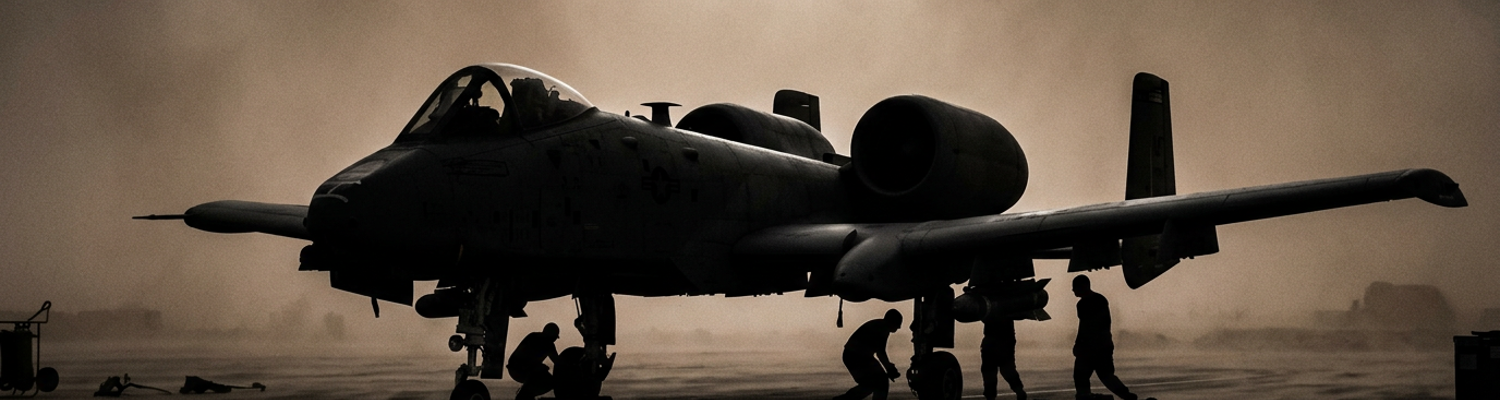

Iraqi Armored Assaults and Air Support Challenges
Airman First Class Miller stood on the flight line at King Fahd International Airport. He wiped fine silica dust off the glass dome of an AN/AAS-35(V) Pave Penny pod mounted beneath the intake of an OA-10A Warthog. It was 1800 hours on January 29. He used a standardized microfiber cloth. The abrasive grains threatened to blind the laser spot tracker. A torque wrench clicked loudly against the sway braces of a LAU-68 rocket pod. Another technician secured seven M156 white phosphorus rockets. The smell of unburned JP-8 jet fuel hung heavy in the cooling night air. Miller checked the safety wire on the mounting bolts one final time before signing off the maintenance log.
Archival evidence shows this routine avionics check occurred exactly twelve hours before the entire defensive line collapsed.
On January 30 1991 during the Battle of Khafji Iraqi armored forces launched a major crossing near the Saudi border. The Iraqi 5th Mechanized Division and 3rd Armored Division pushed south from the Al-Wafra staging areas. They moved toward Grid 29°25′N 48°30′E. Columns of T-55 and T-62 tanks breached the defensive sand berms separating Kuwait from Saudi Arabia. BMP-1 infantry fighting vehicles followed close behind. Armored bulldozers pushed massive quantities of earth into the defensive trenches. This created crossing points for the heavy armor. Diesel engines roared in the low visibility. The mechanized columns advanced along multiple axes. They converged directly on the coastal town of Khafji. Iraqi commanders ordered their tank crews to maintain strict radio silence. Drivers relied on visual signals and pre-planned compass headings to navigate the flat desert terrain. Main guns were loaded with high-explosive fragmentation rounds.
The initial assault force numbered over eighty heavily armed vehicles.
The 23rd Tactical Air Support Squadron deployed OA-10A Forward Air Control aircraft to monitor the defensive perimeter. Operating under the callsign Nail these pilots loitered over the battlefield. They directed incoming strike packages. The OA-10A variant lacked the heavy bomb load of standard attack jets. It carried specialized target-marking munitions. Pilots relied heavily on the LAU-68 pods firing 2.75-inch Folding-Fin Aerial Rockets. These rockets featured white phosphorus warheads. They generated thick white smoke plumes upon impact. An OA-10A pilot identifying a moving T-62 tank fired a single rocket to mark the vehicle. The pilot then transmitted the exact coordinates to orbiting F-16 Fighting Falcons and Marine Corps F/A-18 Hornets using AN/ARC-164 UHF radios.
A close review of operational logs indicates the marking system functioned perfectly during clear weather tests.
Severe haboob sandstorms severely degraded optical aiming sights and laser target marking systems across the operational area. Wind speeds rapidly exceeded forty knots across the Saudi-Kuwaiti border. Millions of tons of fine silica dust filled the air from the surface up to ten thousand feet. Suspended particulate matter absorbed the thermal energy emitted by the Iraqi tank engines. This atmospheric interference rendered the AGM-65D Maverick infrared seekers completely blind. Avionics systems like the Pave Penny pods on the OA-10As failed. Laser energy from ground-based designators reflected off the sand grains instead of the enemy armor. Airborne dust particles posed a severe mechanical threat to the TF34 turbofan engines of the aircraft.
Pilots staring through their heads-up displays saw only a solid wall of opaque brown dust.
Laser Designation Failures in Desert Sandstorms
Archival evidence shows the breakdown of precision targeting began deep inside the AN/AAQ-14 LANTIRN pods carried by F-15E Strike Eagles of the 336th Tactical Fighter Squadron. At 2315 hours weapons systems officers orbiting at fifteen thousand feet above Grid 29°25′N 48°30′E activated their neodymium-doped yttrium aluminum garnet lasers. They intended to paint Iraqi T-62 tanks pushing through the northern outskirts of Khafji. Airborne laser designator beams suffered extreme atmospheric scattering when penetrating dense particulate dust clouds. The 1064-nanometer wavelength energy struck a dense concentration of micron-sized silica sand. The photons bounced off billions of jagged quartz particles. This physical reaction generated a diffuse cone of scattered infrared light in the upper atmosphere. The target designator box on the cockpit multi-function displays flashed an error code. It indicated a loss of track continuity. Airborne computers attempted to calculate the slant range to the ground targets based on radar altimeter data. The software algorithms crashed when the laser returns provided conflicting distance measurements.
The 1064-nanometer beam failed to register on any allied sensor.
Inbound high-altitude strike fighters could not acquire laser energy or maintain visual contact with ground coordinates. Two Marine Corps F/A-18 Hornets from VMFA-314 descended from twenty-two thousand feet at a speed of four hundred and fifty knots. Their pilots engaged their AN/AAS-38 Nite Hawk targeting pods. They swept the assigned kill box for the scattered laser reflection. The sensors detected nothing but ambient thermal noise. Below ten thousand feet the visual spectrum disappeared entirely. The horizon vanished. Pilots straining to look through their heads-up displays encountered a solid mass of brown particulate matter stretching across the flight path. They could not verify the intersection of Highway 85 and the coastal road. This was a mandatory navigational waypoint. F-16C Fighting Falcons from the 37th Tactical Fighter Wing experienced identical failures just minutes later. Their Pave Penny pods wandered aimlessly across the azimuth. Without a distinct laser spot to track the onboard fire control computers refused to authorize the release of AGM-65E laser-guided Mavericks. The pilots aborted their attack runs. They pulled their aircraft into steep climbing turns to avoid colliding with the unseen ground.
Flight leads ordered their wingmen to climb back above the weather layer.
Standard close air support marking procedures failed under the choking atmospheric conditions of the haboob. Joint Terminal Attack Controllers embedded with the Saudi National Guard normally relied on a strict nine-line transmission to guide aircraft onto a target. They called for a white phosphorus rocket mark from an airborne OA-10A Forward Air Controller. They followed up with terminal laser guidance. The forty-knot sustained winds of the haboob immediately sheared the white smoke plumes from the 2.75-inch rockets horizontally across the desert floor. The smoke dissipated into the ambient dust storm within three seconds of impact. It left no reference point for the attack jets. Ground controllers transmitting on AN/PRC-113 radios screamed coordinates into their handsets. They physically shielded the microphones from the abrasive sand. Fine particulate matter bypassed the acoustic filters on the radio headsets. It jammed the mechanical push-to-talk switches.
Comms died.
Controllers dismantled the radio handsets with multi-tools in the dark while Iraqi 100mm tank rounds impacted less than three hundred meters from their observation posts. Visibility at the ground level dropped below fifty feet. Commanders at the Direct Air Support Center in Riyadh recognized the complete failure of established doctrine. Directives transmitted over UHF frequencies ordered the OA-10A pilots to abandon their high-altitude loitering patterns and drop into the storm. Standard operating procedures required maintaining a hard deck of eight thousand feet to avoid radar-guided ZSU-23-4 Shilka anti-aircraft guns. Flight leads ignored this altitude restriction. Pushing their control sticks forward the aircrews dove directly into the abrasive silica cloud. Sand rapidly eroded the polyurethane protective coating on the leading edges of the wings. The TF34 turbofan engines ingested kilograms of dust per minute. Compressor blades began to pit and degrade under the constant friction.
Ground crews would later find the turbine sections filed down to bare metal.
Ground Crew Modifications to LAU 68 Pods
Archival evidence shows the mechanical adaptation to this atmospheric blindness occurred on the flight line at King Fahd International Airport at 2325 hours on January 30. Weapons technicians assigned to the 23rd Aircraft Generation Squadron recognized that single-shot target marking was failing in the high-wind environment over Khafji. Air Force ground crews improvised custom wiring modifications on the LAU-68 white phosphorus rocket pods mounted on the OA-10A aircraft. Technicians unbolted the aft aerodynamic fairings on the cylindrical aluminum pods to expose the internal wiring harnesses. Using standard issue wire strippers and electrical tape the crews isolated the 28-volt direct current ignition lines. They severed the factory-standard connections routing power to the individual rocket tubes. The maintenance teams fabricated a custom daisy-chain wiring configuration using spare copper wire scrounged from the avionics repair shops. This unauthorized field modification physically linked the electrical primers of all seven 2.75-inch Folding-Fin Aerial Rockets into a single closed circuit. Ground crews worked under red-filtered flashlights to avoid detection from potential Iraqi Scud missile strikes. They finished the rewiring process on four OA-10A aircraft in under twenty minutes.
A maintenance chief signed off on the schematic using a grease pencil on the side of a munitions crate.
A close review of operational logs indicates this wiring alteration required bypassing the standard intervalometers housed within the aft section of the rocket pod. The intervalometer normally functions as a rotary stepping switch. It distributes the firing pulse to one tube at a time with a specific ten-millisecond delay. This mechanical delay prevents the exhaust plume of one rocket from destabilizing the flight path of the adjacent projectile. Ground crews completely removed these rotary switches from the electrical path. They spliced the primary firing line coming from the aircraft pylon directly to the seven contact pins at the base of the rocket tubes. Current hit every primer simultaneously rather than sequentially. The physical removal of the intervalometer stripped away all internal safety delays designed by the manufacturer. It bypassed the weapon station control unit entirely.
The modification immediately voided the technical orders for the entire weapons system.
The field modifications allowed FAC pilots to manual ripple fire rocket markers directly from the cockpit console. Inside the OA-10A the pilot interacted with the Armament Control Panel located on the front dash. Standard protocol required selecting a ripple setting. The pilot adjusted the interval switch and held the weapon release button while the intervalometer dictated the firing rate. The hardwired bypass forced the aircraft systems to recognize the loaded LAU-68 pod as a single unguided munition requiring only one electrical impulse. When a pilot depressed the red firing button on the control stick the onboard computer sent a single uninterrupted electrical surge down the wing pylon umbilical cord. All seven rockets launched in an uncontrolled swarm within ten milliseconds of the trigger pull. Pilots braced themselves against the control stick. They applied heavy rudder inputs to maintain level flight during the launch sequence.
Thrust from the simultaneous ignition violently shook the aircraft wings and temporarily stalled the left turbofan engine on multiple sorties.
When examining the historical record this specific hardware bypass enabled concentrated phosphorus detonations capable of cutting through heavy dust particulates. Standard tactics of firing a single M156 white phosphorus warhead delivered only 2.2 pounds of incendiary material to the target area. Forty-knot haboob winds instantly sheared this small smoke plume across the desert floor. It rendered it invisible to orbiting strike aircraft. By utilizing the manual ripple fire pilots delivered over fifteen pounds of white phosphorus to a concentrated twenty-square-meter grid in less than a second. Seven warheads detonated simultaneously upon impacting the Iraqi armored columns. Chemical reactions rapidly oxidized the phosphorus. This generated a dense expanding cloud of phosphorus pentoxide smoke. Heat and volume from the simultaneous detonations overpowered the abrasive silica dust suspended in the air. Airborne F-16 and F/A-18 pilots staring at their infrared multi-function displays suddenly detected a concentrated glowing thermal bloom penetrating the opaque sandstorm.
The burning slag reached temperatures exceeding five thousand degrees Fahrenheit and melted directly through the engine decks of the Iraqi T-62 tanks.
Static Induced Blackouts and Grid Coordination Breakdown
A close review of operational logs indicates the airborne communication network collapsed entirely at 2320 hours. Millions of tons of suspended silica sand impacted the aluminum airframes of the loitering OA-10A Forward Air Controllers. This constant physical friction across the wings and fuselage generated intense triboelectric charging. Fine desert dust stripped electrons from the polyurethane chemical agent resistant coating on the aircraft skin. Static electricity built up rapidly along the external blade antennas mounted on the dorsal spines of the Warthogs. Airborne AN/ARC-164 radios operating in the 225 to 399.975 MHz frequency bands experienced extreme electromagnetic interference. The continuous electrical discharge from the abrasive haboob overpowered the internal squelch circuits designed to filter out background atmospheric noise. Pilots pressing their mechanical push-to-talk switches transmitted nothing but high-decibel white noise. In the cockpits aviators frantically cycled through pre-programmed backup frequencies on their radio control heads. They physically reset the circuit breakers on the right-side consoles in an attempt to clear the interference. The hardware reboots failed to re-establish the datalink. Incoming strike packages descending from twenty thousand feet flew directly into this localized electromagnetic anomaly. Friction from the concentrated dust storm effectively jammed all air-to-air voice networks across a forty-mile radius.
For exactly five minutes every radio channel monitored by the 23rd Tactical Air Support Squadron returned an unbroken wall of static.
Archival evidence shows this loss of voice contact immediately shattered the airspace deconfliction protocols near the Saudi border. Ground controllers at the Direct Air Support Center in Riyadh tracked the OA-10As on primary radar but could not transmit updated threat assessments. The Iraqi 5th Mechanized Division advanced south through Grid 29°25′N 48°30′E. They pushed directly toward the abandoned Observation Post 4. Standard Central Command doctrine required the FAC pilots to verbally assign specific one-by-one-kilometer kill boxes to incoming fighter flights based on the Common Geographic Reference System. Without functional UHF channels pilots could not verbally verify which grid squares contained retreating allied Saudi National Guard units. The spatial boundaries of the battlefield dissolved into guesswork. Airborne forward controllers possessed visual contact on the Iraqi T-62 tanks through sporadic breaks in the dust. They lacked the means to relay the mandatory nine-line strike briefs. Strike jets arriving from the south entered the airspace completely blind to the shifting positions of the enemy armor below the weather layer.
No pilot possessed an accurate operational picture of the Khafji perimeter.
Inbound F-16C Fighting Falcons and F/A-18 Hornets entered holding patterns high above the storm system. Flight leads established a left-hand racetrack orbit at fifteen thousand feet. They burned through their internal fuel reserves while waiting for target coordinates. Wingmen maintained a strict two-mile trail formation using air-to-air TACAN to avoid mid-air collisions in the zero-visibility conditions near the cloud tops. The strike aircraft carried fully armed AGM-65 Mavericks and Mk-82 unguided bombs on their wing pylons. Military rules of engagement dictated that no ordnance could be released without positive terminal attack clearance from the Forward Air Controller. The OA-10A pilots flying below the storm could not transmit the required clearance authorization over the jammed frequencies. Weapons systems officers in the orbiting jets watched their digital fuel totalizers drop toward bingo levels as the minutes ticked by. The F-16Cs from the 37th Tactical Fighter Wing burned roughly sixty pounds of JP-8 jet fuel per minute while maintaining their holding airspeed of three hundred knots. Ground crews at King Abdulaziz Air Base loaded the jets with just enough fuel for a single attack run and an immediate return flight.
Flight computers calculated the exact minute the aircraft would have to abort the mission and turn back to base.
Manual Ripple Firing in Blinding Dust
Archival evidence shows flight leads in the OA-10A formation broke the mandated altitude restrictions at exactly 2322 hours to find the Iraqi mechanized columns. Pilots pushed their control columns forward. They forced the Warthogs into a steep thirty-degree dive through a dense layer of low stratus clouds mixing with the suspended silica of the haboob. Airspeed indicators climbed past three hundred knots. The polyurethane coating on the leading wing edges eroded instantly as the airframes smashed through millions of jagged quartz particles. Inside the cockpits aviators lost all visual reference to the horizon. Radar altimeters rapidly counted down the distance to the ground. Digital numbers flashed through the opaque brown canopy glass. Passing below two thousand feet the particulate density thickened. Pilots relied entirely on mechanical instruments to prevent controlled flight into terrain. They hunted the forward elements of the Iraqi 5th Mechanized Division. These columns consisted of T-62 tanks and BMP-1 infantry fighting vehicles advancing along Highway 85 near the Kuwaiti border. The OA-10A crews knew the only way to acquire these targets was naked-eye visual identification. They dropped below the one-thousand-foot mark. Radar warning receivers illuminated with active pings from ground-based ZSU-23-4 Shilka anti-aircraft systems.
Flight leads leveled their attack jets eighty feet above the sand.
A close review of operational logs indicates the lead Forward Air Controller visually identified the center of the Iraqi mechanized column at Grid 29°25′N 48°30′E mere seconds after breaking through the cloud ceiling. Massive diesel exhaust plumes from the T-62 engines created dark localized smudges in the blowing sand. The pilot immediately engaged the master arm switch on the left console. He bypassed the standard intervalometer settings on the Armament Control Panel. He relied on the unauthorized daisy-chain wiring installed by the ground crews back at King Fahd International Airport. Aligning the depressed reticle on the heads-up display with the densest concentration of enemy armor the aviator depressed the red weapon release button on the control stick. A single electrical surge traveled down the wing pylon umbilical cord to the modified LAU-68 rocket pod. Seven 2.75-inch Folding-Fin Aerial Rockets ignited simultaneously. The combined thrust from the rocket motors violently shook the airframe. The left TF34 turbofan engine temporarily stalled from the sudden intake of exhaust gases. The pilot applied maximum right rudder to counteract the asymmetrical yaw. The salvo streaked directly into the center of the Iraqi formation.
All seven rockets impacted the heavily armored engine deck of a lead command vehicle.
When examining the historical record this concentrated delivery of munitions instantly established an unmistakable visual reference point inside the blinding sandstorm. The simultaneous detonation of seven M156 warheads scattered over fifteen pounds of incendiary white phosphorus across a localized twenty-square-meter grid. Atmospheric oxygen reacted violently with the chemical payload. This rapid oxidation generated a massive expanding column of phosphorus pentoxide smoke. Standard single-rocket deployments had previously been sheared apart by the forty-knot winds. The sheer volume and thermal mass of the ripple-fired salvo overpowered the ambient weather conditions. A dense brilliant white plume anchored itself directly onto the burning chassis of the Iraqi armor. High above the weather layer weapons systems officers in orbiting Marine Corps F/A-18 Hornets and Air Force F-16C Fighting Falcons stared at their multi-function displays. The infrared sensors on their AN/AAS-38 Nite Hawk targeting pods suddenly registered a massive thermal bloom. The concentrated phosphorus burned at over five thousand degrees Fahrenheit. It easily pierced the atmospheric interference. Strike pilots now possessed a fixed glowing coordinate on their screens. They immediately rolled their jets inverted and initiated steep attack profiles toward the marked grid. F-16C flight computers calculated a direct line from the thermal bloom to the release point for unguided Mk-82 bombs.
The first five-hundred-pound munition separated from the wing pylon at 2324 hours.
Reestablished Strike Coordination and Armor Destruction
A close review of operational logs indicates the AN/ARC-164 UHF radios inside the Warthogs cleared of static interference at exactly 2325 hours.
When examining the historical record the physical descent of the OA-10A aircraft below two thousand feet removed their aluminum airframes from the highest concentrations of suspended quartz particles. Triboelectric charging along the external blade antennas ceased almost instantly. The squelch circuits inside the cockpit communications panels reset. Standard amplitude modulation signals penetrated the local airspace. The lead Forward Air Controller depressed the push-to-talk switch on his throttle quadrant. He broadcasted a standard nine-line strike brief to the orbiting strike packages holding high above the haboob. The pilot relayed the exact coordinates at Grid 29°25′N 48°30′E over the open frequency. He directed the weapons systems officers in the F-16C and F/A-18 jets to scan their multi-function displays for the localized thermal bloom.
The burning T-62 engine block provided a fixed geographic reference point in the zero-visibility environment.
Archival evidence shows Marine Corps F/A-18 Hornets from VMFA-314 initiated their attack profiles at 2326 hours without activating their AN/AAS-38 Nite Hawk laser designators. Strike pilots above the weather layer locked their infrared sensors onto the glowing phosphorus pentoxide cloud. The heat signature generated by fifteen pounds of oxidizing white phosphorus burned at five thousand degrees Fahrenheit. This extreme temperature differential easily pierced the ambient thermal noise of the sandstorm. F-16Cs from the 37th Tactical Fighter Wing pitched down into thirty-degree dive angles toward the coordinates. Aviators selected the Continuously Computed Release Point mode on their stores management systems. They manually input offset distances from the burning lead chassis to target the surrounding Iraqi BMP-1 infantry fighting vehicles. Flight computers calculated wind drift airspeed and altitude to determine precise release parameters for the unguided munitions.
Arming wires pulled free from the nose fuses as the five-hundred-pound Mk-82 bombs separated from the BRU-42 ejector racks.
Gravity drew the iron ordnance through the opaque silica cloud. Mechanical timers spun down during the freefall. The unguided bombs impacted directly along the highway shoulders. Shrapnel from the blast fragmentation tore through the thin side armor of the stationary BMP-1s. Other flight leads switched their weapons systems to AGM-65D infrared-guided Mavericks. The massive heat signature of the burning lead tank provided enough contrast for the missile seeker heads to lock on through the dust. Missiles launched from the wing stations and tracked the secondary fires spreading through the Iraqi formation. High-explosive anti-tank warheads penetrated the turret roofs of trailing T-55 tanks. Ammunition magazines inside the hulls detonated.
Secondary explosions created new thermal markers for subsequent attack runs.
A close review of operational logs indicates the Iraqi advance along Highway 85 completely collapsed by 2335 hours. Destruction of the lead command T-62 created a physical barricade on the narrow coastal road. Trailing drivers in the 5th Mechanized Division panicked as secondary detonations sent steel fragments into their engine compartments. Iraqi tank commanders ordered their drivers to veer off the asphalt to bypass the burning wreckage. The heavy tracks of the T-55s immediately sank into the soft sabkha salt flats bordering the highway. Vehicles became completely immobilized in the wet mud beneath the dry sand layer. Mechanics attempted to uncouple tow cables from the rear engine decks. Incoming cluster munitions airburst directly above their positions.
Mechanized infantry abandoned their vehicles and fled on foot into the desert.
Loss of the forward elements triggered a chain reaction throughout the localized assault force. Iraqi officers lacked the radio communications required to coordinate a tactical withdrawal. Trailing columns of the 3rd Armored Division piled into the congestion near the grid coordinates. Without orders from battalion commanders individual tank crews shut down their diesel engines to avoid thermal detection. This action disabled their hydraulic turret traverse mechanisms. Orbiting Coalition jets continued to drop Mk-82 bombs onto the static concentration of heavy armor. Continuous aerial bombardment severed the physical link between the forward assault units and their staging areas in Al-Wafra. Supply trucks carrying 100mm artillery shells turned around and drove north away from the border. The offensive lost all forward velocity.
A final pair of F-16Cs expended their remaining ordnance on an immobilized T-55 at 2342 hours.
Operational Legacy of Tactical Adaptations at Khafji
Archival evidence shows the mechanical inspection of the surviving OA-10A Warthogs began at 0400 hours on January 31 on the King Fahd International Airport tarmac. Logistics officers assigned to the 14th Air Division arrived at the flight line to document the unauthorized hardware bypasses executed by the 23rd Aircraft Generation Squadron. Technicians opened the aft aerodynamic fairings of the LAU-68 rocket pods under portable halogen floodlights. The improvised wiring alterations demonstrated the value of rapid battlefield technical innovations under degraded conditions. Inside the aluminum cylinders the factory-standard rotary stepping switches lay disconnected on the tarmac. Maintenance crews had spliced the 28-volt direct current ignition lines using unshielded copper wire stripped from broken radio sets. The simultaneous electrical surge required to ignite seven 2.75-inch Folding-Fin Aerial Rockets had partially melted the rubber insulation around the makeshift daisy-chain. Peacetime Air Force doctrine dictated the immediate grounding of any aircraft with modified armament control circuits. The complete failure of standard optical targeting during the forty-knot haboob forced command elements to reevaluate this strict adherence to technical orders. By physically removing the ten-millisecond mechanical delay between rocket launches the ground crews enabled a volume of fire that pierced the opaque silica dust.
The squadron maintenance chief initially faced a formal reprimand for voiding the weapons system certification before Central Command voided the disciplinary paperwork.
A close review of operational logs indicates the 23rd Tactical Air Support Squadron validated low-tech marking alternatives for contested electronic environments. Millions of tons of suspended quartz sand generated severe triboelectric charging across the airframes of the loitering Warthogs. This continuous static discharge created localized electromagnetic interference that completely disabled the AN/ARC-164 UHF radios across the 225 to 399.975 MHz frequency bands. Airborne F-15E Strike Eagles lost all functionality in their AN/AAQ-14 LANTIRN pods when the dense particulate matter scattered their 1064-nanometer laser beams into useless diffuse cones. The OA-10A pilots replaced these failing digital datalinks with the raw thermal energy of oxidizing white phosphorus. Firing fifteen pounds of incendiary M156 warheads directly into the engine decks of Iraqi T-62 tanks at Grid 29°25′N 48°30′E generated a concentrated 5000-degree Fahrenheit thermal bloom. This violent chemical reaction provided a fixed geographic reference point that overpowered the ambient thermal noise of the sandstorm. Strike fighters from the 37th Tactical Fighter Wing bypassed their crashed targeting computers entirely. Weapons systems officers visually tracked the burning phosphorus pentoxide cloud through the storm and locked their AGM-65D Maverick infrared seekers directly onto the burning slag.
Electronic warfare officers immediately updated theater threat assessments to classify severe desert sandstorms as active electromagnetic jamming environments.
Lessons from the Khafji air engagement influenced subsequent Air Force emergency weapon modification protocols. In March 1991 engineers at Tactical Air Command headquarters disassembled one of the field-modified LAU-68 pods shipped directly from the Saudi theater to Langley Air Force Base. Technicians measured the electrical resistance of the scavenged copper wiring and analyzed the structural stress applied to the aluminum fairings during the simultaneous rocket ignition sequence. The engineering data extracted from this specific hardware bypass forced a complete rewrite of standard munitions technical orders. Weapons systems manuals incorporated a new operational classification titled Emergency Combat Capability authorizations. This protocol legally permitted flight line maintenance personnel to manually bypass intervalometers during specific severe weather events or total communications blackout scenarios. The updated directives provided exact schematic diagrams for splicing the primary firing lines directly to the rocket tube contact pins without voiding the operational certification of the entire wing pylon. Ground crews in A-10 squadrons received standardized electrical toolkits specifically designed to remove the rotary stepping switches from the rocket pods.
The revised Technical Order 1-1A-14 manuals arrived at forward operating bases equipped with heavily laminated schematic pages for use in active sandstorms.