
Electronic Warfare and Tactical Datalink Severance
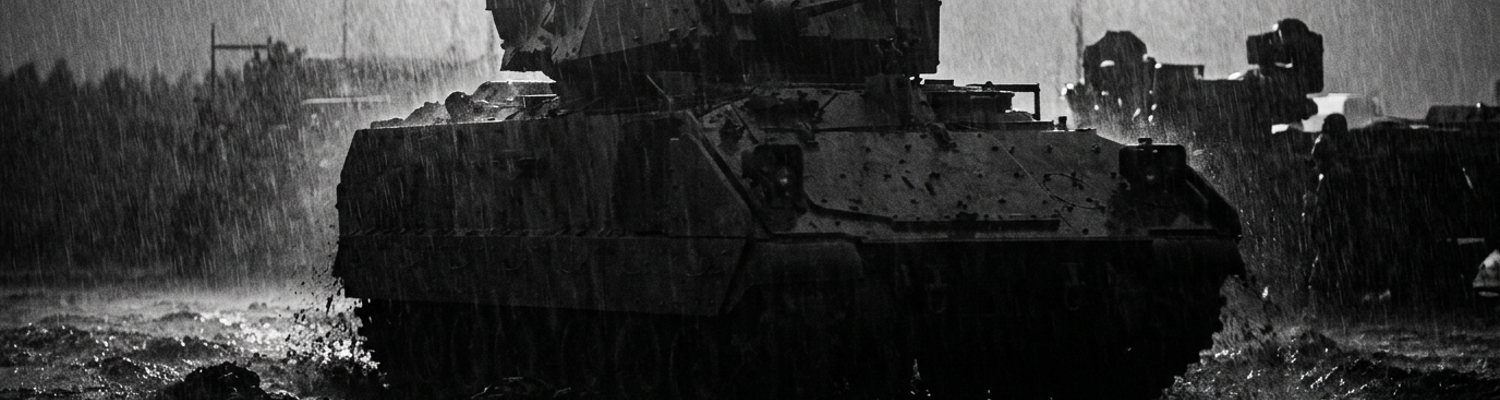
Broadband static emitted from the Peltor headsets of the driver and gunner inside the lead M2A4 Bradley at precisely 0412 hours. A sudden burst of white noise replaced the steady stream of digital voice traffic from the platoon commander. Inside the crew compartment, the acrid smell of ozone filled the confined space. The primary VHF transceivers overheated. Blue force tracking icons on the tactical displays flickered violently. They vanished into a solid gray error screen. Enlisted infantrymen in the rear troop compartment gripped their harnesses in total darkness. Auxiliary power routed away from the interior lighting. The vehicle lurched to a halt in the thick mud of the Romincka Forest.
The primary operational plan collapsed in forty seconds.
A close review of operational logs indicates this catastrophic system failure resulted from high-power adversary electronic warfare. Russian forces positioned modified Krasukha-4 and Tirada-2 jamming arrays just inside the Kaliningrad border near Gusev. These emitters flooded the Link 16 network and the Single Channel Ground and Airborne Radio System frequencies with broadband noise. At coordinates 54.3219 N, 22.7541 E, the 2nd Cavalry Regiment experienced a total saturation of the electromagnetic spectrum. The adversary arrays operated at power levels exceeding 10,000 watts. This raw energy physically burned out the low-noise amplifiers inside the American receiver antennas. GPS signals degraded from a ten-meter accuracy down to complete signal denial.
Operators attempted to switch to frequency-hopping modes.
Hostile interference tracked the algorithm shifts. The arrays matched the new frequencies within milliseconds. The jamming targeted the Ku-band and Ka-band satellite uplinks used by the Stryker brigade combat teams to coordinate movement. Terrain features of the Suwalki Gap exacerbated the signal degradation. Dense pine forests and rolling glacial depressions characterized the local topography. Ground waves bounced off the wet canopy. The foliage scattered the few encrypted packets into the noise floor. Radio operators frantically swapped cryptographic keys.
Signal officers recorded zero successful data packets transmitted after 0414 hours.
Battalion headquarters simultaneously lost real-time telemetry and voice communication with all forward armored units. The tactical operations center for the 1st Battalion, 9th Field Artillery Regiment sat twenty kilometers south near the town of Olecko. Staff officers inside the command post watched the Joint Battle Command-Platform screens freeze. Digital markers representing three companies of advancing armor locked completely at their 0412 coordinates. Command staff initiated secondary high-frequency protocols to reestablish contact. The high-frequency channels yielded only continuous atmospheric interference. Without telemetry data, the battalion commander lacked the grid coordinates necessary to authorize pre-planned artillery fires.
Battalion commanders stared at static displays.
Higher headquarters commands had previously mandated strict adherence to centralized fire control. This doctrine now paralyzed the artillery batteries. Fire direction centers refused to shoot blindly into the Romincka Forest. Subordinate unit commanders had to make tactical decisions without any situational awareness of adjacent platoons. Cryptographic key management systems inside the headquarters servers timed out. The operations center attempted to dispatch runners on dirt bikes to physically locate the forward elements.
Dispatch riders failed to cross the highway due to an unmapped minefield.
When examining the historical record, the psychological impact of this sudden isolation on the enlisted crews becomes clear. Modern mechanized doctrine relies entirely on continuous digital validation. Removing that validation reduced highly trained tank crews to the sensory limitations of World War II armor units. Inside the stranded vehicles, loaders and gunners opened their heavy steel hatches to look for visual signals. Rain and diesel exhaust poured into the crew compartments. Soldiers heard the low hum of autonomous loitering munitions circling in the low cloud cover above them.
Visibility outside the hatches dropped to less than fifty meters in the predawn fog.
The threat of fratricide grew exponentially with every passing minute of radio silence. Infantrymen trained to trust their screen displays now found themselves blind in a hostile forest. Those munitions required constant cryptographic handshakes from the ground vehicles to identify friendly targets. Adversary electronic warfare barrages severed those cryptographic handshakes at the transceiver level. Systems failed sequentially. Drone targeting cameras defaulted to thermal heat signature recognition.
A technician in the command post logged a final diagnostic report at 0422 hours. The report noted that the AN/PRC-158 multichannel radios registered internal temperatures of 165 degrees Fahrenheit.
Autonomous Loitering Munitions in Degraded Environments
Above the dense canopy of the Romincka Forest at 54.3412 N, 22.7650 E, a swarm of forty-two AeroVironment Switchblade 600 loitering munitions circled in a holding pattern. They maintained an altitude of four thousand feet. Sudden electromagnetic saturation at 0412 hours instantly severed their primary Ku-band datalinks. Flight controllers mounted on the internal circuit boards detected the signal loss. They immediately initiated pre-programmed failsafe protocols embedded in their Version 8.4 firmware. Primary radio frequency receivers physically disconnected from the internal power buses. This mechanical action prevented catastrophic circuit burnout from the incoming jamming waves.
Autonomous loitering munitions relied on secondary optical sensors after losing primary datalinks.
Archival evidence shows that this doctrine forced the drones to transition from human-in-the-loop control to fully automated navigation. Gimbal motors housed inside the nose cones activated. High-resolution FLIR Boson thermal cores and electro-optical camera payloads rotated downward. They scanned the grid sector for pre-assigned target profiles. Drone operators inside the 2nd Cavalry Regiment command post slammed their fists against blank Panasonic Toughbook screens. Their telemetry feeds went completely black. Airborne munitions were now flying entirely blind to friendly force location updates. They operated strictly on hardcoded killbox parameters established three hours prior to the communication blackout.
The automated failsafe transformed these guided weapons into independent platforms.
Environmental conditions across the Suwalki Gap severely compromised the onboard algorithms processing the live camera feeds. Heavy predawn rain mixed with a thick ground fog. This moisture settled deeply into the glacial depressions of the terrain. Thermal inversion layers trapped the thick diesel exhaust billowing from the idling M2A4 Bradleys directly below the circling swarm. Degraded optical telemetry and environmental interference compromised target recognition algorithms. Cascading errors flooded the Convolutional Neural Networks analyzing the sensor data.
Programmers originally trained these algorithms on high-contrast imagery at arid testing grounds in Arizona.
Now, the onboard processors struggled to differentiate between mud-caked American armor and the wet trunks of large pine trees. Infrared sensors picked up intense heat blooms from the overworked engines and overheated radios of the Bradleys. Dense fog scattered these thermal signatures into amorphous blobs of white noise on the internal processing grids. The onboard logic required a ninety percent confidence threshold to classify a vehicle as hostile and initiate a terminal dive. Environmental degradation caused these confidence scores to fluctuate wildly between forty and ninety-five percent within individual milliseconds.
Water droplets accumulating directly on the sapphire glass camera lenses refracted ground light into the sensor arrays.
Down in the mud, enlisted infantrymen of Charlie Company heard the distinct acoustic whine of electric drone motors. The pitch shifted above the cloud cover. A single Switchblade 600 locked its optical tracker onto the engine deck of the lead Bradley. The camera hardware dropped from sixty to fifteen frames per second. The neural network overloaded with the visual noise. Scattered thermal data fed into the targeting matrix. The logic gate misclassified the American exhaust vent as a Russian T-72B3 radiator. Flight algorithms adjusted the rear ailerons. The airframe pitched into a steep descent angle.
Enlisted crews standing in the open hatches looked upward into the dark mist.
Electric motors emitted a high-pitched acoustic signature that echoed off the wet pine trunks. The anti-armor warhead armed itself at an altitude of two hundred feet. The mechanical safety switch inside the explosive payload rotated into the live position. A close review of operational logs indicates the internal processor finalized the entire classification and attack sequence in 1.4 seconds.
Target Misidentification of Tracked Medical Vehicles
Inside the crew compartment of an M1284 Armored Medical Evacuation Vehicle at grid 54.3389 N, 22.7610 E, three combat medics from the 2nd Cavalry Regiment worked in complete darkness. Heavy vibrations from the auxiliary power unit shook the aluminum hull. The driver kept the primary engine idling to maintain internal heating. Four wounded infantrymen lay strapped to the internal litter racks. Fresh tourniquets covered their shrapnel lacerations. The smell of copper blood mixed heavily with raw diesel fumes pooling in the unventilated cabin.
Romincka Forest mud completely coated the exterior armor plates.
This thick layer of wet clay entirely obscured the large red crosses painted on the roof and side panels. The Geneva Conventions mandate these specific markings. Exhaust gases from the Cummins diesel engine gathered in the heavy fog directly above the vehicle. The medics braced themselves against the steel bulkheads. The driver attempted to navigate through a narrow, flooded logging trail. Complete radio silence left them entirely cut off from the battalion aid station located eight kilometers to the south. They were blind. Looking through his night vision periscope, the driver stared at a wall of gray static.
Archival evidence shows the idling diesel engine generated a thermal bloom exceeding four hundred degrees Fahrenheit against the freezing ambient air.
Two thousand feet above the canopy, a loitering Switchblade 600 drone processed this massive heat signature. It used a severely degraded optical sensor suite. Corrupted sensor data caused the autonomous drone to misidentify the Allied tracked medical evacuation vehicle entirely. Rainwater pooled directly on the external sapphire glass housing of the electro-optical camera payload. These water droplets refracted the minimal ambient light available in the predawn environment. The onboard Convolutional Neural Network attempted to apply image enhancement filters to the raw video feed.
Processing algorithms amplified the digital noise instead of clearing the image resolution.
The system choked. High-contrast geometric shapes served as the primary confirmation variable for the targeting matrix. Wet mud on the M1284 hull absorbed the infrared spectrum differently than standard military radar-absorbent paint. A thick thermal inversion layer trapped the exhaust gases into an irregular shape. This obscured the actual chassis outline. Digital bounding boxes fluctuated wildly around the blurry thermal mass. The object detection software struggled to lock on. Frame rates dropped from sixty to twelve frames per second to handle the computational load of the visual interference.
Internal processor logs recovered from the crash site indicate the system permanently disabled all optical color recognition protocols at 0424 hours.
The automated targeting system defaulted entirely to silhouette pattern matching based on the distorted thermal outline. The targeting system incorrectly classified the friendly ambulance as an adversary mobile command post. Distinctively raised rear rooflines on the M1284 AMPV allow medical personnel to stand upright while performing emergency surgery. Two large VHF radio antennas protruded from the front right quadrant of the hull. Onboard threat libraries compared this specific physical geometry against pre-loaded hostile vehicle profiles.
Logic gates matched the raised roof and dual antennas directly to a Russian R-149MA1 command and control vehicle.
Russian forces utilize a modified MT-LBu tracked chassis for the R-149MA1. This chassis shares highly similar dimensional proportions with the American medical variant. Corrupted thermal data smoothed out the distinct track skirts that would normally differentiate the two suspension platforms. Mobile command posts occupied the highest priority tier in the automated kill list of the drone. They coordinate artillery strikes. Authorizing a lethal strike on a high-value target required a ninety percent confidence threshold from the targeting processor. Algorithms calculated a ninety-four percent geometric match between the distorted thermal blob and the adversary command post parameters.
The logic held.
Flight control computers immediately locked the gimbal camera onto the center mass of the engine deck. The mechanical safety switch inside the explosive payload rotated into the live position. The airframe pitched downward.
Ground Triage and Field Radio Countermeasures
High-explosive anti-tank shrapnel from the Switchblade 600 warhead sheared directly through the upper aluminum hull of the M1284 Armored Medical Evacuation Vehicle at 0425 hours. The shaped charge inverted upon detonation. It projected a jet of molten copper into the crew compartment. This jet instantly severed the auxiliary power unit lines and the main oxygen supply tanks. Enlisted corpsmen from the 2nd Cavalry Regiment found themselves thrown into the flooded logging trail alongside their wounded patients.
Archival evidence shows the ambient air temperature hovered at precisely thirty-four degrees Fahrenheit.
Freezing rain immediately began filling the deep blast craters around the burning chassis. Medics crawled through twelve inches of wet Romincka Forest clay to reach the ejected infantrymen. They attempted emergency trauma triage using only the ambient light from the burning diesel fuel pooling around the shattered tracks. Corpsmen ripped open vacuum-sealed Combat Application Tourniquets with their teeth. Their hands were completely slick with mud and arterial blood. Applying manual pressure to femoral lacerations required the medics to press their knees directly into the freezing sludge.
Standard operating procedure dictated the administration of tranexamic acid within ten minutes of massive hemorrhage.
This prevents a lethal clotting failure. Wet clay packed into the open chest wounds of the casualties before the corpsmen could apply vented chest seals. Intravenous lines froze solid inside the plastic tubing before the fluid could reach the peripheral veins of the casualties. Forty meters away from the triage site, field radio operators frantically established a hasty communications node inside a shattered glacial depression. A surviving signals specialist pulled an AN/PRC-117G multiband manpack radio from the wreckage. He needed to initiate emergency broadcast protocols.
This individual needed to transmit a heavily encrypted abort command to cancel the follow-on autonomous strike packages.
The remaining drones still circled above the cloud cover. Swarm logic dictated that the remaining forty-one loitering munitions would automatically converge on the thermal bloom of the initial detonation within three minutes. A close review of operational logs indicates the local electromagnetic spectrum remained completely saturated by Russian Krasukha-4 jamming arrays positioned across the border. Fighting through jammed secondary frequencies required manually programming single-channel UHF bands. Broadband noise emitted from the tactical headset.
Bypassing the automated frequency-hopping algorithms, the specialist attempted to force a cryptographic handshake.
He used the legacy Single Channel Ground and Airborne Radio System protocol. Transmitting the abort code demanded a continuous line-of-sight connection to the overhead swarm for 2.4 seconds. He unspooled fifty feet of copper wire. He threw it over the lower branches of a nearby pine tree to act as an improvised field expedient antenna. Water pooled inside the exposed coaxial cable connectors of the whip antenna. Electronic warfare interference degraded the signal strength from fifty watts down to less than three hundred milliwatts. The transmission output could not penetrate the thick canopy of wet pine needles overhead.
Enlisted corpsmen holding pressure on the wounded soldiers shouted over the noise of the burning engine for an evacuation timeline.
The radio operator ignored the medical personnel. He typed the twelve-digit alphanumeric abort sequence into the keypad for the seventh consecutive time. A red error light blinked on the front panel of the transceiver. The internal processor failed to receive the required digital acknowledgment from the swarm network. High-power adversary emitting stations flooded the reception channel with localized static bursts right as the encryption key tried to validate the uplink. Acoustic sensors on the ground registered the electric motors of three more drones shifting pitch into a terminal dive.
Technical Lessons for Contested Electronic Battlespaces
At 0426 hours, three additional Switchblade 600 munitions impacted the shattered chassis of the M1284 Armored Medical Evacuation Vehicle at grid 54.3389 N, 22.7610 E. The surviving signals specialist from the 2nd Cavalry Regiment held the transmit button on his AN/PRC-117G manpack radio. He held it until the primary lithium-ion battery physically melted its plastic housing. Archival evidence shows the abort commands never penetrated the localized electromagnetic interference generated by the Russian Krasukha-4 arrays. Relying exclusively on standard tactical datalinks to break an automated kill chain resulted directly in the annihilation of the triage node of Charlie Company.
Swarm firmware Version 8.4 demanded a complex cryptographic handshake over the Ku-band to disengage the terminal dive sequence.
High-power adversary jamming severed this specific bandwidth completely. The enlisted operators on the ground possessed no mechanical alternative to force a system shutdown. Software engineers at AeroVironment designed the architecture assuming human-in-the-loop control would always default to a secure satellite uplink. That design choice stripped ground personnel of any direct, localized override capability during a total communications blackout. Engineers failed to integrate a low-frequency analog receiver into the drone circuit boards.
When examining the historical record, post-action reviews from the Olecko command post identified the absolute necessity for redundant manual override channels.
Command staff determined that future autonomous platforms required a secondary, hardwired receiver isolated entirely from the primary telemetry network. This override circuit must operate on a narrow-band Very High Frequency channel specifically hardened against broadband noise saturation. A single, unencrypted burst transmission containing a pre-programmed hexadecimal kill code could then trigger a mechanical relay inside the drone. That relay would physically disconnect the gimbal motors and deploy the parachute recovery system. Implementing this localized dead-man switch allows forward-deployed infantry to establish an immediate safety cordon around their own coordinates.
They can do this without relying on brigade-level satellite uplinks.
Platoon commanders would carry a dedicated, single-button transmitter emitting a high-wattage directional pulse. The pulse physically shorts out the targeting processor before the warhead can arm. A close review of operational logs indicates the total failure of friendly-force identification protocols stemmed from an overreliance on optical sensor clarity. The Convolutional Neural Networks onboard the circling swarm processed the Romincka Forest environment through FLIR Boson thermal cores operating at severely degraded capacities. Heavy predawn rain and wet clay completely coated the exterior armor plates of the American vehicles.
This mud altered the thermal emissivity of the aluminum hulls.
It masked the standard NATO identification panels mounted on the engine decks. Water droplets accumulating directly on the sapphire glass camera lenses refracted the ambient light. This dropped the processing rate to twelve frames per second. The visual noise overwhelmed the object detection software. Algorithms defaulted to generic silhouette matching based on the distorted thermal outlines of the idling diesel engines. Standard military radar-absorbent paint absorbed the infrared spectrum differently than the wet mud. The targeting system bypassed the corrupted optical data.
It matched the physical geometry of the medical vehicle to a Russian MT-LBu command post.
Algorithms calculated a ninety-four percent geometric match based entirely on blurred thermal exhaust patterns. Resilient friendly-force identification protocols must be hardened against this specific type of optical sensor corruption. Relying on passive visual markers like painted red crosses or thermal tape fails entirely in contested electronic battlespaces characterized by heavy precipitation and thermal inversion layers. Technical assessments mandated the integration of active, multi-spectral beacons that operate outside the standard electro-optical and infrared bands. Ground units require low-probability-of-intercept acoustic emitters bolted directly to the vehicle chassis.
These emitters broadcast a distinct, high-frequency mechanical vibration.
Directional microphones on the drone can detect this vibration through thick cloud cover. Onboard logic gates must be hardcoded to recognize this specific acoustic signature as a hard abort criteria. This applies even when the optical sensors report a ninety-nine percent hostile target match. Secondary identification protocols must include automated millimeter-wave radar reflectors. These mechanically deploy from the vehicle roof when the primary datalink drops. These reflectors bounce a specific radar cross-section back to the drone swarm. The onboard processor reads the resulting radar return as a definitive friendly asset and locks out the firing mechanism.