Task Force Bayonet Staging at Fort Amador
Infantrymen and 193rd Infantry Brigade combat medics staged inside darkened, unventilated barracks at Fort Amador on December 19, 1989, completing final equipment checks while waiting for nightfall. Heavy blackout tarps sealed every window frame against the humid night air, trapping body heat until uniform shirts clung wet against body armor plates. Riflemen sat shoulder to shoulder along the barracks floor, wiping condensation off rifle receivers with oily rags and thumbing green-tip ammunition rounds into aluminum magazines entirely by feel. Outside the concrete barracks walls, the split compound of Fort Amador remained deceptively quiet, with American troops occupying one portion of the facility while Panamanian forces held the buildings directly across the open parade ground. Squad leaders moved through the shadowed rows of cots to inspect weapons, distributing extra bandoliers and reminding the men to muffle the metal clasps on their canvas gear with olive-drab duct tape. At the far end of the room, squad leaders dropped heavy wooden crates of medical supplies directly onto the concrete floor beside the squad bays.
Medics cracked open these wooden crates to assemble unit trauma rolls, pre-rigged intravenous bags, and splints under strict light discipline and sweltering tropical humidity. Small red-lens flashlights held beneath poncho hoods provided faint illumination as hands sorted through rolls of sterile gauze, triangular bandages, and wire ladder splints. Combat lifesavers spiked plastic saline bags with intravenous tubing in advance, wrapping the clear lines tightly around each bag and taping the needle catheters securely in place to save seconds in the dark. Sweat poured from foreheads onto the plastic wrappers, forcing the medics to wipe their hands repeatedly on their trousers so adhesive tape would stick to skin during treatment. Every medic distributed field dressings, morphine syrettes, and airway tubes directly into the front pockets of the infantrymen.
Riflemen adjusted these bulging pockets while commanders confirmed staging plans that addressed severe logistical and resupply constraints prior to the coordinated assault on Manuel Noriega headquarters. Infantry squads knew that standard wheeled supply vehicles would be blocked by street barricades and sniper fire, so they left behind heavy rucksacks and sleeping gear to haul extra machine-gun ammunition and drinking water. Platoon sergeants distributed handheld bolt cutters, axes, and breaching shotguns to lead fireteams to ensure the assault forces could smash through chain-link fences and fortified timber entryways without waiting for heavy engineer transport. Rifle companies cross-loaded heavy mortars and shoulder-fired anti-tank rockets between individual soldiers, distributing the physical weight across entire platoons so a single vehicle loss would not strip the company of its fire support. Troops locked thirty-round magazines into their rifles, tested the focus on their night vision goggles, and lined up near the rear doorways to wait for the final strike order.
Mechanized Assault on the Comandancia Compound
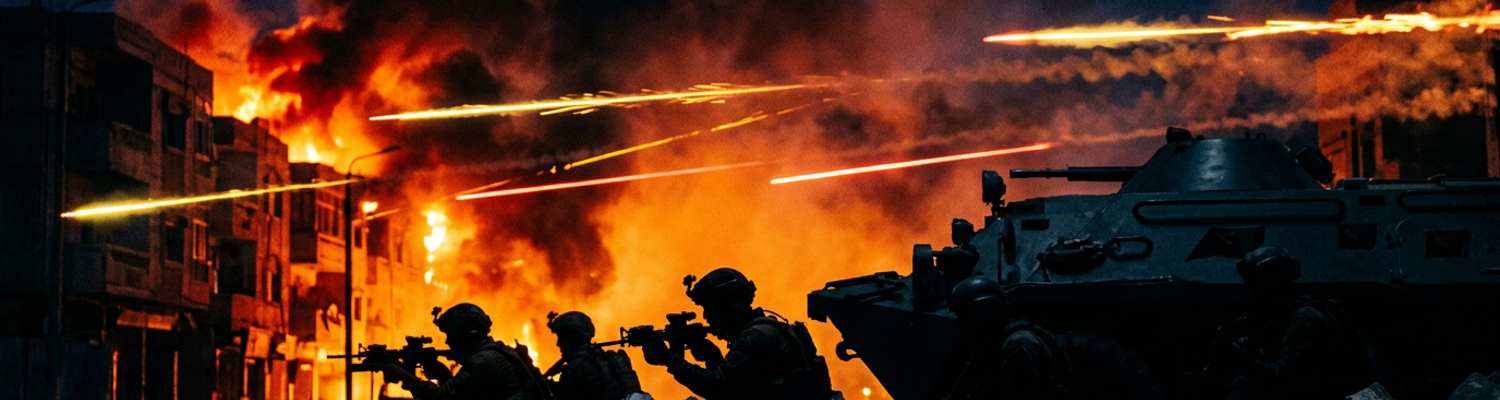
Steel ramps banged down onto the asphalt as the final strike order launched the assault on the central Panamanian Defense Forces headquarters compound at 0100 hours on December 20, 1989. Exhaust fumes churned through the air as armored vehicles surged out of the staging bays, rumbling toward the dense streets of El Chorrillo. Drivers steered through narrow alleyways cluttered with parked cars, downed power cables, and makeshift barricades while vehicle commanders tracked dark window frames with heavy machine guns. Snipers opened fire from the upper floors of wooden apartment buildings along the route, sending copper-jacketed bullets clattering across the vehicle hoods. Platoon leaders guided their columns through the blind intersections by shouting over internal vehicle intercoms, pushing toward the outer security gates of the fortress. Combat engineers positioned behind the lead carriers readied explosive breaching kits to blast through the thick masonry walls protecting the perimeter.
Demolition teams detonated these explosive breaching kits against the thick masonry walls, allowing M113 armored personnel carriers and mechanized infantry to engage entrenched defenders across the fortified urban perimeters. Fifty-caliber machine guns on the armored carriers raked concrete guard shacks and reinforced firing slits, chipping away chunks of plaster and brick while dismounted rifle squads advanced along street gutters. Panamanian riflemen fired back through pre-cut loopholes in compound walls and from sandbagged positions on garrison roofs, sweeping the open roadway with crossfire. Gun crews inside the tracked vehicles rotated their weapon mounts to suppress rooftop machine guns, expending entire ammunition cans of linked ball and tracer rounds to keep enemy shooters down. Dismounted infantrymen sprinted through the freshly blasted perimeter breaches in three-man buddy teams, taking up defensive sectors behind overturned dumpsters and courtyard curbs.
Concrete curbs provided minimal cover against the crossfire that swept across the courtyard from fortified central headquarters buildings. Heavy small-arms fire, rocket-propelled grenades, and supporting aerial gunship strikes inflicted immediate blast and penetrating fragmentation trauma on lead assault squads. Anti-tank rockets smashed into the courtyard pavement, sending supersonic metal splinters through uniform fabric and severing leg arteries of riflemen lying in prone firing positions. Overhead, an AC-130 gunship circled through the smoke and fired heavy cannon shells into the command building roofs, raining jagged fragments and pulverized concrete down onto both defenders and advancing American squads. Concussion blasts burst eardrums and knocked soldiers unconscious against vehicle hulls, creating severe shock injuries alongside deep shrapnel lacerations.
Shrapnel lacerations and shock injuries forced medics to drag bleeding casualties behind the armored road wheels of the idling carriers. Torn muscle and shredded skin required immediate pressure dressings, but slippery hands and blinding muzzle flashes made applying field bandages difficult under incoming fire. Combat lifesavers cut away scorched uniform sleeves to clamp spurting bleeders with hemostats and jammed plastic tubes into nostrils to clear blocked airways for nonresponsive blast victims. Riflemen kneeling over the wounded laid down continuous rifle fire into ground-floor windows, emptying thirty-round magazines as fast as they could reload to keep defenders from overwhelming the casualty collection point. Squad leaders signaled the armored personnel carriers to pivot their hulls perpendicular to the street, forming an armored steel barrier that shielded the triage area while infantry fireteams pushed into the main entrance of the burning headquarters.
Tenement Conflagrations and Street Triage in El Chorrillo
Flames inside the burning headquarters breached the upper roof timbers, throwing showers of burning embers directly over the armored carriers into the neighboring wooden apartments. Stray heavy machine gun tracers and exploding anti-tank rockets ripped through clapboard siding, igniting dense wood-framed tenement blocks throughout El Chorrillo within minutes. Pacific sea breezes funneled through the tight street grid, whipping separate structural fires together until entire residential sectors collapsed into sweeping firestorms. Platoon sergeants shouted for fire extinguishers and water buckets to protect their vehicle tires and track pads, but cracked municipal mains drained street pressure and left troops powerless against the intense heat. Roaring drafts tore through open wooden stairwells, collapsing multistory balconies into the roadways and blocking tactical withdrawal routes for the assault forces.
Residents trapped beneath these collapsing balconies forced their way through smashed ground-floor doors, pouring thousands of terrified civilians into narrow streets and alleyways caught directly within active crossfire corridors. Panamanian Dignity Battalion gunmen fired automatic rifles down the alleys, while American riflemen returned fire from behind vehicle road wheels and masonry corners. Parents dragged screaming children through blinding banks of acrid smoke, stumbling over downed high-voltage power lines and abandoned vehicles right in the fields of fire. Squad leaders screamed at their gunners to shift machine-gun sectors away from the fleeing families, waving noncombatants past the idling carriers toward the southern shoreline. Crowds surged against the armored hulls to escape the advancing flames, splitting American fireteams apart and forcing riflemen to physically wrestle wounded noncombatants out of the line of incoming fire.
Riflemen handed these bleeding noncombatants and soldiers directly to medics, establishing point-of-injury triage stations right on the burning asphalt. Radiant heat from the adjacent tenement fires softened the street tar and heated the pavement enough to melt rubber boot soles, complicating efforts to treat complex trauma, blast wounds, and severe thermal burns. Corpsmen stripped off charred clothing that had melted directly into the flesh of blast victims, flushing blackened skin with sterile water while applying wire tourniquets to limbs severed by mortar fragments. Superheated air scorched the vocal cords of patients gasping on the ground, requiring medics to force plastic airway tubes through swollen nasal passages without the aid of suction devices. Flying shrapnel from exploding ammunition boxes in nearby tenements punctured saline bags and shredded fresh bandages, prompting junior medics to cut up clean uniform blouses to pack sucking chest wounds and stabilize crushed pelvises.
Litter teams loaded patients with these stabilized chest wounds and crushed pelvises onto improvised stretchers constructed from corrugated tin and scorched window frames. Vehicle drivers engaged their tracks and backed through the flaming alleyways, grinding over smoldering building timbers to carve an evacuation route out of the inferno toward Fort Amador. Infantry squads bounded backward in three-man fireteams along the smoking street corners, firing controlled bursts into upper-floor windows to suppress rooftop snipers attempting to target the departing casualty convoys. Platoon leaders repositioned their surviving riflemen behind concrete utility poles and scorched foundation walls, establishing a hasty security perimeter around the edge of the burning headquarters. Riflemen stacked discarded sandbags and overturned steel dumpsters across the charred intersection, locking fresh magazines into their rifles to defend the casualty collection point against counterattacks.
Battalion Casualty Collection Under Sniper Fire
Gunfire from these counterattacks forced aid station personnel to establish forward casualty collection points in bullet-riddled masonry buildings and contested alleys immediately behind the barricaded intersection. Medical teams dragged wounded infantrymen across shattered glass into ground-floor storefronts and concrete garages where thick exterior walls provided partial protection against ricochets. Platoon leaders directed walking wounded to haul crates of ammunition and medical bags from disabled vehicles through side doors to reinforce the hasty holding areas. High-caliber rounds constantly chipped the masonry facades and showered the aid crews with pulverized mortar and pink brick dust. Riflemen leaned out of fractured ground-floor window frames to return fire into the surrounding street grid while junior medics cleared debris off the tiled floors to create dry triage spaces. Combat engineers knocked open internal dividing walls with sledgehammers to link adjoining commercial rooms into a continuous sheltered evacuation corridor, allowing stretcher bearers to sprint through exposed alleys and jump over smoldering building rubble to deliver fresh casualties.
Casualties arriving from the rubble required medics to perform critical airway interventions and tourniquet applications while taking sustained fire from Dignity Battalion snipers concealed in the upper floors of nearby concrete tenements. Marksmen fired through gaps in corrugated tin awnings and cracked plaster walls, aiming directly at muzzle flashes and red lens flashlights inside the treatment rooms. Combat medics dropped flat against the bloody floor tiles, working on their knees and stomachs to secure breathing passages for unconscious soldiers who had inhaled superheated soot and blast smoke. Hands slick with blood and sweat forced plastic tubes through shattered facial bones and swollen throats, securing emergency airways by touch alone beneath the windowsill line. Doctors broke open surgical kits to bypass airways crushed by falling masonry, inserting plastic breathing tubes while sniper rounds smacked into the plaster inches above their helmets. Platoon corpsmen wrenched canvas tourniquets tight around mangled arms and thighs, cranking the windlasses until severed arteries stopped pumping dark blood onto the floorboards, while riflemen positioned beside the doorways emptied magazine after magazine toward rooftop positions to suppress the snipers whenever medical personnel had to stand upright to lift patients onto treatment tables.
Blood soaked these treatment tables as battalion aid stations rapidly exhausted stocks of blood expanders, sterile dressings, and field litters throughout the early morning hours. Influxes of blast victims and gunshot cases filled every hallway, doorway, and side office until medics had to step directly over wounded men to distribute intravenous fluids. Supply clerks tore through green canvas aid bags only to find the last bottles of saline already drained into shock patients with failing pulses. Triage officers prioritized remaining rolls of gauze and triangular bandages for soldiers with penetrating chest and abdominal wounds, forcing medics to reuse clean utility towels and uniform strips on less severe extremity lacerations. Aluminum pole litters ran out completely, compelling medical teams to arrange casualties on wooden doors, corrugated metal siding, and bare concrete slabs along the building corridors. Exhausted aid workers labeled patient foreheads with black grease pencils to mark triage priority and track tourniquet application times as the floor space vanished, prompting company commanders to place urgent radio calls across the battalion tactical network to scramble additional armored personnel carriers for immediate casualty evacuation runs back to Fort Amador.
Gorgas Evacuation Gridlock and the Howard Media Blackout
Drivers steered these scrambled armored carriers through the barricaded avenues toward Gorgas Army Hospital, only to slam their brakes against towering barricades of overturned delivery trucks, smoldering telephone poles, and tangled high-voltage wiring. Ground and aerial casualty evacuation corridors toward Gorgas Army Hospital stalled completely due to active street ambushes and roadway debris. Dignity Battalion gunmen hidden in multistory brick tenements sprayed the stalled medical convoys with armor-piercing machine-gun fire and shoulder-fired rockets, while burning fuel tanks poured dense black smoke across the blind intersections. Helicopter crews attempting to bypass the blocked streets flew directly into concentrated ground fire as they descended toward the terraced lawns of Ancon Hill. Rounds punched through aluminum cockpit floors and severed hydraulic lines on approaching Black Hawk helicopters, forcing flight leads to abort their landing approaches and bank away toward the Pacific coast. Broken street routes and hostile airspace left the armored columns completely isolated, trapping critically wounded soldiers and civilians inside sweltering troop compartments that smelled of hot engine oil and scorched flesh.
Heat and hot engine oil filled the air as doctors pulled these hemorrhaging casualties out of the sweltering troop compartments and laid them across concrete garage floors as evacuation delays mounted. Medical personnel rapidly recognized that the total paralysis of flight paths meant blast victims with penetrating abdominal fragmentation and massive head trauma could never reach the surgical suites at Gorgas before suffering fatal blood loss. Severe aeromedical delays forced triage officers into harsh triage choices at perimeter collection points, requiring doctors to separate salvageable patients from those beyond the reach of forward field care. Triage physicians marked black grease-pencil crosses directly onto the foreheads of soldiers with crushed skulls and catastrophic torso wounds, setting them aside on bloodstained litters with palliative doses of morphine. Medics reserved their dwindling bags of intravenous fluids, surgical clamps, and plastic chest tubes exclusively for casualties who still retained detectable pulses and repairable extremity injuries. Corpsmen sat beside the dying casualties in the dark, checking failing pulses and moistening parched lips while Dignity Battalion rifle fire continued to crack against the exterior plaster walls.
Corpses filled green canvas body bags behind these exterior plaster walls outside the view of reporters, as the Pentagon enforced a strict media blackout that confined the national press pool to Howard Air Force Base. Public affairs escorts held dozens of newspaper correspondents, photographers, and television crews inside a secure military building across the canal, barring them from boarding helicopters or crossing the Bridge of the Americas toward the sound of combat. Military police stationed at base access gates checked credentials and turned back unauthorized vehicles, preventing outside observers from counting the dozens of civilian dead or witnessing the desperate sorting inside frontline aid stations. Briefing officers fed the isolated press pool sanitized statements about low casualty numbers and orderly consolidation phases, omitting any mention of the paralyzed evacuation routes and the bloody holding areas across El Chorrillo. Flight crews on the Howard tarmac loaded long rows of critical litters directly into darkened transport aircraft behind locked perimeter gates, staging trauma cases for immediate flights toward military hospitals in Texas and Washington. Maintenance personnel secured the heavy rear cargo ramps and locked the side pressure hatches before the four-engine transports taxied into the darkness to fly the wounded out of the country.