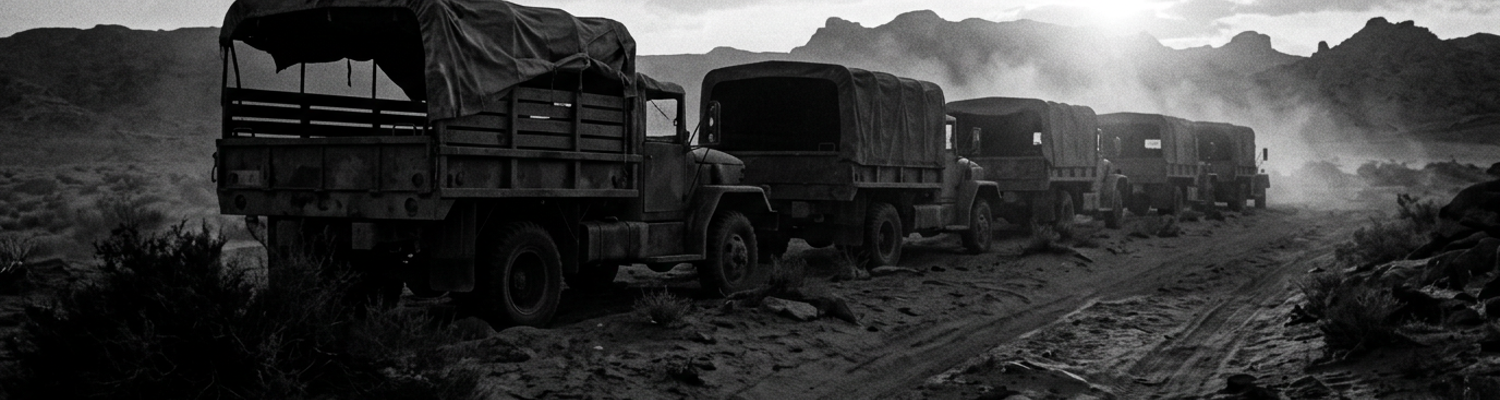

USAFIA Base Section 1 Deployment Post-Darwin
Allied planners in Melbourne issued an impossible operational timeline within seventy-two hours of the February 19, 1942 air raids on Darwin. Staff officers received direct orders to establish and secure a supply corridor across the continent. Reconnaissance reports indicated Japanese carrier groups maneuvering in the Timor Sea. Base commanders had less than three weeks to convert an obsolete inland cattle track into an active combat artery.
Time ran out before the first convoy engines turned over.
Archival evidence shows USAFIA established Base Section 1 to secure critical supply routes across the Northern Territory. Command personnel hastily shifted the supply nerve center inland from the burning waterfront of Darwin. Operations relocated toward Katherine, Birdum, and Alice Springs. Depot detachments worked eighteen-hour shifts in triple-digit heat. Service troops stacked thousands of 55-gallon drums of 100-octane aviation fuel among scrub eucalyptus trees. Fear of immediate airborne landings triggered widespread insomnia among the newly arrived American units. Base Section 1 personnel deployed without tropical acclimatization. Soldiers absorbed accounts of dead wharf laborers and sunken transports while scrambling to improvise perimeter defenses. Infantrymen dug in water-cooled M1917 Browning machine guns. Quartermasters operated under constant alerts. Uncamouflaged crates of rations sat exposed on the baked earth in dispersal yards.
Prolonged isolation broke driver discipline far more rapidly than Japanese bombs.
A close review of operational logs indicates motorized security detachments operated along the roughly 900-mile unpaved stretch of the Stuart Highway. Fleets of GMC CCKW 2.5-ton trucks and Dodge WC-51 weapons carriers pushed north from the Central Australian Railway railhead. Convoys ground through fine red bull-dust. Powdery dirt choked oil-bath air cleaners within fifty miles of departure. The unpaved surface consisted of violent washboard corrugations. Heavy steel leaf springs shattered. Steering knuckles sheared. Rear axle housings snapped under the strain. Escort gunners manned .50-caliber M2 heavy barrels on ring mounts. Crews scanned cloudless skies for incoming dive-bombers. Ambient temperatures routinely climbed past 112 degrees Fahrenheit. Drivers fought blinding dust plumes that reduced daytime visibility to three feet. Severe sensory exhaustion set in. Chassis welds fractured under the constant hammering of the dirt track. Convoys cannibalized disabled vehicles directly on the shoulder.
Men hallucinated phantom obstacles on empty stretches between Barrow Creek and Newcastle Waters.
When examining the historical record of Base Section 1 convoy runs, mechanics and drivers spent up to twenty continuous hours in uninsulated steel truck cabs. Skin blistered against steering wheels and metal floor pans heated by engine firewalls. Convoys were restricted to five-mile-per-hour crawl rates through the deep sand pits near Dunmarra. Armed security detachments dismounted repeatedly under a blistering sun to dig out trapped differentials by hand. Strict water rationing limited each soldier to a single canteen every twelve hours. Acute kidney strain and sudden psychological collapse followed. Repair yards at Birdum logged that forty percent of transit vehicles sat deadlined with cracked cylinder blocks or burnt-out clutch plates by mid-March 1942.
Fuel Rationing and Severe Vehicle Attrition
Patrol runs north of Alice Springs operated on calculated fuel deficits before convoys even left the railhead.
Archival evidence shows that by late March 1942, USAFIA Base Section 1 headquarters at Birdum instituted rigid fuel consumption ceilings across all Northern Territory motor units. Quartermaster staff restricted scout cars and reconnaissance vehicles to twenty-four gallons per three-hundred-mile patrol leg. This allocation failed to account for continuous four-wheel-drive low-gear crawling through deep sand drifts. The 148th Field Artillery Regiment and provisional truck companies faced total immobilization whenever high manifold temperatures caused severe fuel line vapor-lock. Motor transport officers established austere emergency fuel dumps along the Stuart Highway at desolate waypoints such as Banka Banka Station, Elliott, and Renner Springs. Convoys deposited five-hundred-pound caches of fifty-five-gallon drums directly into shallow trenches excavated in the red soil. Sparse mulga scrub provided the only shelter for volatile standard 72-octane gasoline from solar heating and Japanese aerial observation. High ambient heat caused drum seams to split. Up to fifteen percent of forward reserves leaked into the dirt before patrol vehicles arrived. Mechanics operated manual wobble pumps and rubber siphon tubes without filters. Personnel routinely ingested leaded gasoline and developed chemical bronchitis under the desert sun. Drivers missing these unmarked desert caches faced long-distance foot marches through barren scrubland.
Every disabled truck abandoned on the shoulder was stripped to its bare frame within forty-eight hours.
A close review of operational logs indicates that Base Section 1 maintenance shops at Alice Springs and Larrimah experienced an absolute collapse of spare part shipments from southern Australian supply depots. Washboard road surfaces and razor-sharp quartz gibber stones shredded 7.50-20 military non-directional combat tires at four times the projected consumption rate. Continuous hundred-degree track temperatures accelerated the rubber degradation. Replacement stock did not exist in theater. Heavy multi-leaf rear suspension spring packs snapped under constant pounding. Violent shocks sheared differential pinion gears and ground down dry-plate clutch friction facings inside GMC CCKW 2.5-ton drivetrains. Field maintenance detachments instituted systematic cannibalization programs across the entire corridor. Ordnance crews traveled in mobile repair trucks. Recovery teams targeted broken vehicles abandoned between Barrow Creek and Newcastle Waters to scavenge steering knuckles, carburetors, water pumps, and axle half-shafts using standard hand tools. Mechanics fought off blistering metal contact burns and engine oil fumes while removing operational components from deadlined hulls.
Stripped chassis were left propped on dry scrub eucalyptus logs beside the road.
When examining the historical record of Base Section 1 ordnance companies, mechanics labored through thirty-six-hour emergency shifts to graft salvaged civilian truck parts onto military assemblies. Workshop logs from the Birdum advance depot noted that forty percent of operational patrol vehicles ran on mismatched components. Chevrolet passenger car fuel pumps were spliced into Dodge weapons carriers. Hand-welded leaf springs fractured again after fifty miles of transit. Relentless mechanical failures imposed a crushing psychological burden on driving personnel. Operators worked under the constant dread of axle failure in uninhabited scrubland hundreds of miles from medical aid. Drivers routinely bypassed designated rest periods to inspect cracked wheel rims and leaking wheel cylinders by flashlight. Sudden catastrophic mechanical lockups regularly flipped loaded transports into trackside ditches. Depot records indicate that by the end of April 1942, twenty-eight percent of the original Base Section 1 vehicle fleet lay completely abandoned or cannibalized across the highway corridor.
SCR-193 and SCR-299 Mobile Radio Failures
Radio operators suffered mental breakdowns listening to blank static while waiting for incoming Japanese bombers.
Archival evidence shows that vehicular SCR-193 and SCR-299 radio sets suffered frequent transmitter tube blowouts from intense desert heat and corrugated road vibrations. USAFIA Base Section 1 mounted SCR-193 sets into Dodge WC-56 command cars. Heavy SCR-299 mobile radio units were bolted into uninsulated K-51 panel truck bodies behind GMC 2.5-ton chassis. Unpaved track surfaces along the central corridor subjected electronic chassis to non-stop mechanical shock. Transmitter cages rattled violently. Fragile glass envelopes fractured. Interior vehicle temperatures exceeded 130 degrees Fahrenheit by mid-morning. Localized heat traps formed inside BC-191 transmitter cabinets. Delicate tungsten filaments inside VT-4-C power triode tubes sagged under thermal expansion before snapping against internal grids during washboard impacts. Inside the SCR-299 shelters, BC-610 high-power transmitters generated lethal internal heat loads. Ceramic tube sockets warped. Solder joints melted across final-stage amplifier circuits. Signal Corps technicians lacked replacement 100TH modulator tubes and heavy-duty rectifiers. Maintenance squads salvaged heat-stressed glass valves from disabled vehicles. Mechanics worked in stifling cabins saturated with the stench of charred wiring insulation.
Supply depots ran out of spare transmitter tubes by the second week of March.
A close review of operational logs indicates that persistent ionospheric dead zones across the dry interior completely severed communication links during critical coastal SIGINT alert relays. Early-warning signals originated from Allied intercept centers in Darwin and naval radio direction-finding stations on Groote Eylandt. Operators tracked Imperial Japanese Navy 23rd Air Flotilla strike squadrons across the Arafura Sea. Coastal headquarters broadcast urgent high-frequency warning dispatches intended to alert inland motor convoys and staging strips between Katherine and Daly Waters. Scorching daytime temperatures over the arid interior induced severe solar heating in the upper atmosphere. Excessive D-region ionization absorbed high-frequency skywaves between 3 and 8 megahertz. Transmissions struck broad daytime skip zones. Radio signals leaped over mobile field antennas and vanished into the unpopulated desert waste. Patrol commanders drove exposed along the red track with zero advance warning of incoming air strikes. Units failed to establish contact with base relays situated less than eighty miles away. Repeated emergency attempts to establish contact met only silence.
Sensory deprivation and acute isolation drove radio crews toward severe cognitive fatigue.
When examining the historical record of Signal Corps detachments assigned to Base Section 1, prolonged monitoring duties under combat alert status triggered widespread insomnia and acute anxiety among communication personnel. Technicians sat trapped inside sealed radio shelters for twelve-hour shifts. Operators pressed bakelite headphones tight against their ears through blistering afternoons to detect faint Morse code pings through deafening atmospheric noise. Fear of unexpected strafing runs caused operators to violently flinch at random bursts of static. Crews expected machine-gun fire to rip through thin exterior sheet metal at any moment. Field commanders at Birdum and Tennant Creek eventually ordered SCR-299 crews to shut down their PE-95 gasoline generators during peak midday hours. This directive aimed to prevent complete thermal destruction of remaining transmitter components. Scheduled contact windows terminated. Supply patrols remained isolated from continental headquarters for thirty-six hours at a stretch.
Bore Water Contamination and Ration Deficits
Survival depended entirely on contaminated artesian wells sunk by cattlemen decades before the war.
Archival evidence shows that USAFIA Base Section 1 quartermasters failed to establish reliable potable water distribution networks along the Stuart Highway. Motorized security detachments operating between Alice Springs and Larrimah relied exclusively on isolated bore holes spaced up to eighty miles apart. Subterranean water sources contained dangerously high concentrations of magnesium and calcium. Medical officers mandated heavy chemical treatment before consumption. Supply sergeants issued standard Halazone water purification tablets to vehicle crews. Soldiers dissolved the chlorine-based compound directly into unlined steel canteens. The resulting mixture produced a foul, metallic liquid that burned the throat and caused severe gastrointestinal distress. Troops operating in 115-degree heat required a minimum of three gallons of water per day to maintain basic physiological function. Strict rationing limited intake to less than half that amount. Chronic dehydration became a permanent medical condition across the entire operational theater.
Men stopped sweating entirely by the third day of a patrol.
A close review of operational logs indicates that food supply chains collapsed simultaneously with the water distribution network. Refrigeration did not exist outside of the main depot at Alice Springs. Convoy crews survived on quarter-rations of canned corned beef and hardtack biscuits. The intense ambient heat inside the truck cabs caused the fat inside the unventilated cans to liquefy. Soldiers consumed the rancid meat paste directly from the tin using dirty bayonets. Severe outbreaks of amoebic dysentery swept through the motorized detachments by early April 1942. The 135th Medical Regiment recorded hundreds of cases of acute intestinal infection. Afflicted drivers suffered violent abdominal cramps and severe diarrhea while operating heavy machinery over treacherous terrain. Medical evacuation protocols required transporting sick personnel in the back of unpadded cargo trucks for up to two hundred miles. The violent bouncing of the suspension systems exacerbated the physical trauma.
Physical deterioration accelerated rapidly under the relentless sun.
When examining the historical record of field hospitals at Katherine and Tennant Creek, admission logs detailed the profound physical withering of American service personnel. Soldiers lost up to twenty pounds within their first month of deployment. Vitamin C deficiencies led to early-stage scurvy. Minor cuts and abrasions sustained during vehicle maintenance refused to heal. Open sores became infected with fine red dust and attracted swarms of bush flies. Medical officers lacked basic antibiotic supplies and relied on iodine swabs to treat festering wounds. The combination of clinical dehydration, malnutrition, and chronic dysentery stripped the motorized crews of their physical endurance. Drivers fell asleep at the wheel during daylight hours. Gun crews lacked the upper body strength to manually traverse the heavy .50-caliber machine gun mounts. The human element of the supply chain fractured under the environmental assault long before the mechanical components failed.
Mandatory Blackout Operations and Sensory Fatigue
Driving blind at four miles per hour became a standard tactical requirement after dark.
Archival evidence shows that USAFIA Base Section 1 headquarters enforced mandatory blackout orders across the entire 900-mile central corridor following recurrent night reconnaissance flights by Japanese long-range aircraft over Katherine. Base commanders strictly prohibited standard headlamps. Transport echelons operated exclusively with factory-installed Guide Lamp blackout marker lights. Stamped metal hoods covered the miniature three-candlepower bulbs. Illumination was restricted to thin horizontal slits that projected a faint downward triangle of white light less than twenty feet ahead of the front bumper. Drivers piloting loaded GMC CCKW 2.5-ton trucks and Dodge weapons carriers through unmapped desert stretches between Barrow Creek and Renner Springs faced zero ambient illumination beneath overcast skies. Unpaved track conditions exacerbated the optical handicap. The Stuart Highway existed merely as a graded dirt trace bordered by jagged quartz gibber stones, sunken creek crossings, and loose gravel drifts. Vehicle operators pushed outward-opening split windshields flat against the hood to eliminate glass reflections. Drivers leaned their upper bodies over steering columns to spot the outer edge of the dirt shoulder. Mechanics disabled vehicle brake lights by severing wires or coating glass housings in black lacquer. This prevented any red flash that Japanese high-altitude bombers could acquire from ten thousand feet.
Vision degraded completely five minutes into every night march.
A close review of operational logs indicates that the passage of six-wheeled military transports churned fine Australian bull-dust into airborne plumes. The dust hung suspended in the stagnant desert air for hours. Convoys moving northward toward Birdum maintained fifty-yard intervals. Trailing drivers entered thick walls of red silica that swallowed the cat-eye markers of the truck ahead. Faint light slits struck these static dust clouds. The red particles scattered the illumination directly back into the cab. Drivers were blinded by a dull, flat crimson fog. Depth perception vanished. Motor transport personnel endured relentless ocular strain. Men squinted into impenetrable darkness while fighting acute physical exhaustion from eighteen-hour driving rotations. Fine quartz grit penetrated the eye sockets. Severe conjunctivitis, corneal abrasions, and involuntary eye-blinking spasms plagued the crews. Drivers experienced hypnotic sensory deprivation after four hours behind the wheel. Trackside mulga bushes appeared as stationary staff cars. Sheer drop-offs materialized on perfectly flat terrain.
Exhausted nervous systems produced catastrophic steering corrections.
When examining the historical record of Base Section 1 ordnance recovery teams, extreme sensory fatigue caused regular vehicle rollovers along treacherous shoulders between Tennant Creek and Newcastle Waters. GMC CCKW trucks carried top-heavy payloads of sixty-pound crated artillery shells or three tiers of fifty-five-gallon aviation gasoline drums. A momentary micro-sleep caused the right front tire to slip into soft sand drifts banked against trackside gullies. Deep washaways carved into the red earth by tropical wet-season deluges remained invisible under blackout slits. These hazards caught heavy front axles at twenty miles per hour. Heavy vehicles flipped sideways into ditches. Steering boxes sheared off. Stamped steel chassis rails bent. Thin sheet-metal cabs crushed inward before relief drivers could jump clear. Field casualty files at the Katherine transit hospital noted dozens of crushed thoracic cavities and skull fractures directly caused by inverted truck cabs. Recovery squads routinely abandoned these overturned chassis in drainage ditches. Crushed steering assemblies and spilled fuel barrels remained exactly where they fell.
Combat Fatigue and Psychological Erosion
The human mind fractured under the relentless rhythm of the supply corridor.
Archival evidence shows that USAFIA Base Section 1 commanders maintained a punishing operational tempo that ignored basic physiological limits. Motorized reconnaissance crews and transport drivers operated on a continuous rotation of eighteen hours on duty and six hours of rest. The threat of a Japanese amphibious landing at Darwin hung over every dispatch order. Officers at Birdum HQ pushed their men past the point of clinical exhaustion to meet arbitrary tonnage quotas. The constant vibration of the unpaved Stuart Highway battered the nervous systems of the vehicle crews. Drivers absorbed thousands of micro-impacts per hour through the unpadded steel seats of the GMC CCKW trucks. The physical pounding translated directly into severe neurological fatigue. Men developed uncontrollable hand tremors and chronic tension headaches. Medical officers attached to the 148th Field Artillery Regiment recorded a sharp spike in acute combat anxiety by the end of April 1942. Soldiers who had never seen a Japanese aircraft began diving into trackside ditches at the sound of a misfiring Dodge engine.
Auditory hallucinations became a standard symptom of the night patrols.
A close review of operational logs indicates that the sheer isolation of the Northern Territory amplified the psychological deterioration. Patrols operated hundreds of miles from the nearest allied outpost. Radio failures left crews completely cut off from the chain of command. The vast, empty expanse of the scrubland induced a profound sense of agoraphobia among troops drafted from dense urban centers. Men stared into the shimmering heat haze until their minds fabricated movement. Gunners reported seeing enemy infantry formations marching through the mulga scrub. Drivers slammed on their brakes to avoid phantom roadblocks that vanished upon approach. The lack of sleep, combined with severe dehydration and malnutrition, dissolved the boundary between reality and delirium. Discipline broke down in the isolated encampments. Fistfights erupted over access to the chlorinated bore water. Non-commissioned officers struggled to maintain authority over men who had lost the capacity for rational thought.
Evacuation protocols failed to address the scale of the psychiatric casualties.
When examining the historical record of the Alice Springs staging area, medical personnel lacked the facilities to treat severe combat fatigue. Psychiatric wards did not exist in the forward operating bases. Doctors diagnosed the psychological collapse as simple heat exhaustion. Afflicted soldiers received a single day of rest on an army cot before being ordered back into the truck cabs. Men who refused to drive faced immediate court-martial for insubordination under combat conditions. The rigid military hierarchy refused to acknowledge the breaking point of the human element. Drivers continued to operate heavy machinery while suffering from active nervous breakdowns. The accident rate skyrocketed. Convoys lost more vehicles to driver error and fatigue than to mechanical failure. The Stuart Highway consumed the minds of the men forced to navigate its length. The operational demands of Base Section 1 ground the motorized detachments down to their raw psychological nerves.