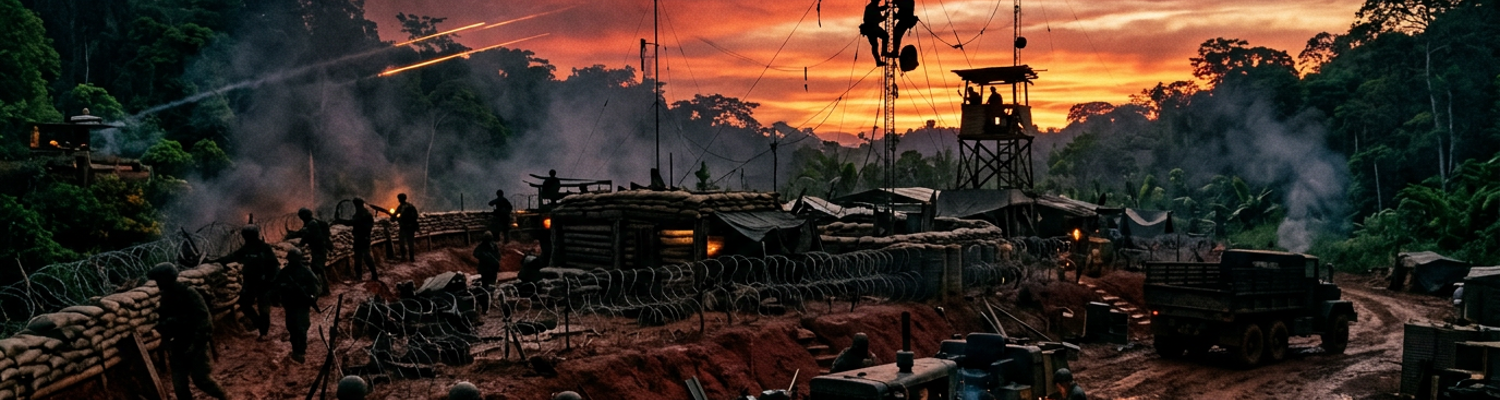

Border Camp Bu Dop Construction and Vulnerabilities
Bulldozer hydraulic hoses ruptured under heavy strain as engineers carved out the defensive berm, spraying hot oil across the red clay. Mechanics from the detachment scrambled through the mist of fluid, killing the roaring diesel motor before the pump seized from friction. Operational Detachment A-341 of the 5th Special Forces Group had established an isolated border surveillance camp at Bu Dop in Phuoc Long Province in late 1963, and losing heavy digging machinery in late 1967 threatened to stall vital bunker construction entirely. Green Beret technicians quickly unbolted the torn high pressure line, scavenging salvaged braided tubing and brass sleeves from discarded cargo palettes to construct an emergency splice. Soldiers tightened double screw clamps over the patched seam, refilled the reservoir with spare engine oil, and restarted the motor so the steel blade could scrape out deeper perimeter trenches.
Trenches carved by the repaired earthmover formed the outer ring of an outpost positioned in an extremely vulnerable tactical location. The camp was constructed roughly five kilometers from the Cambodian border to monitor and interdict major North Vietnamese Army infiltration routes into War Zone C. Hostile regiments belonging to the North Vietnamese Army 9th Division moved regular supply columns along nearby jungle trails under dense canopy cover, keeping the isolated compound under continuous observation. Red dirt roads and thick bamboo groves surrounded the small dirt airstrip, severely limiting line of sight observation from ground level and exposing perimeter work details to sudden ambush. Green Berets used every operational vehicle and hand tool to clear defensive fire lanes four hundred meters outward, felling trees with crosscut saws and blasting stubborn root systems with cratering charges.
Tree stumps and fractured timber required immediate clearance by infantry squads, compelling the garrison to run joint security patrols around the active work zone. The compound garrison integrated Green Beret advisers with indigenous Civilian Irregular Defense Group soldiers to maintain local security. American sergeants and local troops, consisting primarily of ethnic Cambodians and regional Montagnard fighters, worked shoulder to shoulder unspooling barbed wire and filling thousands of burlap sandbags along the defensive walls. Mixed teams installed directional claymore mines, set up interlocking machine gun bunkers, and strung trip flares along obvious avenues of approach. Weapons maintenance details cleared pervasive red clay dust out of M16 firing chambers and Browning machine gun feeds, teaching newer recruits how to clear mechanical jams with steel cleaning rods.
Steel cleaning rods and copper safety wire doubled as emergency repair tools when the base electrical grid failed during dusk perimeter checks. Mechanics from the detachment disassembled the fuel injection pump on the primary diesel generator by flashlight, finding the intake filters clogged with grit kicked up from the nearby runway. Special Forces sergeants washed the clogged wire meshes in aviation gasoline, while indigenous guards monitored the darkening treeline for approaching North Vietnamese reconnaissance probes. Technicians reassembled the fuel lines, hand primed the diesel cylinders, and cranked the heavy flywheel until the generator surged back to life, restoring electricity to tactical radios and perimeter searchlights. Radio operators immediately established contact with forward listening posts, locking down the compound gates as enemy mortar teams fired range finding rounds into the clearing.
Viet Cong Regiment Assaults and Perimeter Breaches
Mortar bursts from Viet Cong 272nd Regiment elements rapidly escalated into a continuous barrage of high explosive shells during November and December 1967. Intense shelling severed exterior concertina wire entanglements and heavily damaged the airstrip essential for supply flights and medical evacuation. Shrapnel sliced through the tangled coils along the defensive perimeter, blasting wide gaps into the approach lanes and showering the forward trenches with hot jagged iron. Concentrated impacts along the dirt landing strip gouged deep craters into the runway surface, halting incoming transport aircraft and trapping severely wounded defenders who urgently needed surgical evacuation. Detachment A-341 engineers grabbed hand shovels, empty wooden ammunition crates, and spare perforated steel planking under active fire to patch the ruined strip. Technicians dumped gravel and compacted red dirt into the craters, using sledgehammers to beat twisted steel runway plates flat and drive makeshift locking pins through the distorted joints until cargo planes could land again.
Cargo planes landing on the repaired strip delivered critical reinforcements directly into the embattled camp, where Detachment A-341 integrated reinforcing MIKE Force companies into the defensive perimeter to hold the outer berms against massed charges. Green Beret team leaders positioned the newly arrived indigenous strike troops along the most battered northern and eastern earthworks, where mortar fire had flattened the defensive parapets. MIKE Force riflemen reinforced the Civilian Irregular Defense Group positions, filling fresh burlap sandbags and interlocking their automatic weapons along the outer lip of the trenches. Successive formations of enemy infantry surged from the woodline across the cleared fire lanes, firing rocket propelled grenades directly into the newly fortified firing steps. High explosive warheads detonated against the sandbag revetments, cracking the cast iron pintles and mounting brackets of two heavy Browning machine guns on the northern wall.
Armorers from the detachment sprinted into the shattered bunker to stabilize the cracked mounting brackets before the heavy fifty caliber weapons tore loose from their foundations under continuous recoil. Technicians dragged the heavy weapon receivers onto wooden ammunition pallets, scrounging through maintenance bins for scrap steel angle iron and threaded vehicle U-bolts. Mechanics clamped the salvaged steel brackets around the fractured pintle stems, tightening locknuts with adjustable pipe wrenches while enemy rifle bullets struck the bunker roof logs. Gun crews seated the machine gun receivers back onto the reinforced mounts, finding that the improvised steel splints absorbed the heavy vibration of sustained automatic fire. Special Forces sergeants and indigenous soldiers opened fire into the charging assault formations, stopping advancing sappers who carried demolition charges toward the base of the berm.
Demolition charges dropped by the fallen sappers exploded against the wire barriers, shredding whole sections of protective mesh and snapping the electrical detonating lines to the camp claymore mines. Green Beret engineers crawled onto the forward slope under cover of darkness, dragging fresh bundles of razor wire and rolls of salvaged field telephone wire into the shell holes. Technicians spliced the severed electrical command wires by stripping the rubber insulation with pocketknives and twisting the copper cores together beneath layers of friction tape. Indigenous soldiers drove bent reinforcement bars into the clay berm to anchor the newly strung wire obstacles, creating fresh barricades across the cleared breach lanes. Weapons teams tested each improvised firing circuit with hand cranked galvanometers, verifying electrical continuity across the entire defensive perimeter just as another wave of hostile mortar rounds fell toward the compound.
Improvised Radio and Antenna Repairs Under Fire
Shrapnel from hostile mortar rounds peppered the sandbagged roof of the tactical operations bunker and shredded the external communications array. Incoming shrapnel repeatedly destroyed long wire antennas and mast mounts, breaking tactical communications with forward air controllers orbiting above the cloud deck. Heavy steel fragments sheared through the steel guy lines holding the tall antenna poles upright, toppling the tubular masts across the compound dirt and crushing the ceramic base insulators against the gravel. Vibrating shock waves tore the coaxial lead in lines cleanly out of their bulkhead pass through sleeves, cutting off the high frequency and very high frequency sets in the radio room below. Static instantly drowned out the voice channels on the main receivers, leaving air observers unable to spot enemy mortar pits or direct strike aircraft onto the assault waves. Detachment communicators stared at silent receiver dials as incoming rocket fire hammered the perimeter berm, realizing that without an overhead antenna the camp had no way to guide close air support.
Radio operators scrambled into the open courtyard under continuous hostile fire to reestablish the severed frequency nets and coordinate that close air support. Green Beret radio operators exposed themselves to hostile fire to manually splice severed antenna leads using spare field wire. Soldiers knelt beside smoking shell craters and crawled through exposed drainage ditches, using pocketknives to strip the thick black rubber casing from ragged cable ends and bare the internal copper conductors. Technicians unspooled coils of two conductor telephone wire across the torn ground, twisting the fresh strands securely around the exposed copper cores and sealing each raw joint with layers of black friction tape to keep out moisture and red clay dust. Repair teams hauled the spliced leads up the splintered remains of a wooden corner beam, tensioning the line across the operations bunker and securing the makeshift dipole with nylon parachute cord until a faint carrier signal hummed back through the bunker speakers.
Transceivers connected to those bunker speakers inside the underground command post suffered severe mechanical shock as concussive blast waves collapsed overhead timber supports and showered the equipment benches with dirt. Communicators rapidly jury rigged damaged AN/PRC-25 radio units with scavenged parts to keep tactical emergency voice nets active. Special Forces technicians unbolted stamped aluminum cases with flathead screwdrivers, swapping intact circuit modules and undamaged power amplifier stages between shattered transmitter frames. Soldiers stripped fine copper wire from ruined flashlights to bridge fractured battery contacts, wedging dense cardboard shims behind loose connector pins so the heavy battery packs maintained steady electrical contact during ongoing explosions. Technicians replaced broken flexible steel whip antennas with lengths of stiff brass rod and coiled wire soldered directly into the threaded antenna base mounts, testing signal strength with handheld multimeters as mortar bursts rattled the earthen ceiling.
Antenna cables soldered to the jury rigged sets withstood the earthen ceiling vibrations, allowing the reassembled transceivers to broadcast strong signals across the tactical network and reopen clear voice contact with the orbiting forward air controller. Pilots flying above the smoke immediately acknowledged the detachment call sign and requested coordinates for incoming fighter bombers circling over the province. Team sergeants relayed precise compass azimuths and estimated ranges to enemy mortar positions along the Cambodian tree line, reading the numbers directly off acetate map overlays under red flashlight beams. Forward observers adjusted air bursts in hundred meter increments over the radio net, walking ordnance into the camouflaged gun pits until secondary explosions erupted from stored mortar ammunition. Strike aircraft rolled into steep dives and dropped high explosive bombs directly onto the hostile firing pits, forcing the surviving infantry units to withdraw into the jungle.
Emergency Diesel Generator Troubleshooting in Combat
Infantry withdrawals by enemy forces coincided with a final mortar barrage that tore into the power revetments, where point blank mortar fragments punctured the cooling systems, fuel conduits, and crankcases of the base diesel generators. Jagged iron slivers sliced through the radiator cores, releasing pressurized ethylene glycol coolant that vaporized instantly against the red hot exhaust manifolds. Low pressure safety trips clicked shut as the cooling jackets ran dry, killing the motors and plunging the defensive compound into sudden darkness and silence. Special Forces mechanics scrambled through the lingering smoke into the generator bunker, using red filtered flashlights to inspect the shredded engine blocks and severed copper fuel lines. Diesel fuel pooled around the skids from torn supply conduits, while engine lubricating oil flooded through cracked metal sumps and threatened to seize the internal crankshaft bearings.
Crankshaft bearings required immediate lubrication, prompting technicians and combat engineers to utilize field expedient materials like wooden plugs and adhesive patches to restore oil retention and fuel flow under fire while sniper bullets chipped the protective timber revetments overhead. Soldiers whittled soft pine from empty wooden ammunition crates into tapered dowels, hammering the makeshift pegs directly into the jagged shrapnel punctures along the cast iron crankcases. Wooden plugs swelled rapidly as they soaked up residual oil, forming tight seals that halted the loss of lubricating fluid from the cracked sumps. Other engineers cleaned the ruptured fuel lines with wire brushes, wrapping heavy rubber adhesive patches cut from vehicle tire repair kits around the perforated copper tubing. Mechanics cinched the patches tight with twisted copper safety wire and steel hose clamps, stopping the fuel leaks and restoring fluid pressure throughout the supply lines.
Fuel lines fed diesel back to the engines, but radiators on the damaged machines still required immediate sealing before the blocks could handle the heat of combustion. Combat engineers clamped off shredded brass cooling tubes with heavy vise grip pliers, flattening the torn metal ends to isolate the punctured passages from the main fluid circulation. Specialists smeared thick layers of two part epoxy paste across the cracked upper radiator tanks, embedding strips of cotton canvas into the resin to bridge the widest shrapnel tears. Indigenous Civilian Irregular Defense Group soldiers carried five gallon water cans across the open compound, pouring fresh water into the repaired cooling jackets while mechanics refilled the oil sumps with clean motor oil. Technicians attached long steel crank levers to the starter lugs, bracing their boots against the muddy floor to turn the heavy flywheels by hand until the cylinders built compression.
Cylinders built compression and the generators surged back to life with a deep mechanical roar, providing electrical output that maintained power to critical tactical base transceivers and perimeter illumination networks across the embattled camp. Powerful high intensity searchlights flickered and threw brilliant white arcs over the defensive berm, exposing enemy assault teams that were attempting to regroup in the brush. Heavy machine gun crews on the firing steps sighted their weapons into the illuminated perimeter lanes, opening suppressive fire that drove the remaining hostile recon squads back toward the Cambodian border. Radio operators in the command bunker switched their main transceivers back to full transmission power, relaying target coordinates to orbiting gunships to establish an unbroken aerial umbrella over Bu Dop for the rest of the night.
Tactical Air Support and CIDG Counterattacks
Controllers utilized those fresh target coordinates immediately, as restored radio links enabled controllers to vector close air support strikes within meters of the camp defensive berms. Concussion waves from earlier mortar detonations had warped the chassis of the main transceiver and loosened the ceramic output terminals, threatening to cut base communications again. Special Forces comms sergeants knelt beside the shaking equipment bench under active shellfire, securing fractured solder joints with twisted copper core strands and tightening down loose terminal nuts with utility pliers. Air controllers relayed compass bearings through the repaired handsets, talking Douglas A-1 Skyraiders into low level bombing runs right over the outer defensive wire. Pilots dropped napalm tanks and fragmentation clusters directly into the dry wash where North Vietnamese sappers were cutting through the final concertina barriers. Heavy bomb fragments shredded the enemy breaching parties, while intense heat from the burning fuel drove the surviving assault infantry back into the jungle.
Aircraft wheeled over the burning jungle canopies to suppress the opposing artillery positions, delivering sustained ordnance that halted enemy penetrations and neutralized opposing heavy mortar emplacements. Hostile eighty two millimeter crews continued lobbing shells from camouflaged pits, showering the detachment mortar parapets with dirt and jamming the base traversing gears. Green Beret weapons specialists cleared the seized elevation threads by scrubbing away grit with rifle cleaning brushes and soaking the gears in lubricating oil under continuous sniper fire. Mortar crews dropped high explosive shells into the cleared tubes to mark the enemy positions with white phosphorus smoke, giving orbiting strike flights a visible reference point. Attack aircraft rolled into steep dives through the rising smoke, delivering five hundred pound high explosive bombs directly onto the camouflaged mortar pits. Secondary explosions ripped through the enemy weapon revetments as buried ammunition caches detonated, throwing timber beams into the air and silencing the hostile battery.
Artillery suppression allowed Civilian Irregular Defense Group personnel and MIKE Force elements to execute counterattacks and secure the camp perimeter while orbiting gunships raked the retreating enemy formations. Strike teams surged out through the breached sandbag revetments, firing their carbines into the shattered communication trenches where small groups of North Vietnamese soldiers were attempting to regroup. Detachment armorers moved alongside the assault squads, using cleaning rods to punch out ruptured cartridge casings from overheated rifles and swapping bolt assemblies from fallen weapons to keep the frontline firing lines active. Combat engineers hauled salvaged rolls of concertina wire and wooden fence pickets into the craters, driving iron stakes into the red clay with sledgehammers to seal the perimeter breaches under scattered small arms fire. Irregular fighters pushed beyond the outer berms to clear remaining sniper pockets, capturing abandoned rocket launchers and stockpiles of unexploded satchel charges. Special Forces advisers established interlocking machine gun positions across the newly reclaimed forward trenches, consolidating their defensive perimeter before daylight broke over the border outpost.
Presidential Unit Citation and Redeployment
Cartridge brass, shattered mortar fins, and scorched timber beams littered the forward berms as daylight broke over the border outpost. Detachment A-341 soldiers walked through the smoking shell craters to clear unexploded ordnance, while combat engineers leveled fresh mounds of red clay over collapsed trench walls. The stubborn defense of Bu Dop proved the tactical viability of remote border outposts in disrupting hostile logistics corridors. Ground crews used pickaxes and shovels to pack crushed rock into the runway craters, clearing the dirt strip so incoming transport flights could deliver essential cargo. Transport aircraft rolled to a halt along the smoothed runway, discharging crated radio parts, medical supplies, and replacement ammunition into the waiting hands of detachment soldiers.
Soldiers unloaded the aircraft as officers from III Corps headquarters arrived on those early supply flights to inspect the battered bunkers, walk the cleared approach lanes, and examine the improvised generator patches that had kept the outpost alive. Combat debriefs documented how technicians had spliced severed radio lines under direct fire, patched perforated cooling systems with hand carved wooden pegs, and corrected weapon malfunctions in the middle of ground assaults. The operational achievements of Detachment A-341 contributed directly to the award of the Presidential Unit Citation to the 5th Special Forces Group. Senior military leaders recognized that the successful defense of the perimeter hinged entirely on the mechanical resourcefulness and steady discipline of the defenders under continuous shellfire. Group planners compiled these combat records into official award recommendations while frontline teams along the border duplicated the mechanical expedients that had saved the compound.
Battlefield expedients pioneered at Bu Dop helped Special Forces detachments apply practical solutions and combat engineering techniques across dozens of remote outposts along the Cambodian and Laotian frontiers. The 5th Special Forces Group maintained forward operational commitments across Southeast Asia until officially redeploying its colors to Fort Bragg in March 1971. Teams stationed in distant border camps continued running surveillance patrols, directing close air strikes, and training local civilian irregulars to protect isolated rural valleys. Technical personnel kept old tactical radios, portable generators, and light observation aircraft running through monsoon rainstorms and persistent supply delays by manufacturing replacement parts from salvaged scrap metal. Advisory teams systematically transferred operational control of these fortified camps to South Vietnamese border ranger units, freeing the remaining American teams to prepare their base property for strategic departure.
Riggers and supply specialists secured crated transceivers, generator spare parts, and weapons racks onto cargo pallets at coastal staging yards to execute that strategic departure. Aviation crews hauled heavy shipping containers aboard cargo ships and military transports as the last operational elements closed out their field headquarters in Nha Trang. Green Beret personnel traveled back to the United States on charter flights, assembling on the parade fields of North Carolina to mark the formal conclusion of their overseas mission. Soldiers stood in formation while commanders uncased the unit colors and affixed the Presidential Unit Citation streamer alongside the campaign ribbons earned during years of jungle fighting. Sergeants ordered the green and yellow group standard posted outside the headquarters building on Smoke Bomb Hill, while mechanics and armorers unpacked their tool chests inside the company motor pools to service tactical vehicles for upcoming field exercises.