
NIE 11-10-71 Intelligence and DMZ Fortifications
Archival evidence shows radio intercept detachments at Phu Bai logged sudden dense transmissions from North Vietnamese command networks along the northern rim of the Demilitarized Zone. These signals preceded the arrival of heavy artillery rounds on the isolated peak of Hill 951. Date of intercept was 30 March 1972 at 1130 hours local time. Coordinates recorded were Military Grid Reference XD940488.
Soviet armor moved directly toward the border.
When examining the historical record, National Intelligence Estimate 11-10-71 documented the exact scope of Moscow maritime supply lines into North Vietnam throughout the preceding autumn. Soviet merchant freighters docking at Haiphong offloaded shipments of T-54 medium tanks and PT-76 amphibious vehicles directly onto railheads. Defense Intelligence Agency analysts tracked these manifests as North Vietnamese logistics units shuttled the hulls southward through the Mu Gia and Ban Kar passes. Standard American military doctrine taught that the karst topography and jagged peaks flanking the Demilitarized Zone prohibited multi-ton tracked vehicles. War games conducted in Honolulu assumed enemy forces would advance on foot. Planners believed forty-degree jungle slopes and thick red clay restricted heavy mechanized movement. National Intelligence Estimate 11-10-71 dismantled that assumption. The document confirmed hundreds of modern V-54 twelve-cylinder diesel engines and heavy repair assemblies assigned to the 203rd and 204th Armored Regiments. Central Intelligence Agency photo interpreters spotted new tank training compounds near Vinh. Crews practiced hull-down firing drills using 100mm D-10T rifled main guns.
North Vietnamese engineers widened the mountain paths to accommodate wide-track suspensions.
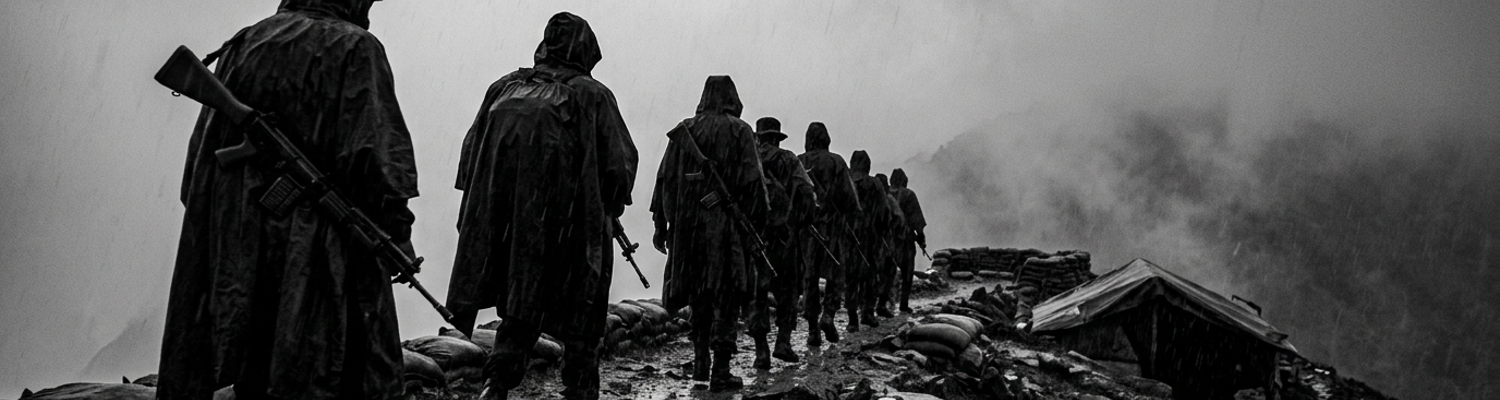
A close review of operational logs indicates that MACV Advisory Team 155 deployed to fortify Firebase Sarge on Hill 951 against impending mechanized incursions. Assigned to the newly activated 3rd Division of the Army of the Republic of Vietnam, the American advisors reached an elevation of 951 meters above the western reaches of Route 9. The site was originally designed as a brush-cleared observation post against light infantry. It was never intended to repel armored breakthroughs. Heavy bulldozers failed to negotiate the thirty-five-degree dirt switchbacks leading to the summit. ARVN infantrymen hauled logs and concertina spools up the incline by hand. Advisors laid out perimeter antitank ditches and reinforced command shelters. They designated aiming stakes for disposable M72 light antitank weapons. Monsoon downpours saturated the red soil within hours. Bunker roofs collapsed. Defensive ditches reduced to mud-filled troughs. Engineers tried driving steel revetment plates into the loose slate to defend against high-velocity 100mm tank projectiles.
Supply helicopters could not deliver concrete footings through the low ceiling of cloud.
Ground reports from Advisory Team 155 recorded constant equipment breakdowns across the exposed perimeter. Diesel-powered ditching machines brought up on external helicopter slings seized when volcanic grit entered the air intakes. Soldiers of the ARVN 4th Battalion stored their M72 rockets in wet weapon pits. This fouled the battery-operated firing mechanisms. Theoretical field manuals prescribed deep overlapping sectors of direct antitank gunfire. The ragged drop-offs around Firebase Sarge produced severe blind angles beneath the summit. By late March 1972 the garrison held Hill 951 with hand tools and damp perimeter wire. Three 106mm recoilless rifles pointed into the fog.
Antitank Doctrine and Hill 951 Weapon Deployments
Archival evidence shows that MACV advisors and ARVN planners constructed the defensive perimeter on Hill 951 around three separate primary firing sectors. Each sector was anchored by a crew-served M40A1 106mm recoilless rifle. Major James E. Willcox of Advisory Team 155 mapped these positions to interdict mechanized movements through the low-lying gaps connecting the DMZ to Route 9. Siting teams bolted the heavy weapon assemblies onto M79 tripod mounts inside open revetments along the northern and western approaches. The M40A1 system weighed 462 pounds. Each gun team received a dedicated allocation of M344A1 shaped-charge projectiles. These seventeen-pound rounds were designed to burn through four hundred millimeters of conventional rolled homogeneous armor. United States military doctrine dictated that spotters acquire enemy vehicles at a distance of twelve hundred meters. Gunners used the attached .50-caliber M8C spotting rifle to fire tracer ammunition ballistically matched to the main 106mm round. The theoretical plan assumed the incoming armor would advance along the exposed military crest of the valley floor.
Field doctrine disintegrated against the physical contours of the ridge.
A close review of operational logs indicates that the physical footprint of Hill 951 wrecked the fundamental mechanical operation of the M40A1 system. Standard firing tables specified a clear backblast area of forty meters in length and thirty meters in width directly to the rear of the breech block. This space dissipated hot gases and prevented lethal overpressure. On the narrow crest of Firebase Sarge engineers dug the recoilless rifle pits directly against sheer rock faces and the vertical log bulkheads of infantry bunkers. When weapons crews conducted test discharges the backblast bounced off the compacted red slate walls. The pressure wave deafened the ARVN gunners and blasted sandbags into the command trenches. Escaping propellant ignited dead brush. It churned dry soil into towering columns of red dirt that lingered in the still mountain air. Red dust plumes marked the gun positions immediately for North Vietnamese forward observers stationed on the opposite high ground. Artillery units from the 204th Artillery Regiment began dropping 130mm counter-battery salvos onto the 106mm emplacements within ninety seconds of a spotting round leaving the barrel.
The mountain offered nowhere to hide the backblast.
Down in the perimeter trenches infantry companies of the ARVN 4th Battalion received large stocks of individual M72 Light Anti-tank Weapons. These systems were based on tactical manuals drafted for open European battlegrounds. Pentagon tactical doctrine assumed rifle squads would engage enemy armor across open fields with flat trajectories. Planners expected high-probability hull strikes at ranges between one hundred and two hundred meters. At Firebase Sarge those conditions did not exist. Hill 951 fell away at thirty-five to forty-five-degree angles into dense bamboo thickets and elephant grass. Sightlines were restricted to less than thirty yards until an armored vehicle crested the lip of the ravine. Soldiers fired the sixty-six-millimeter rockets downward at steep pitch angles. The slender whip antennas and brush guards of the rockets repeatedly struck tree limbs. This sent the munitions veering off course. Theoretical minimum arming distances made shots at close-range targets impossible. Gun teams leaned out over parapets into incoming small-arms fire to point the disposable fiberglass launch tubes downward. This fully exposed their torsos to coaxial machine-gun bursts from advancing PT-76 and T-54 tanks.
Moisture did the rest of the damage.
When examining the historical record supply manifests show that helicopter flights delivered over four hundred M72 units to Firebase Sarge during the third week of March. Storage conditions ruined them. Soldiers piled the cardboard crates directly inside unlined earthen bunkers. Daily monsoon downpours produced standing pools of stagnant water. High ambient humidity dissolved the rubber seals surrounding the telescoping tubes. Water penetrated the internal barrel assemblies. Piezoelectric crystal assemblies inside the firing circuits degraded rapidly when exposed to prolonged dampness. Condensation fouled these firing leads and degraded the dual-base solid rocket propellant grains inside the motor housings. Extending the launcher housings failed to complete the internal electrical connection required to ignite the rocket motors. Weapons that managed to discharge frequently experienced delayed motor burns. Warheads tumbled end-over-end and struck the rocky slopes sideways. This crushed the nose switches without triggering the copper cone inside the warhead.
Monsoon Mud and Sensor System Degradation
Archival evidence shows that twenty-four consecutive days of winter monsoon rain transformed the compacted red laterite capping Hill 951 into fluid silt. Saturated by four inches of daily precipitation throughout late March the earthen revetments constructed by the ARVN 4th Battalion lost all structural cohesion. Siting crews stacked heavy timber baulks and pierced steel planking against backfilled red clay to shield command posts and recoilless rifle pits along the northern rim. Water accumulated behind these retaining barriers faster than hand-dug weep holes could drain it away. Sump pits dug behind the main log bunkers filled with two feet of red runoff every six hours. This rotted structural support posts and loosened the bedrock anchoring the perimeter wire. Unreinforced trench walls gave way under hydrostatic pressure. Thousands of gallons of liquified mud dumped directly into ammunition magazines and sleeping bays. MACV Advisory Team 155 logged that heavy bunker roofs sagged dangerously under thirty tons of waterlogged overhead cover. Saturated parapets detached from the ridge. They tumbled two hundred meters down the thirty-five-degree northern incline into the jungle below. ARVN infantrymen spent daylight hours bailing out sunken weapon pits with empty ration cans rather than repairing damaged concertina wire entanglements.
The hill disintegrated from the crest downward.
A close review of operational logs indicates that United States defense planners attempted to offset blind spots along the DMZ approach routes by deploying networks of automated intrusion detectors. Army and Air Force technicians positioned strings of Phase IV ground-vibration detectors and acoustic sensor spikes across the ravines flanking Hill 951. Air-delivered spike units dropped by strike aircraft and hand-emplaced geophone sensors were calibrated to detect low-frequency earth tremors. These tremors were generated by multi-ton vehicle tracks and heavy diesel engines. Thick red mud ruined the mechanical operation of every unit across the sector. Shifting soil beds tilted the vertical geophones past their forty-degree operating limit. Internal pendulums jammed against housing walls. Surface mudflows ripped flexible whip antennas from their mounting bases and dragged transmitter pods into deep waterlogged gullies. Standing water breached the vulcanized rubber gaskets protecting the internal lithium-sulfur battery packs. Electrical connections shorted out. Acid leaks triggered inside the casings. Torrential surface runoff generated constant acoustic interference. Sensitive listening diaphragms drowned in the roar of churning water and falling debris.
Sensor nodes broadcast nothing but continuous false alarms.
When examining the historical record radio relay logs from EC-121R Batcat aircraft patrolling the western DMZ confirm that intelligence collection collapsed completely by 28 March 1972. Signal monitoring personnel stationed at the Task Force Alpha Infiltration Surveillance Center in Nakhon Phanom watched their display consoles register constant erratic data spikes across western Quang Tri Province. Automated processing algorithms could not differentiate between the ground-shaking signatures of advancing T-54 tanks from the 203rd Armored Regiment and the violent rumble of flash floods stripping soil off Hill 951. Major James E. Willcox and his advisory team received no warning of mechanized assembly areas forming along the Cam Lo river axis. Technicians dispatched two ARVN patrol elements down the southern slope to retrieve and inspect non-functioning sensor units near the base of the ridge. Soldiers discovered seven submerged sensor housings packed solid with river clay. Internal electronic motherboards were corroded by water seepage. Reconnaissance logs noted zero operational automated surveillance channels along the northern avenue of approach by dusk on 29 March.
The automated surveillance perimeter ceased functioning forty-eight hours before the main assault.
Moisture Penetration and Infantry Munitions Ignition Failures
Archival evidence shows that three weeks of relentless mist and subterranean runoff transformed the unsealed earthen ammunition bays of Firebase Sarge into standing sumps. Soldiers from the 4th Battalion stacked dozens of wirebound wooden crates of M72 Light Anti-tank Weapons straight onto the exposed laterite floor. Water breached the saturated cardboard packaging within forty-eight hours of delivery. Prolonged dampness caused ignition failures in the moisture-compromised solid-propellant rocket motors of M72 LAWs across the entire northern perimeter. The extruded double-base solid propellant was composed of nitrocellulose and nitroglycerin. It absorbed airborne moisture once the thin neoprene environmental membranes degraded. Water molecules infiltrated the propellant grain geometry. This disrupted the burning rate necessary to generate chamber pressure inside the launch tube. Striking the mechanical trigger bar produced a faint click. Dampness in the internal electric igniter squibs grounded out the current before the flame could jump to the igniter pellet. Infantrymen pulled the telescoping tubes open and pressed the trigger housing against advancing armor silhouettes. Over sixty percent of the disposable rockets produced dead misfires.
Over half of the launcher inventory was completely inert.
A close review of operational logs indicates that the heavier antitank systems defending Hill 951 suffered identical chemical decomposition inside their sunken storage bunkers. Crewmen serving the three M40A1 106mm recoilless rifles kept their M344A1 shaped-charge rounds stacked inside log-covered revetments. Moisture dripped continuously from rotten ceiling timbers. Moisture infiltration in ammunition bunkers caused misfires in recoilless rifle primer assemblies during contact. The 106mm fixed ammunition utilized an M94 series percussion primer fitted into the base of a perforated steel cartridge case. Water accumulated inside the perforated casing holes. It directly saturated the internal rayon liner bags and contaminated the black powder igniter cores. North Vietnamese armor appeared out of the fog at ranges under four hundred meters. ARVN loaders slammed rounds into the interrupted-thread breech blocks and closed the operating levers. Tripping the firing trigger dropped the firing pin against the center primer cup. This produced an inert metallic snap instead of an ignition sequence. The moisture-logged primer compounds failed to flash down the central perforated tube to ignite the main propellant charge.
Empty firing clicks echoed across the northern revetments during the mechanized advance.
When examining the historical record post-action debriefs and advisor logs from MACV Advisory Team 155 record gun crews desperately cycling non-functioning shells. Incoming 100mm tank rounds struck the parapets. ARVN loaders wrestled swollen misfired cartridge cases out of fouled chambers using metal cleaning rods. They tossed intact four-foot rounds into the mud behind the firing pits. In three consecutive engagements along the northwest perimeter wire weapons teams struck four different primer caps without initiating combustion. Infantrymen firing backup M72 launchers from adjacent fighting holes experienced delayed propellant burns. Rockets whistled out of the tubes only to burn half their fuel before falling short into the concertina wire. Lieutenant Colonel Pham Van Dinh noted in tactical situation logs that by 1600 hours on 30 March gunners had exhausted twenty-two M344A1 cartridges to produce just five actual discharges against enemy armor. Wet firing pins repeatedly pierced softened primer cups without generating the kinetic friction needed to detonate the lead styphnate mixture.
Field inspection logs later recorded fifty-two misfired recoilless rifle rounds abandoned in the wet clay around the perimeter bunkers.
Zero-Visibility Air Support Failures and Artillery Misalignment
Archival evidence shows that by midday on 30 March 1972 a heavy thermal inversion trapped thick maritime fog against the northern flanks of the Annamite Range. Hill 951 sat beneath an unbroken cloud base resting seventy feet above the jungle canopy. Seventh Air Force commanders at Tan Son Nhut dispatched flights of F-4D Phantoms from the 366th Tactical Fighter Wing at Da Nang. A-1H Skyraiders from the 56th Special Operations Wing at Nakhon Phanom flew in support. OV-10A Bronco forward air control aircraft from the 20th Tactical Air Support Squadron orbited above the overcast at eight thousand feet. They were completely blind to the terrain below. Standard tactical air doctrine required visual acquisition of the target ridge and smoke marking rockets before releasing high-explosive ordnance within five hundred meters of friendly perimeter lines. Strike pilots descended through the soup to locate the landing zone. The vertical karst bluffs flanking Route 9 forced them to pull up immediately to avoid ridge collisions. Flight leads reported zero forward visibility. They refused to drop five-hundred-pound Mark 82 low-drag bombs without ground verification.
Every tactical air sortie turned back toward Thailand with full bomb racks.
A close review of operational logs indicates that Advisory Team 155 attempted to bypass visual flight limitations by requesting radar-guided Combat Skyspot strikes. Ground operators at the AN/MSQ-77 radar tracking site at Dong Ha locked onto aircraft transponders. They issued automated bomb-release cues over radio telemetry based on pre-plotted map grid coordinates. Close-quarters combat shattered the geometry behind radar bombing. Automated computer calculations assumed a circular error probable of one hundred and fifty meters under optimal conditions. This was an unacceptable variance when North Vietnamese infantrymen from the 308th Division were engaging ARVN soldiers across a trench line thirty meters wide. Major James E. Willcox canceled the radar drops. Tracking officers confirmed that standard system drift risked dropping twelve Mark 82 bombs square onto the 4th Battalion command bunker.
The sky offered no intervention for the garrison.
When examining the historical record fire mission logs show that the defenders turned to radar-directed defensive artillery barrages from Firebase Fuller and the heavy gun batteries at Camp Carroll. These sites sat six miles to the northeast. Fire direction centers attempted to drop continuous rings of protective fire around the Hill 951 wire using AN/TPQ-10 radar tracking sets. This directed long-range fire through the dense drizzle. Artillery crews firing M107 175mm self-propelled guns and M114 155mm howitzers loaded variable-timed and point-detonating shells. They used cold propellant lots that had absorbed humidity inside unsealed storage revetments. Saturated powder grains altered internal chamber pressures. This threw off muzzle velocities by up to forty feet per second. Heavy mountain crosswinds pushed the high-angle ballistic arcs far off the plotted firing tables. High-explosive shells plunged southwest of the intended target coordinates. They landed directly into the 4th Battalion perimeter. Two ARVN fighting bunkers collapsed on the western wire. Eight South Vietnamese soldiers died in their crawl trenches.
Shrapnel from the misaligned 155mm rounds severed the field telephone wires. This cut off fire-adjustment corrections connecting the forward observation post to the tactical operations center. Willcox used his emergency PRC-25 radio to order an immediate cease-fire from Camp Carroll before the friendly barrages could wipe out the third defensive platoon. By 1800 hours incoming 130mm counter-battery rounds from North Vietnamese positions near the Ben Hai River knocked out the remaining forward radar transponder.