
A Port System at Breaking Point
When General John J. Pershing and the first contingent of the American Expeditionary Forces (AEF) disembarked in France on June 13, 1917, they confronted a logistical nightmare. The war had bled Europe for three years, and its infrastructure was failing. The primary French ports on the English Channel, such as Le Havre, Calais, and Dunkirk, were completely saturated by British military traffic. They could not accommodate the millions of tons of supplies and millions of men America planned to send. Pershing dispatched a board of officers, led by Colonel William Barclay Parsons, a prominent civil engineer who designed New York City's first subway, to assess the situation. The Parsons Commission's report, delivered in July 1917, was blunt. The Atlantic ports of western France, from Brest to Bordeaux, were underdeveloped, their equipment was antiquated, and the connecting double-track rail lines were already operating at maximum capacity supporting the French war effort. The AEF had two options. It could feed its divisions piecemeal into British and French commands, using their strained supply lines. Or it could build its own independent, American-run logistical network from the ground up. Pershing, adamant about maintaining an autonomous American army, chose to build.
Forging the Service of Supply
Pershing’s vision required an organization of immense scale. On July 5, 1917, he established the Line of Communication (LOC) to manage the AEF’s rear-echelon activities. This initial structure proved inadequate, struggling to coordinate the monumental construction and procurement tasks. Following a series of reorganizations, the command was redesignated the Service of the Rear in February 1918 and finally, in March 1918, the Services of Supply (SOS). With its headquarters established in the city of Tours, the SOS became a logistical behemoth, an army behind the army that would eventually number over 600,000 personnel. Its structure was a model of industrial organization. The entire supply chain was divided into geographic sections. Base Sections, numbered one through nine, were centered on the major ports like Saint-Nazaire (Base Section No. 1) and Bordeaux (Base Section No. 2). An Intermediate Section, headquartered at the giant depot complex at Gievres, managed the flow of goods inland. Finally, an Advance Section, based at Is-sur-Tille, operated just behind the combat zone, feeding supplies directly to the fighting armies.
Command of this enterprise required proven leaders. On July 29, 1918, amid a supply crisis, Pershing appointed Major General James G. Harbord to command the SOS. Harbord, a disciplined officer who had risen from an enlisted private, had served as Pershing's first chief of staff and later commanded the Marine Brigade at Belleau Wood. He brought combat-zone urgency to the rear, famously telling his staff that regulations were "for the guidance of the feeble-minded." Working with his own chief of staff, Brigadier General Johnson Hagood, Harbord streamlined operations, centralized procurement, and imposed a ruthless efficiency on the sprawling organization.
American Ports on French Soil
The physical manifestation of the SOS's power was the port construction program. American Army engineers, many recruited directly from civilian construction and railroad firms, descended on the French coast. At Saint-Nazaire, the 17th Engineer Regiment (Railway) arrived in August 1917 and began a massive expansion project. They constructed new docks, lighterage wharves for unloading ships mid-stream, and a vast 825-acre supply depot and classification yard at Montoir.
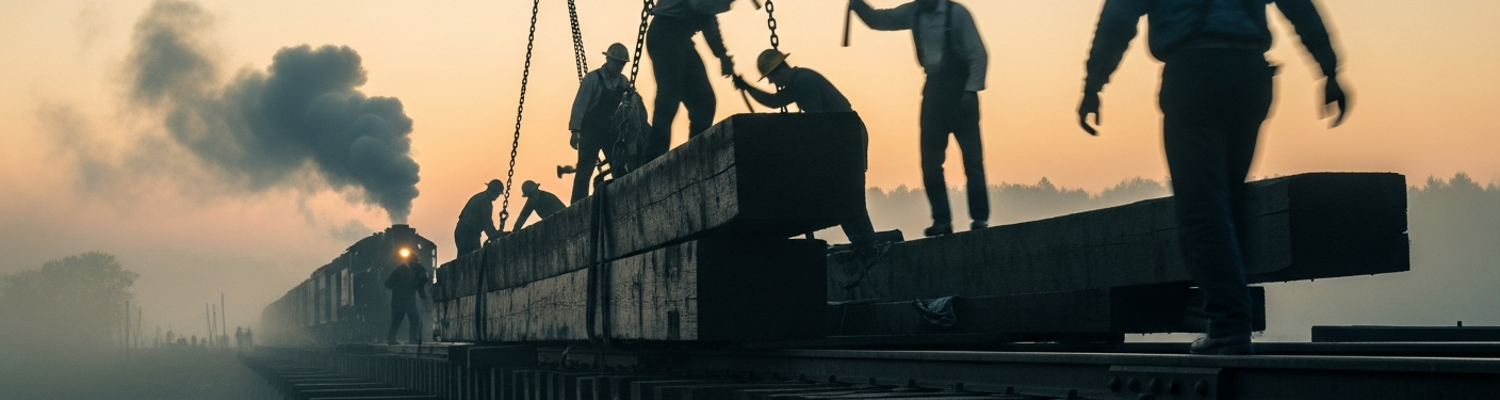
The crown jewel of the AEF’s engineering effort was the American Bassens terminal, a few miles downriver from Bordeaux. Here, Army engineers drove thousands of Douglas fir piles, shipped from the Pacific Northwest, into the bed of the Gironde estuary. Upon this foundation, they erected a ten-berth timber dock over a mile long, complete with warehouses and 145 miles of supporting railway track. This single project, completed between October 1917 and the summer of 1918, created the most modern port facility in France.
The work of unloading the constant stream of cargo ships fell largely to African American stevedore and labor battalions. Units like the 301st, 302nd, and 303rd Stevedore Regiments worked around the clock in grueling conditions, often setting records for cargo discharge. At Bordeaux, they regularly unloaded over 10,000 tons per day, a rate that astonished French and British observers. By the Armistice, American ports in France had received over seven million tons of cargo, a testament to the combined efforts of engineers and laborers who built and operated the AEF's maritime gateway.
The Steel Arteries of War
Ports were useless without railways to prevent cargo from piling up on the docks. The AEF's Transportation Corps, led by Director General of Transportation W. W. Atterbury, a vice-president of the Pennsylvania Railroad on leave for war service, essentially built an American railroad system in France. The Corps of Engineers, using specialized railway regiments like the 15th and 19th Engineers, laid over 1,000 miles of new standard-gauge track. They quadrupled the capacity of the key lines running from the ports to the front and built enormous rail yards and engine terminals.
The AEF brought its own locomotives and rolling stock. The primary engine was the robust 2-8-0 Consolidation type steam locomotive, built by the Baldwin Locomotive Works in Philadelphia. Weighing nearly 180,000 pounds and producing 35,600 pounds of tractive effort, these engines were designed for heavy freight hauling. The Army ordered 1,500 of these standardized locomotives, nicknamed the "Pershing" class. Initially, they were shipped in pieces, and reassembly at the main plant in Saint-Nazaire created a serious bottleneck.
Samuel Morse Felton Jr., the Director-General of Military Railways, devised a solution. He located specialized ships with large, open holds, allowing the locomotives to be shipped fully assembled. This innovation cut the time from arrival to service from weeks to mere days.
To push supplies to the very edge of the battlefield, engineers also laid hundreds of miles of 60-centimeter narrow-gauge track. These light railways could be rapidly constructed over rough terrain, delivering ammunition, food, and engineering materials directly into the trench networks, proving indispensable during the massive Meuse-Argonne Offensive.
The Strains of a Global Effort
The creation of this logistical network was fraught with friction. The most significant tension existed within the AEF itself, a constant tug-of-war between the SOS in the rear and the combat arms at the front. In March 1918, the German Army launched its massive Spring Offensive, threatening to break the Allied lines. In a panic, Allied leaders pleaded for American infantry and machine gunners. Pershing agreed, cabling Washington to prioritize the shipment of combat troops at the expense of engineers, quartermasters, and other support personnel. This decision had severe consequences.
As hundreds of thousands of infantrymen poured into France that summer, the understaffed SOS buckled. The amount of supplies delivered per soldier per day fell sharply, from 33 pounds in June to 25 pounds in July. The system nearly broke during the Meuse-Argonne offensive in September and October 1918. Frontline divisions reported critical shortages of food, ammunition, and medical supplies, directly impacting their combat effectiveness. The crisis forced Pershing to appoint Harbord to fix the SOS and to convert combat divisions into emergency labor troops, a clear admission that the focus on frontline strength had nearly severed the AEF's own lifeline.
Cooperation with the U.S. Navy, which transported the AEF across the Atlantic, was more successful but required constant management. Vice Admiral Albert Gleaves’ Cruiser and Transport Force worked with Army Port Commanders in daily meetings to coordinate ship arrivals and departures, maximizing the efficiency of the convoy cycle.
There was also friction with the French government, which provided the land and some labor but also competed for rail capacity and raw materials, jealously guarding its own sovereign control over its strained transportation network. The AEF's logistical achievement was not a seamless operation but a relentless, high-pressure struggle against material shortages, bureaucratic inertia, and the competing demands of total war.