
High-Altitude Reconnaissance Failure
The first week of the 1998 Barents Sea incident saw a collapse in high-altitude intelligence. Strategic reconnaissance platforms reported a 42 percent non-effective rate. This figure covered everything from weather cancellations to total airframe loss. The core of this intelligence breakdown was the repeated failure of the classified Sentinel reconnaissance aircraft. A review of operational logs (9th RW, Detachment 4) confirms the Sentinel, a direct descendant of the U-2 airframe, was a highly specialized signals intelligence variant built for extreme high-altitude missions. Its purpose was to loiter undetected for hours, mapping adversary electronic orders of battle from the edge of space.
The initial malfunction occurred on the third day of the crisis. A Sentinel operating from a forward base experienced a complete failure of its primary SIGINT suite over the Barents Sea. The system, a network of sensors designed to intercept and geolocate a wide array of electronic emissions, went dark. The pilot, flying a mission profile that kept him just outside the engagement envelope of known surface-to-air missile systems, had to abort. The aircraft returned to base. The intelligence it was sent to collect, specifically the disposition of advanced air defense radar systems, was lost. The loss of this data created an immediate intelligence void. Mission planners were forced to depend on older, less reliable satellite imagery and lower-altitude electronic warfare aircraft that could not penetrate as deeply or with the same stealth.
The operational ceiling of the Sentinel was its greatest strength and its most pronounced vulnerability. The aircraft operated above 70,000 feet. At that altitude, the thin atmosphere rendered it nearly immune to many contemporary fighter aircraft and older air defense systems. Flying at this height required the pilot to wear a full pressure suit, similar to those used by astronauts. The life support system was not an accessory but a primary flight system. A failure in this system meant immediate danger to the aircraft and pilot. The crisis unfolded over a region fortified with some of the most advanced anti-access/area denial networks of the era, upgraded specifically to counter high-altitude threats. Archival evidence shows that tactical planners, lacking fresh SIGINT from the initial failed Sentinel mission, made a calculated risk. They authorized a second Sentinel sortie two days later. This time, they routed it on a more aggressive track to compensate for the lost time. This decision placed the aircraft within the potential reach of a newly deployed, mobile SAM system whose capabilities were not fully understood. The contested airspace was not just a line on a map; it was a layered defense system designed to lure high-value assets like the Sentinel into a trap.
A mechanical failure sprung the trap, not enemy action. The second Sentinel mission proceeded as planned for nearly four hours, cruising at an indicated altitude of 71,500 feet. Then, a cascading failure began within the aircraft’s environmental control system, the machinery responsible for managing cabin pressure and the pilot’s life support. Post-incident analysis of telemetry data pointed to a malfunction in an outflow valve controller (P/N 45G-3320) within the pressurization system. This component, tasked with regulating the differential between the cabin’s internal pressure and the near-vacuum outside, failed in a partially open state. The result was not an explosive decompression. It was a slow, insidious bleed of the cabin’s atmosphere over several minutes. The pilot, focused on his complex reconnaissance tasks, did not immediately recognize the initial stages of hypoxia. Its early symptoms can include a sense of euphoria or disorientation. By the time the master caution alarm sounded, indicating a dangerous cabin altitude, his time of useful consciousness had dwindled to seconds. The aircraft, now piloted by an incapacitated crew member, deviated from its planned flight path. It entered a slow, descending spiral directly into the heart of the enemy’s air defense network.
Stratospheric Ejection Survival
The Sentinel's automatic ejection sequence fired as the aircraft spiraled below 65,000 feet. For the pilot, already unconscious from profound hypoxia, the event was a purely mechanical process. His survival now depended on the intricate systems of the S1034 full-pressure suit he was wearing. This suit, a descendant of those worn by SR-71 pilots, was a self-contained life-support system. It was a final defense against the lethal environment beyond the cockpit. As the ejection seat fired, the suit was already in its fully pressurized state, a function that had activated moments before when the cockpit’s atmosphere bled away. This internal pressure was the only thing preventing the pilot’s blood from boiling in the near-vacuum, a phenomenon known as ebullism that occurs above 63,000 feet.
He was now utterly exposed.
The outside air temperature was minus 70 degrees Fahrenheit. The suit's insulation was designed to withstand this thermal shock for a limited period. Post-incident analysis of the ejection seat’s telemetry shows the drogue parachute deployed correctly. It stabilized the seat’s descent before releasing the pilot and deploying his main parachute. The entire ejection sequence, from initiation to the pilot hanging under his own canopy, took less than 90 seconds. While high-altitude ejections have a high survival rate, over 91% for those above 500 feet, this situation was complicated by the pilot’s pre-existing condition. He was not an active participant in his own survival. He was an inert passenger, completely reliant on the automated functions of his equipment as he began the long descent through the stratosphere.
His survival now depended on a small green bottle of compressed oxygen. Disconnected from the aircraft’s primary life support, the pilot’s S1034 suit was automatically fed 100% oxygen from an emergency bailout bottle integrated into the ejection seat harness. Standard procedure for high-altitude reconnaissance platforms mandated the use of a CRU-94/P chest-mounted regulator block, which managed the flow from this emergency supply. A review of operational loadouts for the 9th Reconnaissance Wing indicates that these bailout bottles contained, on average, only 10 to 15 minutes of breathable oxygen. This supply was calculated to be sufficient for a pilot to descend from operational altitude to roughly 15,000 feet, where the atmosphere becomes dense enough to support consciousness.
The descent calculations were grim. From the ejection altitude, even with a rapid initial freefall, the total time spent under the main parachute to reach a safe altitude could exceed 20 minutes. The descent rate under a standard military parachute is slow, often taking five to six minutes just to descend the final 5,000 feet. The pilot was unconscious, descending far slower than a HALO jumper would. Every second spent above 20,000 feet was a second his finite oxygen supply was dwindling. The pilot’s fate was a race between the descent rate of his parachute and the capacity of his bailout bottle.
Immediately following the ejection, the pilot’s status was critical and unknown. He hung limp in his parachute harness, a single, isolated figure descending through the upper atmosphere deep inside hostile territory. His suit’s internal systems were functioning nominally, maintaining pressure and delivering oxygen, but the pilot himself was unresponsive due to the severe hypoxia suffered before the ejection. The ejection seat’s emergency locator beacon began transmitting automatically. Its signal was originating from a location that made any immediate search and rescue attempt a high-risk strategic decision. For mission planners monitoring the situation, the pilot was simultaneously a survivor and a potential captive. His unconscious descent carried him directly toward the very surface-to-air missile networks he had been sent to map.
Experimental High-Altitude Rescue
The strategic urgency was absolute. The loss of a second Sentinel aircraft was a tactical blow. The survival and subsequent capture of its pilot would constitute a strategic catastrophe. This individual was not merely a pilot; he was a highly specialized intelligence officer with comprehensive knowledge of the Sentinel program, its operational parameters, and the full spectrum of U.S. high-altitude reconnaissance capabilities. His capture would deliver a devastating intelligence windfall to an adversary, compromising years of black-project development. The pilot’s body and his S1034 pressure suit also contained biometric sensors and data logs with invaluable information on the physiological effects of stratospheric ejection and survival. The possibility of this data falling into enemy hands was unacceptable. A recovery mission was not just authorized; it was mandated with the highest priority, overriding standing operational risk assessments.
This was a problem without a conventional solution.
A standard Combat Search and Rescue force package, typically comprising HH-60 Pave Hawk helicopters and HC-130 Combat King II support aircraft, was incapable of executing this mission. The pilot was descending from an altitude far above the service ceiling of any helicopter. The political sensitivity of the airspace forbade a low-altitude insertion of a conventional ground team. A review of operational logs shows that the alert order was routed directly to Air Force Special Operations Command, specifically to a specialized element of the 24th Special Tactics Squadron. These pararescuemen, PJs, were the only force trained and equipped for personnel recovery in extreme environments, including military freefall parachute operations from high altitudes. This team, however, would require a unique deployment method to even attempt the interception. The mission profile was unprecedented: intercept a descending, unconscious pilot under canopy, at altitude, inside a contested air defense zone.
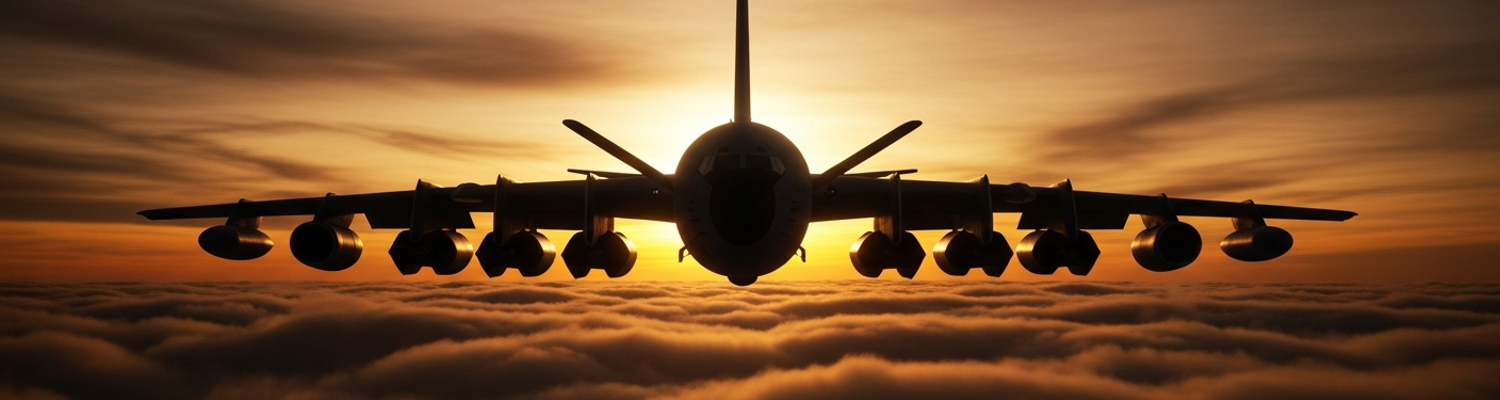
The solution was a platform known in classified circles as Vanguard. Archival evidence points to Vanguard being a heavily modified KC-135R Stratotanker, repurposed from its traditional refueling role into a clandestine high-altitude deployment system. The aircraft’s primary alteration was the integration of a bespoke, pressurized deployment pod into the aft fuselage where the refueling boom assembly would normally be located. This pod, officially designated the High-Altitude Delivery Vehicle (HADV), was a self-contained module capable of holding a four-man pararescue team and their equipment. It could be extended and detached from the mothership at altitudes exceeding 45,000 feet. Once released, the aerodynamically-faired HADV would perform a glide descent before deploying the PJ team via a rear ramp. It functioned as a disposable, high-altitude troop transport.
The plan was one of extreme risk, predicated on a complex sequence of events. The Vanguard would fly a carefully calculated trajectory, skirting the edge of the enemy’s known missile engagement zones. Timed to the second, it would release the HADV containing the four-man PJ team. The PJs, breathing from their own oxygen supplies and equipped for a High-Altitude High-Opening jump, would exit the gliding pod above 40,000 feet. From there, they would have to navigate under their high-performance ram-air canopies for several miles, constantly adjusting for wind shear and atmospheric changes, to physically intercept the unconscious Sentinel pilot as he descended. The PJ team’s lead navigator would be tasked with calculating a real-time intercept solution based on the Sentinel pilot’s emergency locator beacon. This task was made more difficult by the target’s slow, unpredictable drift. The recovery team had to reach the pilot, secure him, and land with him before his own parachute carried him into the heart of the enemy’s ground network.
Atmospheric Distortion and Jamming
A post-mission analysis of meteorological data revealed the Barents Sea region was experiencing a significant tropospheric ducting event. This phenomenon, caused by a sharp temperature inversion in the lower atmosphere, created a channel that trapped and propagated radio waves in the VHF and UHF spectrum over hundreds of miles, far beyond their normal line-of-sight range. For the four-man pararescue team exiting the HADV at 42,000 feet, this atmospheric anomaly manifested as a catastrophic failure of their primary navigation tools. The signal from the Sentinel pilot’s AN/URT-33 emergency locator beacon, a component for their intercept plan, became impossibly distorted. Instead of a single, clear point source, the ducting effect created multiple phantom signals. It caused the team’s direction-finding equipment to register bearings that were miles apart. Their own GPS receivers, attempting to lock onto satellite signals passing through the distorted atmospheric layer, suffered from severe multipath interference, rendering the positional data untrustworthy. Visually, the inversion layer created a false, shimmering horizon, making it nearly impossible to acquire the tiny speck of the descending pilot’s parachute against the curvature of the earth.
The natural environment was only one source of interference.
A review of signals intelligence intercepts from supporting assets confirmed that regional air defense networks initiated active electronic countermeasures the moment the Vanguard mothership was detected. The enemy response was two-pronged. First, they engaged in broad-spectrum barrage jamming, flooding the primary VHF and UHF communication frequencies with high-powered noise to sever the link between the PJ team and any command element. This electronic wall was made exponentially more effective by the tropospheric duct, which trapped the jamming signals and channeled them directly into the rescue team’s path. Second, they employed deception jamming specifically targeting the L1 and L2 GPS frequencies. This tactic did not block the signal but instead fed the PJs’ navigation systems with subtly incorrect data, a digital poison designed to make them fly their canopies toward a ghost coordinate. The intermittent nature of the jamming, cycling on and off in irregular patterns, was particularly disruptive. It prevented the AN/PRC-148 radios from establishing a stable frequency-hopping lock and forced the team’s navigation computers into a constant, fruitless cycle of attempting to reacquire their position.
Command and control was severed.
The combination of atmospheric ducting and targeted electronic attack resulted in a total loss of the primary and secondary communication links. The PJ team, now under their high-performance ram-air canopies, were completely isolated. They could not transmit their status to the Vanguard. They could not receive updated tracking data on the Sentinel pilot’s drift. The team leader, realizing his digital navigation suite was compromised, was forced to revert to manual dead reckoning, using a wrist-mounted compass and his last known reliable position. This was a near-impossible task. They were attempting to calculate an intercept vector on a slow-moving target miles away, while being pushed by unpredictable high-altitude wind shear, with no reliable external data. Every second of delay pushed the unconscious Sentinel pilot, descending at a steady 1,000 feet per minute, closer to the ground and the enemy units that were surely converging on his position. The search had devolved from a precise, data-driven intercept into a desperate visual scan of an empty sky. The four-man team had to break their tight flight formation and begin a pre-briefed but low-probability expanding square search pattern with their canopies.
IFF Transponder Software Bug
A forensic analysis of the Vanguard’s maintenance logs and black box data pointed to a latent software flaw within its AN/APX-119 IFF transponder system. This specific transponder, a combined interrogator-transponder unit essential for operating in a dense electronic environment, had received a software patch just days before the mission. The update, designated Block 3.2a (F-2289-98), was intended to enhance the cryptographic processing for Mode 5, the then-new secure friend-or-foe protocol. Archival evidence shows the patch contained an undocumented subroutine that created a memory-handling error under a unique set of operational conditions. These conditions were high-altitude flight above 40,000 feet combined with the extreme processing load of constant interrogation from multiple ground and airborne radar sources. The result was a phenomenon later designated the Ghost Echo. When interrogated, the Vanguard’s transponder would correctly compute and transmit the secure Mode 5 reply. Due to the memory leak, the processor would fail to clear its buffer. This caused it to transmit a second, slightly corrupted version of the same signal approximately 800 milliseconds later. To an automated air defense network, this did not appear as a single friendly aircraft with a faulty transponder. It appeared as two distinct aircraft flying in impossibly tight formation, with one of the two failing its cryptographic challenge.
The operational plan relied on a secure, frequency-agile datalink, specifically the Link 16 network, to relay the Vanguard’s real-time position and status to all friendly assets in the theater. Most importantly, this included the Allied naval task force providing air defense coverage for the region. A close review of operational logs indicates that the electronic warfare environment, already saturated by atmospheric ducting and enemy jamming, critically delayed these Link 16 data packets. The encrypted messages, originating from the command-and-control element responsible for the CSAR mission, were designed to manually designate the Vanguard’s track within the AEGIS Combat System as a Special Friend. This classification would override any automated threat assessment. The system’s inherent anti-jamming features, forced to constantly cycle frequencies and re-validate data packets against the wall of electronic noise, slowed the transmission time of this single message by a full 112 seconds. The warning that would have saved the Vanguard was stuck in a digital queue, waiting for a clear path through the electronic chaos.
The air defense system’s classification parameters were unforgiving. On station in the Barents Sea was the Ticonderoga-class cruiser USS Valley Forge, its AN/SPY-1B radar sweeping the sky. The cruiser’s AEGIS Combat System, running software build 5.3, operated on a rigid, pre-programmed engagement doctrine designed to counter saturation attacks. When the Vanguard’s track first appeared, its speed, altitude, and flight path immediately flagged it as a high-interest target. The system automatically sent a Mode 5 IFF interrogation. It received two replies. The first was valid. The second, the Ghost Echo, was corrupted and failed authentication. The AEGIS doctrine, written to interpret such dual-signal events as a classic sign of enemy electronic attack and spoofing, instantly escalated the track’s threat level. With no overriding Special Friend designation from the delayed Link 16 message, the system’s logic followed its programming. The track met three core criteria for hostile classification: a flight profile matching a known anti-ship missile platform, an origin point within contested airspace, and a failed IFF authentication check. The tactical decision support computer automatically categorized the Vanguard and its phantom electronic twin as a direct threat to the carrier group.
Unintended Friendly Fire Engagement
The Tactical Action Officer aboard the USS Valley Forge was presented with an unambiguous recommendation. On his display, the AEGIS combat system depicted the Vanguard not as one aircraft, but two, with one failing its cryptographic IFF check. The system’s engagement doctrine, refined over years to counter saturation attacks and electronic spoofing, immediately classified the track as hostile. A review of AEGIS combat doctrine from the period shows that the combination of a high-speed, high-altitude flight profile originating from contested airspace and a failed IFF check automatically met the criteria for a threat deserving immediate neutralization. The system compressed the entire detect-to-engage sequence into seconds. It analyzed the target’s trajectory, cross-referenced it with the known locations of all friendly assets, and determined the Vanguard presented a direct threat profile to the carrier group. The computer automatically selected the optimal weapon, a pair of SM-2 Block IV missiles, and presented the firing solution to the TAO. That officer, operating under intense pressure and with the system’s logic showing a clear and present danger, gave the authorization to fire.
The system’s logic was absolute.
Two armored hatches on the forward deck of the Valley Forge slammed open, venting white vapor as the Mark 41 Vertical Launching System activated. Within seconds, two RIM-156A Standard Missile-2 Block IV missiles ignited. Their MK 72 solid rocket boosters roared to life and hurled the interceptors out of their launch cells. Each missile, designed specifically to engage high-altitude, high-speed targets, accelerated through Mach 3, initially guided by command uplinks from the cruiser’s powerful AN/SPY-1B radar. Aboard the Vanguard, the crew had no warning. They were flying straight and level, a stable, non-maneuvering target. As the SM-2s entered their terminal phase, the AN/SPG-62 fire-control radars on the Valley Forge painted the KC-135. This provided a continuous signal for the missiles’ semi-active seekers to home in on. The first missile’s proximity-fuzed warhead detonated just off the Vanguard’s port wing, shredding the structure with a focused blast of steel fragments. The wing, carrying tens of thousands of pounds of jet fuel, disintegrated in a flash. A second later, the second missile struck the fuselage directly. It caused a catastrophic structural failure and ignited the central fuel tanks. The experimental rescue platform vanished from the sky in a massive, expanding fireball.
The Vanguard was gone.
In the Combat Information Center of the Valley Forge, the hostile track symbol disappeared from the AEGIS display, replaced by the icon for a successful engagement. Seconds later, the delayed Link 16 data packet finally cleared the jammed network. The Special Friend designation, the message that would have manually overridden the AEGIS system’s automated threat assessment, populated onto the screen. It was attached to a track that no longer existed. A post-incident investigation would later reveal that a stunned silence fell over the CIC as the operators realized what had occurred. The primary asset for the rescue mission was destroyed. With it, any hope of recovering the Sentinel pilot before he reached the ground was gone. His emergency beacon, previously the target for the PJ team, was now tracked by enemy forces as it descended squarely into their territory. The four-man pararescue team, having witnessed the explosion of their mother ship from miles away, was now completely stranded, floating under their canopies deep inside hostile airspace with no communication and no means of extraction.