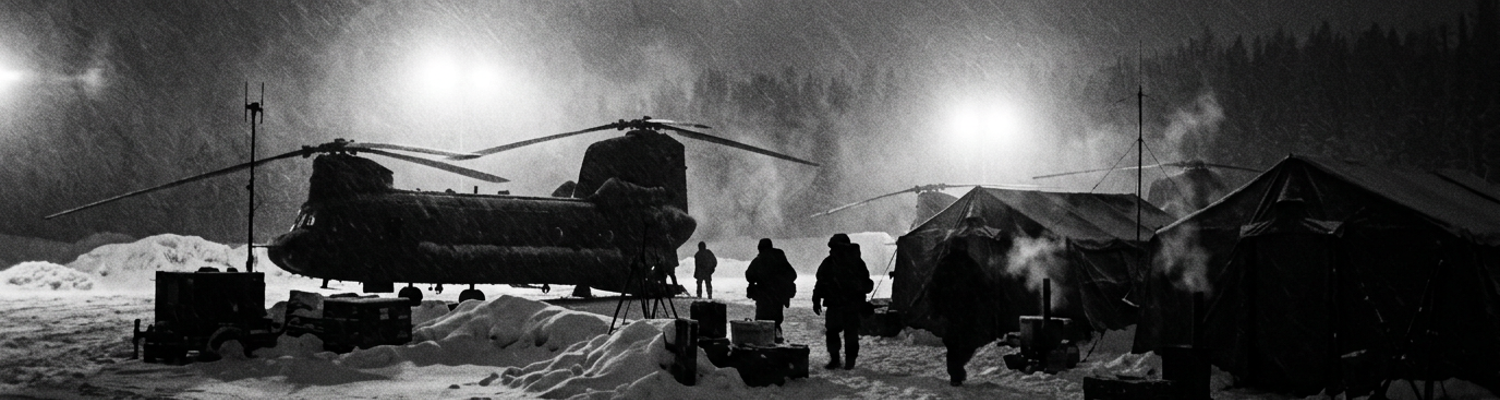

Forward Collection Collapse of Support Force 21
The primary hydraulic brake line of the lead Dodge M43 ambulance ruptured under three hundred pounds of sudden pedal pressure. Warm fluid sprayed across the frozen wheel well. Steel spur gears in the transfer case sheared flat with a dry metallic screech. Sub-zero mountain air congealed the heavy ninety-weight gear oil into a stiff paste. This locked the front differential. The forward evacuation column halted five miles north of Hoengsong along Route 29.
Behind that disabled drive axle.
The Chinese People's Volunteer Army counteroffensive struck Support Force 21 on the freezing night of February 11 1951. Archival evidence shows that elements of the PVA 40th and 66th Armies penetrated the frontline screening positions of the Republic of Korea 8th Division within two hours near Pungam-ni. Broken allied infantry units fled south directly into the open firing perimeters of the 38th Field Artillery Battalion and the 15th Field Artillery Battalion. Chinese strike groups bypassed standard defensive strongpoints. They deployed 82mm mortars and Type 24 Maxim heavy machine guns along the high ridgelines at Changsang-ni. They surrounded the American howitzers before withdrawal orders arrived from X Corps headquarters. Mortar shells detonated across the uncamouflaged powder charges before the gun crews could traverse their artillery pieces.
When examining the historical record of the 2nd Infantry Division medical detachments, aid stations operating behind the gun lines were forced into total blackout conditions. The surge of shattered casualties overwhelmed the forward collection tents. Surgeons and enlisted technicians worked in absolute darkness. They strictly prohibited gasoline heating stoves, Coleman lanterns, and vehicle headlights. Any illumination provided aim points for Chinese mortar spotters situated on the bluffs above. Medical personnel cut through frozen combat parkas with shears. They relied on hooded red-lens flashlights held inside their coats to locate severed blood vessels.
Glass morphine syrettes froze solid in canvas pouches.
Medics held the small ampules under their tongues to thaw the painkiller before attempting intramuscular injections. Whole blood congealed inside administration sets within unheated tents. The temperature plunged past fifteen degrees below zero Fahrenheit. Corpsmen inserted wire splints blindly by touch alone. They packed blast cavities in the dark. They applied field tourniquets over thick winter clothing. More than three hundred burned artillerymen and shock cases lay packed shoulder-to-shoulder on frozen canvas tarpaulins spread over the snow. Roadbound motorized evacuation ceased when Chinese roadblocks blasted the lead trucks and severed Route 29.
A close review of operational logs indicates that litter bearer teams had to transport critically wounded casualties south along a five-mile gorge. Troops named this route Massacre Valley (NARA Record Group 338). Four-man teams composed of combat engineers and artillery survivors hauled heavy canvas folding litters across boulder-strewn creek beds. They navigated icy irrigation ditches and terraced rice paddies under direct small-arms fire from PVA positions on Hill 277. Carrying a wounded soldier wrapped in sub-zero sleeping gear weighed up to two hundred and twenty pounds. This rapidly exhausted each squad of bearers. Chinese infantrymen firing captured M1 carbines and Russian PPSh-41 submachine guns targeted the movement in the ravines. Bursts of automatic fire punctured the stretchers. Litter teams repeatedly dropped into frozen ditches to pull surviving patients forward by their web equipment. Dozens of shattered litters were abandoned along frozen stream beds alongside burning 105mm howitzers. Dead draught engines blocked the path. Walking wounded crawled south on their hands and knees toward the perimeter defenses at Hoengsong.
Sub-Zero Extraction Protocols for Sikorsky H-5 Helicopters
Archival evidence shows that Detachment F of the 2nd Helicopter Detachment committed its four-seat Sikorsky H-5 helicopters to night casualty extraction flights. These flights crossed the jagged mountain passes flanking Route 29. Pilots pushed their nine-cylinder Pratt and Whitney R-985-AN-5 radial engines past standard cylinder head temperature limits. They cleared the unmapped defiles north of Hoengsong without navigation lights or cockpit panel illumination. PVA machine-gunners holding the ridgelines at Changsang-ni swept the narrow river corridors with green tracer fire. This happened whenever exhaust manifolds glowed red against the canyon floor.
Aircrews tracked the faint silhouettes of frozen ridgelines against the winter sky at altitudes below one hundred feet.
They fought severe updrafts and carburetor icing. These conditions caused sudden drops in manifold pressure. Foot-thick snowdrifts along the canyon walls reduced visual contrast to zero. Cockpit crews cranked their cyclic sticks with stiffened forearms. Frozen hydraulic fluid resisted movement. They maintained a low-altitude crawl along the icy bends of the Som River to skirt enemy automatic weapons positions. Rotor downwash whipped powdery snow across the unheated bubble glass. The Sikorsky H-5 featured a maximum gross weight of four thousand eight hundred and twenty-five pounds. Adding two external litter pods pushed the airframe to its absolute aerodynamic limit. The R-985 engine consumed twenty-four gallons of aviation fuel per hour under normal conditions. The dense cold air and constant high-power settings increased consumption to over thirty gallons. This reduced operational loiter time over the Som River valley to less than forty-five minutes.
When examining the historical record of these evacuation flights, the external stretcher pods mounted to the fuselage flanks presented an immediate threat to patient survival. Mechanics bolted two enclosed metal and canvas litter capsules to the tubular steel frames flanking the engine compartment. No internal cabin space existed for wounded soldiers. Severely wounded artillerymen were strapped flat on their backs inside these narrow external pods without any heating ducts. At seventy knots airspeed through sub-zero air, the external windchill dropped beneath minus forty degrees Fahrenheit.
Cold drafts tore through capsule seam seals.
Exposed skin froze instantly. Field dressings solidified. Infusion tubing congealed within minutes of takeoff. This blocked intravenous glucose and saline solutions before the needle tips reached collapsed veins. Patients who survived major abdominal blast wounds inside Massacre Valley frequently died from profound hypothermic cardiac arrest during the twenty-minute transit south to the 8055th Mobile Army Surgical Hospital perimeter at Wonju. Plasma froze inside the needle hubs before fluid reached femoral arteries.
A close review of operational logs indicates that touching down at the forward recovery zones required blind approaches governed solely by shielded red flashlights. Combat medics from the 2nd Infantry Division cleared compact thirty-foot squares amid terraced rice paddies near the roadbed. They dug small foxholes to shield the signalmen from Chinese sniper fire. Two enlisted soldiers stood sixty paces apart. They held standard-issue angle-head flashlights with red-lens filters inserted behind blackened cardboard sleeves. These faint red lights provided the only visual reference for descending aviators blinded by the vortex of blowing ice particles kicked up by the main rotor. Approaching at near-vertical angles to clear surrounding telephone poles and telegraph wire, pilots dropped collective pitch levers blindly into the darkness. Landing gear struts struck hidden frozen irrigation dikes with heavy impact force. This threatened to tip the top-heavy aircraft onto its side before mechanics could pin the skid brakes. Litter teams rushed the swirling whiteout with stretchers. They worked under rotating three-bladed wood-and-steel rotors without helmets or ear protection.
Whirling rotor tips cleared the vertical granite bluffs by less than five feet.
Ground crews struggled against fifty-knot rotor downwash to slide the canvas-wrapped wounded into the cold side capsules. They forced stubborn steel locking pins into place with bare knuckles while grease congealed on the slide tracks. Aviators kept engines running at two thousand revolutions per minute to prevent oil coolers from freezing solid on the snowfields. Small-arms rounds fired from PVA positions along Hill 277 repeatedly perforated the fabric-covered tail booms. Bullets cut through aluminum ribs and grazed the exposed drive shafts that powered the tail rotors. Once the capsule latches snapped shut, the H-5 pulled maximum collective pitch to claw out of the ravine. Its skids cleared telephone wires by inches as it banked toward Wonju airbase.
Carburetor Icing and Tail Rotor Gearbox Failures
A close review of operational logs indicates that flight crews operating over the mountain gorges north of Hoengsong faced immediate power loss. Severe carburetor icing developed inside their Pratt and Whitney R-985 Wasp Junior radial engines. Dense river fog hovered at twenty degrees below zero Fahrenheit. Moisture was drawn into the Bendix-Stromberg carburetors. The pressure drop across the venturi cooled incoming air by another thirty degrees. Ice formed directly on the throttle butterfly valves and internal fuel metering jets within three minutes of takeoff.
Pilots observed manifold pressure indicators drop precipitously from twenty-eight inches of mercury to less than twenty.
This starved the nine-cylinder air-cooled engine of intake air. Pulling the manual carburetor heat control diverted warm air from the exhaust shroud into the induction system. This corrective action bled off five to eight percent of the engine maximum four hundred and fifty brake horsepower. Heavily laden aircraft carrying two external stretcher casualties lacked the power margin to maintain level flight. Rotors decayed to critical low-RPM thresholds. Pilots dropped collective pitch and skimmed frozen pine canopies along the narrow riverbeds to avoid complete engine stall. Ice chokes starved the intake tubes.
Archival evidence shows that dense sub-zero mountain fog caused catastrophic oil pressure loss in unheated Sikorsky H-5 tail rotor gearboxes during descent phases into forward landing clearings. The aircraft relied on exposed magnesium forty-five-degree intermediate and ninety-degree tail rotor gearboxes positioned at the extreme end of the long tubular tail boom. These components sat completely isolated from engine bay heat. Flying through supercooled water droplets along the Chuam-ni corridor, outer gearbox casings encountered severe windchill. Aluminum and magnesium housing temperatures dropped below minus thirty-five degrees Fahrenheit. The heavy-grade mineral oil inside congealed into an unpumpable sludge. This starved the internal spiral bevel gears of lubrication.
Friction stripped the precision-ground steel gear teeth within minutes.
Pressurized seals shrank and ruptured under localized pressure spikes. Remaining fluid dumped down the vertical stabilizer. Enlisted pilots suddenly lost directional anti-torque control at hover altitude. The helicopter entered violent uncommanded flat spins over rocky stream beds and abandoned artillery positions. Anti-torque drive shafts locked instantly.
When examining the historical record of ground maintenance at the Wonju flight line and the K-46 auxiliary strip at Hoengsong, aviation mechanics used open-flame heaters to thaw frozen control linkages and rotor hubs between continuous casualty extraction sorties. Main rotor swashplates, pitch change horns, and hydraulic cyclic push-pull rods seized solid within ten minutes of engine shutdown. Freezing fog and blowing snow coated the mechanical assemblies in glaze ice. Lacking enclosed hangars or heated canvas shelters, ground crews dragged gasoline-powered Herman Nelson utility heaters directly onto the snow. Flexible canvas ducts spat open flame and exhaust gas at the exposed rotor heads. Mechanics repeatedly used bare-flame plumbers blowtorches and gasoline-soaked asbestos ropes wrapped directly around the rotor hub spider bearings and lead-lag hinges to break the ice welds. Working without insulated flight gloves to manipulate frozen castellated nuts and safety wire, personnel routinely left strips of skin frozen to the sub-zero steel. Residual aviation gasoline from weeping primer lines occasionally flashed across the torch flames. Crew chiefs smothered engine deck fires with shoveled snow before the blazes ignited the fabric fuselage covering.
Maintenance logs from the 3rd Air Rescue Squadron note that ground crews spent three hours with open flames thawing pitch links for every twenty minutes an H-5 stayed airborne over the valley. Mechanics applied heated engine oil directly to exposed swashplate bearings using pressurized hand-pump squirt cans. The lubricant froze into waxy beads before the main rotor achieved operational speed. Replacement rotor drive assemblies dispatched by IX Corps headquarters sat delayed on blocked secondary roads south of Wonju. Ground crews cannibalized stripped tail rotor components from downed airframes parked along the airstrip revetments.
Hypothermic Shock and Medical Supply Depletion at Wonju
Archival evidence shows that forward medical personnel assigned to the 8055th Mobile Army Surgical Hospital and the 2nd Clearing Company at Wonju airstrip found their blood reserves completely nonfunctional upon opening delivery crates. Standard 500cc Baxter glass bottles containing whole type-O blood and reconstituted citrated plasma had frozen into solid cylindrical blocks during unheated truck transit south from Chechon. Sub-zero airstrip winds dropping temperatures past twenty degrees below zero Fahrenheit caused the saline diluent and aqueous blood fractions to expand rapidly. This sheared the outer glass walls and fractured the inner rubber stoppers.
Ice split the thick vacuum glass from the inside out.
Technicians attempting to thaw the containers over vehicle exhaust manifolds or inside engine compartments triggered thermal shock. Tempered glass shattered. Congealed cellular sludge spilled into the mud. When bottles survived intact, uneven heating caused extensive hemolysis. Hemolyzed blood injected into hypovolemic patients released toxic concentrations of free hemoglobin and potassium directly into the bloodstream. Acute renal failure and fatal cardiac arrhythmias followed within minutes of transfusion. Reconstitution of dried plasma using frozen distilled water bottles proved equally impossible. Double-ended transfer needles bent against solid ice plugs inside the bottle necks. Solidified red blood cores rattled against fractured bottle walls.
A close review of operational logs indicates that extreme hypothermic shock systematically disrupted field triage procedures as litter teams deposited hundreds of frostbitten casualties across the frozen dirt taxiways. Ambient temperatures hovering below minus fifteen degrees induced massive peripheral vasoconstriction in wounded men who had spent hours exposed along the Route 29 withdrawal corridor. Radial, brachial, and carotid pulses became completely impalpable to the fingers of corpsmen wearing heavy woolen glove liners. Enlisted medics repeatedly misidentified comatose hypothermic soldiers as dead. Men with severe bradycardia were placed onto expectant piles outside the admission tents. Standard metal stethoscopes grew too cold to touch bare skin without tearing the epidermis. Stiffened rubber tubing lost all acoustic flexibility in the sub-zero air.
Wounded infantrymen exhibiting core body temperatures below eighty-six degrees Fahrenheit showed no corneal reflexes.
Fixed dilated pupils mimicked lethal brain trauma. Medical officers had to cut away frozen combat boots and parkas with heavy aviation tin snips to drive large-bore needles directly into femoral arteries. They checked for faint back-pressure before committing scarce resuscitation litters to incoming casualties. Corpsmen mistook frozen comatose artillerymen for deceased remains.
When examining the historical record of airstrip service detachments, the total mechanical failure of standard M-1941 gasoline tent stoves forced medical personnel to adopt extreme heating expedients to keep patients alive. Gasoline feed lines and needle valves choked on ice formed from condensed water vapor inside fuel drums. Heaters shut down throughout the pre-operative and surgical shelters. Enlisted technicians from the 2nd Medical Battalion used splitting mauls and entrenching tools to break apart green-painted 105mm artillery ammunition boxes, 81mm mortar crates, and discarded cargo pallets scavenged from the C-47 transport unloading ramps. Corpsmen rolled fifty-five-gallon oil drums into the triage tents. They cut off the drum tops with cold chisels. They built open bonfires fueled by splintered pallet pine and chemical-treated plywood. Dense black smoke laden with creosote, lead-based stencil paint, and wood preservative drifted through the unvented canvas. Doctors were blinded. Carbon soot deposited across sterile instrument trays. Fire guards armed with snow shovels stood permanent watch to extinguish canvas tent roofs ignited by flying embers. Litter racks had to be rotated continuously. Patient skin blistered from drum radiation on one side while their backs froze against canvas stretchers on the other.
Perimeter Mortar Fire and Casualty Prioritization
Archival evidence shows that at 0240 hours, Chinese mortar batteries zeroed their Type 20 82mm tubes onto the open casualty staging pads adjacent to the main Wonju runway. High-explosive fragmentation shells impacted every twenty seconds across the crowded taxiway. Over four hundred stretcher cases lay lined up head-to-toe on canvas litters resting directly on the frozen mud. Blast waves detonated upward and outward against the packed casualties. Wool blankets shredded. Field dressings tore apart. Jagged metal fragments hurled through unarmored ambulance panels. Hot steel shrapnel sliced through nylon intravenous tubing. Plasma lines severed. Dry straw bedding laid beneath stretchers to block ground frost ignited.
Enlisted litter bearers dropped litters into frozen ruts.
They threw their own bodies across wounded men as secondary shrapnel from exploding five-gallon fuel cans tore across the open tarmac. Men awaiting air extraction sustained fresh blast injuries, perforated chests, and traumatic amputations without ever leaving their stretchers. Shrapnel ripped canvas stretchers in half.
When examining the historical record of the 21st Troop Carrier Squadron, inbound twin-engine Douglas C-47 transports taxied down the icy pierced-steel planking. Their Pratt and Whitney R-1830 engines roared at continuous high idle to prevent spark plug fouling. Flight crews kept tailwheels rolling and refused to cut their magnetos. An immobilized aircraft on the single strip presented an immediate target for PVA forward observers. Loading a single immobilized litter patient through the narrow rear cargo doors required four bearers and ninety seconds of careful maneuvering. The aircraft sat completely stationary under incoming mortar fire during this process. Flight surgeons made the tactical calculation to abandon normal medical sequencing. Airfield controllers shouted over the propeller wash. They ordered flight marshals to pack the cabins exclusively with ambulatory casualties. Ambulatory soldiers packed shoulder-to-shoulder into the stripped aluminum fuselages in less than three minutes. Thirty-five men fit per airframe. Over sixty non-transportable litter cases with penetrating abdominal wounds, shattered pelvic bones, and crushed spines lay strapped to stretchers on the open snowbanks. Cargo doors slammed shut. The transports accelerated into the headwind.
Non-transportable patients watched the tailfins lift away into the sleet.
A close review of operational logs indicates that ground combat breached the northern runway markers when PVA infiltrators from the 117th Division bypassed outer infantry tripwires. They reached the drainage ditches two hundred yards from the parked transport planes. All infantry security forces were committed to blocking Route 29. The defense of the landing area fell directly upon surgeons, surgical technicians, and ambulance drivers from the 2nd Medical Battalion. Enlisted medics threw down blood-soaked shears. They uncrated semi-automatic M1 and M2 carbines from reserve racks. They shoved fifteen-round magazines into cold receivers. Technicians crawled into frozen sandbag revetments flanking the runway fuel dump. They rested weapon barrels on earthen parapets to fire blind into the dark river bottom.
Sub-zero temperatures caused weapons to malfunction repeatedly.
Congealed preservative oil seized firing pins. Corpsmen struck bolt handles with trench knives to clear failures to extract. Medics fired controlled bursts at muzzle flashes rising from the frozen reeds. They held off Chinese assault squads armed with stick grenades. The last functional transport cleared the strip at 0415 hours. The medical personnel remained on the ground.