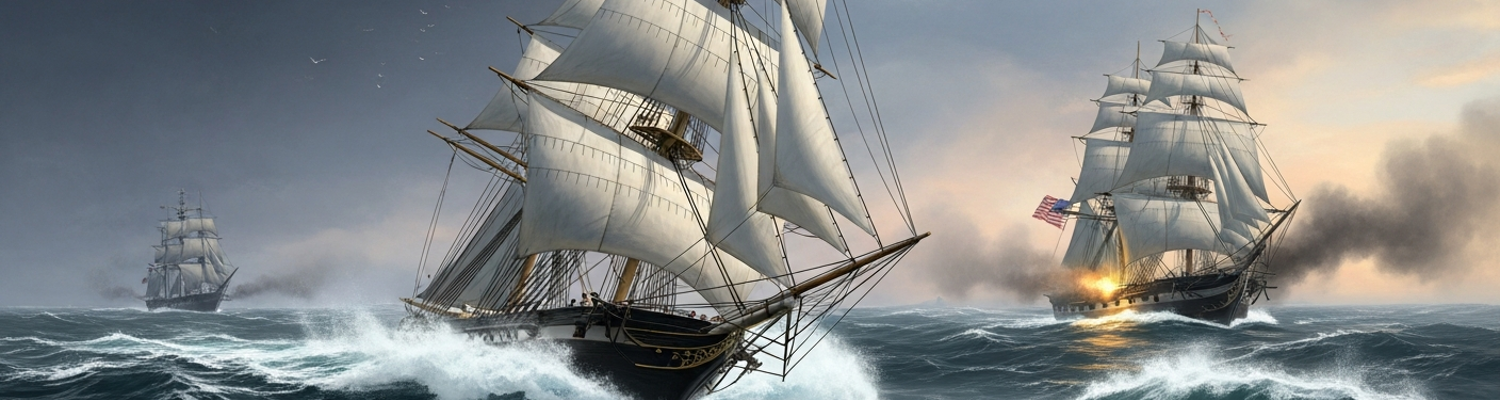

In the summer of 1812, the United States embarked on a conflict against a titan. The declaration of war against the British Empire pitted a young republic against the world’s preeminent naval power. The disparity was stark. The United States Navy consisted of fewer than twenty seaworthy vessels, its most powerful assets being a handful of well-built frigates like the USS Constitution. The British Royal Navy, by contrast, commanded over a thousand warships, with more than 600 in active commission, enforcing a global maritime dominion. President James Madison’s administration understood that direct fleet-on-fleet confrontation was a strategic impossibility. To strike at Great Britain, America had to leverage its greatest maritime asset not its formal navy, but its vast population of merchant mariners and shipwrights. The strategy was asymmetric and rooted in the nation’s founding conflicts. The government would authorize a second, privately funded navy to wage a war of economic attrition against British commerce across the globe.
Authorizing a Private War at Sea
The legal mechanism for this privatized war effort was the Letter of Marque and Reprisal. Immediately following the declaration of war on June 18, 1812, Congress empowered President Madison to issue these commissions, which granted private armed vessels the authority to attack and seize enemy shipping. This was not state-sanctioned piracy. It was a recognized form of warfare, governed by established international customs and specific American legislation. The system was a public, private partnership fueled by profit. Syndicates of wealthy investors, often merchants and shipowners in ports like Baltimore, Salem, New York, and Philadelphia, would fund the purchase, conversion, and outfitting of a vessel. They bore the entire financial risk. The government provided no funds but legitimized their actions and provided the legal framework for their profits through federal prize courts. When a privateer brought a captured vessel into port, the case went before a court. If the capture was deemed legal, the ship and its cargo were condemned and sold at auction. The proceeds, known as prize money, were then distributed according to a predetermined contract, with the owners typically taking half and the other half divided among the captain, officers, and crew. Over the war's 31 months, the U.S. government issued more than 500 such letters, unleashing a swarm of commerce raiders onto the world's oceans.
The Baltimore Clipper as a Weapon System
The effectiveness of this strategy depended heavily on naval technology, specifically the design of the privateering vessels themselves. The quintessential American privateer was the Baltimore Clipper. These ships, typically rigged as schooners or brigs, were not designed for cargo capacity or the heavy construction needed to stand in a line of battle. They were built for a single purpose: speed. Characterized by a sharp, V-shaped hull, a deep draft aft, and sharply raked masts carrying an enormous spread of canvas, the Baltimore Clipper could outsail almost anything afloat. Their design allowed them to run down lumbering British merchantmen and, more importantly, to flee from the heavier, more powerfully armed Royal Navy frigates and sloops-of-war that hunted them. A typical privateer schooner might be around 100 feet in length, mounting between six and ten small-caliber cannons, enough to intimidate a merchant crew into surrender. Their shallow draft also gave them a tactical advantage, allowing them to navigate coastal shoals and inlets to escape pursuit from deep-hulled naval warships. These vessels were the physical embodiment of America's asymmetric naval strategy, a weapon system perfectly tailored for commerce raiding.
The Privateer's Economic Toll on Britain
The impact of this privateer fleet on British commerce was immediate and severe. American raiders prowled the vital shipping lanes of the North Atlantic, the Caribbean, and even the waters directly surrounding the British Isles. The total number of British merchant vessels captured by American privateers is estimated to be between 1,300 and 2,500 ships. For comparison, the official U.S. Navy captured approximately 254 enemy vessels during the same period. This relentless campaign of attrition inflicted significant economic pain. The most direct measure of this pressure was the dramatic rise in maritime insurance rates at Lloyd's of London. Premiums for transatlantic voyages skyrocketed, sometimes reaching as high as 30 percent of the value of the cargo. British merchants were forced to petition their government for more naval protection, demanding convoys that, while safer, were slow and inefficient, delaying shipments and further disrupting trade. The psychological impact was also considerable. In a famous act of bravado, Captain Thomas Boyle of the Baltimore privateer Chasseur sailed into the English Channel and had a proclamation posted in a London coffee house declaring a single-handed blockade of the entire United Kingdom. While symbolic, the gesture underscored the Royal Navy's inability to guarantee the safety of its own home waters. The total value of captured ships and goods is estimated to have reached as high as $45.5 million, a substantial drain on the British war economy and a contributing factor in the growing desire for peace in London.
A Rivalry for Salt-Hardened Seamen
The explosive growth of the privateering fleet created a complicated and often tense relationship with the U.S. Navy. Both services fought the same enemy, but they were in direct competition for the war's most essential resource: trained sailors. Privateering offered the powerful lure of wealth. A U.S. Navy able seaman earned a fixed wage of about $12 per month, plus a share of any prize money. On a privateer, a common sailor could earn more from a single successful cruise than he would in years of naval service. The privateer Yankee of Bristol, Rhode Island, for example, captured prizes valued at over $5 million during its wartime career, distributing life-changing sums to its crew. This disparity made recruitment a constant struggle for naval commanders. Commodore Stephen Decatur complained bitterly about the difficulty of manning his squadron in New York while privateers in the same harbor offered far more lucrative terms. Yet, the dynamic was not purely competitive. The privateering industry cultivated a massive pool of combat-experienced mariners. Men who would have otherwise served on peaceful merchant ships learned gunnery, ship handling under duress, and the brutal realities of naval combat. Many of these seasoned sailors and officers, like Captain Thomas Boyle, would later serve in the U.S. Navy or contribute their skills to local defense when their own vessels were blockaded in port, creating a resilient and invaluable reserve of maritime fighters.
Close-Quarters Combat and the Price of Prize Money
Life aboard a privateer was a high-stakes gamble. The ships were often deliberately over-manned, with large crews needed to intimidate merchant vessels into surrendering without a fight and to provide prize crews to sail captured ships back to American ports. When a target resisted, the resulting combat was often swift, brutal, and at close range. The fight between the privateer Prince de Neufchatel and the boats of the British frigate HMS Endymion off Nantucket on October 11, 1814, demonstrates this ferocity. Attacked while becalmed, Captain John Ordronaux's small crew of 40 men fought off a boarding attempt by 111 British sailors. The twenty-minute battle on the privateer's deck was a chaotic melee of pistols, pikes, and cutlasses that left over 90 British attackers killed or wounded. Another defining action was the defense of the General Armstrong under Captain Samuel Reid in the Azores in September 1814. Attacked by a powerful British squadron, Reid's 90-man crew repelled multiple boarding attempts by hundreds of British marines and sailors, inflicting over 120 casualties before scuttling their ship. These violent encounters, repeated across the Atlantic, were the sharp end of the privateering strategy. They were a necessary risk in a war where the United States, unable to challenge the Royal Navy directly, instead unleashed hundreds of profit-seeking captains to sever the economic lifelines of the British Empire, proving that a nation's will to fight could be projected by more than just its official fleet.