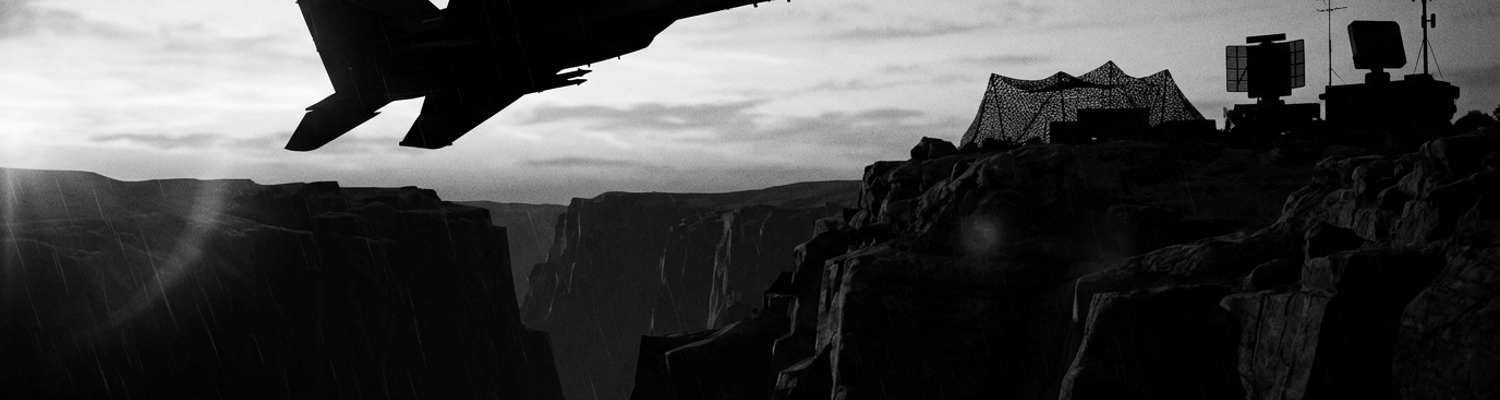

Northern No-Fly Zone Security and Iraqi Threat Posture
Supplying an entire displaced civilization perched on bare rock while holding off an armored army with thin air cover was a logistical impossibility from day one.
When examining the historical record, the crisis exploded in April 1991. Over one million Kurdish refugees fled into the freezing Zagros Mountains along the Turkish border. They were escaping chemical strikes and mechanized purges ordered by Baghdad. Iraqi Mi-24 helicopter gunships and T-55 tanks had flattened settlements across northern Iraq. Terrified families were pushed onto barren ridges at elevations exceeding six thousand feet. They had no water. They had no food. United Nations Security Council Resolution 688 established the international mandate. Combined Task Force Provide Comfort had to build the exclusion zone with raw firepower and transport wings. Coalition commanders drew a line across the map at the 36th parallel. This designated roughly nineteen thousand square kilometers of northern Iraq as a no-fly and ground exclusion sector. United States European Command pushed C-130 Hercules transports from Rhein-Main and Incirlik. They dropped thousands of cargo bundles onto narrow drop zones around Cukurca, Silopi, and Zakho. Paratroopers from the 10th Special Forces Group and 24th Marine Expeditionary Unit pushed down into the valley floors. They wrestled territory away from Iraqi regular army units to establish forward relief centers.
Baghdad watched every mile of that advance with loaded barrels.
A close review of operational logs indicates that the Iraqi military response south of the 36th parallel maintained maximum tactical friction against all coalition flight packages. Elements of the Iraqi Republican Guard massed heavy armor along the boundary line. Specifically, the Hammurabi Division and units of the V Corps out of Mosul and Kirkuk held these positions. Hundreds of T-72 main battle tanks, BMP infantry fighting vehicles, and 152mm artillery batteries occupied fortified revetments. These were within direct firing range of the allied humanitarian corridor. Iraqi air defense units positioned Spoon Rest and Straight Flush radar systems along the ridge lines south of Erbil. They actively painted coalition aircraft with target-tracking radar emissions. To check this armored wall, Combined Task Force Provide Comfort had to project air assets from Incirlik Air Base in southern Turkey. This staging base was located more than four hundred nautical miles to the west. Every standard combat air patrol required two to three aerial refuelings from KC-135 Stratotankers over the jagged peaks of eastern Anatolia. Fighters had to top off before they could even arrive on station over northern Iraq.
Fatigue cracked flight crews before their wheels touched down.
Archival evidence (NARA Record Group 338) shows that daily operations inside the Tactical Area of Responsibility demanded constant combat readiness. The enemy probed allied boundaries daily. Coalition F-15C Eagles from the 53rd Fighter Squadron and F-16C Fighting Falcons had to maintain overhead coverage. E-3 Sentry AWACS aircraft tracked both coalition packages and hostile contacts from high orbits inside Turkish airspace. On the ground, the Military Coordination Center operated out of Zakho. They sent small unarmed teams of allied officers across the tactical perimeter in soft-skin vehicles. They met directly with Iraqi commanders. They verified that heavy armor stayed south of agreed coordination lines. Iraqi forces constantly tested the perimeter. They moved mobile SA-6 and French-made Roland surface-to-air missile launchers within lock-on distance of allied ingress routes. Allied flight logs recorded dozens of unauthorized radar illuminations and small-arms fire incidents every week across the border checkpoints.
The pressure never stopped.
Terrain Masking and E-3B Sentry Blind Spots
A close review of operational logs indicates that at 0736 local time on April 14, 1994, a USAF E-3B Sentry AWACS departed Incirlik Air Base. The aircraft belonged to the 963rd Airborne Air Control Squadron. It was tasked to monitor the northern no-fly zone. Flown by a nineteen-member crew under the mission direction of Major Lawrence Tracy, the modified Boeing 707 airframe climbed east toward the rugged Anatolian highlands. By 0845, the crew established a standard racetrack surveillance orbit at an altitude of thirty-two thousand feet over southeastern Turkey. They set up roughly twenty-five miles north of the Iraqi border. Down below the E-3B, the AN/APY-2 rotodome swept across the sector once every ten seconds. It tasked enroute and tactical controllers at airborne consoles to monitor allied airspace entries. The mission profile required these operators to maintain full situational tracking over all Combined Task Force Provide Comfort aircraft traversing the boundary into northern Iraq.
The sky over eastern Anatolia was entirely cloudless.
When examining the historical record, two US Army UH-60 Black Hawk helicopters lifted off from Diyarbakir. They belonged to the 6th Battalion, 159th Aviation Regiment. Their mission was to transport twenty-six allied delegates and Kurdish liaisons to a coordination summit in Erbil. Identified under the tactical flight call sign Eagle Flight, the helicopters made radio contact with the AWACS enroute controller at 0822. Lieutenant Joseph Halcli logged their flight path while they routed south toward the tactical boundary. He assigned transponder codes and placed an operational rotary-wing symbol over the helicopters on the screen of Senior Director Captain Jim Wang. As the two Black Hawks checked through the border gate at Zakho at 0843, Eagle Flight descended to low altitude along the deck. Moving at one hundred and thirty knots, the helicopters dropped below the high ridgelines. They did this to avoid hostile Iraqi ground-fire batteries positioned south of the 36th parallel.
Archival evidence shows that mountainous ridgelines and deep river valleys in northern Iraq generated severe radar shadowing. This shadowing intermittently obscured the two US Army UH-60 Black Hawk helicopters from AWACS screens. The physical mechanics of pulse-Doppler radar at thirty-two thousand feet clashed directly with the fractured topography of the Zagros range. As Eagle Flight pushed into the Great Zab River valley, sheer limestone bluffs rising over seven thousand feet broke the line-of-sight electronic broadcast. The AN/APY-2 transmitter was rotating miles to the north. Radar returns bouncing off mountain peaks created intense ground clutter. This caused the pulse-Doppler processor to filter out the low, slow-moving helicopters as background terrain noise. Between 0846 and 0912, the AWACS tracking software dropped and regained the transponder data multiple times across thirty nautical miles of flight path.
Every turn through the river gorges erased the helicopters from the tactical displays.
When the radar track faded behind the mass of the Chia-e Zozik ridge, the automated target-tracking system inside the E-3B entered coast mode. It searched three consecutive sweeps before purging the position data. The tactical display at the airborne consoles dropped the green operational helicopter symbols. It did this without generating an audible drop-track warning to the surveillance operators. Wang and Halcli turned their attention north toward incoming combat air patrol packages. They assumed the Army helicopters had already touched down at an intermediate mountain landing zone near Dohuk. Transponder pulses from Eagle Flight continued broadcasting civilian Mode I, II, and IV military identity signals. The valley walls blocked those line-of-sight transmissions from reaching the E-3B receiving antennas. At 0915, the Black Hawks entered the central valley corridor completely invisible to allied air surveillance tracking.
They were flying blind on the scope.
Air Tasking Order Failures and Operational Stovepipes
A close review of operational logs indicates that the Combined Task Force Provide Comfort daily Air Tasking Order generated out of Incirlik Air Base failed. It failed to incorporate the specific flight itineraries and route timing of US Army Eagle Flight into the AWACS onboard mission database. Mission planning cells at Incirlik generated the daily Air Tasking Order through computerized scheduling mainframes. They focused almost exclusively on fast-moving fixed-wing combat packages, fighter sweep profiles, and tanker orbits. Army aviation assets from C Company operated out of Ganci Air Base in Diyarbakir. They fell under the tactical direction of the Military Coordination Center in Zakho. Because the helicopter detachment handled ground-liaison transport rather than offensive air combat, Air Force planners routinely relegated rotary-wing flight schedules to disconnected paper administrative annexes. They did not enter them directly into the primary mission database tape loaded onto the E-3B Sentry. Flight crews of the 963rd Airborne Air Control Squadron boarded their aircraft with digital tracking systems that contained zero pre-programmed itinerary waypoints for the two UH-60 Black Hawks scheduled to enter northern Iraq.
Two separate command structures ran two separate air operations within the same boundary.
When examining the historical record, the mechanical transmission of mission data broke down at the administrative interface between ground units and air tasking cells. Army personnel submitted Eagle Flight routing requests forty-eight hours in advance. They used local telephone networks and courier drops to the Military Coordination Center. Staff officers at Zakho then routed those flight windows across the Turkish border to the joint headquarters at Incirlik. The Combined Task Force air operations division failed to transfer these entry times, assigned corridors, and transponder codes into the Computer Aided Force Employment system. This system formatted the operational air picture. Tactical air controllers aboard the E-3B Sentry received a printed mission schedule that listed the general presence of helicopters in theater. The onboard data processors received no machine-readable data tracks. If an airborne controller looked strictly at the tactical cathode-ray console displays, the northern Tactical Area of Responsibility appeared entirely devoid of scheduled friendly rotary-wing traffic.
No digital record existed inside the E-3B software architecture.
Archival evidence shows that rapid post-Cold War force reductions and compressed personnel rotation cycles created administrative disconnects. These disconnects separated Army aviation units and Air Force mission planners. Sweeping budgetary cuts across United States European Command after 1991 decimated permanent unit staffing. Operation Provide Comfort was forced to rely on short-term, ninety-day temporary duty deployments. Flight officers, tactical directors, and logistics planners constantly rotated through Incirlik from bases scattered across the United States and Germany. This left little time to establish cross-service cohesion or preserve institutional operating procedures. Air Force personnel from the 53rd Fighter Squadron at Spangdahlem Air Base cycled into Turkey for brief operational windows. They received fragmented local orientation briefings that fixated on Iraqi air defense sites rather than Army rotary-wing coordination. Army aviators based in Diyarbakir remained physically and administratively segregated from the fighter wings. They held separate morning intelligence reviews and operated under entirely different operational command chains.
Rosters turned over before working relationships could form.
A close review of operational logs indicates that these rotating service stovepipes directly undermined basic communications and identification protocols. Army helicopter crews operated primarily on VHF-FM frequencies to coordinate with ground teams and the Military Coordination Center. They lacked direct UHF Have Quick radio contact with overhead F-15C fighters. Air Force mission packages relied almost exclusively on ultra-high-frequency channels and AWACS vectoring. This left both branches deaf to one another across the border crossing points. Airspace control orders published by the Combined Task Force failed to mandate a shared, standardized procedure for validating Mode IV cryptographic friend-or-foe interrogator codes between rotary assets and combat air patrol leads. Command elements in Incirlik never reconciled these divergent operating doctrines. Daily flight safety depended on individual crew assumptions. On April 14, 1994, incoming fighter pilots entered the tactical sector expecting clear skies. They were guided by airborne controllers who possessed no computerized record of the two Army helicopters flying beneath the radar horizon.
Identification Friend or Foe Transponder Interrogation Failures
A close review of operational logs indicates that at 0922 local time, the lead F-15C Eagle initiated electronic interrogations. Flying under the call sign Tiger 01, Captain Eric Wickson targeted the unknown low-altitude radar contacts inside the Great Zab River valley. Wickson activated the AN/APX-76 interrogator system integrated into his Hughes AN/APG-63 radar. He transmitted interrogation pulse pairs across the 1030 MHz frequency band. Coalition task force air control orders mandated Mode I code 52 for friendly fixed-wing and rotary traffic entering the northern sector. Eagle Flight had been assigned Mode I code 42 by an enroute AWACS controller during their initial border check-in at Zakho. Tiger 01 broadcast interrogation pulses. The AN/APX-100 transponders on the two US Army UH-60A Black Hawks failed to return a valid electronic reply. The cockpit selector switches were dialed to an incompatible numerical code. Wickson toggled the interrogator to Mode IV to trigger the classified military cryptographic channel. No valid signal came back.
The transponders stayed silent.
Army communication security personnel in Diyarbakir and Air Force planners in Incirlik had loaded non-synchronized cryptographic key variables into their respective systems. They used KYK-13 electronic fill devices (National Security Agency specification). This prevented the Black Hawk transponder processors from decoding the incoming interrogation pulses. Physical masking from the sheer limestone walls of the canyon broke the remaining line-of-sight electronic waveforms. This ensured the interrogator screens remained blank.
Archival evidence shows that thirty-two thousand feet overhead, the surveillance crew aboard the E-3B Sentry watched the tactical picture deteriorate on their cathode-ray consoles. They did not intervene. Senior Director Captain Jim Wang and Weapons Director Captain Kenneth Joyce observed the tactical radar tracks of Tiger flight converge directly toward an intermittent return. This return was designated near the mountain settlement of Kani Masi. That intermittent radar return corresponded to the two Black Hawks. Earlier that morning, AWACS controllers had manually tagged that identical flight profile with a friendly rotary-wing symbol. Terrain masking then dropped the contact from active computer tracking. Wang failed to warn the fighters that friendly helicopters were operating along the floor of the riverbed. When Wickson transmitted over the UHF Have Quick net that he had visually acquired two hostile Iraqi Hind helicopters, the AWACS crew sat in silence.
Nobody pressed the microphone switch.
Airborne Mission Crew Commander Major Lawrence Tracy did not cross-examine the radar displays. He did not consult the printed administrative flight schedules detailing Eagle Flight itinerary to Erbil. Joyce acknowledged the radio transmissions without issuing a cease-fire or directing the fighters to break off their attack run. When examining the historical record, the breakdown of command discipline aboard the E-3B directly cleared the path for the missile launch. Combined Task Force rules of engagement required airborne controllers to declare an immediate cease-fire the moment an unidentified contact occupied airspace assigned to scheduled allied operations. Neither Wang nor Joyce ordered the F-15C pilots to stand down or verify their targets against the morning ground-liaison manifests. Wickson initiated a visual sweep at five hundred feet above ground level. He banked hard through the gorge alongside wingman Lieutenant Colonel Randy May to confirm the silhouette of the trailing helicopter. No warning came through his headset. Controllers at the airborne consoles possessed the active radar returns showing the fighters descending directly into the established flight corridor of Eagle Flight. They failed to broadcast a single alert over the guard frequency. At 0928, Tiger 01 locked an AIM-120A AMRAAM missile onto the lead UH-60A at a range of four nautical miles.
Visual Misidentification and the Missile Engagement Sequence
A close review of operational logs indicates that at 0927 local time, Captain Eric Wickson rolled Tiger 01 into a four-hundred-and-fifty-knot descent over the Great Zab River canyon. He dropped from three thousand feet down to five hundred feet above the valley floor to conduct a visual identification pass. Flying at near-transonic speed past the two slow-moving helicopters, Wickson scanned the airframes for mere seconds against the dark limestone bluffs. The two US Army UH-60A Black Hawks carried external stores support system pylon wings fitted with two-hundred-and-thirty-gallon external fuel tanks. This equipment configuration altered their broadside profile. In his brief visual window, Wickson mistook those horizontal fuel tanks and sponsons for the stub weapon wings of Soviet-designed Iraqi Mi-24 Hind gunships. Dark olive-drab paint and desert dust obscuring the fuselage further degraded optical recognition. This concealed the two-foot-wide American flag decals and orange door markings painted onto the helicopters. Wickson keyed his Have Quick transmitter, reporting two hostile Iraqi Hinds heading east toward the Kurdish regional perimeter.
His wingman confirmed the call.
When examining the historical record, Lieutenant Colonel Randy May banked Tiger 02 across the canyon rim to execute a trailing visual pass at four hundred knots. May swept past the rotary-wing aircraft from a lateral distance of fifteen hundred feet. He observed the dark camouflage patterns and low-slung fuselage lines through his cockpit canopy. Flight parameters prevented an extended look. May did not slow his fighter or close distance to verify tail rotor placement or identify national insignia. The wingman matched Wickson initial misidentification. He keyed his microphone to report tally-ho on two hostile Hinds. Neither pilot attempted to re-engage AWACS tactical controllers for tracking clarification. They did not cross-reference the known absence of Iraqi helicopter operations north of the 36th parallel that morning. Rules of engagement governing Provide Comfort required absolute positive visual confirmation before hostile fire. Both F-15C aviators committed fully to an offensive intercept based on fleeting, high-speed glances across an angular mountain trench.
Tiger flight cleared itself to fire.
Archival evidence shows that at 0928, Wickson repositioned Tiger 01 into an attack vector four nautical miles behind the trailing helicopter. Army flight records (Department of the Army Form 2408-13) identified this airframe as tail number 88-26060. The flight lead locked his AN/APG-63 radar onto the target. He depressed the weapon release button on his flight stick, launching a radar-guided AIM-120A AMRAAM. Accelerating past Mach 4 down the canyon corridor, the missile detonated its twenty-two-kilogram high-explosive blast-fragmentation warhead directly into the empennage of the rear Black Hawk. Detonation shockwaves severed the tail boom and main rotor system. This hurled the burning fuselage into the rock face below Kani Masi. Seconds later, May established an attack run against the lead Black Hawk, tail number 87-26000. The pilot was attempting an evasive low-level turn toward the canyon floor. At 0930, May uncaged an infrared-guided AIM-9M Sidewinder at an engagement range of one point five nautical miles. Tracking optics acquired the thermal heat signature of the twin General Electric T700 turboshaft engines. The missile struck the upper engine deck and detonated on impact, tearing the helicopter apart in mid-air.
Nobody survived the impact.
A close review of operational logs indicates that the dual missile strikes instantly killed all twenty-six military officers, diplomatic liaisons, and flight crew members aboard the two aircraft. The dead represented five allied partner nations participating in Operation Provide Comfort. Fifteen American personnel died, including five Army aircrew from the 6th Battalion, 159th Aviation Regiment, Air Force officers, and a United States Foreign Service officer. Five Kurdish political liaisons and translators perished. Four British military officers died, including Major Benjamin Hoskins. One French military officer and one Turkish Army officer were also killed. Impact patterns scattered burning wreckage across hundreds of yards of terraced hillsides. Smoldering titanium fragments and classified flight manifests were strewn along the riverbed. Turkish border observers and local villagers reached the crash coordinates within minutes. They discovered shattered rotor assemblies and burned equipment packages bearing standard United States military serial numbers.
The valley went quiet.
Congressional Inquiries and Subsequent Court-Martial Proceedings
When examining the historical record, the sudden loss of twenty-six allied personnel sent shockwaves across the capitals of the four coalition partner nations. United States Secretary of Defense William Perry received notice of the shootdown while attending international meetings. This triggered emergency briefings inside the Pentagon. President Bill Clinton initiated formal White House national security reviews. The presence of foreign delegates among the dead transformed a tactical fratricide into an acute diplomatic confrontation. In London, the British Ministry of Defence demanded a comprehensive explanation for the deaths of four British subjects. Paris lodged formal protests through diplomatic channels after learning that French Army Lieutenant Colonel Guy Demetz had perished in the trailing helicopter. Turkish military leadership in Ankara confronted United States European Command over the death of Colonel Ceyhun Ceylan, their designated representative to the Military Coordination Center. They questioned the basic competence of coalition airspace control over northern Iraq. Joint Chiefs of Staff Chairman General John Shalikashvili faced immediate demands from allied governments for access to all flight tapes, radar telemetry, and voice recordings recovered from the crash site.
Diplomatic cables flooded Washington before rescue teams finished recovering the bodies.
Archival evidence shows that United States Air Force investigators, led by Major General James G. Andrus, published an Aircraft Accident Investigation Board report in July 1994. This document detailed twenty-seven separate human and procedural errors. Congressional committees seized upon the findings. They launched inquiries through the House Committee on National Security and the Senate Armed Services Committee. Lawmakers wanted to examine how two heavily armed fighters could mistake two friendly aircraft in broad daylight. They tasked the General Accounting Office with investigating why Combined Task Force Provide Comfort operated with uncoordinated identification frequencies and segregated planning architectures. Technical investigators established that the disaster did not stem from mechanical defects within the F-15C radar sets or the UH-60 transponders. It stemmed from administrative breakdowns that permitted the Air Tasking Order to bypass Army aviation schedules entirely. Testimony delivered before Capitol Hill committees exposed how post-Cold War budget cuts and rapid personnel turnover had degraded joint training doctrines between the Army and Air Force.
Congress pushed the Pentagon to hold specific individuals criminally accountable.
A close review of operational logs indicates that the United States military responded by initiating Uniform Code of Military Justice proceedings against five AWACS controllers and two fighter pilots. Air Force prosecutors charged Captain Eric Wickson and Lieutenant Colonel Randy May with dereliction of duty and negligent homicide. They were accused of pulling the triggers without verifying their targets. Lieutenant General Eugene Santarelli, commander of the Seventeenth Air Force, conducted Article 32 hearings to weigh the charges. Wickson received transactional immunity in exchange for his testimony. Santarelli dismissed all criminal charges against May, concluding his visual identification matched an honest mistake of fact. Charges were likewise dropped against tactical controllers Captain Kenneth Joyce, Captain Steve Piper, and Lieutenant Joseph Halcli. Only Senior Director Captain Jim Wang faced a general court-martial. He was brought to trial at Tinker Air Force Base in Oklahoma on three counts of dereliction of duty for failing to warn the fighters about Eagle Flight.
Every military jury rejected criminal accountability for the tactical operators.
When examining the historical record, Wang was acquitted on all charges in June 1995. This left the United States armed forces with zero criminal convictions for the deaths of twenty-six individuals. The acquittal shifted the entire focus of the tragedy onto systemic command failure. Military reviews acknowledged that Combined Task Force Provide Comfort commanders, specifically Brigadier General Jeffrey Pilkington and Colonel James Herrel, had tolerated an operational environment where safety protocols eroded unchecked. Instead of facing courts-martial, senior flag officers and mid-level planners received administrative letters of reprimand or non-punitive admonishments. These administrative actions quietly terminated their promotion tracks. The Air Force subsequently overhauled its airborne warning doctrine. It enforced universal transponder encryption standards across joint operations. It reassigned oversight of Provide Comfort rotary-wing operations directly into the unified air tasking cycle at Incirlik.