
The Doctrine of Collision
The American Maritime Strategy of 1986 was a declaration of offensive intent. It discarded the defensive posture of convoy escort for a forward-deployed, aggressive doctrine. In the event of a European conflict, US Navy carrier battle groups and hunter-killer submarines would not wait for the fight. They would surge north to strike the Soviet Navy in its home waters. The primary targets were the heavily protected fleets and the ballistic missile submarines (SSBNs) forming the core of the Soviet nuclear second-strike capability. This American plan was a direct challenge to the Soviet bastion concept. The Soviet Navy, acknowledging the acoustical superiority of Western submarines, intended to consolidate its SSBNs into fortified zones in the Barents Sea and Sea of Okhotsk. These bastions would be sanitized by layers of surface warships, attack submarines, and land-based aircraft. The American strategy to proactively hunt these assets inside their supposed sanctuary was a fundamental threat to Soviet strategic planning.
The North Atlantic was the designated arena for this confrontation. A close review of operational planning reveals the geographic lynchpin of this entire strategy: the Greenland-Iceland-United Kingdom (GIUK) gap. This series of straits formed a critical chokepoint. The Soviet Northern Fleet, based on the Kola Peninsula, had to pass through it to threaten the sea lines of communication between North America and Europe. For NATO, controlling the gap was a paramount objective. This control was a multi-layered effort. It involved fixed Sound Surveillance System (SOSUS) hydrophone arrays on the seabed, constant patrols by P-3 Orion maritime surveillance aircraft flying from Keflavik in Iceland, and the silent hunting missions of American and allied attack submarines. The corridor was the gateway for the Soviet Navy to project power into the Atlantic. It was also the primary line of defense for NATO’s reinforcement capabilities. Exercises like Ocean Safari '87 were conceived as full-scale tests of NATO's ability to surge forces into this region, hunt Soviet submarines, and establish sea control against the full might of the Northern Fleet. The exercise was designed to push carrier battle groups, like the one centered on the USS Forrestal, farther north than ever before, operating in the challenging fjords of Norway to simulate attacks on Soviet territory. This high-stakes environment imposed a relentless demand for readiness upon the personnel of the fleet. The offensive nature of the Maritime Strategy required a state of constant alert that blurred the line between peace and war. Fleet records from the period show an operational tempo that stretched crews and machinery to their limits. Deployments were long. The environment of the North Atlantic was unforgiving, with cold temperatures and violent seas adding a constant physical strain to the psychological one. Life aboard a warship was a repeating cycle of drills, all while executing the primary mission of tracking Soviet movements. Soviet surveillance aircraft and tattletale intelligence-gathering ships were a constant presence, shadowing NATO fleets and adding to the tension. A hot war could be moments away. The pressure to maintain peak performance from complex systems in a corrosive saltwater environment was immense. For the individual sailor, this meant long hours, sleep deprivation, and extended separation from home, all under the knowledge that they were on the front line of a potential global thermonuclear conflict.
The High Tempo of Ocean Safari
Operational logs for Ocean Safari '87 (OS87) document an exercise of enormous scope. The scenario was a direct test of the forward-leaning Maritime Strategy. Over 150 NATO warships participated. The central element, Carrier Battle Group Six centered on the USS Forrestal, was tasked with pushing farther north than American carriers had operated before, deep into the Norwegian Sea. The objective was to simulate the establishment of absolute sea control in the face of a full-scale Soviet naval response. A key phase of the exercise involved the Forrestal battle group penetrating the complex and constricting fjords of Norway. From these sheltered but geographically challenging positions, Carrier Air Wing Six would practice launching simulated strikes against targets representing Soviet territory. A direct rehearsal for taking the fight to the enemy’s doorstep. The operational area was unforgiving. A region known for violent seas and sub-zero temperatures, placing as much strain on machinery as it did on the ship’s crew.
This demanded a continuous war footing.
Archival evidence from squadron reports (specifically, VA-65 and VF-74 AARs) shows sustained high-alert conditions for the duration of the deployment. For the sailors on the Forrestal, the line between simulation and potential combat was functionally nonexistent. Flight operations were conducted around the clock. The constant catapult launches and arrested landings of F-14 Tomcats and A-6 Intruders created a perpetual state of controlled violence on the flight deck. Below decks, in the dimly lit Combat Information Center and sonar rooms, watch-standers spent exhausting hours hunting for simulated and, often, real Soviet submarines. Soviet intelligence-gathering ships, known as AGIs, shadowed the battle group relentlessly, while Tu-95 Bear reconnaissance aircraft made frequent and provocative passes. Every sensor contact had to be treated as a legitimate threat until proven otherwise, keeping crews at their stations for extended, draining periods.
Naval doctrine, with its clean diagrams and procedural checklists, offered little preparation for the disorienting physical and mental environment inside the steel hull of a warship at general quarters for weeks on end. Sleep was a rationed commodity, often limited to four-hour blocks constantly interrupted by the call to battle stations. The unceasing noise of engines, ventilation, and flight deck machinery combined with the violent pitching and rolling of the carrier in the North Atlantic swells induced a state of deep, systemic fatigue. For the men tracking contacts, the knowledge that Soviet Victor-class hunter-killer submarines were actively attempting to penetrate the carrier’s defensive screen during the exercise was not an abstraction. In the claustrophobic confines of the ship, the hunt felt entirely real. It bred a unique strain born from the combination of intense focus, physical exhaustion, and the underlying awareness of being a primary target in a potential global conflict. The performance of the crew under these conditions was officially commended, yet internal reports would later show the deep cracks forming in the ship's morale.
The Unacknowledged Lifeline
Naval logistics doctrine in the 1980s was a science of material readiness. The flow of fuel, ordnance, and critical repair parts to a carrier battle group at sea was the central problem that services like Carrier Onboard Delivery (COD) were designed to solve. In this rigid hierarchy, personal mail was officially cargo. But it was cargo without a priority designation. It occupied a space below the essential components needed to keep F-14s flying and radars functioning. This created an unacknowledged dependency. Fleet readiness, as measured on paper by operational availability of aircraft and weapons systems, failed to account for the direct correlation between the psychological state of the crew and their ability to execute complex, high-stress tasks. The system assumed that a sailor was a constant, a human component that would function to specifications as long as they were fed and rested. The consistent delivery of mail was not codified as a factor in combat effectiveness. This doctrinal blind spot treated the primary input for personnel morale as a non-essential luxury, creating a systemic fragility that would only become apparent under extreme operational pressure.
This was a critical oversight.
For a sailor aboard the USS Forrestal during the high-tempo operations of Ocean Safari '87, a letter from home was a tether to reality. Life on the carrier, pushed far into the Norwegian Sea, was a disorienting experience of sleep deprivation, constant machinery noise, and the perpetual tension of being hunted by real Soviet submarines. In this claustrophobic, all-male world of gray steel, mail call was the most significant event of the day. The announcement over the 1MC speaker system would send a ripple of anticipation through the ship’s 5,000-man crew. It was not simply news; it was the tangible, physical proof of a world beyond the endless watches and drills. Letters, photographs, and cassette tapes from wives and children provided a narrative counterweight to the intense, isolating focus of the mission. When this connection was severed, the effect was corrosive. A missed letter meant a void, which was quickly filled by anxiety and worst-case scenarios, a damaging distraction for a flight deck crewman guiding a multi-million dollar aircraft or a sonar technician trying to classify a faint underwater contact.
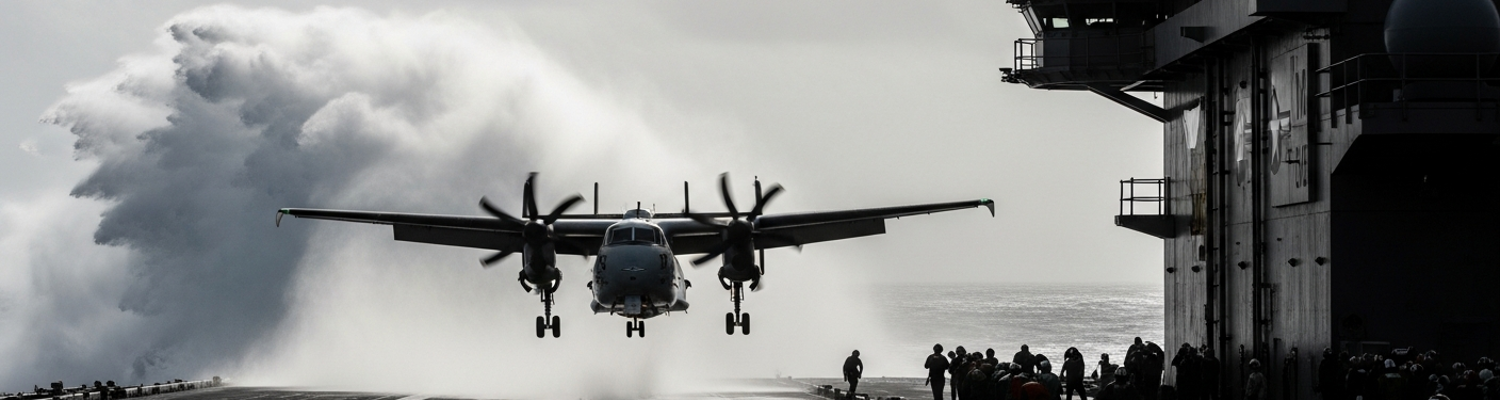
The logistical chain for delivering this non-materiel support was inherently vulnerable. The journey of a letter began at a Fleet Post Office (FPO) in the United States, from where it was flown to a European shore base, such as Naval Station Rota in Spain. There, mail for the entire battle group was sorted and palletized, awaiting a flight on a C-2 Greyhound COD aircraft out to the carrier. During Ocean Safari '87, a combination of high-tempo flight operations, the far northern operating area, and persistent bad weather created a perfect storm for logistical failure. The limited number of available C-2 flights were consistently prioritized for mission-critical hardware. Spare parts for aircraft, avionics components, and other materiel deemed essential to the exercise. Command decisions, driven by the minute-to-minute demands of the operation, repeatedly bumped mail pallets in favor of machinery. Mail delivery slowed to a trickle and then stopped entirely, with tons of letters and packages piling up in hangars ashore. The system, designed to sustain the warfighting capability of the carrier, ended up directly undermining the psychological endurance of the personnel required to operate it.
A Cascade of Failures
The logistical architecture supporting Ocean Safari ’87 was stretched to its mechanical and geographical limits. The official process for delivering mail to the fleet was a multi-stage relay. A letter destined for a sailor on the USS Forrestal began its journey in the United States civilian postal system, eventually arriving at an FPO on the East Coast. From there, it was flown as military cargo to a primary European naval hub. For the Forrestal battle group, this hub was Naval Station Rota in Spain. At Rota, all mail for the deployed units was consolidated, sorted by ship, and packed onto standardized cargo pallets. The final, critical link in this chain was a C-2 Greyhound COD aircraft. These twin-engine turboprops were the workhorses of the fleet, designed to carry up to 10,000 pounds of cargo from shore bases directly to the carrier’s flight deck. The extreme northern operating area of OS87, however, placed the Forrestal at the far edge of the C-2’s effective operational range, demanding perfect conditions for every flight.
This intricate system collapsed.
The breakdown was not a single event, but a cascade of failures driven by command priorities. A close review of naval logistics doctrine from the period shows that mail, while recognized as important for morale, was officially classified as low-priority cargo. During Ocean Safari '87, the high tempo of flight operations and the constant cat-and-mouse game with Soviet forces led to an increased demand for mission-critical supplies. The limited payload capacity of each C-2 Greyhound flight became a zero-sum calculation for the battle group’s logisticians. When a choice had to be made between a pallet of mailbags and a replacement avionics package for an F-14 Tomcat, a spare part for a critical shipboard radar, or a replacement jet engine, the machinery of war always took precedence. The severe weather common to the Norwegian Sea further constricted the number of safe flight windows for COD operations. Mail pallets were repeatedly bumped from flight manifests. What began as a one-day delay spiraled into a week, and then longer, as tons of mail for the Forrestal and its escorts began to accumulate in hangars back at Rota.
The problem was made significantly worse by disruptions occurring within the United States Postal Service (USPS) itself. Archival reports from 1987 indicate the USPS was facing considerable internal challenges. The service lost as much as $225 million in fiscal year 1987, a year in which it had projected it would break even. This internal turmoil had a direct impact on the military postal system, which was an extension of the civilian service. Delays and inefficiencies in domestic sorting centers meant that mail destined for the FPO system was not arriving in a steady, predictable stream. It often arrived in large, uncoordinated batches, creating backlogs before it even entered the military logistics chain. The USPS was also reeling from the aftermath of the 1986 Edmond, Oklahoma, post office shooting, an event which prompted massive internal and congressional investigations into the service’s workplace environment and safety practices throughout 1987. This combination of financial instability and internal review created an environment where efficiency was degraded, compounding the delays for mail heading to the fleet. The result of these compounding failures was a complete severance of the psychological tether that connected the 5,000 men aboard the USS Forrestal to their homes. While the crew was pushed to its physical and mental limits, the primary conduit for their morale had been cut. The tangible evidence of this failure was a mountain of canvas mail sacks sitting dormant on Spanish tarmacs.
The Crisis Onboard
The decay in crew well-being was rapid. The intense operational pressure of Ocean Safari '87, which had been sustained by adrenaline and professional focus, gave way to acute and widespread stress once the primary link to home was severed. In high-stakes environments like the Combat Information Center, where sailors were responsible for tracking Soviet submarines, the lack of mail manifested as a corrosive distraction. Watch-standers, already subsisting on limited sleep and fighting exhaustion from the constant, violent motion of the ship, now contended with a rising tide of anxiety about their families. This mental fatigue led to a documented degradation of performance. Anecdotal reports from department heads noted an increase in minor errors, a loss of focus during critical watch-keeping periods, and a general sense of apathy spreading through the enlisted ranks. The stress was not confined to watches. Berthing compartments, already tense and overcrowded, became pressure cookers of anxiety as sailors speculated on the reasons for the silence from home, with worst-case scenarios filling the information void.
This psychological strain quickly translated into a breakdown of military discipline. Ship records from the period following the mail cutoff indicate a sharp increase in reports of minor insubordination and interpersonal conflict. The ship’s command structure found itself dealing with a surge of disciplinary infractions that signaled a significant erosion of good order. Arguments between sailors on the mess decks became more frequent and heated. Junior enlisted personnel, pushed to their physical and mental limits, were increasingly cited for disrespect to a non-commissioned officer following exhausted, short-tempered responses to routine orders. The number of sailors appearing at Captain’s Mast, a non-judicial disciplinary hearing for minor offenses, rose significantly. The offenses were typically petty, involving failure to report for a work detail on time or uniform infractions, but their frequency pointed to a crew that was collectively disengaging from the standards of military conduct. The system had failed to recognize that the psychological contract with its sailors was as important as any mechanical system, and its breach resulted in the predictable decay of the ship’s internal cohesion.
The ship’s medical department became the final repository for the crisis. A review of sick bay logs from this timeframe shows a substantial increase in personnel reporting with symptoms directly attributable to mental and emotional strain. The medical staff was inundated with sailors complaining of debilitating migraines, persistent insomnia, and overwhelming exhaustion that went beyond simple fatigue. These were psychosomatic manifestations of the intense, unresolved stress permeating the carrier. Medical personnel noted a significant uptick in requests for light duty or a temporary reprieve from demanding watch stations, particularly those on the flight deck or in the noisy, claustrophobic engineering spaces. This surge in medical visits placed an additional burden on the remaining healthy crew members, who had to cover the duties of their ailing shipmates, accelerating a cycle of exhaustion and burnout throughout the Forrestal and its escort ships. The crisis had moved beyond a simple matter of morale and become a quantifiable medical event that threatened the operational readiness of a front-line naval asset.