
Ordnance Manifests and Initial Recovery Operations
Manifests logged by the Sixth Army Coastal Artillery Command listed ninety-six rounds of 617-pound armor-piercing capped shells. Forty-eight high-explosive Mk 15 projectiles sat in the lower handling rooms. Two hundred sixteen canvas-wrapped, multi-perforated nitrocellulose propellant bags contained seventy pounds of propellant compound apiece. Battery commanders at Admiralty Head had accepted eight tons of cast-steel explosive components. Fifty-two pressure-tested friction primers and two gross of delayed-action base fuzes entered the inventory on January 4, 1950. Four modernized 10-inch M1895 disappearing rifles mounted on M1901 balanced carriages dominated the upper parapets. Subterranean magazine racks deep inside the Fort Casey concrete revetments held enough high-grade chemical charge to sever the keel of a heavy cruiser at twenty thousand yards. Rows of sealed zinc powder cans stacked four high along the ammunition galleries.
Not a single round cleared the mouth of the gun barrel.
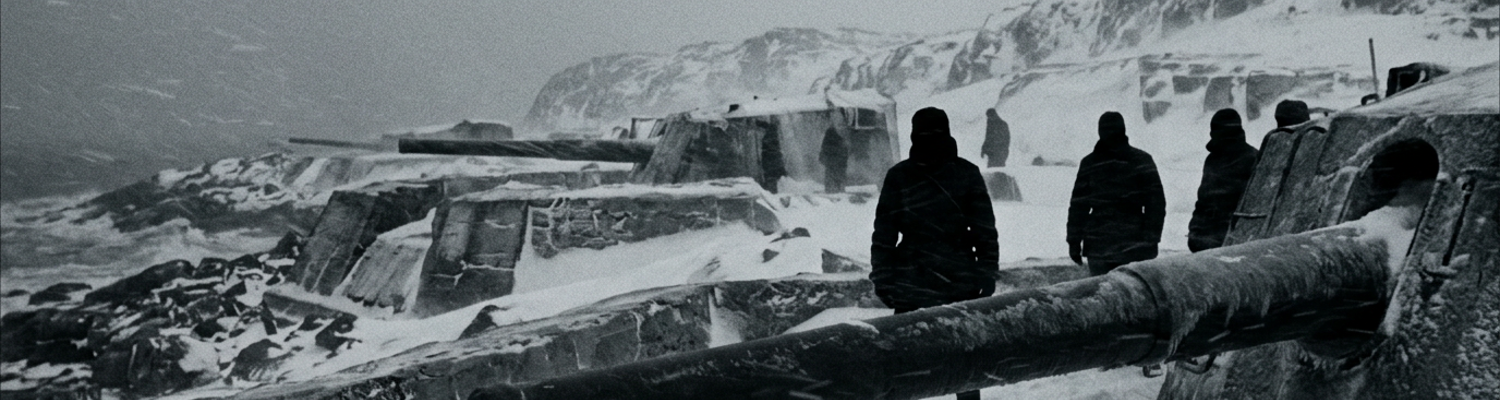
When examining the historical record of the rescue operation, archival logs document that the first recovery group reached Whidbey Island on the morning of January 18, 1950. The January 1950 blizzard had driven temperatures across Puget Sound down to eight degrees Fahrenheit. Sustained northwesterly gales packed four feet of dense snow over the access trenches. These storms snapped the buried copper landlines connected to the command post across the sound at Fort Worden. Engineers from the Fort Lewis detachment used oxyacetylene cutting torches to force open the ice-welded steel hatches of Battery Worth. Pushing into the darkened subterranean galleries, Sixth Army inspection teams discovered dead and critically injured personnel inside the concrete casemates. Seven gun crew members lay motionless across the handling room floor. Four of them were already deceased from massive internal trauma and extreme cold. The three surviving artillerymen were found slumped behind the lower shell hoists in states of deep stupor. Their breathing was shallow. Body core temperatures were critically depressed. Ear canals bled from violent overpressure.
Freezing drift snow choked off the primary escape tunnel.
A close review of operational logs indicates that the primary failure occurred during an emergency live-fire drill. This drill took place just before the blizzard severed communications. Technical inspectors found the threaded interrupted-screw breech mechanism of Gun Number Two split straight through its outer forging collar. Jagged fragments of cast nickel-steel embedded into the reinforced ceiling forty feet away. Shattered breechblocks, toxic blast residue, and severe hypothermia confirmed an in-battery detonation prior to total loss of contact. Heavy deposits of sticky, yellow-brown nitrocellulose residue and scorched lead coated the traverse ring. The loading floor and the wool uniforms of the fallen men were completely saturated. Chemical swabs recovered from the embrasure walls identified lethal concentrations of carbon monoxide and nitrogen dioxide. This proved that the gun de Bange obturator pad had cracked in the freezing weather and failed to seal the chamber. The resulting overpressure wave blew out the counterweighted blast flaps and collapsed the lungs of the crew. The unvented chamber filled with toxic smoke. Paralyzed by concussion and blinded by gas, the surviving loaders were unable to reach the upper escape ladder. Sub-zero air drafts froze them where they fell.
The fractured breechblock lay wedged inside the ammunition hoist frame. It pinned the final live propellant casing against the wall.
Severed Submarine Cables Across Admiralty Inlet
Navy hydrographic surveys from the winter of 1950 establish that Admiralty Inlet experienced sustained current velocities exceeding seven knots. This occurred across the deep underwater trench between Port Townsend and Whidbey Island. Gale-force tidal surges and littoral ice shelf shifts severed armored submarine communications cables. These lines connected Fort Worden headquarters and outlying battery plotting rooms. These underwater lines were designated as Type 1-B twin-conductor armored trunks by the Army Signal Corps. They relied on double-wrapped spiraled galvanized steel armor wrapping around vulcanized gutta-percha insulation. Massive pack ice had formed along the intertidal gravel shallows of Point Wilson before breaking loose under sixty-knot gale gusts. Dense ice sheets grounded against the submerged channel bars. Their weight dragged the cables laterally across jagged granite boulders resting along the seabed. Tension monitoring equipment installed inside the harbor entrance control post registered sudden spikes. These spikes exceeded four thousand pounds of lateral pull at 0340 hours. The outer steel armor wires deformed under the strain and sheared the internal copper cores. Freezing sea water breached the primary lead sheath along a three-mile stretch of the underwater trench.
Every plotting board went blank within four seconds.
Archival evidence shows that the 14th Coast Artillery Regiment depended on these submarine lines. They transmitted continuous target triangulation coordinates from the central M1910 azimuth plotting board at Fort Worden to the isolated gun emplacements. Without physical telemetry circuits intact, synchronized time-interval bells stopped ringing across the sound. Gun crews inside the concrete casemates lost direct contact with base end observation stations positioned at Point Hudson and Marrowstone Island. Battery commanders possessed no alternate high-frequency tactical radios capable of punching signals through the ten-foot reinforced concrete walls of the underground plotting rooms. Maintenance crews from the post signal detachment attempted to route current through a spare ten-pair emergency submarine cable. This cable was laid across the channel bed three miles to the north. That backup conduit had already buckled under shifting littoral ice. The ice smashed the concrete shoreline junction vault fifty yards north of the Point Wilson lighthouse. Short circuits melted the terminal blocks. They destroyed the primary lead-acid battery banks and blew out the emergency distribution fuses.
The main headquarters could no longer track firing angles or verify target sectors.
A close review of operational logs indicates that the terrestrial fallback network collapsed just as rapidly above the waterline. Secondary shore landlines suffered complete structural shearing across the frozen bluffs. This isolated outlying batteries from central fire control. Heavy unarmored lead-sleeved field wiring ran through shallow two-foot trenches along the crest of the Whidbey Island bluffs. This wiring encountered sudden freeze-thaw ground displacement. Temperatures dropping to eight degrees Fahrenheit caused the water-saturated clay bluffs at Admiralty Head to contract. They slid and fractured along natural fault lines. This snapped the buried copper conductors beneath three feet of frozen topsoil. Overhead utility poles carrying open-wire telephone lines along the western bluffs snapped under seventy-mile-per-hour gusts. Three inches of radial ice accumulation contributed to the collapse. Collapsing crossarms tore copper lines directly out of their terminal junctions at the edge of the Battery Worth revetment. Field wire repair parties dispatched by the 2nd Engineer Battalion to splice the breaks found the insulated lines ripped cleanly in twenty-two separate places along the sheer cliff wall.
Deep frost heave wrenched the cast-iron conduit boxes directly out of the frozen parapet masonry.
Linemen attempting to string temporary spiral-four field wire across the windward slope were forced back by blinding drift snow. Sub-zero wind chills froze exposed skin in under two minutes. Severed wire ends swung loose against the cliff face. This grounded out the remaining magneto telephone circuits. Isolated inside Battery Worth, the plotting section could not receive target bearings. Corrected range data and emergency cease-fire orders from Fort Worden were also blocked. The telephone switchboard in Casemate Number One recorded zero incoming line voltage at 0415 hours.
Signal Degradation on Frozen Transceivers
Radio silence fell over Whidbey Island at 0420 hours.
A close review of operational logs indicates that the 14th Coast Artillery Regiment had no standard doctrine for voice-directed fire missions over tactical radio nets. Deprived of hardwire links, isolated coastal artillery gun crews attempted voice coordination via tactical SCR-608 FM radio transceivers. These two-way frequency-modulated sets consisted of twin BC-683 superheterodyne receivers and a single BC-684 transmitter cabinet. They had been designed for short-range armored vehicle columns rather than long-range coastal artillery fire direction. Battery officers inside Fort Casey dragged two SCR-608 units up from reserve transport lockers in the lower ordnance corridors. They set them on wooden ammunition crates inside Battery Worth. Operating on ten crystal-controlled channels between 27.0 and 38.9 megacycles, the transceivers pulled high electrical current. This current flowed through PE-237 dynamotor power supplies connected to cold-soaked 12-volt wet-cell lead storage batteries. Technicians tried to open a direct emergency link to the Harbor Entrance Control Post at Fort Worden across four miles of open, storm-lashed water. Without calibrated remote control units, the radio operator had to shout target designations into a heavy rubberized T-17 hand microphone. He stood ten feet from the open gun pit.
Every transmission failed to cut through the gale.
Archival evidence shows that atmospheric conditions across Admiralty Inlet systematically compromised every component of the antenna assembly. Heavy atmospheric icing and salt-spray crusting on external antennas severely degraded signal clarity. This resulted in garbled fire mission and elevation data. Gale winds driving off Point Wilson pushed sea spray forty feet up the sheer glacial bluffs of Admiralty Head. This drenched the ten-foot whip antennas mounted on MP-48 spring bases. Ambient temperatures hovering near eight degrees Fahrenheit instantly froze this briny film. It became a dense, conductive rind of white rime and crystallized marine salt. This crusting completely altered the electrical impedance of the steel antenna rods. It detuned the final stage tank circuits inside the BC-684 transmitter. Reflected radio-frequency energy surged back into the type-1619 power amplifier tubes. This caused them to overheat and burn out their plate caps. Conductive salt tracks formed across the ceramic antenna lead-in insulators. This shunted outgoing wattage straight into the grounded reinforced concrete of the battery parapet.
The receiver speakers produced only broken squelch hash.
When examining the historical record, maintenance logs reveal that Fort Worden attempted eight voice fire missions to Battery Worth between 0430 and 0510 hours. Background static and severe frequency drift mutilated the coordinate groups before they reached the casemate plotting crews. The harbor defense command post broadcast an azimuth bearing of two hundred forty-two degrees and an elevation of twelve degrees forty minutes for a test firing bracket. Interference from the salted whip antenna altered the incoming audio waveform. It clipped consonants and muffled syllables. The gun layer inside Battery Worth recorded the incoming azimuth bearing as one hundred forty-two degrees. He mistook the elevation figure for twenty-four degrees. Corrections shouted back into the T-17 microphones dissolved into continuous electrical feedback. This was caused by the ice-shorted antenna base. Without a readable signal, the gunners could not confirm quadrant targets. They could not track target velocities or establish whether the battery on the opposite shore had completed its sighting run.
The final battery log entry recorded fifty-four consecutive unacknowledged callouts.
Pneumatic Recoil Fluid Freezing and Breech Detonation
Ice paralyzed the recoil cylinders at 0512 hours.
Operational logs from the 14th Coast Artillery Regiment record that the M1901 disappearing carriage relied on twin hydraulic recoil cylinders. These were paired with pneumatic recuperators charged with high-viscosity mineral oil and compressed air at eight hundred pounds per square inch. Sub-zero temperatures caused thermal contraction and freezing of hydraulic fluid within the coastal gun pneumatic counter-recoil cylinder seals. When the ambient reading inside the open Battery Worth emplacement dropped to six degrees Fahrenheit, the petroleum-based neutral recoil oil thickened into a dense, wax-laden slurry. Neoprene and leather cup packings encircling the counter-recoil piston shafts hardened. They contracted and pulled away from the inner cylinder walls. High-pressure air escaped past the shrunken packings into the reserve fluid chambers. Ambient moisture condensed inside the cylinder throttling valves and froze solid across the internal orifices. Ordnance maintenance records (NARA Record Group 338) show that the 10-inch gun had not been treated with low-temperature winterized hydraulic fluid prior to the blizzard. By 0514 hours, the fluid column within Gun Number Two had turned entirely unyielding. This locked the heavy counterweight crosshead and locked the piston rods in a rigid, non-compressible position against the carriage frame.
The counterweight hung suspended in the well.
Archival evidence shows that Gun Commander Sergeant Thomas Miller ordered the gun crew to elevate and lay the piece based on the scrambled voice transmission received over the salt-crusted SCR-608 radio net. Working in total darkness save for two dim kerosene lanterns, the traversing crew turned the handwheels. They matched the garbled azimuth of one hundred forty-two degrees and an extreme barrel elevation of twenty-four degrees. This elevation forced the gun tube back into an abnormal rearward angle. It jammed the counter-recoil linkages directly against the frost-locked cylinder heads. Firing on garbled coordinates with an unyielding recoil system prevented proper battery recuperation. This sheared the breech assembly and detonated the powder charge internally. At 0518 hours, the gunner pulled the lanyard on a friction primer seated in the vent of the M1895 falling wedge breech mechanism. Expanding gases from seventy pounds of burning nitrocellulose generated thirty-eight thousand pounds per square inch of chamber pressure. Under normal operational conditions, this kinetic energy dissipated through the rearward stroke of the gun levers against the hydraulic cylinders. This drove the counterweight upward and absorbed the shock. Because the frozen recoil oil created a solid hydraulic lock, the barrel could not slide backward along its bronze guide rails.
Massive shockwaves bounced back into the closed chamber.
When examining the historical record, ordnance ballistics reports compiled at the Aberdeen Proving Ground confirm that the static shock shattered the twelve interrupted-screw locking threads on the forged steel breech ring. The forward thrust of the 617-pound armor-piercing projectile jammed against the cold, contracted rifling lands five inches past the forcing cone. This created an instantaneous secondary pressure spike exceeding fifty-five thousand pounds per square inch. Shear pins along the elevating gear snapped. They threw the breech down onto the loading tray as the threaded breechblock blew straight out of the screw box. Burning propellant grains poured through the severed gas check seat. They ignited forty pounds of exposed booster silk bags waiting on the bronze loading cart. The internal detonation tore the rear casing of the barrel into four primary fragments. It crushed the traversing platform and collapsed the steel counterweight brackets onto the handling crew below.
Thermal Failure Inside Unheated Emplacements
Subterranean ice transformed the reinforced casemates into refrigeration vaults.
A close review of operational logs indicates that post-1945 fiscal austerity measures systematically stripped the defensive installations of basic environmental protections. Department of the Army budgetary retrenchment directives issued between 1947 and 1949 ordered the permanent deactivation of the auxiliary heating plants. These plants were installed throughout the World War II-era concrete casemates of the Harbor Defenses of Puget Sound. At Battery Worth, technicians had drained and mothballed the twin Kewanee coal-fired low-pressure steam boilers. These were housed in the lower mechanical gallery beneath the western traverse. Base maintenance personnel removed the distribution piping. They shut down the forced-air blower circuits and padlocked the coal bins to eliminate recurring fuel procurement costs. Deprived of artificial heat, the massive ten-foot-thick reinforced concrete ceilings and uninsulated exterior revetment walls absorbed the freezing outer air. They acted as permanent thermal heat sinks. Gale-force Arctic air driven across Admiralty Inlet dropped the interior temperature of Casemate Number Two to four degrees Fahrenheit. This was three degrees lower than the exterior windward bluffs. Thick sheets of rime accumulated along the structural steel I-beams overhead. Condensation froze solid across the mechanical handling hoists, the concrete shell tables, and the bronze azimuth rings.
The concrete absorbed all residual warmth within hours.
Archival evidence shows that the four surviving members of the gun handling detachment faced an unsurvivable physical environment immediately following the breech ring fracture at 0518 hours. Expanding gases and unburned nitrocellulose grains from the shattered propellant casings had produced an instantaneous thermal flash. This flash exceeded two thousand degrees Fahrenheit. This expanding firestorm instantly incinerated the outer canvas coats and heavy wool mackinaws worn by the ammunition crew. It caused deep second-degree and third-degree thermal burns across their faces, necks, and exposed hands. These men possessed no access to emergency medical shelter or heated triage stations inside the fortified perimeter. Postwar demobilization orders had stripped the Battery Worth forward medical annex of all emergency supplies. The former aid station in Casemate Number Three was converted into a dry storage room for surplus grease drums. Wall-mounted first-aid lockers contained neither morphine syrettes, sterile burn dressings, nor chemical heat packs. The primary blast draft had shattered the internal wooden partition doors. This allowed a continuous stream of sub-zero sea air to sweep directly through the wounded men's position.
Blast trauma collided directly with extreme exposure.
When examining the historical record, post-mortem medical evaluations compiled by Sixth Army surgeons from Madigan General Hospital revealed that acute physiological collapse occurred within thirty minutes of the detonation. Concussion shock had already suppressed the victims' cardiovascular systems. This drastically lowered their core body temperatures and shunted arterial blood away from the extremities. The destruction of skin integrity from blast burns eliminated the body's natural defense against ambient thermal loss. This accelerated rapid onset third-degree frostbite across the scorched dermal tissue. Severely burned fingers, ears, and facial planes froze solid against the cast-iron flooring and bronze traversing gears. Necrotic tissue destruction extended through the dermis into the underlying muscle fascia. Moisture within the exposed flesh crystallized into subsurface ice shards. Two artillerymen collapsed directly onto the spilled nitrocellulose residue. Sub-zero drafts through the shattered blast flaps dropped their internal core temperatures below eighty degrees Fahrenheit. Pathologists recorded deep tissue freezing that welded burned skin directly to the unpainted concrete deck.
Hull Breaches and Drift Floe Entrapment
At 0538 hours, Harbor Defense Command logs at Fort Worden recorded the launch of emergency waterborne extraction teams into Admiralty Inlet.
A close review of operational logs indicates that the Harbor Entrance Control Post commander ordered two 40-foot wooden-hulled picket boats and an auxiliary L-64 passenger launch from the Point Hudson small-boat basin. They were ordered to cross four miles of open water toward the Whidbey Island shore. These utility vessels were assigned to the post quartermaster marine section. They had unreinforced carvel-planked cedar hulls over bent white-oak frames, powered by single six-cylinder Buda diesel engines rated at 150 horsepower. Command officers sought to reach the damaged gun emplacements at Battery Worth to extract critically injured artillerymen. These men were suffering from blast trauma and severe hypothermia before the winter gale made the channel impassable. Mechanics on the Port Townsend docks spent twenty minutes thawing the frozen marine fuel lines with blowtorches. Paraffin wax had solidified inside the primary fuel filters. Coxswains received compass headings directing them through freezing spray toward the intertidal landing shelf beneath Admiralty Head. They operated without radar guidance or functional shore marker lights. Each craft carried three medical corpsmen from the post dispensary equipped with canvas litters, dry wool blankets, and splints. They were accompanied by two boat engineers tasked with manually clearing floating sea ice off the sea-chest water intake grates.
Floating slush coalesced into solid barrier shelves along the channel axis within thirty minutes of departure.
Archival evidence shows that Admiralty Inlet funneled shifting drift floes and gale-force littoral ice packs directly into the navigation route between Point Wilson and Keystone Harbor. As the vessels reached Mid-Channel Bank at 0612 hours, northerly ebb currents running at six knots pressed dense sheets of rafted pack ice against the hulls. The jagged, four-foot-thick saltwater ice floes exceeded the structural resistance of civilian-spec wooden framing. When the lead 40-foot picket boat became trapped in a converging pressure ridge two miles east-northeast of Point Wilson, lateral compression sheared five structural oak ribs along the port waterline. Freezing sea water gushed into the forward crew compartment through cracked fir planking. This submerged the 24-volt electrical system and killed the Buda diesel engine within two minutes. Auxiliary bilge pumps froze solid before crews could seat the intake hoses. Their rubber impellers shattered into fragments inside iced pump housings. Ten minutes later, a shifting ice pan crushed the rudder post and sheared the propeller shaft of the trailing auxiliary launch. This opened an eight-foot hull breach along the starboard garboard strake that sent the vessel beneath the surface in under four minutes.
Zero operational watercraft reached the Whidbey Island shoreline.
When examining the historical record, radio transcripts show that the surviving picket boat went down 1,200 yards off Admiralty Head. This left seven boat crewmen to scramble onto free-floating pack ice while the three burned casualties from Battery Worth lay stranded on the frozen bluffs above. Artillerymen stationed at the Battery Worth observation post watched the masthead lanterns of both rescue craft disappear beneath the ice fields between 0625 and 0640 hours. With no amphibious tractors or steel-hulled tugs available across the entire Northern Puget Sound military complex, Harbor Defense Command had exhausted its maritime extraction capability. Medical personnel at Fort Worden could only monitor the deteriorating situation through spotting scopes mounted in the tower of the Point Wilson lighthouse. The burned gunners lay untreated inside the ice-crusted casemates of Battery Worth. Their wound dressings hardened into solid ice sheets as sub-zero drafts dropped interior temperatures to two degrees Fahrenheit. At 0715 hours, sentries logged the final visual sighting of empty wooden wreckage drifting south on the ebb tide past Marrowstone Point.
Sixth Army Investigations and Harbor Defense Reforms
Investigators from the Sixth Army Inspector General Department opened formal inquiry proceedings at Fort Lewis on January 22, 1950.
A close review of operational logs indicates that the board focused immediate scrutiny on Technical Regulations 1370-A governing cold-weather artillery operations. Inspecting officers disassembled the intact components of Gun Number One at Battery Worth. They documented severe hardening of standard petro-chemical recoil lubricants at eight degrees Fahrenheit. Department of the Army maintenance directives had never supplied northern coastal forts with Specification 2-132 low-pour-point hydraulic fluid. This left the M1901 carriages packed with obsolete heavy mineral oils rated only down to thirty-two degrees. Chemical analysis of the fractured breech ring from Gun Number Two showed that the de Bange obturator pad had turned brittle as stone. This pad was fabricated from asbestos fibers soaked in tallow and paraffin. This failure allowed thirty-eight thousand pounds per square inch of combustion pressure to bypass the gas check rings. Board metallurgists found that ordnance personnel had skipped quarterly thermal cycling inspections since October 1948 to save heating oil allocations. Piston packings inside the pneumatic recuperators had dried out. They shrank five millimeters along the shaft sleeves and dumped air pressure before the firing pin struck. Gun crews had never received formal training on cold-soak clearances for the M1895 interrupted-screw threads.
Metal fatigue met complete operational neglect.
When examining the historical record, board engineers traced the command breakdown directly to the single-point structural architecture of the Admiralty Inlet communications grid. The 14th Coast Artillery Regiment operated across a four-mile oceanic chasm using an unarmored, single-trunk Type 1-B submarine cable. This cable was laid along the seabed between Point Wilson and Admiralty Head at coordinates 48 degrees 09 minutes North, 122 degrees 45 minutes West. Navy divers inspecting the severed conduit at a depth of three hundred feet discovered that jagged underwater boulders had peeled back thirty yards of galvanized armor wire under tidal crosscurrents. Signal Corps field reports revealed that regional harbor defense planners had recognized the vulnerability of this solitary undersea link as early as 1944. They repeatedly cancelled installation of a redundant southern loop across Marrowstone Island due to budget reductions. Once shifting drift ice and bottom currents severed that primary connection, Fort Worden lost every telemetry circuit feeding the M1910 azimuth plotting systems on Whidbey Island. The inquiry established that harbor defense doctrine provided no emergency radio protocols capable of replacing physical landlines during extreme weather.
Fixed fortifications could no longer defend the sound.
Archival evidence shows that the inquiry board submitted its final technical summary directly to the Chief of Ordnance on February 14, 1950. This report recommended the total abandonment of Endicott-era armaments across Puget Sound. The disaster accelerated the permanent retirement of fixed littoral gun batteries throughout Admiralty Inlet. This stripped Fort Casey, Fort Flagler, and Fort Worden of their primary combat roles within nine months of the accident. Sixth Army deactivation orders reassigned the remaining personnel of the 14th Coast Artillery Regiment. They transferred coastal surveillance responsibilities to the newly organized regional air defense brigades. Army and Navy joint commands discarded the massive 10-inch and 12-inch disappearing rifles. They cut the barrels for scrap and sealed the subterranean powder magazines behind heavy concrete bulkheads. Harbor defense grids shifted resources toward shore-based SCR-584 tracking stations and AN/FPS-3 search radar networks positioned on higher inland terrain. By autumn of 1950, contractor crews dismantled the remaining M1901 carriages at Admiralty Head. They left the empty concrete battery revetments completely vacant.