
Post-Mission Casualty Autopsy at Forward Aid Stations
At 0214 hours on April 9, the high-frequency tactical radio net collapsed along the southern edge of the Nazal district. This severed frontline infantry squads from the 1st Marine Division Combat Operations Center. The extraction corridor went completely silent.
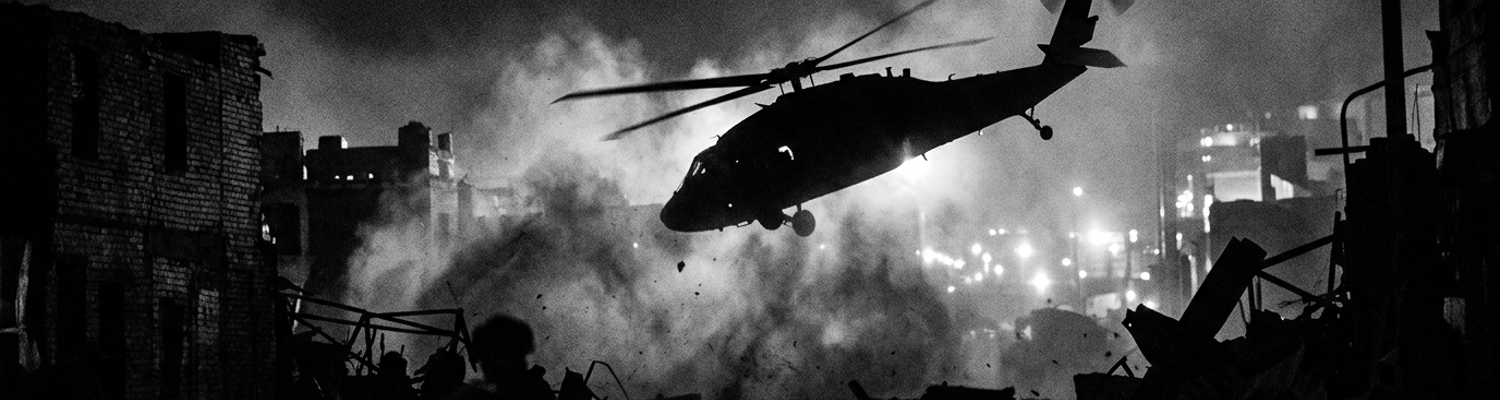
Archival evidence shows that twenty minutes after communications cut out, the surgical shock trauma bays at Camp Taqaddum began receiving the fallout. Dust-caked UH-60A Black Hawk air ambulances from the 571st Medical Company dropped out of the pitch-black sky onto the concrete aprons east of Lake Habbaniyah. Twin General Electric T700 engines screamed at full throttle. Litter bearers dashed into the swirling gravel. Marine and Navy medical teams inside the triage tents did not receive stabilized patients. They took custody of bodies sliding fast into systemic shutdown.
Blast trauma victims pulled from rubbled courtyards near Phase Line Fran had endured twenty minutes of extreme low-level transit without functioning monitoring equipment.
Medical officers logged deep hypothermia, profound acidosis, and unrecordable blood pressures across arriving casualties. Dark blood soaked straight through the canvas litters. It pooled inches deep across the aluminum cabin floors before ground staff could pull the patients clear.
Sand and plasma coated the concrete.
When examining the historical record of casualty intake logs, clinical autopsy notes indicate that physiological failure occurred directly inside the aircraft during low-level transit. Aviators from the 571st flew at altitudes under seventy feet and speeds surpassing one hundred knots. They threw the airframes into violent defensive rolls to break infrared locks from shoulder-fired Strela missiles and dodge bursts of 12.7mm machine-gun fire from rooftop positions. These severe maneuvers made procedural trauma care impossible inside the unlit cargo bays. Handheld suction canisters filled instantly with thick blood clots. This caused endotracheal tubes to misplace into the esophagus during high-G banking turns. Improvised wound packings and early friction-buckle tourniquets slipped off amputated limbs under the physical force of sudden descents.
Post-flight clinical evaluations cataloged fatal arterial exsanguination from junctional groin wounds. Tension pneumothoraces remained unrelieved because hollow decompression needles bent flat against rib cages as the floor dropped out from underneath the flight medics.
Violent flight dynamics overrode emergency medicine.
A close review of operational logs filed in the Army Awards Information Management System details the mechanical violence medics endured while attempting to keep soldiers alive. Numerous valor submissions from the assault show medical personnel operating inside aircraft shaking violently from ground-fire damage to main rotor pitch links and tail rotor driveshafts. One flight medic wedged his combat boots against the internal cargo frame to pin down a convulsing casualty. He cut down a ballpoint pen casing to fashion an improvised cricothyroidotomy tube while fighting cyclical vibrations that shattered cockpit multifunction displays. Official records establish that medics performed blind finger thoracostomies by touch alone in complete darkness. They rammed fingers into pleural spaces while hydraulic fluid sprayed across the cabin and anti-torque pedals kicked violently under the pilots.
Sworn witness statements in the awards database confirm that medical crews routinely abandoned mechanical ventilators. They kneeled in pooled blood to compress manual resuscitator bags with their forearms while physically clamping severed arteries with bare fingers until the wheels touched down.
By 0500 hours, the triage ledger at Camp Taqaddum recorded nineteen casualty admissions from three consecutive 571st Medical Company sorties. Five patients were pronounced dead on arrival.
In-Flight Aeromedical Triage Failures and Equipment Breakdown
When examining the historical record of 571st Medical Company flight manifests during Operation Vigilant Resolve, cabin interiors filled with dense airborne debris the second the Black Hawks flared over pickup zones. Rotor wash churned powdered brick dust, pulverized gypsum, and burning oil soot directly through open cargo door gunner windows. The eight-foot-wide cabin space filled with grit before crew chiefs could slide the heavy armor panels shut. Airframe vibration reached severe mechanical thresholds across the twenty-minute transit corridors between the Euphrates river bridges and the Camp Taqaddum airstrip. The cabin deck shook at twenty-two hertz along the vertical axis while twin turbine engines pushed airspeeds past one hundred and twenty knots.
Under these violent oscillating forces, flight medics attempting basic airway control found the standardized endotracheal intubation protocol mechanically impossible to execute.
Laryngoscope blades chattered against broken maxillary bones. This fractured tooth fragments into posterior pharyngeal tissue. Blood-slicked vocal cords vanished beneath layers of masonry dust. Medics could not achieve an airtight seal with standard Asherman or petrolatum gauze chest dressings. The skin of blast casualties repelled adhesive backings due to heavy sweat, grease, and street debris. Open chest wounds aspirated contaminated cabin air with every respiratory effort.
Adhesive tape lost all stickiness against the dust-caked skin.
A close review of operational logs indicates that the breakdown extended directly into the aircraft avionics and communication suites. The low-altitude flight profiles required to survive direct insurgent ground fire along Route Mobile broke line-of-sight relays across both the AN/ARC-164 UHF radio and the AN/ARC-186 VHF frequency sets. Forward surgical teams stationed with Charlie Surgical Company at the shock trauma platoon compound never received standard nine-line medevac updates or patient status reports. Pilots stayed masked beneath ridge lines and desert canal banks at altitudes below fifty feet. Terrain features and concrete urban corridors blocked terrestrial repeater towers. Local tactical commanders on the ground lacked dedicated satellite communication channels to patch low-level air assets through to rear receiving hospitals.
Flight medics spent whole transit legs shouting patient blood pressure counts into dead internal intercom loops. They were completely cut off from medical direction or physician consultation at base aid stations. By the time pilots crossed the perimeter berm at Taqaddum, surgeons had zero advance warning regarding the blood cross-match quantities, surgical equipment sets, or chest thoracotomy trays required for arriving litters.
Surgical trauma bays at Taqaddum received no inbound data.
Archival evidence shows that clinical failure reached its peak because flight medics had to conduct invasive emergency interventions in total darkness. Strict blacked-out flight protocols across the Al Anbar battle space forbade even the momentary use of hooded red-lens penlights. Pilots reported these lights would wash out the third-generation night-vision goggles of the aircrew and draw heavy small-arms fire from anti-aircraft ambushes along the road network. Flying without an onboard assistant, a lone medic sat wedged between two double-stacked litter tiers. They diagnosed life-threatening tension pneumothoraces solely by feeling asymmetric chest expansion through dirty body armor.
Medics drove standard 3.25-inch 14-gauge intravenous catheter needles into casualty second intercostal spaces by blind tactile indexing alone. They struggled to find the sternal notch and mid-clavicular line while the aircraft banked hard to evade surface fire. When decompression needles seated improperly or bent on impact with ribs, trapped intrapleural air continued to collapse internal blood return uncorrected. First-generation nylon friction-adapter tourniquets loosened repeatedly as casualties seized from hemorrhagic shock. Medics had to grope in pooling blood with bare fingers to locate the femoral artery pulse and manually retighten wet windlasses before the aircraft touched down.
Maintenance logs recorded four bent decompression needles and two stripped windlass bands recovered from the blood pools on cabin floorboards after a single night sortie.
Tactical Reconnaissance Blind Spots and Approach Hazards
When examining the historical record of theater-level surveillance assets, the Joint Surveillance Target Attack Radar System created a lethal operational illusion across Multi-National Force-West command centers. High above central Iraq at thirty-two thousand feet, the Air Force E-8C JSTARS swept the Fallujah battlespace. Its twenty-four-foot ventral canoe housed an AN/APY-7 multimode side-looking phased array antenna. Mission crew commanders within the tactical operations center monitored synthetic aperture radar maps and Ground Moving Target Indicator displays. These systems were calibrated to track armored columns and logistical convoys along major supply routes.
The radar data processor relied on a strict Doppler clutter notch filter to cancel out ground returns. It discarded any physical track moving slower than four knots to suppress movement from windblown dust and desert scrub.
Insurgent fireteams operated entirely on foot. They moved through shattered alleyways and breach points across the Nazal and Shuhada districts at walking speeds of three miles per hour. Signal processing banks classified these dismounted mortar teams and infantry squads as natural surface clutter. Their signatures were erased entirely from intelligence screens. Tactical battle maps at the 1st Marine Division Combat Operations Center displayed empty sectors while entire insurgent platoons repositioned unmonitored beneath concrete residential compounds.
Radar processing algorithms rendered dismounted insurgent movement invisible.
Archival evidence shows that lower-tier tactical reconnaissance assets suffered mechanical and optical breakdowns that masked low-profile ambushes. Marine Unmanned Aerial Vehicle Squadrons flying RQ-2B Pioneer and RQ-7A Shadow drones over the urban center carried electro-optical and forward-looking infrared camera turrets. These turrets were restricted by standard-definition analog sensors. Baked by searing daytime desert heat, brick masonry walls, asphalt roads, and reinforced concrete roofs radiated intense residual heat late into the night. This thermal blooming phenomenon washed out infrared camera sensors. Entire neighborhood blocks on display monitors turned into flat, undifferentiated white sheets.
Insurgent cells exploited the physical blind spot by setting up concealed firing points beneath the dense date palm groves flanking the Euphrates riverbanks. RPG-7 anti-tank teams took cover under corrugated tin overhangs, carports, and second-story residential balconies along the western margins of the Jolan district. Foliage and sheet metal deflected the heat plumes of rocket crews. This prevented orbiting drones from detecting anti-armor teams aiming directly at low-altitude approach corridors.
Overhead optical sensors recorded only static thermal wash across the river groves.
A close review of operational logs indicates that rigid airspace deconfliction directives channeled medical aircraft straight into prepared anti-aircraft kill zones. Airspace control officers at the Direct Air Support Center established mandatory, narrow transit corridors running west from Camp Fallujah. These corridors were designed to prevent mid-air collisions with active 155mm howitzer trajectories and low-flying close air support jets. These mandated heading gates forced UH-60A Black Hawk crews from the 571st Medical Company onto low-level approach tracks crossing directly over unmapped ambush points in the eastern Askari and industrial sectors.
Medical airframes operated without defensive weapons. Doctrine mandated the removal of cabin door machine guns to retain protected medical status under the Geneva Conventions.
Insurgent cells positioned heavy 12.7mm DShK machine guns and multi-layered RPG-7 teams atop residential buildings flanking these exact flight paths. They anticipated the restricted flight profiles. Black Hawk pilots descending through eighty feet to locate infrared signal markers were caught in interlocking fields of fire from rooftop positions that intelligence logs had marked clear.
Post-mission structural inspections on April 10 logged forty-eight direct hits from 7.62mm and 12.7mm rounds penetrating the fuel cells and cabin decks of two medical airframes along the Askari approach corridor.
Zero-Illumination Navigation and Urban Landing Zone Perils
Archival evidence shows that during the opening nights of Operation Vigilant Resolve in April 2004, flight crews of the 571st Medical Company encountered atmospheric light readings that dropped to absolute zero lux. Thick cloud decks combined with municipal power grid shutdowns across the Al-Anbar Governorate stripped away all celestial and cultural ambient light. Pilots flew wearing AN/AVS-6 Aviator Night Vision Imaging Systems. These third-generation image intensifier tubes required at least some minimal background photons to multiply. Without infrared searchlight illumination from escorting gunships, the green phosphor displays degenerated into coarse visual noise known as scintillation.
Flight leads attempting to guide thirty-four-foot UH-60A airframes through urban corridors between the Euphrates River and the industrial zones lost the ability to distinguish building silhouettes from the open night sky.
Instrument panels inside the cockpit were chemically masked with low-transmission filters. The total absence of external contrast forced pilots to fly strictly on instruments while maintaining visual scans through narrow forty-degree fields of view. Forward air speed had to be cut below forty knots as crews strained to detect the edges of two-story residential rooftops.
Visual acuity through the phosphor tubes dropped from 20/20 to worse than 20/70.
A close review of operational logs indicates that the most acute danger occurred during the final descent phase into improvised landing zones inside the city center. When a twenty-two-thousand-pound Black Hawk flared between courtyard walls, the downwash generated by its fifty-three-foot rotor disc churned centuries of fine Mesopotamian river silt, concrete dust, and powdered brick into an opaque cloud. This particulate wall engulfed the aircraft within the final ten feet of wheel touchdown. Ground references vanished in an instant. This included infrared chemical lights placed by Marine forward air controllers and physical curb lines.
Pilots experienced immediate spatial disorientation. The swirling sand created visual illusions of lateral drift and backward movement even while the airframe maintained a level hover. Collective pitch adjustments had to be made purely by feel and vertical speed indicators. Radar altimeters lagged behind actual ground contact rates. Crew chiefs strapped into gunner wells hung their upper bodies out into the blinding dust cloud. They shouted continuous drift calls into the intercom to prevent the main landing gear from rolling over hidden curbings or dropping into open drainage trenches.
Rotor wash turned the touchdown zone into an opaque suspension of pulverized concrete.
When examining the historical record of casualty recovery missions near the government compound, urban structural clutter posed a constant threat to airframe integrity. Decades of unmapped civilian utility projects had left the airspace above Fallujah alleys strung with illegal, sagging 220-volt copper lines, heavy industrial power cables, and steel telephone wires suspended between residential rooftops. These thin obstacles remained invisible on night-vision goggles until the aircraft was inside twenty feet.
Aircraft were equipped with wire-strike protection systems featuring roof-mounted and belly-mounted serrated cutting blades. These mechanical cutters were designed strictly for taut, horizontal cables struck at forward flight speeds exceeding thirty knots. Slack wires simply snagged on forward avionics antennae, pitot tubes, or the landing gear struts. This threatened to pitch the helicopter forward during flare-outs. Piles of reinforced concrete rubble, exposed rebar lattices from destroyed perimeter walls, and abandoned civilian vehicle chassis ringed every designated pickup point. Main and tail rotor blades operated with clearance margins of less than thirty inches from solid brick structures.
Tail rotor blades cleared courtyard parapets by less than a meter.
Flight maintenance records from the 571st Medical Company recorded three separate wire-strike incidents and two damaged tail rotor cap assemblies during the first two weeks of April alone. Crew chiefs reported finding stripped aluminum wiring wrapped tightly around the swashplate linkages and rotor heads during post-mission turnarounds at Taqaddum. In one recorded recovery attempt east of the central market, a Black Hawk pilot had to abort an active litter loading cycle. The left main wheel settled onto an unstable pile of collapsed masonry, tilting the fuselage ten degrees toward an unreinforced residential wall.
Operational Doctrine Deficiencies in Asymmetric Urban Evacuation
When examining the historical record of theater medical doctrine in early 2004, Army field manuals enforced a peacetime interpretation of the Geneva Conventions that crippled tactical flight crews over the Euphrates corridor. Army Regulation 40-3 and Field Manual 8-10-6 dictated that UH-60A air ambulances retain red crosses on bright white square backgrounds across the nose, cabin doors, and belly. These national markings legally prohibited the mounting of M240H machine guns in the crew windows. Medical airframes flew completely defenseless.
Department of the Army planners maintained that arming air ambulances or assigning dedicated attack helicopter escorts would violate medical neutrality and draw enemy fire.
Insurgent cells across the Jolan and Nazal districts observed no legal conventions. Enemy machine-gun teams used the bright white enamel panels as zeroing marks for shoulder-fired RPG-7 rounds and 7.62mm PKM machine guns. Calls for dedicated attack aviation routinely stalled in multi-echelon airspace approval channels. This forced 571st Medical Company pilots to launch unescorted into active kill zones. Marine AH-1W SuperCobras were explicitly barred from riding shotgun alongside non-combatant hulls.
Red crosses served as aiming points rather than shields.
Archival evidence shows that inter-service structural friction split the evacuation chain between the street and the operating room. Marine Corps infantry units from Regimental Combat Team 1 and Regimental Combat Team 7 established battalion casualty collection points behind armored assault lines. They routed casualty reports through Marine tactical air control parties to the Direct Air Support Center. Army aeromedical evacuation companies belonged to the 18th Medical Command. They operated under a separate, rigid joint task force command tree that dispatched aircraft through an Army flight operations center at Camp Taqaddum.
Line-of-sight VHF-FM SINCGARS radios carried by Marine forward aid stations could not overcome urban structural attenuation to reach Army operations cells twenty miles to the west. Marine ground corpsmen transmitted nine-line evacuation messages. They used alphanumeric grid coordinates cross-referenced to local street phase lines. Army aviation dispatchers demanded standardized eight-digit military grid reference coordinates alongside designated clearance codes before releasing airframes. Helicopters orbited over desert staging areas while bleed-out casualties waited at improvised collection points inside the city. Marine radio operators shouted across incompatible tactical frequencies to establish positive identification.
Ground squads and flight crews operated on isolated radio nets.
A close review of operational logs indicates that the violent ambushes of Operation Vigilant Resolve in April 2004 triggered an immediate overhaul of forward triage doctrine and en-route life-support architecture. Flight crews recognized that the standard military occupational specialty 91W health care specialist lacked the emergency skills needed to stabilize blast victims inside vibrating, unpressurized cabins. Medics equipped with basic emergency medical technician skills could only offer crystalloid saline infusions. This diluted clotting factors and worsened lethal hypothermia in deep shock trauma cases.
The Surgeon General of the Army initiated emergency procurement programs to replace standard 91W flight assignments with critical-care qualified paramedics. These paramedics trained to administer tranexamic acid, insert surgical airways, and operate ruggedized transport ventilators such as the Impact Uni-Vent 754.
Field commands simultaneously rewrote tactical communication architectures. Aviation units ripped out legacy single-channel VHF avionics. They installed multi-band Harris AN/PRC-117F and Rockwell Collins AN/ARC-210 transceivers capable of bridging UHF, VHF, and dedicated satellite communication frequencies across joint service bands. By late April, ground collection points received secure frequency-hopping relays that tied directly into the Blue Force Tracking data feed. The tactical shift culminated when Third Army air planners officially stripped the non-combatant designation from specific urban extraction flights. They ordered armed escort packages to suppress rooftop ambushes along every night ingress corridor.