
NSC 68 Projections and Early Rearmament Realities
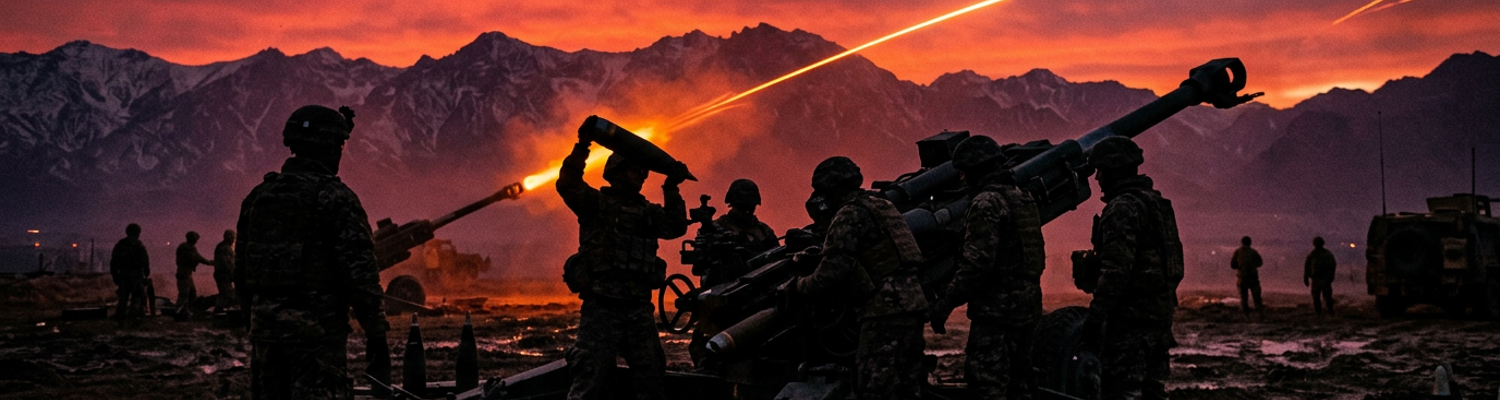
Granite ridges across the central Korean peninsula choked supply trucks and exhausted infantrymen long before they made contact with enemy positions. Subzero winds whipped through narrow mountain corridors, freezing motor oil in transport vehicles and locking the recoil mechanisms of towed howitzers in place. Narrow dirt roads carved along steep cliffs collapsed into deep mud under heavy vehicles, stranding field batteries on exposed river flats with minimal cover. Infantry units climbed vertical trails through dense snow, carrying basic field rations on their backs while relying on heavy artillery barrages to break massed enemy assaults. Forward gunners fired hundreds of high explosive rounds every night into the dark ravines to keep enemy battalions from overrunning isolated outposts in the valleys below.
Artillery shells expended during these intense defensive stands quickly drained the supply depots at the port of Pusan. The outbreak of the Korean War forced the United States Army to draw down finite World War II ammunition reserves while domestic shell factories remained largely in mothballs. Ordnance officers pulled weathered wooden crates of 105mm and 155mm rounds out of humid Pacific island storage dumps and Japanese supply yards, discovering rusted metal casings and decayed powder charges that failed to detonate upon impact. Factory complexes across the American homeland that once pressed brass cases and forged artillery steel remained completely idle because federal contracts had not funded their reopening.
Bureaucrats drafting National Security Council Paper 68 mandated a massive rearmament to counter Soviet military capabilities in April 1950, yet the document failed to budget for prolonged industrial lead times to restart those idle production lines. Policy makers in Washington drafted broad rearmament goals based on dollar amounts rather than the physical time required to retool heavy industry. Manufacturing specialized artillery shells required precision machine tools, casting dies, and chemical mixing facilities that took more than a year to rebuild from scratch. Officials working inside heated offices thousands of miles from the front lines treated national defense as a long range theoretical exercise, assuming that approved spending bills would quickly produce finished munitions for field units.
Procurement officers executing these approved spending bills initially prioritized strategic deterrence and heavy airframes over high volume production lines for standard ground artillery munitions. Military leaders assigned top priority and materials to long range atomic bombers and jet fighters, preparing for an all out global war in Europe rather than a grinding ground battle in Asia. Bureaucrats in the Pentagon processed supply requests through slow administrative channels, creating communication delays that kept senior officials ignorant of how rapidly field units consumed munitions. Battery commanders along the front lines responded by slashing daily fire allowances to less than twenty rounds per gun, leaving artillerymen to watch enemy columns maneuver across open slopes without firing a single shot.
Executive Findings of the NSC 114 Memorandum
Howitzer crews stacked empty wooden ammunition crates outside their sandbag revetments, forwarding daily expenditure logs up through corps headquarters into a bureaucratic pipeline that stretched across the Pacific. Senior staff officers at the Pentagon condensed these desperate battlefield deficits into statistical balance sheets for the National Security Council inside the White House. Executive Secretary James S. Lay Jr. submitted NSC 114 to President Harry S. Truman on August 8, 1951, to assess the status and timing of national security programs across all military branches. Production lines that were supposed to manufacture millions of high explosive shells remained stalled by raw material shortages, machine tool bottlenecks, and contract squabbles between the military services.
Machine tools required to shape forged steel billets into finished artillery cases sat on backorder across the industrial Midwest, delaying factory startups for months. Industrial analysts reviewing the data found that brass foundries, chemical blending vats, and projectile presses required nearly two full years to reach wartime production volume. War planners calculating factory outputs realized that the domestic manufacturing base could not supply munitions fast enough to replenish depleted homeland reserves and active Korean combat units at the same time. President Truman read detailed projections showing that American field armies would have to fight through the most dangerous phases of the Korean conflict on severe shortages of artillery rounds.
Staff officers serving under President Truman drafted strict overseas shipping quotas that prioritized defensive garrisons in Western Europe over the immediate combat needs of the Eighth Army in Korea. General Matthew Ridgway and his theater commanders sent urgent cablegrams warning that arbitrary expenditure caps crippled tactical operations and invited enemy counterattacks. Bureaucrats in the Munitions Board answered these field pleas by demanding extensive paper audits to justify every round fired, isolating the fighting troops behind administrative delays and rigid quotas. Ordnance officers in Washington dismissed these front line warnings as alarmist exaggerations, locking Korean supply allocations into fixed monthly ceilings that matched current factory outputs rather than combat realities.
Cargo freighters departing the port of San Francisco carried only a fraction of the high explosive tonnage that Eighth Army logisticians requested each week to meet those fixed monthly ceilings. Crates of 105mm and 155mm projectiles swung into cargo holds alongside official instructions ordering division commanders to ration their firepower even further. Transpacific supply ships spent nearly a month crossing the ocean to reach the supply piers at Pusan, where dockworkers transferred the small shipments onto northbound freight trains under armed guard. Forward gun crews received only enough shells to fire brief defensive bursts into attacking enemy waves, forcing artillerymen to bolt their howitzer breeches shut while hostile infantry overran friendly listening posts on the ridges.
Machine Tool Deficits and Industrial Bottlenecks
Artillerymen bolted those howitzer breeches shut because converted civilian assembly lines failed to produce basic replacement shells. Severe national deficits in specialized machine tools, cold extrusion dies, and heavy hydraulic presses crippled efforts to convert domestic factories into high explosive shell plants. Plant managers attempting to establish new casing lines discovered that precision boring lathes and massive metal stamping machines carried order backlogs stretching beyond a year. Civilian contractors lacked the heavy equipment needed to shape thick steel billets into aerodynamic projectile bodies without cracking the metal under pressure. Ordnance officers overseeing these plant conversions reported to Pentagon directors that shell production quotas could not be met until toolmakers built entirely new machining lines from the ground up.
Pentagon directors found their rebuilding schedules blocked when federal material administrators diverted raw metals away from defense contractors. National Production Authority allocations routinely directed high grade steel and brass to civilian and consumer sectors instead of dedicated ordnance forge facilities. Automobile manufacturers and home appliance companies consumed massive rail shipments of alloyed bar stock to satisfy consumer markets while government ammunition plants stood half empty. Federal administrators in Washington refused to impose strict wartime controls, fearing that stripping raw materials from domestic assembly lines would damage the post war economy. Ordnance inspectors could only certify small batches of rough shell casings each month because metal suppliers delivered second tier alloys that blistered and fractured during test firings.
Inspectors stacked the few surviving projectiles in warehouse storage bays because commercial suppliers failed to deliver the internal parts needed to make each round explode. Critical industrial components, such as point detonating artillery fuzes and propellants, faced procurement backlogs exceeding eighteen months across commercial suppliers. Chemical plants lacked the specialized nitrocellulose and stabilizers required to blend smokeless powder charges for heavy artillery, while instrument makers struggled to cut tiny brass clockwork gears for impact fuzes. Commercial subcontractors refused to disrupt profitable consumer product lines to retool for complex military fuzes without long term government guarantees. Assemblers had to halt final packaging lines because empty explosive cavities could not be filled with molten composition B or fitted with nose fuze threads.
Paperwork detailing these factory halts filtered slowly into isolated command offices at General Headquarters in Tokyo, where staff officers managed ammunition accounts based on theoretical production schedules rather than actual deliveries. General James Van Fleet sent urgent requests from Eighth Army forward command posts pleading for unrationed fire support to break Chinese mountain fortifications, but theater administrators responded with strict expenditure ceilings based on the eighteen month industrial delay. Distant planners shielded their decisions behind rigid administrative regulations, insisting that field batteries conserve remaining rounds until mainland factories reached full output years in the future. Battery commanders along the frozen front lines read the latest restriction cables, checked their depleted ammunition pits, and ordered their gun crews to dig secondary infantry trenches to defend the artillery positions with carbines and bayonets.
High Expenditure Rates and the Van Fleet Day
Lieutenant General James A. Van Fleet refused to let his artillerymen fight as stranded riflemen and instituted an aggressive firepower doctrine, dubbed the Van Fleet Day, designed to expend artillery steel rather than infantry lives. Field commanders received orders to drown hostile trench systems under continuous waves of high explosives, entirely disregarding the restrictive firing allowances issued by distant headquarters planners. Gun crews slammed shells into hot howitzer breeches around the clock, keeping enemy reinforcements pinned inside their reinforced bunkers and clearing paths for advancing American infantry battalions. Forward observers radioed back target coordinates across entire mountain sectors, directing batteries to sustain fire rates that exceeded standard barrel wear limits and warped recoil cylinders under relentless friction. Logistics clerks inside Eighth Army command posts calculated that this relentless tactical bombardment consumed several times the daily ammunition tonnages authorized by theater commanders in Tokyo.
Commanders directed artillery battalions to blast fortified enemy mountain positions along the Kansas Wyoming Line throughout the autumn 1951 offensives, expending 105mm and 155mm howitzer rounds at five times peacetime production rates. Battery loaders hauled heavy brass shell casings out of wooden packing crates day and night, their hands blistering through canvas gloves as they fed hundreds of rounds per gun into smoking barrels. Empty metal casings piled up around revetments in knee deep mounds, blocking weapon trails and forcing crews to clear firing pits with shovels between incoming fire missions. Van Fleet brushed aside bureaucratic protests from rear headquarters, ordering his artillery officers to keep their lanyard cords pulling whenever infantry patrols reported enemy movement on the slopes ahead.
Gunners pulling those lanyard cords during the battles for Bloody Ridge and Heartbreak Ridge drained forward operational stockpiles down to zero, forcing frontline batteries to consume emergency theater safety reserves. Infantry regiments clawed their way up the razorback crests under intense mortar fire, relying on continuous rolling barrages from massed 105mm and 155mm howitzers to shatter deeply buried timber and stone enemy bunkers. Supply sergeants at forward ammunition transfer points broke the red wax seals on emergency reserve crates without waiting for written authorization from the Far East Command. Gun captains unpacked these final emergency reserves in the mud, stacking the fuzed high explosive rounds right behind the breech blocks to sustain the defensive barrages through the night.
Supply officers across the port at Pusan reported their reinforced storage revetments entirely empty as those final emergency reserves rolled north toward the sound of the guns. Administrative officers in Tokyo scrambled to draft emergency requisition forms for the Pentagon, realizing that Eighth Army artillery had consumed the strategic reserve meant to sustain operations across the entire Pacific basin. Logisticians in Washington received urgent teletype demands for immediate resupply, but could only offer the same rigid allocations because domestic factories had not yet begun mass production. Battery officers walked down their gun lines, counted the few high explosive rounds left in the dirt, and ordered their gunners to set variable time fuzes by hand for the final defensive missions.
Frontline Ammunition Rationing and Battery Quotas
Fuze wrenches clicked against the nose cones of those final projectiles as Far East Command imposed emergency rationing chits that capped frontline 105mm howitzer batteries to strictly enforced daily expenditure limits. Couriers delivered these printed paper chits down through corps distribution centers, establishing legal ceilings that prohibited gunners from firing more than twenty to thirty shells per tube in a twenty four hour period. Battery clerks signed physical receipts for every single crate opened, balancing ammunition ledger books before supply officers would release the next day of fire support. Gun captains locked their remaining high explosive shells in timber reinforced bunkers, posting armed sentries outside the doors to prevent desperate forward observers from demanding unauthorized barrages. Supply sergeants at ammunition transfer points turned away empty battery trucks when unit commanders failed to present stamped paper authorizations from division headquarters.
Battalion commanders along the active sectors of the Second Infantry Division were compelled to deny counter battery and interdiction fire requests due to quota restrictions after division headquarters withheld those stamped authorizations. Forward observers spotted enemy mortar teams dragging heavy baseplates into open firing pits across the valleys, but battery fire direction centers refused to unlock their howitzers. Fire control officers calculated firing solutions on their plotting boards, only to store the coordinate cards inside wooden desk drawers under strict orders to conserve high explosive stocks for direct assaults. Hostile artillery crews operated with total freedom along ridgelines just three miles away, hammering American trenches because friendly howitzers could not fire a single counter battery shell without division approval. Infantry officers on forward outposts radioed urgent calls for harassing fire along suspected enemy troop trails, only to hear artillery controllers announce over the wire that the daily quota had expired.
Infantrymen facing those expired quotas reported that enforced artillery rationing left their outposts vulnerable to Chinese and North Korean massed assaults, driving up frontline casualties. Enemy assault battalions recognized the sudden silence of American artillery positions and advanced through open barbed wire fields in dense formations that howitzer fire would normally break apart in minutes. Isolated rifle platoons holding exposed bunkers on the crests had to repel repeated night attacks with small arms, light machine guns, and hand grenades instead of protective box barrages. Company commanders watched entire squads get overrun in their fighting trenches while the heavy 105mm guns sat cold in the rear valleys behind strictly monitored rationing ledgers. Wounded infantrymen filled forward battalion aid stations by the dozens each morning, suffering blast and shrapnel injuries that proper artillery interdiction would have prevented before the enemy reached the wire.
Medics loaded those injured riflemen onto transport ambulances while casualty reports traveled back to General Headquarters in Tokyo, where isolated staff planners reviewed the rising injury totals against their theoretical ammunition balances. Stifling administrative pressure forced division commanders to spend hours on field telephone lines, begging Eighth Army staff for emergency quota waivers while listening to the explosions of incoming enemy shells shaking their bunker roofs. Theater administrators working hundreds of miles away in Japan refused to release reserve stocks, instructing the field army to endure the quotas until industrial output from the United States could reach Far East ports. Logistics officers in Tokyo filed the emergency ammunition appeals into administrative storage cabinets and sent teletype instructions ordering Eighth Army artillerymen to continue rationing their remaining shells.
Forward Ammunition Supply Points at Wonju and Chunchon
Teletype machines chattered against wood tables in command tents near the central front, turning those rationing directives into practical nightmares for forward supply depots. Logistics officers managing forward Ammunition Supply Points near Wonju and Chunchon contended with washed out, single track mountain supply routes and severe vehicle shortages. Relentless rains and flash floods churned narrow dirt roads into thick mud, washing away timber bridges and trapping supply columns on exposed valley floors. Ordnance companies struggled to keep their transport units moving with less than half of their authorized two and a half ton cargo trucks because broken drive shafts, flat tires, and cracked engine blocks lined depot maintenance yards. Logistics teams watched these rare truck convoys crawl north at walking speeds, unable to deliver enough cargo tonnage to satisfy the basic daily needs of front line combat units.
Trucks arriving back at the transfer sidings found almost no fresh artillery shells to carry north because ammunition trains originating from the port of Pusan suffered systemic offloading backlogs along the Korean National Railroad, stalling shell shipments far behind combat echelons. Rail crews faced constant bottlenecks along the single main line running north from the coast, where blown culverts and damaged rail switches halted supply traffic for hours. Unloading yards lacked mechanical forklifts, hydraulic cranes, and industrial roller tracks, forcing Korean civilian laborers and American soldiers to lift each heavy wooden crate by hand off flatcars and out of boxcars. Empty freight cars piled up in secondary sidings because station masters could not clear tracks fast enough to send the rolling stock back to the southern docks. Station managers walked down the tangled lines of boxcars with clipboards, unable to move the stranded steel shells toward the artillery batteries running out of ammunition on the front lines.
Soldiers handling the small quantities of cargo that bypassed the stranded steel shells were forced into daily triage, often prioritizing small arms rounds over separate loading 155mm projectiles and propelling charges. Infantry commanders sent urgent couriers demanding millions of rifle, carbine, and machine gun rounds so rifle companies could fight off human wave assaults at close quarters. Crates of small arms ammunition took up very little cargo bed volume and could be unloaded and distributed in a fraction of the time required for heavy artillery munitions. Separate loading 155mm howitzer rounds presented an immense physical burden because each complete round required three different items shipped separately, a ninety five pound steel projectile, a fragile canister of propellant powder bags, and an individual primer. Forward logistics officers signed off on daily transport manifests that kept riflemen supplied with basic bullets, while heavy artillery batteries along the ridgelines remained starved of the big shells needed to break enemy defensive works.
Command Isolation and the Strategic Logistics Gap
Gunners manning those starved artillery batteries stood idle beside empty gun pits because strategic planners in Washington relied on macroeconomic production charts, remaining largely insulated from tactical ammunition shortfalls on the Korean front lines. Staff officers inside the Pentagon measured national defense capability through broad gross national product figures, total steel mill output, and projected federal spending rates rather than physical inventories at Korean supply depots. Civilian administrators serving on national production boards treated long range commercial contracts and factory forecasts as solid proof that the military supply pipeline functioned smoothly, remaining blind to the handwritten rationing ledgers that paralyzed forward batteries. Planners filled official binders with smooth statistical projections that made rearmament look steady on paper while failing to account for the ferocious rate of high explosive consumption required in mountain warfare. Senior officers inside the Pentagon examined macroeconomic graphs of raw national steel production, believing that expanding domestic blast furnace capacity ensured an adequate flow of munitions to combat divisions.
Clerks tracking actual ammunition expenditures for those combat divisions moved paperwork through a fractured administrative chain, where prolonged reporting delays across the Pentagon, Far East Command in Tokyo, and forward field headquarters obscured the severity of Eighth Army ordnance depletion. Ordnance sergeants at muddy supply points hand typed physical receipt totals onto carbon copy forms before loading them into courier jeeps that bounced slowly across washed out dirt roads toward corps headquarters. Corps logistics officers spent several days compiling these handwritten tallies into weekly theater manifests before transmitting the summary numbers by telegraph to General Headquarters in Tokyo. Theater logisticians in Japan held the incoming data for additional weeks of auditing and ledger balancing, cross checking requests against theoretical safety margins before forwarding formal replenishment appeals across the Pacific. Communication lines between these command tiers broke down into sluggish bureaucratic cycles, ensuring that forward supply deficits grew worse long before distant staffs processed the initial warning cables.
Commanders sending those initial warning cables realized that factory mobilization schedules produced in Washington projected mass shell deliveries for late 1953, and the operational disconnect between long range industrial mobilization schedules and immediate combat survival forced ground commanders to compromise tactical objectives. Field commanders fighting along the central front could not wait two years for domestic plants to finish tooling hydraulic presses and installing heavy boring lathes. Division generals abandoned planned offensive assaults against heavily fortified enemy hilltops because artillery battalions lacked the high explosive rounds needed to demolish reinforced log bunkers and clear barbed wire approaches. Regimental officers canceled aggressive combat patrols into adjacent valleys and pulled rifle companies back into static defensive lines to prevent infantrymen from engaging hostile waves without indirect fire support. Gunners piled empty ammunition crates into protective breastworks around their silent artillery pieces, watching hostile patrols march across the valley floor in broad daylight while fire direction centers kept the lanyard cords coiled in the mud.