
Amphibious Ready Group Alfa and Tonkin Patrols
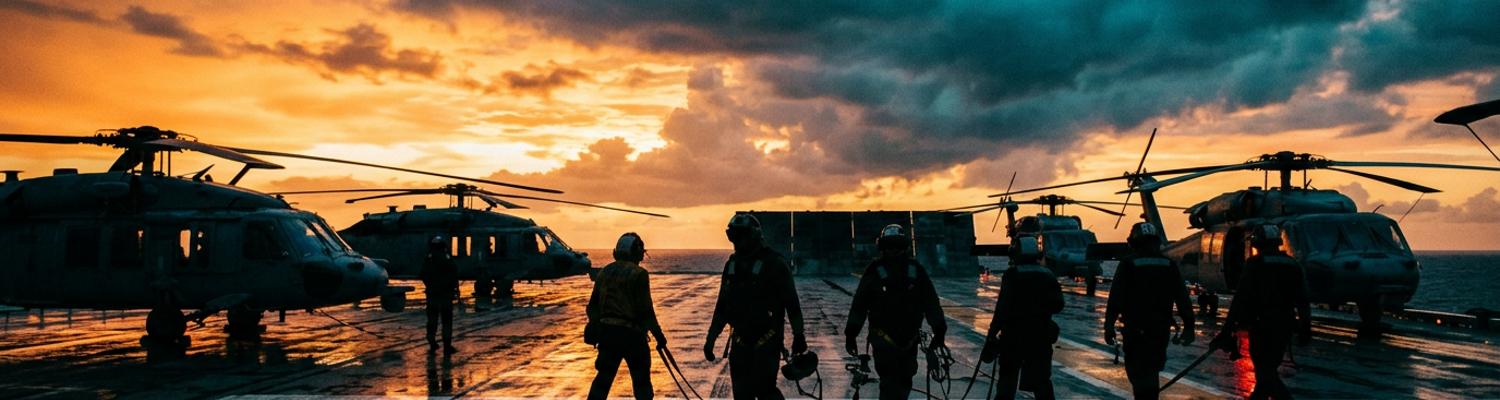
Headsets clamped over sweat-soaked ears hissed with overlapping voice traffic as a sudden squall line struck the flight deck of USS Iwo Jima. Enlisted radio operators crammed into the tight compartments of the ship fought to untangle urgent tactical calls from the intense atmospheric static of the storm. High-frequency signals from shore batteries, naval gunfire liaison teams, and air controllers across the Gulf of Tonkin collided on the same frequencies, overriding the orderly check-ins outlined in Marine Corps flight manuals. Flight deck crews fought against heavy wind gusts to lash down airframes on the wet non-skid deck while the ship pitched into steep coastal waves. Saltwater sprayed across the forward sponsons as USS Iwo Jima maintained an over-the-horizon alert posture in April 1971, keeping the 31st Marine Amphibious Unit positioned twenty miles off the coast of Military Region 1.
Marines belonging to the 31st Marine Amphibious Unit waited in dark berthing compartments below the hangar deck as the assault ship rolled through the coastal swells. Flight crews from Marine Medium Helicopter Squadron 165 sat strapped into the cockpits of their CH-46 Sea Knights on the flight deck, keeping the twin turbine engines ready for continuous quick-reaction capability. Naval doctrine manuals called for dry decks and calm winds during helicopter operations, but the rolling ship and heavy rain forced ground crews to crawl on their knees beneath turning rotor blades to pull heavy wheel chocks. Exhaust gases from burning aviation fuel blew into the lower ventilation ducts, filling the radio spaces and narrow passageways with bitter fumes. Sweat dripped from the chins of young radio operators who scribbled coordinates on grease-pencil boards while watch officers shouted orders over the roar of the ventilation system.
Plexiglas status boards smeared under damp grease-pencils as the operators struggled to confirm which ground stations in Military Region 1 were broadcasting the urgent launch codes. Enlisted radio operators maintained constant monitoring of crowded tactical networks across the Gulf of Tonkin, balancing heavy handsets between their shoulders and ears while adjusting receiver dials with calloused fingers. Tactical voice nets crackled with competing reports of emergency medical evacuations, artillery requests, and shifting coordinate points along the coastal plains. Paper message forms piled up in wire distribution trays across the radio room faster than messenger runners could haul them up the narrow ladders toward the command bridge. Signalmen hammered out replies on mechanical teletype printers that vibrated against the steel bulkheads, producing a clattering racket that drowned out spoken conversations across the compartment.
Steel hatches clattered open against the bulkhead as the communications officer pushed through the opening with handwritten authorization forms for the flight line. Bridge personnel flashed launch lights toward the flight deck, directing the HMM-165 Sea Knight crews to lift off despite crosswinds that threatened to push the helicopters toward the edge of the ship. Ground handlers unhooked the final steel tie-down chains and scurried toward the catwalks as the rotors churned through the rain. CH-46 Sea Knights lifted into the low clouds, their rear loading ramps locked tight and forward rotors tilting into the monsoonal gusts to pull away from the carrier island. Radio operators inside the ship gripped the edges of their radio benches as the departing engines rattled the steel bulkheads, waiting for the pilots to call back on the tactical command frequency.
Flight Deck Salt Encrustation and Engine Maintenance
Static crackled through the headsets as the lead Sea Knight pilot reported a sudden loss of engine power only three miles off the carrier bow. Ocean spray tossed up by thirty-knot surface winds had entered the forward air intakes of the Boeing-Vertol CH-46 helicopters, driving fine brine deep into the General Electric T58 turboshaft engines. Salt deposits accumulated rapidly across the compressor blades and stator vanes, disrupting the smooth airflow necessary to maintain combustion efficiency. Turbine compressor fouling caused the engines to run hotter and produce less torque, forcing pilots to pull extra collective pitch just to stay airborne over the swells. Cockpit temperature gauges climbed into yellow cautionary bands as the engines strained against the increased drag of the salt-choked turbine stages. Radio operators relayed emergency landing instructions from the bridge, clearing the struggling flight to abort its mission and return to the pitching deck of USS Iwo Jima.
Flight deck directors guided the shuddering aircraft into landing spots three and four while sea spray broke across the starboard catwalks. Marine maintenance crews rushed out from the island passageways dragging high-pressure freshwater wash carts and heavy rubber hoses across the salt-slicked non-skid surface. Deck movement made every step hazardous as the ship rolled fifteen degrees in the monsoonal swell, turning the wet steel plating into a treacherous working area. Emergency mechanics clamped safety lanyards to deck tie-down rings and scrambled under the hot exhaust cowlings of the idling helicopters. Crew chiefs shouted orders over the whine of the cooling turbines, directing teams to hook up the wash rigs before the salt crust had time to bake hard against the compressor surfaces. Hand pumps and pressurized water tanks were locked down beside the main landing gear to prevent them from sliding overboard as the deck dipped toward the dark water.
Freshwater streams surged into the engine bellmouths as mechanics began the rigorous compressor wash procedure on each T58 turboshaft. Ground crews engaged external starter units to motor the turbine shafts without lighting the combustors, spinning the compressor blades so the fresh water could strip away the corrosive salt coating. Brine and foam drained out of the lower engine bay scuppers onto the wet deck, carrying dissolved minerals away from the critical titanium and steel stages. Mechanics used inspection mirrors and small dental picks to remove stubborn salt clumps from the variable inlet guide vanes and fuel control linkages. Salt fouling had degraded power margins by up to ten percent on both engines, requiring ground crews to complete three full rinse cycles on each machine before testing the ignition. Pilots remained strapped in the cockpits to run the engines back up to flight idle, watching the torque meters stabilize as clean airflow returned to the restored compressor sections.
Mechanics inspected the outer fuselages with heavy flashlights as soon as the pilots shut down the dual rotors. Airframe salt encrustation covered the magnesium transmission cases, rotor head swashplates, and fuselage seams, where high monsoonal humidity prevented the metal surfaces from ever drying out. Severe structural corrosion threatened to pit the thin skin panels and weaken structural fasteners along the lower belly of the Boeing-Vertol CH-46 helicopters. Mechanics scraped chalky oxidation from exposed aluminum joints, wiped down exposed wiring harnesses, and coated moving linkages with fresh corrosion-preventive grease. Squadron work parties carried dry rags and chemical wash buckets through the gusting rain to scrub down the tail pylons and rotor blade roots. Maintenance chiefs signed off the emergency logbooks on the hangar deck and ordered the newly serviced Sea Knights pushed into launch spots for the next scheduled operational sortie.
Tactical Communications Overload and Alert Scrambles
Tractors dragged the freshly rinsed CH-46 Sea Knights into launch spots along the rolling flight deck as emergency klaxons sounded an immediate launch alert across the ship. Duty pilots from HMM-165 sprinted across the drenched non-skid plating with unzipped flight suits and survival vests flapping against thirty-knot squall winds. Immediate launch protocols forced the ready-deck crews to strap into their cockpit seats and trigger turbine starters within three minutes, scrambling to meet urgent contingency tasking from coastal commanders ashore. Rain lashed against the cockpit plexiglas and low clouds dropped visibility below half a mile, creating deteriorating atmospheric conditions that made normal visual departures impossible. Crew chiefs reached out of open side hatches to verify rotor clearances by sight while the flight deck director waved amber wands to signal an immediate run-up of both turboshaft engines.
Turbine startup sequences completely bypassed the methodical steps dictated by the Naval Air Training and Operating Procedures Standardization manual as pilots pushed fuel levers forward without waiting for standard oil pressure warm-up intervals. Flight crews ignored formal safety checklists that called for dry deck surfaces, daylight visibility, and calm seas, choosing instead to rely on rapid hand signals through the downpour. Marine aviators yanked collective levers upward before the rotors fully stabilized, fighting severe crosswinds that threatened to smash the fuselage against the carrier island structure. Flight deck safety officers who were supposed to halt operations during heavy rolls stood back in the catwalks, unable to stop the rushed launches as tactical orders demanded aircraft in the air immediately. CH-46 Sea Knights lifted into the cloud bank with tail ramps partially unsecured and cargo straps flapping against the outer airframe skin, climbing directly into the pitch-black rain squall.
AN/ARC-51 transceivers inside the climbing Sea Knights erupted with deafening screeching noises the moment pilots selected their primary tactical frequencies. Coastal jamming stations operated by North Vietnamese forces transmitted continuous buzzing carriers and tone interference across common military channels, drowning out navigation vectors from USS Iwo Jima. Heavy atmospheric lightning from the monsoon squall combined with this electronic interference to produce total signal saturation across the airborne radio equipment. Pilots twisted frequency knobs through secondary and tertiary channels to escape the acoustic wall of static, but each backup frequency carried either enemy jamming or the garbled shouts of overlapping friendly units. Flight leaders tapped their cockpit audio boxes in frustration, struggling to hear position reports from their wingmen while flying blind through torrential rain at barely two hundred feet above the Gulf of Tonkin.
Radio operators aboard USS Iwo Jima fought an identical communications breakdown inside the humid main radio central as incoming calls overwhelmed every receiver rack. Shipboard communications suites hummed under extreme electrical loads while dozens of remote stations across Military Region 1 broadcast urgent voice traffic simultaneously over the same frequencies. Enlisted technicians spun tuner dials on AN/SRC-20 transmitters, attempting to filter out enemy interference and punch high-power carrier waves through the stormy coastal atmosphere. Red alert lamps flashed continuously along the patch panels, signaling dropped connections and unacknowledged messages between the bridge, the air tactical control center, and the scattered Sea Knights. Exhausted radio watchstanders pressed heavy rubber ear cushions against their skulls with both hands, shouting decoded bearing coordinates into sound-powered telephone handsets so the bridge could guide the disoriented flight toward its shoreline targets.
Monsoonal Ship-to-Shore Logistics and Littoral Sorties
Boeing-Vertol CH-46 Sea Knights followed those compass headings through sheets of torrential rain to establish a continuous logistics lifeline between USS Iwo Jima and mainland landing zones. Squadrons launched waves of heavy cargo and personnel sorties into the teeth of the monsoon storm, ferrying fresh rifle platoons and crated gear across twenty miles of churning ocean. Crew chiefs stood inside the shuddering fuselages, bracing their combat boots against wet aluminum ribs while holding onto nylon tie-down straps to keep five-hundred-pound cargo pallets from breaking loose in the severe air turbulence. Pilots flew barely one hundred feet above the whitecaps to stay underneath the lowest storm clouds and avoid coastal radar systems. Sea Knights touched down inside mud-churned clearings on the mainland coast, lowering their rear ramps so combat troops could scramble out into the downpour and unload mortar ammunition before the aircraft lifted back into the driving squalls.
Marine detachments stationed at isolated coastal bases depended entirely on these sustainment flights for essential supplies as monsoonal floods washed away bridges and mainland supply roads. Deteriorating flight ceilings fell below two hundred feet, squeezing the twin-rotor helicopters into a narrow visual gap between saturated tree lines and dense cloud decks. Aircrews navigated by dead reckoning and visual landmarks, hauling emergency crates of field rations, dry medical supplies, fresh water containers, and replacement radio batteries directly to outposts cut off by the weather. Radio watchstanders aboard USS Iwo Jima monitored the mission progress by listening for clipped voice transmissions, tracking fuel reserves as pilots hovered over sodden jungle drop zones without touching down. Ground teams snatched pallet nets and pushed crates down the wet cargo ramps into ankle-deep mud while the aircraft crew chiefs monitored rotor blade clearances against nearby trees. Flight leaders pulled pitch to climb above the tree line the moment the cargo was clear, banking their emptied helicopters back toward the open water of the gulf before the lowering cloud ceiling shut down all flight corridors.
USS Iwo Jima rolled through fifteen-degree arcs in the coastal troughs as the returning helicopters fought to reach the pitching flight deck through heavy rain. Pilots faced severe hover instability during recovery operations because turbulent air currents whipped around the ship island structure and combined with violent ocean swells to upset rotor lift. Torrential rain and zero-visibility sea spray caused acute visual disorientation, leaving aviators unable to see a clear horizon or judge their closing distance to the wet steel plating. Flight deck landing signal enlisted personnel held lighted amber wands above their heads from the starboard catwalks, giving hand signals to coax the drifting helicopters downward as strong wind shears repeatedly pushed the airframes off the landing centerline. Radio watchstanders in the communications spaces listened to the rapid, strained updates between the air tactical controller and the flight leader while both T58 turbines whined at maximum recovery power. Tandem landing wheels slammed onto the wet non-skid surface on the crest of a swell, allowing flight deck handlers to rush beneath the churning rotor blades and hook heavy steel tie-down chains to the landing gear struts.
Offshore Search-and-Rescue Grids and Emergency Triage
Steel chains rattled tight against the deck pad-eyes just as an urgent distress broadcast on the 243.0 megahertz emergency guard frequency flooded the communications center of USS Iwo Jima. Overwhelmed radio operators shoved carbon-paper log sheets across the message desk, copying scrambled geographic coordinates for downed maritime and joint-service aviators whose strike aircraft had disintegrated off the shoreline. Tactical action officers immediately diverted HMM-165 Sea Knights from cargo runs to conduct offshore search-and-rescue sector sweeps across assigned oceanic grids in the stormy gulf. Marine pilots climbed out through the torrential squall line, dividing the open water into systematic search patterns while flying barely fifty feet above heavy ocean swells. Aircrews leaned through open cabin hatches into driving rain, using portable searchlights and binoculars to scour the black chop for dye markers, emergency smoke signals, and life raft beacons. Rescue hoist operators lowered steel cable slings directly into the churning waves, pulling waterlogged Navy and Air Force aircrew out of the surf and dragging them into the cargo cabins before the helicopters turned back toward the carrier.
USS Iwo Jima doused all running lights and deck floods to enforce strict darkened-ship operations as the rescue helicopters navigated back through the storm. Complete blackout conditions forced the returning HMM-165 pilots to make zero-illumination instrument recoveries toward the pitch-black flight deck, relying on talk-down guidance from shipboard radar controllers to line up with the moving hull. Heavy coastal crosswinds and thirty-foot sea swells tossed the carrier through violent yawing motions, depriving incoming pilots of any visible horizon or surface reference. Landing signal officers crouched in the catwalks with infrared torches and faint chemical glow wands, using tiny flashes of low-spectrum light to signal altitude corrections to the cockpits. Marine aviators maintained steady turbine descent rates through the blind blackness, watching their cockpit attitude indicators until the damp flight deck suddenly filled their forward windscreens. Deck crews executed precise coordination under the darkened superstructure, catching the Sea Knights the moment the wheels touched the non-skid surface and pinning them down with heavy chains before rolling seas could slide the aircraft over the deck edge.
Corpsmen sprinted beneath the spinning rotor heads the moment the tie-down chains locked, hauling wire-frame stretchers directly up the rear ramps to take charge of the injured airmen and wounded troops brought back from coastal evacuation missions. Stretcher teams carried the casualties across the slick steel deck to the aircraft elevators, lowering them down into the converted hangar deck medical spaces of USS Iwo Jima. Navy doctors and medical technicians initiated rapid triage reception on the hangar deck, sorting patients on folding litters set between rows of lashed-down CH-46 fuselages. Flight surgeons worked under battery-powered operating lamps, treating severe blast injuries, shrapnel wounds, and severe hypothermia while aircraft mechanics continued emergency maintenance only yards away. Hospital corpsmen cut away fuel-soaked survival suits, administered plasma transfusions, and bandaged trauma cases before transferring stable patients to narrow racks along the lower bulkheads. Radio operators relayed surgical updates back to operational commanders, marking off completed medical evacuations in the ship logs while the flight deck prepared for the next wave of offshore rescue alerts.
Marble Mountain Turnover and Offshore Marine Drawdown
Teletype printers clattered against the radio room bulkhead as watchstanders filed those casualty reports and confronted mounting emergency traffic caused by the phased departure of III Marine Amphibious Force units from South Vietnam. American withdrawal schedules removed entire infantry battalions and aviation squadrons from the coastal plain, forcing the offshore ships to shoulder mission requests that mainland commands previously handled. Headquarters personnel ashore packed shipping crates and shuttered frontline command posts, leaving fewer radio relay sites to support friendly troops caught in contact along the coastal ridges. Radio technicians aboard USS Iwo Jima handled these diverted requests directly through their headsets, monitoring frantic calls from isolated advisory teams that had lost their traditional close air support networks. Every retired ground battery and evacuated airfield shifted more combat search, resupply, and medical duties onto the embarked Sea Knights of HMM-165. Flight crews sat strapped into their cockpits on the pitching flight deck for hours at a time, enduring heavy alert strain while waiting to launch into whatever crisis developed across the emptying mainland.
Marine Aircraft Group 16 accelerated that mainland reduction in mid-1971 by executing the operational turnover of Marble Mountain Air Facility to the United States Army. Marine flight lines that had launched thousands of helicopter sorties across northern South Vietnam transferred their concrete revetments, fuel bladders, and maintenance hangars to incoming Army aviation companies. Ground crews dismantled Marine communications vans and crated delicate avionics test sets, loading heavy shop equipment onto cargo transports destined for Okinawa and the United States. Radio operators on the ship listened as familiar Marine call signs from Marble Mountain signed off the air for the last time, replaced by Army air traffic controllers working with different frequencies and unfamiliar procedures. Maintenance personnel at the coastal air facility handed over perimeter guard towers and runway control to soldiers who were unfamiliar with Marine amphibious air doctrine. The loss of Marble Mountain stripped Marine aviators of their primary coastal refueling stop and emergency divert airfield, leaving the flight deck of USS Iwo Jima as the only secure landing surface within reach of offshore operations.
USS Iwo Jima served as the command flagship of Amphibious Ready Group Alfa, preserving over-the-horizon quick-reaction forces as the primary Marine deterrent force remaining in the theater. Planners kept the amphibious ships cruising beyond visual range of the coastline to demonstrate immediate striking power without violating political troop ceilings inside South Vietnam. Rifle companies of the 31st Marine Amphibious Unit waited in troop compartments deep below the waterline, keeping their packs staged and weapons inspected for immediate assault landings. Radio watchstanders maintained constant communications checks with Seventh Fleet flag officers, copying secure operational codes that could trigger an emergency landing force within thirty minutes of a North Vietnamese breakthrough. Mechanics worked continuously under red auxiliary lamps to keep every HMM-165 Sea Knight fueled, armed, and ready to launch from the forward spots at any hour of the night. Deck officers paced the catwalks while salt spray drifted across the parked helicopters, verifying that launch chains remained clear so the squadron could scramble the moment coastal defenses failed.