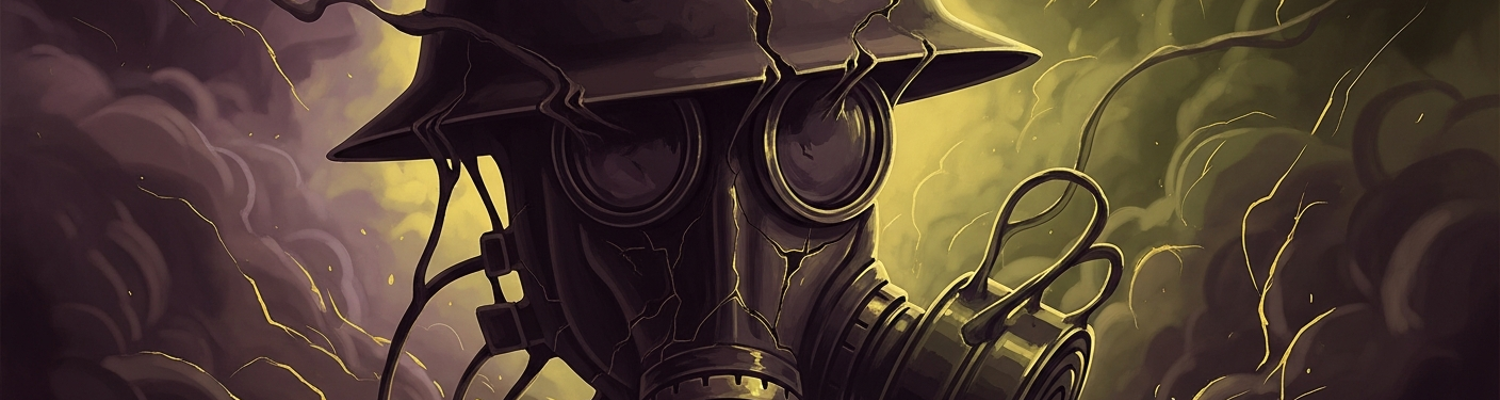

An Army Unprepared for Poisoned Air
The American Expeditionary Forces arrived in France wholly unready for the chemical battlefield of the Great War. The United States military establishment, separated by an ocean, had paid scant attention to the two years of gas warfare that had already come to define the Western Front. This profound oversight plunged the AEF into a desperate race against time to master defense against an invisible, lung-searing enemy. The organization’s rapid and successful adaptation is a signal achievement of military logistics and doctrinal flexibility. It was a brutal education, one paid for with a casualty rate from gas that proportionately exceeded that of its allies or enemies. The conflict would force a generation of American officers to confront a new reality of warfare, where the very air had become a weapon.
A Violent Awakening on the Line
When America declared war in April 1917, its army possessed no modern chemical warfare capability, neither offensive nor defensive. Its entire stock of chemical munitions consisted of a few experimental items, and its defensive equipment was nonexistent. Early encounters with German gas attacks were, therefore, catastrophic. The first major chemical strike against AEF troops occurred before dawn on February 26, 1918. German forces near the Pargny sector fired hundreds of gas projectors, a terrifyingly silent delivery system, filled with a deadly mixture of phosgene and diphosgene. Of the 225 American soldiers from the 1st Division located near the impact zone, 85 became casualties, a staggering rate of over 37 percent. In the chaos of the pre-dawn bombardment, many soldiers, panicked or poorly trained, fumbled with their unfamiliar masks, removed them too soon, or tore them off in the suffocating confusion, resulting in severe lung injuries and death.
General John J. Pershing, commander of the AEF, immediately recognized the existential threat. He grasped that without effective protection, his army could not function, let alone fight. The only immediate solution was to rely entirely on the AEF’s British and French allies for both equipment and training. American troops were issued the British Small Box Respirator (SBR) for primary protection. While effective, the SBR was bulky, uncomfortable, and featured a separate filter box connected by a hose, which could snag on equipment. As a secondary option, they received the French M2 mask, a less cumbersome, single-piece apparatus. The M2 was far less protective, however, and intended only for short-term use or against less concentrated agents. This dual-issue policy created its own lethal problems. Untrained troops, suffering from the heat and claustrophobia of the SBR, often switched to the lighter M2 mask during an attack, inhaling toxic agents in the process. Pershing’s directive was simple and absolute: learn and adapt, or be destroyed.
An Industrial Mobilization Against Gas
The logistical effort to equip millions of American soldiers was an industrial miracle. The U.S. government, starting from a complete standstill, manufactured just under 5.25 million gas masks during its 19 months in the war, shipping over 4 million to the front in Europe. This industrial mobilization was a monumental feat of engineering, procurement, and sheer willpower. The first American attempt to copy the British SBR, known as the American Small Box Respirator (ASBR), was a dangerous failure. Produced in mid-1917 under the guidance of the Bureau of Mines, which had extensive experience with mining safety but little with chemical warfare agents, the masks proved ineffective against the aerosolized particulate chemicals like diphenylchloroarsine used by the Germans. These faulty masks were quickly and quietly relegated to training purposes stateside, a near-disaster averted before they reached the front in large numbers.
By October 1917, American engineers, working closely with British experts, developed the Corrected English Model (CEM). This was a much-improved and reliable copy of the British mask, and over 1.8 million CEMs were produced. These served alongside the final, most advanced American design of the war, the Richardson, Flory, Kops (RFK) mask. The RFK, introduced in early 1918, was a superior piece of equipment. It featured a more comfortable rubber-coated fabric facepiece that provided a better seal, improved eyepieces for a wider field of vision, and a smaller, more efficient filter canister with less breathing resistance. The innovation was a direct response to soldier feedback from the field. More than 3 million RFK masks were produced before the Armistice, becoming the standard for the AEF.
Procurement was only half the battle. The AEF’s newly formed Gas Service, under the command of the energetic and determined Colonel Amos Fries, faced the immense task of distributing these masks to every soldier and ensuring they knew how to use them as if by second nature. Gas Non-Commissioned Officers (NCOs) were assigned to every company-level unit, tasked with constant inspection, maintenance, and drills. They taught soldiers to don and clear their masks in under six seconds, to march and fight while wearing them, and to resist the primal urge to remove them until the all-clear was given. Confidence was built in brutal fashion, marching soldiers through gas chambers filled with tear gas to prove the masks worked and to inoculate them against panic.
A Doctrine of Collective Defense
Individual protection formed the core of chemical defense, but it was not enough to win. The AEF, guided by Colonel Fries, developed a comprehensive, multi-layered defensive system that integrated technology, training, and tactics. The Gas Service, formally established by General Order 62 on June 28, 1918, grew from a small headquarters section into a dedicated corps of over 22,000 officers and men by the war’s end. This organization provided technical specialists and trainers down to the battalion level, creating an army-wide nervous system for chemical defense.
Early warning systems became critical. Gas sentries, equipped with alarms like the hand-cranked Strombos horns, klaxons, and even large bells or suspended shell casings, stood watch day and night. They monitored wind changes and listened for the distinct, soft 'plop' of incoming gas shells, which sounded different from high-explosive rounds. Their vigilance could provide the precious seconds needed for an entire unit to mask up before a toxic cloud rolled through their trenches.
Collective protection measures were implemented across the front. AEF engineers developed techniques to gas-proof dugouts and command posts, using heavy blankets soaked in chemical-neutralizing solutions to seal entrances and vents. These primitive collective protection shelters provided a vital haven where men could get temporary relief from the constant physical and psychological strain of wearing a mask for hours on end. The 30th Engineer Regiment, later redesignated the 1st Gas Regiment, was the AEF’s primary offensive chemical unit. Armed with British-made 4-inch Stokes mortars and Livens projectors, they delivered suppressive fire with smoke, high explosives, and gas. During the massive Meuse-Argonne Offensive, the regiment’s companies fired thousands of thermite, smoke, and phosgene shells. They used thick smoke to screen infantry advances across open ground and targeted gas barrages to neutralize enemy machine gun nests and silence artillery positions, directly contributing to the forward momentum of the American advance.
A Legacy Etched in Policy and Memory
The AEF’s experience in World War I left an indelible mark on the U.S. Army and its perception of chemical warfare. More than 71,000 American soldiers were gassed, accounting for nearly 30 percent of all AEF casualties. The searing memory of gas attacks, the sight of blinded and choking comrades, and the desperate struggle for survival convinced a generation of military leaders that preparedness was non-negotiable. The long-term effects on veterans, including chronic respiratory illnesses and psychological trauma, served as a grim reminder of this weapon's cruelty.
After the war, General Pershing himself stated,
“Whether or not gas will be employed in future wars is a matter of conjecture, but the effect is so deadly to the unprepared that we can never afford to neglect the question.”
This sentiment was championed by Amos Fries, who was promoted to Major General and served as the chief of the permanent Chemical Warfare Service (CWS) until 1929. Fries fought tenaciously against powerful postwar political and public efforts to abolish the CWS, arguing that chemical disarmament without verification was a dangerous fantasy that threatened national security. His advocacy, rooted in the AEF’s brutal battlefield experience, ensured that the Army retained its chemical warfare expertise through the interwar years.
The AEF’s hard-won mastery of chemical defense also profoundly influenced America’s complex relationship with international arms control. While the United States was a key participant in the conference that produced the 1925 Geneva Protocol, which condemned the use of chemical and biological weapons in war, the Senate refused to ratify it. This reluctance, lasting until 1975, reflected a persistent institutional belief, born in the mud of France, that the nation must retain the ability to retaliate in kind to deter an attack. The journey from the unprepared force of 1917 to the architect of a robust chemical defense doctrine shaped American military policy for decades, a direct and lasting result of the lessons learned in the poisoned air of the Western Front.