
Tactical Deployment Across the Mount Malepunyo Massif
A close review of operational logs indicates that in April 1945, Sixth Army G-2 intelligence sections moved into the sector between Lipa and Mount Malepunyo. Field teams from the 441st Counter Intelligence Corps Detachment accompanied them. Operational headquarters assigned these specialized units to identify non-uniformed elements operating behind active front lines. They supported the 1st Cavalry Division and the 11th Airborne Division directly. General Walter Krueger issued orders requiring counter-intelligence teams to process captured administrative records right at forward collection points. Field investigators carried portable mimeographs. They hauled heavy typewriters and carbon-paper ledgers into forward observation posts. Incoming Japanese 75-millimeter artillery fire repeatedly disrupted work in these field tents. Operatives filed daily tactical summaries indexed precisely by Military Intelligence Division decimal classification numbers. Telephone lines running down to the battalion command post severed under constant mortar tree-bursts.
Paperwork backed up as casualties climbed.
Archival evidence shows that Japanese Fuji Force regulars occupied the terrain. Colonel Masatoshi Fujishige held overall command of these units. His regular infantry joined armed fighters of the Makapili militia to fortify the volcanic ridges. These combined forces occupied more than two hundred fortified cave complexes. Interconnected volcanic saps cut directly into the basalt ridges of the Mount Malepunyo massif linked these positions. Sub-surface defenses featured multi-tiered firing chambers. Reverse-slope escape shafts provided exit routes. Concealed machine-gun apertures offered overlapping fields of fire across the narrow mountain draws. Japanese engineers reinforced the natural volcanic tubes using hard timber revetments. They buried communication wires between distinct strongpoints.
The Makapili auxiliaries served as route scouts.
Recruited locally through the pro-Japanese Ganap party, these militia members carried Type 38 rifles and improvised hand weapons. They manned narrow forward listening posts. Natural cave entrances masked by fresh cut brush concealed their positions. From these hidden exits, they launched night counter-attacks against isolated American slit trenches. Forward combat patrols encountered a defense designed to absorb heavy bombardment. American 105-millimeter howitzer shells detonated harmlessly against the thick basalt overhangs. The defenders inside the subterranean chambers remained untouched. Tactical radios suffered severe signal attenuation. The SCR-300 back-pack sets failed due to the iron-rich volcanic rock and dense canopy. Forward teams relied on runners. These messengers crawled through open avenues of sniper fire. Counter-intelligence agents accompanying assault platoons attempted to gather physical intelligence from dead combatants in newly taken pillboxes. Retreating defenders frequently booby-trapped filing cabinets and map cases with Model 99 defensive grenades.
Sixth Army forward field hospitals recorded twenty-two cases of acute combat exhaustion on the first afternoon of the ridge assaults.
Logistical Collapse Under Severe Tropical Cloudbursts
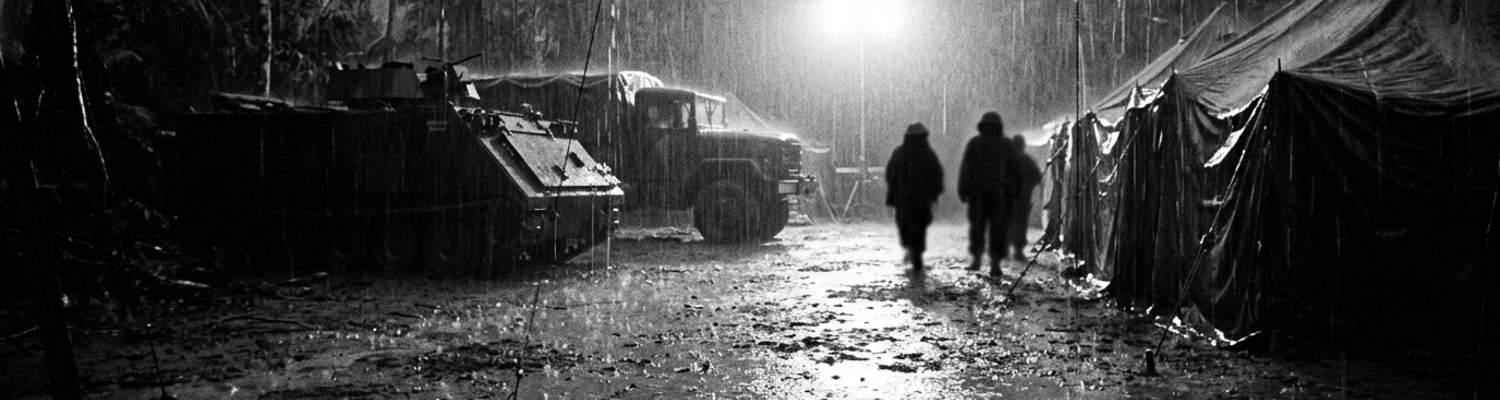
When examining the historical record of the third week of April, uninterrupted tropical downpours dissolved the volcanic approaches of Mount Malepunyo. The terrain turned into impassable mud chutes. Torrents of water mixed with volcanic ash and degraded loam. This mixture stripped soil down to slick basalt shelves. Rubber-soled jungle boots found no traction. Tracked M29 Weasels spun their treads uselessly against the rock. Supply details from the 188th Glider Infantry attempted to haul ordnance up the southern draws toward Hill 3000. Elements of the 511th Parachute Infantry Regiment joined this effort. Standard transport methods proved entirely useless. Pack boards snapped under saturated loads. Ammunition crates slipped from human carriers. Ten-in-one ration boxes and five-gallon water cans plunged into deep ravines. Gear vanished beneath layers of moving silt.
Canvas covers failed completely.
Constant water ingress destroyed radio gear. Heavy SCR-284 receiver-transmitters slid down muddy slopes. Fragile battery units fractured upon impact. Internal circuitry shorted out immediately. Forward litter teams collapsed from physical fatigue. Moving a single chest-wound casualty across two miles of liquefied ravine terrain required eight stretcher bearers. These men traded off on their hands and knees. They took over twelve hours to reach the forward aid post. Sustained cloud cover eliminated tactical air control over the Malepunyo operational area. Cloud ceilings dropped below one hundred feet. The stratus banks settled directly onto the serrated ridges. Volcanic peaks rising above three thousand feet disappeared into the gray mist.
Target spotting ceased across the entire divisional front.
Stinson L-5 Sentinel spotter planes assigned to the 674th Glider Field Artillery Battalion sat grounded. Piper L-4 Grasshoppers remained parked on the waterlogged sod strips at Lipa Airfield. Pilots could not take off into the enclosed mountain valley. Vertical wind shear and zero-visibility fog banks forced them back on the rare occasions they attempted to penetrate the mist. This aerial blindness cut advance infantry companies off from tactical reconnaissance. Japanese Fuji Force machine-gun emplacements remained completely undetectable from above. Camouflaged Makapili sniper perches built into the steep reverse slopes stayed hidden. Division artillery liaison officers could not adjust battery fires for 105-millimeter howitzers. Ground troops probed fortified draws without prior intelligence on enemy strongpoints.
The complete suspension of courier traffic stranded forward field investigators in flooded foxholes.
Agents stationed with forward battalion command posts struggled to safeguard captured enemy administrative records. They protected Makapili rosters and tactical sketch maps against the constant moisture. Saturated canvas squad tents offered no barrier against the downpours. Mimeograph ink bled across official interrogation summaries. Carbon paper dissolved before operatives could produce the required triplicate copies. The Military Intelligence Division decimal classification mandates remained in force despite the weather. Personnel spent hours drying waterlogged documents over gasoline stoves. They performed this administrative work rather than executing tactical sweeps. Spliced field-telephone lines running down the mountain snapped repeatedly under the weight of rain-weakened tree limbs. Voice links between front-line intelligence squads and Sixth Army headquarters severed completely. By midnight on April 21, the 11th Airborne Division reported that forward rifle companies had expended their emergency K-rations. They retained less than fifteen rounds of carbine ammunition per man.
Subterranean Cave Reductions and Document Exploitation
A close review of operational logs indicates that assault squads from the 188th Glider Infantry Regiment approached the tiered basalt knolls facing interlocking subterranean defenses. Japanese Fuji Force combat engineers cut horizontal firing slits into living rock. They shielded dual Type 92 heavy machine guns behind three-foot aprons of volcanic stone. Hard timber revetments and packed volcanic loam provided additional cover. Concealed Makapili riflemen sat inside vertical spider holes above these primary bunker positions. Woven rattan lids covered their hiding spots. They waited for clearing patrols to walk past before firing into their exposed backs. Forward assault units brought up direct-fire weapons to smash these reinforced firing ports.
Two-man teams manning 2.36-inch M9A1 rocket launchers crawled through dense scrub.
They moved to within thirty yards of the rock faces. The teams fired white-tipped shaped charges directly into embrasures to silence automatic fire. Riflemen then scaled the rock walls. They shoved M15 white phosphorus hand grenades down hidden vertical ventilation tubes. The chemical fire consumed interior oxygen. This action forced defenders into dead-end communication saps. Combat engineers followed with forty-pound Composition C-2 satchel charges. They wired these explosives with friction igniters and non-electric blasting caps. The engineers blew down the timber-braced cave openings to prevent counter-attacks from rearward escape shafts. C-2 blast concussion fractured the volcanic ceiling rock across forty feet of subterranean tunnels.
Language officers from the 441st Counter Intelligence Corps Detachment entered these smoking complexes.
Field operatives moved immediately behind the lead assault teams. These men crawled through unmapped volcanic tubes on their bellies in absolute subterranean darkness. They dragged canvas document bags behind them. The operatives breathed through saturated M3 chemical-sponge masks. Their primary directive demanded securing intact Imperial Japanese Army signal materials. They had to reach these documents before internal demolition squads could burn them. Forward operatives crawled past fresh casualties to reach command recesses. Japanese communications personnel kept wooden desks equipped with kerosene burners and red emergency lanterns in these deep chambers.
Point-blank pistol fire regularly broke out inside these narrow crawlways.
Rear-guard riflemen fired Type 14 Nambu pistols from side chambers to delay the advance. Intelligence personnel operated with single-cell angled inspection torches taped to their carbine barrels. They engaged surviving staff officers at point-blank range to stop the destruction of cipher books. Teams recovered damp red-bound kanji codebooks. They secured monthly cryptographic key-substitution pads. Hand-stitched silk binders containing rosters of local Makapili auxiliary operatives fell into American hands before defenders could ignite open tins of aviation fuel kept by the desks. Every recovered cipher sheet was caked in wet basalt clay and soot.
Field teams discovered that Japanese headquarters staff had hidden secondary personnel registers within hollow bamboo roof braces.
Carbon monoxide generated by exploding satchel charges pooled in the unventilated lower galleries. This toxic gas sickened investigators. They spent hours crawling through mud to clear dead-end escape tunnels. Counter-intelligence specialists cataloged these recovered papers inside water-sealed ammunition boxes right at the cave mouths. They preserved fragile ink-inscribed personnel rolls identifying pro-Japanese Ganap organizers throughout Batangas Province. Operatives dried individual pages over Coleman squad lanterns. Artillery shrapnel sliced the brush directly above their positions. The Sixth Army G-2 required serial numbers and personnel classifications transcribed into duplicate divisional ledgers. The intelligence packets moved rearward by runner to the Lipa collection station only after complete transcription. At 1630 hours on April 23, the 441st Detachment processed the final personnel roster recovered from Bunker Eighteen.
Psychological Attrition and Unending Perimeter Vigilance
Archival evidence shows that by April 24, forward rifle companies of the 188th Glider Infantry Regiment maintained continuous perimeter security for ninety-six consecutive hours without relief. Battalion commanders instituted a mandatory fifty-percent watch schedule. This rotation rapidly broke down into an unsustainable full-alert posture along the outer volcanic knolls. Infantrymen occupied mud-choked slit trenches dug twelve inches into basalt soil. Pooling ground water prevented any prone rest. Prolonged exposure to saturated clay rotted leather combat boots. Foot tissue turned necrotic. Hundreds of severe immersion foot casualties developed across the line.
Bacillary dysentery spread through shared water canteens.
Plasmodium falciparum malaria reduced the effective combat strength of Company G to forty-two ambulatory men. Sentry shifts extended from four hours to twelve hours. Under-strength platoons lacked rear echelons to cycle exhausted personnel out of the combat zone. Sleep loss degraded motor coordination. Riflemen dropped live cartridges while attempting to load five-round stripper clips. Field surgeons assigned to the 11th Airborne Division clearing station at Lipa categorized over thirty percent of evacuated personnel as acute combat exhaustion cases. Sustained autonomic arousal caused involuntary muscle tremors. Uncontrollable eyelid twitching and localized speech impairments appeared among forward observation personnel.
Counter Intelligence Corps teams operating along Hill 3000 documented dozens of administrative errors.
Investigators misread standard operational maps. They transcribed garbled radio coordinates into daily situation reports. Men flinched violently at falling bamboo stalks. Some experienced auditory hallucinations. They reported phantom footsteps along ridge slopes where no enemy movement existed. Field officers attempted to counteract this physical decline by distributing amphetamine tablets from medical kits. The stimulant intensified sensory paranoia without restoring cognitive performance. On April 25, the 2nd Battalion reported three sentries suffering catatonic paralysis within their fighting holes. They left their weapons uncocked during an incoming artillery barrage. Nerve exhaustion disabled more frontline troops than shrapnel wounds throughout the southern sector.
Thick afternoon cloudbursts routinely dissolved into an unnatural motionless fog.
This weather pattern trapped damp air at ground level and dampened all ambient sound. Triple-canopy tree frogs ceased their calls. Cicadas and cockatoos halted their noise simultaneously whenever armed groups shifted through the surrounding brush. This created an immediate absence of natural noise across a three-hundred-yard radius. Experienced sentries recognized this total cessation of wildlife acoustics. It signaled pro-Japanese Makapili militia crawling through high cogon grass toward outer slit trenches. Infiltrators carried sharpened agricultural bolos and Type 99 magnetic hand grenades. They held bamboo spears. They advanced within five yards of American positions by timing their crawl intervals to wind gusts.
Sentry platoons held their breath in absolute stillness.
They disengaged safety catches on M1 Garand rifles with two fingers. This prevented a metallic click that would pinpoint their foxholes. Makapili assault teams hurled percussion-detonated stick grenades directly into fighting pits the second American gun bolts snapped forward. Surviving records from the 511th Parachute Infantry Regiment reveal that nocturnal perimeter incursions quickly degenerated into silent hand-to-hand combat. Infiltrators jumped directly into two-man foxholes. They disabled occupants with short-bladed machetes before adjacent machine-gun nests could identify targets in the zero-visibility mist. Gun crews held their fire out of fear of striking their own men. They fought instead with entrenching tools and brass-knuckled trench knives in water-filled craters. Intelligence operatives bivouacked inside forward command posts stood perimeter guard with drawn M1911A1 pistols. Water dripped steadily onto captured Ganap member dossiers spread across their field desks. At 0340 hours on April 26, an infiltration squad overran an advanced listening post at coordinates 13.982-121.245. They killed both sentries before vanishing back into the bamboo breaks.
War Department Documentation and Administrative Burdens
A close review of operational logs indicates that General Headquarters Southwest Pacific Area directives enforced War Department document-control standards regardless of forward combat intensity. Operatives of the 441st Counter Intelligence Corps Detachment received explicit orders. They had to catalog every recovered scrap of enemy paper in triplicate. Field agents operating behind the firing lines of the 188th Glider Infantry Regiment sorted through hundreds of water-damaged Japanese Fuji Force field dispatches. They processed defense maps and vernacular Tagalog leaflets printed by the pro-Japanese Ganap organization. Each individual paper required formal categorization under the Military Intelligence Division decimal classification index.
Agents assigned code 091.712 for insurgent organizational rosters.
They used code 383.6 for civil collaboration logs. Typewriters jammed repeatedly as grit and volcanic loam ground between the steel typebars. The detachment relied on portable Remington Rand Model 17s and waterproofed Underwood portables. Saturated sheets of purple carbon paper disintegrated under damp keystrokes. Junior non-commissioned officers manually re-typed five-page registry inventories on folding wooden field desks. Water dripped steadily through punctured shelter-halves during this administrative work. Sixth Army G-2 guidelines prohibited the consolidation or destruction of duplicate leaflets. Couriers carried heavy bundles of wet propaganda down single-track mountain trails. Typebar linkages rusted solid within forty-eight hours of frontline exposure.
Field intelligence teams established forward detainee processing points.
They erected standard twelve-by-fifteen-foot command post tents along the lower draws of Mount Malepunyo. Working at coordinates 13.974-121.238, these small detachments held more than one hundred and forty suspected Makapili militia members. Armed guards watched over ankle-deep mud pens. Interrogators worked by battery-powered inspection lamps. They assembled detailed biometric indexes for every individual cleared from the forward ravines. Operatives rolled ink across swollen fingers to complete ten-point fingerprint cards. High ambient humidity kept the black printer paste from setting. Ridge patterns dissolved into illegible black smears on damp cardstock. Physical registries demanded immediate transcription of facial scars and tribal markings. Agents recorded height measurements taken against tent poles and previous Ganap party affiliation numbers.
Japanese Fuji Force mortar crews targeted the tent cluster.
They fired steady salvos of 81-millimeter Type 97 high-explosive rounds from the upper basalt knolls. Shrapnel sliced directly through the sodden olive-drab canvas. The metal fragments sheared guy lines and collapsed tent fabric over ink pads, classification rosters, and typewriter ribbons. Mortar splinters ignited two crates of pre-printed intake forms during the dusk barrage on April 27. Administrative mandates required three distinct operational tallies before any captured insurgent could transfer to rear-echelon internment enclosures. Investigators assigned detainees into three rigid political classifications. They graded suspects as Class A active combatants, Class B political organizers, or Class C coerced laborers. Producing these classifications demanded constant cross-referencing against recovered village ledgers and seized Japanese auxiliary paybooks.
Operatives worked lying flat on their bellies inside water-filled drainage trenches.
Close mortar harassment forced them into the mud. They pinned index sheets against their clipboards with their elbows to shield the ink from falling rainwater. Sixth Army headquarters rejected incomplete identity rosters. Staff officers repeatedly ordered field couriers to retrieve missing biometric data points while front-line clearing sweeps continued across the upper ravines. A direct mortar hit near the processing station at 2200 hours demolished the detachment primary field safe. The blast scattered over four hundred partially processed suspect dossiers into the adjacent drainage gully. Field clerks recovered seventy-one saturated classification sheets from the creek bed at dawn.