
The Bakuriani Sighting and Corinto Harbor Alert
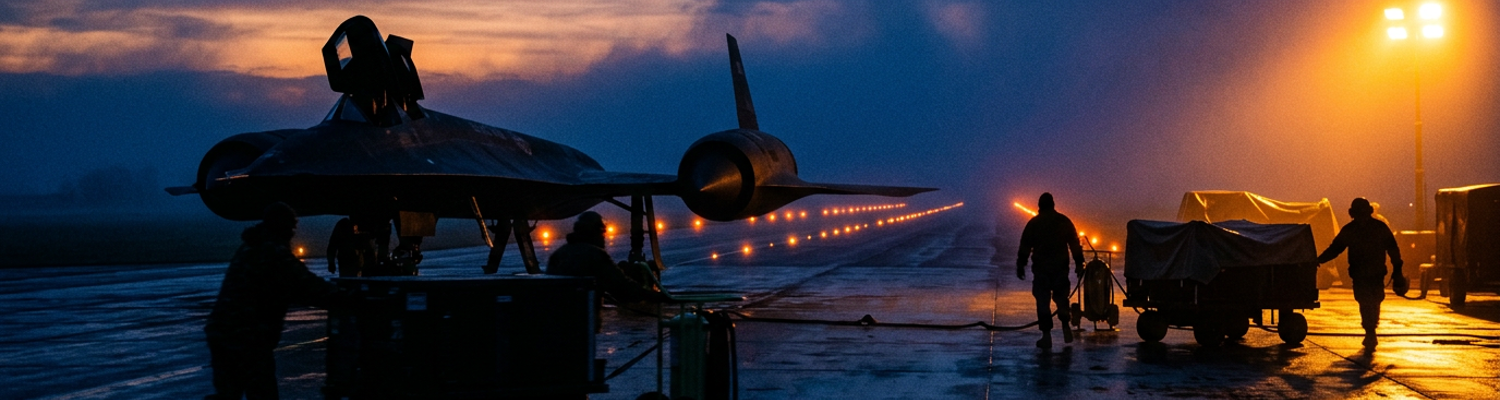
Technicians secure brass lock rings on high altitude pressure suits across the damp runway tarmac of the forward staging base. Ground personnel connect oxygen hoses and electrical communication cords to the torso harnesses while heavy Pacific fog rolls past the runway edge lights and concrete airfield revetments. Pilots climb into pitch black cockpits, checking analog dials and camera toggle switches as mechanics run auxiliary power units along the perimeter aprons. Reconnaissance aircraft taxi past harsh floodlights onto the coastal concrete, preparing for high speed runs over the approaches to western Nicaragua. Sensors and high resolution optical cameras inside the reconnaissance bays power up, ready to record harbor berths and dockside shipping as soon as the jets reach operational altitude. Ground operations staff monitor telemetry channels in darkened mobile vans, tracking the aircraft as they depart the runway and head toward the Pacific sea lanes where raw radar intercepts indicate commercial shipping traffic.
Analysts examine the resulting radar plots and wet film contact prints under illuminated magnifying lenses to verify the commercial cargo hulls anchored in the tidal channel. The Soviet merchant freighter Bakuriani arrived at Corinto on November 6 and 7, 1984, amid classified intelligence reports warning of crated MiG-21 interceptors shipped from the Black Sea. Surveillance specialists measure the vessel hatch covers and topside wooden containers with plastic millimeter rulers, attempting to match crate dimensions against known fuselage crates from Soviet aircraft factories. Radar operators cross reference the harbor imagery with electronic intercept logs, but the signals fail to indicate military radar emissions or operational jet avionics from the wharves. Intelligence officers in regional field stations draft conflicting priority cables that question whether the vessel carries crated combat jets or harmless civilian patrol equipment, leaving military commanders with an unverified operational picture.
Advisors inside the White House and National Security Council convened emergency operational meetings to weigh direct preemptive air interdiction strikes against port offloading infrastructure based on this unverified operational picture. Military staff officers spread target maps across the conference tables, identifying gantry cranes, rail spurs, and concrete warehouses as primary aimpoints for tactical bombers. Naval planners calculate flight times and bomb loads for carrier based attack squadrons operating off the Central American coast, preparing immediate strike packages to destroy the docks before heavy equipment can move inland. Disagreements break out inside the meeting room between cabinet officials who want to hit the port facilities immediately and intelligence chiefs who warn that bombing Soviet sailors without positive visual identification of combat aircraft will create a major diplomatic crisis. Operational commanders hold their combat wings on high alert while requesting definitive photographic proof of the cargo before releasing strike orders against the Corinto waterfront.
Commanders dispatched additional low level and high altitude surveillance sorties toward the port to secure the definitive photographic proof required by national leadership. Pilots guide their aircraft through low cloud decks and Pacific ocean spray, banking across the harbor mouth while camera systems record long lines of dockworkers and mobile cranes beside the Soviet ship. Aircraft sensors snap high speed exposures of open cargo holds and wooden packing cases, revealing heavy craning equipment rather than supersonic fighter wings. Couriers rush the developed film negatives directly from airbase darkrooms to intelligence evaluation desks, where senior analysts confirm that the offloaded containers hold military transport helicopters and standard cargo rather than MiG interceptors. National security officials stand down the carrier strike groups and cancel the preemptive air strikes, returning combat aircraft to standard alert rotations as the freighter finishes unloading at the dock.
Strategic Air Command Blackbird Overflights
Generals at Strategic Air Command mobilized the 9th Strategic Reconnaissance Wing to conduct SR-71 Blackbird sorties across the Nicaraguan Pacific coastline as dockworkers cleared the remaining cargo crates from the pier. Flight planners at Beale Air Force Base organized round trip tracks that sent the long range jets through international airspace along the Central American littoral. Specialized KC-135Q tankers met the reconnaissance aircraft over the ocean to deliver thousands of gallons of specialized aviation fuel before each high speed dash. Pilots and reconnaissance systems officers adjusted oxygen regulators inside their full pressure suits as their twin engines propelled the aircraft beyond Mach 3 at altitudes exceeding eighty thousand feet. Flight crews pointed their sensor suites toward the shoreline and pushed into steep operational turns, generating massive sonic booms that surged downward through the atmosphere toward coastal shipping channels.
Shockwaves slammed into Corinto harbor and the Punta Huete military airstrip because reconnaissance flight profiles deliberately produced supersonic booms over both facilities. The sudden pressure waves struck port warehouses, rattling cargo cranes and breaking window panes across the civilian docklands. Construction laborers at Punta Huete scrambled away from half poured concrete taxiways as the double sonic cracks shook bulldozers and support trucks. Ground commanders in western Nicaragua activated search radars and ordered antiaircraft artillery crews to their posts, but the local weapons could not reach the extreme operating altitude of the jets. Optical bar cameras and synthetic aperture radar packages inside the Blackbird bays operated without pause through each pass, recording clear panoramic imagery of the docks, shipping basins, and unpaved airfield clearings.
Film canisters dropped into waiting service carts as ground crews opened the cooled camera bays at the recovery airfield to retrieve the panoramic imagery. Laboratory technicians rushed the exposed rolls into darkrooms and loaded them into automated chemical processing machines to develop thousands of feet of high resolution film. Couriers hand carried the dry negatives to illuminated light tables, where intelligence specialists used high power stereoscopic microscopes to examine every millimeter of the emulsion. Photo interpreters checked the Corinto waterfront first, verifying that the cargo offloaded from the Soviet freighter consisted of transport helicopters rather than crated MiG fighter fuselages. Darkroom specialists produced duplicate photographic prints and prioritized them for immediate courier flights to defense evaluation centers in Washington.
Analysts at the National Photographic Interpretation Center placed the enlarged prints under optical measuring scales to calculate runway dimensions at Punta Huete. Measurement grids confirmed that the newly poured concrete strip lacked aircraft arrestor gear, operational radar towers, and hardened storage revetments required for modern jet fighters. Intelligence officers compared the Blackbird imagery against Soviet military construction manuals, determining that the remote airbase remained months away from supporting combat flight operations. Strategic planners used these detailed measurements to update their strike contingency maps and confirm that no immediate air threat existed against neighboring Central American countries. Defense officials reduced alert levels for regional air defense units and filed the surveillance negatives in permanent intelligence archives.
Electronic Intelligence and Littoral Intercept Telemetry
Pilots flying RC-135 platforms maintained continuous orbits over the Pacific littoral as regional naval intercept stations logged active radio traffic left behind by the photographic sorties. Sensor operators inside the aircraft cabin monitored green display screens, intercepting pulse emissions from Sandinista air defense radar systems as ground crews along the coast tracked departing American aircraft. Regional naval intercept stations aboard offshore warships simultaneously captured high frequency radio transmissions exchanged between Soviet merchant vessels and coastal harbor authorities. Antennas mounted along the aircraft fuselage recorded repeated bursts of target acquisition telemetry, showing that Sandinista radar batteries had shifted from search modes into active target tracking. Signals analysts rapidly tagged these incoming wave patterns, cross checking the frequencies against standard electronic threat libraries to determine whether coastal missile batteries had prepared to engage incoming naval units.
Technicians in signals intelligence units grappled with contradictory telemetry and incomplete electronic orders of battle as raw data concerning the missile batteries flowed to operational decision makers. Processing consoles displayed pulse repetition rates that matched Soviet built surveillance radars, yet the recorded pulse widths varied wildly from standard technical profiles. Marine intercept stations ashore picked up disjointed bursts of encrypted marine telemetry from the merchant ship Bakuriani, but the shipboard transmissions lacked the automated navigation beacons typically seen on vessels coordinating combat air wings. Radar operators could not establish a stable electronic order of battle because Sandinista tracking stations switched frequencies erratically, blending commercial maritime radar bands with military targeting signals. Raw intercept tapes showed intermittent fire control illuminations without the continuous carrier waves needed to guide surface to air missiles, leaving intelligence officers unable to verify whether ground forces possessed operational anti aircraft missiles or merely rudimentary warning antennas.
Teletype printers hammered out incomplete signal summaries across command center floorboards as duty officers rushed unverified logs of the warning antennas to tactical commanders. Watch officers examined contradictory frequency charts that showed active tracking signatures occurring at the exact coordinates where photo interpreters had just confirmed empty harbor quays. Tactical decision makers read warnings of immediate radar lock ons while adjacent intelligence desks reported that the detected signals originated from civilian navigation beacons aboard merchant cargo freighters. Operators adjusted tuning dials on high frequency receivers to filter out atmospheric interference caused by coastal humidity and ocean surface clutter, but the signal to noise ratio remained too degraded for definitive identification. Analysts refused to clear combat strikes against coastal targets without confirmed missile guidance frequencies, forcing battle staff officers to delay retaliation plans while intercept vans gathered further electronic proof.
Computer mainframes in regional assessment centers processed final signal tapes alongside revised coastal emitter maps to resolve the radar discrepancies and provide the required electronic proof. Cryptologists matched the mysterious pulse bursts to low powered port surveillance gear and training radars rather than surface to air missile guidance stations. Reconnaissance systems officers verified that the merchant vessel transmissions consisted entirely of routine commercial logistics traffic between Soviet port dispatchers and civilian crane crews. Operations commanders formally classified the coastal radar spikes as non threatening tracking exercises, canceling combat air patrol alerts across the littoral zone. Flight controllers radioed orbiting reconnaissance aircraft to return to home bases, concluding the electronic surveillance alert as the intercept aircraft touched down on staging runways.
Photographic Interpretation Center Cargo Assessments
Technicians unloaded sealed film cassettes from the camera bays as the reconnaissance engines wound down, packaging the long spools into pressurized transfer canisters for urgent air transport to Washington. Darkroom staff at the National Photographic Interpretation Center received the airbase couriers under armed guard and fed the high resolution rolls directly into continuous processing vats. National Photographic Interpretation Center imagery analysts conducted urgent dimensional analysis of wet film negatives capturing maritime crates at Corinto. Specialists pulled the damp film strips across backlit viewing tables while water and chemical fixer still dripped from the film edges into drainage gutters below the glass surfaces. Interpreters lowered high power optical microscopes over the translucent negatives, adjusting twin focus wheels to examine the concrete wharves where crane crews had clustered heavy wooden shipping boxes along the water edge. Technicians kept exhaust fans running at full capacity to clear heavy chemical fumes from the interpretation rooms while senior duty officers stood directly behind the light tables waiting for initial findings.
Interpreters aligned micro metric measuring scales across the enlarged film frames to calculate crate heights, widths, and surface angles on the dock to generate the initial findings. Analysts checked the physical measurements against Soviet foreign military export manuals, noting that crated MiG-21 jet fuselages required specialized containers measuring nearly forty feet in length with narrow side clearances. The wooden containers unloaded from the Soviet freighter measured barely thirty feet in length and stood considerably taller and wider than any supersonic fighter packing box. Photo analysis confirmed the offloaded containers held Mil Mi-24 Hind assault helicopters rather than high performance MiG-21 fighter airframes. Interpreters documented that the crated loads matched the exact physical volume and structural ribbing of Soviet rotary wing aircraft delivered previously to other regional allies. Analysts measured the distinct stepped rooflines visible on the largest crates, which accommodated the high tandem cockpits of the assault helicopters rather than the narrow spine of a swept wing jet.
Lenses on the optical tables helped the analysts measure auxiliary containers scattered across the Corinto dockyards beside the main crates to confirm the helicopter identification. Analysts located long, shallow wooden boxes resting near the ship berths that measured the exact length required to hold five blade main rotor sets and anti torque tail assemblies. Additional dockside pallets held crated rocket pods, gun mount components, and auxiliary fuel tanks designed specifically for helicopter attack profiles instead of swept wing jet operations. Photo teams marked each identified cargo piece with grease pencils on clear acetate overlays, noting the complete absence of delta wing root crates, tail fin containers, or afterburner shipping boxes. Interpreters compiled the crate dimensions, shadow lengths, and crane lift angles into a standardized target assessment folder to substantiate the findings with concrete physical evidence. Analysts cross referenced the Corinto negative numbers against previous Blackbird reconnaissance passes over Soviet ports to verify that the crate stenciling followed standard helicopter logistics markings.
Couriers carried the photographic enlargements and finished dimensional reports detailing the helicopter logistics markings directly into senior military command centers in Washington. Duty staff presented the photographic plates to the Joint Chiefs of Staff and national security advisors, demonstrating that the cargo consisted of tactical support helicopters rather than strike fighters capable of threatening regional air space. Strike coordinators used the confirmed imagery assessments to adjust combat postures across Caribbean and Pacific staging facilities. Tactical air commanders cancelled standby scramble orders for offshore carrier squadrons and ordered maritime strike aircraft returned to standard alert status. Operations officers in naval command centers closed tactical strike folders and stood down regional alert crews as intelligence summaries circulated through the Pentagon. Intelligence directors delivered the finalized photo interpretation binder to White House officials, ending the immediate military alert as the Soviet freighter finished its port operations.
Targeting Abatement and Intelligence Leakage Control
Photographs spread across the Situation Room conference table showed the unmistakable structural contours of transport and assault helicopters along the concrete wharves of Corinto, confirming the end of the immediate military alert. Confirmation of rotary wing cargo forced White House officials to abandon strike options and stand down naval interdiction assets that had assembled along maritime choke points. Defense Secretary Caspar Weinberger reviewed the dimensional measurements with the Joint Chiefs of Staff, verifying that the crated equipment contained Mil Mi-24 assault helicopters rather than modern jet fighters. Tactical commanders transmitted code words over encrypted military radio circuits, ordering surface warships and carrier battle groups to abort planned combat air patrols over the Pacific coast. Flight deck crews on the offshore carriers secured attack jets back onto hangar deck tie downs, disabling live ordnance circuits and returning armed strike packages to baseline standby status.
Warships patrolling the Pacific littoral reversed course and powered down their targeting radars as cancel orders crackled over encrypted fleet communications, matching the baseline standby status of the aviation units. Picket destroyers and replenishment tankers broke tactical formations to clear the maritime approaches to Central American ports, saving thousands of gallons of marine fuel while stepping back from full combat alert. Watch officers across regional command centers closed their active strike planning folders, archiving target coordinates for coastal radar stations and port facilities that had been marked for destruction only hours earlier. Aircrews at forward staging airfields unzipped their flight suits, handed mission clipboards to intelligence debriefers, and watched ground personnel push high altitude reconnaissance aircraft into maintenance hangars. Tactical operations centers formally dissolved the joint strike coordination cells, leaving maritime sea lanes open to routine commercial freighter traffic as the freighter Bakuriani prepared to depart.
Telephones across the Pentagon and the State Department rang incessantly as news organizations demanded verification of earlier anonymous leaks concerning the freighter Bakuriani and its suspected Soviet fighter deliveries. Senior executive leadership spent late November 1984 containing intelligence leaks and managing international political fallout stemming from initial escalation threats that had warned of military action if supersonic jets arrived. White House press officials fielded contentious questions in daily briefings, working to damp down speculation that combat operations had been narrowly averted by a matter of hours. State Department diplomats transmitted confidential cables to allied governments in Western Europe and Latin America to smooth over diplomatic protests provoked by the public naval maneuvers. Government spokesmen released formal statements emphasizing that while the helicopters expanded ground combat capabilities, the crated airframes did not constitute the regional offensive jet threat that had prompted the initial crisis.
Investigators initiated formal security reviews across Washington assessment agencies to determine who had leaked unconfirmed electronic intercepts to national newspapers and sparked the initial crisis. Security officers checked document clearance registries and scrutinized telephone records across regional analysis desks to identify analysts who had distributed raw warnings before photo interpreters could inspect physical evidence. Briefers met behind closed doors with members of the congressional intelligence committees, walking lawmakers through the sequence of photo negatives that proved the crates contained helicopters rather than advanced interceptors. Technicians in image analysis laboratories stamped final clearance designations onto the Corinto reconnaissance film rolls and stored the metal canisters inside classified archives. Ground crews at forward airfields finished cleaning camera optics and refueled reconnaissance platforms, resetting the aircraft for routine border surveillance missions.