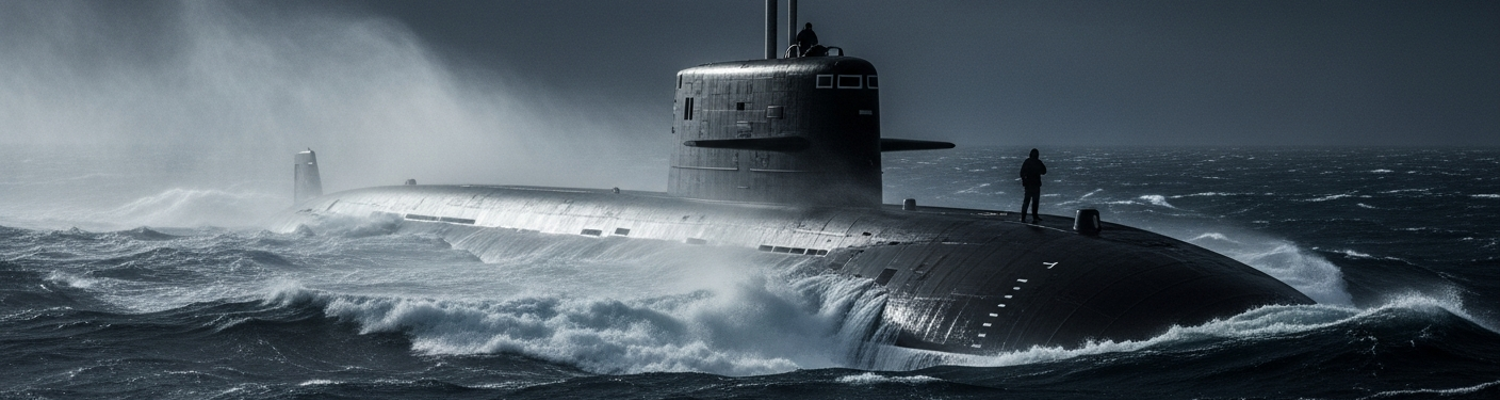

Post-Incident Status and Final Position
A close review of post-incident analysis compiled under file reference SUBGRU-2-PM-78-1104 paints a stark picture of a vessel broken by procedure and environment. The USS Hammerhead (SSN-663) rested on the seabed in fifty-five meters of water, its position south of the Danish island of Bornholm. The boat was not level. The uncontrolled flooding of the aft torpedo room and auxiliary machinery spaces had added hundreds of tons of dead weight to the stern, forcing it down into the silt. The bow pitched upwards at a fifteen-degree angle, a silent, dark shape aimed at a surface it could no longer reach. For six hours and fourteen minutes after the initial grounding, the official status of the submarine at Commander, Submarine Group Two (SUBGRU-2) headquarters in Groton, Connecticut, remained unchanged: “experiencing communications equipment malfunction.”
The clock for a rescue had not started.
Inside the forward compartments, the surviving crew, numbering over forty, were trapped in a contracting world of cold and darkness. Power was gone. The only light came from two failing battery-powered battle lanterns, casting erratic shadows across the crew’s mess. The air, thick with the smell of ozone and saltwater, was growing thin. More dangerous was the slow, steady creep of chlorine gas, a byproduct of seawater reacting with the compromised forward battery cells located below the mess decks. The fight to save the ship had ended hours earlier. The new fight was for air. The primary objective of the mission, the interdiction of a Warsaw Pact convoy, was a distant memory. The strategic failure was absolute; the convoy proceeded to its destination unhindered. The immediate failure was the silence from command. The crew of the Hammerhead was alone.
Unexpected Shallow Water Shoaling
Operational plans for the mission reveal the calculated risk of the transit route. The Baltic Sea is not open ocean. It is a shallow, semi-enclosed body of water with an average depth of only 55 meters, a hazardous environment for a nuclear submarine designed for blue-water operations. The chosen path, a channel south of Bornholm, was intended to use the complex seabed to mask the submarine’s acoustic signature from Soviet patrols. This area is a geological minefield. Nautical charts of the era (DMA Chart 77A, 1976 revision) lacked the high-resolution sonar data available today. They failed to account for the true complexity of the seafloor, a landscape carved by ancient glaciers. Unpredictable and often unmapped glacial moraines, hard ridges of granite and basaltic rock, littered the operational box.
The water itself was an adversary. The Baltic’s brackish, layered composition creates thermal clines and unpredictable variations in salinity that severely disrupt sonar performance. Distinguishing between open water and a rapidly shallowing seabed was difficult. The Hammerhead was navigating with compromised senses in a known danger zone.
This latent geographical threat was activated by a sudden and violent shift in weather. Archival meteorological data shows the rapid formation of a Force 10 gale sweeping in from the northeast. For a submerged submarine, the effect was not surface chop but something more insidious. While the boat itself, operating below 50 meters, would not feel the direct impact of the 30-foot waves, the storm’s energy translated into powerful, erratic underwater currents. These surges are notoriously difficult to predict in the constricted channels of the Baltic. Aboard the Hammerhead, this manifested as a constant, unseen force pushing the 4,600-ton vessel laterally off its intended track. The helmsman and diving officer would have been fighting to maintain steady course and depth, their control inputs growing larger and more frequent as the unseen water shoved the hull.
The gale also churned the shallow sea, kicking up silt and sand from the bottom. This created a state of high turbidity that further crippled the BQQ-5 sonar system. Its sensitive arrays were now trying to interpret a soundscape filled with the noise of the storm, seabed clutter, and the confusing acoustic reflections of the brackeish water. Operational logs indicate a series of small, corrective rudder commands in the minutes leading up to the incident, evidence of the crew fighting the powerful cross-currents. Believing they were still within the charted safe channel, they were in fact being pushed steadily south, toward a known but poorly mapped area of shoals. At 02:17 local time, the submarine experienced a violent shudder. A high-frequency screech of metal grinding against rock followed. The Hammerhead had struck an unmapped granite ridge.
Hull Integrity Compromise and Propulsion Failure
The impact was not a direct collision. It was a prolonged, tearing scrape along the lower starboard side of the hull. Damage control reports transmitted later, and corroborated by post-recovery analysis, detail a 40-meter-long gouge running from just aft of the bow sonar sphere, past the amidships section, and terminating near the auxiliary machinery spaces. The pressure hull itself, constructed of high-tensile HY-80 steel, was not breached in this initial event. The damage was more subtle. The impact inflicted a critical and insidious wound to the ship’s circulatory system. Shrapnel from the sheared outer hull and framing tore through the confined space between the inner and outer hulls, severing primary steam lines feeding the starboard propulsion turbine. Archival records from the Manoeuvring Room show a catastrophic drop in steam pressure on the starboard main engine loop within two seconds of the grounding.
A cascade of secondary failures followed. The immense shock of the impact and the subsequent water hammer effect that pulsed through the ship’s structure caused a critical misalignment in the main reduction gears. This was the massive transmission connecting the high-speed turbines to the slow-turning propeller shaft. Alarms for gear strain and lubrication failure screamed across the control panel. With its primary power source severed and its drivetrain irrevocably damaged, the submarine’s seven-bladed screw spun to a halt in under a minute. Propulsion was gone.
The Hammerhead was now a 4,600-ton deadweight, its forward momentum rapidly bleeding away. The fight to maintain control fell to the emergency propulsion motor, a small, battery-powered engine capable of providing only minimal headway. As engineers fought to contain the steam leak and reroute power, a far more grave threat was developing aft. The same grounding event that killed the main drive had also deformed the hull around the aft torpedo room. The bulkhead separating the breached auxiliary space from the torpedo room was not designed to withstand the full hydrostatic pressure of the sea at operational depth. Inspection reports later confirmed that the welds along the lower third of the bulkhead at Frame 128 began to part. The watertight door set within it buckled inward. At 02:24, the bulkhead failed completely. A torrent of seawater exploded into the aft torpedo room. The compartment flooded in less than thirty seconds. The sudden addition of hundreds of tons of water in the extreme aft section of the submarine threw the boat’s trim into chaos, pitching the bow upward and sending the stern plunging heavily toward the shallow seabed.
Distress Signal Misinterpretation
Communications logs from the night of the incident reveal the first attempts by the Hammerhead to report its predicament. Following the loss of propulsion and the catastrophic aft flooding, the surviving senior officer, the ship’s Engineering Officer, ordered the deployment of the AN/BRA-8 buoyant cable antenna. This system spooled out hundreds of feet of cable from a pod on the submarine’s deck, allowing a small transmitter at the end to float to the surface and send burst transmissions. The first message, a highly compressed data packet sent at 02:28 local time, was a desperate digital signal. It was encoded with a “SUBMISS” flag, a designation for a submarine in critical, unresolved distress, one step below a “SUBSUNK” declaration. The packet contained fragmented telemetry indicating a complete loss of main power, multiple hull breach alarms, and an atmospheric contamination warning for the forward compartments.
The signal was a ghost.
Transmitted into the teeth of a Force 10 gale, the antenna’s small float was being thrashed by 30-foot waves. This violent motion caused repeated, split-second interruptions in the transmission. To the receiving station at the NATO listening post NAVCOMMSTA Londonderry, the signal arrived as a corrupted, unintelligible hash of data. Key contextual information was missing. The system did manage a second, weaker transmission three minutes later using the low-bandwidth underwater telephone, or UQC. This acoustic signal, however, was severely distorted by the high turbidity of the churned-up shallow water and the ambient noise of the storm. It registered at the listening post as little more than a garbled, rhythmic pulse that defied immediate classification. The Hammerhead was screaming for help, but its voice was being torn apart by the very environment that had crippled it.
The watch commander at Londonderry made a choice. Examining the corrupted data logs, the officer on duty cross-referenced the event with the known operational record of the AN/BRA-8 antenna system. In heavy seas, the system was notoriously unreliable. False positives caused by water intrusion or cable damage were not uncommon. The garbled UQC transmission was flagged by the receiving computer as an acoustic anomaly of unknown origin, a frequent occurrence in the acoustically cluttered Baltic. Without a clear, intelligible message or the subsequent launch of a colored smoke signal or emergency beacon, actions now impossible for the crippled submarine, the commander fell back on standard procedure. The event was logged not as a confirmed submarine emergency, but as a severe communications equipment malfunction aboard the Hammerhead. No alert was raised. No assets were spun up. The official record noted that the Hammerhead was to re-establish contact at its next scheduled communications window in six hours.
The Six-Hour Rescue Delay
For six hours, the operational clock for a rescue did not tick. During that window, two watch rotations occurred at both NAVCOMMSTA Londonderry and SUBGRU-2. The corrupted data packet was noted in the logs as a low-priority technical issue to be resolved at the next check-in. The standing operational directive for covert submarine operations (COMSUBLANTINST 3120.1C) was explicit. Uncorroborated and garbled transmissions in the absence of a secondary signal were to be treated as equipment failures to preserve operational security.
This fatal assessment was compounded by a significant intelligence failure regarding the storm’s true intensity. On the command level at SUBGRU-2, the meteorological picture of the operational area was dangerously incomplete. The forecast models available in 1978 relied on widely spaced weather stations and satellite imagery that lacked the resolution to detect small, fast-developing weather events. Their charts showed a broad front of inclement weather, predicting a sea state of Force 7, gusting to Force 8. This was considered rough but manageable. The operational plan had accounted for such conditions.
Their weather maps were wrong.
What the regional forecast failed to capture was the formation of a highly localized but exceptionally violent storm cell centered directly over the submarine’s transit lane. SUBGRU-2 command, operating with an inaccurate understanding of the on-scene conditions, assessed the situation with a critical lack of context. They reasoned that a well-handled Sturgeon-class submarine could easily cope with a Force 8 sea. In their minds, the conditions were not severe enough to precipitate a genuine catastrophe. This reinforced the conclusion that the garbled signals were the product of equipment failure, not a foundering vessel. The underestimation of the gale’s severity created a fatal gap between the reality aboard the Hammerhead and the perception at headquarters. The six-hour delay was not the result of a debate; it was the result of no debate taking place at all.
This delay had an irreversible impact. A rapid deployment of a dedicated submarine rescue ship, such as the USS Pigeon (ASR-21), could have put trained saturation divers on-site within hours. The six-hour gap, however, provided the Soviet Baltic Fleet ample time to consolidate its control over the area. By the time SUBGRU-2 was alerted, Soviet surface combatants had formed a tight cordon around the datum. Sonar buoys saturated the water column. Any attempt by a U.S. Navy salvage ship to enter the area would no longer be a rescue; it would be a direct military confrontation. The window for salvage closed completely. For the surviving crew, the delay was equally final. The primary tool for such a scenario, the Deep Submergence Rescue Vehicle (DSRV), was never activated. The operational timeline for the DSRV Mystic, the designated Atlantic rescue asset, called for it to be loaded onto a C-5 Galaxy transport aircraft, flown to a forward operating base, and mated to a “mother submarine” for transit. The six-hour delay meant that by the time command acknowledged the emergency, the internal environment of the Hammerhead was already beyond recovery.
Catastrophic Internal Damage Control
A detailed reconstruction of the chaos inside the Hammerhead reveals a battle lost before it could be properly fought. The failure of the bulkhead at Frame 128 was an unstoppable wound. Seawater, at a near-freezing temperature and pressurized to over 100 pounds per square inch, did not seep. It blasted into the aft torpedo room with the force of a solid object. The initial rate of flooding was calculated in post-incident analyses to be in the thousands of gallons per second, a volume that rendered any concept of containment futile. The torrent of water, mixed with ruptured hydraulic fluid and lubricating oils, instantly submerged the lower levels of the compartment, shorting out electrical junctions and plunging the space into darkness.
The water was only half the problem.
Survivor debriefs from the engineering crew paint a picture of absolute sensory deprivation. The initial grounding and subsequent flooding destroyed the primary lighting circuits. The battery-powered emergency lights, their wiring compromised by the shock and water ingress, flickered and died within seconds. The result was a total and profound blackness. This void was filled with the deafening roar of incoming water, the high-pitched scream of escaping high-pressure air from ruptured lines, and the sharp crackle of arcing electrical panels. The atmosphere itself became an enemy. Atomized seawater and hydraulic fluid created a dense, choking fog that hung in the air. The saltwater flooding the forward battery compartment below the crew’s mess initiated a chemical reaction, releasing clouds of toxic chlorine gas. Damage control teams, moving by memory and touch, were navigating a lethal maze where the air burned their lungs and the darkness hid every obstacle.
Against this overwhelming cascade of failures, the crew’s training and equipment were rendered insufficient. Standard damage control doctrine on a Sturgeon-class boat was built around the principle of isolation and containment of a single, manageable casualty. The procedures assumed that teams would be able to see the damage, communicate its extent, and bring the appropriate tools to bear. On the Hammerhead, none of these were possible. Portable submersible pumps were useless against a flood rate measured in tons per second. The wooden shoring and steel pipe patches stored in damage control lockers were designed to brace a strained bulkhead or seal a weeping seam, not to hold back the full weight of the Baltic Sea. The Emergency Air Breathing (EAB) system, a network of air manifolds intended to provide breathable air, became a liability. In the pitch-black, debris-strewn compartments, the umbilicals connecting the masks to the manifolds became tangled, snagged, and severed, leaving sailors to suffocate just feet from a source of clean air.
Hypothermia and Preventable Fatalities
Post-recovery medical logs, compiled by Hospital Corpsman Second Class David Jensen, detail the impossibility of conducting effective medical triage. The surviving crew were crammed into the forward crew’s mess and the adjacent passageway, the only compartments forward of the flooded engine room that remained remotely tenable. Jensen, with only one medical kit and the help of two sailors, was forced to triage by sound and touch. He moved through a crowded, tilting space slick with a mixture of seawater and hydraulic fluid, the groans of the wounded mingling with the constant sound of the hull contracting in the cold. He could not see the color of a man’s skin or the full extent of a laceration. He was attempting to locate life-threatening arterial bleeds in near-total blackness on men soaked in seawater.
The cold was the primary enemy.
The steel hull of the Hammerhead, no longer warmed by the ship’s environmental control systems, became a ruthlessly efficient heat sink. It transferred the warmth of the interior directly into the 2°C water of the Baltic. For the wounded, this environmental shift was a final blow. Men suffering from blast injuries and burns, already in a state of shock that impaired their body’s ability to regulate temperature, were lying on bare steel decks in wet clothing. Their bodies lost heat at a catastrophic rate. Shivering consumed what little energy they had before ceasing altogether as their core temperatures plummeted. The cold constricted blood vessels, but it also prevented platelets and clotting factors from functioning. A moderately severe wound that might have been manageable in a controlled environment continued to bleed slowly but unstoppably. Corpsman Jensen reported watching men who were shivering violently fall quiet, a sign he first took for stabilization but soon recognized as the final, lethargic slide into severe hypothermia.
An analysis of the eventual casualty list reveals at least three specific cases of fatalities that were directly attributable to the conditions and were medically preventable. The first was a machinist’s mate from the auxiliary machinery space who had escaped the initial flooding with second-degree burns. His injuries were painful but not immediately life-threatening. He was laid on the deck of the crew’s mess, his burned skin exposing him to rapid fluid loss. Without sterile dressings, a warm environment, or intravenous fluids, his body could not compensate. He succumbed to hypothermic shock within three hours. A second case involved a young electronics technician who suffered a compound fracture of the femur. In the dark, Jensen and another sailor applied a makeshift splint, but they could not know the full extent of the internal bleeding. As the sailor’s core temperature dropped below 32°C, his blood refused to clot. He bled out internally over the course of four hours. The final documented case was an officer who sustained a concussion but was otherwise mobile. He was triaged as “walking wounded.” As the hours passed in the dark and cold, the effects of his head injury, compounded by hypothermia, led to disorientation and then lethargy. He sat down in a passageway to rest and was found dead during a later attempt to conduct a headcount, having quietly slipped into a fatal coma.