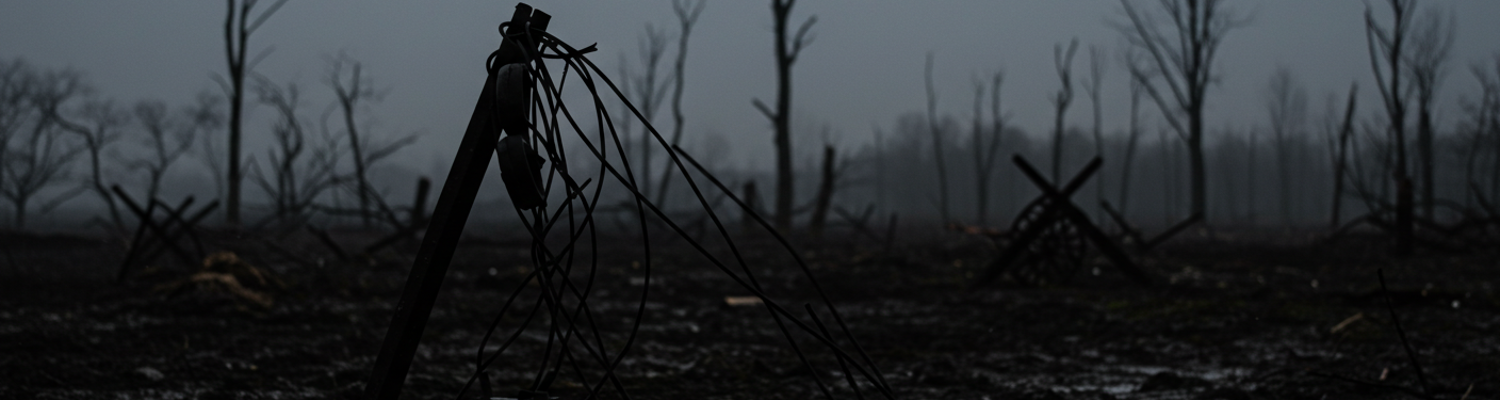

The corporal’s Very pistol gave a sickening, metallic crunch. A misfire. No white star flare would burst above his position west of Montfaucon to signal his platoon’s location to the liaison aircraft circling somewhere overhead. The doctrine, conceived months earlier in the frantic mid-1918 buildup of the American Expeditionary Forces, was failing in his hands.
A close review of AEF operational logs shows its approach to air-ground cooperation was formalized with desperate urgency. Influenced by British and French experience but filtered through an American belief in open warfare, the doctrine was codified under figures like Colonel Billy Mitchell. His plans for the St. Mihiel offensive, which preceded the Meuse-Argonne, called for a massive air armada to not only destroy the enemy’s air service but to directly attack his troops.
This established two primary aircraft types for ground liaison. Corps observation planes for deep reconnaissance and divisional infantry contact aircraft, whose job was to fly low and maintain contact with forward troops. These infantry aircraft were supposed to patrol designated sectors, observe the advance, and report back.
The entire system was predicated on a theoretical battlefield that rarely existed. Theory was a clean thing.
The primary method for an infantryman to communicate his position was a system of unreliable visual signals. AEF field manuals (Document No. 782) instructed ground units to use large white cloth panels, known as ground strips, laid out in specific patterns. The most important signal marked the front line for friendly aircraft, a measure to prevent friendly fire and inform command of an advance’s progress.
An observer in a De Havilland DH-4 at 3,000 feet, however, saw a battlefield obscured by perpetual fog, smoke, and cordite haze. Panels became caked in mud, lost in the shattered terrain, or could not be deployed by men under intense machine-gun fire. Exposing oneself to lay out a ten-foot sheet of white cloth was an invitation for a sniper. The Germans also learned these panels were magnets for their own artillery.
Communication from air to ground was just as crude. Lacking air-to-ground radio, pilots and observers relied on physical message drops. Standardized forms were created for observers to scribble notes on enemy troop concentrations. An observer from the 12th Aero Squadron noted German troops and dropped messages during a flight on October 5, 1918. These notes were stuffed into weighted leather pouches with long streamers and dropped over the side. The pilot had to fly low and slow over a pre-designated drop zone, often a divisional headquarters. The inaccuracy was profound. A misjudgment of wind or altitude could send the pouch hundreds of yards off course, delivering intelligence into no-man’s-land or directly to an enemy unit.
The mechanical backbone of AEF command and control in the Meuse-Argonne was the field telephone. Devices like the 18-pound EE-4 were built in wooden cases, designed for front-line rigors. The system’s effectiveness depended entirely on the fragile, cloth-insulated copper wire connecting them.
Signal Corps wire teams, with casualty rates as high as the infantry they supported, were tasked with spooling out thousands of miles of this thin lifeline. The process was agonizingly slow. A team had to unreel wire from a heavy drum while trying to bury it or string it along shattered trees. German artillery, which had registered nearly every ravine and road in the four years they occupied the sector, systematically targeted these communication lines. A single shell could sever communications for an entire regiment, sending a wire team out under shrapnel to find and splice the break. The Germans also practiced wiretapping, forcing the AEF to use codes for local calls, adding another layer of delay.
This system was a product of static trench warfare. The speed of the American advance, when it occurred, rendered the telephone system almost immediately obsolete. Infantry units, driven by the AEF’s doctrine of open warfare, frequently outpaced the wire teams’ ability to lay new lines. An attacking battalion could cover several hundred yards in an hour, while a wire team under fire might take that long to lay a fraction of the distance. This created a dangerous communication gap, leaving forward units isolated.
The most harrowing example was the ordeal of the 77th Division’s “Lost Battalion” in early October 1918. After advancing deep into the Argonne Forest as ordered, Major Charles Whittlesey’s command of over 550 men found themselves cut off. German forces infiltrated behind them, severing their telephone lines. For six days, they were completely isolated, unable to communicate their position to a command that believed them to be much further behind. This failure also led to friendly artillery fire falling on their position.
Without a functioning wire, troops on the ground were forced to rely on visual signals wholly inadequate for the Argonne. The perpetual rain and mud meant the large white cloth panels were quickly soiled and became indistinguishable from the churned-up earth.
For more urgent messages, soldiers were issued signal flares. A complex system of color-coded signals was developed: a white flare to signal the front line, a green flare to call for an artillery barrage. Red was a universal signal for distress. Yet these pyrotechnics were unreliable. Misfires were common in the damp environment, and the thick fog could easily obscure the signal from the air.
The consequences of broken communication were immediate and catastrophic for the infantry. A close review of operational logs from the campaign reveals multiple instances where American aircraft strafed and bombed their own troops. In the chaotic advance of the 35th Division near the end of September 1918, elements pushed forward into the landscape around Baulny Ridge. They soon found themselves under attack from what they identified as friendly Salmson 2A2 observation planes and DH-4 bombers. Lacking effective ground panels to mark their rapid advance and with telephone wires to the rear severed, the forward companies had no way to signal their true position. The pilots, flying from airfields miles away, were operating on intelligence that was hours old. They saw movement in what their maps designated as German-held territory and initiated their attacks as ordered. Men who had survived German machine-gun fire now had to dive for cover from American machine guns.
A less lethal but operationally corrosive outcome was the frequent expenditure of ordnance on abandoned positions. The German Army, masters of the strategic withdrawal and elastic defense, often pulled back from forward trench lines just before an American attack, leaving behind only a few machine-gun teams. Yet, squadrons of AEF bombers would proceed with their missions hours later. Mission logs for the 96th Aero Squadron detail bombing runs on German trench systems near Romagne-sous-Montfaucon that ground troops had already passed through. A pilot and observer in a Breguet 14 bomber would risk anti-aircraft fire to drop their payload on a network of unoccupied ditches.
This waste was a direct function of the intelligence cycle’s sluggishness. A runner carrying a message about a captured position could take hours to reach a regimental command post. From there, the information had to be relayed by a functioning telephone line or another runner to divisional headquarters, then to corps, and finally to the Air Service command. By the time a mission could be cancelled, the aircraft were already in the air.
The world for the American infantryman in the Meuse-Argonne was a universe of mud, steel, and noise. Heavy rains turned the terrain into a thick mire that bogged down men and equipment. Post-Armistice accounts from enlisted men describe the constant roar of artillery as the defining feature of their existence, a sound so continuous it merged into a single vibration that passed through the soil. The air, thick with fog and the chemical tang of cordite, carried the screams of wounded men and the crack of machine-gun fire.
Soldiers from divisions like the 79th, many in France for only a few weeks, were thrust into this chaos. They clawed their way through a landscape of skeletal forests and deep ravines fortified by the Germans for four years. For these men, air support was a distant theoretical advantage. Hope and terror arrived on the same wings.
The psychological toll of this uncertainty was a corrosive force. When an aircraft did appear, it triggered a complex emotional response. A close review of veterans’ recollections reveals a deep-seated paranoia. Was it a German Halberstadt, preparing to strafe their position or drop a signal to artillery? Or was it one of their own, a SPAD or a DH-4? The appearance of a friendly plane did not bring relief. For units that had outpaced their communications, an American aircraft was just as likely to misidentify them. A plane overhead, regardless of its markings, was a source of anxiety. It represented an observer who could not distinguish friend from foe. This feeling of being watched by an indiscriminate eye, coupled with the inability to communicate with it, fostered a profound sense of helplessness.
This frustration was acutely felt by the junior officers tasked with executing the failed doctrine. Post-war correspondence from lieutenants and captains of divisions like the 82nd and 29th details the impossible choices they faced. An order would come down to mark the forward line for an observation plane. Yet, to do so required men to expose themselves to German snipers. Officers recounted the futility of trying to use signal flares in the perpetual fog and rain. One officer from the 307th Infantry reported that many replacements his unit received just before entering the Argonne had never fired a rifle, let alone been trained on the complex visual signaling equipment. They were caught in an operational vise: damned by command if they failed to signal, and killed by the enemy if they tried.
The total disconnect between Air Service plans and the ground situation produced a catastrophic human cost. During the initial push of the offensive, the American 35th Division experienced this failure directly. After advancing near Baulny Ridge, the exhausted companies were strafed and bombed by their own aircraft. With communication lines cut, they were unable to signal their true positions. Aircrews, operating from outdated maps, saw troops moving in territory designated as German-held and followed their orders. The systemic nature of the flaw meant that across the front, men developed a deep-seated suspicion of any aircraft. Junior officers were trapped, ordered to mark their lines but knowing it meant exposing their men to enemy fire. This feeling of abandonment was a significant factor in the morale crisis that affected AEF units, where some divisions were reported to be on the brink of combat ineffectiveness.
The command and control system, by failing to provide a reliable link between air and ground, transformed a potential asset into another source of terror. The high cost in lives and operational friction forced a complete re-evaluation of air-ground cooperation in the post-war U.S. Army. Figures like Billy Mitchell used these failures as powerful arguments for an independent and technologically advanced air arm.
The central, undeniable lesson was the absolute need for reliable, real-time, two-way communication. The post-war era saw a concentrated push toward developing and fielding effective air-to-ground radios, a technological leap intended to prevent a repeat of the 1918 tragedies. The doctrinal separation of “attack aviation” from simple observation became a key focus at the Air Corps Tactical School, ensuring a specialized force was developed specifically to destroy enemy ground targets in close coordination with friendly troops. The entire framework for air support was rebuilt from the ground up, moving away from the futility of flares and cloth panels toward the integrated combined-arms team that would define the combat of the next world war.