
Strategic NATO Posture and USS Saipan Deployment
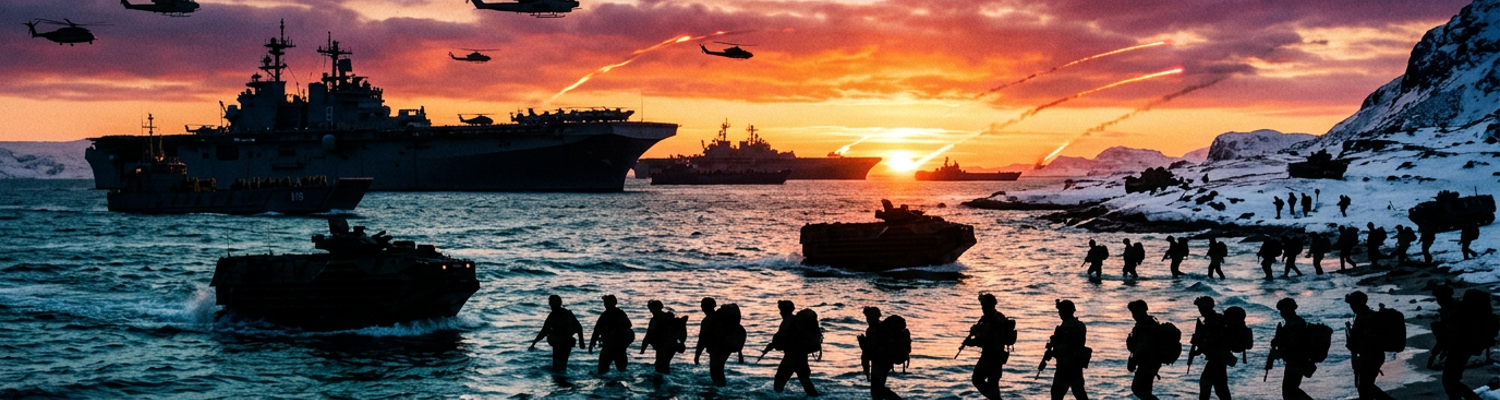
Ice coated the rocky fjords of northern Norway in thick crusts as subzero winds swept down from the Scandinavian mountain ridges. Granite cliffs rose straight out of deep black water, leaving narrow boulder strewn shorelines blocked by deep snowdrifts and hidden ground crevices. Dense fog banks rolled off the Norwegian Sea, dropping ambient temperatures well below zero while distant avalanches blocked the few primitive roads that linked remote coastal outposts to interior defense points. NATO launched Exercise Anorak Express into this brutal Arctic environment in March 1980, mobilizing over 18,000 allied personnel along northern Norway fjords to counter Soviet Northern Fleet expansion. Lieutenants studying tactical maps recognized that the jagged terrain provided almost no safe beachheads or stable footing for troops weighed down by heavy winter combat gear. Planners gathered inside the insulated command spaces of the fleet flagship to plot rapid landing routes toward the frozen shore.
USS Saipan housed these planners inside heated briefing rooms, marking the European operational debut of the massive Tarawa class amphibious assault ship. Staff officers worked over clean acetate map overlays inside the island superstructure of the ship, enjoying comfortable spaces shielded from the gale force winds outside. Amphibious landing scenarios evaluated alliance capabilities to reinforce NATO Northern Flank bastions and secure vital Norwegian airfields before adversary forces could push west from the Kola Peninsula. Marine officers assigned to the 36th Marine Amphibious Unit listened with mounting frustration as senior planners issued aggressive landing schedules that ignored the real effects of deep snow, blizzard conditions, and congealed engine fluids. Commanders treated the unpredictable Arctic weather as an administrative inconvenience rather than an active obstacle capable of halting a modern military force. Platoon leaders received orders at the conclusion of the briefing to move their landing teams into forward assembly areas, sending company officers down toward the frigid lower decks.
Infantrymen waited in shivering rows across the unheated vehicle decks, feeling the extreme chill of the subzero air near the waterline. Cold drafts whistling through the ventilation shafts chilled the steel bulkheads while riflemen struggled to buckle their heavy packs with numb fingers. Mechanics in the lower vehicle bays burned through hand torches trying to thaw frozen fuel lines and fuel filters on amphibious tractors that refused to turn over in the subzero chill. Delayed command directives from the insulated upper deck repeatedly changed landing sequences, leaving heavily loaded troops sitting motionless for hours in freezing staging areas while early signs of hypothermia set in. Officers moved among their shivering men to adjust frozen straps and check equipment, trying to reconcile the neat timetables from the briefing room with the mechanical failures unfolding around them. Boat teams finally received clearance to climb into their assault craft as exhaust fumes filled the cavernous well deck and the stern gates opened onto the churning sea.
Diesel fumes poured out of the open stern gates as coxswains gunned their engines and steered the flat bottomed craft out into the open fjord. Tactical radios immediately failed under severe atmospheric interference and fjord wall shadowing, drowning out coordinate updates in loud bursts of static. Salt spray froze across air intakes on several utility boats, stalling their outboard engines and forcing crews to guide the wallowing hulls past jagged coastal rocks with wooden oars. Company officers realized they were entirely isolated from the command bubble aboard the flagship as their assault craft approached the snowbound shoreline. Boat teams struck a narrow strip of ice encrusted boulders and dropped their bow ramps into chest deep freezing surf, committing the Marines to the shore without radio support or clear tactical directives.
Amphibious Assault Formations at Surnadalsora
Riflemen stepped off those lowered ramps into the black swell, dragging waterlogged packs and heavy rifles across jagged rocks that tore through wet utility uniforms. The 36th Marine Amphibious Unit landed approximately 1,900 Marines across rugged littoral terrain near Surnadalsora, forcing companies to scramble up steep ice glazed bluffs directly from the waterline. Numb hands fumbled with weapon slings and frozen pack buckles as platoon leaders shouted orders over the roar of the surf, pointing squads toward defensive perimeters along the treeline. Wet canvas gear froze stiff within minutes of clearing the spray, locking uniform joints and sapping body heat from troops already exhausted by hours in the unheated well decks. Radiomen repeatedly cranked field sets against granite outcrops to find signal paths out of the fjord, but dense stone walls deflected their transmissions back into deafening white noise. Squad leaders abandoned their useless handsets and pushed forward on foot, leading shivering fire teams into deep snowbanks to secure the narrow landing strip.
LVTP-7 amphibious tractors followed the infantry squads toward that narrow strip of snow, grinding their steel treads against slippery granite slabs as they fought to climb out of the near freezing surf. Amphibious operations integrated these tracked landing vehicles and Landing Craft Utility insertions navigating near freezing waterways and rocky shorelines, creating a slow bottleneck of heavy armor along the water edge. Flat bottomed Landing Craft Utility vessels struggled against powerful tidal currents in the narrow channels, scraping their hulls on submerged rocks while trying to beach close enough to drop vehicle ramps. Steel tracks slipped repeatedly on hidden underwater shelf ice, causing several tractors to throw their track pins or stall out with swamped bilge pumps. Vehicle crewmen jumped into waist deep water with tow cables to haul crippled tractors onto dry gravel before rising tides could flood their engine compartments. Drivers gunned their diesel engines to clear the rocky shallows, spewing thick exhaust into the freezing air while guiding the surviving vehicles toward snow choked coastal trails.
Helicopters bypassed these congested coastal trails by flying low over the water, battling erratic mountain downdrafts as they ferried reserve assault waves toward rocky clearings further inland. Support elements conducted concurrent insertion sorties using CH-46 and CH-53 airframes amid severe subzero crosswinds, pushing mechanical flight limits across the turbulent fjord corridors. Powerful rotor downwash whipped loose snow into blinding whiteouts that obscured landing zones and coated airframe windscreens in sheets of clear ice. Pilots wrestled with heavy flight controls as turbulent mountain currents threatened to slam their aircraft into sheer rock faces bordering the landing clearings. Flight crews kicked cargo nets and shivering infantry platoons out of open side doors directly into waist deep snowdrifts before lifting away to avoid engine flameouts caused by freezing spray. Disembarked riflemen immediately dropped into defensive prone positions around the cleared zones, watching the transport helicopters bank hard toward the open water of the fjord.
Commanders watched the transport aircraft disappear over the water before turning their attention to the isolated squads, directing them toward road intersections flanking Surnadalsora to link up with the mechanized columns crawling inland from the beach. Messengers traveled between scattered platoons on foot because dead radio batteries and steep ridgelines continued to block voice contact with command posts aboard USS Saipan. Marines dug shallow foxholes through crusted snow with folding entrenching tools, building snow parapets to shield weapon positions from biting gale force winds. Frostbite claims mounted among squad members who had lost dry gloves during the wet landing, forcing corpsmen to warm frozen fingers inside their own coats behind rocky windbreaks. Patrol leaders checked paper compasses against distant terrain features and led their fire teams forward along the icy roadway, securing the initial vehicle junction before twilight settled over the fjord.
Tactical Disconnect Between Afloat Command and Shore
Riflemen anchored their blocking positions around this newly secured vehicle junction, stamping their feet into the crusted snow while radio operators attempted to establish contact with the amphibious task force command aboard USS Saipan. Operational planning took place in heated command spaces aboard the flagship while small landing teams endured immediate hypothermic risk on shore. Wet utility jackets froze solid against the skin of the infantrymen, and squad leaders forced their Marines to keep moving in small circles to prevent severe numbness from disabling their hands and feet. Platoon commanders crouched behind snow drifts to consult their waterproof maps, waiting in vain for word on whether to push further inland or hold the road against simulated enemy counterattacks. Every passing minute in the Arctic wind drained physical stamina from the stranded landing teams as core body temperatures dropped toward dangerous hypothermic thresholds.
Radiomen tried to halt this dangerous delay by pulling standard PRC-77 VHF sets from their thermal packs to call for immediate tactical direction and medical evacuation guidance. Fjord topography and atmospheric interference caused static choked tactical radio blackouts on these standard sets, preventing voice contact with offshore vessels. Massive granite cliffs rose thousands of feet above the water, deflecting very high frequency line of sight signals and trapping radio energy within the narrow valleys. Operators extended whip antennas to their maximum lengths and climbed onto icy boulders to find higher ground, but the transceivers continued to produce only loud static and piercing squeals. Low temperatures also attacked the radio power supplies, freezing the internal chemicals in standard dry cell battery packs and dropping output power within twenty minutes of field exposure. Platoon leaders had to shut down their failing sets to conserve what little battery power remained, leaving the ground troops cut off from naval gunfire support and aerial reconnaissance.
Couriers replaced the dead radios by running along the frozen roadbed to carry written situation reports by hand between the isolated company command posts. Delayed command directives from afloat headquarters left small units isolated on exposed beaches without timely tactical updates, forcing company officers to make critical operational decisions without knowing the broader amphibious battle plan. Planners aboard USS Saipan continued to debate revised movement schedules over conference tables, assuming that landing units were advancing on theoretical timelines rather than fighting for survival against the environment. Messengers arriving at the shoreline found subsequent landing craft circling blindly offshore in the fog because afloat commanders had not authorized beachmasters to redirect incoming waves to safer landing points. Heavy vehicle ruts and swamped equipment cluttered the narrow strip of rocks, trapping rifle companies between sheer rock faces and rising sea tides. Lieutenants recognized that they had to rely solely on their own organic weapons and immediate ground reconnaissance to keep their men alive through the incoming Arctic night.
Patrols conducted this immediate ground reconnaissance by fanning out into the surrounding evergreen tree line, clearing secondary trail networks and looking for natural timber shelters to shield injured Marines from the freezing wind. Riflemen cut pine boughs with combat knives to create insulated bedding across the deep snow, keeping shivering casualties off the bare frozen rock. Machine gun teams established overlapping fields of fire across the vehicle junction, anchoring their tripods in the icy dirt without waiting for approved defensive coordinates from the flagship. Squad leaders shared rations and dry socks from their rucksacks while company corpsmen rebandaged frostbitten fingers inside canvas shelter halves. Marines maintained a fifty percent alert watch inside their snow trenches, keeping their machine guns aimed down the dark road to await whatever orders might eventually filter through from the sea.
Mechanical Failures and Arctic Environmental Strain
Riflemen waiting in the dark tested the charging handles of their weapons and discovered seized moving parts inside the aluminum receivers. Standard weapon lubricants congealed in subzero air, forcing infantrymen to strip lubrication from M16A1 rifles to prevent cycling failures. Marines dismantled their service rifles directly in the snow, using dry rags and bore patches to scrub away the gummy residue of standard oil that had turned into stiff paste within the bolt carrier groups. Squad leaders ordered their men to reassemble the bolt assemblies completely dry, preventing sticky lubricant from collecting carbon and jamming the frosted chambers during rapid fire. Officers watched their freezing men perform this delicate maintenance with bare fingers, knowing that high ranking staff officers aboard USS Saipan still believed the landing force was fully operational. Heavy physical labor during this hurried weapons maintenance generated sudden body heat, causing perspiration to soak through the innermost garments of the troops.
Perspiration from this frantic maintenance soaked into standard cold weather vapor barrier boots and layered uniforms, sharply increasing frostbite risks. The non breathable rubber footwear held foot sweat directly against the skin, and as soon as troops stopped moving to hold their defensive foxholes, this trapped moisture chilled rapidly against the frozen ground. Corpsmen crawling between the snow positions pulled off stiffened boots to find numb blanched skin on toes that were already showing signs of superficial frostbite. Men stripped their damp wool socks and rubbed their feet together inside sleeping bags or pressed them against the warm skin of squad mates to restore circulation. Company officers realized that the heavy winter clothing system approved by afloat planners was disabling riflemen who had never even made contact with simulated enemy forces. Squad leaders sent walking wounded and frostbite casualties back toward the beachhead, hoping the tracked vehicles stationed near the surf line could provide heated shelter.
LVTP-7 crewmen waiting near that surf line struggled to keep their transport engines running as subzero temperatures froze hydraulic fluids and gummed fuel systems, incapacitating heavy tracked amphibious vehicles on rocky beaches. Diesel fuel separated and thickened inside the unheated lines, clogging primary filters and cutting engine power before the tractors could climb past the shoreline boulders. Hydraulic fluid solidified inside the steering rams and cargo ramp assemblies, leaving massive steel bow gates frozen wide open as icy saltwater sloshed across the vehicle floors. Mechanics climbed over the slippery metal hulls with blowtorches and hand tools, trying to thaw the clogged fuel manifolds while freezing coastal spray coated their coveralls in rigid sheets of ice. Battery banks drained flat after only a few attempts to crank the cold engines, stranding multiple assault tractors in a dead cluster along the narrow strip of gravel. Vehicle commanders abandoned their dead machines and guided the shivering casualties into rocky gullies, realizing that the mechanized arm of the amphibious unit was completely immobilized.
Lieutenants responded to the immobilized armor by organizing makeshift triage stations inside narrow rock crevasses, using discarded vehicle tarpaulins and spruce branches to block the howling wind. Platoon leaders quickly understood that neither vehicle heaters nor rapid amphibious resupply would arrive to protect their hypothermic troops from the plunging night temperatures. Field corpsmen pooled survival rations and dry socks retrieved from the disabled tractors, distributing extra footgear to the most severe cold weather casualties. Messengers continued to relay tactical updates on foot between scattered platoons because dead radio batteries and steep granite cliffs kept voice communications completely silenced. Company commanders ordered their men to rotate every thirty minutes between active perimeter watches and shared shelter blankets, keeping blood moving through numb fingers and feet without relying on any external assistance. Squad leaders posted extra sentries along the perimeter rocks with dry unlubricated rifles at the ready, watching the dark road while the rest of the company huddled together against the frozen stone.
Critical Deficiencies in Marine Corps Arctic Doctrine
Sentries leaning against the frozen stone observed ski equipped Norwegian host forces gliding effortlessly past their positions, highlighting a glaring tactical disparity along the icy valley. Marine rifle units lacked organic over snow mobility assets, contrasting sharply with these ski equipped Norwegian host forces. The local defense troops moved on lightweight cross country skis and pulled fiberglass gear sleds over drifts that reached chest high on American boots, bypassing road obstructions with ease. American riflemen possessed neither skis nor snowshoes, forcing infantry patrols to plunge waist deep into powdery snowdrifts the moment they stepped off the plowed roadway. Moving a single platoon several hundred yards across an open snowfield exhausted the troops within half an hour, soaking them in sweat and risking swift hypothermia. Company officers ordered their exhausted riflemen back to the hard packed gravel shoulders of the roadway, leaving these road bound units unable to secure the flanking heights.
Quartermasters trying to supply these road bound units soon confronted the complete breakdown of Marine Corps supply channels. The deployment revealed that Vietnam era temperate supply lines and doctrine failed under high latitude winter conditions. Standard supply packaging and push package distribution doctrines had been refined during decades of warm weather operations across Southeast Asia and the Pacific, leaving equipment completely unsuited for high latitude littoral freezing. Cardboard cargo boxes disintegrating in the wet snow along the beach exposed canned field rations that quickly froze solid, splitting their metal cans before quartermasters could distribute them to forward platoons. Rubber bladder tanks filled with fresh potable water froze solid into massive ice blocks on the shoreline, cutting off drinking water for the ashore combat elements. Supply personnel lacked cold weather handling gear and had to chop through ice encrusted shipping containers with axes to salvage dry socks and emergency heating tabs for the forward defensive pockets.
Corpsmen working inside those forward defensive pockets faced an immediate medical crisis as evacuation routes collapsed. Casualty evacuation timelines suffered severe breakdowns caused by restricted sea conditions and localized coastal whiteouts. Heavy freezing swells and jagged rock reefs in the fjord prevented landing craft from safely beaching to load litter patients, threatening to smash small boats against the boulders. Sudden coastal whiteouts and blinding snow squalls rolled across the shoreline, dropping visibility to zero and forcing transport helicopters from USS Saipan to abort their inland recovery flights. Seriously injured troops and severe frostbite cases accumulated inside makeshift shelters near the water, waiting hours for medical extraction that planners had scheduled to take minutes. Field doctors improvised warming stations inside wet granite caves using chemical heat packs and shared sleeping bags to keep freezing casualties alive until rescue boats could approach the surf.
Commanders pulled their battered defensive lines back toward the surf to protect these makeshift granite cave clinics, assigning uninjured riflemen to rotate shifts between survival shelters and outward security outposts. Officers discarded theoretical amphibious doctrine manuals written for warm water operations, realizing that simple physical survival now dictated every tactical move. Squad leaders collected functioning weapons and dry ammunition belts from incapacitated troops, reallocating rifle rounds and cold weather clothing to maintain a perimeter against simulated enemy attacks. Troops gathered discarded cargo wood and dry evergreen branches to build windbreaks across the narrow gravel corridor, creating basic thermal barriers against the driving sleet. Platoon sergeants stationed forward sentry pairs in ten minute relief cycles, using knotted guide ropes anchored to rock outcrops to guide shivering replacements through the coastal gale.
Prepositioning Programs and Cold Weather Reforms
Riflemen used the guide ropes to stumble through the gale toward the evacuation beaches as allied controllers finally terminated the landing drills. Shivering company officers boarded USS Saipan with clipboards full of casualty reports, frozen equipment logs, and stark accounts of systemic supply failure. Planners inside the heated afloat command center confronted undeniable proof that standard amphibious doctrine had broken down in the northern fjords. Transporting an entire brigade across thousands of miles of storm tossed ocean during an actual military emergency would consume critical weeks and leave combat units vulnerable to hostile air and submarine strikes. After action analysis from Anorak Express 80 accelerated the creation of the Marine Corps Prepositioning Program Norway in reinforced cave complexes. Engineers blasted massive subterranean storage vaults deep inside granite mountains in the Trondheim region, building climate controlled chambers to safeguard heavy artillery, ammunition, trucks, and medical supplies for immediate wartime breakout.
Engineers outfitting these subterranean caverns could not protect landing parties if individual troops lacked the practical skills to survive in subzero wilderness. Instructors at the high altitude mountain facility discarded outdated temperate combat drills, instituting mandatory mountain survival courses, avalanche rescue training, and cross country ski instruction for deploying units. Marines spent weeks climbing through deep Sierra Nevada snowpacks, learning to balance heavy combat loads on wooden snowshoes and build thermal snow shelters before hypothermia set in. Platoon leaders practiced maintaining small arms without congealing lubricants and monitored squad hygiene to prevent sweat accumulation inside newly evaluated boots and moisture wicking uniform layers. Infantry platoons mastered over snow navigation on cross country skis, but company commanders still faced the challenge of hauling heavy combat supplies over frozen mountain passes.
Vehicles designed for warm climates had failed completely to haul those heavy supplies along the Norwegian coastline, leaving foot patrols isolated without mobile heavy weapons or rapid medical evacuation. The operation prompted the acquisition of specialized Arctic equipment, including the tracked Bv 206 Small Unit Support Vehicle. Built with wide rubber tracks and a two car articulated body, this Swedish designed transport distributed its weight across fragile snow crusts without sinking into deep drifts. Front passenger cabins housed the driver and tactical radio systems within insulated heated compartments, while the powered rear car carried fully equipped rifle squads, mortar crews, or medical litter patients. Drivers steered the agile vehicle across steep rocky slopes and waterlogged muskeg where standard amphibious tractors had bogged down. Mechanics delivered these all terrain carriers to forward operational depots, giving landing units the cross country mobility that earlier assault forces had lacked.
Quartermasters supported this new mobility by packing cold weather uniforms and survival gear into the reinforced mountain tunnels alongside the tracked carriers. Officers assigned to subsequent NATO Northern Flank deployments drew dry operational combat vehicles directly from the subterranean Norwegian depots within hours of landing at regional airfields. Combat battalions no longer relied on unheated well decks or vulnerable beachhead supply dumps to sustain forward infantry companies in deep snow. Squad leaders led conditioned riflemen into subzero mountain sectors on skis, supported by tracked support vehicles carrying heavy weapons, hot rations, and functioning radio relays. Patrols established fortified defensive sectors along the rocky ridges of northern Norway, anchoring NATO defense lines against potential Soviet advances without succumbing to the Arctic elements.