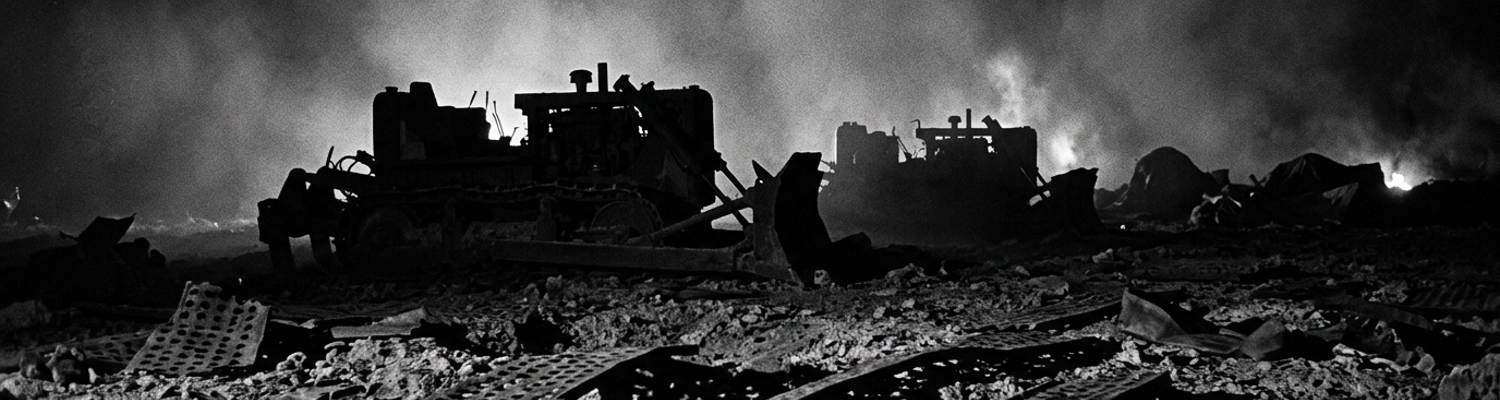

Biak Island and Strategic Airfield Objectives
27 MAY 1944. 0715 HOURS UTC+9. COORDINATES 01 11 S 136 06 E.
The initial landing craft dropped their ramps onto the abrasive coral shelves of Bosnik beach. This initiated an operation dictated entirely by commanders sitting three hundred miles away.
Archival evidence shows that Allied high command aggressively targeted Mokmer Airfield on Biak Island in mid-1944. General Douglas MacArthur required heavy bomber bases to project continuous air cover over the impending amphibious invasions of the Palau Islands and the Philippine archipelago. Planners at Sixth Army headquarters in Hollandia examined high-altitude aerial reconnaissance photographs. They identified a flat coastal plain highly suitable for Consolidated B-24 Liberator operations. These officers operated inside an isolated administrative command center completely detached from the physical terrain. They measured distances on two-dimensional maps and issued strict timetables for the capture and operational readiness of the runway. Staff officers calculated that Mokmer could be captured and expanded within seventy-two hours of the initial beach assault. Mokmer was the largest and most developed of three Japanese-built aviation strips on the southern coast of Biak. Their planning documents categorized the island topography as manageable scrubland.
Intelligence reports failed to identify the interconnected network of limestone caverns dominating the northern edge of the airfield.
The US 116th Engineer Combat Battalion was assigned the specific task of securing and constructing perimeter defenses around the captured airfield. A close review of operational logs indicates that these men were expected to function as both heavy construction crews and frontline infantrymen simultaneously under extreme duress. Their mandate required them to transport D7 Caterpillar bulldozers and motorized road graders onto the Mokmer strip immediately behind the advancing 41st Infantry Division. They also hauled thousands of tons of pierced steel planking. Command directives issued from the rear echelon explicitly ordered the engineers to establish a fortified defensive ring using sandbags and heavy timber before initiating any runway repairs. Officers back in Hollandia assumed the infantry battalions would rapidly sweep the surrounding area clear of enemy resistance. The 116th carried M1 Garand rifles and standard infantry combat loads alongside their heavy surveying equipment. They were expected to lay interlocking sheets of Marston matting across heavily cratered coral rock. They also had to establish overlapping fields of .30 caliber machine-gun fire to protect their own exposed machinery.
Orders arrived over crackling SCR-300 backpack radios demanding instant progress reports from men pinned down in the dirt.
Frontline conditions immediately contradicted the neat operational timelines drafted by rear-area commanders. Generals safely insulated in their distant command posts transmitted increasingly frantic demands for bomber strip activation to support upcoming naval maneuvers. They could not see the steep coral cliffs directly overlooking the designated work zones. These cliffs rose forty feet into the air. Colonel Naoyuki Kuzume had positioned Type 92 heavy machine guns and 81mm mortars within the natural cave mouths facing south toward the runway. The 116th Engineer Combat Battalion drove their unarmored heavy earth-moving equipment directly into these pre-registered artillery zones. Communications between the exposed engineers on the runway and the task force headquarters broke down repeatedly. Japanese mortar shells shredded the copper field telephone wires laid across the coral. Rear echelon commanders continued to push blind directives forward. They demanded the engineers stand up and operate their graders.
A bulldozer operator attempting to fill a blast crater near the center of the runway received a direct hit from a high-explosive mortar round at 1430 hours.
Coral Trenching and Static Bunker Construction
Archival evidence shows the 116th Engineer Combat Battalion attempting to dig standard infantry fighting positions along the northern perimeter of Mokmer Airfield on May 28. General Walter Krueger and his staff in Hollandia issued orders specifying trenches three feet wide by five feet deep. They based their calculations on standard soil excavation rates found in Army field manuals. The geological composition of Biak Island consisted entirely of densely packed Oolitic limestone and uplifted reef coral. Engineers swung standard-issue M1910 entrenching tools into the ground at coordinates 01 11 30 S 136 06 15 E. The steel folding shovels snapped at the hinge. Company commanders quickly requisitioned heavy pneumatic rock drills and diesel-powered Le Roi air compressors from the beachhead stockpiles. Mechanics dragged the heavy compressors across the uneven runway surface using damaged jeeps.
The hardened steel drill bits glowed red and shattered against the subterranean coral shelves within minutes of operation.
A close review of unit medical logs indicates a high casualty rate among the combat engineers purely from environmental hazards. Men attempting to carve out the trench lines by hand suffered deep lacerations from the jagged coral edges. These wounds frequently became infected with tropical ulcers within forty-eight hours. The infections incapacitated highly trained heavy equipment operators. Headquarters personnel monitored the situation from a secure communications tent three hundred miles away. They refused to alter the defensive blueprints. Officers transmitted repeated demands over the SCR-300 radios on frequency 48.3 MHz for the engineers to finish the perimeter earthworks before nightfall. The rear-echelon commanders completely failed to comprehend the physical environment. Digging a single foot into the coral required fifty pounds of dynamite.
The men on the ground resorted to stacking loose chunks of blasted limestone to form crude parapets above the surface.
Static defensive bunkers were constructed under sustained Japanese mortar and artillery fire originating from the limestone terraces directly above the airfield. Colonel Naoyuki Kuzume had pre-registered his Type 94 75mm mountain guns and Type 97 81mm mortars to target specific coordinate grids along the runway apron. The engineers of Company B attempted to assemble heavy mahogany timber roofing for the primary command bunkers. High-explosive shells detonated against the exposed coral surface during this process. Shrapnel mixed with secondary projectiles of shattered limestone. This created a deadly horizontal fragmentation effect across the flat expanse. Men dropped their hammers and flattened themselves against the shallow rock depressions. Planners at Sixth Army headquarters had mandated the construction of twenty-four reinforced sandbag bunkers to protect the incoming bomber crews.
The engineers found no loose sand or soil anywhere near the construction sites to fill the canvas bags.
Troops fed chunks of blasted coral through motorized rock crushers to generate usable fill material. The abrasive coral dust rapidly clogged the air filters on the gasoline engines powering the crushers. This caused multiple mechanical seizures. Japanese forward observers positioned in the West Caves spotted the thick black diesel exhaust plumes from the operational machines. They immediately directed concentrated artillery barrages onto the engineer positions. A direct hit on a primary supply depot at 1615 hours ignited a stockpile of diesel fuel. The fire incinerated three weeks of burlap sack reserves. Rear-echelon commanders responded to the resulting delay by threatening the battalion officers with court-martial for failing to meet the original construction timetable.
An incoming 90mm mortar round sheared the steel blade off a D7 Caterpillar bulldozer attempting to push coral rubble over a half-finished bunker roof.
Command Isolation at Alamo Force Headquarters
When examining the historical record of the Biak operation, the physical detachment of the command structure becomes glaringly apparent. Alamo Force Headquarters operated out of a sprawling encampment at Hollandia. This base was situated nearly three hundred miles east of the fighting. General Walter Krueger and his senior staff officers directed the invasion from inside large canvas tents equipped with wooden floorboards and reliable electric lighting. Heavy diesel generators hummed constantly to power the complex cryptographic machines and radio transmitters required to manage a theater-wide campaign. These officers stared down at flat 1:50,000 scale topographic maps pinned to folding tables. They measured distances with brass calipers. The map contours completely failed to capture the vertical sheer of the coral cliffs dominating Mokmer Airfield. Planners analyzed high-altitude aerial reconnaissance photographs taken weeks prior. They interpreted the dense jungle canopy as standard tropical foliage rather than a camouflaged network of fortified limestone caverns.
The three-hundred-mile geographical gap severed the rear echelon from the immediate tactical environment.
A close review of operational logs indicates that this extreme situational isolation severely degraded command decision-making. Information flow relied entirely on fragile radio links and encrypted Morse code transmissions. Forward observers on Biak carried heavy SCR-300 backpack radios. They attempted to broadcast situation reports through dense atmospheric interference and the physical barrier of the limestone ridges. These weak signals had to be captured by offshore naval vessels and relayed back to the massive SCR-299 mobile communication trucks parked at Hollandia. Signal Corps clerks then spent hours deciphering the coded text before typing up formal reports for the general staff.
A frontline coordinate update was frequently six hours out of date before an officer placed a colored pin on the headquarters map.
Rear commanders issued urgent offensive mandates based entirely on these delayed intelligence reports. The strategic timetable demanded a fully functional heavy bomber base to project air power over the impending Philippine sea lanes. General Krueger and his staff required immediate progress on the Mokmer strip. They transmitted direct orders for the 116th Engineer Combat Battalion to begin heavy construction. Directives originating from the Hollandia tents on May 29 explicitly instructed the engineers to deploy their unarmored motorized road graders and ten-ton rollers onto the open runway apron. Staff officers calculated their construction schedules using standard excavation metrics derived from peacetime training exercises in the continental United States. They expected the immediate installation of thousands of interlocking pierced steel planks across the coral surface. The command staff possessed zero real-time awareness of the infantry situation. The 41st Infantry Division had failed to clear the elevated terraces flanking the airfield. High-ranking officers working safely behind desks assumed the infantry had already established a secure perimeter.
Headquarters expected the engineers to pour concrete and grade coral exactly according to the pre-invasion blueprint.
Archival evidence shows that Alamo Force completely ignored the desperate requests for artillery support coming from the pinned-down forward units. Radio operators at Hollandia logged incoming reports of heavy Japanese mortar fire as isolated pockets of minor enemy resistance. Rear-area generals refused to alter the operational timeline without real-time updates confirming the massive scale of Colonel Naoyuki Kuzume and his entrenched cave defenses. They sent encrypted cables down the chain of command. These cables bypassed standard tactical pauses. The directives demanded the engineers stand up, start their heavy machinery, and clear the runway debris by 1800 hours. Combat engineers received these blind mandates while lying face-down in shallow coral depressions under overlapping arcs of Type 92 machine-gun fire.
A Japanese high-explosive shell obliterated a D7 Caterpillar bulldozer precisely as the radio operator transcribed the order to begin grading the tarmac.
Japanese Subterranean Networks in the West Caves
A close review of captured Imperial Japanese Army engineering schematics reveals the exact dimensions of the defensive complex positioned directly north of the Mokmer runway. Colonel Naoyuki Kuzume integrated the 222nd Infantry Regiment into a series of massive limestone sinkholes. US forces collectively designated this area as the West Caves. Located at coordinates 01 10 50 S 136 05 45 E, this geological formation consisted of three primary underground chambers plunging more than one hundred feet below the surface ridge. Japanese combat engineers spent months modifying the natural Oolitic limestone. They used pneumatic drills and hand tools to expand narrow subterranean fissures into wide transit corridors. They constructed heavy mahogany platforms suspended by iron pitons driven into the cavern walls. These platforms supported Type 94 75mm mountain guns and twin-mount 20mm anti-aircraft cannons depressed for ground fire. The multi-tiered layout included dedicated subterranean ammunition magazines storing thousands of high-explosive shells. It also featured a fully equipped hospital ward holding two hundred beds and natural freshwater sumps capable of sustaining a garrison of over a thousand men for months. Kuzume positioned his heavy ordnance specifically to fire through narrow fissures. These camouflaged openings offered unobstructed firing arcs directly onto the flat coral expanse of the airfield below. Infantrymen manned Type 92 heavy machine guns mounted on sandbagged ledges just inside the cave mouths. They kept the weapons in total darkness to hide their muzzle flashes from counter-battery observers.
Steel blast doors installed at the primary entrances deflected the concussive waves from direct artillery strikes.
Alamo Force planners stationed three hundred miles away at Hollandia completely failed to identify these subterranean fortifications prior to the amphibious assault. General Walter Krueger and his intelligence staff relied exclusively on high-altitude aerial reconnaissance photographs. These images were captured by F-5 Lightning aircraft flying at twenty thousand feet. Analysts looking through magnifying stereoscopes at Fifth Air Force headquarters interpreted the dense jungle canopy covering the limestone ridges as standard tropical scrubland. They assessed the dark circular shadows on the photographic negatives as thick vegetation clusters rather than seventy-foot-wide vertical drops leading into the primary cavern network. The intelligence annexes attached to the invasion orders listed the area immediately north of Mokmer Airfield as lightly defended terrain suitable for rapid infantry flanking maneuvers.
The two-dimensional intelligence maps provided to the 41st Infantry Division depicted a gently sloping hill devoid of heavy defensive emplacements.
When examining the historical record of the invasion, the resulting command directives demonstrate a complete detachment from the physical terrain. Sixth Army headquarters issued strict operational timetables assuming the infantry would encounter only shallow trench networks and exposed pillboxes. Rear-echelon commanders calculated that standard naval bombardment from offshore destroyers would easily neutralize any elevated Japanese positions before the 116th Engineer Combat Battalion moved onto the runway. They did not account for the physics of subterranean warfare. A fourteen-inch high-explosive naval shell detonating against the exterior limestone ridge transferred zero kinetic energy to the Japanese infantrymen sheltered eighty feet underground. The heavy coral ceilings absorbed the impact of thousand-pound aerial bombs. This left the subterranean command posts and mortar pits entirely intact. Japanese internal communication lines consisted of insulated copper wire strung deep within the cave system. This setup completely shielded their network from the explosive fragmentation that routinely severed American field telephones on the surface.
Japanese gunners simply rolled their 81mm mortars back from the cave mouths during the bombardments.
Officers inside the Hollandia command tents pushed blind orders over the radio network demanding immediate runway activation. They remained entirely unaware of the surviving subterranean garrison. They transmitted encrypted directives expecting the combat engineers to deploy their unarmored D7 Caterpillar bulldozers and ten-ton rollers directly into pre-registered kill zones. The rear headquarters dismissed early frontline reports of heavy flanking fire as isolated sniper harassment. Signal Corps clerks typed up daily situation reports that continuously underestimated enemy troop strength. This led generals to threaten forward commanders with demotion for failing to advance across the exposed tarmac. Planners measuring map coordinates with brass dividers refused to authorize tactical withdrawals for the engineers pinned down behind their heavy machinery.
A Type 92 heavy machine gun firing from an undetected ventilation shaft sixty feet above the runway severed the hydraulic lines on a motorized road grader at 0914 hours.
Nightly Counterattacks and Forward Triage Bottlenecks
A close review of unit medical logs indicates that the 116th Engineer Combat Battalion forward casualty clearing stations rapidly collapsed under a massive triage bottleneck on the evening of May 29. Battalion surgeons established their primary treatment tents in a shallow depression fifty yards south of the main Mokmer runway at coordinates 01 11 40 S 136 06 10 E. The facility consisted of four canvas tarpaulins stretched over shattered palm trunks. Medics treated an overwhelming influx of complex blast trauma caused by Japanese 81mm mortar shells detonating against the exposed limestone apron. The Oolitic coral fragmented into razor-sharp secondary projectiles upon impact. This caused severe lacerations and deep tissue avulsions that standard field dressings could not contain. Combat engineers carried their wounded operators off the tarmac on improvised stretchers made from pierced steel planking. The equatorial heat pushed ambient temperatures above one hundred degrees Fahrenheit. Japanese snipers positioned in the elevated terraces systematically targeted the battalion unarmored water trailers. They drained hundreds of gallons of drinking water directly into the porous dirt. Severe dehydration accelerated the onset of hypovolemic shock among the bleeding men stacked in rows outside the surgical tents.
Blood plasma supplies completely ran out at 1930 hours.
General Walter Krueger and his staff officers sitting inside the Alamo Force command tents three hundred miles away in Hollandia monitored the escalating casualty reports through delayed radio transcripts. Planners operating under strict deadlines for bomber base activation refused to authorize the diversion of incoming landing craft for medical evacuations. They prioritized the offloading of heavy construction materials over the extraction of wounded personnel. Rear-echelon commanders transmitted encrypted orders directly to the medical detachment. They demanded that lightly wounded heavy equipment operators return to their bulldozers immediately after receiving basic first aid. Signal Corps clerks typed out these directives on dry wooden desks while frontline medics desperately sorted patients by survivability in the mud.
A battalion surgeon amputated a shattered leg using a standard-issue hacksaw without anesthesia.
Archival evidence shows that the perimeter security completely disintegrated as darkness fell across the airfield. Elements of the Japanese 222nd Infantry Regiment launched fanatical nightly counterattacks directly from the primary entrances of the West Caves. Colonel Naoyuki Kuzume ordered his men to infiltrate the American lines in squad-sized elements. They exploited the wide gaps between the unfinished engineer bunkers. The Japanese infantrymen navigated the steep coral drop-offs in total darkness wearing split-toe rubber boots to silence their footfalls. They bypassed the standard infantry pickets and assaulted the heavy construction machinery parked along the runway apron. Enemy soldiers threw Type 97 fragmentation grenades directly into the open cabs of motorized road graders. They attached magnetic demolition charges to the steel tracks of D7 Caterpillar bulldozers. The combat engineers of the 116th dropped their surveying transits and engaged the infiltrating assault teams at point-blank range using M1 Garand rifles and fixed bayonets.
A Japanese officer drove his shin-gunto sword completely through the chest of an American radio operator.
The three-hundred-mile geographical gap severed Alamo Force headquarters from the immediate tactical emergency unfolding on the runway. Forward observers pinned down behind disabled rock crushers broadcasted frantic requests over frequency 48.3 MHz for offshore destroyers to fire star shells and illuminate the airfield. Generals safely insulated in their distant command posts denied the artillery support requests. Their two-dimensional topographic maps indicated that the 41st Infantry Division had already secured the northern ridges flanking the airstrip. Staff officers assumed the engineers were simply reporting isolated sniper fire. They refused to expend naval ammunition reserves designated for upcoming amphibious assaults. The rear echelon sent cables demanding the engineers hold their positions and prepare to resume pouring concrete at first light.
An incoming Type 94 75mm mountain gun shell obliterated a medical supply dump exactly as a field telephone rang with the order to begin grading the tarmac.
Logistical Isolation and Tactical Communication Gaps
A close review of Signal Corps transmission logs reveals a systematic breakdown in tactical communications between Biak Island and Alamo Force headquarters. Forward observers attached to the 116th Engineer Combat Battalion carried SCR-300 backpack radios onto the Mokmer runway at coordinates 01 11 20 S 136 06 15 E. The frequency modulation signals emitted by these units operated on a line-of-sight principle. The dense Oolitic limestone ridges rising forty feet directly north of the airfield physically blocked the very high-frequency radio waves from reaching the command ships anchored offshore. Radio operators had to crawl across the exposed coral tarmac under overlapping arcs of Type 92 machine-gun fire to find signal gaps between the terrain features. Weak transmissions that managed to penetrate the atmospheric interference were captured by Navy destroyers. Sailors manually transcribed the messages and relayed them via encrypted Morse code to the sprawling SCR-299 mobile communication trucks parked three hundred miles east in Hollandia. Clerks inside these trucks fed the incoming intercepts through M-209 cipher machines. The decryption process required hours of manual labor before a junior officer could type a formal situation report.
A frontline coordinate update logged on the runway at 0600 hours did not reach General Walter Krueger and his planning desk until the sun had already set.
Delayed intelligence transmission severely compromised tactical decision-making at higher echelon commands. Staff officers analyzing two-dimensional maps inside their secure tents read reports that were entirely disconnected from the immediate tactical environment. Decrypted cables from the previous evening indicated that advance elements of the 41st Infantry Division had successfully bypassed the northern ridges to pursue retreating Japanese units. Alamo Force planners assumed this maneuver effectively neutralized any threat to the airfield. They immediately drafted strict operational directives demanding the 116th Engineer Combat Battalion begin heavy construction on the runway apron. General Krueger and his headquarters transmitted blind orders over the radio network requiring the deployment of ten-ton rollers and unarmored motorized road graders by 0800 hours. The rear-echelon commanders completely failed to understand that the American infantry had walked past Colonel Naoyuki Kuzume and his heavily fortified subterranean network in the West Caves without clearing it.
Officers three hundred miles away threatened forward battalion commanders with court-martial for failing to pour concrete on a runway absorbing dozens of 81mm mortar strikes per hour.
Combat engineers maintained airfield perimeters despite tactical misalignments between forward troops and headquarters. The 41st Infantry Division rapid advance inland created a massive security vacuum directly adjacent to the primary construction zones. Archival evidence shows that the 116th Engineer Combat Battalion was forced to abandon their heavy surveying equipment and establish static infantry fighting positions to protect their own exposed machinery. Mechanics and bulldozer operators unloaded crates of M1917 water-cooled .30 caliber machine guns from the landing craft and dragged them across the abrasive coral shelves. They established interlocking fields of fire around the parked D7 Caterpillar tractors. Standard Army doctrine dictated the use of sandbags for heavy weapon emplacements. The engineers found no usable soil on the uplifted reef. This forced them to fill thousands of canvas sacks with sharp coral dust generated by diesel-powered rock crushers. Men stacked these heavy bags around their Le Roi air compressors while Japanese snipers systematically targeted the exposed gasoline tanks.
Heavy equipment operators fired fragmentation grenades from M7 rifle adapters to repel Japanese infiltration teams advancing toward the parked road graders.
The geographical separation between the fighting and the command posts resulted in conflicting tactical priorities. Hollandia continuously broadcasted demands for the immediate installation of pierced steel planking across the heavily cratered tarmac. The engineers on the ground ignored these directives to survive. Elements of the Japanese 222nd Infantry Regiment exploited the gap left by the 41st Infantry Division. They emerged from camouflaged cave mouths to launch daylight assaults against the airfield perimeter. The 116th stretched coils of barbed concertina wire directly across the designated runway expansion zones to slow the enemy infantry. Rear-area generals monitored the lack of construction progress through delayed radio intercepts. They responded by sending increasingly hostile reprimands down the chain of command. They expected the engineers to act as a dedicated construction crew while the men on the runway fought as a completely isolated infantry battalion.
An armor-piercing 20mm shell fired from a concealed cavern fissure ignited a drum of aviation fuel exactly as the radio operator transcribed the order to begin laying the Marston matting.