
A Lawless Frontier Fueled by Whale Oil
In the decades after the War of 1812, American whaling escalated from a coastal trade into a global industrial enterprise. By the 1850s, a fleet of over 700 U.S. flagged vessels dominated the world's oceans, hunting the leviathans whose bodies yielded the essential commodities of the age. Whale oil and spermaceti lubricated the machines of the Industrial Revolution and lit the nights of burgeoning American cities. The industry's economic output was immense, with sales in 1853 reaching $11 million, a figure that made ports like New Bedford, Massachusetts, among the wealthiest per capita in the world. This wealth was extracted from the most remote corners of the globe. As whalers depleted stocks in the Atlantic, they pushed into the Pacific and then relentlessly north, chasing bowhead and right whales into the Bering Sea and the Arctic Ocean. In these distant, ice-choked waters, they operated in a geopolitical vacuum. Slow, heavy with valuable cargo, and isolated for years at a time, whaling ships were vulnerable to foreign claims, disputes with indigenous populations, and the unforgiving environment. This combination of high economic value and extreme vulnerability created a direct need for federal intervention. The U.S. Navy's global presence was thin, its priorities elsewhere. The duty fell to the United States Revenue Cutter Service, expanding its mission from policing coastal tariffs to projecting American sovereignty into the planet's most hostile maritime frontier.
Building Vessels to Survive the Ice
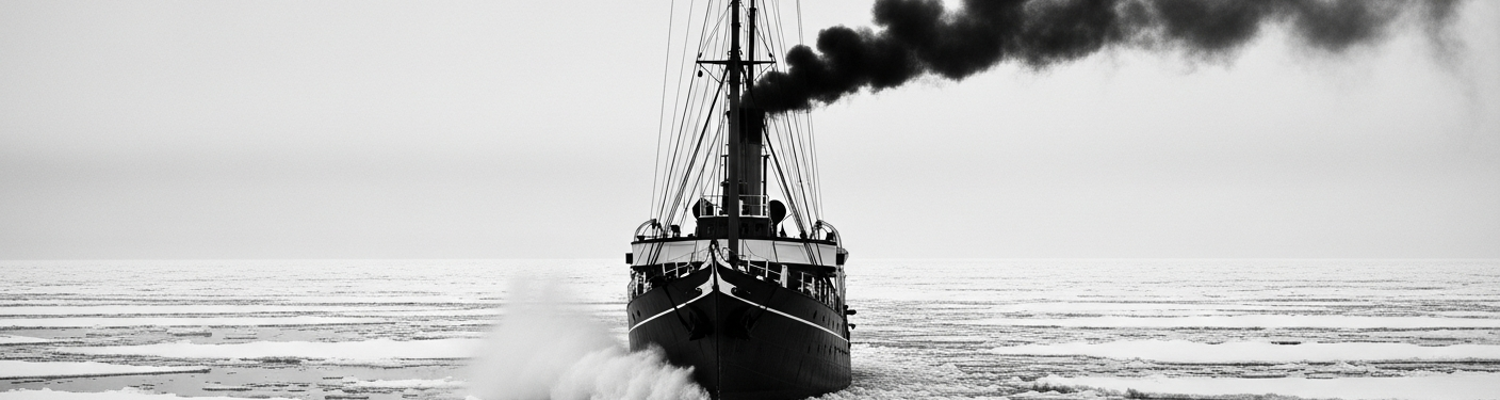
The Service's push into the Arctic demanded a new type of vessel, one that could endure the crushing power of sea ice while possessing the range for trans-oceanic patrols. The standard wooden topsail schooners of the early 19th century were wholly inadequate. Experience in the Bering Sea Patrol quickly proved the necessity of specialized, reinforced construction. The USRC Thomas Corwin, launched in 1876, was an early purpose-built attempt. Constructed of Oregon fir and fastened with iron and copper, the 155-foot vessel was a hybrid, a single-screw steam-powered schooner that acknowledged the deep limitations of both sail and engine power in the Arctic. Her inverted cylinder steam engine provided critical propulsion for maneuvering in calm winds or navigating narrow leads in the ice, but her small coal bunkers made sails essential for the long voyage from San Francisco to the whaling grounds. The true archetype of the Arctic cutter emerged with the acquisition of the USRC Bear in 1885. Originally a Scottish-built sealer from Greenock, the Bear was a fortress of wood. Her 198-foot hull was a laminate of oak planks six inches thick, sheathed with exceptionally dense Australian ironwood for resisting ice abrasion. Her bow was plated with iron. A reliable 350-horsepower compound-expansion steam engine, combined with a full barkentine sail rig, gave the Bear a combination of power and endurance her predecessors lacked. These cutters were not icebreakers. They could not smash through solid ice fields. They were ice-resistant platforms, designed to follow leads, push through loose pack, and, most importantly, survive being frozen in for months at a time. Their armament was light, typically a few 6-pounder guns, sufficient for law enforcement but not for naval combat. Their strength was in their construction and the accumulated knowledge of their commanders in reading the ice.
Navigating by Instinct and Dead Reckoning
Operating in the Bering Sea and Arctic Ocean during the late 19th century was an exercise in high-stakes approximation. Officers aboard cutters like the Corwin and Bear depended on a small suite of fragile technologies. The ship's chronometer, a precise marine clock kept carefully insulated from temperature swings, was the heart of navigation, enabling the calculation of longitude. A sextant, used to measure the angle of celestial bodies above the horizon, provided latitude. These instruments, however, were frequently rendered useless. Persistent Arctic fog, a low sun angle, and the long twilight of the polar summer could obscure the sky for weeks. Near the magnetic pole, compasses became erratic and unreliable. The available charts were a patchwork of conjecture and sparse soundings from earlier explorers, riddled with inaccuracies that could easily place a ship onto an uncharted reef or shoal. Cutter commanders thus became cartographers out of necessity, spending a significant portion of their patrols taking soundings and sketching coastlines, correcting old charts and creating new ones. Communication beyond shouting distance was nonexistent. Once a cutter left the port of Unalaska, it was utterly alone. A catastrophic engine failure or a hull breach from ice was a private disaster, with no hope of summoning aid. The psychological pressure of this profound isolation, combined with the constant physical danger and harsh living conditions, was a significant operational factor that shaped every decision made by a cutter's captain.
Projecting Federal Authority into the Arctic
The Bering Sea Patrol's mandate was to act as the sole representative of the U.S. government in a vast and ungoverned territory. This meant protecting American whalers, enforcing laws against smuggling liquor and firearms to native populations, providing medical aid, conducting scientific research, and performing search and rescue. Captain Michael A. Healy, commanding the Corwin and later the Bear, became the embodiment of this authority. Known as "Hell Roaring Mike," Healy acted as judge, doctor, and police officer for the floating communities of whalers and the coastal Alaskan natives. He settled wage disputes among crews, hunted for mutineers, and mediated conflicts between whaling captains and local villages. His patrols occurred against a tense backdrop of international competition, particularly the Bering Sea Controversy with Great Britain over pelagic sealing rights. Cutters were a constant physical reminder of U.S. jurisdiction. The service's most celebrated mission was the Overland Rescue of 1897-1898. That autumn, eight whaling ships, including the Orca and Belvedere, with 275 men aboard were trapped by an early freeze near Point Barrow, Alaska. Facing certain starvation, the whaling companies appealed to President McKinley, who ordered the Bear, under Captain Francis Tuttle, to attempt a rescue. The Bear steamed north from Port Townsend, Washington, into the advancing winter darkness, an unprecedented feat. Blocked by impassable ice hundreds of miles from the trapped fleet, Tuttle dispatched an overland relief party. First Lieutenant David H. Jarvis, Second Lieutenant Ellsworth P. Bertholf, and Surgeon Samuel J. Call began a 1,500-mile journey by dogsled from Cape Vancouver. Through the brutal Alaskan winter, in temperatures that fell to sixty degrees below zero, they traveled across the frozen tundra, bartering for and eventually driving a herd of 450 reindeer to provide a source of fresh meat. They reached the desperate whalers in late March 1898, having been on the trail for three months. Their arrival ended the immediate threat of starvation and scurvy, saving all 275 men.
The Tyranny of Coal and Hardtack
Arctic patrols were defined by their logistical limitations. A vessel like the Bear departed San Francisco with its holds filled to capacity, but these supplies dwindled with alarming speed. Coal was the most critical constraint. The powerful but inefficient steam engines consumed tons of it, and a cutter's operational radius was dictated by the volume of its coal bunkers, which held about 150 tons. Coaling stations were almost nonexistent north of Dutch Harbor. The all-hands evolution of 'coaling ship' was a filthy, back-breaking process of hauling sacks of coal aboard from lighters or shore, often in rough, cold seas. Victualing a crew of more than fifty men for a patrol lasting up to eight months in a pre-refrigeration era was a constant battle against decay and disease. The diet consisted of salted beef and pork, hardtack biscuits, and dried beans. This lack of fresh food inevitably led to outbreaks of scurvy, a debilitating disease that caused lethargy, bleeding gums, and excruciating joint pain, crippling a crew's effectiveness. Surgeons did what they could, and captains encouraged foraging for edible greens on rare shore excursions. Fresh water was another constant worry, collected from shore when possible or, more often, harvested as blocks of old, salt-free sea ice and melted down. The capacity to perform repairs was minimal. Any significant damage to the hull, propeller, or rudder north of Unalaska was a potentially fatal problem. The ship's carpenter, blacksmith, and engineering staff had to be masters of improvisation, using their limited stock of wood, metal, and tools to patch a hull breached by ice or forge a replacement for a critical engine component. These material realities, the constant struggle for fuel, food, and mechanical integrity, dictated the rhythm and reach of every patrol, underscoring the immense fortitude required to protect American interests at the top of the world.