
Demobilization Pressures and Quartermaster Staffing Depletion
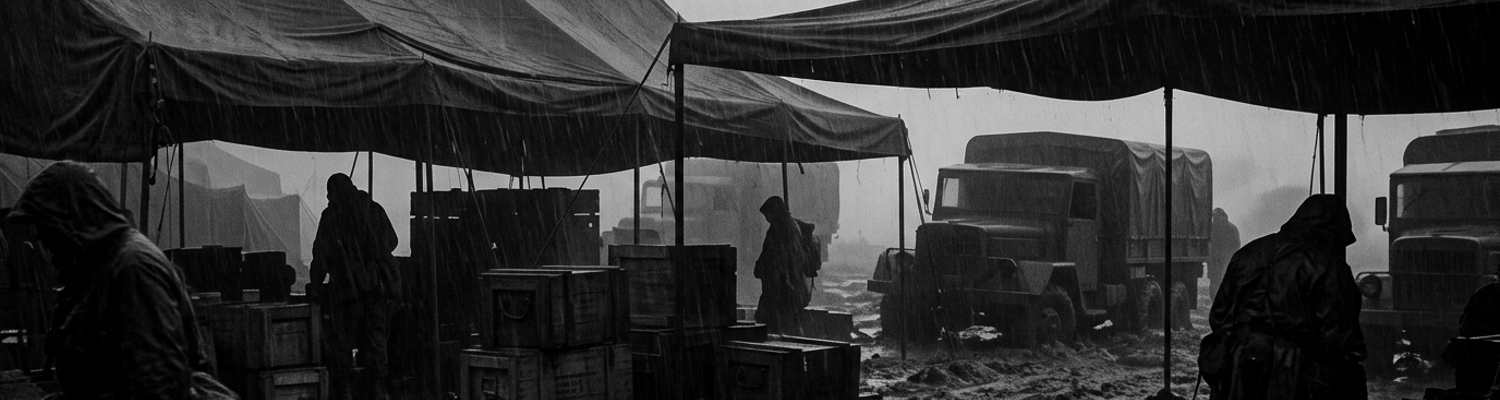
0600 hours GMT, 18 September 1945. Coordinates 51.5115 N, 0.1511 W. Inside the basement communications vault of the United Kingdom Base Section headquarters at 20 Grosvenor Square, London, an unrouted teletype message from the Southampton Staging Area began to click across the Western Union teleprinter. A close review of operational logs indicates that the base commandant at Southampton had just registered a forty percent collapse in daily hot meal distribution across Staging Camp C-14. Outside the central depots, three thousand combat veterans fresh from northern France stood in an autumn rain. The chalk ground of Hampshire had turned into gray mud.
The cooks were gone.
The army had point-scored away its own mess halls.
War Department Circular 347 had activated the Adjusted Service Rating Score system with immediate effect. Enlisted men received one point per month of military service. A second point was awarded per month overseas. Five points were granted per campaign participation star. Twelve points were allocated per dependent child. Quartermaster mess sergeants holding Military Occupational Specialty 824 and trained cooks carrying MOS 060 were among the longest-serving American soldiers on British soil. Many of these non-commissioned officers had arrived in early 1942 during Operation Bolero. They had accumulated thirty-six to forty-two months of continuous foreign service.
By mid-September 1945, the demobilization cut-off dropped from eighty-five points down to eighty. Then it dropped to seventy.
Archival evidence shows that these point reductions instantly drained more than sixty percent of certified culinary non-commissioned officers from depots across Tidworth, Winchester, and Weymouth within three weeks. High-point Quartermaster specialists turned in their field jackets. Men boarded troop trains for Glasgow. Veterans secured berths on the RMS Queen Mary before base commanders had processed their departure manifests. Senior planners in London had assumed that basic mess operations could sustain themselves through the momentum of routine supply doctrine.
Standard operating procedure failed the moment untrained personnel operated the burners.
When examining the historical record from the Tidworth Staging Depot, replacements did not exist in the regular replacement depots. Base section commanders filled the empty kitchens with transient infantrymen, artillery gunners, and antiaircraft loaders from Category IV units. These men were detained in staging areas for only forty-eight to seventy-two hours. None had received instructional training at the Quartermaster Corps Subsistence School. None had mastered the mechanical firing assembly of the standard M-1937 liquid-fuel field range. Men unfamiliar with the high-pressure vaporizing units repeatedly fed contaminated leaded motor pool gasoline into the gasoline burners. This action clogged the generator tubes. It cracked cast-iron burner heads. It ignited twenty-four grease fires across the Hampshire cantonments during October alone.
Inventory management suffered equal decay.
Transient details assigned to ration breakdown yards did not understand War Department Form 400 tally sheets. They did not grasp the technical distinction between perishable Class I rations and emergency ten-in-one ration packs. Unmonitored soldiers stacked hundreds of wooden crates containing frozen quarter-beef carcasses directly onto open-air gravel pads instead of insulated refrigeration lockers. Within seventy-two hours, damp salt air and unchecked moisture rotted twenty tons of Grade A provisions behind the docks at Southampton.
Accountability vanished into paperwork backlogs. No incoming transient officer possessed the clearance or the technical training to audit the mess accounts.
Technical Failures of M-1937 Field Ranges
A close review of operational logs from the 313th Quartermaster Gasoline Supply Company at Tidworth Barracks reveals the mechanical vulnerability that grounded mess halls across southern England. The M-1937 field range relied on a temperamental gasoline burner unit. This unit required manual tank pressure between thirty-five and forty pounds per square inch. It required clean, unleaded white fuel to function. Transient soldiers assigned to mess duty lacked training on the mechanical preheating cycle.
Instead of priming the small generator cup with pure alcohol and waiting for the brass vaporizing tube to reach operating temperature, men cranked open the fuel control valve cold.
Raw, liquid 80-octane leaded motor fuel flooded directly into the combustion chamber. Soldiers tossed burning matches onto the saturated cast-iron grates. Pressurized fuel erupted into sudden five-foot fireballs. These fires scorched canvas tent flaps and blackened the air-intake orifices. Within four hours of operation on leaded motor gasoline, heavy carbon and tetraethyl lead deposits caked the tiny 0.04-inch fuel nozzles. The needle valves seized tight.
No replacement needles existed in the Western Base Section inventory.
Archival evidence from Quartermaster Depot G-47 at Thatcham indicates that spare generator assemblies, leather pump washers, and valve packings were already sealed inside shipping crates. These crates were marked for priority diversion to Pacific staging bases before the war ended. Supply clerks could not find the requisitions.
Burner units choked shut across Staging Camps C-12, C-13, and C-14 outside Southampton.
Transient crews lacked the brass cleaning wires specified in War Department Technical Manual 10-405 to clear the carbonized generator tubes. Soldiers attacked the microscopic orifices with steel bayonets, pocketknives, and unraveled baling wire. This sheared off the soft brass fittings inside the burner bodies. Entire assemblies were destroyed. By the first week of October 1945, seventy-eight out of ninety-two M-1937 ranges in the Southampton cantonments were out of commission. Base kitchens could not boil coffee or warm water to clean eating gear. Mess officers ordered men to open unheated C-ration cans. They served cold slabs of congealed meat and vegetable hash directly into canteen cups under continuous autumn rain.
Men threw the greasy food into drainage ditches. They set out to find their own heat.
When examining the historical record from the 12th Replacement Depot near Winchester, desperate camp officers permitted hazardous workarounds to avoid mutinous demonstrations over ice-cold provisions. Enlisted work details siphoned 100-octane aviation fuel from local transport pools. They poured it directly into shallow metal pans placed beneath disabled range chassis. Other soldiers cut fifty-five-gallon steel drums in half with pickaxes. They built makeshift oil braziers fed by discarded motor crankcase oil trickling through copper fuel lines. These unstable fabrications repeatedly flashed back into the faces of the operators.
On the night of October 12, an improvised fuel drum exploded inside the mess tent of Camp Hursley.
The blast sprayed burning aviation gasoline across twelve square yards of wood floorboards. Seven transient soldiers were hospitalized with third-degree burns. Base headquarters responded by banning all open-flame cooking within fifty yards of sleeping billets. Four staging battalions were left without hot breakfast indefinitely.
Distribution Gridlocks at Southampton and Tidworth
A close review of operational logs from the Southern Railway marshaling yard at Eastleigh reveals the precise friction point that severed the southern supply line in late October 1945. Heavily laden freight trains arriving from General Depot G-25 at Ashchurch and Depot G-45 at Sudbury rolled south toward the Hampshire coast. They carried tens of thousands of gross tons of Class I field rations.
The rail lines choked.
British civilian railway crews operated under rigid wartime labor contracts and depleted rolling-stock reserves. They could not clear the junctions fast enough to match the arrival schedules drafted in London. Between Eastleigh junction and the port gates of Southampton, forty-two freight trains carrying standard ten-in-one packs and bulk flour sat stalled on exterior passing sidings for days. Simultaneously, forty miles northwest at Tidworth Barracks, the military rail spur branching off the Andover-to-Cheltenham line shut down completely. Three separate steam locomotives developed boiler tube fractures within seventy-two hours. Southern Base Section transport officers diverted convoys of ten-ton semi-trailers from the 358th Quartermaster Truck Brigade to bypass the blocked trackage. Hampshire county roads proved too narrow for two-way military traffic. Convoys jackknifed in rain-slicked mud. Entire battalions of homeward-bound troops at Tidworth Barracks were left without daily ration deliveries.
The tracks operated as stationary storage yards.
When examining the historical record from the Southampton Docks Railhead, the physical breakdown inside the classification yards was total. Central staging depots sent shipments without synchronized offload manifests. Switch engines shoved boxcars loaded with wet-pack canned goods onto auxiliary spurs alongside trains packed with frozen carcasses and bulk coffee beans. Yard tracks five through eleven were blocked end-to-end. Empty rolling stock was prevented from returning north to reload.
Boxcars sat immobilized on the rails due to missing paperwork.
Archival evidence shows that the breakdown was compounded by the sudden removal of experienced administrative staff across the rail terminals. Standard Quartermaster operating doctrine required MOS 055 supply clerks and MOS 264 stock control specialists to inspect, classify, stamp, and route every rail car using War Department Form 402 tally receipts. Those certified clerks were already demobilized or sailing across the Atlantic. In their place, base commands assigned bewildered replacements from deactivated tank destroyer battalions and field artillery batteries to run the railhead manifests. These transient soldiers lacked any familiarity with the United States Army supply catalog or basic inventory ledger entries. Faced with hundreds of sealed, unmanifested British boxcars and American gondolas rolling onto open-air docks, replacement personnel simply walked away from the clerical tables.
No paperwork moved.
Along the exterior railhead platforms at Southampton Terminus and the open transfer sidings at Tidworth, vast stacks of perishable Class I subsistence provisions sat abandoned beneath deteriorating weather tarpaulins. Thousands of heavy wooden crates of frozen quartered beef were shipped from refrigerated packing houses in Chicago. They were pre-positioned for troop transports. They were dumped onto uncovered gravel rail aprons alongside towering pyramids of dairy butter, fresh yeast bricks, and crate upon crate of eggs. Because the assigned transients could not log the items into the central ledger or confirm destination depot codes, the food remained uncounted and stationary. Warm autumn rain soaked through the thin canvas covers. Moisture seeped through untreated pine shipping cases. Cardboard liners liquefied. Thousands of egg cartons rotted where they sat on the wet platform planks.
Over forty tons of perishable dairy goods and quartered beef liquefied into foul-smelling grease.
This grease drained into the ballast gravel between tracks nine and ten. It attracted swarms of docks rats. The 203rd Port Company was forced to cordon off three entire unloading docks by the final week of October. At Tidworth, ten flatcars carrying two hundred thousand pounds of dehydrated vegetables swelled inside their burst burlap sacks after four days of exposure on an uncovered switch lead near North Tidworth Station.
Supply sergeants did not have the authority to issue food that had not been officially logged into the register.
A desperate attempt by Western Base Section to substitute highway transport collapsed along the A33 corridor when the 3612th Quartermaster Truck Company ran out of serviceable spare tires. Heavy GMC six-by-six trucks sat abandoned on roadside shoulders between Winchester and Southampton. Their cargo beds were filled with moldering field rations that had been pulled from blocked rail sidings without delivery vouchers. By October 28, the railhead traffic control office at Southampton had rejected four hundred and sixteen consecutive freight shipments. No receiving officer on site possessed the authorized administrative stamps to clear them from Southern Railway custody.
Depot Coal Deficits and Bulk Food Spoilage
A close review of operational logs from the British Ministry of Fuel and Power and United Kingdom Base Section indicates that deep underground production across the Welsh and Yorkshire coalfields dropped by fifteen percent between September and November 1945. The newly elected Labour government prioritized fuel diversions to London municipal power stations and civilian domestic ration cards. That decision cut American military coal allocations by more than sixty percent. At General Depot G-25 in Ashchurch (51.9964 N, 2.1154 W) and across the sprawling cantonments of the Tidworth staging hub, daily fuel car receipts dropped from eighty tons of bituminous lump coal to less than twelve.
Kitchen fuel bunkers sat empty.
Cast-iron water-jacket boilers servicing the mess facilities of the 154th Quartermaster Battalion choked off entirely. This disabled the high-pressure steam pipes that heated the three-compartment mess kit washing vats. Soldiers washed their aluminum mess pans in stagnant, unheated water greasy with pork lard. A rapid outbreak of bacillary dysentery spread across seven transient battalions.
Depot furnace flues went cold by the second week of November.
Headquarters officers at 20 Grosvenor Square remained insulated from the freezing damp. They had secured priority electrical connections to the Battersea Power Station. General supply circulars issued from London instructed base quartermasters to preserve remaining anthracite coal strictly for hospital wards. This completely halted space heating across several hundred corrugated-steel Nissen huts. At Staging Camp C-14 outside Southampton (50.9097 N, 1.4044 W), over nine thousand combat veterans lived in sodden winter uniforms within unheated sheet-metal shells. Indoor temperatures matched the freezing external rain. Dampness penetrated mattress ticks and rotting straw palliasse pads. Desperate transient details from the 29th Infantry Division tore down perimeter timber fences, wooden inventory pallets, and telephone cable reels to burn inside empty ammunition canisters. London base command responded by issuing administrative reprimands against local depot commandants for property destruction instead of addressing the missing coal trains.
Local British electrical substations collapsed under the weight of the fuel freeze.
Archival evidence shows that this regional electrical failure knocked out the heavy industrial refrigeration plants at the Ashchurch cold-storage complex and the Southampton docks. The centralized cooling facilities relied on massive three-cylinder York ammonia compressors powered directly by civilian municipal high-voltage lines. When those commercial lines blacked out on rolling two-hour industrial load-shedding cycles, the electric compressor motors tripped their thermal overload relays and stalled. Auxiliary backup diesel generators at Depot G-25 could not accept the load. Their copper commutators had been cannibalized for Pacific theater staging crating weeks prior.
Coolant temperatures inside the insulated depot vaults climbed from thirty-four degrees Fahrenheit to sixty-two degrees within seventy-two hours.
Over three thousand gross tons of bulk winter cabbage were packed tightly in untreated wooden bushel crates for winter field rations. They began to ferment in the humid, anaerobic atmosphere. Cabbage leaves decomposed into a black, liquefied slime. This material pooled four inches deep across the concrete vault decks. Rot spread rapidly into adjacent cold rooms containing three hundred tons of cured slab bacon and forty thousand pounds of fresh domestic poultry. The Ashchurch warehouse bays filled with hydrogen sulfide gas so dense that quartermaster inspection teams required M3 diaphragm gas masks to enter the bays. Base section officers dumped the spoiled bulk produce into outdoor lime pits alongside the Birmingham-to-Bristol railway spur.
Wet-Storage C-Rations and Subsistence Crises
A close review of operational logs from the 242nd Quartermaster Depot Company at Thatcham indicates that base supply officers faced complete exhaustion of usable fresh provisions by the second week of November 1945. Rot had claimed the beef quarters. Cold-storage electrical shutdowns had destroyed regional vegetable stocks. Mess sergeants running kitchen tents for 8th Infantry Division staging areas received formal directives from Grosvenor Square. These directives authorized an emergency shift to reserve Class I operational rations. Supply officers did not dispatch fresh shipments from port stores. Instead, depot details were ordered to clear the open-air storage dispersal dumps surrounding the Netley marshaling grounds and the perimeter fields of Depot G-45 near Sudbury.
Tens of thousands of wooden wire-bound crates containing pre-1944 packings of standard Type C field rations had rested on saturated Hampshire soil for eighteen months under shredded canvas paulins.
Autumn downpours had pooled six inches deep across the unpaved dunnage rows.
Standing water dissolved the outer cardboard cartons into gray pulp.
Archival evidence shows that exposure to continuous ground moisture destroyed the protective lacquer coating on the standard twelve-ounce cylindrical steel ration containers. When mess orderlies pried open waterlogged crates, they found damp mud encasing the interior cans. Microscopic corrosion pitted the soldered side seams of the M-units. These units contained meat and vegetable stew, meat and beans, and meat and hash. Rainwater and road runoff had seeped past degraded rubber sealing gaskets into the can interiors. Anaerobic bacteria colonies multiplied alongside the fats. Tin-plated lids had oxidized. This produced micro-perforations that admitted fungal spores into the carbohydrate B-units. Sugar candies liquefied into an acidic syrup. This liquid dissolved paper-wrapped biscuits.
Quartermaster inventory regulations prohibited writing off subsistence stocks without a formal inspection board report on War Department Form 446.
Camp commanders refused to discard the spoiled rations. Untrained kitchen details across Camps C-11 and C-13 simply dumped the rusted cans directly into cold water buckets. Cooks wiped off exterior slime with greasy rags. Orderlies opened the metal cylinders with bayonets for evening chow.
Rotting pork fat separated into gray foam on soldiers mess trays.
When examining the historical record from the 68th General Hospital near Netley, the medical fallout from spoiled rations struck combat veterans already physically depleted by continuous winter campaigning in the Ardennes and Rhineland. Within six hours of consuming the water-damaged M-units, transient soldiers developed severe staphylococcal enterotoxin poisoning and acute bacillary dysentery. Ward books from the 121st Station Hospital at Winchester recorded over eight hundred acute gastrointestinal admissions between November 12 and November 24. Men experienced explosive diarrhea, persistent vomiting, and severe dehydration. Standard salt-tablet therapy could not stabilize their conditions. Laboratory tests performed by the European Theater Medical Laboratory confirmed that the degraded C-ration batches had completely lost their nutritional efficacy. Thiamine and ascorbic acid levels degraded to zero by moisture exposure and chemical breakdown in storage.
Redeploying troops were restricted to staging camps for weeks beyond their projected embarkation dates.
They developed secondary nutritional deficiencies that included angular stomatitis and acute peripheral neuropathy. Port surgeons at Southampton refused to issue embarkation clearances for four consecutive outbound troop transports after inspecting transient battalions from the 29th Infantry Division. They found three hundred and forty ambulatory soldiers too weak from continuous bowel purging to climb ship boarding ladders.
London Headquarters Isolation and Teletype Delays
A close review of operational logs from the UK Base Section Chief Quartermaster reveals how completely command personnel detached themselves from field stations sixty miles away. General staff officers occupied requisitioned luxury townhouses along Mount Street and five multi-story commercial buildings around Grosvenor Square in Mayfair. Coal fires and electrical steam radiators maintained constant seventy-degree temperatures inside high-ceilinged offices. Enlisted staff sergeants tracked tonnage allocations on expansive wall maps. Daily staff routines bore no connection to the unpaved mud paddocks of Hampshire. London officers ate two hot meals daily in the requisitioned dining rooms of Claridge's and the Cumberland Hotel. They drew provisions directly from dedicated ministerial food distribution channels secured under 1943 diplomatic protocols.
Administrative personnel rarely traveled to staging areas unless escorting congressional inspection delegations.
Officers signed daily transport chits for sedans while staging camp commanders walked five miles across rain-soaked chalk terrain to check leaking mess tents. Senior planners operated on pre-invasion assumptions that fixed regional depots possessed self-sustaining maintenance units and automated resupply pipelines.
Mayfair had heat, dry wool, and running hot water.
When examining the historical record from the 838th Signal Service Battalion, the primary teletype link between Grosvenor Square and the Southern Base Section at Salisbury suffered severe signal gridlock. Dispatch traffic routed through the central Signal Corps exchange at Selfridges department store basement on Oxford Street faced backlogs exceeding fifty hours. High-priority diplomatic traffic and demobilization transport rosters filled the copper lines. Basic subsistence dispatches stalled in mechanical relay buffers. Teletype operators ran Model 15 teleprinters around the clock. Perforated paper tape reader heads repeatedly tore paper strips during heavy damp spells. This wiped out entire batches of encrypted logistical traffic.
Western Union operators in London handled commercial cables ahead of military requisition vouchers due to mixed signal priorities established by the European Theater communications board.
Urgent operational queries sent from Tidworth regarding freezing water pipes and exhausted rations sat in unprocessed London receiving queues for three full days. By the time a London communications clerk loaded an incoming status report onto an outgoing teletype carriage, the supply numbers were already seventy-two hours out of date.
Paper tape accumulated on the floor faster than clerks could process it through the transmitters.
Archival evidence shows that London headquarters flooded field commands with administrative demands that ignored depleted supply docks. Base section officers issued Chief Quartermaster Directive 88 on November 4. This demanded that all staging depots cut Class I ration distribution by fifteen percent to match revised post-hostilities inventory charts. The directive ordered mess officers to balance company account registers using War Department Form 400 tally sheets within forty-eight hours of receipt. Depot commandants were instructed to log non-existent deliveries of fresh Chicago beef quarters into their active physical inventory counts. They were told to treat stranded and spoiled railhead boxcars as operational field rations.
Local commanders teletyped back that over thirty tons of beef were decomposing in standing water at the Southampton docks.
Grosvenor Square answered twenty-four hours later with General Order 112. This incoming teletype strictly forbade the write-off of spoiled meat without a formal physical inspection board convened by a field-grade officer. No such field-grade officers existed within thirty miles of Camp C-14. Quartermaster clerks were threatened with court-martial proceedings under the 104th Article of War if inventory balances showed discrepancies exceeding two percent. Station mess lieutenants received orders to balance company ledgers against paper quotas while their supply shelves held only water-damaged crackers.
At Depot G-25, quartermasters received a teletype instructing them to ship fifty tons of frozen turkey to Liverpool twelve hours after the last refrigerated railcar had already broken down on a dead siding.
Localized Camp Mutinies and Administrative Fallout
A close review of operational logs from the 115th Infantry Regiment detachment billeted at Tidworth reveals the threshold where administrative breakdown triggered outright insurrection. By November 18, 1945, daily caloric intake across the staging cantonments dropped below eleven hundred calories per man. Meals consisted primarily of unheated dehydrated potatoes and rancid corned beef hash scraped from dented storage tins. Over four thousand combat veterans holding ninety or more demobilization points had lived for twenty consecutive days in unheated, leaking pyramidal tents pitched over freezing Hampshire chalk mud. They lacked a change of dry socks or wool trousers.
Mess personnel at Camp C-14 outside Southampton announced on the morning of November 20 that the day's sole scheduled meal was canceled due to coal shortages and fuel range burner failures.
Company cohesion fractured.
Six hundred men from the 29th Infantry Division overturned three mess hall serving tables. Enlisted personnel kicked down the wooden frame of the battalion orderly room. Mutineers physically barred company officers from entering the company street. Simultaneously at Tidworth Barracks, nine hundred veteran soldiers armed with pick mattocks and heavy iron fire pokers marched directly onto the central parade ground. The mob surrounded the headquarters building of the 14th Replacement Depot. Staging troops refused to answer roll calls or report for port embarkation baggage details until hot rations were restored. Junior officers attempting to restore order were stripped of their sidearms and locked inside a supply shed.
The staging camps operated entirely outside of military control.
When examining the historical record from the Southampton Port of Embarkation, base commanders recognized that regular channels through Grosvenor Square were actively accelerating the collapse. Standard operating procedures dictated that any local supply deficit had to be processed through War Department Form 400 requisitions transmitted via the backlogged 838th Signal Service Battalion switchboards. This process required seventy-two hours of staff review. Camp commandants refused to wait for teletypes that never arrived.
Colonel Arthur B. Miller commanded Staging Camp C-13.
He severed communication protocols on the evening of November 21 by picking up a commercial civilian telephone line. He placed an unencrypted priority call directly to Brigadier General Royal B. Lord's deputy at the Southern Base Section. Miller cited the immediate threat of coordinated armed takeovers of regional armories by angry combat veterans. He formally declared a local logistics emergency. This was an extraordinary administrative action reserved strictly for units under active enemy bombardment. This emergency bypass stripped London of its unilateral veto. By invoking theater emergency supply statutes without prior Grosvenor Square endorsement, Miller forced regional quartermaster controllers at General Depot G-25 in Ashchurch and Depot G-47 in Thatcham to open their sealed security compounds.
Field-grade officers risked court-martial proceedings by issuing unauthorized supply requisitions.
Archival evidence shows that Miller and his operational staff dispatched armed military police detachments in fifteen-ton tractor-trailers directly to Depot G-47 at Thatcham. Convoy drivers carried handwritten requisition slips marked emergency operational issue. Depot sentries initially refused to unchain the perimeter gates without a teletyped release code stamped by the Chief Quartermaster in London. Drawing sidearms, staging area convoy commanders ordered depot warehouse staff to cut the master padlocks on four priority storage bays. The raiding details seized seventy tons of reserve ten-in-one combat rations, five thousand woolen blankets, and twelve hundred gallons of unadulterated white gasoline intended for Pacific theater contingency stockpiles.
Back in Mayfair, London staff officers drafted immediate charges against Miller under the 96th Article of War for conduct prejudicial to good order and military discipline.
Those charges were quietly suspended forty-eight hours later. The theater provost marshal warned the general staff that arresting staging camp commandants would trigger general strikes across every American port along the English Channel. Depot G-25 clerks logged the seized items as an unclassified field loss on ledger voucher 941-B on November 24.