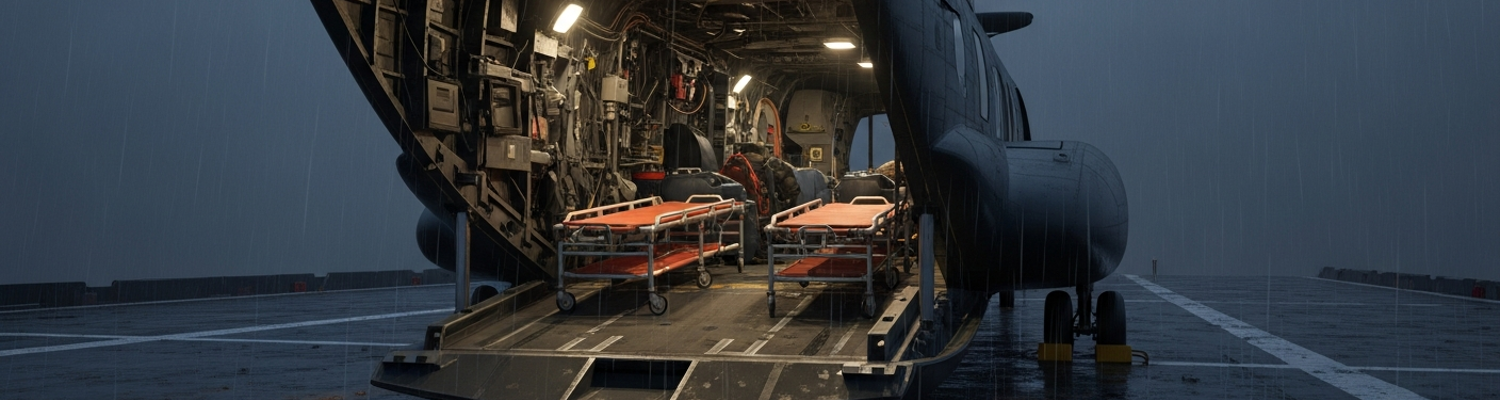

Quang Tri Province 1972 Combat Environment
October 1972, Quang Tri Province. The northernmost front of South Vietnam. A line drawn by the Ben Hai River defined the Demilitarized Zone. The terrain itself was a military problem. Narrow coastal plains, bisected by the infamous Route 1, gave way to highlands choked with jungle to the west. This geography dictated movement, creating predictable avenues for attack. By October, the northeast monsoon had arrived. Heavy rains turned the ground to mud and wrapped the highlands in low, persistent cloud cover. These conditions degraded visibility and limited the air power that had been decisive months earlier. The province was a territory that had absorbed more ordnance than any other region during the war, leaving a cratered, defoliated landscape.
The war here had not ended. It had changed form.
The combat environment was a direct result of the North Vietnamese Easter Offensive, which began March 30. The conventional invasion initially succeeded, with NVA forces capturing Quang Tri City on May 1. A counteroffensive, Operation Lam Son 72, saw South Vietnamese Airborne and Marine units retake the destroyed citadel by September 16, backed by immense American air and naval firepower. The North Vietnamese Army was not destroyed. Archival evidence shows multiple NVA divisions, including elements of the 304th, 308th, and 324B, remained active. Having lost the conventional battle, they reverted to an attritional strategy. They dug in, creating a dense defensive network west of the city. Their forces used long-range 130mm artillery to harass ARVN positions, firing thousands of rounds a day. The NVA had also saturated the area with an anti-aircraft umbrella built around the Soviet-made SA-7 Grail shoulder-fired missile. First appearing in numbers during the battle for Quang Tri, the SA-7 had proven effective against low-flying aircraft, claiming dozens of helicopters and observation planes. This weapon system altered air operations, forcing pilots to fly higher and faster. A tactical shift that made medevac missions infinitely more dangerous.
Caught in this were the outposts of the South Vietnamese Regional and Popular Forces. These were not hardened firebases. They were local militia units charged with village-level security. A typical outpost held a platoon of Popular Forces, men recruited from the village they defended, living in simple earthen compounds. They were lightly armed, a tripwire to detect insurgent activity and call for reinforcement. By late 1972, with large NVA units operating openly, these isolated positions were targets. A state of siege became the norm. NVA sappers and artillery observers directed mortar and rocket fire onto the small compounds. Snipers pinned down movement. Probing attacks tested the perimeter at night, draining ammunition. This pressure severed the outposts from ground support, making them dependent on aerial resupply and casualty evacuation. They became isolated islands, with the enemy holding a veto over the local airspace.
Desperate Radio Call for Aid
The transmission cut through the monsoon static. It was a final, desperate act. Operational logs from the 1st Marine Aircraft Wing’s Direct Air Support Center (DASC) show the call came from a Popular Forces outpost designated Blue-7, a small compound of earth and wire west of Quang Tri City. The outpost was under siege by a regular North Vietnamese Army unit. The voice on the AN/PRC-25 radio was not following protocol. It was a raw plea, relayed up a chain from the PF platoon to their district headquarters, then hurled into the tactical radio net. The outpost was being reduced by accurate mortar and artillery fire. The low-hanging clouds and rain degraded both visibility and radio signals, making the call for help a faint ghost in the noise.
The transmission painted a visceral picture of the carnage inside Blue-7. It was a mass casualty event. The initial report, once deciphered, listed over a dozen wounded, many critically. The high-explosive ordnance had inflicted injuries a single, lightly-trained PF medic could not handle: traumatic amputations, severe shrapnel lacerations, and the internal damage of blast overpressure. The PF medic’s aid bag, with its basic bandages and morphine, was exhausted within minutes. The mud-floored bunker serving as an aid station was filled with broken bodies. The report conveyed a complete breakdown of medical capacity.
They were asking for a miracle.
The outpost commander begged for two things: blood plasma and immediate helicopter evacuation. The call for plasma was a clear and terrifying signal. It communicated that the wounded were deep in hemorrhagic shock, bleeding out faster than their bodies could compensate. Standard IV fluids could restore volume but not the blood’s oxygen-carrying and clotting ability. This was a sophisticated medical request, born of hard-won battlefield experience. The second part of the request, for medevac, presented a near-suicidal problem for the 1st MAW. The area around Quang Tri was saturated with the SA-7 Grail. Any helicopter attempting a landing at Blue-7 would have to fly low and slow into a hot landing zone while navigating monsoon weather and the missile threat. The call forced an immediate calculation at the DASC: risk a helicopter and its four-man crew, or consign the wounded South Vietnamese militiamen to a slow death.
1st MAW Tactical Misinterpretation
Operational logs from the 1st Marine Aircraft Wing’s Direct Air Support Center (DASC) reveal the first point of failure was cognitive. The DASC received the call from outpost Blue-7 as one of many data points. The raw Vietnamese transmission, filtered through multiple relays, arrived stripped of its panic. It was translated, codified, and entered into a system for managing air assets. The request was categorized as an Urgent medevac, the second-highest priority. This classification, while correct, failed to capture the context. To the watch officers juggling assets across I Corps, it was another request. The system was built to react to standardized inputs. There was no flag for a garrison bleeding out, no specific protocol for an outpost on the verge of being overrun. The event was logged not as a localized catastrophe but as a high-priority logistical requirement.
This initial misreading led directly to a failure to assess the specific medical requirements. The call for blood plasma was a specific detail lost in the procedural shuffle. Standard medevac helicopters, CH-46 Sea Knights or UH-1E Hueys from MAG-16, were equipped with FMF corpsmen whose kits were designed for immediate trauma stabilization. They were prepared for a few critical casualties. The request for plasma signaled a mass casualty event with widespread hemorrhagic shock, a situation far exceeding a standard medevac loadout. Properly interpreted, that phrase should have triggered a different response: the dispatch of a bird carrying a specialized load of whole blood and plasma, possibly with a flight surgeon. Instead, the request was subsumed into the generic medevac classification. Medevac procedures from the period show a system focused on the speed of evacuation over the specific capabilities delivered. The assumption was the helicopter’s primary role was transport to a hospital, not bringing the hospital to the casualties. The DASC processed a need for helicopters, not a need for a flying blood bank.
The most significant breakdown occurred in the processing of battlefield intelligence. The 1st MAW’s intelligence section possessed all the information to forecast the extreme danger of a mission to Blue-7. Data on the area west of Quang Tri City clearly indicated the heavy presence of NVA regular units and their use of the SA-7 missile. Air defenses in the region were so formidable they had previously restricted B-52s. Any low-flying aircraft, like a medevac helicopter, was entering a known high-threat envelope. The failure was not in the collection of this intelligence, but in its application to a single tactical decision. The watch officer tasking the mission saw a friendly outpost and a requirement for evacuation. They were not presented with an overlay of recent SA-7 sightings, the firing radiuses of known 130mm artillery batteries, or the disposition of the NVA infantry battalions besieging the outpost. Information existed in discrete channels, S-2 (intelligence), S-3 (operations), and the DASC, but it was not fused into a real-time threat assessment for that specific grid coordinate. The crew was launched into a kill zone that was well-documented on paper.
Inadequate Medevac Asset Deployment
The decision cascade following the misinterpretation at the DASC produced a flawed response. A review of 1st MAW medevac procedures from 1972 indicates the asset dispatched was a standard utility helicopter, likely a CH-46 Sea Knight from a squadron within Marine Aircraft Group 16. This was a machine designed for troop transport and cargo hauling. Its use as an ambulance was a secondary role. The aircraft was a tool of conveyance, not a mobile aid station. Its fuselage, while spacious enough for litters, was not equipped for the medical realities of a mass casualty event. The aircrew launched into the monsoon clouds and known SA-7 threat envelope in an aircraft fundamentally miscast for the crisis on the ground. The DASC had processed a request for a bus, and a bus was sent. What was required was a mobile emergency room.
A catastrophic error.
The most telling failure was the absence of blood plasma on board. The request for plasma from the ground was a clear signal of widespread hemorrhagic shock. Analysis of medical practices during the conflict shows that while helicopter evacuation had revolutionized military medicine, the standard loadout for a medevac mission was focused on stabilization, not resuscitation from profound blood loss. The embarked Navy Hospital Corpsmen would have had saline solution, battle dressings, morphine, and tourniquets. These tools were effective for managing a small number of wounded. They were insufficient for treating casualties bleeding out from the internal and arterial damage caused by mortar fragments. Saline could replace volume, but not the oxygen-carrying or clotting properties of blood. Securing and transporting blood products involved a complex cold-storage logistical chain, making it a non-standard item for a hastily launched mission. The request for plasma was an explicit warning, but this vital intelligence was lost in translation.
Compounding the equipment deficiencies was a personnel problem. No dedicated medical officer was assigned. The standard medical personnel on a Marine medevac flight were enlisted FMF Hospital Corpsmen. These Docs were well-trained combat medics, skilled in trauma care under fire. Their role was procedural: apply life-saving interventions and prepare patients for transport. A medical officer, a commissioned Navy doctor or flight surgeon, possesses a different skillset, including advanced diagnostics and the authority to perform more complex procedures. In a mass casualty scenario, a doctor is trained for triage: rapidly assessing casualties to determine who is most likely to survive with immediate intervention, who can wait, and who is beyond saving. This command-level medical judgment was what the situation at Blue-7 required. The absence of a doctor meant the crew was flying without the critical command-and-control medical expertise needed to manage a disaster of that scale.
Ground Unit Communication Barriers
The initial point of failure was linguistic and procedural. The call for aid from the Popular Forces at outpost Blue-7 was spoken into an AN/PRC-25 radio by a man under artillery fire. His transmission, in panicked, colloquial Vietnamese, was a raw data stream of terror. That signal had to travel through an institutional filter. It was relayed to a district-level command where a bilingual operator translated the plea. In this act of translation, the message was stripped of its urgency. Horrifying descriptions of wounds became the sterile jargon of a nine-line medevac request. “Many men bleeding to death” became “Urgent Surgical, 14 litters, 2 ambulatory.” The specific request for blood plasma was noted but not given special emphasis in the standardized format. The information that reached the 1st MAW’s DASC was technically accurate but contextually neutered. A data point, not a diagnosis of a catastrophe.
The message was received. The meaning was lost.
This miscommunication informed the lack of pre-flight coordination. The helicopter crew, from a CH-46 squadron in MAG-16, received their mission as coordinates and numbers from the DASC. Their brief would have been simple: call sign, location, number of casualties, and radio frequency. There was no mechanism for a detailed tactical handover. The pilots and crew had no intelligence on the specific layout of outpost Blue-7, the designated landing zone, the locations of friendly positions, or the primary axes of enemy fire. They were not informed of a recognition signal protocol, such as a specific color of smoke. This information existed only in the minds of the besieged PF soldiers. The American aircrew, assuming standard procedures, expected a clearly marked and secured LZ. The PF soldiers, fighting for their lives, expected the helicopter crew to know where to land.
They were flying into a vacuum of information.
Upon arrival over Blue-7, these failures cascaded into a terminal, on-site communication breakdown. The helicopter pilot, attempting to establish contact on the assigned frequency, was met with noise: the roar of his engines, the slam of impacting mortar rounds, and frantic, unintelligible Vietnamese chatter. The PF radio operator, likely not a trained aviation liaison, would have been shouting information the American pilot could not understand. When the pilot requested the landing zone be marked with smoke, the request itself was a point of failure. Did the translator on the ground understand the English phrasing? Did the PF soldier have the correct color smoke, or did he grab the first one he could find? From the air, the pilot would see smoke rise, but without coordination, he had no way of knowing if it marked a safe landing spot or the impact area of the last mortar barrage. The ground troops, pinned down, could not communicate the locations of the NVA machine guns and mortar teams. To the pilot, the entire perimeter was a zone of tracer fire with no clear distinction between friend and foe. The five-minute window for a decision was consumed by an inability to exchange the most basic tactical information.
Landing Zone Hostile Fire Chaos
After-action reports from Marine helicopter squadrons in 1972 reveal the duress on crews flying into contested landing zones. For the CH-46 Sea Knight crew dispatched to outpost Blue-7, the final five minutes of their approach were a descent into a tactical nightmare. The monsoon weather forced the pilots to fly low, negating any altitude advantage. This low-level flight path made them predictable. North Vietnamese Army doctrine emphasized extensive anti-aircraft networks. NVA forces would have anticipated the helicopter would follow a recognizable terrain feature. The largest threat was the shoulder-fired SA-7 Grail missile. To counter the infrared-seeking missile, pilots were trained to fly as low and fast as possible, using terrain to mask their heat signature. This tactic, however, put the aircraft in the engagement envelope of every other weapon on the battlefield. The approach to Blue-7 was a high-speed, low-altitude run, culminating in an abrupt, power-intensive flare to bleed off speed. This maneuver exposed the aircraft, making it a near-stationary target for several critical seconds.
As the Sea Knight flared over the wire of Blue-7, the air erupted. NVA procedure called for siting heavy machine guns to create interlocking fields of fire over likely landing zones. The primary weapon was the Soviet-designed DShK 12.7mm heavy machine gun, capable of firing 600 rounds per minute and defeating a helicopter's light armor. From concealed positions, these heavy machine guns opened up, their slugs tearing through the thin aluminum skin of the CH-46. This was supplemented by a barrage of 82mm mortar fire. NVA mortar teams were skilled at pre-registering coordinates. The moment the helicopter began its descent, rounds were on their way to saturate the landing zone. The crew chief and door gunner would have immediately returned fire with their M60 machine guns, spraying into the jungle at muzzle flashes they could barely see. The cockpit was a cacophony: the whine of twin turbine engines, the slap of incoming rounds against the fuselage, frantic warnings over the internal comms, and the crump of impacting mortar shells.
On the ground, order disintegrated.
This enemy fire created a ground environment so chaotic it rendered operations impossible. The link between air and ground was severed. The American pilots, trying to get information from the South Vietnamese Popular Forces, were met with a panicked, unintelligible stream of Vietnamese on the radio. A request for the landing zone to be marked with smoke, a standard procedure, became a point of catastrophic failure. The PF soldiers, pinned down, likely threw whatever color smoke they could grab. That smoke, intended to guide the aircraft, instead served as a perfect aiming point for the waiting NVA mortar crews. The landing zone itself was perilous. It was not a prepared pad but a patch of mud, churned by rain and pockmarked with fresh craters. A helicopter’s rotor wash in such an environment would kick up a blinding storm of mud and debris. There was no one on the ground to marshal the aircraft or establish a secure perimeter. Wounded men were not staged and ready for loading. They were still in bunkers. Any attempt to move them across the open ground to the helicopter would have been a death sentence. To the crew of the CH-46, there was no identifiable landing zone, only a churning mix of mud, smoke, and enemy fire.
Critical Triage and Blood Type Confusion
The moment the CH-46’s ramp hit the mud, the operational disconnect between the American aircrew and the South Vietnamese militia became a fatal reality. A Navy Hospital Corpsman, an E-4 or E-5 with extensive trauma training, would have been the first to encounter the ground truth. His training emphasized a rapid, systematic assessment of casualties. He was prepared to categorize wounds and apply life-saving interventions based on a strict triage protocol. He met a desperate mob. The Popular Forces medic, his own small aid bag long since emptied, tried to communicate through gestures and frantic pointing. Language barriers were a constant point of friction in joint operations at this level. The American corpsman was looking for recoverable patients with airway, breathing, or circulation issues he could fix. The PF medic was simply pointing to his friends, many already beyond saving.
This collision of training and desperation made triage a non-event. The American concept of triage is a calculus designed to maximize survival. It divides the wounded into categories: immediate, delayed, minimal, and expectant. A soldier with a blocked airway is an immediate priority; one with a catastrophic head wound is expectant, left to die to conserve resources for those who might live. This system was drilled into every corpsman. Applying this logic required control of the scene. Inside the besieged Blue-7 outpost, the corpsman had no such control. As he attempted to assess one casualty, another, with a less severe but more gruesome-looking wound, would be pushed forward by his comrades. The corpsman’s attempt to impose order was met with the panic of men who saw their friends bleeding out. They did not understand why the “Bac Si” (doctor) was ignoring a man screaming in pain to work on a quiet, motionless soldier. This confusion burned through the five-minute window the helicopter had on the ground.
Blood type identification, the final medical link, was completely broken. A review of allied force integration procedures reveals a significant gap in administrative record-keeping for local militia units. While an American Marine had his blood type stamped on his dog tags, a Popular Forces soldier often had no such standardized identification. In the dim light of a bunker, covered in mud and blood, finding and reading a non-existent tag was an impossibility. The desperate radio call for plasma had signaled a need for blood products, but the helicopter carried none. Even if it had, the problem of typing remained. The corpsman’s kit contained no field blood-typing equipment. Administering whole blood without confirming compatibility would have been a lethal act of medical malpractice. The only universally safe option, O-negative blood, was a highly limited resource reserved for major surgical hospitals, not carried on standard medevac flights. The wounded of Blue-7 were bleeding to death from a lack of blood, and the arriving medics had no safe way to give them any.
Preventable Casualty Systemic Failures
The loss of life was a direct consequence of systemic failure. Medevac doctrine and after-action reporting from the period reveal a fatal gap between procedure and reality. On the chaotic landing zone at Blue-7, at least one South Vietnamese militiaman with survivable, but severe, arterial bleeding was never reached by the American corpsman. The five-minute window on the ground was consumed by incoming NVA fire and a complete breakdown in on-site triage. The Navy corpsman, trained to systematically categorize patients, was met by a panicked crush of soldiers attempting to push their most grievously wounded friends forward. This chaos, combined with the language barrier, made identifying and reaching the most critical yet salvageable patients an impossibility. The soldier with the arterial bleed, a classic immediate casualty who could have been saved by a properly applied tourniquet and pressure dressing, was lost in the crowd. He bled to death not because his wound was untreatable, but because the system to get the right treatment to him at the right time had disintegrated.
His death was an institutional accident.
The entire sequence of events was predicated on deep flaws in the medevac process. The doctrine that had revolutionized battlefield medicine by emphasizing speed, the “Golden Hour” principle, had created a procedural rigidity that failed in this instance. The system was built to move bodies quickly, assuming that definitive care would happen at a hospital. A study of Marine medevac procedures from the era shows the median time from a helicopter’s dispatch to a casualty’s delivery at a hospital was a remarkable 31 minutes. But this focus on speed overshadowed the need for tailored capability. The initial, desperate call for plasma from the outpost was a specific piece of intelligence that was ignored. The Direct Air Support Center processed a request for transport, not a request for a flying blood bank. No specialized medical assets were deployed because the standardized nine-line medevac request format, designed for efficiency, had no effective mechanism to flag such a critical, non-standard need. The request was classified as Urgent, but this failed to differentiate it from any other severe combat injury.
This failure exposed a fundamental weakness in the American military’s operational doctrine when supporting allied, non-standard units. The 1st MAW’s procedures were designed by and for American forces, assuming a common language, shared radio protocols, and standardized equipment. At Blue-7, none of this was true. The American aircrew had no common language with the Vietnamese militia, no pre-arranged landing signals, and no shared understanding of how to mark a landing zone under fire. The entire operational model was brittle. It could not absorb the friction of combined operations with a force that did not mirror its own structure. The loss at Blue-7 was not just the death of a soldier; it was a data point illustrating a lethal flaw in the architecture of the war effort itself.