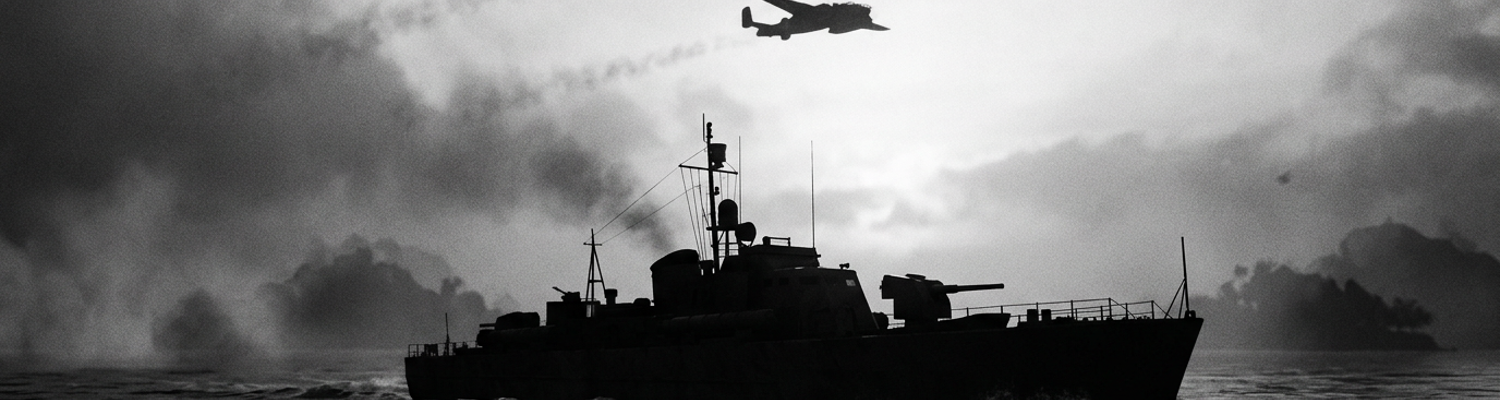

Hydrographic Constraints and Operation Globetrotter Staging
Fifty thousand Japanese soldiers fortified the surrounding defense perimeter of the Vogelkop Peninsula and adjacent island chains. They outnumbered the incoming assault elements five to one across the operational theater. Archival evidence shows that roughly fifteen thousand imperial troops from the 35th Division held Manokwari just ninety miles east of the objective. Another thirty-five thousand entrenched across the Halmahera corridor to the northwest. Between these two hardened concentrations sat Cape Sansapor. This isolated point of dense equatorial jungle fronted sharp coral shelves and narrow coastal shallows. Any Allied amphibious echelon entering these waters risked flanking counter-strokes from Japanese air installations at Babo and armed naval barge networks running directly out of Sorong.
Entrenched imperial forces outnumbered the approaching landings by tens of thousands of rifles.
When examining the historical record of late July 1944, naval planners inside Task Force 77 faced unforgiving hydrographic constraints. Rear Admiral William Fechteler organized Operation Globetrotter around the tactical requirement to bypass Japanese strongpoints at Manokwari without committing Sixth Army ground forces to protracted inland jungle combat. Hydrographic reconnaissance conducted by Alamo Scouts along the northern Vogelkop shoreline revealed that Cape Sansapor itself lacked suitable beach gradients for tank landing ships. This forced a revised landing scheme directed toward Amsterdam Island, Middelburg Island, and the coastal spit near Mar.
Repair ship crews worked under torrential equatorial downpours in Maffin Bay to refit amphibious hulls. They replaced corroded bilge valves and addressed salt-crusted propulsion components on landing craft. These vessels had operated for months without access to drydocks.
Hull plates were visibly degraded by high-salinity seawater before the convoys cleared the staging bays.
A close review of operational logs indicates that the Seventh Fleet assigned converted Landing Craft Infantry (Gunboat) units to control the shallow littoral channels between the Vogelkop coastline and the deep reaches of the Halmahera Sea. These LCI(G) vessels drew less than six feet of water. This permitted them to operate directly over shallow reef fringes where fleet destroyers could not safely steer. Task Group 78.1 ordered these gunboats to form a continuous offshore picket line beginning July 29. They were specifically positioned to intercept armed Japanese Daihatsu landing barges staging from Sorong and to block potential torpedo boat runs originating from Halmahera naval outposts.
Gunboat crews rotated through twenty-four-hour continuous surface watches inside unventilated steel deckhouses. Interior temperatures reached 115 degrees Fahrenheit. Sailors cleared brine deposits off gun trunnions and checked manually cocked breech blocks to prevent mechanical jamming during sudden night engagements.
Gunboat sailors slept beside ready-service ammunition lockers with wet rags tied over their faces.
Tactical orders dispatched from Task Force headquarters required these gunboats to maintain fixed screening sectors while coordinating visual identification flags with Fifth Air Force fighter-bombers patrolling the coastal corridors. Maintenance records reveal that sustained exposure to equatorial spray severely degraded shipboard pyrotechnics and signaling equipment across the screening flotilla. Yellow-smoke identification canisters stowed in topside ready-boxes absorbed ambient ocean moisture through cracked rubber seals. This rendered their internal chemical strikers unreliable during high-speed recognition drills. Firing pins within the M2 Browning fifty-caliber machine guns seized repeatedly due to galvanic corrosion between dissimilar metals in the damp coastal air.
At 2100 hours on July 29, 1944, three LCI(G) hulls took up defensive screening stations off the Mar reef line at coordinates zero degrees thirty minutes south, one hundred thirty-two degrees thirteen minutes east.
Shallow-Draft Gunboat Architecture and Ordnance Modifications
Converting an amphibious troop transport into a shallow-water gunboat required cutting away internal steel bulkheads to accommodate thousands of rounds of heavy ordnance.
Archival evidence shows that naval shipyards in early 1944 took standard 158-foot Landing Craft Infantry (Large) hulls and stripped out troop berthing spaces. These hulls were originally fabricated to carry two hundred infantrymen onto open beaches. Shipwrights created ammunition handling rooms, electrical generator bays, and splinter-proof armor stations. Ten-pound STS splinter plating was welded directly along the pilot house, conning tower, and deck gun tubs. This shielded exposed crews against small-arms fire and shrapnel. Removing troop bunks and ramps drastically altered the center of gravity.
Powered by twin General Motors 6-71 diesel quad engines turning two bronze screws, the converted LCI(G) drew five feet forward and five feet ten inches aft under combat displacement. This shallow draft allowed Seventh Fleet commanders to push the gunboats directly across coral barriers along the Vogelkop coast. Standard destroyers drawing fifteen feet would ground their keels in these same waters.
Shipfitters installed auxiliary diesel generators to drive powered gun mounts. The structural weight strained the lightweight frames.
Ballast water tanks required continuous pumping to prevent top-heavy platforms from rolling over in open Pacific swells.
Weight distribution aboard the modified hulls bordered on hazardous instability.
When examining the historical record of Task Group 78.1, the topside weaponry of an LCI(G) packed more direct firepower per square foot of deck space than a fleet destroyer. Navy armorers placed single-barrel 40mm Bofors cannons on raised centerline tubs forward and aft. This provided direct fire against Japanese coastal barges and hidden shore emplacements. Each 40mm mount fired four-round clips of high-explosive tracer shells at a cyclic rate of 120 rounds per minute.
Enlisted loaders fed these clips into open hopper feeds exposed to salt spray. The recoil-operated slide mechanisms stuck when ocean brine dried inside the casing extractors.
Ringing the conning tower were two to four 20mm Oerlikon autocannons set on pedestal mounts. These blowback-operated weapons fired 450 rounds per minute from heavy sixty-round drum magazines. Salt-crusted trunnion bearings and rusted cocking cables forced gunners to scrub operating groups with diesel fuel every morning to maintain functional traverse arcs.
Brine fouled the sliding breech locks within hours of clearing open water.
A close review of operational logs indicates that the main bombardment battery consisted of ten to twelve Mark 7 gravity-fed or Mark 5 continuous-feed rocket launchers mounted along the forward forecastle. These launcher rails held banks of 4.5-inch spin-stabilized rockets designed to saturate beach landing sectors with high explosives before assault waves touched down. Electric firing panels inside the pilot house allowed the deck officer to ripple-fire forty-eight rockets in under thirty seconds at targets up to 1,100 yards away.
Firing these batteries generated an intense backblast that washed across the open bow. This scorched wiring harnesses and burned the paint off surrounding bulkhead plates.
Gunners stood clear in steel blast shelters or wore heavy asbestos hoods to avoid inhaling toxic exhaust gases. Constant equatorial moisture seeped into the rocket propellant grains. This caused irregular burn rates that dumped armed projectiles into coastal shoals short of the beach.
On July 30, gunners aboard LCI(G)-399 recorded two defective rocket igniters during pre-dawn invasion checks off Cape Sansapor.
Environmental Degradation of Topside Armament
Archival evidence shows that continuous forty-eight-hour offshore screening patrols degraded the mechanical reliability of the deck armament across Task Group 78.1. Running along the outer coral shoals between Cape Sansapor and Amsterdam Island at zero degrees twenty-nine minutes south, one hundred thirty-two degrees eleven minutes east, the low-slung gunboats took direct ocean wash over their bow gun tubs with every swell. Single-barrel 40mm Bofors guns mounted forward absorbed gallons of atomized saltwater every hour.
Inside the automatic loader mechanism, the twin helical ejector springs operated without protective cowlings. They were fully exposed to airborne brine that evaporated under ninety-eight-degree tropical sun.
Salt crust caked the sliding surfaces of the ejector shafts within six hours of continuous steaming.
When gunners ran weapon cycling tests, the encrusted springs lacked the mechanical force to throw spent four-round casing bases clear of the guide chute. Empty brass casings stuck midway out of the breech ring. This blocked the vertical movement of the sliding breech block and halted the chambering cycle dead.
Brine turned automatic weapons into manually cleared single-shot guns.
When examining the historical record of gunboat flotillas operating off the Mar coastal shelf, topside machine gun positions suffered identical galvanic and chemical seizing. Task Group standing directives ordered all secondary armament kept unmasked and immediately manned to engage incoming low-altitude air strikes out of Japanese air bases at Babo and Sorong. Crews could not rig protective canvas covers over the M2 Browning .50-caliber machine guns pinned to the bridge wings and forecastle stanchions.
Salt spray drifted directly into the unsealed bolt groups. It worked through the open ejection ports and cocking handle channels.
High ambient humidity caused crystalline sodium chloride layers to form between the firing pin and the internal channel of the bolt body. The firing pin striker springs failed to overcome this crystallized friction when the trigger was depressed. Gunners charging the bolt heard the forward sear click home. The seized firing pin never touched the cartridge primer. This left live .50-caliber rounds sitting inert in the chamber during tracking runs against fast-moving targets.
Corrosion froze the firing pins solid inside their ungreased steel housings.
A close review of operational logs indicates that the standard supply of Navy mineral lubricating oil was incapable of counteracting this rate of environmental decay. Seventh Fleet logistics depots in Hollandia supplied light grade petroleum lubricants. These washed clean off metal guide surfaces after two or three ocean waves broke over the gunwale.
Gun captains aboard LCI(G)-439 and LCI(G)-440 attempted to pack breech slide grooves and firing pin sleeves with heavier mineral grease. The thick compound combined with airborne volcanic grit from the mainland beaches. This created an abrasive paste that ground down the extractors.
Daily maintenance sheets for July 30 reveal that armorers completely disassembled each .50-caliber bolt every morning on the exposed deck. They soaked the firing pin assemblies in diesel fuel buckets while scraping away sodium buildup with copper wire brushes. By midday, intense heat and breaking surf completely reversed the cleaning effort. This left the screening craft defenseless against sudden air attack.
At dawn on July 31, three forward Bofors mounts on the picket line reported complete ejector failure during clearing drills.
Navigational Discrepancies and Aerial Misidentification
Archival evidence shows that morning flight dispatches on August 1, 1944, sent twin-engine A-20 Havoc attack bombers from the Fifth Air Force into the coastal strike lane with catastrophic navigational errors already codified on paper. Operating out of forward strips near Hollandia and Wakde Island, crews from the 312th Bombardment Group received target coordinates plotted on standardized aeronautical strip maps. These completely diverged from the local maritime recognition grids utilized by Task Group 78.1.
Naval planners inside the Seventh Fleet had designated a safe-conduct littoral box along the Vogelkop Peninsula between Cape Sansapor and Middleburg Island. They marked it as an active landing craft patrol lane closed to free-bombing runs.
Air liaison officers attached to Sixth Army headquarters failed to translate these marine sector boundaries into the five-minute quadrant grids carried in A-20 cockpits. Flight leaders cross-referenced their briefing overlays against obsolete coastal references. This shifted the designated free-fire interdiction boundary five nautical miles north into waters actively patrolled by American picket lines. Aircrews throttling twin Wright R-2600 radial engines at two hundred and twenty knots believed every surface vessel west of the Mar river mouth was an active imperial target.
Naval safety boundaries disappeared beneath bureaucratic chart translations before the bombers cleared coastal airstrips.
When examining the historical record of low-level strikes along the Dutch New Guinea coast, pilot misidentification of Seventh Fleet low-profile gunboats as motorized Japanese sea-trucks developed as an immediate tactical consequence of ship architecture. Japanese army shipping units operating out of Sorong relied on twenty-meter motorized sea-trucks and armed Daihatsu luggers. These featured blunt prows, low freeboards, and unarmored flat decks designed to hug shallow reef lines by day.
Seventh Fleet converted LCI(G) hulls presented almost the identical visual geometry from the air. Stripping away the high troop housing assemblies left the American gunboats with flat, elongated silhouettes sitting less than six feet above the waterline.
Dazzle and olive-drab marine camouflage patterns were applied specifically to conceal the gunboats against background jungle foliage along the Mar shoals. This prevented incoming pilots from recognizing standard naval hull numbers. Sweeping down from fifteen hundred feet against the morning sun glare, A-20 gunners peering through cockpit windscreens mistook the steel shield tubs of forward 40mm Bofors cannons for the raised deckhouse cargo coamings typical of Japanese auxiliary freight luggers running ammunition to Manokwari.
Silhouette sheets in cockpit map kits offered no visual distinction between an American gunboat and an armed enemy coaster.
A close review of operational logs indicates that the breakdown culminated at 0835 hours. Two A-20 Havocs made their initial target run toward the offshore picket line at zero degrees thirty minutes south, one hundred thirty-two degrees twelve minutes east. Picket lookouts aboard LCI(G)-439 spotted the twin-engine aircraft dropping down to fifty feet above the wavetops. They initiated low-level skip-bombing profiles standard for coastal interdiction.
Deck crews scrambled to light chemical smoke pots on the fantail. Sodden yellow pyrotechnics failed to generate colored recognition markers before the planes crossed the safety perimeter.
Firing pins on two bridge-wing Browning fifty-caliber machine guns seized under heavy sodium deposits. This prevented gunners from launching pre-arranged green recognition tracer patterns into the approach vector. Flight leads in the lead A-20 interpreted the silence from the vessel as passive evasion by Japanese supply mariners.
The lead bomber opened fire with four nose-mounted .50-caliber machine guns. It stitched the forward gun tub with heavy ball ammunition while releasing two five-hundred-pound demolition bombs equipped with five-second delay tail fuzes directly into the wake of the lead gunboat.
Shrapnel from the first bomb detonation ruptured the unarmored diesel auxiliary room aboard LCI(G)-439 at 0837 hours.
Pyrotechnic Failure and the August First Strafing Run
Six forward-mounted aircraft machine guns concentrated over four thousand rounds of heavy ammunition per minute into an unarmored deck space.
Archival evidence shows that the lead A-20 Havoc leveled off forty feet above the water. It roared across the shallow reef shelf at two hundred and thirty knots to execute its strafing run. Concentrated bursts from six nose-mounted .50-caliber Browning M2 machine guns tore across the low-slung silhouette of LCI(G)-439 from stem to stern. The incoming flight path aligned directly with the centerline of the gunboat. It raked exposed 40mm Bofors tubs, the open conning platform, and the unshielded forward deck.
Hardened steel-core armor-piercing and incendiary projectiles struck at a flat downward trajectory. They punched clean perforations through unarmored ten-gauge steel deck plating, cut internal electrical conduits, and punctured high-pressure pneumatic lines running to the forward rocket banks.
Projectiles entering the unarmored deckhouse sliced through secondary splinter shields. They disintegrated ready-service ammunition boxes and threw fragmentation across the interior navigation flat. Enlisted sailors stationed at the manual training wheels of the forward Bofors were cut down by incoming direct fire before they could swing the mount away from the coastline.
The gunboat possessed no deck armor capable of deflecting high-velocity .50-caliber ball rounds at point-blank range.
Deck plating made of mild structural steel offered zero resistance against heavy machine gun rounds traveling at twenty-nine hundred feet per second.
When examining the historical record of the engagement, the fatal breakdown centered on the complete physical failure of the ship pyrotechnic signaling equipment. Standing operating procedures issued by Task Group 78.1 required surface craft to display distinctive yellow smoke immediately upon the approach of friendly aircraft to verify naval identification. Picket sailors aboard the targeted gunboat rushed to the topside pyrotechnic locker. They pulled out standard Navy Mark 1 yellow-smoke canisters to signal the overhead flight lead.
Salt spray and ambient equatorial humidity had penetrated the thin vulcanized rubber seals lining the canister caps during two days of continuous picket duty off Amsterdam Island. Chemical fills consisting of sulfur, potassium chlorate, and powdered yellow auramine dye had absorbed ocean moisture through compromised crimp joints. This transformed the dry combustion mixture into an inert, damp paste.
Gunboat crewmen repeatedly yanked the manual friction-wire igniters. The rusted pull-rings tore free from the casing tops without striking a spark.
Sailors struck mechanical matchheads against damp striker strips. The wet chemical compounds failed to generate sustained combustion. Three separate canisters thrown onto the forward deck simply sputtered, vented a faint wisp of bitter white vapor, and went completely cold.
Every moisture-damaged igniter pin pulled by the bridge crew sheared away without triggering the internal chemical heat pad.
A close review of operational logs indicates that the lack of yellow smoke confirmed the pilots erroneous belief that the gunboat was an armed Japanese coastal lugger attempting to slip west toward Sorong. Clearing the mast of LCI(G)-439 at 0838 hours, the second A-20 Havoc banked steeply over the coral breakers, reversed course, and initiated a second low-level pass from the port beam.
High-density .50-caliber machine gun fire raked the pilot house and the auxiliary generator flat. It severed primary rudder control cables and disabled the port quad-diesel engine bank.
At 0839 hours, four enlisted gunners lay dead on the deck. Nine crewmen suffered penetrating projectile wounds. LCI(G)-439 began drifting out of control at coordinates zero degrees twenty-nine minutes south, one hundred thirty-two degrees eleven minutes east.
Forward Magazine Penetration and Damage Control Operations
High-velocity machine gun fire converted the forward hold into an enclosed blast chamber.
Archival evidence shows that fifty-caliber armor-piercing rounds fired by the Fifth Air Force A-20s sliced directly through the unarmored quarter-inch mild carbon steel deck plating of LCI(G)-439. Traveling at twenty-nine hundred feet per second, the steel-cored projectiles punched into the enclosed forward magazine compartment directly beneath the number one 40mm Bofors platform. Projectiles disintegrated aluminum ammunition feed chutes, shattered light steel stowage racks, and pierced pressurized metal cans containing four-round clips of high-explosive 40mm tracer shells.
Kinetic impact and friction sparks ignited exposed nitrocellulose cordite propellant grains within dozens of ruptured cartridge cases.
A flash fire instantly consumed the forward handling flat at coordinates zero degrees twenty-nine minutes south, one hundred thirty-two degrees eleven minutes east. Inside the enclosed space, ambient temperatures spiked past eight hundred degrees Fahrenheit within twelve seconds. This set off loose twenty-millimeter high-explosive incendiary rounds through sympathetic thermal detonation.
Secondary fragmentation ricocheted off structural frames. It punched upward through the deck seams and sliced through water mains running to the forward fireplugs. The ship damage control team had to dog down the forward hatch manually. They cranked emergency sea-cock flood valves by hand to flood the ammunition lockers with ocean water before the entire forward magazine exploded.
Manual sea-cock valve wheels required thirty-six full mechanical turns to flood the burning hold.
When examining the historical record of Task Group 78.1, medical triage collapsed into chaos because incoming aircraft fire severed every primary communication circuit across the weather deck. Lead-sheathed wiring harnesses for the 1MC general announcing system and sound-powered telephone lines mounted along the exterior bulkhead coamings were pulverized during the second strafing run. The conning officer had no physical way to transmit damage reports or issue casualty calls to the engine room or aft crew spaces.
Topside, a lone Pharmacist Mate Second Class confronted nine critically wounded sailors scattered across the forward gun tubs without telephone contact to the auxiliary surgical locker.
Enlisted loaders suffered catastrophic blast trauma. This included shattered extremities, severed femoral arteries, and sucking chest wounds caused by half-inch projectile strikes and flying hull rivets. Wounded men lay pinned beneath warped steel gun mounts under direct equatorial sun on steel deck plating heated to one hundred and twenty degrees.
The corpsman crawled between casualties on his hands and knees. He manually applied canvas battle dressings, rubber tourniquets, and half-grain morphine syrettes while aircraft engines still echoed over the Mar reef line. Runners dispatched aft to request plasma bottles and wire-basket stretchers were blocked by smoke billowing from perforated engine intake vents.
Severed communication wiring left the bridge completely blind to the mounting death toll forward.
A close review of operational logs indicates that damage control parties battled simultaneous mechanical failures while attempting to drag wounded gunners down narrow exterior ladders. Heavy aircraft machine gun fire had punctured the high-pressure copper piping of the carbon dioxide fire-suppression system. This vented the gas charges uselessly into the sky instead of the engine spaces. Thick, toxic fumes from burning zinc-chromate primer paint and smoldering kapok life jackets flooded the narrow passageways. Rescue parties worked without oxygen breathing apparatuses.
Sailors formed a bucket brigade using canvas deck pails. They drew seawater over the low bulwarks to douse smoldering clothing and cool hot steel bulkheads bordering the auxiliary fuel oil tanks.
At 0843 hours, the wounded were moved under hand carry to the shaded side of the deckhouse. Corpsmen administered blood plasma from bottles hung by wire from signal halyards. The ship deck log recorded four enlisted men dead of traumatic shock, six with penetrating torso wounds, and five hundred rounds of ruined 40mm ammunition dumped over the side into fifteen fathoms of water.
Cryptographic Delays and Obsolete Recognition Protocols
Paperwork bottlenecks between Seventh Fleet headquarters and forward airfields turned identical operational sectors into lethal target zones.
Archival evidence shows that patrol coordinate dispatches originated at naval afloat headquarters aboard the command ship USS Wasatch. They passed through high-frequency continuous-wave Morse circuits to shore-based naval communication stations before being rerouted across inter-service teleprinter networks to Fifth Air Force Advanced Headquarters at Hollandia. This landline and radio relay sequence routinely generated sixteen to twenty-four-hour transmission delays.
Task Group 78.1 adjusted the shallow-water screening line of LCI(G) hulls off Cape Sansapor, Amsterdam Island, and Middelburg Island on the afternoon of July 31. They shifted picket stations to zero degrees twenty-nine minutes south, one hundred thirty-two degrees eleven minutes east.
The revised maritime boundaries were encrypted, transmitted via naval cipher, and queued behind priority invasion supply traffic. Flight operations staff with the 312th Bombardment Group and 310th Bombardment Wing at Wakde Island received coordinate updates only after morning strike packets were already fueled, briefed, and rolling down unpaved coral taxiways.
A-20 Havoc aircrews entered cockpit briefing shacks carrying mimeographed target maps based on naval coordinates that were two days out of date.
Strike packets took off before morning cryptographic updates reached forward squadron tents.
When examining the historical record of inter-service visual challenge-and-reply systems, the failure of daily color-of-the-day authentication protocols exposed frontline gunboats to direct aerial attack. Seventh Fleet operating instructions specified that naval surface craft would identify themselves to approaching Allied aircraft by firing a specific two-color pyrotechnic sequence or displaying standardized colored cloth panels on the deckhouse roof. These alternated every twenty-four hours at 0001 Zulu time.
Air liaison sections attached to Fifth Air Force forward staging strips failed to distribute these twenty-four-hour day-code sheets to lower-echelon flight lines. Squadron intelligence officers within the 312th Bombardment Group received the updated recognition cards via courier pouch. Field couriers traveling between dispersal revetments and ready rooms frequently delivered the printed day-codes hours after sunrise.
Flight leaders took off carrying obsolete identification color sheets from July 30 while patrolling over naval gunboats that were already displaying the August 1 recognition sequence. In the cockpits of low-flying A-20 Havocs skimming waves at two hundred knots, pilots looked for specific colored smoke patterns. They observed green or yellow flares that contradicted the expired signal tables clipped to their flight boards.
Pilots treated valid naval distress flares as enemy deception tactics.
A close review of operational logs indicates that the breakdown compounded during the pre-dawn briefing cycle on August 1, 1944. Air liaison officers at Wakde Island possessed no direct, real-time voice radio link with Seventh Fleet tactical control frequencies. This prevented immediate air-to-ground cross-referencing when flight leaders encountered unidentified vessels inside the Vogelkop coastal corridor.
A-20 pilots were briefed to conduct free-hunting sweeps against all Japanese motorized sea-trucks between Sorong and Manokwari. They were completely unaware that Task Group 78.1 had pushed converted LCI(G) picket craft directly into the river estuaries east of Cape Sansapor.
Aircrews sighted low-profile gray hulls maneuvering off the reef at 0830 hours. They cross-checked their obsolete charts, noted no friendly positions recorded within eight nautical miles, and verified that the ship did not display the outdated July 31 visual code.
At 0834 hours, the 388th Bombardment Squadron flight leader closed the throttle to drop into an attack dive against LCI(G)-439 without transmitting a visual query.
Jurisdictional Disputes and Material Depreciation Audits
Archival evidence shows that Adjutant General Office correspondence dispatched between June 8 and August 10, 1944, focused extensively on material depreciation accounting rather than diagnosing the operational breakdown off the Vogelkop coast. Communications flowing between the Seventh Fleet Service Force, the Southwest Pacific Area rear echelon in Brisbane, and naval supply bureaus in Washington prioritized hull amortizations and capital asset tracking over tactical failure reports.
Standard Form survey documents generated immediately after the attack demanded line-by-line financial reconciliations for the strafed gunboat. They calculated wear-and-tear percentages on twin General Motors 6-71 diesel engines and factored the loss of auxiliary electrical plants against quarterly naval allotments.
Clerks at base depots in Finschhafen and Brisbane spent weeks debating whether the perforated deck plating of LCI(G)-439 should be coded as ordinary maritime wear or direct combat destruction. They tied up administrative teletype channels with queries regarding scrap valuations for brine-damaged Bofors components.
Field commands received sharp reprimands for failing to attach certified inventory schedules detailing forty-millimeter shell expenditure ledgers. Wounded gunners were still undergoing surgery aboard the repair ship USS Prometheus.
Ledger clerks tabulated paint and bolt inventories while gunners underwent limb amputations in field tents.
When examining the historical record of General Douglas MacArthur command structure, bureaucratic disputes over theater jurisdiction stalled formal inquiries into the air-naval fratricide for weeks. Vice Admiral Thomas C. Kinkaid Seventh Fleet operated under Southwest Pacific Area authority for tactical planning. Yet they answered directly to Admiral Chester Nimitz and the Navy Department for disciplinary and judicial proceedings. Lieutenant General George Kenney Far East Air Forces asserted autonomous control over Fifth Air Force operational tasking and internal disciplinary boards.
Neither branch permitted investigators from the other service to question personnel directly.
Seventh Fleet legal officers ordered an immediate naval board of inquiry. They dispatched written demands to Wakde Island for the flight logs, pilot debriefing transcripts, and gun-camera footage of the 312th Bombardment Group. Fifth Air Force headquarters in Hollandia rejected these requests. They maintained that naval authorities possessed no legal standing to interrogate Army aircrews or subpoena flight leaders.
Air staff officers counter-claimed that Task Group 78.1 had placed amphibious gunboats inside a designated open-fire bombing corridor without securing prior clearance through the Alamo Force Air Center. This transformed the strafing into a contested jurisdictional grievance rather than a joint tactical failure.
Paper files circulated between Brisbane, Hollandia, and Pearl Harbor for weeks without a single commanding officer facing a court-martial.
A close review of operational logs indicates that this procedural paralysis directly prevented fleet units from receiving corrected safety directives. Navy supply auditors processing post-action vouchers for LCI(G)-439 categorized five hundred rounds of jettisoned 40mm ammunition and eight water-damaged Mark 1 yellow-smoke canisters as unauthorized materiel abandonment. This delayed the delivery of fresh pyrotechnics to sister craft on the Amsterdam Island picket line until sworn loss certificates were countersigned.
Clerical echelons traded carbon-copy letters debating boundary lines and asset liability across three separate headquarters. They did not ground the involved A-20 flight elements or synchronize recognition cards across forward airstrips. Investigation dockets sat untouched on legal desks in Brisbane through the end of August 1944. Frontline LCI(G) crews operating off Cape Sansapor continued patrols with identical unsealed smoke pots, seized Browning firing pins, and conflicting coordinate charts. The Adjutant General processed replacement hull authorizations for ships that had already burned.