
Post-Mortem Assessment of the Hoa Vang Clearance
A close review of operational logs indicates that the September 1966 subterranean clearance operations in Hoa Vang District ended in complete tactical stagnation. Marine Corps infantry units withdrew from the Tuy Loan River basin on 28 September 1966. The subterranean complexes constructed by the Viet Cong R-20 Doc Lap Battalion remained structurally intact. Combat engineers from the 1st Engineer Battalion failed to achieve permanent denial of the underground networks. The 2 September 1966 Special Joint Report on Revolutionary Development documented this specific operational failure in exact detail. The report outlined a direct conflict between aggressive combat engineering tactics and rural pacification mandates. Marine units could not destroy the tunnels without destroying the civilian hamlets located directly above them.
The operation failed at the intersection of engineering and policy.
Archival evidence shows that III Marine Amphibious Force planners initiated the September sweeps to secure the agricultural belt surrounding Da Nang Air Base. Fifty-nine-man Revolutionary Development teams had spent six months establishing civic action programs in the villages of Phong Le and Duong Son. These pacification cadres relied on local goodwill to build schools and dig communal wells. Marine infantry battalions arrived to provide a security cordon against local guerrilla forces. The infantrymen immediately discovered that the R-20 Battalion had excavated extensive defensive networks directly beneath the pacified zones. Neutralizing these underground positions required heavy explosives. Detonating those explosives caused severe collateral damage to the surface infrastructure.
Commanders faced an impossible tactical geometry.
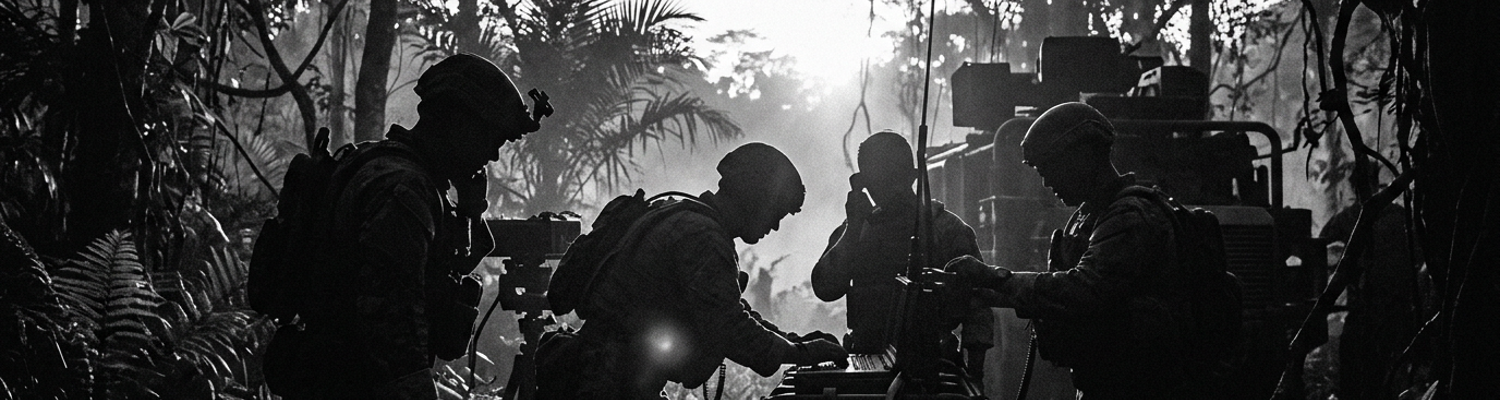
When examining the historical record, the post-mortem analysis revealed cascading logistical and technical breakdowns. Specialized equipment failed under environmental stress. The M106 Mighty Mite mechanical blowers seized in the high humidity. Standard tactical radios lost all signal transmission capabilities underground. Direction-finding intelligence placed enemy transmitters directly beneath civilian living quarters. Every technical advantage possessed by the 9th Marine Regiment dissolved upon contact with the local soil composition. The operation devolved into manual subterranean combat. Infantrymen crawled into unmapped shafts with hand tools and sidearms. The resulting casualty rates forced a complete reevaluation of subterranean warfare doctrine across the Da Nang tactical area.
Revolutionary Development Priorities and Operational Friction
The 2 September 1966 Special Joint Report laid bare profound contradictions between underground denial and rural pacification mandates in Quang Nam Province. Local force guerrillas used civilian dwellings as functional shields. Combat engineers operating alongside infantry platoons near coordinate BT 015 762 routinely uncovered interconnected bunkers. Neutralizing subterranean strongpoints required massive physical force. Detonating forty-pound cratering charges or bulk composition C-4 shattered local drinking wells. The blasts breached irrigation dikes and collapsed wooden farmhouses into the earth. The joint report documented how kinetic underground denial physically destroyed the agricultural foundations of the hamlets.
This destruction alienated the rural population.
Marine search teams found that destroying underground infrastructure simultaneously destroyed the pacification mission. Pacification cadres could not win local loyalty while combat engineers shattered the village water table. Archival evidence shows that Marine units faced strict constraints designed to safeguard noncombatants. Headquarters directives from III Marine Amphibious Force imposed severe fire-support limitations on infantry battalions sweeping the rice-farming belt. Tactical units were prohibited from calling in unobserved artillery missions within five hundred meters of registered pacification hamlets. Combat engineers discovering tunnel shafts beneath domestic living areas were barred from utilizing high-explosive demolitions without prior written authorization from the Hoa Vang district chief.
Squad leaders abandoned systematic explosive demolition.
Field logs from the 3rd Battalion 9th Marines operating south of the Song Cau Do river near coordinate BT 024 745 expose the mechanical failures that plagued these non-destructive clearance efforts. Specialized engineering detachments attempted to clear tunnel complexes without explosive devastation. They deployed the M106 Mighty Mite blower. This sixty-pound mechanical unit was designed to drive CS-1 riot control powder into subterranean crawlways. Fine alluvial mud and excessive monsoon humidity fouled the two-stroke engine carburetors. The blowers seized under full operational throttle. Backpressure inside unvented tunnel complexes blew the intake couplings apart. The machines released choking clouds of micro-pulverized gas across civilian family compounds instead of the underground bunkers.
Viet Cong Subterranean Architecture in Populated Hamlets
Engineering surveys conducted by the 1st Engineer Battalion around grid coordinates BT 032 738 documented an extensive subterranean defense network. Local guerrilla detachments carved these underground complexes directly into the dense laterite clay native to the Hoa Vang basin. When exposed to circulating air, this clay oxidized and hardened into a rigid consistency. The hardened clay created stable structural load paths that resisted surface compression without requiring timber shoring. Marine patrols sweeping the hamlets encountered subterranean works organized into three distinct depth tiers.
The first level sat two meters below ground.
This upper tier housed fighting holes and concealed communication trenches. Beneath that lay an intermediate operational level at four to six meters. This middle section contained weapons repair caches and field surgical stations. A third level dropped down nearly nine meters to reach the seasonal water table. This deepest tier provided sleeping quarters that shielded guerrilla squads from surface blast effects. A close review of operational logs indicates that VC combat engineers incorporated specific blast attenuation geometries throughout these subterranean tiers. Horizontal tunnels measured less than eighty centimeters wide and one meter high. Marines had to strip off web gear and protective flak vests simply to fit inside the crawlways.
The R-20 Battalion excavated sharp ninety-degree elbows every three meters.
These earthen baffles neutralized the kinetic overpressure of American fragmentation grenades. A detonating M26 grenade generated shockwaves exceeding two hundred pounds per square inch in a straight corridor. The earthen elbows diverted and dissipated the wave. Heavy trapdoors built from seasoned teak isolated each section. Downward-sloping U-bends formed subterranean water traps that blocked CS-1 riot control agent from spreading between levels. Ventilation shafts built from hollow bamboo tubes climbed to the surface at forty-five-degree angles. Guerrillas disguised these vents as termite mounds or fence posts. Vertical access holes dropped through the tamped-earth floors of thatch-roofed peasant residences. Auxiliary air shafts emerged inside active pigsties.
Signals Intelligence via AN/PRD-1 Direction-Finding Sets
During the opening weeks of September 1966, radio direction-finding detachments from Sub Unit 1 1st Radio Battalion established monitoring baselines across the perimeter of Da Nang. They intended to intercept the communications network of the Viet Cong R-20 Doc Lap Battalion. The detachment deployed AN/PRD-1 tactical direction-finding sets. These man-portable systems consisted of a directional loop antenna and an indicator-receiver box. Heavy battery packs powered the units to detect high-frequency ground-wave emissions. Marine technicians established listening posts along elevated terrain at Hill 55.
Intercept operators manually rotated the directional loop antennas.
Operating across the 1.5 to 30 megahertz spectrum, operators listened for audio nulls in their headsets. They captured faint bursts of high-speed Morse code. Guerrilla signallers utilized low-power clandestine transmitters operating on pre-set crystal frequencies. Operational logs reveal the technical friction Marine direction-finders faced in the waterlogged paddies. The eighty-pound AN/PRD-1 apparatus required dry-cell battery supplies. These batteries decayed within hours inside coastal Quang Nam Province. Relative humidity routinely reached ninety percent. Corrosive salt air fouled the receiver switches.
Dense iron-bearing laterite deposits distorted ground-wave propagation.
The soil produced compass anomalies up to twelve degrees. Marine teams constructed calibrated bearing baselines between fixed observation towers at coordinate BT 025 765 to correct these electromagnetic deviations. Plotting rooms inside the III Marine Amphibious Force compound cross-referenced these cuts to generate circular error probabilities down to a radius of two hundred meters. The calculated targeting fixes placed the clandestine transmitters directly under the populated center of Phong Le. Ground reconnaissance patrols sent to inspect the surface coordinates found ordinary farming families harvesting rice. Guerrilla radio operators were working inside the three-tier subterranean complexes. They strung thin insulated antenna wires through hollow bamboo fence pickets.
Clay Soil Composition and AN/PRC-25 Communication Blackouts
The geological composition of the Hoa Vang basin created an impenetrable barrier to military radio propagation. The low-lying delta plain surrounding the Tuy Loan and Cau Do river systems consisted of saturated alluvial clay. Seasonal monsoon rains pushed the regional water table to within two meters of the ground level. This converted the underground soil strata into an electrically conductive mass with high dielectric permittivity. When radio operators attempted to transmit high-frequency signals through this medium, the moisture-laden clay acted as an expansive grounding plane. The earth absorbed electromagnetic radiation.
Signal attenuation calculations demonstrated total VHF-FM failure.
Signals dissipated almost entirely within thirty centimeters of penetrating the damp earth. Standard-issue AN/PRC-25 tactical transceivers suffered immediate transmission blackouts the moment clearance teams slipped beneath the surface. Marine infantry companies relied on the AN/PRC-25 as their primary communication link. The transceiver operated across a frequency spectrum of 30.00 to 75.95 megahertz with a nominal output of two watts. The system depended on direct line-of-sight propagation using the three-foot AT-892 steel tape antenna. When a Marine tunnel scout maneuvered his equipment through a vertical shaft, the metal casing of the RT-505 receiver-transmitter unit made direct contact with the slick clay walls.
Surface monitors heard only flat background receiver noise.
This loss of transmission left subterranean clearance teams entirely isolated from surface command elements. Tunnel scouts could not relay information regarding tunnel dimensions or branching shafts. Surface units had no immediate way of determining whether a scout was dead or trapped. Field commanders could not adjust topside security cordons without direct knowledge of their underground personnel. Marine signalmen attempted to resolve the blackout by paying out spools of lightweight WD-1/TT communications wire connected to battery-powered surface handsets. Guerrilla fighters intentionally built low-clearance crawlways and rough wooden framing that snagged the telephone wire. The wire snapped as scouts crawled forward.
Civilian Protection Rules and Tactical Constraints
Command restrictions bound the 9th Marine Regiment to an exhaustive set of noncombatant protection rules across Hoa Vang District. The South Vietnamese district chief in Da Nang lodged multiple civilian casualty complaints. Field officers lost authorization to use bulk high explosives near registered hamlet perimeters. Forty-pound ammonium-nitrate cratering charges and M183 demolition assemblies had previously collapsed entire subterranean systems. The resulting shockwaves pulverized nearby wattle-and-daub farmhouses. The blasts shattered clay water storage urns and fractured delicate earth berms. Deploying bulk CS-1 gas dispersants also fell under strict prohibitions within four hundred meters of domestic settlements.
Monsoonal downbursts pushed chloracetophenone back into peasant living quarters.
Battalion commanders had to obtain direct written clearance before placing any charge exceeding ten pounds of composition C-4 near an inhabited dwelling. Operational logs south of the Tuy Loan River near grid coordinate BT 031 748 reveal that local Viet Cong cadre deliberately exploited these constraints. Guerrillas anchored their crawlway shafts directly beneath the wooden beds of noncombatant families. Platoon leaders faced an immediate dilemma during every domestic search. Detonating a satchel charge meant destroying the house and violating division-level pacification mandates. Sparing the shaft left a combat route open directly beneath the company rear.
Marine combat engineers received strict orders forbidding general surface demolitions.
Subterranean search teams had to clear complex corridors using primitive manual equipment. Long-barrel service rifles like the M14 were completely useless in corridors that measured sixty centimeters wide. Marine scouts no room to shoulder a stock. Marines crawling into the pitch-black red clay shafts stripped off their steel helmets. They descended with an angled MX-991/U flashlight and an M1911A1 .45 ACP pistol. Firing the heavy pistol inside an unvented earthen tunnel generated acoustic pressure that ruptured eardrums. The cordite smoke extinguished flashlight beams. Scouts could not utilize fragmentation grenades. The confined overpressure would kill the thrower around ninety-degree bends.
Subterranean Explosive Breaching and Collateral Destruction
When engineers did receive authorization to use explosives, the physical results proved devastating to the local geography. Operations near grid coordinate BT 028 751 demonstrated the destructive capacity of standard military demolitions on agrarian infrastructure. A squad from the 1st Engineer Battalion located a primary access shaft beneath a communal rice drying floor. The district chief granted a rare exemption for explosive clearance. Engineers packed eighty pounds of composition C-4 into the primary vertical drop. They wired the charges with standard detonation cord and time fuzes. The resulting explosion vaporized the upper tier of the tunnel system.
The blast wave traveled outward through the saturated clay.
The kinetic energy sought the path of least resistance. It found that path through the local water table. The detonation fractured the subterranean aquifer feeding the hamlet drinking well. The well ran completely dry within four hours. Surface tremors collapsed three adjacent wooden structures. The explosion created a crater twelve meters wide and four meters deep. Monsoon rains immediately filled the crater with contaminated runoff. The engineers destroyed the tunnel entrance. They also destroyed the agricultural viability of the entire family compound.
Civilian pacification teams spent weeks attempting to repair the damage.
Archival evidence shows that explosive breaching consistently failed to destroy the deepest levels of the R-20 Battalion complexes. The heavy laterite clay absorbed and deflected the downward force of surface explosions. Combat engineers excavated the blast craters to assess the damage. They found the intermediate and lower tiers completely intact just two meters below the blast zone. The Viet Cong combatants simply waited in the lower levels until the Marines moved on. They then dug new vertical shafts up through the loose soil of the fresh blast craters. High-explosive clearance in pacification sectors produced counterproductive tactical results and massive civilian property damage.
Doctrinal Lessons and Subterranean Denial Adjustments
Operational after-action reports delivered to Major General Lewis J. Walt at III Marine Amphibious Force headquarters triggered a fundamental overhaul of subterranean combat doctrine. Heavy-handed explosive clearances carried out by the 9th Marine Regiment had failed to achieve permanent denial. Guerrilla fighters reoccupied the cleared sectors within forty-eight hours. The failures in Hoa Vang forced operational planners to reconsider aggressive subterranean demolition tactics in pacification zones. Major General Walt issued revised directives to the 1st Marine Division. He formally restricted large-scale explosive subterranean operations within one thousand meters of registered Revolutionary Development hamlets.
Engineers learned that subterranean combat required surgical methods.
Marine Corps leadership prioritized mechanical denial and specialized subterranean intelligence teams over high-explosive clearance. Combat engineers turned to physical closure methods that preserved surface housing. Heavy equipment operators from the 7th Engineer Battalion moved Caterpillar D8 bulldozers into target areas. They scraped off camouflaged access points without using explosives. Demolition squads stopped using satchel charges. Engineers mixed heavy slurries of bentonite clay, river gravel, and quick-drying cement. They poured hundreds of gallons down vertical access shafts. Pneumatic tampers packed the wet mixture into dense plugs.
The concrete cured and hermetically sealed the lower crawlways.
This tactical shift produced the first formal institutional push toward dedicated underground intelligence exploitation. III Marine Amphibious Force established specialized subterranean teams drawn from reconnaissance units. Trainees received low-profile helmets and battery-powered directional headlamps. They carried compact commercial revolvers chambered for low-velocity rounds. Sound-powered field phones linked by spools of WD-1/TT wire kept subterranean scouts in voice contact with surface recorders. Intelligence officers accompanied these specialist detachments into cleared shafts south of the Tuy Loan River. They retrieved operational maps and cipher tables from deep chambers. Engineers poured the final concrete caps.