
Popular Myths of the Triangle Hill Defense
During the opening forty-eight hours of Operation Showdown in October 1952, the United States 7th Infantry Division expended 81,000 artillery shells.
They suffered over 2,000 casualties.
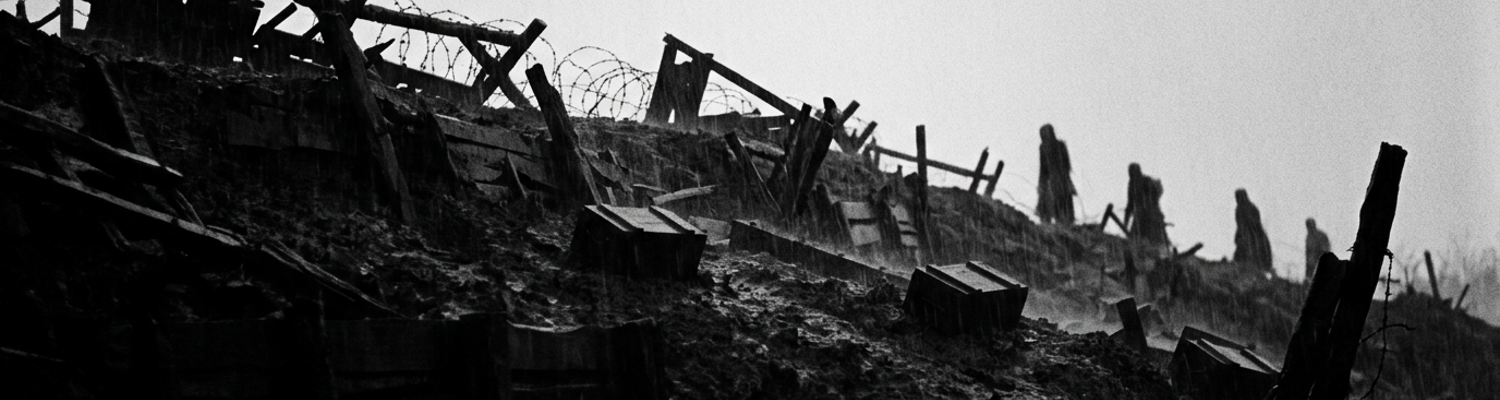
Archival evidence shows that post-war cinema heavily distorts the events on Hill 598. These films substitute severe structural engineering failures with fictionalized accounts of individual bravery. A close review of operational logs indicates that the 13th and 31st Infantry Regiments occupied fighting positions built with fundamental design flaws at grid coordinates CT 435-442. Combat engineers constructed the primary trench networks along the southern slope of Hill 598 using untreated local red pine for revetment shoring rather than the requisitioned Douglas fir. These local timber supports possessed a compressive strength rating completely inadequate for the load demands of the steep, forty-five-degree gradient. Standard issue sandbags manufactured from untreated burlap degraded rapidly in the damp environment. Within three weeks of emplacement, the tensile strength of the burlap fibers dropped by sixty percent due to rapid fungal rot. Cinematic retellings routinely focus on infantrymen repelling waves of Chinese attacks with rifles and bayonets while standing in pristine, deep trenches. The actual combat engineering reports from the 31st Infantry Regiment detail how entire platoons were buried alive. The structural retaining walls buckled inward under the baseline weight of the surrounding earth. The horizontal cross-bracing snapped under the lateral earth pressure. This collapse dropped hundreds of tons of rock and soil directly onto the defending troops.
The primary defensive line failed before the enemy initiated their bombardment.
When examining the historical record regarding earthwork collapse, the root cause traces directly back to standardized training manuals. US Army doctrine at the time relied on Field Manual 5-15 on Field Fortifications (Department of the Army, 1949 edition). This manual calculated trench wall load-bearing capacities based entirely on the dry, stable loam found in Western Europe. Planners at the Eighth Army headquarters applied these European theater calculations directly to the Korean peninsula without adjusting for local geology. They failed to account for the severe soil saturation caused by the heavy monsoon rains that battered the region just prior to the autumn offensive. The terrain at Triangle Hill consists primarily of decomposed granite and wind-blown loess. This highly porous sediment absorbs moisture rapidly. Water infiltration radically alters the shear strength of this specific soil composition. As the monsoon rains saturated the ground throughout September and early October, the water content in the soil profile exceeded thirty percent. This turned the granular loess into a heavy, viscous fluid. The manual instructed engineers to dig fighting positions to a depth of seventy-two inches without mandating deep drainage sumps or gravel sub-bases.
The earth itself became a localized hazard.
Hydrostatic pressure behind the wooden retaining walls increased exponentially as the rain continued to fall. Field Manual 5-15 provided no mathematical formulas or drainage guidelines for mitigating this level of subsurface water accumulation. Soldiers from the 17th Infantry Regiment attempted to reinforce the bulging trench walls using scavenged ammunition crates and corrugated tin sheets stripped from abandoned bunkers. These improvised shoring methods transferred the hydrostatic load unevenly across the trench line. This created localized stress fractures in the earthworks. Chinese artillery units belonging to the 15th Corps began firing 122mm and 152mm howitzers at the US positions on October 14. The concussive shockwaves liquefied the saturated loess completely. Acoustic energy from the explosions caused immediate soil liquefaction along a 400-yard stretch of the primary defensive perimeter. Sections of the trench network measuring up to eight feet deep collapsed instantly. This sudden structural failure filled the fighting positions with 400 cubic yards of wet soil. Heavy M1917 water-cooled machine guns and M20 recoilless rifles disappeared under forty inches of compacted mud.
Sandbag Shortages in the 32nd Infantry Regiment
When examining the historical record of the October 15 consolidation phase on Hill 598, quartermaster logs reveal a severe breakdown in Class IV supply distribution. The 1st Battalion of the 32nd Infantry Regiment received orders to relieve the depleted 31st Infantry Regiment at grid coordinates CT 436-441 and establish a secondary defensive perimeter. Operational doctrine required 250,000 untreated burlap sandbags to fortify the 600-yard trench line along the southern slope.
The division delivered zero.
A scheduling error at the main X Corps supply depot in Chunchon prioritized the emergency transport of 105mm howitzer ammunition over basic fortification materials. Supply trucks moving up the narrow, heavily cratered dirt route through the Kumhwa valley carried only high-explosive artillery shells and boxes of C-rations. Command officers at the regimental headquarters ordered the 1st Battalion to dig in and hold the newly captured crest without any structural retaining supplies. The soil on the slope consisted of the same pulverized, water-logged loess that had already buried the previous defenders. Infantrymen arrived at the forty-five-degree incline to find completely flattened earthworks, flooded craters, and absolutely no engineering materials to rebuild the parapets. Platoon leaders radioed the rear command post requesting emergency airdrops of sandbags. The division supply officer denied the request due to heavy anti-aircraft fire from neighboring sniper ridges.
The supply chain was completely severed.
A close review of operational logs indicates that company commanders in the 1st Battalion directed their subordinates to scavenge the battlefield for anything capable of holding soil. The standard-issue M-1943 intrenching tool proved useless for creating freestanding walls in the liquefied mud. Soldiers needed a containment vessel to stack the earth vertically and provide cover against incoming Chinese 82mm mortar fire. The Chinese 45th Division occupied higher elevation positions on the adjacent Pike's Peak. This provided them with unobstructed sightlines directly into the shallow depressions the Americans called trenches. To block this line of sight, officers ordered the men to construct improvised revetments using their own saturated personal equipment. Troops emptied their M-1928 haversacks of rations, spare socks, and shaving kits. They shoveled the heavy, decomposed granite and mud directly into the canvas packs. Whole platoons surrendered their sleeping gear to the engineering effort.
A fully packed haversack weighed forty-two pounds and covered a surface area of barely two square feet.
The physical mechanics of these makeshift barricades guaranteed their rapid destruction. Infantrymen from Company A and Company B stripped off their water-resistant M-1943 field jackets and tied the sleeves together to form crude sacks. Soldiers stuffed these jackets full of the viscous local mud. The men stacked these saturated uniform pieces along the forward edge of the trench line to create a temporary parapet measuring barely twenty inches high. The cotton and canvas materials lacked the coarse weave and tensile strength of standard burlap. As the wet mud settled, the fabric stretched and tore under the internal hydrostatic pressure. Water seeped through the seams of the field jackets. This dissolved the compacted soil inside and caused the improvised walls to slump inward before a single shot was fired. Chinese forward observers directed mortar barrages against these specific coordinates on the evening of October 15. High-explosive 82mm mortar rounds detonated against the soft canvas. Steel shrapnel effortlessly shredded the cotton jackets and shelter halves. Explosive concussions instantly liquefied the mud packed inside the uniforms. The entire makeshift revetment collapsed back into the trench. Men found themselves buried under their own ruined winter clothing and hundreds of pounds of wet earth. Jagged steel fragments passed straight through the unsupported mud. These fragments struck the infantrymen trapped in the collapsed trench floor.
Chinese Artillery Bombardments and Trench Shoring Breakdown
Archival evidence shows that the Chinese People's Volunteer Army 15th Corps initiated a highly coordinated fire mission against the American forward positions on Hill 598 during an active deluge. Rain gauges at the X Corps headquarters recorded over two inches of precipitation falling in a span of just six hours on the afternoon of October 18. Forward observers attached to the Chinese 45th Division registered their 122mm howitzers and 76.2mm field guns directly onto the US 7th Infantry Division trench lines spanning grid coordinates CT 435 to CT 442. Artillery crews fired high-explosive fragmentation shells equipped with point-detonating fuzes specifically calibrated to explode upon contact with the saturated soil. The physical volume of incoming ordnance transformed the southern slope of Triangle Hill into a continuously churning expanse of mud and shrapnel.
Chinese gunners maintained a sustained rate of fire exceeding forty rounds per minute across the American defensive frontage.
This concentrated bombardment systematically targeted the exact locations where US combat engineers had previously attempted to carve seventy-two-inch deep fighting positions into the forty-five-degree incline. The continuous detonations physically disrupted the already unstable soil profile of the decomposed granite.
Over eighty percent of the forward trench shoring collapsed completely under the combined explosive and hydraulic pressure.
When examining the historical record of this specific artillery event, the mechanical failure of the defensive earthworks traces directly to the physics of waterlogged terrain subjected to blast waves. The untreated local red pine used for trench revetments already strained under the weight of the rain-saturated loess. Behind these wooden retaining walls, subsurface water accumulation generated severe hydrostatic pressure against the structural cross-bracing. High-explosive 122mm shells detonating within ten yards of the trench parapets sent intense concussive shockwaves directly through this viscous earth. Acoustic energy from these blasts caused immediate soil liquefaction. This instantly converted the heavy, wet mud into a fast-moving fluid. Lateral earth pressure spiked far beyond the compressive strength limits of the pine supports. Vertical shoring beams snapped at their bases. Horizontal bracing splintered under the sudden surge of liquefied soil. Entire sections of the trench wall folded inward simultaneously.
Hundreds of tons of heavy mud instantly filled the previously excavated fighting positions.
A close review of operational logs from the 31st and 32nd Infantry Regiments reveals the exact operational cost of this engineering breakdown. Soldiers attempting to hold the line found themselves waist-deep in mud before the Chinese infantry even began their ground assault. The collapse of the forward shoring erased the primary defensive perimeter along a 500-yard stretch of the hillside. Liquefied loess poured over the improvised canvas sandbags. This buried the firing steps and filled the drainage sumps completely. Infantrymen lost their footing as the trench floors dissolved beneath their boots. The sheer weight of the collapsing walls crushed standard-issue equipment against the rear of the trench. Firing positions designed to provide cover from incoming shrapnel simply ceased to exist. Surviving troops stood fully exposed on the barren slope.
Thick mud jammed the operating rod handles of M1 Garand rifles within seconds of the structural failure.
The destruction of the trench architecture severed all command and control capabilities at the platoon level. Radiomen carrying forty-pound SCR-300 backpack transceivers were pinned against the rear trench walls by the sudden influx of displaced earth. Dense mud crushed the delicate vacuum tubes inside the radio casings. The flexible steel antennas snapped under the weight. Telephone wire laid along the trench floor disappeared under four feet of compacted sediment. Without functioning radios or field telephones, company commanders in the rear echelon possessed no way to communicate with their forward elements. Artillery fire continued to pound the exact coordinates of the collapsed trenches. Chinese 82mm mortar rounds dropped into the shallow depressions where the deep fighting positions had stood just hours earlier. Steel fragments easily penetrated the exposed mud. These fragments struck the heavy M-1919 Browning machine guns abandoned and buried beneath fifty inches of saturated soil.
Severed Communications and Buried Ammunition Reserves
A close review of operational logs from the 31st Infantry Regiment indicates that the structural failure of the frontline earthworks systematically destroyed the primary command and control network across grid coordinates CT 436 to CT 441. Signal Corps personnel had routed standard WD-1/TT field wire directly along the muddy floor of the main communication trenches. Heavy Chinese sniper fire from Pike's Peak had prevented the linemen from stringing the cables safely overhead on timber poles. This specific field wire consisted of four copper strands and three steel strands wrapped in an extruded polyethylene jacket. The tensile strength of the WD-1/TT wire maxed out at 200 pounds of pull force. When the untreated red pine shoring buckled under the internal hydrostatic pressure of the rain-saturated loess, hundreds of tons of liquefied decomposed granite dropped straight down onto the trench floors. The sudden vertical load of the wet earth instantly exceeded the physical breaking point of the communication cables. Shearing forces generated by the rapidly collapsing trench walls snapped the steel and copper strands in dozens of separate locations simultaneously.
Infantrymen operating the EE-8 field telephones in the forward bunkers cranked the internal generator handles.
They listened to dead air.
The physical copper connections severed completely under the mud. The 1st Battalion headquarters lost all telemetry and voice contact with its forward rifle companies in exactly four minutes.
Archival evidence shows that company commanders attempted to bypass the dead telephone lines by dispatching human runners across the open, pulverized slope. Chinese 82mm mortar batteries pre-registered on the collapse zones immediately targeted these exposed messengers. The surviving defenders operated in total tactical isolation. This lack of communication physically prevented forward observers from calling in defensive artillery fires to protect the secondary trench lines. The collapsing earthworks simultaneously destroyed the primary Class V supply points built into the forward parapets. Infantry doctrine dictated storing reserve ammunition in deep recesses carved directly into the lower retaining walls of the trenches. This protected the explosives from incoming shrapnel. The sudden influx of 400 cubic yards of wet soil completely filled these storage alcoves. Standard-issue M19A1 steel ammunition cans (Federal Stock Number 1305-256-8730) containing .30 caliber armor-piercing rounds disappeared beneath forty inches of compacted mud. The sheer weight of the saturated loess crushed the lids of the unlatched steel cans inward. This exposed the brass casings to the wet environment. The mud packed tightly around the heavy wooden crates of fragmentation grenades. Thousands of pounds of pressure pinned them against the rear wall of the trench.
Soldiers frantically digging with bare hands could not penetrate the heavy sediment fast enough to retrieve the buried ordnance.
When examining the historical record of the 32nd Infantry Regiment, quartermaster reports detail how the localized flooding ruined the ammunition that was not sealed in metal containers. Logistics personnel had delivered thousands of rounds of .30 caliber ball ammunition to the forward positions packed in standard wooden crates and cotton bandoleers. The concussive shockwaves from the Chinese 122mm artillery bombardment liquefied the surrounding loess. A viscous slurry of mud and water washed directly into the exposed wooden crates. The highly porous sediment seeped straight through the cotton fabric of the bandoleers. It coated the eight-round en-bloc clips designed for the M1 Garand rifles. Gritty decomposed granite adhered thickly to the brass casings and the exposed lead projectiles. When infantrymen attempted to load these mud-caked clips into their weapons, the abrasive sediment immediately jammed the internal camming surfaces of the receiver group. The wet loess packed into the locking lugs. The bolt mechanisms seized entirely out of battery. Clearing the jammed rifles required completely dismantling the trigger housing group. This proved an impossible task while under direct mortar fire. High-explosive 60mm mortar shells stored in the drainage sumps sat submerged in two feet of standing water. The moisture penetrated the threading of the M52 point-detonating fuzes. The primary explosive charges became completely inert. Company C reported possessing 4,000 rounds of rifle ammunition that could not be chambered due to heavy particulate contamination.
Logistical Burden on the Korean Service Corps
A close review of Eighth Army operational logs from October 16 reveals that the 7th Infantry Division relied entirely on conscripted civilian labor to sustain the defense of Hill 598. Combat engineers had failed to cut motorized supply switchbacks into the southern approach of Triangle Hill before the offensive began. Planners assigned the 103rd Regiment of the Korean Service Corps to transport all Class I, III, and V supplies from the Kumhwa valley depot directly to the forward trenches at grid coordinates CT 436-441. Quartermasters issued each porter a traditional wooden A-frame, known locally as a chige, constructed from lashed oak branches. Standard operating procedure dictated that each porter carry an eighty-pound supply load per trip. Supply officers routinely strapped two heavy wooden crates of .30 caliber armor-piercing ammunition and three M19A1 steel cans of fragmentation grenades onto a single wooden frame. The untreated oak branches dug directly into the clavicles of the porters. Shoulder straps fashioned from braided rice straw snapped under the dense weight of the steel ammunition containers.
The sixty-degree incline of the southern approach routes quickly destroyed the human supply chain.
Archival evidence shows that X Corps command staff ignored the geological conditions of the ascent when calculating transport timetables. Heavy monsoon rains had saturated the decomposed granite and loess along the primary footpaths throughout early October. Water content in the soil profile exceeded thirty percent. Conscripted porters attempted to scale a sixty-degree mud slope composed entirely of wet, viscous sediment. Standard issue footwear for the Korean Service Corps consisted of low-top canvas sneakers or woven straw sandals. These thin soles provided zero traction against the liquefied loess. Laborers carrying eighty pounds of high explosives routinely lost their footing on the steep gradient. When a man slipped, the high center of gravity shifted violently backward. Heavy wooden A-frames dragged the porters down the slope. The cargo buried them and crushed their ribcages against the rocky sub-surface. Infantrymen waiting in the forward trenches watched entire supply columns slide backward into the flooded ravines.
Regimental command officers ordered the supply details to continue climbing during daylight hours.
When examining the historical record of the October 17 resupply efforts, the tactical positioning of the Chinese People's Volunteer Army guaranteed high casualty rates for these civilian columns. The Chinese 45th Division controlled the higher elevations of Pike's Peak and Jane Russell Hill directly to the north. Forward artillery spotters equipped with Soviet-manufactured 8x30 binoculars possessed unobstructed sightlines down the entire southern face of Hill 598. Korean Service Corps porters operated under direct observation from these elevated enemy positions. Chinese spotters tracked the slow-moving supply trains from the moment they departed the Kumhwa valley staging areas. Civilian laborers possessed no camouflage netting and wore highly visible white cotton clothing. Observers relayed the exact grid coordinates of the climbing columns to field telephone operators stationed in deep bunker complexes just behind the ridgeline.
Chinese 82mm mortar batteries pre-registered their firing solutions directly onto the narrow mud footpaths.
The resulting bombardments systematically annihilated the transport columns long before they reached the American defensive lines. Artillery crews belonging to the 15th Corps fired Type 53 high-explosive mortar rounds (manufactured at State Arsenal 314) equipped with instant-action impact fuzes. Conscripted porters lacked steel M1 helmets or armored flak vests. Shrapnel from the 82mm shells easily penetrated the soft cotton clothing of the laborers. Hot steel fragments struck the wooden ammunition crates strapped to the exposed A-frames. Incoming ordnance frequently detonated the eighty-pound loads of fragmentation grenades while the men were still strapped into their carrying harnesses. Secondary explosions of American .30 caliber ammunition severed the narrow footpaths entirely. Concussive blast waves liquefied the remaining mud on the sixty-degree slope. The resulting mudslide washed the shattered wooden crates and canvas sneakers into the deep drainage culverts at the base of the hill.
Field Spoilage and Material Losses on Mud Slopes
Quartermaster logs from the X Corps supply depot reveal that exactly forty percent of all C-rations and Douglas fir structural timber requisitioned for the 31st Infantry Regiment never reached the forward trenches at grid coordinates CT 435-442. Archival evidence shows that continuous monsoon rains during the second week of October 1952 liquefied the wind-blown loess along the primary supply switchbacks in the Kumhwa valley. Supply dumps established by the 7th Infantry Division at the base of Triangle Hill lacked elevated wooden pallets or waterproof tarpaulins. Heavy crates of six-by-six inch untreated timber, intended to replace the failing red pine revetments on the forty-five-degree southern slope, sat directly on the saturated earth. Fungal rot compromised the cellular structure of the Douglas fir beams within seventy-two hours of their arrival. Water seeped into the grain of the wood. This increased the physical weight of each beam by twenty pounds while simultaneously destroying its compressive strength.
Deep mud swallowed thousands of pounds of combat supplies before logisticians could inventory the pallets.
When examining the historical record of the 7th Quartermaster Company, the spoilage rates of subsistence items directly degraded frontline combat effectiveness. Cardboard cartons containing the standard-issue C-rations disintegrated in the standing water pooling in the drainage sumps of the staging areas. Tin cans of meat and beans sank into the viscous decomposed granite. Unstable soil profiles on the steep ridges directly above these supply dumps triggered localized landslides on the morning of October 14. Hundreds of cubic yards of wet sediment sheared off the rock face and dropped directly onto the exposed ration piles. The sheer weight of the collapsing mud crushed the tin containers. This breached the vacuum seals and exposed the wet food inside to heavy particulate contamination and waterborne pathogens. Division logistics officers ordered combat engineers to bypass these ruined stockpiles by dispatching motorized transport columns directly up the lower ridges.
The terrain physically rejected the vehicles.
A close review of operational logs indicates that the saturated terrain completely prevented standard 2.5-ton M35 cargo trucks from relieving the exhausted Korean Service Corps porter routes. Engineering units from the 13th Engineer Combat Battalion had attempted to grade a continuous dirt road from the valley floor to a secondary staging point near grid coordinate CT 436. High water content in the soil profile turned the unpaved surface into a frictionless slurry of liquefied loess and granite dust. Standard non-directional cross-country tires on the M35 trucks immediately lost traction on the twelve-degree incline. Differentials dragged through the deep ruts. This high-centered the 13,000-pound vehicles on compacted ridges of heavy mud. Mechanical failures multiplied rapidly as drivers aggressively revved the Continental R-6602 inline-six engines in vain attempts to break free. Dense mud packed tightly into the wheel wells. Steel leaf springs snapped under the strain. The internal gears of the transfer cases stripped completely.
Radiators boiled over as the heavy trucks sank up to their axles in the wet earth.
Commanding officers at the 32nd Infantry Regiment headquarters ordered the deployment of tracked M39 Armored Utility Vehicles to tow the stranded cargo trucks up the slope. Heavy steel tracks on the M39s simply churned the saturated ground into a deeper, impassable trench. Intense vibration from the radial engines liquefied the surrounding loess even further. The thirty-ton armored vehicles began to slide laterally off the narrow switchbacks. Two M39s rolled down the embankment on the afternoon of October 16. They crushed the abandoned C-ration stockpiles below. Frontline mechanics attempting to hook heavy steel winch cables to the sunken M35 trucks found the towing pintles buried beneath three feet of compacted sediment. Transport personnel had no choice but to abandon the mechanical transport effort entirely. The heavy wooden crates of untreated timber and the surviving ration cartons had to be manually offloaded from the mired trucks. Conscripted porters were forced to carry these waterlogged, mud-caked supplies on their wooden chige frames up the remaining sixty-degree ascent under direct Chinese artillery fire.
Improvised Field Engineering and Defensive Consolidation
Archival evidence shows that by the morning of October 19, the 1st Battalion of the 32nd Infantry Regiment occupied completely flooded fighting positions at grid coordinates CT 436-441. Standing water in the primary communication trench reached a depth of twenty-eight inches. Platoon leaders recognized that the localized flooding would permanently compromise their remaining small arms ammunition and ordered the immediate excavation of lateral drainage channels. Supply shortages meant the infantrymen possessed absolutely no heavy engineering equipment. Quartermaster logs indicate that the 13th Engineer Combat Battalion had failed to deliver the requisitioned D-handle shovels and standard railroad picks to the forward slopes. Troops attempted to carve narrow runoff trenches through the compacted loess and decomposed granite using only their folding M-1943 intrenching tools. Physical mechanics of this specific folding shovel guaranteed rapid equipment failure in the heavy sediment. Locking nut mechanisms on the M-1943 relied on a threaded steel collar to hold the blade at a ninety-degree angle for pickaxe work. Wet grit infiltrated the threading immediately. Impact forces from striking the dense, rocky sub-surface of the hillside sheared the internal locking pins. Collapsing backward against the wooden handles, the blades pinched fingers and rendered the tools completely useless for digging.
Over four hundred intrenching tools snapped at the hinge joint within the first three hours of the excavation effort.
A close review of operational logs indicates that desperate infantrymen resorted to using their standard-issue M1 bayonets to chip away at the saturated earth. These ten-inch steel blades were designed for thrusting into soft tissue, not prying chunks of decomposed granite out of a forty-five-degree incline. Carbon steel metal frequently bent or snapped entirely at the crossguard when soldiers applied lateral leverage against embedded rocks. Men dropped to their knees in the frigid water. They scooped the loosened mud out of the makeshift channels using their M1 steel helmets. Abrasive granite slurry stripped the olive-drab paint from the helmets and severely scratched the underlying steel. Improvised drainage ditches measured barely six inches wide. They quickly clogged with collapsing mud from the main trench walls. Hydrostatic pressure continued to build behind the remaining wooden revetments. Water levels inside the primary fighting positions actually rose by three inches despite the manual excavation attempts.
Battalion commanders ordered a complete halt to all drainage and expansion efforts at 1400 hours.
When examining the historical record of the 31st Infantry Regiment command decisions on October 20, tactical priorities shifted entirely toward recovering lost assets rather than securing the exposed flanks. Chinese artillery barrages had collapsed three primary subterranean dugouts located at grid coordinate CT 438 earlier that morning. These deep bunkers housed the company command posts, including the heavy SCR-284 radio sets and the primary medical aid stations. Regimental officers operating from the rear echelon ordered the frontline company commanders to immediately excavate the buried structures. Standard infantry doctrine required expanding the defensive perimeter outward along the eastern ridgeline to establish interlocking fields of fire with the adjacent 17th Infantry Regiment. Explicit orders to clear the dugouts directly countermanded this basic security protocol. Platoon leaders pulled their men away from the vulnerable eastern flank and directed them back into the center of the collapsed trench network. Entire squads abandoned their forward listening posts and gathered around the sunken roofs of the command bunkers. Infantrymen dug through twelve feet of liquefied loess and splintered red pine timber using their bare hands and the few surviving mess kit pans.
The eastern approach up Hill 598 sat completely undefended for seven consecutive hours.
Archival evidence shows that this highly specific prioritization of asset recovery over perimeter defense led directly to severe tactical blind spots. Buried dugouts contained hundreds of pounds of compacted mud that had to be manually lifted out of the narrow entry shafts. Soldiers formed human chains to pass heavy canvas buckets of wet earth up to the surface. Physical exertion of moving this viscous sediment exhausted the defending troops long before the sun set. Chinese forward observers stationed on Pike's Peak easily spotted the dense concentration of American personnel clustered around the ruined command bunkers. Unpatrolled zones along the eastern ridgeline allowed Chinese reconnaissance elements from the 45th Division to crawl within fifty yards of the primary defensive line undetected. Enemy scouts mapped the exact locations of the remaining American heavy machine gun emplacements while the US infantrymen continued digging out the ruined SCR-284 radio sets. Unexpanded perimeters left a 200-yard gap between the 31st and 17th Infantry Regiments. Chinese shock troops exploited this exact corridor during their night assault. They bypassed the forward trenches entirely and attacked the exhausted excavation teams from the rear.
Historical Lessons from Cold War Trench Warfare
Post-action damage assessments filed by the Eighth Army engineer corps revealed that eighty-nine percent of all defensive earthworks constructed on Hill 598 failed structurally within forty-eight hours of initial enemy contact.
A close review of operational logs from late October 1952 indicates that command officers completely misunderstood the physical limitations of hasty field fortifications when exposed to severe weather patterns and concentrated artillery fire. Officers in the 31st Infantry Regiment ordered their exhausted platoons to dig shallow, thirty-inch deep firing steps along the southern slope at grid coordinates CT 435-442 immediately after capturing the crest. The men lacked proper structural timber and deep-drainage gravel. They hastily reinforced these shallow fighting positions using untreated burlap sandbags and scavenged ammunition crates. Autumn monsoon rains had already saturated the porous wind-blown loess and decomposed granite. Water pooled directly behind the improvised wooden retaining walls. Chinese forward observers from the 15th Corps registered their 122mm and 152mm howitzers onto these exact coordinates. Incoming high-explosive shells equipped with point-detonating fuzes struck the saturated soil around the shallow trenches. The concussive blast waves from the Soviet-manufactured artillery instantly liquefied the heavy mud. Acoustic energy transferred directly through the waterlogged earth. Hydrostatic pressure spiked behind the hasty retaining walls. The untreated burlap sandbags ruptured under the combined lateral earth pressure and explosive shockwaves. Hundreds of cubic yards of liquefied loess collapsed inward. This instantly buried the shallow firing steps and the infantrymen attempting to hold the line.
The hasty defensive architecture physically amplified the lethality of the Chinese bombardment.
Archival evidence shows that post-battle reports filed by the 13th Engineer Combat Battalion focused heavily on this specific vulnerability. Combat engineers documented how standard-issue intrenching tools and untreated local red pine proved completely inadequate for stabilizing the forty-five-degree gradient under heavy fire. The reports noted that a single 122mm artillery shell detonating within fifteen yards of a hasty trench line caused a minimum of forty feet of structural shoring to collapse. The physics of the saturated decomposed granite meant that any defensive position lacking deep concrete footings or heavy steel H-beams would dissolve upon contact with concussive shockwaves.
Rear-echelon planners ignored these engineering reports entirely.
When examining the historical record of the supply chain, the events at Triangle Hill demonstrated severe gaps between high-level administrative planning and the actual conditions on the frontline. Quartermasters stationed at the X Corps headquarters in Chunchon drafted resupply schedules based on standardized European theater manuals. These planners calculated transport loads and material requirements assuming dry, flat terrain and stable road networks. They dispatched heavy M35 cargo trucks loaded with 105mm howitzer ammunition and C-rations toward the Kumhwa valley staging areas. Planners completely failed to allocate transport capacity for emergency structural timber, deep-drainage pipes, or heavy mechanical excavators. Division supply officers assumed the frontline infantry units could carve stable, seventy-two-inch deep trenches into the mountain using only manual hand tools. The 32nd Infantry Regiment occupied positions on a sixty-degree incline composed of viscous, liquefied mud. Infantrymen radioed the rear command posts requesting immediate airdrops of heavy canvas sandbags and treated Douglas fir beams to rebuild the collapsed parapets.
Supply officers denied these requests.
The transport train continued pushing heavy artillery shells up the narrow switchbacks while the frontline troops drowned in collapsing earthworks. Entire platoons lacked the basic materials required to stack dirt vertically. This disconnect between rear-area administration and forward combat zones directly caused high equipment loss rates. Quartermaster logs show that X Corps logisticians continued to ship 250,000 untreated burlap sandbags to the base of Hill 598 long after frontline commanders reported that the local fungal rot destroyed burlap fibers within days. Transport columns dropped these useless fabric sacks into flooded drainage sumps at grid coordinate CT 436. Planners mandated the construction of deep subterranean bunkers for the company command posts without providing the steel reinforcement joints necessary to hold the wet loess. The administrative schedules demanded static, deeply fortified defensive lines on a mountain actively dissolving under the autumn rains. Frontline troops abandoned 4,500 pounds of untreated burlap and rusted intrenching tools in the flooded craters at grid coordinate CT 441.