
Iraqi Offensive Moves and Littoral Vulnerability
Standard military doctrine promised orderly logistics and multi-tiered air defense umbrellas designed to alert garrisons hours before enemy contact. The physical truth of August 1990 offered zero warning. It brought unbroken shifts in hundred-degree humidity and the grinding fear of immediate obliteration.
Chronic sleep deprivation broke junior officers before the first week ended.
Archival evidence shows that Iraqi forces deployed over twenty mobilized divisions toward the Kuwaiti and Saudi borders in early August 1990. Following the sudden assault on Kuwait City on August 2, the Iraqi high command pushed mechanized formations southward with extraordinary speed. Elements of the Republican Guard fanned out across the open desert flats toward the neutral zone and the border outpost at Ras al-Khafji. These veteran units operated hundreds of Soviet-built T-72 and T-62 main battle tanks alongside BMP-1 infantry fighting vehicles. Heavy self-propelled 152mm artillery regiments supported the advance. Supply convoys choked the primary north-south asphalt corridors. They established forward ammunition holding areas within direct striking distance of Saudi oil infrastructure. Intelligence analysts reviewing satellite reconnaissance frames tracked the rapid assembly of regular Iraqi army corps. The II and III Corps positioned heavy strike echelons directly along the frontier. Western tactical planners in Manama and Riyadh understood that these massed formations faced no credible ground-based tripwire. A fast-moving armored blitz down the coastal highway toward Dhahran could envelop the entire littoral within seventy-two hours. This would trap the island of Bahrain behind an isolated causeway.
Tactical operations centers ran on black coffee, nicotine, and quiet dread.
A close review of operational logs indicates that Bahraini oil terminals and airfields lacked comprehensive early-warning radar coverage against low-level strike aircraft. Civil and military installations on the island sat exposed against northern maritime flight paths. This included the Sitra crude loading terminal, the refinery complex, and the runways at Shaikh Isa Air Base. Shore-based radar suites suffered severe target degradation caused by atmospheric ducting and heavy surface clutter across the shallow waters of the Persian Gulf. Iraqi Air Force strike squadrons flying French-built Mirage F1EQs and Soviet Su-24MKs possessed the tactical capability to exploit these low-altitude blind spots. By flying under two hundred feet across the water, an attack package armed with sea-skimming Exocet AM39 anti-ship missiles or laser-guided ordnance could appear over Sitra or Mina Salman with less than ninety seconds of reaction time for point-defense crews. Radar operators sat trapped in air-conditioned vans. They stared at glowing green cathode-ray scopes that regularly blossomed with false returns. Their nervous systems frayed by ceaseless adrenaline spikes and false alarms.
The island possessed no land-based surface-to-air missile network capable of stopping low-altitude supersonic ingress.
When examining the historical record from the naval coordinating cell at Mina Salman, watchstanders documented continuous mechanical failures in secondary radio transmitters alongside heat exhaustion among lookouts posted on open bridge wings. Ambient temperatures on exposed steel decks regularly surpassed one hundred and twenty degrees Fahrenheit. Personnel collapsed every twenty minutes. On August 8, an unidentified low-level radar track off Ras Tanura triggered an emergency scramble. This burned out the generator of a coastal surveillance station. Bahrain's northern approaches went unmonitored for four consecutive hours.
Carrier Group Deployment to the Gulf of Oman
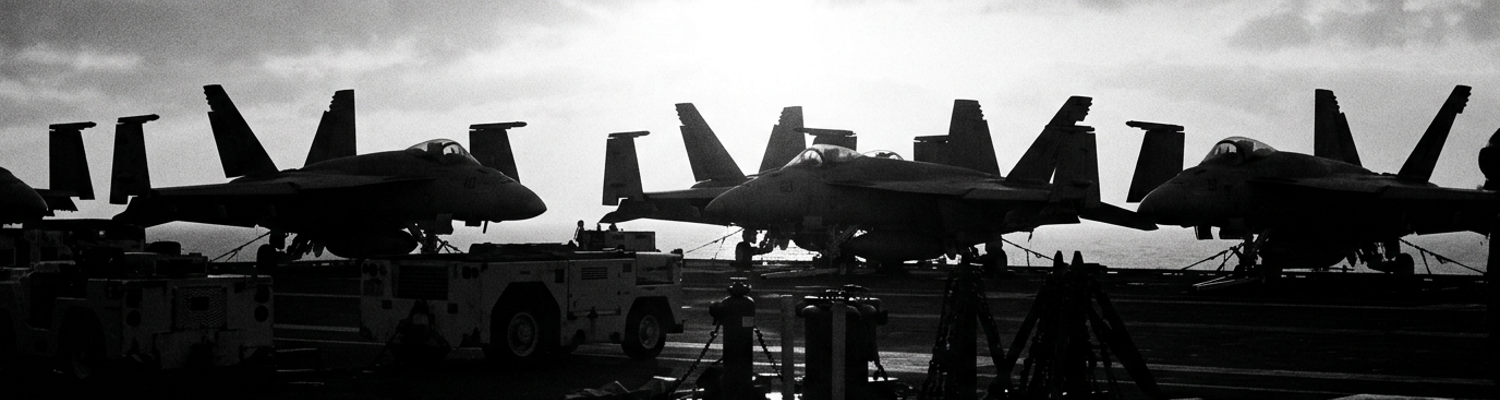
Archival evidence shows that the USS Independence (CV-62) and Carrier Air Wing 14 arrived on station in the northern Gulf of Oman on August 7, 1990. They deployed to project regional combat air power against Iraqi territorial ambitions. Sailing under Battle Group Delta commander Rear Admiral Thomas A. Mercer, the sixty-thousand-ton supercarrier completed an emergency transit from the central Indian Ocean at sustained speeds exceeding twenty-eight knots. Naval planners positioned the carrier task group south of the Strait of Hormuz near twenty-four degrees north latitude. They deliberately kept the vessel in international waters while establishing a forward staging posture outside the confined choke point of the Persian Gulf. The flight deck immediately became the single offensive platform capable of striking Iraqi forward units if Baghdad authorized a secondary thrust into eastern Saudi Arabia or Bahrain. Deck crews operated under sea-surface temperatures of ninety-four degrees Fahrenheit. Ambient air temperatures pushed past one hundred and fifteen degrees on the open steel plating. Flight operations commenced within ninety minutes of entering the patrol box.
Engineering spaces reached temperatures that melted standard boot soles.
A close review of operational logs indicates that the propulsion spaces suffered rapid mechanical breakdowns as the ship pushed its aging steam plant through fifty consecutive hours of hard maneuvering. Forced-draft blowers failed under continuous thermal loading. This filled lower compartments with superheated steam leaks that overwhelmed auxiliary ventilation fans. Machinists and water tenders worked four-hour watches stripped to their skivvies. They absorbed body core temperatures that regularly exceeded one hundred and four degrees Fahrenheit before collapsing onto non-skid deck plates. Medical logs from August 8 record thirty-four cases of severe heat prostration and acute renal distress among engineering ratings within the first thirty-six hours on station. Salt depletion caused severe muscle cramping. Seasoned technicians became unable to hold wrenches or adjust boiler feed valves. Shipboard distillers struggled to produce enough fresh potable water for both catapult steam demand and crew hydration. The command imposed water rationing across all living compartments.
Nobody slept more than two consecutive hours.
Carrier-based F-14 Tomcat and F/A-18 Hornet squadrons initiated around-the-clock combat air patrols over the eastern approaches. They shielded Bahrain, eastern Saudi Arabia, and offshore shipping lanes from sudden low-level strikes. Fighting Squadron 21 and Fighting Squadron 154 launched twin-engine F-14As armed with AIM-54 Phoenix and AIM-7 Sparrow missiles directly into the northern transit corridors. Strike Fighter Squadrons 25 and 113 sent F/A-18Cs to maintain high-altitude sweeps along the Omani coast. Flight crews flew exhausting missions lasting up to six hours. They cycled through three or four aerial refuelings per sortie behind Air Force KC-135 tankers or organic KA-6D tankers in turbulent desert thermals. Cockpit air-conditioning systems failed repeatedly against the extreme Arabian heat. Aviators endured cabin temperatures of one hundred and twenty degrees while managing dense radar environments. The Hughes AWG-9 radar sets in the Tomcats suffered repeated transmitter dropouts caused by liquid cooling pump cavitation. This blinded radar intercept officers at five-minute intervals.
Acute sensory overload triggered visual hallucinations among fatigued aviators.
When examining the historical record of Carrier Air Wing 14, flight surgeons documented that fighter pilots experienced chronic disorientation. They suffered bloodshot eyes from cockpit dehydration and severe muscular spasms across their lower backs. This was caused by sitting strapped into Martin-Baker ejection seats for twenty hours out of every forty-eight. Catapult officers on the bow deck reported grease fires on the launcher shuttles. Hydraulic fluid flashed on superheated steel tracks. Between August 7 and August 10, the two Hornet squadrons alone expended over eighty thousand gallons of jet fuel every twelve hours. Ordnance crews hand-cranked five-hundred-pound bombs onto wet deck mounts under blinding sodium floodlights at 0300 hours.
Thermal Stress and Chemical Defense Operations
Sweat collected in the rubber boots of deck crewmen until it spilled over the top cuffs with every running stride.
Archival evidence shows that flight deck surfaces exceeded 140 degrees Fahrenheit while ambient temperatures consistently topped 115 degrees across the northern Gulf of Oman in mid-August 1990. Onboard the USS Independence, the four-and-a-half-acre steel expanse absorbed intense solar radiation from dawn to dusk. Heat radiated straight through the thick rubber soles of standard-issue flight deck boots. Aircraft handlers and catapult crews stood directly on dark non-skid compound that softened underfoot. It gave off acrid petroleum fumes that mixed with jet exhaust from idling General Electric F404 and Pratt and Whitney TF30 turbofans. Hydraulic fluid inside the waist catapult launch valves expanded rapidly under this thermal load. This caused high-pressure seal failures on Catapult Number Three that sprayed atomized oil across the deck edge. Flight deck tugs, specifically the diesel-powered A/S32A-31A tractors, suffered persistent vapor lock and cooling system blowouts. Engine block temperatures spiked past safe operational thresholds. Air wing medical officers logged daily cases of second-degree skin contact burns when sailors slipped and touched bare tie-down chains or arresting gear wire ropes. Core body temperatures among the aviation boatswain's mates frequently spiked past 104 degrees within twenty-five minutes of stepping out from the island catwalks.
Men blacked out while guiding moving aircraft.
A close review of operational logs indicates that flight deck crews conducted high-tempo rearming and fueling evolutions in full MOPP-4 chemical protective gear whenever intelligence warnings flagged potential Iraqi chemical weapon strikes. Baghdad possessed Scud-B ballistic missiles and long-range strike aircraft carrying persistent nerve agents such as sarin or VX. Shipboard leaders ordered personnel into charcoal-impregnated overgarments, butyl rubber gloves, chemical overboots, and tight-fitting MCU-2/P gas masks. Red-shirted ordnancemen lifted five-hundred-pound Mk 82 unguided bombs, AIM-9 Sidewinder air-to-air missiles, and heavy bomb racks onto aircraft pylons while peering through fogged, sweat-streaked mask lenses. The thick rubber gloves stripped technicians of all manual dexterity. Setting arming wire lanyards and pulling safety pins turned into grueling physical struggles. Purple-shirted fuel crews dragged pressurized two-and-a-half-inch JP-5 aviation kerosene hoses across baking steel. Their bodies locked inside airtight protective layers that prevented any sweat evaporation. Internal garment temperatures rose above 130 degrees Fahrenheit within ten minutes. Sailors vomited directly into their mask oral-nasal cups. They suffocated on their own bile because doctrine strictly prohibited breaking the facepiece seal on the open deck.
Catapult crews drank salted water until their stomachs rejected it.
When examining the historical record from Carrier Air Wing 14 maintenance logs, work-rest cycles designed to protect human life collapsed. The operational requirement to keep four fighters continuously airborne overrode safety protocols. Naval safety guidelines mandated that personnel wearing full chemical ensembles rest for forty-five minutes after every fifteen minutes of heavy manual labor in extreme heat. Launch schedules for Combat Air Patrol sorties forced crews to work continuously for two-hour blocks. Flight deck officers improvised by stationing relief squads inside the air-conditioned deck-edge scuttles. They swapped weapons loaders every twelve minutes before acute dehydration induced muscle tetany. Aircraft engines running at military thrust blew turbulent air exceeding two hundred degrees across the flight deck. Ground personnel struggled to see hand signals through darkened mask visors. Between August 11 and August 14, over sixty deck personnel received emergency intravenous saline infusions in the carrier sickbay. Ground crews dropped twenty-millimeter ammunition belts on the nonskid plating after hand muscles locked from involuntary heat cramps.
Medical Triage and Environmental Casualties
The forward triage wards smelled of iodine, burnt hydraulic fluid, and unwashed bodies.
Archival evidence shows that the medical department aboard the USS Independence and the supporting naval clinics ashore at Mina Salman faced an unprecedented volume of environmental casualties. The sheer physical toll of operating heavy machinery in the Arabian Gulf summer rapidly overwhelmed standard shipboard sickbay capacities. Medical personnel established forward triage stations in the air-conditioned hangar bays and mess decks to handle the overflow. They treated acute heat stroke, flash burns, and severe hydraulic fluid injuries. The primary medical ward, located deep within the ship's hull, quickly filled with sailors suffering from dangerous core temperature spikes. Corpsmen administered hundreds of liters of intravenous fluids daily. They ran out of standard IV poles and resorted to taping saline bags directly to overhead pipes and bulkheads.
Ice became a controlled medical commodity.
A close review of operational logs indicates that flash burns and crush injuries spiked during night operations. The combination of fatigue, poor visibility, and slippery deck surfaces created hazardous working conditions. On August 15, a high-pressure hydraulic line ruptured on an F-14A Tomcat during a post-flight inspection. Atomized fluid at three thousand pounds per square inch sprayed across two mechanics. The fluid penetrated their flight deck jerseys and caused severe chemical burns across their torsos. Medical officers spent four hours scrubbing the toxic fluid from the sailors' skin using specialized solvents. The ship's surgeons performed emergency debridement procedures to prevent systemic poisoning. In another incident, a heavy ordnance cart slipped its chocks on a pitching deck. It pinned a red-shirted aviation ordnanceman against a bulkhead, fracturing his pelvis and causing severe internal bleeding. The medical team stabilized him with massive blood transfusions before arranging an emergency medical evacuation via SH-3H Sea King helicopter to a shore-based hospital in Bahrain.
Supply officers rationed burn cream and sterile bandages.
When examining the historical record from the Mina Salman naval clinic, shore-based medical personnel dealt with similar trauma. They treated sailors from the surface combatants and civil affairs detachments who collapsed under the relentless sun. The clinic's small staff worked eighteen-hour shifts. They processed dozens of heat exhaustion cases every afternoon. Medical officers documented a sharp rise in severe dermatological conditions. Sailors developed painful heat rashes and fungal infections from wearing sweat-soaked uniforms for days on end. The constant exposure to harsh industrial chemicals, aviation fuel, and salt spray exacerbated these skin conditions. Corpsmen dispensed large quantities of topical steroids and antifungal creams. The physical deterioration of the crew became a measurable operational constraint. Commanders had to factor medical attrition rates into their daily sortie generation plans.
Maritime Refugee Influx Toward Bahraini Ports
Panic emptied the northern harbors within seventy-two hours of the Iraqi invasion.
Archival evidence shows that thousands of foreign guest workers and displaced Kuwaitis fled across the northern Gulf toward Manama and Sitra ports. Civilian mariners commandeered whatever floated. They loaded families and laborers onto wooden sambuks, aging motorized dhows, commercial harbor tugs, and private cabin cruisers. Fleeing south from anchorages at Shuwaikh, Mina al-Ahmadi, and Ras al-Khafji, these vessels entered the shallow waters of the Bahrain basin without charts or functioning navigation lights. The passengers included thousands of third-country nationals from India, Pakistan, Egypt, and the Philippines. Kuwaiti families carried few possessions beyond paper identification. Ambient temperatures during the daytime crossings hovered near 115 degrees Fahrenheit. Open wooden decks turned into baking platforms. Auxiliary cooling pumps failed on dozens of overtaxed marine diesels. Disabled craft drifted into the shallow shoals and coral heads surrounding Fasht al-Jirim. Dehydration set in rapidly. Passengers consumed contaminated bilge water when plastic storage drums ran dry. This caused acute gastrointestinal illness and heat prostration across entire boatloads before they sighted Bahrain's northern oil platforms.
Overloaded hulls cleared the waterline by less than four inches of freeboard.
A close review of operational logs indicates that embarked civil affairs detachments coordinated with Bahraini naval authorities to establish safe maritime transit lanes. Stationed at the Mina Salman naval base and the Sitra petroleum terminal, US Navy civil affairs personnel established a joint coordinating cell with the Bahrain Amiri Naval Force. Military planners had to separate desperate civilian flotillas from standard commercial shipping and US surface combatants patrolling the sector. Joint watch teams mapped a designated approach corridor running north-northeast through the deep-water channel off Ras Tanura. They directed all inbound civilian traffic along a single axis between 26 degrees 15 minutes North and 26 degrees 30 minutes North. Bahraini patrol craft, including Lurssen-built FPB 45 and FPB 62 fast attack boats, intercepted fleeing vessels ten miles north of Muharraq Island to conduct security sweeps. Civil affairs specialists coordinated with Bahraini harbor masters to broadcast coordinates over international maritime VHF channel 16. They guided skippers away from restricted refinery berths and sensitive radar picket zones.
Watch officers logged seventy-four vessel boardings during a single twelve-hour shift.
When examining the historical record from the joint coordinating desk at Sitra, civil affairs officers managed constant mechanical breakdowns and severe water shortages. Civilian boats piled up against industrial wharves. Pier-side intake facilities lacked the infrastructure to process thousands of disoriented workers arriving simultaneously under armed guard. Portable reverse-osmosis water purification trailers operated continuously. Intake filters clogged with silt and heavy bunker oil residue in Sitra harbor. This cut off potable water distribution for six hours on August 12. Civil affairs personnel worked through twenty-hour shifts under direct sunlight. They manually carried five-gallon plastic water cans down greasy wooden gangways to treat collapsing passengers suffering from heat stroke. Doctors from the Bahraini Ministry of Health set up triage tents directly on the concrete piers. They treated second-degree sun blisters and kidney failure before shuttling foreign nationals to temporary processing centers inland. Bahraini patrol craft towed eight disabled dhows with seized crankshafts into the Sitra anchorage before sunset on August 15.
Airspace Congestion and Joint Surveillance Challenges
Cathode-ray screens turned into solid walls of green electronic hash.
Archival evidence shows that naval tactical air controllers aboard the command ships and within makeshift radar vans at Mina Salman wrestled with overlapping flight corridors. These corridors mixed civilian evacuation airliners, heavy military airlifters, and fully armed combat air patrols. Commercial transports packed with fleeing foreign nationals departed Bahrain International Airport and Dhahran every fifteen minutes. They climbed right through the defensive recovery patterns assigned to Carrier Air Wing 14. Controllers on watch in the carrier air traffic control center had to manually calculate vertical and lateral separation without automated deconfliction software. Unarmed Boeing 747s and Airbus A300s chartered for emergency evacuations frequently deviated from standard civilian airways like Amber 415 to bypass desert dust storms. They drifted directly into live-fire intercept boxes established between 25 degrees 30 minutes North and 26 degrees 45 minutes North. Simultaneously, Military Airlift Command C-141 Starlifters and giant C-5 Galaxies poured into eastern Saudi airfields along tight thirty-second arrival intervals. Their flight paths cut across combat-loaded F/A-18Cs scrambling north on defensive barrier missions. Primary communication radios overheated. Ultra-high frequency transceivers slipped off assigned channels mid-transmission. Controllers shouted over crackling single-channel backups while tracking closing velocities exceeding twelve hundred knots. Shift workers went twelve hours without bathroom breaks. Eyes dried out until corneas burned. The terror of vectoring an armed fighter directly into a passenger-packed evacuation jet induced persistent nausea and hand tremors across the entire watch team.
Panic made every blip look hostile.
A close review of operational logs indicates that E-2C Hawkeye crews from Carrier Airborne Early Warning Squadron 113 tracked hundreds of ambiguous radar contacts daily across completely unsegregated regional airspace. Flying five-hour orbits over the southern Persian Gulf and the western Gulf of Oman, the twin-turboprop aircraft carried the APS-138 radar system. This system suffered severe signal bounce off superheated seawater and coastal sabkha salt flats. The three naval flight officers squeezed inside the Hawkeye's windowless rear tactical compartment faced sensory saturation within forty minutes of takeoff. Ambient cabin temperatures frequently reached one hundred and ten degrees Fahrenheit. Cooling vapor cycle compressors seized under continuous thermal stress. The pressurized compartment filled with the stench of cooking electrical insulation. Operators stared through magnifying visors at glowing displays swarming with uncooperative civilian transponder replies, non-responsive regional cargo haulers, and low-flying Bahraini helicopters that lacked modern identification-friend-or-foe equipment. Iraqi ground-control intercept stations routinely beamed spoofed transponder codes from coastal transmitters near Ras al-Qulayah. This generated false tracks that duplicated Iraqi Mirage F1 strike profiles. Every unidentified return required the tactical action officer to coordinate visual intercept vectors with orbiting F-14As before tracks crossed the sixty-mile security boundary around Bahrain.
Physical exhaustion degraded human reaction times by half.
When examining the historical record of Carrier Air Wing 14, flight surgeons noted that Hawkeye radar operators exhibited acute vestibular disorientation and chronic ocular fatigue. They tracked over four hundred separate surface and air tracks on each orbit. On August 13, a main electrical generator coupling sheared inside an airborne VAW-113 E-2C. This knocked out primary radar displays while the aircraft was managing thirty-two inbound transport tracks off the Qatar peninsula. Rather than aborting the orbit and exposing the task group to an unmonitored air corridor, the mission commander switched to auxiliary battery power. He continued passing manual bearing-and-range vectors by voice over high-frequency radio for eighty-five minutes until a relief Hawkeye arrived on station.
Surface Warfare Alerts and Naval Interdiction
Target lock alarms sounded every forty minutes inside the combat information centers.
Archival evidence shows that Task Force 70 surface combatants maintained continuous Condition III and modified Condition I readiness postures across the central Persian Gulf to intercept Iraqi surface raiders. Operating under the tactical control of Commander Middle East Force aboard the command ship USS LaSalle (AGF-3), guided-missile cruisers and destroyers patrolled defensive sectors. The USS England (CG-22), USS Scott (DDG-995), and USS Reid (FFG-30) established lines between 27 degrees 00 minutes North and 28 degrees 15 minutes North off the Saudi-Bahraini coastline. Tactical commanders faced an acute threat from Iraqi Navy Project 205 Osa-I and Osa-II fast-attack missile craft. These operated out of Umm Qasr and seized Kuwaiti berths at Ras al-Qulayah. These Soviet-built boats carried four P-15 Termit (SS-N-2 Styx) anti-ship cruise missiles fitted with eleven-hundred-pound high-explosive warheads, alongside automated twin thirty-millimeter AK-230 cannons. Supported by Bogomol-class patrol craft and captured Kuwaiti PB-90 gunboats, Iraqi strike packages possessed the range to sprint south at thirty-eight knots through shallow coastal waters along the Saudi shoreline. Shipboard fire control technicians manned their consoles inside combat direction centers twelve hours a day without relief. Mk 92 fire control systems and SPS-49 long-range air-and-surface search radars locked up continuously due to salt encrustation on waveguide horns and thermal ducting off the northern mudflats. In response to sudden surface track pop-ups, weapon crews stood strapped beside loaded Phalanx twenty-millimeter Close-In Weapon Systems and Mk 13 single-arm missile launchers in hundred-degree ambient air. They fully expected supersonic Styx missiles to breach the radar horizon in less than ninety seconds.
Salt crust froze the elevation gears on the forward fifty-caliber machine gun mounts.
A close review of operational logs indicates that bridge watchstanders and exterior lookouts endured debilitating optical and psychological strain during unbroken four-hour shifts trying to classify surface traffic. Between the Iranian exclusion boundary and the approaches to Bahrain, hundreds of wooden sambuks, commercial dhows, and motorized skiffs moved without running lights across the shallow waters of the Bahrain Ridge and the reefs of Fasht al-Dibal. These wooden hulls presented tiny, intermittent radar cross-sections on SPS-55 surface search scopes. They frequently disappeared into heavy sea clutter before re-emerging at point-blank ranges under three nautical miles. Bridge personnel tracked contacts through twenty-power Big Eyes optical binoculars and handheld thermal night-vision sights. They attempted to determine whether a low-profile silhouette concealed an armed boarding party, sea mines, or local fishermen hauling drift nets. Atmospheric mirages and severe thermal shimmer caused by air-sea temperature gradients exceeding twenty-five degrees Fahrenheit distorted vessel profiles. This transformed low wooden booms into the superstructure shapes of Iraqi Zhuk-class patrol boats. Lookouts suffered acute eyeball strain and burning ocular headaches from staring across the blinding midday glare and scouring night-time darkness. Their optical nerves overloaded by the constant fear of misidentifying a civilian trader or hesitating against an approaching attack craft. Gun crews on the bridge wings kept five-hundred-round belts loaded into Browning M2 heavy machine guns and Mk 19 grenade launchers. Their fingers rested against safeties while watching skiffs close within three hundred yards of unarmored ship hulls.
Sleep-deprived watchstanders ingested prescription amphetamines simply to keep their eyelids parted.
When examining the historical record of Task Force 70 operations off Ras Tanura, mechanical casualties systematically crippled key defensive sensors under the sustained pace of alerts. Cooling fans inside the AN/SLQ-32 electronic warfare suites burned out under constant ninety-eight percent humidity. Technicians aimed commercial floor fans into open electronics cabinets to prevent chassis melt. On August 16, an unidentified radar blip sprinting south at thirty-two knots triggered a general quarters alarm aboard the frigate USS Vandegrift (FFG-48) near coordinates 26 degrees 52 minutes North, 50 degrees 22 minutes East. Combat systems officers initialized the fire control radar and energized the forward surface-to-air missile rail. They discovered that the target was a twin-engine smuggling dhow running diesel fuel to Qatar. Command logs recorded that the crew had spent nineteen continuous hours at battle stations without hot meals. Three enlisted watchstanders collapsed from heat exhaustion directly onto the steel grating of the secondary conning station.
Sustained Operational Pace and Human Endurance Limits
Seventy consecutive days at sea without a single liberty port broke down the physical reflexes of three thousand men.
Archival evidence shows that aviation mechanics and catapult crews worked eighteen-hour shifts in the northern Gulf of Oman near 24 degrees 45 minutes North, 58 degrees 12 minutes East through late August 1990 without shore leave. Carrier Air Wing 14 maintained round-the-clock surface-surveillance and combat-air-patrol missions. This pushed flight deck sailors and hangar bay maintainers past human recovery thresholds. A-6E Intruder ground crews from Attack Squadron 196 (VA-196) and jet engine mechanics from Strike Fighter Squadron 25 (VFA-25) faced sixty-day stretches without stepping foot off the steel hull of the USS Independence. Port calls to Dubai or Muscat were canceled because tactical commanders needed every hull instantly available to defend the Bahraini coast. Severe neurological degradation spread through enlisted ratings by the third week of continuous launches. Flight deck personnel stumbled into the whirling propeller arcs of taxiing E-2C Hawkeyes. Safety observers physically dragged them back onto the waist foul line. Aviators flying five-hour night patrols in F/A-18Cs developed optical tunnel vision and involuntary micro-sleep episodes during final carrier approaches. They misjudged the Fresnel lens optical landing system by several vertical feet. Hydraulic pump assemblies on the ship's Number One and Two catapult steam accumulators overheated and ruptured under the constant launch cycles. Atomized fluid sprayed onto technicians whose blunted reaction times delayed manual emergency shutoffs by several seconds.
Technicians fell asleep standing up while holding wrenches inside operating engine nacelles.
A close review of operational logs indicates that carrier battle group leadership scrambled to modify standard shipboard watch routines after sleep-deprived crews triggered a string of dangerous near-misses. Battle Group Delta commander Rear Admiral Thomas A. Mercer and the ship command staff documented that traditional one-in-three watch rotations had collapsed into chaotic twenty-hour duty periods. Carrier leadership instituted emergency watchstanding schedules to halt a spike in flight deck and engineering mishaps. Department heads abandoned standard naval eight-hour blocks. They replaced them with strict six-hour-on, six-hour-off cycles combined with mandatory four-hour quiet periods across crew berthing compartments. The command suspended all non-essential administrative muster formations, routine uniform inspections, and shipboard work parties to protect uninterrupted sleep opportunities for technical rates. Landing signal officers on the platform logged a sharp rise in dangerous bolters and late wave-offs among tired F-14A crews from Fighting Squadron 21. The air wing commander temporarily grounded individual aviators whose sleep logs showed less than four hours of rest in a thirty-six-hour window. On August 22, maintenance officers completely shut down night repairs on AN/AWG-9 radar sets for six hours. They gave exhausted electronics technicians a chance to sleep after two sailors dropped a seventy-pound receiver unit onto the hangar bay deck.
Flight surgeons logged forty percent increases in reaction times across the entire carrier air wing.
When examining the historical record from the USS Independence medical department, clinical logs revealed that chronic sleep deprivation eroded immune responses and multiplied physical trauma across lower-deck ratings. Boiler technicians operating near coordinates 24 degrees 30 minutes North, 58 degrees 40 minutes East managed high-pressure steam distribution valves while suffering from blurred peripheral vision and acute muscular tremors. Salt-tablets and hydration drinks distributed by corpsmen could not reverse the neurological exhaustion brought on by weeks of relentless launch tempos in one-hundred-degree berthing compartments. On August 25, an exhausted catapult safety observer misread a hand signal on the port bow. He cleared a launching F/A-18C while a junior boatswain's mate was still securing the nose-gear launch bar to the shuttle track. The sailor escaped death by diving flat between the catapult track runners as the twin-engine jet accelerated directly over his back. This deafened him permanently in his left ear. Naval safety officers immediately halted catapult operations for forty-five minutes to inspect the shuttle track for scoring and retrieve the sailor's crushed flight deck radio helmet.