
Quartermaster Container Failure at Apo Reef
A controlled, dry deployment.
The Office of Strategic Services maritime training syllabus guaranteed this exact scenario. Operatives would exit a surfaced fleet submarine under the cover of darkness. They would paddle silently to a waiting reception party. Archival evidence shows the men of the Maritime Unit met a different environment. Twenty-knot crosswinds. Plunging ocean swells. Immediate equipment failure the moment they breached the outer hatch.
Commanders in Washington expected a quiet infiltration.
In early 1944, a specialized detachment of OSS Maritime Unit operatives initiated a clandestine night submarine insertion. The target was the western coast of Japanese-occupied Mindoro. A close review of operational logs indicates the insertion point was located near the treacherous shoals of Apo Reef. The navigator targeted the exact coordinates 12 degrees 44 minutes North, 120 degrees 23 minutes East. General Douglas MacArthur had reluctantly approved the OSS presence within his Southwest Pacific Area command. He demanded immediate disruption of the Japanese maritime traffic flowing through the Mindoro Strait. William Donovan viewed this specific drop as a high-stakes geopolitical wedge. A successful radio network would allow the OSS to bypass MacArthur entirely. They could directly feed convoy routing data to the Joint Chiefs of Staff. This direct line of communication would justify a large-scale expansion of OSS funding before the Senate Appropriations Committee.
The fleet submarine approached the coastline at periscope depth just after midnight.
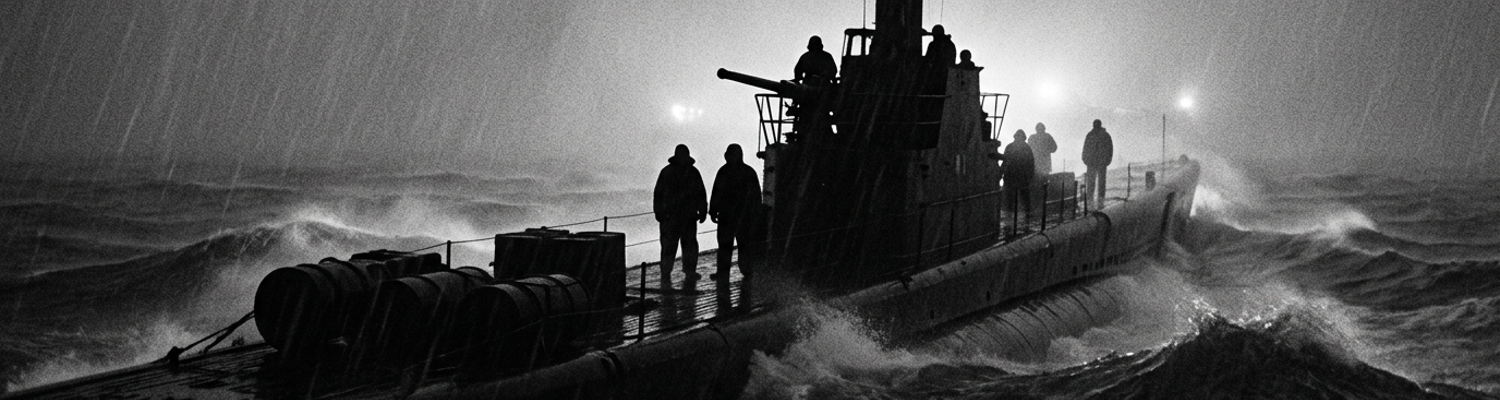
This was a standard Gato-class vessel modified for special operations. The navigator calculated their position using dead reckoning due to heavy cloud cover obscuring celestial navigation points. Water temperatures hovered near eighty degrees. Rip currents flowing out of Paluan Bay threatened to drag the insertion rafts miles off course. The deck crew surfaced the vessel for exactly twelve minutes to offload the insertion team. They opened the forward torpedo loading hatch to extract the men and their gear.
Every second on the surface risked detection by Imperial Japanese Navy coastal patrol boats.
The operatives utilized specialized quartermaster containers engineered specifically for guerrilla sabotage. These cylindrical steel pods (Quartermaster Corps designation M-1944) measured forty-eight inches in length and fourteen inches in diameter. They weighed nearly two hundred pounds when fully loaded. The OSS Research and Development Branch designed them with heavy-duty neoprene O-ring seals and brass locking lugs. Manually operated pressure equalization valves were installed to withstand depths of up to one hundred feet. Archival blueprints reveal the interior payload consisted of tightly packed blocks of Composition C explosives. The crates also held Mark II delayed-action time pencils and blasting caps nested in shock-absorbent sawdust. Magnetic limpet components meant for the hulls of Japanese merchant vessels filled the remaining space. The strategic objective involved arming the Mindoro guerrilla factions. They were tasked with dismantling the Japanese supply chain feeding the defense of the Philippine archipelago. Disrupting this supply line was designed to force the Japanese high command into diverting destroyers away from frontline fleet engagements. The men struggled to lash these heavy iron cylinders to the wooden floorboards of their inflatable boats using thick manila rope.
The neoprene seals began to buckle under the strain of the ocean chop.
Saltwater breached the brass pressure valves on three of the five primary quartermaster containers before the rubber boats had covered a hundred yards. The heavy steel tubes lost their neutral buoyancy. They immediately dragged the small craft down by the stern. The operatives had to draw their combat knives and sever the thick manila lashing lines to prevent the boats from completely swamping. This emergency action sent hundreds of pounds of highly classified sabotage equipment sinking straight to the floor of the Mindoro Strait. Reports of this material loss reached the War Department via encrypted radio traffic within forty-eight hours. The tactical failure handed MacArthur the exact administrative ammunition needed to restrict independent OSS operations in the Pacific theater. Senior officers at the Pentagon drafted memorandums questioning the viability of future maritime infiltration programs. State Department liaisons in Washington expressed immediate concern regarding Japanese salvage divers recovering the sunken containers. They feared the enemy would reverse-engineer the advanced delayed-action fuses and deploy them against American shipping in the Atlantic. The operatives managed to reach the rocky shoreline near Cape Calavite with only their personal sidearms. They carried saturated uniforms and a single waterproofed radio transmitter.
Kingston Valve Rupture and Depth Charge Damage
The primary high-pressure air manifold regulating Main Ballast Tank Number Four suffered a catastrophic mechanical shear at exactly 0114 hours.
A close review of operational logs indicates a heavily corroded bronze Kingston valve failed to seat correctly against its primary rubber gasket. This occurred during the submarine shallow approach vector toward Apo Reef. Hundreds of gallons of compressed air vented directly into the surrounding water column through the compromised seal. This mechanical failure created a massive trail of white bubbles rising straight to the moonlit surface of the Mindoro Strait.
The resulting loss of negative buoyancy forced the submarine bow sharply upward.
Archival evidence shows three Kyotengata-class subchasers belonging to the Japanese Imperial Navy 31st Special Base Force were running a standard acoustic sweep. They operated two thousand yards off the starboard beam. The loud acoustic signature of the venting high-pressure air exposed the American vessel to immediate enemy naval detection. Japanese deck lookouts spotted the roiling surface disturbance seconds later. The enemy commanders ordered full speed ahead and primed their stern racks for an immediate attack run. Back in Washington, the prospect of a sunken fleet submarine tied directly to an experimental OSS operation terrified the Joint Chiefs of Staff. A compromised vessel meant the Japanese could recover highly classified OSS encryption pads. They could also secure specialized sabotage ordnance. An intelligence breach of that magnitude would force the Navy Department to alter Pacific Fleet movement schedules. It would also invite hostile inquiries from the Senate Naval Affairs Committee regarding the misuse of front-line combat assets.
The Japanese subchasers dropped their first pattern of Type 95 depth charges exactly four minutes after the initial ballast leak began.
The enemy ordnance sank to a preset depth of one hundred and sixty feet before the hydrostatic fuses triggered the 100-kilogram explosive payloads. The synchronized detonations generated a massive pressure wave. This force slammed directly into the port side of the submarine pressure hull. The boat commander executed an immediate emergency abort. He ordered the helmsman to dive hard toward the thermal layers of the deep channel. The engineering section pushed the battery-powered electric motors to maximum revolutions. The violent evasive maneuvers combined with the external concussive force of the depth charges proved too much for the aging steel bulkheads. Welds along the forward lower torpedo room cracked open under the sudden structural stress.
High-velocity jets of freezing saltwater flooded the compartment instantly.
The incoming deluge tore heavy wooden supply crates from their steel deck lashings. These ruptured stores contained hundreds of pounds of dense metal radio chassis and spare generator parts. Specialized OSS quartermaster gear spilled across the deck. The heavy equipment turned into high-speed projectiles within the confined space. Seven enlisted sailors and two OSS operatives suffered severe crush casualties when the tumbling crates pinned them against the bronze mechanisms of the forward torpedo tubes. Medical logs detail severe blunt force trauma and compound fractures among the trapped men.
The flooding reached two feet deep.
Damage control parties had to wade through the rising water and manually crank the heavy steel watertight doors shut. This action prevented the entire bow section from swamping. The tactical abort completely derailed the insertion mission and generated immediate political blowback. This specific disaster provided General MacArthur with documented proof that civilian intelligence agencies posed a direct hazard to active naval combat operations. Pentagon administrators quickly drafted new administrative orders. These mandates required all future OSS maritime deployments to receive explicit written authorization from regional theater commanders. The damaged submarine limped toward deep water with a ten-degree list to port and a flooded forward compartment.
SWPA Command Resistance and Intelligence Monopolies
A close review of administrative logs from the South West Pacific Area command headquarters reveals a strict prohibition against independent intelligence agencies.
The headquarters operated out of the AMP Building in Brisbane (General Headquarters SWPA). General Douglas MacArthur exercised absolute jurisdictional authority over all clandestine activities occurring between the Solomon Islands and the Philippine archipelago. The theater commander relied exclusively on his own intelligence apparatus. This was the Allied Intelligence Bureau. Major General Charles A. Willoughby supervised the unit directly. Archival records show Willoughby and his G-2 section systematically intercepted operational requests submitted by the Office of Strategic Services in Washington. The SWPA command structure viewed William Donovan and his civilian operatives as an undisciplined liability. Officers in Brisbane argued these agents were capable of triggering premature Japanese troop deployments along planned invasion routes. MacArthur required all guerrilla supply runs and espionage operations to be processed directly through the Philippine Regional Section. This highly classified sub-unit of the AIB controlled all regional intelligence flow. This centralization of authority ensured that uncoordinated secret operations could not disrupt the scheduled amphibious assault timelines for Leyte and Luzon. Donovan repeatedly lobbied the Joint Chiefs of Staff to grant the OSS a designated operational zone within the theater. He wanted space to test experimental maritime infiltration tactics. The War Department refused to override the theater commander.
Inter-service friction escalated into direct administrative conflict following the submarine damage at Apo Reef.
The tactical failure off the western coast of Mindoro provided MacArthur with the exact leverage required to restrict uncoordinated secret operations. The aborted submarine insertion resulted in the loss of heavy steel quartermaster containers holding highly classified sabotage equipment. Intelligence officers in Brisbane received encrypted damage reports within forty-eight hours. These transmissions detailed the ruptured forward ballast tanks and the jettisoned payload. Willoughby immediately ordered his clerks to compile a comprehensive dossier. This document recorded every structural failure and tactical error committed by the OSS Maritime Unit during the operation. The resulting forty-page intelligence summary focused on the uncoordinated nature of the insertion attempt. It heavily emphasized the proximity to active Japanese shipping lanes. Staff officers identified a high probability that Imperial Japanese Navy salvage divers would recover the sunken Mark II delayed-action time pencils. SWPA analysts calculated that enemy engineers could reverse-engineer the brass pressure valves and neoprene seals from the abandoned rafts within six weeks.
The SWPA command utilized this specific material loss to argue that civilian agencies were inadvertently arming the enemy.
When examining the historical record, the diplomatic and military fallout generated by the botched Mindoro drop reached the Pentagon within days. MacArthur dispatched a series of priority cables to Army Chief of Staff General George C. Marshall. He demanded the immediate cessation of all independent OSS maritime infiltrations within his designated theater. The SWPA leadership leveraged the near-sinking of the fleet submarine to secure support from the Navy Department. They argued that uncoordinated civilian operations actively degraded naval readiness. Admiral Ernest J. King reviewed Willoughby and his extensive dossier. The Commander in Chief of the United States Fleet aligned completely with MacArthur. High-ranking naval commanders expressed anger that an experimental intelligence mission had compromised a front-line combat vessel. The incident exposed Pacific Fleet transit corridors to heightened Japanese acoustic patrols. The Joint Chiefs of Staff convened a closed-door session on September 4, 1944. They met to address the mounting inter-service conflict. The committee reviewed the structural damage reports from the depth charge attack. They examined the specific list of compromised ordnance and the projected cost of drydock repairs at Pearl Harbor. MacArthur submitted a formal memorandum through his representatives at the Pentagon. He argued that any future OSS activity required direct integration into the SWPA chain of command to prevent further loss of naval assets.
The Joint Chiefs formally granted MacArthur full veto power over all future OSS personnel deployments west of New Guinea.
Joint Chiefs Dispute Over Civilian Autonomy
Archival evidence shows the Joint Chiefs of Staff convened inside the Pentagon on September 14, 1944.
They met to process the operational fallout from the Apo Reef disaster (File Ref JCS-1944-09-14). General George C. Marshall and Admiral Ernest J. King reviewed a heavily encrypted fifty-page damage assessment. This document was transmitted directly from the South West Pacific Area command headquarters in Brisbane. MacArthur and his staff weaponized the botched Mindoro insertion to ignite intense political friction between regional theater commanders and Washington. The SWPA dossier detailed the exact repair requirements for the Gato-class submarine. It highlighted the cracked steel bulkheads in the forward torpedo room and the catastrophic failure of the bronze Kingston valve on Main Ballast Tank Number Four. Intelligence officers explicitly blamed the Office of Strategic Services for exposing a front-line combat vessel to depth charge attacks from the Japanese 31st Special Base Force. The theater commander demanded the Joint Chiefs immediately revoke the civilian agency access to Pacific Fleet assets. King aligned with MacArthur and presented the committee with the projected drydock schedules. These repairs were required to replace the submarine high-pressure air manifolds at Pearl Harbor. The Chief of Naval Operations argued that uncoordinated civilian sabotage missions actively degraded the combat readiness of his Pacific submarine force.
The Navy Department officially locked the Office of Strategic Services out of the fleet submarine pool.
This administrative blockade forced military authorities into high-level debates regarding William Donovan and his authority to conduct independent Pacific naval missions. Donovan submitted a formal jurisdictional appeal directly to the Joint Strategic Survey Committee four days after the initial Pentagon meeting. A close review of operational logs indicates the OSS director attempted to shift the blame for the Mindoro failure away from his Maritime Unit operatives. He presented technical schematics of the submarine ballast system. He used these blueprints to argue the mission failed due to poor naval maintenance rather than flawed civilian planning. The intelligence chief asserted that stripping his agency of independent waterborne insertion capabilities would completely blind the War Department to Japanese convoy routing through the Paluan Bay sector. Donovan requested authorization to bypass MacArthur entirely. He wanted to establish a dedicated fleet of modified patrol torpedo boats under exclusive OSS control. The proposal required the Joint Chiefs to allocate specialized marine hardware and high-octane aviation fuel to a civilian network operating in an active combat zone. They would also need dedicated maintenance crews.
Admiral King outright rejected the request.
The ensuing debates fractured the War Department along service lines as officers argued over the strategic risk of the lost sabotage equipment. State Department liaisons circulated memorandums detailing the high probability that Japanese salvage teams had already recovered the sunken quartermaster containers. The prospect of enemy engineers reverse-engineering the Mark II delayed-action time pencils and magnetic limpet components terrified naval logistics commanders. Marshall reviewed the technical specifications of the compromised neoprene O-ring seals and the brass pressure valves. The Army Chief of Staff concluded that Donovan and his operatives lacked the necessary maritime training to handle advanced demolition payloads in heavy ocean swells. Marshall drafted a binding administrative order designed to permanently subordinate the OSS to regional military commanders. The directive stripped Donovan of all unilateral authority to requisition naval combat vessels for autonomous Maritime Unit infiltrations west of the Hawaiian Islands.
The civilian intelligence agency lost all independent maritime strike capabilities.
Any future OSS operations requiring waterborne deployment had to be routed through the Seventh Fleet command structure. A designated flag officer had to approve every mission. The Joint Chiefs mandated that Donovan and his headquarters submit detailed cargo manifests and insertion coordinates to the Navy at least thirty days prior to any planned infiltration. Weather contingency plans were also required. Naval quartermasters received strict orders to inspect all civilian sabotage equipment for proper buoyancy and waterproofing before allowing it aboard Pacific Fleet vessels. The October directive explicitly cited the abandoned composition C explosives resting on the floor of the Mindoro Strait as the primary justification for these new operational restrictions. MacArthur absorbed the OSS intelligence feeds into his SWPA command. He relegated the Maritime Unit to conducting shallow-water reconnaissance patrols behind heavily escorted Navy supply convoys.
Pacific Command Restructuring and Alamo Scouts Integration
A close review of Joint Chiefs of Staff administrative logs reveals the immediate bureaucratic strangulation of the OSS.
This occurred following the equipment loss off the western coast of Mindoro. The political fallout originating from the Apo Reef disaster reached the highest echelons of the War Department within seventy-two hours. Senior military administrators viewed the sunken steel quartermaster containers and the severely damaged Gato-class submarine as unacceptable geopolitical liabilities. State Department liaisons circulated classified memorandums warning that Imperial Japanese Navy salvage teams from the 31st Special Base Force were likely recovering the abandoned Mark II delayed-action time pencils from the ocean floor. Diplomats feared Tokyo would present the advanced American sabotage gear to neutral nations as documented proof of unrestricted irregular warfare. The ensuing panic in Washington provided General Douglas MacArthur with the exact administrative leverage needed to permanently dismantle autonomous OSS operations throughout the South West Pacific Area. Major General Charles A. Willoughby drafted a binding theater-wide mandate. This order formally stripped the civilian agency of its independent operational charter west of the 130th meridian east. Officers in Brisbane categorized the civilian spies as a direct hazard to operational security.
The Senate Appropriations Committee subsequently froze all pending budget allocations for independent maritime infiltration programs.
Donovan and his operatives lost all authority to draft their own insertion coordinates or bypass the Allied Intelligence Bureau. Archival evidence shows the new SWPA directives required every proposed civilian espionage mission to receive a direct counter-signature from military headquarters in Brisbane. The OSS could no longer requisition fleet submarines or high-octane aviation fuel without explicit army authorization. Specialized marine hardware requests were routinely denied. Theater commanders established a rigid chain of command that forced civilian intelligence officers to submit their operational timelines to military analysts for extensive risk assessment. Willoughby and his staff systematically rejected any OSS proposal that threatened to alert Japanese coastal defense garrisons prior to scheduled amphibious assaults. Intelligence clerks buried requests for independent radio networks under layers of mandatory administrative reviews.
The civilian intelligence apparatus completely forfeited its unilateral decision-making power in the Pacific theater.
Subsequent covert maritime deployments fell under the direct tactical control of Admiral Thomas Kinkaid and his Seventh Fleet. The Navy Department immediately prohibited OSS personnel from boarding front-line combat submarines. This forced the Maritime Unit to rely exclusively on eighty-foot ELCO patrol torpedo boats assigned to Motor Torpedo Boat Squadrons (MTBRON). Operational logs indicate that operatives had to submit exhaustive cargo manifests and precise tide schedules to naval commanders exactly thirty days prior to any planned departure. Naval quartermasters stationed at the Hollandia staging base received strict orders to physically inspect all civilian sabotage equipment. These fleet inspectors tested the brass locking lugs and pressure equalization valves on all experimental gear. They checked the neoprene O-ring seals to ensure strict buoyancy compliance before allowing the hardware aboard Seventh Fleet vessels. If an OSS quartermaster container failed a standard saltwater pressure test, Navy officers confiscated the payload and canceled the infiltration attempt. The regional command structure refused to risk another incident involving heavy iron cylinders dragging transport rafts into deep water.
Army commanders integrated the remaining civilian operatives directly into the Alamo Scouts training center on Manus Island.
This forced integration required the Maritime Unit to abandon their highly classified cylindrical steel sabotage pods designed by the Research and Development Branch. When examining the historical record, military instructors restricted the OSS personnel to carrying standard infantry satchel charges and M1 carbines. They were issued conventional waterproofed SCR-300 backpack radios. The operatives underwent mandatory retraining in conventional amphibious reconnaissance under the direct supervision of Sixth Army combat veterans. Planners assigned the civilian agents to conduct shallow-water beach surveys alongside regular military scouts. They mapped jagged coral reef formations. They measured tidal currents. They collected sand samples to support conventional troop landings at Leyte and Luzon. The agency and its Pacific maritime operations devolved into routine hydrographic reconnaissance missions dictated entirely by army invasion schedules.