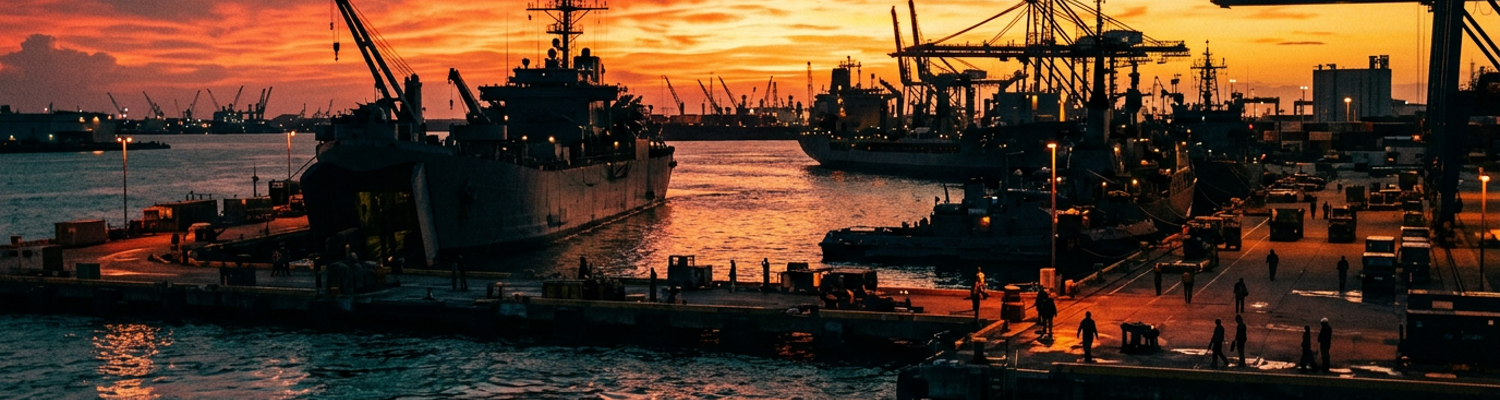

Communications Breakdown on Sasebo Harbor
Radio receivers inside the cramped steel hull of the harbor communications barge hissed into sudden silence when the primary command link to Fifth Fleet headquarters snapped during the storm. Heavy gusts rocked the moored metal hull against its anchor chains, throwing paper message pads to the deck and rattling the exterior antenna arrays. Deafening electrical noise roared through the operators headsets, blocking routine administrative check-ins and leaving the small crew unable to confirm incoming vessel schedules. Frontline radio operators struggled with severe atmospheric static and gale-force autumn winds throughout October 1945. This sudden loss of long-range contact isolated the watch team in the middle of Sasebo Harbor, forcing enlisted sailors to manage local harbor traffic entirely on their own initiative.
Handsets suddenly blared with competing voices as local tactical frequencies erupted with urgent traffic from other vessels trapped under those same storm clouds. Conflicting voice traffic overwhelmed radio watchstanders attempting to route priorities between incoming convoys and shore detachments. Cargo transports anchored in the outer roads demanded immediate clearance to enter the inner basin before the surf grew too rough, while marine detachments ashore transmitted urgent requests for supply barges to bring food, dry blankets, and fuel. Radiomen pressed both hands against their earphones, attempting to untangle call signs and spoken coordinates that overlapped across the single working channel. The volume of simultaneous transmissions produced high-pitched feedback squeals that forced the sailors to order vessel captains to halt their chatter and wait for individual clearance.
Telephone switchboards that should have helped relieve this voice traffic bottleneck remained completely silent because severed landlines hung in broken loops along the blasted concrete seawalls. Japanese forces had abandoned the harbor installations with their utilities wrecked, and recent bombing damage had snapped both the copper cables running along the piers and the underwater lines crossing the basin. Harbor communications teams faced immediate coordination bottlenecks caused by severed landlines and drifting harbor wreckage. Loose wooden pilings, sunken Japanese patrol launches, and shattered cargo pallets drifted through the shipping lanes, where they repeatedly fouled the propellers of small navy boats trying to carry handwritten dispatches between ships and shore stations. Watch officers on the communications barge responded by hauling heavy brass signal lamps out onto the exposed deck, aiming their beam shutters toward the dark coastline to transmit messages through flashing dots and dashes.
Signalmen worked the mechanical shutters of those carbon-arc lamps through the driving rain, sending visual Morse code to naval beachmasters and landing craft coxswains who could not navigate the obstacle-filled channel. Enlisted technicians below deck used pliers and friction tape to splice salvaged field wire into auxiliary transmitter panels, attempting to bypass dead circuits without spare parts from supply depots. Weary operators logged incoming calls with pencil stubs on damp clipboards under red battle lanterns, sorting each request into urgent medical needs, ammunition safety concerns, and general cargo deliveries. Petty officers then organized the anchorage on their own authority, sending alert launches into the fairway to warn incoming transport captains away from shallow wrecks and directing the first loaded landing craft toward the only usable stone ramp.
Staging and Transit from Guam to Kyushu
Steel ramps dropped onto the wet stone, discharging shore parties into the harbor debris after an exhausting logistics effort that had begun thousands of miles to the south. Advanced Base Unit CUB 18 staged from naval staging areas on Guam in early to mid-October 1945, assembling the heavy machinery, communications shelters, and technical personnel needed to turn a defeated enemy naval yard into an operational American anchorage. Enlisted technicians and supply clerks worked around the clock on Guam to crate radio transmitters, diesel generators, switchboards, and field rations under the relentless tropical sun. Crates stacked three layers high lined the red-dirt staging fields as logistics officers checked manifests against urgent deployment orders from Pacific Fleet commanders. Mechanics checked vehicle engines, drained volatile fluids for sea storage, and waterproofed delicate radio gear with heavy tarpaulins and grease. Exhausted work details then hauled the boxed equipment down to the Apra Harbor waterfront, where cargo vessels waited with their deck winches already running.
Deck winches rattled across the decks of the freighter SS Joseph Priestly as dockside cranes hoisted heavy crates and boxed machinery off the Guam piers. Unit personnel and equipment deployed aboard assault transports including USS Starlight and the freighter SS Joseph Priestly, dividing men and material between passenger compartments and large cargo bays. Sailors and Seabees squeezed into the stifling lower decks of USS Starlight, stowing their seabags beneath tiers of pipe-frame canvas bunks stacked five high in the unventilated compartments. Below the waterline, engine crews fed fuel oil to the boilers while working parties shifted crated radio parts, emergency field wire, and repair tools into the bottom levels of the holds to keep the ship stable in rough seas. Officers checked troop muster rolls on the weather decks, sorting specialists into work sections and ensuring that critical communications technicians boarded alongside their essential operating equipment. Stevedores dogged the cargo hatch covers shut on both vessels once the final pallets were lashed down, clearing the decks for immediate departure.
Hemp mooring lines splashed into the harbor water as the ships backed away from the Guam piers and slipped through the outer reef channels into open ocean. The transport convoy delivered CUB 18 alongside the 72nd Naval Construction Battalion directly into western Kyushu, assembling a mixed force of port operators and construction specialists to tackle the damaged Japanese base. Heavy ocean swells battered the convoy throughout the northbound run across the Philippine Sea, tossing the deeply laden transports and triggering bouts of seasickness among the crowded personnel below decks. Radiomen and Seabees spent their off-watch hours huddled in humid companionways, cleaning saltwater corrosion off replacement parts and reviewing technical blue-line drawings of Japanese port facilities. Mechanics used hand files and emery cloth to touch up auxiliary generator components that had suffered dampness during the staging period on Guam. Convoy lookouts spotted the jagged grey ridgelines of the Japanese home islands through drifting sea spray as the task group turned inward toward the island of Kyushu.
Navigators on the bridge of USS Starlight plotted radar ranges off the coastal headlands as the convoy entered the narrow approach channels leading to Sasebo. Lookout watches scanned the grey water for untethered mines and half-submerged wooden hulks that could tear open the thin hulls of the transports. Anchor chains rattled through the hawse pipes as the ships swung into their designated berths inside the outer anchorage, pitching against the gusting winds and harbor chop. Sailors and Seabees immediately unlashed the boat booms, lowering motorized landing craft into the swells to begin ferrying the first waves of heavy equipment toward the battered shore installations. Radio operators carried field receivers up from the troop compartments to the main deck, testing portable battery packs and establishing contact with the harbor communications barge. Coxswains gunned their diesel engines against the harbor chop, driving the first wave of equipment barges toward the cracked stone ramps.
Conversion of Imperial Facilities to Naval Base 3912
Steel ramps scraped across the fractured granite blocks as CUB 18 began seizing the Imperial Japanese Navy Sasebo Naval Arsenal to convert the vast industrial complex into U.S. Naval Base 3912. Working parties stepped onto shattered stone piers littered with collapsed steel roof trusses, overturned railcars, and scorched oil drums that completely blocked vehicle routes into the dockyards. Early base development ground to an immediate halt because unexploded ordnance hazards and dense rubble choked key wharf berths where incoming supply transports needed to discharge their heavy cargo. Bomb disposal teams walked cautiously ahead of the working parties with brass probes and battery-powered detectors, marking buried American aerial bombs and abandoned Japanese artillery munitions sticking out of the debris piles. Sailors wrapped thick rope slings around corroded bomb casings and hoisted the volatile explosives onto wooden lighters for disposal in deep offshore waters. Demolition details then detonated stubborn concrete obstacles with shaped charges, clearing the berth aprons so landing craft could push their blunt bows directly against the stone seawall.
Bulldozers rumbled off those cleared landing craft to shove tons of pulverized concrete into shell craters, opening access routes across the waterfront for the heavy equipment of the 72nd Naval Construction Battalion. Seabees of the 72nd Naval Construction Battalion deployed along the damaged harbor perimeter to repair fractured drydocks, shattered quay walls, and buckled industrial crane facilities that the Japanese navy had left behind. Construction crews anchored heavy timber formwork against collapsed sections of the stone quay walls, pouring fresh concrete into deep tidal washouts to keep deep-draft American cargo vessels from striking underwater obstructions at low tide. Ironworkers climbed the towering steel legs of bombed shipyard portal cranes, using oxygen-acetylene cutting torches to slice away twisted booms and replacing frayed wire rope so the dockside hoists could lift heavy naval machinery once more. Riggers tested the rewired electric hoists with test weights of scrap armor plate, confirming that the restored cranes could safely transfer cargo from transport holds to the newly paved wharf aprons.
Mechanics rolled portable diesel pumps off the wharf aprons and lowered suction hoses down into the flooded pump rooms of the Sasebo drydocks. Continuous pumping drained millions of gallons of oily harbor water out of the massive stone basins, exposing cracked floor culverts, broken caisson seals, and layers of toxic harbor silt. Seabee work gangs shoveled the thick mud into steel buckets while masons chipped out loose mortar and repointed the stone walls to prevent saltwater from leaking back through the lock gates. Shipwrights hauled heavy Douglas fir timbers into the drained basin floor, bolting new keel blocks into the floor slots to support the hulls of damaged American fleet vessels scheduled for emergency docking. Engineers tested the massive iron caisson gate by flooding and pumping out the basin, verifying that the drydock could maintain a dry work environment under the pressure of incoming harbor tides.
Technicians from CUB 18 capitalized on the restored drydock facilities by running permanent copper cables from auxiliary generators into the surrounding machine shops, foundry buildings, and torpedo repair sheds. Electricians rewired industrial lathes, drill presses, and overhead traveling cranes, bypassing burned-out Japanese wiring harnesses with insulated American combat wire strung along the high steel rafters. Communications details unspooled heavy telephone lines from the central arsenal exchange out to every berth along the seawall, linking drydock superintendents with harbor dispatchers on the communications barge. Radiomen installed high-frequency transmitters inside the former Japanese administrative offices, establishing direct contact with fleet commanders and bringing order to the inbound vessel traffic. Dockmasters assigned the first arriving American repair ship to Berth Three, signaling the harbor tugs to guide the vessel alongside the newly restored stone pier.
War Diary Records of Operational Strain
Mooring hawsers groaned under tension as deckhands secured the repair ship to the iron bollards, but shore crews lacked the basic mechanical gear needed to offload its heavy machine tools. Duty yeomen logging these unloading delays had to record an escalating series of equipment failures across the entire harbor. Official entries in the CUB 18 war diary documented severe operational and logistical strain between October 16 and November 3, 1945, noting that incoming transport convoys brought thousands of troops before supply depots could even establish sheltered storage space. Weary clerks typed out daily incident reports under flickering carbon-filament lamps, detailing how emergency requisitions for replacement hardware went unfilled by regional supply centers in the western Pacific. Supply officers tracked missing shipments on grease-pencil wall boards, watching priority cargo requests go unanswered while incoming ships discharged raw personnel instead of essential mechanical hardware.
Garrison beach units faced acute shortages of operable landing craft, winch components, and marine engine spare parts as sailors wrestled heavy cargo pallets across broken stone ramps without functioning machinery. Coxswains ran their blunt-nosed wooden and steel landing craft onto the rocky shoreline until churning gravel stripped the bronze propeller blades and clogged raw-water cooling intakes with coarse sand. Mechanics cannibalized damaged hulls dragged above the high-tide line, stripping carburetor jets, transmission gears, and copper fuel lines from wrecked vessels to keep a handful of engines running for urgent medical and ammunition runs. Cargo handlers attempted to haul heavy crates up the seawalls by hand because worn hoisting winches repeatedly jammed, stripped their drive gears, or burned out their electric motor windings under continuous round-the-clock operation. Boat crews eventually anchored disabled landing craft in shallow coves alongside the docks, leaving sailors to row wooden skiffs across the choppy water to deliver handwritten orders between moored ships.
Naval survey parties navigated these dangerous inshore waters in small whaleboats, struggling against the structural aftermath of late-season typhoons that battered coastal infrastructure. Hydrographic teams dropped lead sounding lines through murky water along the quay walls, finding that torrential storm surges had gouged out seabed foundations and shifted heavy granite blocks into the main berthing channels. Engineers crawled over collapsed wooden sea piers and twisted steel retaining bulkheads, marking cracked pilings and submerged riprap that threatened to tear out the bottom plating of any supply vessel attempting to tie up. Civil engineer officers condemned three major finger piers after measuring severe foundation subsidence caused by floodwaters that had swept down from the surrounding mountain ridges into the naval arsenal. Survey divers surfaced with grim reports of buckled underwater masonry and silt mounds choking the entrance to drydock gates, forcing harbor masters to halt deep-draft vessel movements whenever falling tides exposed the storm wreckage.
Work details hauled pneumatic jackhammers and heavy timber braces down to the exposed stone sills, racing against the incoming tide to chip away jagged underwater ledges before the next convoy arrived. Seabees built temporary wooden cribs around shattered seawall sections, dumping gravel and quick-drying hydraulic cement into the tidal washouts to stabilize the collapsing roadbeds behind the berths. Machinists inside the unheated arsenal workshops turned down salvaged steel shafting on manual lathes, crafting homemade bushings and gears to replace the factory components that never arrived from Guam. Exhausted crews rigged block-and-tackle sets to overhead crane beams, manually muscling heavy diesel blocks onto timber skids so repair mechanics could replace cracked piston assemblies under kerosene lanterns. Petty officers rotated shivering work gangs between the wind-whipped piers and the drafty machine sheds, keeping grease-gun and wrench teams working through the dark hours to hold the precarious harbor operations together.
Minefield Navigation and Harbor Boat Pool Operations
Coxswains warmed up their diesel landing craft at the water edge as those nighttime repair crews finished tightening valve fittings, preparing to push out into the dark bay. Harbor boat pool detachments navigated narrow cleared channels through mine-strewn anchorages in Sasebo Bay, steering carefully between red marker buoys that marked the only tested pathways. Japanese acoustic and magnetic sea mines still rested in the thick harbor mud along both sides of these narrow passages, threatening to detonate if any steel boat drifted off course. Bow lookouts leaned over the gunwales with binoculars and long wooden sounding poles, watching for severed mooring cables and dark horned spheres bobbing just below the choppy surface. Sweepers had cut passages through the main basin, but shifting tidal currents constantly threatened to shove heavy landing craft toward unmapped mine pockets near the harbor mouth. Helmsmen kept their throttles steady and their eyes locked on shore range markers, refusing to deviate even when cold ocean spray blinded the open cockpits.
Dispatchers guided these blinded coxswains from wooden watchtowers along the waterfront, directing every vessel safely through the inner harbor. Small boat dispatchers operated craft around sunken Japanese hulks and navigation hazards to transfer essential cargo and personnel across the crowded roadstead. Masts and smokestacks from scuttled enemy destroyers, blasted merchant freighters, and capsized barges poked through the surface at low tide, creating deadly underwater traps for incoming landing craft. Dispatchers used grease pencils and harbor charts to route wooden personnel launches and steel equipment lighters around these jagged steel hazards. Running boat runs day and night, these crews carried Marine occupation units, medical teams, mail bags, and fresh rations out to fleet ships anchored in the deep outer bay. Crane operators on the supply ships swung cargo nets packed with field generators and wire coils down into the rolling hulls of the landing craft, timing each drop to avoid swamping the smaller boats against the steel hull plating.
Patrol boats circled these offloading lanes through the day and night to keep the busy water corridors clear of unauthorized traffic. Harbor patrol craft enforced security perimeters and navigational curfews to protect working anchorages and offloading lanes from accidental collisions and potential sabotage. Armed crews aboard converted picket boats and motor launches challenged every approaching sampan, fishing junk, and unauthorized naval launch that entered the restricted operational zones. Gunners stood watch behind canvas-covered machine guns on the bow decks, scanning the dark water for floating debris, suspicious swimmer activity, or unlighted civilian craft trying to cross the bay after nightfall. Strict evening curfews kept the narrow channels clear of local harbor traffic, giving tired boat pool crews room to ferry night shifts of construction workers without fearing sudden obstructions. Boarding details pulled alongside stray vessels with loud hailers, inspecting passes and turning back fishermen who wandered near the moored transport fleet.
Searchlights mounted on patrol craft pilothouses swept across the dark water to guide late-running lighters toward the arsenal docks. Coxswains throttled back their engines, nudging the blunt bows of their craft against the stone quay as Seabees caught the thrown mooring lines. Deckhands hauled heavy crates of communications wire, field rations, and engine parts onto the stone wharf, clearing the landing craft decks for the next morning rotation. Mechanics immediately climbed into the engine bays with oil rags and flashlights to inspect the bilge pumps and fuel strainers before the next high tide. Duty officers stamped the cargo manifests in the drafty dockmaster shack, logging another completed transport cycle while the next boat division assembled on the ramp.
Demilitarization of Surrendered Imperial Japanese Vessels
Whaleboats loaded with inspection teams shoved off from that crowded stone ramp, steering across the inner basin toward rows of silent Japanese warships swinging at anchor. Navy technical survey parties cataloged and inventoried hundreds of surrendered Imperial Japanese Navy vessels anchored in Sasebo, climbing up rusty boarding ladders with grease pencils, clipboards, and carbon-copy ledger books. Inspectors moved along cold weather decks of cruisers, destroyers, patrol escorts, and supply craft, writing down hull numbers, machinery conditions, and tonnage estimates while armed guards watched the remaining Japanese skeleton crews. Strict Allied demilitarization timetables dictated rapid inspection and stabilization of decommissioned combatants and midget submarines, leaving survey officers little time to verify handwritten Japanese dockyard manifests against the actual ships moored in the roadstead. Officers split their small survey units into two-man inspection teams, assigning sailors to descend into flooded engine spaces and dark hold compartments with battery lanterns to verify that sea cocks were closed and hull bulkheads remained intact.
Flashlights cut through oily vapor inside the darkened machinery flats as technical personnel oversaw the systematic draining of fuel bunkers, removal of explosive munitions, and disabling of naval gun mounts. Machinists rigged pneumatic suction hoses into deep double-bottom tanks, pumping out thousands of gallons of heavy black bunker oil onto floating sludge barges before leaking petroleum could catch fire or foul the harbor basin. Ordnance specialists worked with Japanese deckhands to haul heavy naval shells and gunpowder charges out of the lower ammunition magazines, hoisting the brass cases through armored hatchways with block and tackle rigs. Weapons technicians then climbed into the open gun tubs and main battery turrets with heavy cutting torches and sledgehammers to destroy the firing mechanisms. Sailors unbolted firing pins, burned through gun-elevation gear teeth, and jammed breechblocks open, ensuring that not a single naval rifle or anti-aircraft cannon across the anchorage could ever fire another round.
Welders extinguished their cutting torches on the cruiser decks while small boat crews moved into the shallow repair basins to deal with dozens of midget submarines. Clustered along the arsenal slipways and tied four abreast in the mud, these small steel craft included scores of Koryu and Kairyu type boats that had been built for coastal defense missions. Inspectors squeezed through narrow conning tower hatches into cramped control spaces, stepping over lead-acid battery banks that leaked toxic fumes and acid into the bilges. Mechanics detached electrical ignition cables from the forward torpedo tubes and removed high-explosive nose charges, neutralizing the dangerous craft before chemical leaks triggered accidental detonations in the crowded slips. Work details tagged each stabilized hull with bright yellow stencil paint, recording battery conditions, hull numbers, and ballast valve positions in harbor tracking logs.
Logbooks filled with completed inspection sheets were ferried back to the dockmaster shack every evening, where division officers checked each decommissioned hull against fleet headquarters quotas. Headquarters staff demanded daily progress counts on every vessel in Sasebo, pressing base commanders to clear military gear from merchant hulls so Allied authorities could convert them into repatriation transports for disarmed Japanese soldiers and overseas civilians. Deck officers selected surviving destroyers and cargo carriers that still possessed operable steam plants, ordering skeleton crews to seal off empty magazine rooms and weld steel covers over ruined gun positions. Towing crews then hauled the stripped combatants out of the naval yard fairways and lashed them to heavy mooring buoys in the outer bay, locking their rudders in place until scrap yards or deep-water demolition sites could receive them.
Fleet Logistics Integration Under Task Group 55.2
Mooring masters guided incoming American supply ships through these cleared fairways, bringing harbor traffic under the direct administrative and operational command structure of Task Group 55.2 and Service Division 103. Advanced Base Unit CUB 18 functioned as the primary shore-based logistics arm within this unified structure, executing daily tasking issued by Service Division 103 officers who coordinated fleet support across western Kyushu. Staff officers aboard the afloat command ships relied on CUB 18 personnel to assign deep-water anchorages, distribute fresh boiler water, and direct cargo transfers for dozens of combat vessels entering the port every week. Enlisted clerks worked inside drafty arsenal offices alongside division coordinators, matching handwritten requisition slips against bulk cargo manifests to ensure that destroyer divisions received emergency engine packing, canned provisions, and replacement boiler tubes. Harbor pilots boarded arriving transports at the outer entrance buoys, checking vessel draft depths against newly sounded channel charts before guiding each deep-draft ship toward assigned service berths along the naval basin.
Repair tenders swung out heavy crane booms over these newly berthed warships, integrating floating drydocks and supply echelons into an around-the-clock logistics network to service Allied occupation warships. Machinists aboard the tenders ran thick electrical cables and high-pressure steam hoses down into warship boiler rooms, providing temporary auxiliary power while shipboard engineers shut down worn propulsion plants for overhaul. Dock crews flooded the ballast chambers of mobile floating drydocks moored in the deeper basins, sinking the massive steel pontoon floors so damaged destroyer escorts and minesweepers could float inside for emergency hull scraping and shaft alignment. Supply echelons pushed loaded cargo lighters out to the drydock sponsons and shipboard gangways, delivering crates of electrical switches, copper tubing, and fresh provisions to keep fleet crews operating without returning to distant rear bases. Seabees and CUB 18 riggers worked from wooden floats with pneumatic riveters and caulking guns, replacing sprung hull rivets and patching underwater storm damage on vessels that had ridden out autumn typhoons along the Japanese coast.
Radiomen stationed inside CUB 18 communications centers tracked these repair schedules, maintaining critical communications links between afloat task group commanders and shore-based occupation headquarters. Teletype lines and heavy field cables connected the harbor communications barge and waterfront signal towers directly to Marine occupation headquarters established in downtown Sasebo, transmitting urgent operational requests, base security reports, and daily troop movement logs. Signalmen stood watch on exposed flying bridges with carbon-arc searchlights to relay administrative traffic whenever high-frequency radio channels suffered from severe atmospheric static or island power drops. Watch officers routed incoming encrypted fleet orders down to naval beachmasters and port directors, ensuring that commanders afloat knew which piers had cleared wreckage and which supply depots could provide fuel oil. Radio watchstanders transcribed urgent tactical dispatches from patrol craft sweeping the Tsushima Strait and delivered carbon copies directly into the hands of Task Group 55.2 staff planners on the command ships.
Staff planners used those tactical dispatches to adjust daily fueling tables and cargo priority orders for the entire occupation fleet. Barge crews pumped thousands of barrels of heavy fuel oil into fleet tankers, repair ships, and escort carriers, running armored rubber hoses across pontoon walkways under the direct supervision of CUB 18 petty officers. Stevedores stacked ammunition boxes, generator coils, and spare diesel components onto wooden pallets, loading them into motor launches that carried replacements out to offshore picket stations. Boat coxswains shoved their throttles forward and steered loaded lighters through the evening chop, delivering the final cargo pallets to the waiting tenders before nightfall closed the harbor fairways.
Support for V Amphibious Corps Repatriation Operations
Cargo handlers stacked those pallets on the tender decks just as the first troop transports carrying Marine units of the V Amphibious Corps signaled for shore support across the bay. Naval Base 3912 provided essential deep-water berthing, supply staging, and medical triage facilities for Marine units of the V Amphibious Corps as they moved inland to occupy Nagasaki Prefecture and disarm remaining Japanese military garrisons. Working parties from CUB 18 secured mooring hawsers for large assault ships along the stone quays, allowing heavy cranes to hoist hundreds of tactical trucks, artillery pieces, and ammunition trailers directly onto the waterfront aprons. Navy doctors and hospital corpsmen converted abandoned arsenal offices into sterile medical triage wards, setting up field operating tables and rows of canvas cots to treat sick Marines and sailors before transferring severe cases to hospital ships in the outer roads. Supply officers directed forklifts and cargo nets through the depot sheds, stacking rations, tent canvas, and fuel drums in organized supply dumps that linked the piers directly to coastal railway sidings. Marine quartermasters loaded flatcars with crated rations and fuel drums, coupling steam locomotives to push the first logistics trains into the interior hills.
Locomotives clattered along coastal tracks toward Fukuoka and Omura, as these facilities established vital logistical corridors across northern Kyushu for handling massive flows of displaced persons and returning personnel. Thousands of demobilized Japanese soldiers returning from China and Southeast Asia arrived at northern rail terminals alongside liberated Korean and Chinese laborers who had spent years in regional coal mines and factories. Navy shore patrols and Marine sentries stood watch over overcrowded train platforms, directing dense crowds into designated processing centers where medical teams checked for infectious diseases. Hospital corpsmen dusted arriving civilians and former soldiers with pesticide powder to prevent typhus outbreaks, separating suspected cholera patients into isolated quarantine barracks along the tracks. Logistics officers coordinated with local railway managers to maintain round-the-clock schedules, keeping boxcars moving between inland junctions and the port without blocking military supply convoys. Work details marshaled these long columns of travelers through the arsenal security checkpoints and halted them directly beside the deep-water quays where transport ships lined the basin.
CUB 18 repair berths and provisioning depots enabled the early execution of post-surrender repatriation shipping across the region by turning those waiting vessels into seaworthy passenger transports. Machinists and shipfitters worked through the night in flooded drydocks, patching corroded hull plates, overhauling worn steam winches, and replacing leaky boiler tubes on dozens of former enemy merchant craft and demilitarized destroyers. Supply details rolled thousands of rice sacks, dried fish crates, and freshwater casks out of waterfront warehouses, hoisting the provisions into cargo holds to feed passengers on voyages across the East China Sea and Tsushima Strait. Electricians rewired emergency lighting and bilge pumps in the lower passenger compartments, while carpenters built rough wooden sleeping tiers inside empty ammunition lockers to shelter families from rough seas. Navy inspectors moved from vessel to vessel with clipboards and sounding tapes, measuring fuel bunker reserves and inspecting lifejackets before certifying each transport for sea.
Tugboats nudged the certified repatriation ships away from the stone piers as soon as passengers filled the decks, easing the deep-draft vessels into the cleared harbor channel under naval escort. Harbor dispatchers on the communications barge tracked each departure on grease-pencil wall charts, logging passenger counts and destination ports from Pusan to Shanghai before radioing clearance codes to coastal patrol craft. Signalmen flashed carbon-arc searchlights from the breakwater tower to guide outward-bound convoys past the inner minefields, opening the fairways for incoming transports that were already waiting at the harbor mouth. Armed guard detachments aboard escort craft watched the sea lanes toward the Tsushima Strait, maintaining order along the repatriation routes while naval sweepers cleared remaining mine lines ahead of the convoys. Harbor pilots swung down rope ladders into waiting motor launches as the transports reached deep water, clearing their helmsmen to set course for the Asian mainland.