
Manhattan Project Shielded Armor Requirements
Engineer Herbert Anderson tightened the mounting brackets on a prototype sampling scoop as scientific teams prepared for the first nuclear test in the Jornada del Muerto desert of New Mexico. Manhattan Engineer District ordnance planners determined in early 1945 that physical soil samples from the detonation crater were mandatory for weapon yield verification. Remote blast pressure gauges, seismic sensors, and high speed optical cameras could estimate explosive power, but only direct radiochemical examination of melted desert soil could verify how many plutonium atoms had actually undergone fission. Fission fragments and unspent plutonium embedded in the crater glass held the vital isotopic data required to measure the total nuclear yield of the implosion device. Scientists needed to collect those radioactive soil samples within hours of detonation before short lived radioisotopes decayed and degraded the diagnostic data. Gathering fresh crater material presented an immediate life threatening hazard that ordinary recovery teams working on foot could never survive.
Crews attempting to approach the blast point faced penetrating radiation levels calculated to reach thousands of roentgens per hour. Unprotected personnel faced lethal gamma radiation exposure thresholds within minutes of entering the immediate vicinity of ground zero. Invisible gamma rays and high energy neutrons would slice unimpeded through canvas uniforms, standard gas masks, and light sheet metal transport cabs. Human tissue exposed to those intense fields would suffer catastrophic cellular destruction and fatal organ failure in less time than it took to fill a single sample container. Medical monitors under Colonel Stafford Warren warned that no recovery personnel could enter the crater area without an enclosed, heavily armored barrier between their bodies and the radioactive ground. Standard military scout cars, open halftracks, and wheeled utility trucks offered virtually no protection against penetrating radiation, creating an urgent tactical demand for a heavy mobile bunker.
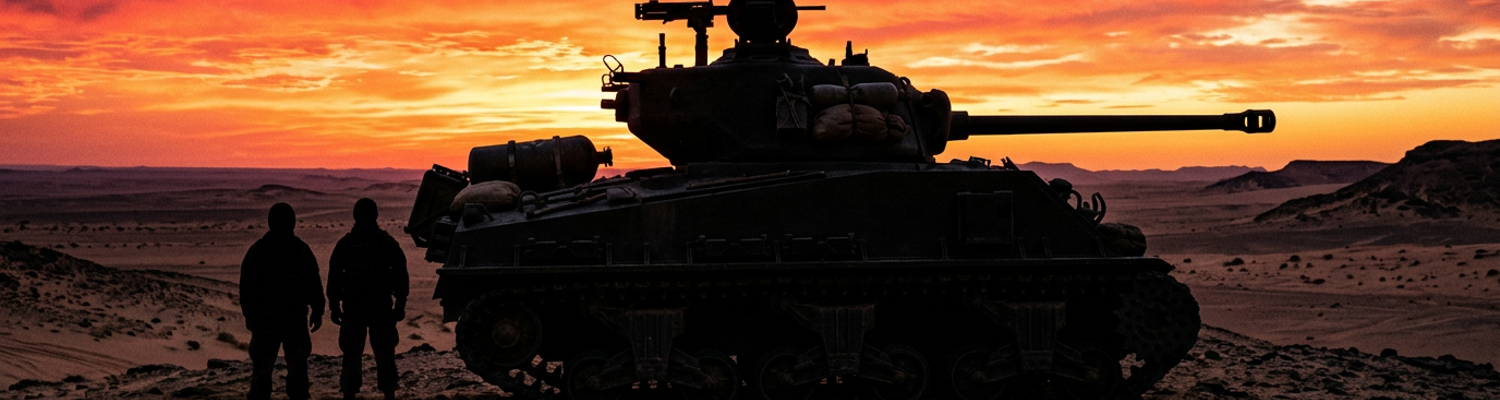
Ordnance personnel selected two standard M4 Sherman tanks from Army inventories to serve as heavy mobile radiation shelters capable of carrying extensive deadweight modifications. Planners chose the thirty ton Sherman because its proven automotive drive train, robust differential, and vertical volute spring suspension could carry massive additional tonnage over rugged desert terrain. Maintenance crews stripped the selected combat vehicles of their 75 millimeter main guns, coaxial machine guns, and internal ammunition racks to reclaim every possible pound of payload. Welders and mechanics then lined the fighting compartments with solid lead shielding up to two inches thick, layering sheets across the floor, sidewalls, and forward crew positions. Lead plates added twelve tons of deadweight to each hull, severely compressing the suspension springs and reducing ground clearance as the modified vehicles settled onto their rubber tracks.
Mechanics compensated for the severe mechanical strain while outfitting the modified hulls with specialized life support and crater sampling systems. Technicians mounted racks of compressed breathing air cylinders onto the exterior sponsons to maintain positive air pressure inside the sealed fighting compartment, preventing contaminated desert dust from infiltrating hull seams. Welders cut a reinforced access hatch through the belly armor of the lead tank so an operator could drop a mechanical sampling drill directly into the radioactive earth beneath the floor. Engineers converted the second vehicle into an auxiliary recovery unit by mounting rocket launchers on the rear deck to fire hollow retrieval scoops attached to steel winching cables across contaminated terrain. Ordnance crews and Los Alamos scientists delivered both heavily shielded vehicles to the southern staging ground ten miles from ground zero for engine tune ups and mock retrieval trials before the detonation.
Lead Shielding and Radiological Modifications
Engine tune ups at the staging ground immediately revealed how drastically the internal conversion had altered each vehicle. Mechanics stripped the fighting compartments and lined the interior hulls with twelve tons of two inch thick lead shielding to attenuate gamma radiation. Ordnance torches had cut away the internal ammunition racks, 75 millimeter gun breeches, and turret rotating mechanisms to make room for the thick lead plates along the floorboards and sponsons. Welders fastened dense lead slabs across the hull interior with heavy steel retaining bars, encasing the driver and observer inside a thick protective enclosure. This massive deadweight flattened the vertical volute suspension springs, shaving inches off the vehicle ground clearance and threatening to bog the tanks down in soft New Mexico sand. Sealed armor plates trapped mechanical engine heat while simultaneously cutting off the occupants from all natural airflow, quickly raising cabin temperatures past one hundred degrees.
Crews fitted external pressurized air tanks to create a positive pressure breathing atmosphere, isolating occupants from radioactive dust and airborne fission products. Heavy steel air cylinders sat in fabricated racks along the exterior rear fenders, feeding clean compressed air through brass flow regulators into the sealed compartment. This continuous positive pressure forced air outward through hull seams and hatch seals, ensuring that contaminated dust could never enter the vehicle from the blast area. Tank drivers and scientific observers wore full rubber masks hooked to emergency backup bottles, preparing for any sudden pressure drop in the desert heat. Gauges mounted on the forward bulkhead allowed the driver to track internal pressure levels throughout the mock desert runs. Safe breathing air allowed the crew to operate close to ground zero, but collecting physical earth from the radioactive crater required another major structural alteration.
Technicians fabricated a sealed, vacuum operated soil collection trapdoor directly into the underside belly armor plate. Cutting torches pierced the thick bottom hull steel between the driver compartment and the rear transmission hump, clearing space for an airtight drop chute. Neoprene rubber gaskets and heavy locking clamps sealed the trapdoor shut until the tank halted directly over radioactive soil samples. Mechanical linkages allowed the scientist inside the hull to unlatch the hatch, drop an intake nozzle onto the desert ground, and pull soil into a lead shielded storage box using vacuum suction. Spring loaded levers snapped the belly door closed the second the sample box registered full, blocking intense ground radiation from entering through the floor. Desert dirt collected during these mechanical trials filled the sample chambers without exposing the internal operators to stray particles.
Drivers practiced the sampling drill repeatedly across the scrub terrain to master the awkward controls before real fallout blanketed the desert. Operating the overburdened tank required heavy physical effort on the steering levers, which pulled hard against the binding final drive gears. Support mechanics replaced stressed track pins and adjusted the sagging suspension arms after every practice run to keep both vehicles operational under the summer sun. Medical monitors inspected the rubber hull gaskets and checked the lead seals for any structural gaps that might leak radiation under blast pressure. Both modified Shermans passed their final operational checks, sitting fueled on the southern perimeter ready to roll into the nuclear strike zone.
Mechanical Breakdown of the Secondary Sherman
Steel launch rails welded across the rear engine deck of the secondary Sherman held a specialized rocket propelled retrieval device built to fire collection cables into high radiation hotspots. Ordnance engineers developed this experimental apparatus as an alternative sampling system in case the primary tank could not safely traverse the scorched terrain near the tower base. The launcher held finned projectiles designed to pull hundreds of yards of braided steel cable across the desert floor into the most intensely contaminated sectors of the blast zone. Heavy electric winches mounted alongside the guide rails were calibrated to reel the hollow retrieval heads back across the radioactive earth, gathering surface crust without forcing the crew to position the vehicle directly over ground zero. This specialized hardware added thousands of pounds of deadweight directly above the rear engine compartment, placing extreme mechanical pressure on drivetrain components already struggling under twelve tons of interior lead slabs. Mechanics verified the firing circuits and checked the cable spools one final time on the desert perimeter, preparing the auxiliary unit to support the primary sampling vehicle.
Starters engaged across the staging area hours after the July 16, 1945 detonation swept across the Jornada del Muerto, sending both heavily modified machines crawling north through the fallout corridor. Churning desert dust and intense summer heat immediately choked the radiator vents as the flattened tracks struggled to find purchase in the loose desert floor. Straining against the deadweight of the shielding plates and the rear rocket platform, the engine of the secondary Sherman began to register alarming coolant temperatures before the tank could close the distance to the crater. Catastrophic engine failure struck the auxiliary vehicle without warning, snapping internal drive linkages and filling the rear compartment with dense smoke as the pistons locked tight. Crewmen inside the lead sealed compartment fought the controls and attempted emergency restarts, but the ruined engine remained completely inert, leaving the rocket equipped tank stalled dead in the open desert several miles outside the crater rim.
Commanders monitoring the approach from the southern control bunkers learned of the breakdown through static heavy radio transmissions and immediately reassessed the entire ground recovery timetable. Desert heat and rising radiation levels ruled out any field repairs or towing attempts, leaving the secondary vehicle and its untried cable firing system stranded where it stopped. The breakdown forced mission commanders to rely entirely on the sole operational lead lined Sherman to complete the ground zero soil retrieval mission before the short lived fission products decayed. Medical officers and Los Alamos physicists now had to gamble the entire radiochemical yield verification on a single modified hull that carried no secondary winch line and no protective escort. Field officers radioed the crew of the remaining Sherman, instructing them to bypass the stalled secondary tank and drive their isolated vehicle straight into the active nuclear crater.
Gears ground forward inside the primary Sherman as its driver pulled the heavy steering levers to maneuver around the silent, broken down sister vehicle. The lone crew maintained positive air pressure inside their lead lined cabin, relying solely on their underside trapdoor and mechanical drop scoop to gather the necessary soil samples. Ground pressure under the thirty ton hull remained dangerously high, creating a constant risk that the sole surviving vehicle would high center on crater debris or sink into loose irradiated sand with no recovery tank available to winch it free. The driver pressed the accelerator flat, steering the solitary armored tank forward through the thermal haze toward the center of the blast field.
Ground-Zero Sortie Across the Trinitite Crater
Harold Smith braced his boots against the floor pedals as the Sherman lurched through scorched sand dunes toward the radioactive blast zone. The Army tank driver and Manhattan Project physicist Herbert Anderson crewed the operational lead shielded vehicle as an isolated two man reconnaissance team without any recovery escort. Anderson sat wedged beside Smith against the dense lead wrapped bulkhead, tracking oxygen flow rates while ionization detectors began clattering against the interior armor plating. Twelve tons of deadweight shielding groaned across the stressed drivetrain as Smith downshifted into first gear, forcing the churning tracks forward to prevent the heavy hull from bogging down in loose ash. Periscope prisms showed blackened yucca stalks giving way to a vast, shallow depression where the nuclear firestorm had stripped the desert topsoil down to bare rock. Smith aligned the nose of the tank with the gentle slope of the crater rim, rolling the vehicle straight down into the bowl where thermal ground heat penetrated the steel belly.
Smith drove the armored vehicle directly across the crust of fused green glass, navigating the crater toward the vaporized test tower remnants. Millions of brittle glass sheets, created when the blast melted alkaline sand into radioactive trinitite, fractured and crunched beneath the weight of the sagging suspension bogies. Heat radiating upward from the glassy floor quickly drove internal hull temperatures well past one hundred degrees, fogging periscope lenses and forcing both crewmen to breathe heavily through their rubber oxygen masks. Smith watched through his narrow viewing prism as four stubby, sheared concrete footings appeared in the distance, marking the exact spot where the steel test tower had stood before the explosion vaporized it. Navigation required constant, small adjustments on the steering levers to skirt deep heat cracks and twisted structural debris littering the center of the depression. Smith eased the Sherman to a halt directly between the four shattered footings, applying the manual parking brakes to steady the hull over ground zero.
Herbert Anderson dropped onto the lead sheathed floorboards the moment the tracks ceased moving, unbolting the heavy dog clamps on the bottom hull door. Anderson operated the belly mounted collection hatch from inside the sealed hull, scooping core soil samples under intense radiation. Opening the reinforced hatch broke the continuity of the belly shielding, allowing an immediate surge of penetrating gamma rays to register across his chest mounted dosimeters. Anderson manipulated the mechanical drop mechanism with gloved hands, driving the cylindrical coring tube into the scorched earth beneath the hull to capture unburned plutonium and fresh fission products. Glassy crust and compacted soil packed tightly into the retrieval sleeves before he winched the sample tubes upward into the crew compartment. Anderson deposited the radioactive soil cores directly into heavy, lead lined transport boxes, securing each container with threaded retaining bolts to contain the gamma scatter.
Locking clamps snapped into place as Anderson sealed the belly hatch shut, restoring the armored barrier between the crew and the hot desert surface. Anderson signaled the driver through the intercom system that the soil payload was secure, prompting Smith to immediately depress the clutch and shove the transmission into reverse. Strained planetary final drives howled as the Sherman rolled backward through its own tracks, clearing the central footing zone before turning southward toward the crater rim. Smith maintained maximum forward speed through the shattered glass crust, steering away from contaminated dust clouds churned up by the spinning tracks. Desert sentries stationed five miles away at the perimeter bunker watched the lone lead lined vehicle break through the shimmering heat horizon, carrying the physical proof of the nuclear weapon yield toward the decontamination wash racks.
Trinitite Radiochemical Analysis and Yield Calculations
Technicians directed high pressure water hoses across the Sherman hull as Harold Smith brought the rumbling vehicle to a halt on the wash rack. Radiation safety officers monitored the runoff water with long handled Geiger counters, checking that toxic desert dust washed away before anyone approached the crew compartment. Anderson pushed the upper turret hatch open from inside the stifling compartment, passing the sealed lead transport boxes down into the waiting hands of chemical corps specialists. The vitrified soil and debris retrieved by the tank were transferred directly to Los Alamos radiochemists for immediate isotopic examination. Armed couriers loaded the lead containers into an awaiting transport plane at the nearby airfield, taking off within the hour to deliver the radioactive cargo to the laboratory mesa in northern New Mexico.
Los Alamos radiochemists received the heavy lead containers and moved them directly into remote handling glove boxes behind thick lead glass viewing blocks. Laboratory technicians chipped apart the green glassy crust to extract pure samples of the melted alkaline sand. Earlier test instruments, including distant optical cameras tracking fireball expansion and mechanical blast pressure gauges anchored in the desert floor, had provided wildly conflicting yield numbers ranging from five to twenty five kilotons. Direct soil sampling superseded optical and blast gauge telemetry to provide the definitive primary yield metric for the implosion design. Radiochemists relied entirely on the physical crater samples to count the exact number of plutonium atoms destroyed during the detonation.
Trinitite fragments dissolved in heated hydrochloric acid allowed the chemists to isolate individual fission isotopes through chemical precipitation and ion exchange. Technicians measured the ratio of unburned plutonium to specific fission products, focusing on radioactive isotopes like molybdenum 99 and zirconium 97 that formed only during the nuclear chain reaction. Fission product radiochemical analysis of the trinitite definitively established the weapon total explosive output at 18.6 kilotons. Anderson and his chemistry colleagues verified that approximately one kilogram of plutonium had undergone complete nuclear fission out of the six kilograms loaded into the core. Laboratory directors transcribed the 18.6 kiloton total into emergency technical memorandums destined for General Leslie Groves and military planners preparing combat orders for the Pacific.
General Leslie Groves reviewed the radiochemical confirmation and immediately authorized field assembly teams on Tinian Island to prepare the second implosion weapon, Fat Man, for operational delivery. Ordnance teams on the island adjusted their weapon fuzing plans, confident that the implosion core would detonate with the destructive power validated by the Trinity soil samples. Back in the Jornada del Muerto desert, the primary lead lined Sherman that had secured those vital cores remained parked under guard on an isolated gravel staging pad. Mechanics stripped away the contaminated exterior air cylinders, but the lingering radiation embedded in the running gear and tracks made standard maintenance impossible. Ordnance officers designated the battered vehicle as contaminated surplus, parking the irradiated hull permanently behind a chain link perimeter fence.
Post-Detonation Hull Contamination and Ultimate Disposal
Technicians drenched the primary vehicle with high pressure water and industrial detergents on the wash rack, but hand held radiation meters continued to register off scale readings across every square foot of the chassis. Intense neutron activation and heavy fallout permanently contaminated the Sherman hulls, road wheels, and suspension assemblies. The initial burst of prompt neutrons from the plutonium core had bombarded the cast steel armor at ground zero, transmuting stable iron and manganese atoms into radioactive isotopes that steadily emitted penetrating gamma rays. Fine particles of vaporized soil and radioactive trinitite had fused into the rubber bogie wheels, grease cups, and volute spring housings, resisting every chemical solvent the wash crews applied. Mechanics could not safely service the planetary final drives or remove the overburdened suspension arms without absorbing hazardous radiation doses through their hands and protective clothing. Chemical specialists finally turned off their pumps and marked both the lead lined runner and the stranded rocket tank with yellow hazard flags, recognizing that the machines themselves had become radioactive sources.
Army radiation safety officers reviewed those survey markings and prohibited the vehicles from post war mechanized testing or chemical biological decontamination drills due to lingering gamma emissions. Tank school commanders at Fort Knox had initially requested the heavily modified hulls to evaluate how armored crews might operate inside contaminated combat zones during future atomic conflicts. Safety personnel rejected those training proposals because the steel armor plates and internal lead slabs continually bathed the crew compartments in deep, penetrating gamma fields. Even brief driver training runs or simulated toxic agent washes would expose soldiers and support mechanics to cumulative radiation exposures far exceeding wartime safety limits. Officers determined that the twelve tons of internal lead shielding, which had protected Smith and Anderson during their brief sprint across the crater, had absorbed scattered fission fragments that made dismantling the interior lethal to salvage crews. Planners canceled all experimental training programs involving the two specialized vehicles, ordering them padlocked behind barbed wire fences under continuous armed guard.
Ordnance officers used that security quarantine to process the administrative records that formally struck both contaminated Sherman hulls from military inventories, isolating them from operational stocks so their radioactive metal could never re enter the armed forces supply chain. Heavy tank recovery tractors hooked steel tow cables to the dead hulls and dragged them across the desert scrub toward a remote, unmarked disposal zone on the military reservation. Excavation crews operated armored bulldozers to gouge massive trenches into the desert floor, carving deep pits through compacted sand and caliche to contain the irradiated armor. Riggers released the tow bridles using long handled release hooks, guiding the thirty ton vehicles over the trench lip so they crashed down onto the bedrock floor. Bulldozers shoved thousands of tons of rocky overburden into the depression, entombing the activated steel, the contaminated suspension assemblies, and the internal lead slabs beneath thick earthen berms. Security personnel classified the disposal site records and restricted all entry to the perimeter, ensuring the radioactive hulls remained permanently buried as classified radioactive ordnance scrap.